




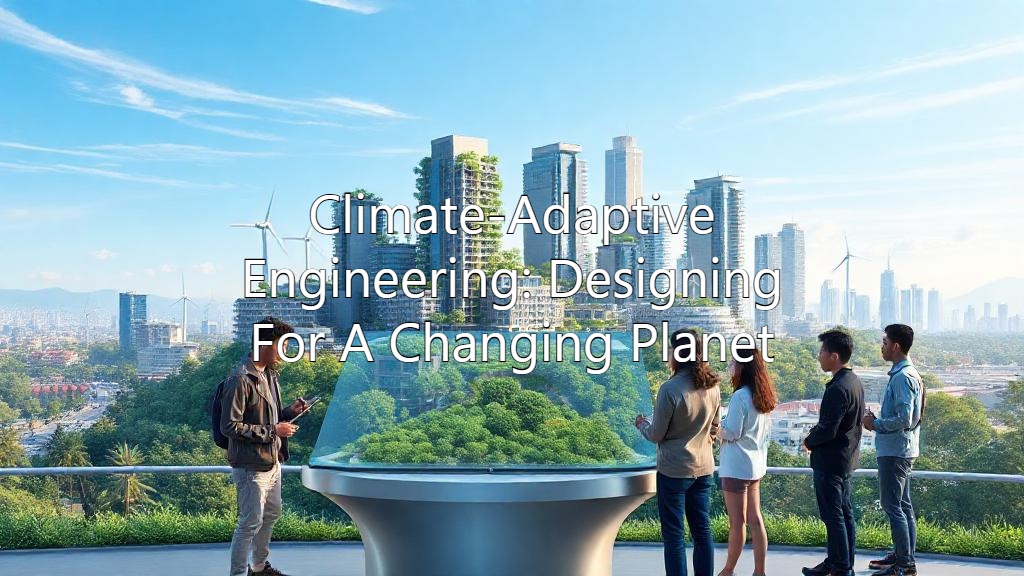
The planet is hurtling towards a precipice of unpredictable weather patterns and rising temperatures.
The concept of climate-adaptive engineering emerges as a beacon of hope, akin to a master sailor navigating treacherous waters.
With the global temperature projected to increase by 3.2 degrees Celsius by 2100, the need for innovative design solutions that can mitigate the effects of climate change has become a pressing concern.
The image of a lotus flower, with its remarkable ability to thrive in diverse environments, serves as a powerful analogy for the kind of resilience and adaptability that climate-adaptive engineering aims to achieve.
By integrating cutting-edge technologies and sustainable materials, engineers and architects can create infrastructure and buildings that not only withstand the challenges of a changing climate but also contribute to a more regenerative and harmonious relationship between the built environment and the natural world.
Designing Infrastructure For A Changing Climate Requires Adaptive Strategies
As the world grapples with the challenges of climate change, designing infrastructure that can adapt to rising temperatures, sea levels, and extreme weather events is crucial for ensuring the resilience and sustainability of communities.
This requires a fundamental shift in the way we approach infrastructure development, from traditional static designs to dynamic and responsive systems.
By embracing adaptive strategies, we can create infrastructure that not only withstands the impacts of climate change but also supports the well-being of both people and the planet.
The future of our planet hangs in the balance, as infrastructure decisions made today will determine the course of climate resilience for generations to come.
- Climate-resilient design is no longer a luxury but a necessity for infrastructure development.
- Green infrastructure solutions, such as parks and green roofs, can help mitigate the urban heat island effect and manage stormwater runoff.
- Innovative materials and technologies, like self-healing concrete and smart grids, are being explored to enhance infrastructure resilience and adaptability.
Assessing Climate Change Impacts On the Built Environment And Human Health

Climate change is a complex issue, and its effects on urban areas and human well-being are multifaceted, involving changes in temperature, precipitation, and extreme weather events.
Understanding these impacts is crucial for developing strategies to mitigate and adapt to climate change.
Climate change affects urban areas and human health in various ways, from more frequent heatwaves to increased flooding.
Integrating Climate Science And Modelling for Cost-Effective Adaptation Approaches
The integration of climate science and modelling allows for more accurate predictions of climate-related hazards, enabling cities to develop targeted adaptation strategies that minimise costs and maximise benefits.
By leveraging advanced modelling techniques, such as machine learning and scenario planning, cities can identify the most effective adaptation measures and prioritise investments in resilience-building initiatives.
The use of climate science and modelling can also facilitate stakeholder engagement and community participation in adaptation planning, ensuring that the needs and concerns of residents are taken into account.
Risk-Based Decision Making In Climate-Adaptive Design And Engineering
Risk-based decision making is a crucial aspect of climate-adaptive design and engineering, as it enables professionals to navigate the complex and ever-changing landscape of climate-related risks and uncertainties.
By incorporating risk-based decision making into their design and engineering processes, professionals can better anticipate and prepare for the potential impacts of climate change, such as sea-level rise, extreme weather events, and changes in temperature and precipitation patterns.
Effective risk-based decision making in climate-adaptive design and engineering requires a deep understanding of the underlying climate-related risks, as well as the ability to communicate these risks effectively to stakeholders and decision-makers.
Evaluating Economic Viability Of Climate Adaptation Strategies And Solutions

Evaluating the economic viability of climate adaptation strategies and solutions is crucial for effective implementation, as it helps identify the most cost-effective measures to mitigate the impacts of climate change.
This involves assessing the costs and benefits of various adaptation strategies, such as sea walls, green roofs, and climate-resilient infrastructure.
By conducting thorough economic analyses, policymakers and stakeholders can make informed decisions about which strategies to prioritise and invest in.
Implementing Green Infrastructure Projects For Urban Resilience And Sustainability
Implementing green infrastructure is crucial for urban areas to thrive.
- Creating green roofs to reduce stormwater runoff and improve air quality
- Designing urban parks to mitigate the urban heat island effect
- Implementing rain gardens to manage flood risk and improve water quality
- Developing green spaces to promote biodiversity and ecosystem services
- Monitoring and maintaining green infrastructure to ensure long-term effectiveness
Enhancing Community Resilience Through Climate-Adaptive Design And Planning
Climate-resilient design is key — it helps communities prepare for and respond to natural disasters: floods, droughts, and heatwaves.
A crucial aspect of this approach is that effective planning can make all the difference in saving lives and reducing damage.
Incorporating green infrastructure, such as parks and green roofs, can help mitigate the effects of climate change: by absorbing carbon dioxide, reducing urban heat islands, and managing stormwater runoff.
Addressing Gaps In Data Availability And Quality For Effective Adaptation Strategies
Having more data does not always lead to better decision-making, as poor data quality can hinder effective adaptation strategies.
In fact, inaccurate or incomplete data can be misleading and lead to poor outcomes.
This highlights the need for reliable and high-quality data.
Developing Stakeholder-Engaged Climate Adaptation Plans For Marginalised Communities
It is essential to develop stakeholder-engaged climate adaptation plans that prioritise the needs of marginalised communities, who are often the most vulnerable to the impacts of climate change, and involve them in the decision-making process to ensure that their concerns and perspectives are taken into account.
By engaging with marginalised communities and incorporating their knowledge and experiences into climate adaptation plans, we can develop more effective and sustainable solutions that promote climate justice and equity.
The success of climate-adaptive engineering will depend on our ability to harness the power of human ingenuity and technological innovation to design a future that is not only resilient but also just and equitable for all.
By embracing this challenge, we can create a world where the built environment is not only adapted to the changing climate but also helps to mitigate its effects, ensuring a brighter future for generations to come.