





Renovation is defined as the process of updating, repairing, or improving an existing structure without full demolition, while rebuilding means complete demolition followed by new construction from the ground up. Understanding the renovation vs rebuilding explained distinction is the first decision every property owner must make before committing budget or timeline to a project. The two paths differ fundamentally in scope, cost, regulatory requirements, and long-term property value. This guide delivers the 2026 cost data, timeline benchmarks, and structural decision frameworks you need to choose with confidence.
What are the key cost differences between renovation and rebuilding?
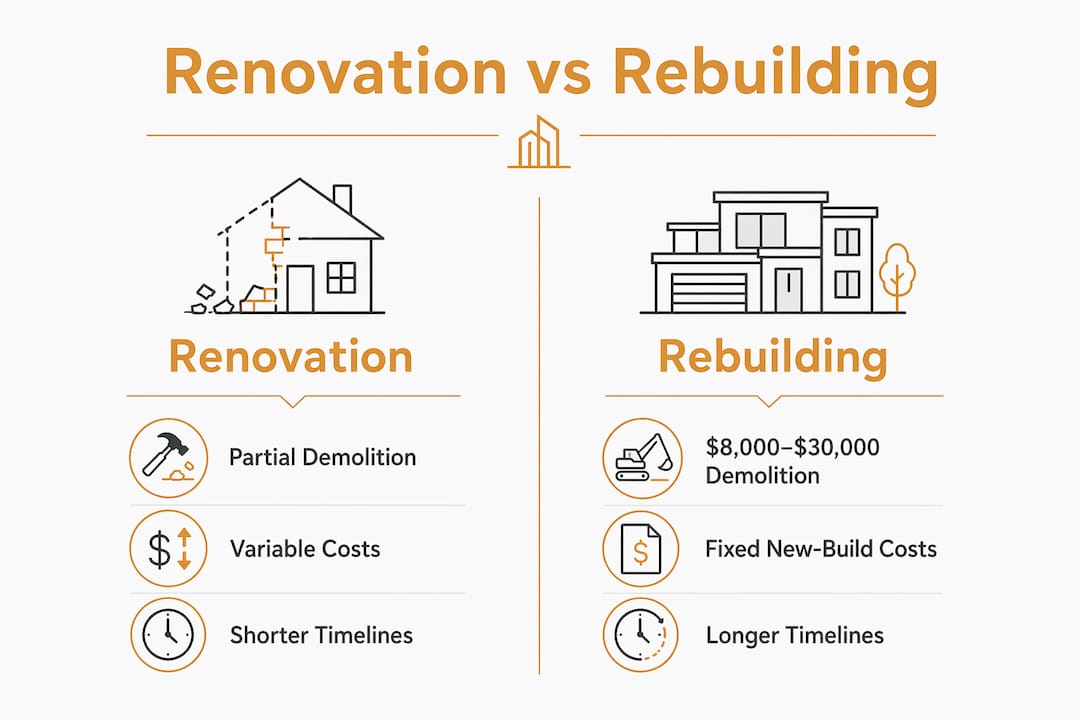
The costs of renovation vs rebuilding diverge sharply once you account for all project phases. Demolition alone costs $8,000–$30,000, architectural planning adds $3,000–$20,000, and new construction averages $150–$450+ per square foot. Permit fees range from $5,000 to $25,000 depending on jurisdiction and project scale. Those figures make rebuilding appear expensive upfront, but renovation carries its own financial risks that are less visible at the outset.
Renovation costs vary widely based on scope, existing conditions, and what contractors find once walls are opened. Scope creep escalates costs rapidly once minor cosmetic updates reveal the need for full rewiring, plumbing replacement, or structural repairs. VAT on materials and labor, plus fees for rectifying unseen faults, can push renovation costs to levels that rival a full rebuild. The result is a project that costs nearly as much as new construction but delivers none of the benefits.

The critical financial threshold is clear: when renovation exceeds 50–70% of new-build cost, rebuilding becomes the more financially rational choice. Professional appraisers apply this benchmark routinely when advising clients on project feasibility. Rebuilding at that cost level also delivers full code compliance, modern warranties, and a clean structural slate that renovation cannot match.
| Cost Factor | Renovation | Rebuilding |
|---|---|---|
| Demolition | Partial or none | $8,000–$30,000 |
| Construction per sq ft | Varies by scope | $150–$450+ |
| Permit fees | $1,000–$10,000 | $5,000–$25,000 |
| Structural warranty | Added sections only | Full six-year coverage |
| Hidden cost risk | High | Low |
Renovations involving heavy structural work can reach 70–80% of new-build prices. At that level, a rebuild provides a full six-year structural warranty while renovation warranties cover only the newly added sections. That warranty gap represents real financial exposure over a 10–20 year ownership horizon.
Pro Tip: Get a structural engineer’s assessment before finalizing any renovation budget. Hidden defects in foundations, frames, or services are the primary driver of cost overruns.
How do renovation and rebuilding differ in timelines and disruption?
Timeline is the second major variable separating home improvement vs rebuilding. Renovation timelines span weeks to months; full rebuilds require 12–24 months including demolition, permitting, and construction. That gap matters enormously if you are managing mortgage payments, school schedules, or rental arrangements during the project.
The disruption profiles are also structurally different:
- Renovation: Staged works allow partial occupancy in most cases. You can remain in the property during kitchen or bathroom upgrades, though major structural works may require temporary relocation for weeks at a time.
- Rebuilding: Full relocation is required from demolition through completion. Budget for 12–24 months of alternative accommodation, which adds directly to total project cost.
- Planning and permitting: Renovation permits are typically faster to obtain. Rebuild applications require full architectural drawings, structural calculations, and authority submissions to bodies such as BCA, URA, or local planning departments.
- Timeline extensions: Both paths face delays. Renovation projects encounter hidden damage once walls are opened. Rebuilds face delays at demolition, foundation, and frame stages if soil conditions or regulatory reviews extend beyond initial estimates.
- Regulatory approvals: Zoning regulations and conservation overlays can prohibit demolition outright or impose new construction requirements that extend the rebuild timeline by months. Checking feasibility with local authorities before committing to either path is non-negotiable.
Pro Tip: For rebuilds, factor alternative accommodation costs into your total project budget from day one. A 15-month rebuild at $2,500/month in rent adds $37,500 to your real project cost.
What structural and design factors drive the renovation vs rebuild decision?
The physical condition of your existing property is the most objective input in this decision. When foundations, structural frames, and roof structures are sound, renovation is technically viable and often preferable. When those elements are compromised, the cost of repairing them while working around existing constraints frequently exceeds the cost of starting fresh.
Renovation preserves what rebuilding cannot recover. Mature trees and established landscaping are lost permanently when a site is cleared for demolition. Heritage architectural details, original timber floors, and period facades carry character that new construction cannot replicate. For properties in conservation zones or heritage overlays, renovation may be the only legally permissible option.
Rebuilding offers design freedom that renovation structurally cannot provide. The four primary structural advantages of a full rebuild are:
- Full layout redesign: Load-bearing walls, staircase positions, and room configurations can be changed without the cost penalties that apply when modifying existing structural elements.
- Complete building code compliance: New construction meets current energy efficiency, fire safety, and accessibility codes from day one. Renovations must comply where works are carried out but cannot always achieve full compliance across the whole building.
- Modern services integration: Electrical, plumbing, HVAC, and data infrastructure are installed to current standards throughout, eliminating the patchwork of old and new systems that renovation typically produces.
- Foundation and soil optimization: A rebuild allows geotechnical assessment and foundation design matched to current loads and soil conditions, reducing long-term settlement and maintenance risk.
| Structural Factor | Favors Renovation | Favors Rebuilding |
|---|---|---|
| Foundation condition | Sound and compliant | Deteriorated or undersized |
| Layout requirements | Minor reconfiguration | Major spatial redesign |
| Heritage or conservation status | Yes | No |
| Mature landscaping | Present and valued | Not a priority |
| Building code compliance | Partial works only | Full compliance required |
Local building authority interpretation of zoning and conservation overlays can decisively limit demolition permits. Engaging a qualified structural engineer or architect to review regulatory constraints before committing to either path prevents costly project restarts. Stellar Structures’ team regularly conducts renovation approval assessments to clarify what is permissible under current authority guidelines.
How do renovation and rebuilding impact property value and ROI?
Both paths generate returns, but the mechanisms and magnitudes differ. Renovation delivers medium to high ROI when it targets aesthetics, functionality, and energy performance in a structurally sound home. Kitchen and bathroom upgrades, façade improvements, and open-plan conversions consistently rank among the highest-returning renovation investments in residential property markets.
Rebuilding typically yields higher absolute ROI over a longer horizon. Rebuilding maximizes site potential, energy efficiency, and modern amenities in ways that renovation cannot fully replicate. New builds attract buyers who prioritize warranties, low maintenance costs, and contemporary design. In competitive property markets, a fully rebuilt home on an established site often commands a premium over both the original structure and comparable renovated properties.
The ROI calculation must account for several factors beyond construction cost:
- Market positioning: Buyers in premium segments increasingly favor new builds with full warranties and modern specifications. A renovated home with visible age in services or structure may sell at a discount relative to a rebuild on the same land.
- Holding costs: A rebuild’s 12–24 month timeline generates holding costs including financing, alternative accommodation, and council rates. These reduce net ROI and must be modeled explicitly.
- Emotional value: Emotional attachment to a home’s character is a legitimate input in this decision. Preserving original features, neighborhood familiarity, and personal history has real value that financial models do not fully capture.
For investment properties, the financial calculus is cleaner. When the land value supports a full rebuild and the existing structure is functionally obsolete, rebuilding is the dominant strategy. For owner-occupied homes, the emotional and lifestyle factors carry more weight and should be assessed alongside the numbers.
Key takeaways
The renovation vs rebuilding decision turns on a single financial threshold: when renovation costs approach or exceed 70% of new-build cost, rebuilding delivers superior compliance, warranties, and long-term value.
| Point | Details |
|---|---|
| Cost threshold rule | Rebuild when renovation exceeds 50–70% of new-build cost to avoid the renovation trap. |
| Timeline gap | Renovation takes weeks to months; rebuilding requires 12–24 months plus full relocation. |
| Structural condition is decisive | Sound foundations and frames favor renovation; compromised structures favor a full rebuild. |
| Warranty and compliance | Rebuilds deliver full six-year structural warranties; renovations cover added sections only. |
| Emotional and regulatory factors | Heritage overlays, mature landscaping, and personal attachment legitimately favor renovation in many cases. |
The renovation trap is more common than most owners expect
From my experience working across residential and commercial projects, the single most consistent mistake property owners make is underestimating total renovation costs before committing to the path. The renovation trap is not a rare edge case. It is the default outcome when owners budget based on visible scope and ignore what a structural inspection would reveal.
The pattern repeats predictably. A homeowner gets a quote for a kitchen extension and bathroom upgrade. The quote looks manageable. Walls open, and the contractor finds outdated wiring, corroded pipes, and a subfloor that needs full replacement. The project doubles in cost and delivers a partially modernized home with a patchwork of old and new systems. That outcome is worse than either a clean renovation or a full rebuild.
My view is that professional structural assessment is not optional. It is the first expenditure on any project above minor cosmetic works. A structural engineer’s assessment costs a fraction of the overruns it prevents. For rebuilds, appointing an architect early to navigate authority submissions and design constraints saves months of delay and rework.
The character argument for renovation is real and I respect it. Original timber floors, period cornices, and mature garden trees are genuinely irreplaceable. But character should be a reason to renovate, not a reason to avoid getting an honest cost assessment first. When the numbers support renovation, preserve everything worth keeping. When they do not, rebuild with intention and design something worth passing on.
— Aman
How stellar structures supports your renovation or rebuild project
Choosing between renovation and rebuilding is only the first decision. Executing either path correctly requires structural engineering, architectural design, and authority submission expertise working together from the start.

Stellar Structures provides civil and structural design checks for both renovation and rebuild projects, covering foundation assessment, structural compliance, and full BCA, URA, and HDB submission management. For rebuilds, the firm’s residential architectural design services deliver code-compliant, site-optimized designs that maximize your land’s potential. For renovations, the team manages authority approvals to keep your project compliant and on schedule. Contact Stellar Structures to get a professional assessment before your project budget is set.
FAQ
What is the difference between renovation and rebuilding?
Renovation updates or improves an existing structure without full demolition. Rebuilding involves complete demolition and new construction from the ground up, offering full design freedom and code compliance.
Is renovation cheaper than rebuilding a house?
Renovation is typically cheaper upfront, but hidden costs and scope creep can push total costs to rebuild levels without the benefits of new construction. When renovation exceeds 50–70% of new-build cost, rebuilding is the more cost-effective choice.
How long does a full house rebuild take compared to renovation?
Full rebuilds require 12–24 months including demolition, permitting, and construction. Renovations typically span several weeks to months depending on scope.
Can zoning regulations prevent me from rebuilding?
Yes. Zoning and conservation overlays can prohibit demolition or impose new construction requirements that make rebuilding infeasible. A pre-application regulatory review with your local authority is the required first step.
What structural warranty does a rebuild provide versus a renovation?
New builds provide a full six-year structural warranty covering the entire structure. Renovations warranty only the added sections, leaving existing elements unwarranted regardless of their condition at the time of works.
Recommended
- Interior designer for rebuilds: key benefits and pitfalls
- Appointing an Architect for Your Landed House Rebuild
- Top Benefits of Hiring a Structural Engineer for Renovation
- Steel vs Concrete PPVC Construction in 2026