




Introduction
Proper Resident Engineer (RE) and Resident Technical Officer (RTO) site supervision is the single most effective line of defence against costly construction rework and project delays in Singapore. Research into Singapore’s construction industry shows that client-related rework occurred in approximately 59% of 381 surveyed projects, raising project cost by an average of 7.1% and delaying completion by roughly 3.3 weeks. These figures make one thing clear: the cost of construction rework in Singapore is substantial, and the value of QP supervision-delivered through qualified REs and RTOs on the ground-cannot be overstated.
This article covers the regulatory framework governing site supervision for structural works, the distinct roles of REs and RTOs, the financial and schedule impact of construction rework, and actionable strategies that construction teams use to prevent rework through proactive daily inspections. The target audience includes developers, contractors, project managers, and property owners managing construction projects of any scale in Singapore.
The direct answer: Proactive daily inspections by qualified REs and RTOs catch non-conformance issues early-during foundation or structural framing stages-saving tens of thousands of dollars in structural rectification costs compared to discovering the same issues during finishing works, where remediation costs can multiply by three to five times or more.
By reading this article, you will learn:
- How rework can represent 2% to 20% of total project costs and what drives those numbers
- The specific supervision mechanisms that reduce rework and prevent costly delays
- BCA regulatory requirements for RE and RTO deployment at different project scales
- Quality control best practices including hold-point inspections, material verification, and documentation protocols
- Risk mitigation strategies that protect both budget and project timelines

Understanding RE and RTO Site Supervision in Singapore
In Singapore, the supervision of structural and geotechnical building works is governed by the Building Control Act and Building Control Regulations. Under this regulatory framework, a developer must appoint a Qualified Person (QP)-typically a Professional Engineer in a Civil & Structural or geotechnical discipline-who in turn must appoint suitably accredited site supervisors. These supervisors, the REs and RTOs, serve as the QP’s eyes on site, ensuring that all construction activities comply with approved plans and specifications.
Since February 2009, only site supervisors accredited through the Joint Accreditation Committee (JAC) of the Institution of Engineers Singapore (IES) and the Association of Consulting Engineers Singapore (ACES) can supervise structural aspects of construction works. This is a mandatory requirement under the Building Control Act. The BCA has also specified supervision thresholds based on estimated project value:
- Up to SGD $7.5 million: Immediate supervision by QP or RE/RTO permitted
- $7.5 million to $15 million: Full-time RTO supervision required
- $15 million to $30 million: One full-time RE required
- $30 million to $75 million: One RE plus one RTO, or more depending on the construction phase
- Above $75 million: Multiple REs and RTOs in combinations scaled to project complexity
Additionally, a framework of risk-based inspection ensures that projects assessed to carry higher risk receive intensified supervision throughout their lifecycle. Using a risk-based inspection plan allows focused supervision on high-rework activities, directing resources where they generate the most value.
Role of Resident Engineers (RE)
REs are Professional Engineers with accreditation through JAC, holding engineering degrees and substantial practical experience in Singapore’s construction industry. They are engaged for full time supervision during critical structural phases-foundation works, superstructure erection, and structural framing-and carry significant authority on the job site.
The RE’s specific responsibilities include verifying that structural works match BCA-approved structural designs, reviewing material test reports such as concrete cube tests and steel reinforcement mill certificates, and coordinating with testing laboratories for third-party inspections. Critically, the RE has the authority to stop works when non-compliance is identified and to enforce corrective actions before the construction process proceeds.
Proper supervision of Resident Engineer and Resident Technical Officer teams ensures compliance with approved designs. The RE’s ability to halt work at critical junctures-before a non-conforming concrete pour proceeds, for instance-is often the difference between a minor correction costing a few thousand dollars and a major structural retrofit costing hundreds of thousands.
Role of Resident Technical Officers (RTO)
RTOs must have relevant diplomas or certificates for qualification and must complete BCA-approved courses for registration. Their accreditation similarly flows through the JAC system, with specific requirements for local practical experience in construction engineering and building services.
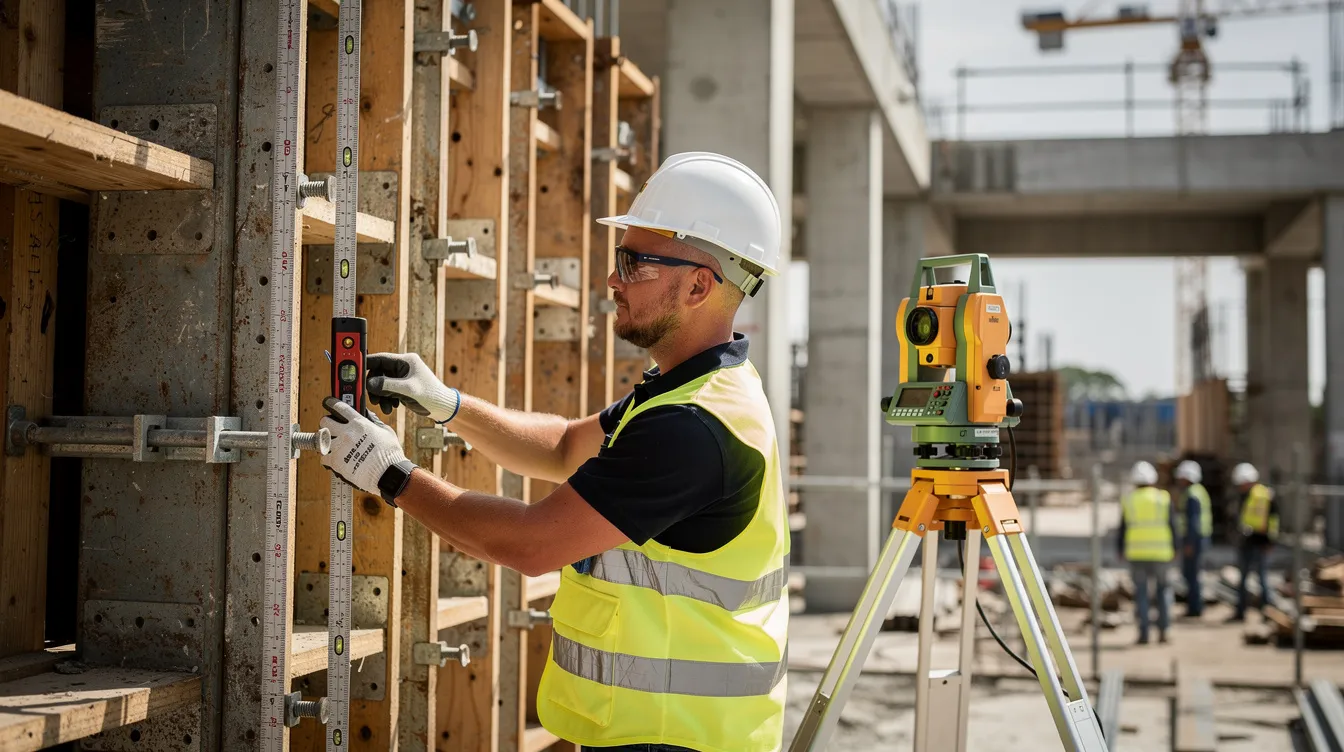
RTOs conduct daily inspections of materials and workmanship, handling the on-the-ground supervision that ensures quality control across every construction phase. Their duties include checking material certifications against specifications, witnessing tests, verifying rebar bending schedules and formwork alignment, and coordinating with subcontractors to ensure compliance with approved plans.
RTOs act as the Professional Engineer’s eyes on-site, providing constant supervision to minimize construction risks. The RTO ensures compliance with BCA safety regulations, and regular site inspections identify potential hazards and ensure safety compliance. A skilled RTO enhances project efficiency and quality by catching deviations the moment they occur-before they compound into systemic quality problems.
RTOs contribute to the integrity of construction projects in Singapore through this persistent, daily vigilance. Effective RTOs prevent costly delays by addressing issues proactively, making them essential even on projects where the budget constraints might tempt stakeholders to reduce supervision coverage.

The Cost Impact of Construction Rework in Singapore
Understanding why construction rework is so damaging requires examining both its direct financial impact and its cascading effects on schedule, contracts, and opportunity costs. The connection between supervision gaps and financial consequences is well-documented across Singapore’s construction market and the global construction industry.
Financial Impact of Rework
Rework can represent 2% to 20% of total project costs, a range confirmed by multiple studies across the construction industry institute and independent research. At the lower end, a SGD $20 million project absorbs SGD $400,000 in rework costs; at the upper end, that figure climbs to SGD $4 million. Either scenario represents a severe blow to project profitability.
A 2013 study investigating client-related rework in Singapore found that such rework raised costs by approximately 7.1% on average across 381 surveyed projects. Major causes included changes in scope and design, as well as replacement of materials mandated by the client.
An ASCE study published in early 2026 measured field rework costs across contractors’ projects: pre-completion rework averaged about 0.38% of contract value, rising to approximately 0.76% when post-completion corrections were included. While these figures may represent lower bounds, even small percentages translate into significant sums on high-budget projects. For a SGD $30 million project, 0.76% equals SGD $228,000 in rework costs alone.
The multiplier effect of late-stage corrections compounds these figures dramatically. A misalignment in a structural frame caught during installation may cost a few thousand SGD to rectify. The same misalignment discovered during finishing works requires stripping finishes, ordering replacement materials, paying additional labour costs, and re-sequencing adjacent trades-inflating the cost to tens of thousands. Early detection often saves a magnitude of cost increase, with remedial costs at the finishing stage typically running three to five times higher than early-stage correction.
Schedule Delays and Their Consequences
Typical delay periods caused by major rework in Singapore projects can range from days to months, depending on when the non-conformance is discovered. The Singapore client-related rework study found that rework delayed projects by an average of 3.3 weeks. Approximately 25% of rework is due to scheduling issues, creating a compounding cycle where rework causes delays that generate further rework.
Research has also established that 1% of field work hours were lost due to construction delays, which across large-scale projects translates to significant labour cost overruns and schedule slippage.
The contractual consequences are severe. Under Singapore standard forms-SIA, PSSCOC, and REDAS-liquidated damages (LDs) for late completion accumulate daily. In the case of CAA Technologies Pte Ltd v Newcon Builders, the contractor faced liquidated damages of SGD $18,500 per calendar day. At that rate, a three-week delay from rework generates over SGD $388,000 in LDs alone-before accounting for any direct rectification costs.
Opportunity costs for developers include delayed handover, inability to collect rental revenues, and reputational damage. For end-users, project delays mean postponed occupancy, additional temporary accommodation costs, and disruption to business operations.
Common Causes of Rework
Design errors and omissions often lead to construction delays and represent one of the most significant sources of rework. Errors in engineering documents often cause rework that could have been avoided through thorough design reviews and verification before the construction phase begins.
Material quality issues and improper installation methods account for another substantial category. Substandard concrete, incorrect steel reinforcement grades, or improperly executed welds all require rectification-often at significant cost when discovered after the structural element has been completed.
Inadequate coordination between trades and subcontractors creates clashes-MEP routing conflicts with structural elements, service penetrations in the wrong locations, or competing installation sequences. Weather impacts construction schedules and can cause delays, adding another layer of complexity to schedule management and creating conditions where rushed work leads to quality issues.
Client-driven scope changes post-approval remain a persistent cause that supervision alone cannot fully prevent, though effective site supervision helps contain the impact and enforces proper change management procedures to meet client requirements without compromising structural integrity.
How Proper Supervision Prevents Rework and Delays
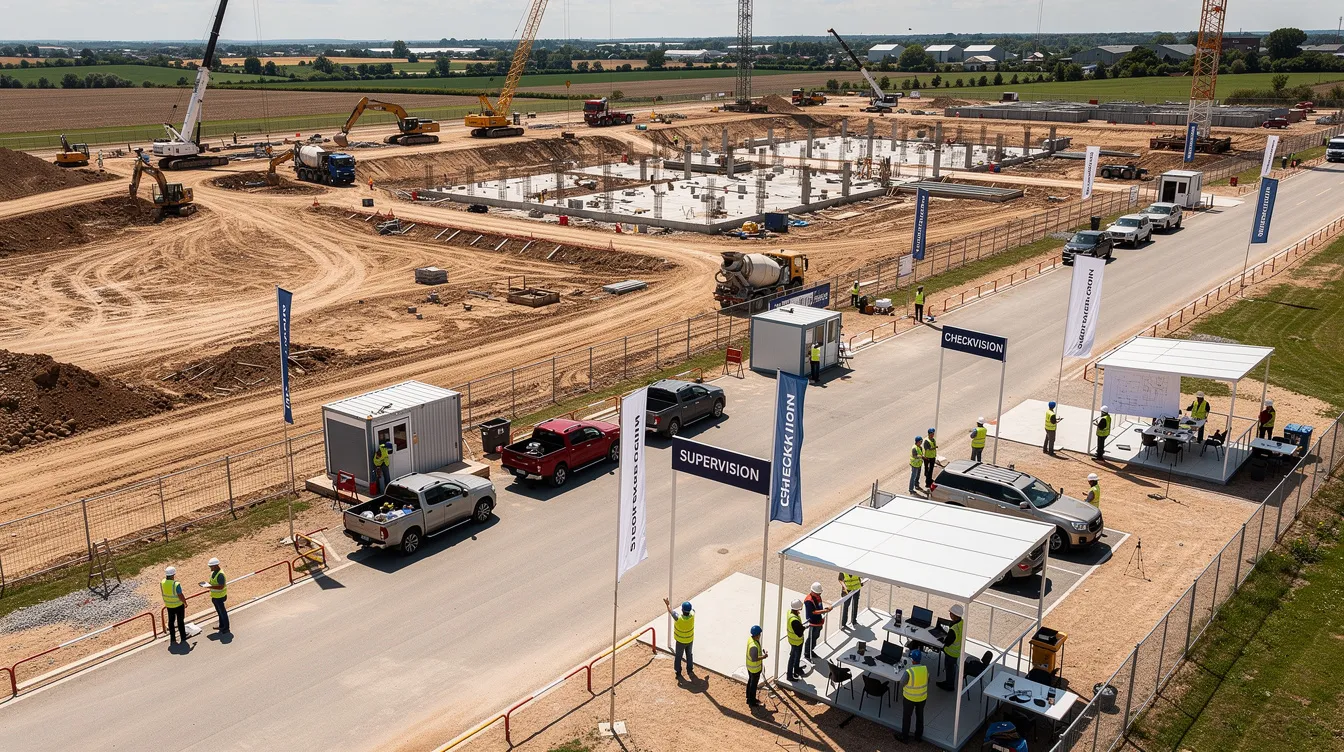
The difference between proactive and reactive supervision approaches determines whether issues are caught at the cost of hundreds or at the cost of hundreds of thousands. Effective site supervision minimises rework by enforcing a standardized inspection process across every stage of construction. Active on-site inspection allows immediate detection of non-compliant works and poor workmanship, while proper supervision enhances communication between clients, consultants, and contractors to solve issues early.
Daily Inspection Procedures
Systematic daily inspections are critical because construction activities move rapidly-a concrete pour that proceeds over incorrectly positioned reinforcement cannot be undone without demolition. RTOs conduct daily inspections of materials and workmanship as a core function, while REs review critical structural elements at defined hold points.
The standard daily inspection procedure follows this sequence:
- Pre-work verification of materials and specifications: Before any construction activity begins, the RE or RTO checks that materials on site match approved specifications-verifying mill certificates for steel reinforcement, checking concrete mix designs, and confirming formwork dimensions against structural drawings. Routine checking of materials ensures that substandard products are rejected before use.
- In-progress monitoring of installation methods: During construction activities, site supervisors verify that installation follows approved methods-correct rebar spacing, proper welding techniques, adequate concrete compaction. Constant supervision by RTOs minimizes errors and reduces rework at this stage.
- Quality checkpoints at completion stages: At each hold point-prior to concrete pours, after MEP rough-in, upon completion of structural framing sections-the RE or RTO conducts formal inspection before authorising the next phase. Enforcing inspection and test plans prevents costly structural retrofits later.
- Documentation and reporting protocols: Every inspection generates records in the Site Supervision Record Book, including conformity certifications, non-conformance reports, and photographic evidence. Clear documentation of daily site progress prevents disputes and costly legal delays.
Regular inspections help maintain quality control standards throughout construction phases. Proactive defect inspections allow for corrections before final handover stages, and real-time issue escalation prevents minor deviations from morphing into systemic faults.
Early Detection vs. Late Correction Costs
The following comparison table illustrates why timing of detection matters enormously to both cost and schedule:
| Detection Stage | Typical Issues | Rectification Cost Range (SGD) | Time Impact |
|---|---|---|---|
| Planning / Design | Drawing conflicts, specification errors | Minimal (design revision cost only) | Days; no site impact |
| Foundation work | Misaligned rebar, incorrect footing depth | Few thousand to tens of thousands | Days to 1–2 weeks |
| Structural frame | Steel gauge deviations, insufficient connections, wrong welds | Tens of thousands; rebuilding sections can reach 5–10% of structural value | 2–4+ weeks |
| MEP installation | Routing errors, clashes with structural elements | Thousands per instance; coordination delays compound | Weeks of finishing schedule extension |
| Finishing works | Cracks, water leakage, tiling misalignment over structural defects | Very costly per unit area; demolition and reinstatement required | Weeks; can delay TOP/CSC significantly |
The synthesis is clear: the exponential cost increase of late detection makes early-stage supervision not merely beneficial but essential for effective project management. A non-compliance caught during foundation work versus the same issue discovered at finishing stage can mean a three-to-five-times difference in cost, plus weeks of schedule delay and accumulating liquidated damages.
Thorough drawing verification before construction helps prevent design clashes, and Building Information Modeling helps identify conflicts before construction begins on site. A case study involving a leading Singapore developer demonstrated that adoption of BIM alongside rigorous supervision reduced project delays by 30% and improved cost efficiency by 18%.
Quality Control Implementation
Hold point inspections and witness testing protocols form the backbone of quality assurance on any construction site. At designated hold points-defined in the Site Supervision Plan-work cannot proceed until the RE or RTO has formally inspected and cleared the preceding stage. This prevents the layering of subsequent work over non-conforming elements.
Material certification and compliance verification procedures include checking concrete cube test results against specified strengths, verifying steel reinforcement mill certificates against structural drawings, and confirming that proprietary products meet specific requirements stated in approved plans. RTOs ensure compliance with BCA regulations for quality control through these systematic checks.
Coordination with testing laboratories and third-party inspections adds an independent verification layer. Maintaining thorough records supports traceability and aids in identifying recurring issues across the project, enabling continuous improvement in the construction process and informing quality management for future projects.
The QP conducts periodic reviews of all inspection records, test reports, and site supervision record books, creating an accountability chain that runs from the construction site through to the Professional Engineer’s endorsement. BCA has also introduced remote supervision frameworks that allow part of supervision to be conducted remotely under approved protocols using modern technology-photo and video documentation, cloud storage, and digital checklists-though physical hold-point inspections remain mandatory.
Common Supervision Challenges and Solutions
Even with Singapore’s robust regulatory requirements, construction firms face persistent supervision challenges that can undermine quality and allow rework to occur. Understanding these challenges and their solutions is essential for any construction team committed to ensuring quality and managing budget constraints effectively.
Inadequate Supervision Coverage
A common lapse in construction projects is deploying insufficient supervision resources for the project scale-for example, employing only an RTO for a project that requires an RE plus RTO under BCA thresholds. This creates blind spots where non-conformances go undetected.
Solution: Implement proper RE and RTO deployment based on project scale and BCA requirements, with clear coverage schedules that account for critical construction phases. RTOs provide constant supervision to minimize construction risks, and the supervision plan should define exactly when full time supervision is needed versus periodic oversight. For projects approaching value-band boundaries, a proactive approach is to err on the side of more supervision rather than less-the cost of an additional RTO is trivial compared to rework expenses. Construction firms should also use constructability reviews to identify potential issues before they materialise on site.
Communication Gaps
Poor communication between design teams, site supervisors, and contractors is a root cause of many such issues. When design intent is not clearly conveyed to the site level, or when field observations are not escalated to the engineering team, problems compound. Proper communication can significantly reduce rework.
Solution: Establish daily briefings between RE/RTO staff and construction teams, implement digital reporting systems that provide real-time visibility to all stakeholders, and define clear escalation procedures for non-conformances. Effective supervision helps catch construction defects early and prevents schedule delays only when the information flows freely between all parties. The RE or RTO should issue site memos for any deviations, with tracked acknowledgment and response from the contractor. Building information modeling platforms can further support this by providing a shared digital environment where design issues and field conditions are visible to everyone.
Skill and Experience Deficiencies
Not all accredited REs and RTOs bring the same depth of practical experience. Inexperienced supervisors may misinterpret structural drawings, lack familiarity with local materials and contractor practices, or fail to identify subtle quality problems that experienced engineers would catch immediately. Safety training is mandatory for all construction workers on-site, but supervisors themselves need domain-specific expertise beyond basic safety issues.
Solution: Engage qualified professionals with relevant Singapore construction experience who understand local codes, materials, and construction engineering practices. Provide ongoing training on evolving BCA standards and industry best practices. The RTO’s role minimizes risks of injury on construction sites, but this requires competence that matches the complexity of the structural works being supervised. Regular design reviews and problem solving sessions between the supervision team and the QP further sharpen skills and ensure alignment with the highest standards.
Other factors such as tight margins incentivising contractors to move fast-sometimes at quality’s expense-also challenge supervision effectiveness. Without supervisors enforcing standards and holding the line at inspection points, slip-ups in materials or installation create defects requiring extensive rework.
Conclusion and Next Steps
Proper RE and RTO site supervision is not just a regulatory requirement-it is the most cost-effective risk mitigation strategy available to anyone managing structural works in Singapore. The evidence is compelling: rework can represent 2% to 20% of total project costs, liquidated damages can reach SGD $18,500 per day, and the cost of late-stage correction multiplies three to five times compared to catching the same issue early. Effective supervision minimises rework by enforcing a standardized inspection process, and RTOs contribute to the integrity of construction projects in Singapore through relentless daily vigilance.
To strengthen your project’s supervision framework and reduce rework, take these immediate steps:
- Assess current supervision arrangements against BCA requirements – verify that your project has the correct number and grade of REs and RTOs for its value band and risk profile
- Implement daily inspection protocols – establish pre-work verification, in-progress monitoring, hold-point inspections, and documentation procedures as standard practice on every job site
- Engage qualified supervision professionals – ensure your REs and RTOs hold current JAC accreditation with relevant local experience and invest in continuous improvement through ongoing training
For related guidance, explore BCA structural design approval procedures, structural inspection processes, and risk management frameworks to build a comprehensive quality assurance strategy for your construction projects.
Additional Resources
- BCA supervision requirements and risk-based inspection framework – current regulations on site supervisor deployment, value-band thresholds, and project completion requirements
- IES-ACES JAC Registry for RE and RTO accreditation – registration procedures, qualification requirements, and professional development resources for site supervisors
- BCA Guidebook for Site Supervision Plans – detailed guidance on structuring supervision plans, inspection checklists, non-conformance reporting, and documentation standards for the construction industry
- ASCE research on field rework costs – industry cost benchmarks from the construction industry institute and international standards for measuring rework impact on project performance