




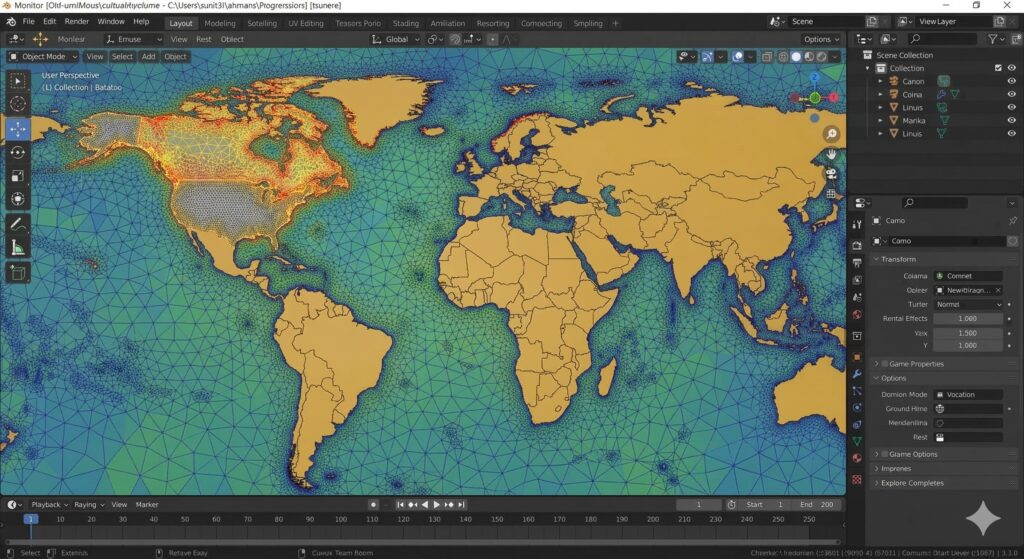
The Definitive Guide to Finite Element Analysis: Why Proven FEA Strategies Are Unquestionably Essential for Accurate Engineering Projects in 2026
Introduction to the Computational Imperative in Modern Engineering
In the highly rigorous and technologically advanced domain of modern engineering, the acceptable margin for error has effectively approached zero.
As skyscrapers reach unprecedented heights, aerospace vehicles become exponentially lighter, and biomedical devices integrate seamlessly with complex human cellular biology, the fundamental necessity for predictive, highly accurate computational models is an unquestionable mandate.
Finite Element Analysis (FEA) has firmly established itself as the definitive, rock-solid mathematical foundation required for achieving this essential accuracy.
By mathematically subdividing immensely complex continuous physical geometries into manageable, discrete finite elements, FEA empowers structural, mechanical, and civil engineers to simulate real-world physical interactions in a purely virtual environment.1
These simulations range from extreme thermal gradients and complex fluid-structure interactions to non-linear structural deformations and high-cycle fatigue over decades of simulated time.3
The importance of finite element analysis for accurate engineering projects cannot be overstated, as it provides a foolproof bridge between abstract theoretical physics and tangible applied manufacturing.
Historically, the engineering process relied heavily on the development of physical prototypes, a methodology fraught with high material costs, immense time delays, and significant safety risks.1
Today, FEA completely revolutionizes this paradigm. It enables design teams to assess incredibly intricate geometries that would otherwise be mathematically impossible to evaluate using traditional hand calculations, allowing them to simulate multiple, coupled physical phenomena simultaneously.1
By identifying critical stress concentrations, dynamic resonant frequencies, and hidden potential failure points in a pristine virtual environment, FEA ensures the absolute safety, structural reliability, and lifecycle longevity of products well before the first physical component is ever manufactured.1
This exhaustive research report explores the profound mathematical origins, the contemporary 2026 software ecosystems, critical industry-specific applications, and the catastrophic historical failures associated with the misuse of FEA.
Furthermore, recognizing the harsh commercial realities of 2026, the report delves deeply into the sophisticated Search Engine Optimization (SEO) and Generative Engine Optimization (GEO) strategies required for engineering firms to market their computational expertise effectively in an increasingly saturated digital landscape.5
The Mathematical Foundations and Generational Evolution of the Finite Element Method
The contemporary capabilities of advanced FEA software are not the result of sudden innovation, but rather the culmination of decades of rigorous mathematical evolution, transitioning from abstract numerical theories to highly robust, commercialized algorithms.
The modern Finite Element Method (FEM) represents a brilliant confluence of Matrix Structural Analysis (MSA), variational approximation theory, and the exponential growth of digital computational power.8
Mathematical Precursors and the Formulation of Discretization
The conceptual origin of dividing a complex, irregular continuous domain into simpler, additive parts dates back to Archimedes, who utilized geometric subdivisions to calculate the volumes and areas of irregular shapes—a philosophy that directly mirrors the core FEM tenet that the total system energy is the sum of individual element energies.8
However, the mathematical rigorousness of FEM truly began to take shape centuries later with Leonhard Euler’s pioneering work in variational calculus, wherein he utilized piecewise linear functions with discontinuous derivatives at specified nodes to produce ordinary differential equations.8
In the 1940s, Richard Courant achieved a monumental breakthrough by advocating for the variational treatment of partial differential equations. Courant performed what is now recognized as the first true FEM-style calculation by utilizing a triangular net to determine the torsional stiffness of a hollow shaft.
He employed piecewise linear interpolation as Rayleigh-Ritz trial functions, a technique he termed “generalized finite differences”.8
Concurrently, Synge and Prager continued advancing direct variational approaches through the hypercircle method in functional analysis.8
The true engineering application of these deeply mathematical concepts was subsequently advanced in 1941 by A. Hrennikoff, a Russian-Canadian structural engineer at the University of British Columbia, who successfully modeled continuous membranes and plates using a discrete lattice framework.9
By 1953, Levy and Schuerch presented a method for analyzing redundant structures that served as the direct precursor to the Direct Stiffness Method, an approach perfectly suited for the nascent digital computers of the era where the global stiffness matrix of an entire structure is computed simply by summing the individual stiffness matrices of its constituent elements.8
The Four Generations of FEA Evolution
The maturation of the Finite Element Method can be systematically categorized into four distinct generational phases, each characterized by significant leaps in mathematical understanding and computational application.8
The first generation, known as “The Pioneers” (1950–1962), was driven predominantly by the aerospace industry’s urgent need for analyzing thin, complex structures like aircraft ribs and fuselage panels.
Engineers during this era, schooled deeply in classical mechanics, viewed finite elements essentially as “force transducers”.8
The formal genesis of modern FEM in everyday engineering use is widely attributed to M. J. Turner at Boeing, who, along with Ray Clough, Martin, and Topp, published a seminal 1956 paper that generalized and perfected the Direct Stiffness Method.8
It was Ray Clough who officially coined the term “finite element method” in 1960 and went on to establish the first major research group dedicated to propelling the idea into civil engineering applications at the University of California, Berkeley.8
The second generation, recognized as “The Golden Age” (1962–1972), is often referred to as the “variational generation.” This era successfully unified the Direct Stiffness Method with minimum potential energy principles.8
- J. Melosh demonstrated that conforming displacement models are essentially a form of Rayleigh-Ritz methodology based on minimum potential energy.8
A monumental breakthrough occurred with Bruce Irons’ invention of the isoparametric formulation, which introduced invaluable tools such as shape functions, numerical integration, and the critical patch test.8
During this time, Olgierd Zienkiewicz, originally an expert in finite difference methods, was convinced by Ray Clough to explore FEM.
Zienkiewicz subsequently published the very first textbook on the subject in 1967 and organized another highly influential research group at the University of Wales at Swansea.8
The third generation, defined as the “Consolidation” phase (Post-1972), saw the meticulous refinement of existing displacement elements and the establishment of deeper, unquestionable mathematical foundations.
Researchers focused intense efforts on error estimation, mesh adaptivity, and the development of assumed strain formulations.8
Commercial FEA codes began to dominate the landscape, serving as vital reality checks for what actually worked in practical, real-world engineering environments.
Notably, it was discovered by the mid-1980s that highly complex, high-order elements were largely commercial flops due to their tendency to break down in new software releases, leading the industry to favor simpler, more robust commercial solutions.8
The fourth generation, known as “Back to Basics” (Early 1980s–Present), shifted the focus toward developing “high-performance elements” capable of delivering precise engineering accuracy even when utilizing relatively coarse meshes.
Techniques such as the Assumed Natural Strain (ANS) method, stress hybrid models in natural coordinates, and the Free Formulation became the standard.8
Today, this generation carefully balances extreme mathematical abstraction with highly automated, user-friendly commercial software recipes that can be easily deployed by practicing engineers.8
The 2026 Technological Paradigm: Artificial Intelligence, Surrogate Models, and Executable Digital Twins
As the industry operates in 2026, finite element analysis is undergoing a fundamental, paradigm-shifting transformation.
The traditional computational bottleneck—where highly refined, complex meshes require vast amounts of High-Performance Computing (HPC) power and days or weeks of processing time—is being comprehensively shattered by the deep integration of Artificial Intelligence (AI) and Digital Twin architecture.11
Artificial Intelligence as a Force Multiplier and Surrogate Modeling
Artificial intelligence is no longer an abstract, forward-looking concept confined to innovation labs; it is actively transforming simulation and computer-aided engineering (CAE) by acting as a native “force multiplier” for physics-based simulations.11
The most profound breakthrough in this arena is the widespread industrial deployment of Surrogate Models.
Utilizing advanced machine learning algorithms to approximate computationally expensive simulations like FEM or Computational Fluid Dynamics (CFD), surrogate models eliminate the need to run full high-fidelity simulations for every single design iteration.11
In 2026, these trained models are accelerating simulation runtimes by astonishing factors ranging from 100 to 1,000, turning hours of computing into mere seconds.11
This extreme acceleration enables the exploration of vast, highly complex design spaces that were previously deemed entirely impractical, drastically reducing the dependency on costly HPC resources and shortening product development cycles for much faster time-to-market.11
However, this technology is not without strict constraints. The predictive strength of surrogate models remains strictly bounded by their specific training domain; outside this localized domain, the model’s accuracy degrades sharply.
Consequently, industrial deployment requires robust validation protocols and clearly defined trust boundaries.11
Furthermore, Physics-Informed Neural Networks (PINNs) are emerging to embed governing physical partial differential equations directly into the loss function of neural networks.11
While PINNs reduce the dependence on massive training datasets by ensuring AI-generated predictions adhere strictly to the fundamental laws of conservation, they largely remain in the research and pilot phases in 2026 due to ongoing challenges regarding computational scalability and application to highly complex, realistic 3D geometries.11
The Rise of Executable Digital Twins (xDT)
The concept of the Digital Twin has rapidly evolved from a static 3D representation into an active, executable computational entity.
Demonstrating immense commercial value, the global digital twin market is projected to expand by approximately $163 billion by 2029, boasting a Compound Annual Growth Rate (CAGR) near 65%.11
Executable Digital Twins (xDT) combine high-fidelity FEA and system models with real-time sensor data from physical assets actively operating in the field.12
By deploying these analytical models on highly scalable cloud infrastructure, AI engines can retrieve historical and real-time data via Application Programming Interfaces (APIs) to continuously update the structural health parameters of the twin.13
This integration facilitates the generation of real-time control commands transmitted back to the physical systems through middleware such as MQTT.13
For asset operators, xDT technology allows for highly accurate predictive maintenance simulations, the evaluation of extreme “what-if” emergency scenarios, virtual commissioning, and process validation, ultimately reducing unplanned operational downtime by up to 45%.11
The Strategic FEA Software Ecosystem in 2026
The commercial FEA software market is currently dominated by several highly specialized platforms, each meticulously refined over decades of development.
Selecting the correct solver is absolutely critical for accurate project execution, as each platform possesses distinct mathematical strengths and specific industry focuses.14
| Software Platform | Primary Capabilities and Core Strengths | Dominant Industry Applications in 2026 |
| ANSYS Mechanical | The undisputed industry-leading multiphysics platform for advanced structural, thermal, and dynamic simulations. Boasts exceptional integration of Generative AI to automate complex model creation and optimize designs.15 | Automotive, Aerospace & Defense, Electrical, and general manufacturing.15 |
| Abaqus (Dassault Systèmes) | The premier, unified FEA suite chosen specifically for solving highly complex, deeply nonlinear problems, severe deformation dynamics, and advanced material modeling (e.g., hyperelasticity, advanced plasticity).14 | Biomedical engineering (tissue modeling), automotive crashworthiness, and elastomer dynamics.14 |
| MSC Nastran | A proven, legacy solver for linear and nonlinear structural analysis. Highly dominant in component modal synthesis, acoustic vibrations, and coupled load analysis for extremely large structures.15 | Aerospace (commercial aircraft and spacecraft), heavy automotive, and defense systems.15 |
| COMSOL Multiphysics | A highly versatile simulation platform uniquely built to solve deeply coupled physical phenomena. Used when multiple physics (structural, electromagnetic, acoustic, chemical) must be solved simultaneously in a single mathematical matrix.14 | Micro-electromechanical systems (MEMS), advanced acoustics, chemical engineering, and electrical design.14 |
| Siemens Simcenter 3D (NX) | A unified environment seamlessly connecting design through manufacturing, eliminating geometry translation breaks. Leads the market in Executable Digital Twin (xDT) capabilities and evergreen asset management.12 | Heavy machinery, complex aerospace components, and predictive maintenance infrastructure.12 |
Unquestionable Importance: Industry-Specific Applications and FEA Capabilities
The true, undeniable value of finite element analysis is best demonstrated through its exhaustive application across incredibly diverse engineering sectors.
In these fields, FEA not only optimizes performance and efficiency but actively prevents catastrophic structural failure and saves human lives.
Aerospace Engineering: Pushing the Boundaries of Weight, Aerodynamics, and Acoustics
In the aerospace sector, the constant, unrelenting battle against gravity requires structures that are as light as physically possible without ever compromising their ultimate load capacity.
Major manufacturers like Boeing and Airbus rely heavily on FEA for the optimization of advanced composite materials, which exhibit highly complex, directionally dependent orthotropic behaviors.18
During the development of highly advanced aircraft such as the Boeing 787 and the Airbus A350 XWB, finite element modeling coupled seamlessly with Multi-Disciplinary Optimization (MDO) tools allowed engineers to perform complex trade studies across scores of design variables.20
This capability enabled simultaneous optimization of wing shapes, engine nacelles, and fuselage structures, balancing transonic acceleration, subsonic cruise efficiency, and low-noise landing performance.21
Techniques such as Lanczos Eigenvalue Extraction and Craig-Bampton reduction have fundamentally revolutionized the handling of large-system structural dynamic analysis, allowing engineers to evaluate aerodynamic flutter, aeroelasticity, and overall structural stiffness simultaneously.18
In evaluating Blended-Wing-Body (BWB) and High Speed Civil Transport (HSCT) concepts, improved CFD for air-loads prediction was deeply coupled with FEA strength optimization to directly guide aerodynamic shape evolution, discovering incremental drag reductions previously invisible to older “pressure matching” methods.21
In the unforgiving realm of space exploration, companies like SpaceX utilize FEA to ensure the survival of their Falcon 9 launch vehicles and highly sensitive payloads.19
A detailed case study involved assessing the early structural design of a hypothetical spacecraft payload. Using FEMAP and MSC Nastran, engineers conducted an exhaustive coupled load analysis (CLA), sine test predictions, and acoustic random test predictions to evaluate the natural frequencies of both the launcher and the spacecraft, assessing severe buckling risks during maximum dynamic pressure (Max-Q).19
In another instance, acoustic FEA simulations conducted by an external vendor correlated strongly with physical tests, validating the hardware’s response to a diffuse acoustic field without any contamination issues, ultimately saving critical schedule time.25
This level of virtual assurance is paramount for optimizing launch sites and managing the immense stresses of heavy payload masses entering geostationary and highly elliptical orbits.26
Automotive Engineering: Crashworthiness and Noise, Vibration, and Harshness (NVH)
The automotive industry utilizes finite element analysis to ensure maximum occupant survival during high-velocity impact events.
Instead of designing civilian vehicles like impenetrable armored tanks—which would tragically transfer lethal deceleration forces directly to the human occupants—modern vehicles are meticulously designed with controlled crumple zones.27
These zones are engineered to progressively buckle and deform, safely absorbing and dissipating kinetic energy away from the passenger cabin.27
Software platforms such as LS-DYNA are heavily utilized to simulate highly complex, non-linear crash events, collusions with rigid walls, and multiple-vehicle impacts, generating vast amounts of data regarding time, vehicle displacement, and velocity.27
These virtual crash tests allow forensic and design engineers to iterate material types, alter body panel thicknesses, and add structural reinforcements in a purely virtual environment.28
By aggressively pushing predictive simulation to the early conceptual design stages, automotive manufacturers have successfully reduced complete vehicle development cycles to incredibly aggressive 18-month timelines, significantly reducing the reliance on highly expensive physical test articles.27
In product liability cases, expert witnesses routinely use these same FEA models to demonstrate whether specific design changes could have improved safety and vehicle crash survivability, presenting compelling visual animations to legal juries.29
Beyond crashworthiness, FEA is absolutely vital for Noise, Vibration, and Harshness (NVH) optimization.
By virtually breaking down a component into smaller elements, engineers can predict exactly how structural vibrations and sound waves will transfer through a vehicle’s chassis.30
This allows designers to alter geometries and materials to cancel out resonant frequencies, resulting in a significantly quieter, more refined driving experience.30
Civil and Structural Engineering: Seismic Analysis and Bridge Diagnostics
Civil infrastructure must be designed to withstand unpredictable environmental loads over lifespans often exceeding a century.
FEA is an indispensable tool for assessing the seismic response of multi-span bridges, particularly when evaluating complex fluid-structure interactions such as the effects of foundational scour caused by river currents.31
By utilizing open-source software like OpenSees, structural engineers can implement scour models around bridge piers to accurately predict the degradation of seismic resistance.31
Furthermore, physics-based structural health monitoring (SHM) heavily relies on FEA operating in tandem with advanced wireless sensor networks.
In an exhaustive diagnostic study of three Pennsylvanian bridges, engineers created highly detailed finite element models to simulate pristine conditions versus various damage scenarios.32
The theoretical strains calculated by the FEA model were subsequently compared directly to experimental strains measured by proprietary wireless sensors during live, physical truck-load testing.32
This comparison proved the immense accuracy of the virtual model, allowed the detection of non-critical anomalies in structural load redistribution, and proved the long-term reliability of the wireless sensing system—demonstrating how FEA can be utilized to diagnose critical assets and prioritize maintenance without resorting to destructive physical testing.32
Similar methodologies are applied globally, from evaluating micro-concrete seismic lap splices on shake tables to conducting ambient vibration testing on the Szapáry motorway bridge in Hungary.34
Renewable Energy: Wind Turbine Blade Optimization
Wind turbines endure relentless, massive cyclical loading from unpredictable weather patterns, making them highly susceptible to progressive fatigue failure.
Finite Element Analysis, frequently coupled seamlessly with Computational Fluid Dynamics (CFD), is utilized to evaluate the immense pressure, aerodynamic drag, and structural displacement acting on both Horizontal Axis Wind Turbine (HAWT) and Vertical Axis Wind Turbine (VAWT) systems.35
Because modern wind turbine blades are constructed from advanced, layered composite laminates, standard linear elastic analysis is woefully insufficient.
Researchers must apply highly advanced, non-linear methodologies to conduct progressive damage analysis.
For example, during the testing of a 5-meter RUZGEM composite blade, engineers utilized Puck’s 2D physically-based phenomenological model within an ABAQUS shell-type framework.36
By subjecting the virtual model to extreme flap-wise, edge-wise, and combined loading scenarios, the FEA successfully identified critical laminate failure regions—such as the internal flange at the leading and trailing edges.37
This level of computational analysis allows designers to safely iterate thermoplastic and metal materials, alter blade geometries, and ensure that the structures remain strictly within the linear elastic range, thereby guaranteeing a 20-year operational lifespan in the harshest remote environments.37
Biomedical Engineering: Implants, Prosthetics, and Cardiovascular Stents
Biomedical engineering applies the principles of FEA to living biological tissues and life-saving medical devices, a highly specialized area characterized by anisotropic nonlinear materials, hyperelasticity, and complex fluid-structure interactions.40
Finite element modeling is critically important in the design and intervention planning of cardiovascular stents.40
Sophisticated simulation platforms model the virtual release of braided and bioresorbable stents, predicting exactly how the metallic or polymer structure will expand within an irregular, diseased artery.41
These simulations map the precise contact stress distribution, successfully proving that the maximum stress point occurs exactly where the bare-metal or Nitinol struts physically contact the delicate arterial wall.41
Understanding this interface is critical for optimizing stent design to treat aortic dissections and cerebral aneurysms without causing catastrophic vessel perforation.41
Furthermore, FEA is actively being utilized to design highly advanced, adaptive prosthetics and personalized drug delivery systems that respond to internal body conditions like pH and temperature.43
By modeling wear, multi-dimensional interpolation, porous media interaction, and crack growth fatigue analysis, biomedical engineers ensure implants can survive millions of biological cycles inside the human body.40
Marine and Naval Engineering: Hull Stress and Structural Fatigue
Marine vessels and offshore structures face some of the most extreme, unpredictable dynamic loads on the planet, battered relentlessly by rogue waves, hurricane-force winds, and massive, shifting cargo loads.
Naval architects rely heavily on FEA to perform both highly localized and massive global strength assessments.44
By utilizing sophisticated shell and solid element models in software like ANSYS, engineers meticulously analyze the immense stress concentrations occurring at critical junctions, such as the intersection of longitudinal stiffeners and transverse frames, or the typical cruciform structures found within double-hull ships.45
Advanced fracture prediction is paramount; researchers apply rate-dependent forming limit curves and ductile fracture locus models to predict membrane loading-dominated failure and bending failure during severe impact events.45
Comparative studies have highlighted that while shell element models often provide lower stress readings than physical experiments, utilizing solid elements for evaluating hot spot stresses specifically at the weld toes provides incredibly high correlation with experimental data.47
This capability is critical for optimizing crashworthiness designs and preventing catastrophic fatigue cracking and subsequent sinking during deep-ocean transit.44
Root Cause Failure Analysis: The Ultimate Diagnostic Power of FEA
When physical structures, heavy machinery, or complex components fail catastrophically in the field, determining the exact root cause is frequently impossible through visual inspection or basic laboratory testing alone.
FEA has rapidly become the ultimate forensic diagnostic tool for conducting comprehensive root cause failure investigations.3
By virtually reconstructing the failed component—often utilizing existing CAD drawings, highly precise 3D laser scans, and direct field measurements—forensic engineers can apply the exact, real-world operational loading conditions that were present at the moment of failure.3
The process involves breaking the digital model into thousands of well-formed elements via rigorous meshing; the smaller and more detailed the physical feature, the finer the mesh required.3
Good engineering judgment is absolutely vital here to determine which structural aspects far from the failure location can be safely omitted without compromising the global stiffness matrix.3
A prime example involves the investigation of a large pressure vessel that exhibited permanent, dangerous deformation following a severe overpressure event during hydrotesting.
To determine the exact severity of the event, forensic engineers first established the physical material properties by testing real-world samples extracted directly from the vessel’s shell.3
These exact properties were fed into a non-linear FEA model. The simulation then reverse-calculated the specific magnitude of internal pressure that would be required to physically create the exact level of permanent deformation measured during the site inspection.3
This brilliant process successfully correlated the physical metallurgical evidence with the analytical data, proving beyond a shadow of a doubt what caused the failure.
In another highly complex case study, structural components of an industrial paper mill dryer exhibited severe cracking after operating continuously for over ten years.3
Initial qualitative metallographic and laboratory analysis identified the failure mechanism as high-cycle fatigue—a progressive cracking process caused by alternating stresses.3
However, the laboratory could not explain why the fatigue occurred. Experts conducted an incredibly detailed FEA on the dryer component at the exact microscopic site of the cracking.
The finite element analysis clearly revealed that a massive, highly localized contact stress existed at that exact location.3
The simulation conclusively proved that the original design engineers had completely failed to properly account for the expected operational loads.
This severe oversight resulted in repeated stress cycles of a high enough magnitude to cause fatigue to initiate and propagate over the decade of use, eventually leading to catastrophic structural failure.3
The Catastrophic Cost of Inaccuracy: Engineering Failures Linked to Simulation Misuse
While FEA is immensely powerful, it is merely a mathematical tool.
It is only as accurate as the specific physical assumptions, applied boundary conditions, loads, and meshes defined by the human user.
Over-reliance on simulation software without applying fundamental, rigorous engineering judgment has directly led to some of the most horrific, catastrophic disasters in modern history.49
The Task Committee on Avoiding Failures Caused by Computer Misuse determined that computer-related errors are primarily caused by users (58%), followed by software flaws (25%), resulting in catastrophic facility failures and poor structural performance.49
The Sleipner A Offshore Platform Collapse (1991)
The catastrophic sinking of the first Sleipner A concrete gravity base structure in the North Sea in 1991 is perhaps the most infamous, globally studied example of FEA misuse.
During a highly controlled ballast test, a sudden, explosive shear failure in a concrete tricell wall caused massive, rapid water intake, instantly sinking the colossal structure and resulting in an astronomical total economic loss.52
Exhaustive post-accident forensic investigations quickly traced the fatal error directly back to the finite element analysis utilized for the platform’s design.52
The structural engineers, relying on the popular FEA program NASTRAN, employed a highly inaccurate linear elastic approximation with severely inadequate meshing around the incredibly complex geometry of the tricell.52 They utilized simplistic first-order elements () and failed to implement any form of rigorous accuracy control or convergence testing.54
Consequently, the simulation underestimated the actual shear stresses present in the wall by an astonishing 47%.52
Because the software confidently predicted much lower stresses, the engineers specified insufficiently thin concrete walls and woefully inadequate steel reinforcement in a highly critical area.52
A subsequent, carefully modeled FEA incorporating proper element density accurately predicted that failure would occur at a depth of exactly 62 meters—which matched with terrifying precision the actual physical collapse depth of 65 meters.52
This devastating disaster underscores the undeniable fact that deficient meshing, the omission of critical failure modes, and a lack of convergence control can render highly sophisticated software entirely useless, with lethal results.49
The Hartford Civic Center Roof Collapse (1978)
In the early hours of January 18, 1978, the innovative space-frame roof of the Hartford Civic Center in Connecticut completely collapsed under the weight of a moderately heavy snowstorm, bringing down 1,400 tons of structural steel and rubble into the arena.
Miraculously, the building was empty, but just hours prior, 5,000 spectators had attended a college basketball game under that very roof.55
The failure was deeply rooted in severe overconfidence in computer analysis, combined with fundamentally flawed physical assumptions.56
To save costs and achieve a large, column-free span, the engineers turned to state-of-the-art structural analysis software.
However, massive errors were injected into the model. First, the computer model severely underestimated the dead load of the roof framework by more than 20% (assuming 18 pounds per square foot instead of the actual 23 psf).57
More critically, the analytical computer model falsely assumed that all of the top chord compression members were laterally braced.
In physical reality, only the interior frame met this criteria; the diagonal bracing on the exterior edges only offered in-plane restraints, allowing the top bars to buckle outward.57
Because the unbraced lengths of the compression members were significantly longer than the computer believed, they were highly susceptible to torsional buckling.56
The slenderness ratio of the built-up diagonals violated established building codes.57
Despite physical inspectors observing structural deflections during ground assembly that were significantly greater than expected, and later observing deflections twice as large as the computer predicted once the roof was lifted into place, the engineers blindly trusted the software’s output, ignoring the physical warning signs.55
Post-collapse computer analysis by investigators proved that the exterior compression members were overloaded by an astounding 852%, leading to catastrophic failure.58
The Citicorp Center Engineering Crisis (1978)
The 59-story Citicorp Center (now Citigroup Center) in New York City narrowly avoided a catastrophic collapse due to an incredibly dangerous oversimplification of wind load dynamics.
Designed by renowned structural engineer William LeMessurier, the skyscraper featured a highly unconventional raised base supported by four massive offset stilts positioned at the center of each side, rather than at the corners.60
Following a probing inquiry by an undergraduate engineering student, Diane Hartley, regarding the unstudied effects of diagonal “quartering” winds directed squarely at the corners of the building, LeMessurier nervously revisited his original calculations.60
He made a horrifying discovery: a mid-construction design change—switching from highly robust welded joints to cheaper bolted joints—was approved without re-running the full dynamic wind load simulations.61
Simple static calculations had been utilized, which completely missed the extreme dynamic amplification factors (DAF) inherent in massive vibrating structures subjected to complex aerodynamic forces.62
The bolted joints severely reduced the building’s capacity, leaving the skyscraper highly vulnerable to collapse in a relatively common 16-year storm event.63
In a brilliant triumph of engineering ethics and crisis management, LeMessurier secretly coordinated with insurers and construction crews to weld two-inch heavy steel plates over all 200 bolted joints in the middle of the night over several months, averting what could have been the greatest architectural disaster in human history.61
The Hyatt Regency Walkway Collapse (1981)
The 1981 collapse of the suspended interior walkways at the Hyatt Regency Hotel in Kansas City resulted in 114 tragic fatalities and countless injuries.65
While not purely a software modeling failure, it represents a catastrophic breakdown in understanding fundamental structural load paths and stresses.
The original architectural design called for a single, continuous hanger rod to support both the second and fourth-floor walkways directly from the ceiling.67
To simplify the erection process, the steel fabricator dangerously altered the design to use two separate, offset rods attached to the box beams.65
This seemingly minor detail change effectively doubled the massive load exerted directly on the delicate fourth-floor box beam connection.65
Subsequent, highly detailed inelastic finite element analysis of the altered box girder-to-hanger rod connection conducted by investigators revealed massive localized stresses and incredibly large inelastic deformations occurring under the dead load alone.65
Had a mandatory, simple FEA simulation been required to validate the fabricator’s design change prior to construction, the extreme stress concentration would have been instantly visible, and 114 lives would have been saved.65
The Commercial Imperative: Mastering Engineering SEO and Digital Authority in 2026
Possessing world-class, mathematically rigorous FEA capabilities is only one half of the equation for a modern engineering firm; the other, equally vital half is ensuring that highly lucrative, ideal clients can rapidly discover these technical capabilities in a crowded market.70
In the digital landscape of 2026, where search engines are aggressively transitioning to Artificial Intelligence-driven Generative Engine Optimization (GEO) models and Large Language Models (LLMs), traditional, rudimentary keyword stuffing is entirely obsolete.6
Modern engineering marketing requires a highly strategic, methodical alignment of deep technical authority with sophisticated Search Engine Optimization (SEO) workflows.6
Shifting from Search Volume to User Intent
For over a decade, traditional SEO relied almost exclusively on finding single, broad keywords with massive monthly search volumes.
In 2026, this simplistic paradigm has completely failed. The new, mandatory approach involves a fundamental shift toward understanding precise user intent and profound semantic context.6
When a potential corporate client or procurement officer types an engineering query into a search engine, their specific intent generally falls into one of three primary categories: informational (seeking answers, e.g., “how does FEA work”), commercial (comparing options, e.g., “best FEA software 2026”), or transactional (ready to hire or purchase, e.g., “FEA consulting firm near me”).6
Aiming blindly for a remarkably broad, high-volume keyword like “mechanical engineering” (Search Volume: 450,000) or simply “engineering” (Search Volume: 1,220,000) is a severely flawed strategy.74
These terms possess extraordinarily high Keyword Difficulty (KD) and are almost entirely devoid of specific commercial intent.75
Instead, highly successful engineering firms in 2026 must pivot aggressively to target low-competition, high-intent, long-tail keywords.5
By narrowing the focus, firms attract clients who have urgent, highly specific engineering challenges and massive budgets waiting to be deployed.
| Broad Query (Low Value, High Competition) | Targeted 2026 SEO Keyphrase (High Intent, High Conversion) |
| Mechanical Engineering | “Finite element analysis services for automotive crashworthiness” |
| Structural Design | “Sustainable structural engineering for high-rise buildings” |
| Software Development | “Custom web application development services for fintech” |
| Conveyor Belts | “Custom conveyor belt design for food processing FEA” |
| IT Consulting | “Software engineering consultants for predictive maintenance” |
By systematically dominating highly specific topic clusters with comprehensive, thoroughly researched, 2,000+ word guides that expertly answer complex technical questions, engineering firms build undeniable topical authority.7
This comprehensive content creation signals directly to LLMs that the firm is the definitive, authoritative entity within that specific engineering niche.
Implementing Generative Engine Optimization (GEO) and Entity Authority
Search engines powered by LLMs do not simply crawl pages looking for exact-match strings of text; they synthesize massive amounts of data to understand “entities”.7
To succeed in GEO, engineering firms must structurally treat their business as a deeply interconnected entity encompassing the brand, its people, its products, its specific expertise, and its underlying processes.7
This requires moving beyond basic web design and utilizing advanced schema markup to explicitly state “how we choose” parameters, showcasing author credentials (strictly adhering to Google’s E-E-A-T principles: Experience, Expertise, Authoritativeness, Trustworthiness), and actively acquiring pristine brand mentions across high-authority scientific journals and industry publications.7
A highly critical scenario in 2026 is the “brand gap.” If an AI overview utilizes an engineering firm’s technical data as a source but fundamentally fails to mention the firm’s brand name in the generated summary, the firm contributes immense value without receiving any commercial credit.72
This requires immediate rectification through stronger entity association, reinforcing brand references seamlessly within the title, H1 tags, introduction paragraphs, and always-on digital PR campaigns that secure third-party trust signals.7
The Psychology of Power Words in Engineering SEO Content
Engineers are inherently logical, data-driven professionals. However, fundamental human psychology unequivocally dictates that clicks, engagement, and subsequent commercial conversions are heavily influenced by deep emotional resonance.79
The highly strategic application of “Power Words” in SEO titles, meta descriptions, and calls-to-action is mathematically proven to significantly increase Click-Through Rates (CTR) without in any way diminishing the piece’s technical credibility.79
For highly technical engineering articles, power words must convey absolute authority, uncompromising safety, and flawless precision.
Terms such as Definitive, Actionable, Rock-Solid, Proven, Foolproof, Unquestionable, and Unseen trigger deep-seated feelings of absolute trust, safety, and commercial urgency.81
A direct comparison of headline optimization illustrates this psychological impact perfectly:
| Standard, Weak Headline | High-Ranking 2026 SEO Optimized Headline (Integrating Power Words & Intent) |
| Using FEA for Bridge Design | The Definitive Guide to Rock-Solid Bridge Diagnostics: Proven FEA Strategies to Prevent Catastrophic Failure |
| Roof Repair Services | Emergency Structural Roof Leak Repair: Get a Foolproof Quote in Dallas |
| Finite Element Analysis Explained | Unlocking the Unseen: Why Actionable Finite Element Analysis is Essential for Accurate Engineering |
| Tech Blog SEO Tips | Master the Top SEO Tactics for Tech Blogs: A Definitive 2026 Buyer’s Guide |
When combined flawlessly with hyper-local modifiers (e.g., “Best residential siding contractor near downtown Austin”) and clear, definitive actionable insights, these optimized headlines satisfy both the highly complex technical algorithms of 2026 search engines and the psychological demands of the human end-user.84
Leveraging ATS Keywords for Engineering Talent Acquisition
Just as SEO dictates how clients find engineering firms, Applicant Tracking Systems (ATS) dictate how engineering firms find top-tier talent.
Engineers seeking employment must structure their resumes identically to how a firm structures its website content.87
Modern ATS algorithms in 2026 actively scan for highly specific, technical power keywords to immediately filter out unqualified candidates.
For a mechanical engineer specializing in simulation, a resume must explicitly list terms such as: Finite Element Analysis (FEA), Fluid Dynamics, Product Lifecycle Management (PLM), HVAC Systems, CNC Machining, Stress Analysis, SolidWorks, GD&T, ANSYS, and Design for Manufacturing (DFM).87
Civil engineers must highlight AutoCAD Civil 3D, Revit, BIM, HEC-RAS, and STAAD.Pro, while electrical engineers must focus on Circuit Design, PCB Layout, Power Systems, and Electromagnetic Compatibility (EMC).87
Ensuring these exact keywords are present guarantees that the candidate bypasses the initial AI screening and reaches the human hiring manager.
Conclusion
Finite Element Analysis remains the undisputed, mathematically rock-solid cornerstone of modern engineering, singularly responsible for accurately predicting the highly complex behavior of structural systems under the most extreme conditions imaginable.
From its deeply theoretical mathematical origins in the mid-20th century to the AI-augmented, hyper-fast surrogate models and Executable Digital Twins of 2026, FEA empowers structural, mechanical, and biomedical engineers to aggressively push the ultimate boundaries of materials and design.
By enabling exhaustive, predictive virtual testing across the aerospace, automotive, civil, biomedical, and marine sectors, FEA dramatically reduces manufacturing costs, exponentially increases product safety, and provides the ultimate diagnostic capability for root cause failure analysis.
However, as the catastrophic, lethal failures of the Sleipner A offshore platform, the Hartford Civic Center roof, and the Hyatt Regency walkways so vividly illustrate, sophisticated computational software is never a substitute for rigorous, uncompromising human engineering judgment.
An algorithm will dutifully calculate the exact outcome of a fundamentally flawed mesh or a drastically misunderstood load path, yielding results that are mathematically precise yet physically disastrous.
The responsibility for accuracy rests entirely on the engineer’s ability to interpret the data, validate the boundary conditions, and recognize the physical realities of the structures they design.
Simultaneously, the modern engineering firm operating in 2026 must recognize that absolute technical brilliance must be paired flawlessly with high-level digital visibility.
The most advanced FEA capabilities in the world are entirely useless if potential clients cannot find the firm.
By executing sophisticated, intent-driven SEO strategies—leveraging deep topic clusters, Generative Engine Optimization principles, authoritative power words, and strict adherence to E-E-A-T guidelines—firms can ensure that their highly critical expertise reaches the exact stakeholders who urgently require it.
Ultimately, the masterful fusion of foolproof, scientifically rigorous finite element methodologies with commanding, data-driven digital authority defines the successful, highly innovative engineering enterprise of the future.
Works cited
- What is Finite Element Analysis (FEA)? – Ansys, accessed March 11, 2026, https://www.ansys.com/simulation-topics/what-is-finite-element-analysis
- What Is Finite Element Analysis (FEA)? | Engineering Guide – GreenGirt.com, accessed March 11, 2026, https://greengirt.com/articles/introduction-to-finite-element-analysis-fea-in-engineering-design/
- Integrating Finite Element Analysis into Root Cause Failure…, accessed March 11, 2026, https://www.jsheld.com/insights/articles/integrating-finite-element-analysis-into-root-cause-failure-investigations
- Transforming Engineering Design with Finite Element Analysis – Rescale, accessed March 11, 2026, https://rescale.com/blog/harnessing-the-potential-of-finite-element-analysis-transforming-engineering-design-and-testing/
- Marketing for Engineering Firms: Top 11 Ways to Stand Out in 2026 – SevenAtoms, accessed March 11, 2026, https://www.sevenatoms.com/blog/marketing-for-engineering-firms
- Keyword Research in 2026: Beyond Search Volume. – CONTADU Content Intelligence, accessed March 11, 2026, https://contadu.com/keyword-research-in-2026-beyond-search-volume/
- How to plan for GEO in 2026 and evolve your search strategy – Search Engine Land, accessed March 11, 2026, https://searchengineland.com/plan-for-geo-2026-evolve-search-strategy-463399
- The Origins of the Finite Element Method, accessed March 11, 2026, https://home.iitk.ac.in/~mohite/History_of_FEM.pdf
- History of Finite Element Method – FEA Academy, accessed March 11, 2026, https://www.fea-academy.com/index.php/component/content/article/27-blog/fea-generalities/73-fem-history?Itemid=101
- (PDF) Eighty Years of the Finite Element Method: Birth, Evolution, and Future, accessed March 11, 2026, https://www.researchgate.net/publication/361271697_Eighty_Years_of_the_Finite_Element_Method_Birth_Evolution_and_Future
- AI in Engineering 2026: How Simulation, Digital Twins & Surrogate …, accessed March 11, 2026, https://www.tgm.solutions/top-technologien-im-engineering/ai-in-engineering-2026-how-simulation-digital-twins-surrogate-models-are-redefining-cae/
- 5 big reasons Executable Digital Twins will surge in 2026 – Simcenter, accessed March 11, 2026, https://blogs.sw.siemens.com/simcenter/5-big-reasons-executable-digital-twins-will-surge-in-2026/
- AI-Enabled Digital Twins in the Built Environment: A Bibliometric Review of Applications, Trends, and Future Directions – MDPI, accessed March 11, 2026, https://www.mdpi.com/2075-5309/16/4/809
- Finite Element Analysis Software: Best Tools Compared – GaugeHow, accessed March 11, 2026, https://gaugehow.com/simulation/finite-element-analysis-software-best-tools-compared
- Top 10 Best Fea Analysis Software of 2026 – Gitnux, accessed March 11, 2026, https://gitnux.org/best/fea-analysis-software/
- Top 10 Finite Element Analysis (FEA) Software: Features, Pros, Cons & Comparison, accessed March 11, 2026, https://www.devopsschool.com/blog/top-10-finite-element-analysis-fea-software-features-pros-cons-comparison/
- Finite Element Analysis Software Market Size, Share, Trends 2034, accessed March 11, 2026, https://www.fortunebusinessinsights.com/finite-element-analysis-software-market-111214
- An Historical Perspective on Boeing’s Influence on Dynamic Structural Analysis Numerical Simulation, accessed March 11, 2026, https://www.boeing.com/content/dam/boeing/boeingdotcom/features/innovation-quarterly/may2017/btj_numerical_simulation_full.pdf
- (PDF) Spacecraft-Falcon 9 Coupled Finite Elements Method (FEM) Analysis with FEMAP and Nastran – ResearchGate, accessed March 11, 2026, https://www.researchgate.net/publication/378012409_Spacecraft-Falcon_9_Coupled_Finite_Elements_Method_FEM_Analysis_with_FEMAP_and_Nastran
- Cost/Weight Optimization of Aircraft Structures – Diva-portal.org, accessed March 11, 2026, https://www.diva-portal.org/smash/get/diva2:13224/FULLTEXT01.pdf
- What aerodynamic improvements were introduced on the Boeing 787?, accessed March 11, 2026, https://aviation.stackexchange.com/questions/93314/what-aerodynamic-improvements-were-introduced-on-the-boeing-787
- FAST special edition – Airbus, accessed March 11, 2026, https://www.aircraft.airbus.com/sites/g/files/jlcbta126/files/2022-04/FAST_specialA350.pdf
- Finite Element Based HWB Centerbody Structural Optimization and Weight Prediction, accessed March 11, 2026, https://ntrs.nasa.gov/api/citations/20120008184/downloads/20120008184.pdf
- Space Exploration Technologies (SpaceX) Case Study – Siemens, accessed March 11, 2026, https://media.plm.automation.siemens.com/nx/CAD_design-solutions/pdf/10/NXCAD01_10_en_spacex_CS.pdf
- Payload Launch on a SpaceX Falcon 9 Heavy – ARS Direct Field Acoustic Testing, accessed March 11, 2026, https://www.acousticrs.com/case-study-1-confidential-client/
- Designing of an AI system for predicting the successful recovery of SpaceX’s Falcon 9 launch vehicle – RJ Wave, accessed March 11, 2026, https://rjwave.org/ijedr/papers/IJEDR2301008.pdf
- Structural FEA in the Automotive Industry – Digital Engineering 24/7, accessed March 11, 2026, https://www.digitalengineering247.com/article/structural-fea-in-the-automotive-industry
- Analysis of the vehicle: applying finite element method of 3D data – Extrica, accessed March 11, 2026, https://www.extrica.com/article/22328
- Finite Element Analysis in Crashworthiness Cases Expert Article – Robson Forensic, accessed March 11, 2026, https://www.robsonforensic.com/articles/FEA-crashworthiness-expert
- Finite Element Analysis (FEA) in Automotive NVH Testing: Pros and Cons – Patsnap Eureka, accessed March 11, 2026, https://eureka.patsnap.com/article/finite-element-analysis-fea-in-automotive-nvh-testing-pros-and-cons
- Full article: Structural Health Monitoring for Performance Assessment of Bridges under Flooding and Seismic Actions – Taylor & Francis, accessed March 11, 2026, https://www.tandfonline.com/doi/full/10.1080/10168664.2018.1472534
- Case Studies about Finite Element Modeling and Wireless Sensing of Three Pennsylvania Bridges – PMC, accessed March 11, 2026, https://pmc.ncbi.nlm.nih.gov/articles/PMC10975385/
- Editorial: Structural Health Monitoring of Bridges – Frontiers, accessed March 11, 2026, https://www.frontiersin.org/journals/built-environment/articles/10.3389/fbuil.2020.00017/full
- Structural Health Monitoring and Performance Evaluation of Bridges and Structural Elements – MDPI, accessed March 11, 2026, https://www.mdpi.com/2412-3811/9/10/178
- Wind Turbine Simulation and Design | Blog – SimScale, accessed March 11, 2026, https://www.simscale.com/blog/wind-turbine-simulation-and-design/
- Finite Element Analysis of Wind Turbine Blade Vibrations – MDPI, accessed March 11, 2026, https://www.mdpi.com/2571-631X/4/2/20
- Finite element simulations for investigating strength characteristics of a 5-m composite wind turbine blade – WES, accessed March 11, 2026, https://wes.copernicus.org/preprints/wes-2020-44/wes-2020-44-manuscript-version3.pdf
- Finite Element Analysis for wind turbine blades and tower, accessed March 11, 2026, https://windempowerment.org/docs/finite-element-analysis-for-wind-turbine-blades-and-tower/
- Best Software to design Wind Turbine’s Blades : r/EngineeringStudents – Reddit, accessed March 11, 2026, https://www.reddit.com/r/EngineeringStudents/comments/1icyrqs/best_software_to_design_wind_turbines_blades/
- (PDF) Finite Element Analysis for Biomedical Engineering Applications – ResearchGate, accessed March 11, 2026, https://www.researchgate.net/publication/331836367_Finite_Element_Analysis_for_Biomedical_Engineering_Applications
- [Finite element simulation of stent implantation and its applications in the interventional planning for hemorrhagic cardio-cerebrovascular diseases] – PubMed, accessed March 11, 2026, https://pubmed.ncbi.nlm.nih.gov/33369336/
- Experimental Tests, FEM Constitutive Modeling and Validation of PLGA Bioresorbable Polymer for Stent Applications – MDPI, accessed March 11, 2026, https://www.mdpi.com/1996-1944/13/8/2003
- From Stents to Smart Implants Employing Biomimetic Materials: The Impact of 4D Printing on Modern Healthcare – PMC, accessed March 11, 2026, https://pmc.ncbi.nlm.nih.gov/articles/PMC11853600/
- FEM Structural Analysis for Ship’s Beam Modification: A Case Study – Engineering, Technology & Applied Science Research, accessed March 11, 2026, https://etasr.com/index.php/ETASR/article/download/7885/3909/31854
- Advanced Analysis of Marine Structures – MDPI, accessed March 11, 2026, https://www.mdpi.com/2077-1312/12/7/1111
- Structural Analysis of Ship Hulls Using Finite Element Methods – ResearchGate, accessed March 11, 2026, https://www.researchgate.net/publication/385093262_Structural_Analysis_of_Ship_Hulls_Using_Finite_Element_Methods
- Finite Element Comparative Study of Ship Structural Detail – DTIC, accessed March 11, 2026, https://apps.dtic.mil/sti/tr/pdf/AD1004963.pdf
- Finite Element Analysis Applications in Failure Analysis: Case Studies – IntechOpen, accessed March 11, 2026, https://www.intechopen.com/chapters/39754
- Forging Forensic Frontiers: A Framework to Prevent Construction Failures Due to Computer-Related Erro – ASCE Library, accessed March 11, 2026, https://ascelibrary.com/doi/pdf/10.1061/9780784482018.056
- Chapter 3 Engineering Disasters – Engineering and Technology in Society – Canada, accessed March 11, 2026, https://pressbooks.bccampus.ca/engineeringinsociety/part/chapter-2-engineering-disasters/
- Engineering disasters – Wikipedia, accessed March 11, 2026, https://en.wikipedia.org/wiki/Engineering_disasters
- Reference3 Slipener A | PDF | Applied And Interdisciplinary Physics – Scribd, accessed March 11, 2026, https://www.scribd.com/document/457882208/Reference3-Slipener-A
- Failures – Sleipner A – North Sea Oil Platform Collapse – Penn State Engineering, accessed March 11, 2026, https://www.engr.psu.edu/ae/thesis/failures/MKP/failures/failures.wikispaces.com/Sleipner_A_North_Sea_Oil_Platform_Collapse.html
- Trends and New Problems in Finite Element Methods Ivo Babuska and Barna Szabo – Oden Institute, accessed March 11, 2026, https://www.oden.utexas.edu/media/reports/1996/9637.pdf
- Engineers Are Not Infallible – ASCE, accessed March 11, 2026, https://www.asce.org/publications-and-news/civil-engineering-source/civil-engineering-magazine/article/2020/03/engineers-are-not-infallible
- Another Look at Hartford Civic Center Coliseum Collapse | Request PDF – ResearchGate, accessed March 11, 2026, https://www.researchgate.net/publication/239388088_Another_Look_at_Hartford_Civic_Center_Coliseum_Collapse
- Failures – Hartford Civic Center (Johnson) – Penn State Engineering, accessed March 11, 2026, https://www.engr.psu.edu/ae/thesis/failures/MKP/failures/failures.wikispaces.com/Hartford_Civic_Center.html
- Another Look at Hartford Civic Center Coliseum Collapse – EngagedScholarship@CSU, accessed March 11, 2026, https://engagedscholarship.csuohio.edu/cgi/viewcontent.cgi?article=1036&context=encee_facpub
- Structural Failures – Hartford Coliseum, accessed March 11, 2026, https://www.selicensure.org/what-were-doing/case-study/structural-failures-hartford-coliseum
- Citicorp Center engineering crisis – Wikipedia, accessed March 11, 2026, https://en.wikipedia.org/wiki/Citicorp_Center_engineering_crisis
- Lessons from the Citicorp Center Crisis: How Insurance Helped Avert a Catastrophe, accessed March 11, 2026, https://www.riskeducation.org/lessons-from-the-citicorp-center-crisis-how-insurance-helped-avert-a-catastrophe/
- When Simple Calculations Miss the Mark: The Citicorp Center Bolt Crisis, accessed March 11, 2026, https://www.excelcalcs.com/calcs/newsletter/when-simple-calculations-miss-the-mark-the-citicorp-center-bolt-crisis
- Failures – Citicorp Center – Penn State Engineering, accessed March 11, 2026, https://www.engr.psu.edu/ae/thesis/failures/MKP/failures/failures.wikispaces.com/Citicorp_Center.html
- Storytelling Podcast 007 – Saving the Citicorp skyscraper – Anecdote, accessed March 11, 2026, https://www.anecdote.com/2018/02/007-saving-the-citicorp-skyscraper/
- Hyatt Failure from the Perspective of a Forensic Engineer | Proceedings | Vol , No, accessed March 11, 2026, https://ascelibrary.org/doi/10.1061/40482%28280%294
- The Hyatt Regency Walkway Collapse – ASCE, accessed March 11, 2026, https://www.asce.org/publications-and-news/civil-engineering-source/civil-engineering-magazine/article/2007/01/the-hyatt-regency-walkway-collapse
- Investigation of the Kansas City Hyatt Regency walkways collapse – NIST Technical Series Publications, accessed March 11, 2026, https://nvlpubs.nist.gov/nistpubs/Legacy/BSS/nbsbuildingscience143.pdf
- Investigation of the Kansas City Hyatt Regency walkways collapse – GovInfo, accessed March 11, 2026, https://www.govinfo.gov/content/pkg/GOVPUB-C13-5bd97234307cf65506d324b7d04ddc87/pdf/GOVPUB-C13-5bd97234307cf65506d324b7d04ddc87.pdf
- Case Study: The 1981 Kansas City Hyatt Regency Walkway Collapse and the Role of Modern Contractor Management Portal – SHEQ Network, accessed March 11, 2026, https://sheqnetwork.com/2024/12/16/case-study-the-1981-kansas-city-hyatt-regency-walkway-collapse-and-the-role-of-modern-contractor-management-portal/
- SEO for Engineering: 10 Proven Strategies to Outrank Competitors – Digital Success, accessed March 11, 2026, https://www.digitalsuccess.us/blog/how-engineering-firms-can-attract-more-clients-with-seo.html
- Top SEO Keywords for Software Company – Tech Webers, accessed March 11, 2026, https://www.techwebers.com/seo-keywords-for-software-company/
- I read (almost) every 2026 SEO predictions. Here’s what matters. – thruuu, accessed March 11, 2026, https://thruuu.com/blog/seo-predictions-2026/
- SEO Blogging in 2026: Best Practices, Structure, and Workflows That Rank | Frizerly Blog, accessed March 11, 2026, https://blog.frizerly.com/12095/the_complete_seo_blogging_guide_for__strategies_tools_and_workflows_for_modern_businesses
- Top Engineering Keywords | Free SEO Keyword List | KeySearch, accessed March 11, 2026, https://www.keysearch.co/top-keywords/engineering-keywords
- Low Competition Keywords: Find Them & Start Ranking in 2026 – Traffic Think Tank, accessed March 11, 2026, https://trafficthinktank.com/low-competition-keywords/
- My Keyword Planning Strategy for Blogging in 2026 – Reddit, accessed March 11, 2026, https://www.reddit.com/r/Blogging/comments/1q8a06m/my_keyword_planning_strategy_for_blogging_in_2026/
- Best Keyword Research Tools 2026: Complete Guide for SEO Success – Topical Map AI, accessed March 11, 2026, https://topicalmap.ai/blog/auto/best-keyword-research-tools-2026
- Engineering Blog SEO Checklist: Complete Optimization Guide (2026) – Byword AI, accessed March 11, 2026, https://byword.ai/resources/seo-checklists/engineering
- SEO Power Words That Drive Clicks & Conversions – Ignite Visibility, accessed March 11, 2026, https://ignitevisibility.com/15-powerful-words-marketing-seo/
- What Are SEO Power Words And How to Use Them, accessed March 11, 2026, https://www.higglo.io/post/how-to-use-seo-power-words
- SEO Power Words: Ultimate List & Guide – SEO.co Blog, accessed March 11, 2026, https://seo.co/power-words/
- 300+ Short SEO Power Words List [Best Powerful Words for SEO Titles] – white rabbit consultancy, accessed March 11, 2026, https://consultantsussex.com/short-power-words-seo-post-title-seo-boost/
- 125+ SEO Power Word Examples to Increase Engagement and Conversions – Hilltop Help, accessed March 11, 2026, https://www.hilltophelp.com/blog/seo-power-word-examples
- How to Optimize Your Meta Titles & Descriptions for Top Local Rankings in 2026, accessed March 11, 2026, https://sink-or-swim-marketing.com/blog/how-to-optimize-your-meta-titles-descriptions-for-top-local-rankings-in-2026/
- Most SEO Headlines Fail in 2026 — Use This Ranking Checklist Instead – Junia AI, accessed March 11, 2026, https://www.junia.ai/blog/write-headlines-for-seo
- Top SEO Tactics for Tech Blogs in 2025 and 2026 | by Nb Joshua | Medium, accessed March 11, 2026, https://medium.com/@nbjoshua8/top-seo-tactics-for-tech-blogs-in-2025-and-2026-f9ffb7262ced
- ATS Keywords for Engineering Resume – VisualCV, accessed March 11, 2026, https://www.visualcv.com/blog/engineering-ats-keywords-for-resume/
Resume Keywords List (2026): 210+ Role-Specific Keyword Guides – ResumeAdapter, accessed March 11, 2026, https://www.resumeadapter.com/blog/resume-keywords-list