




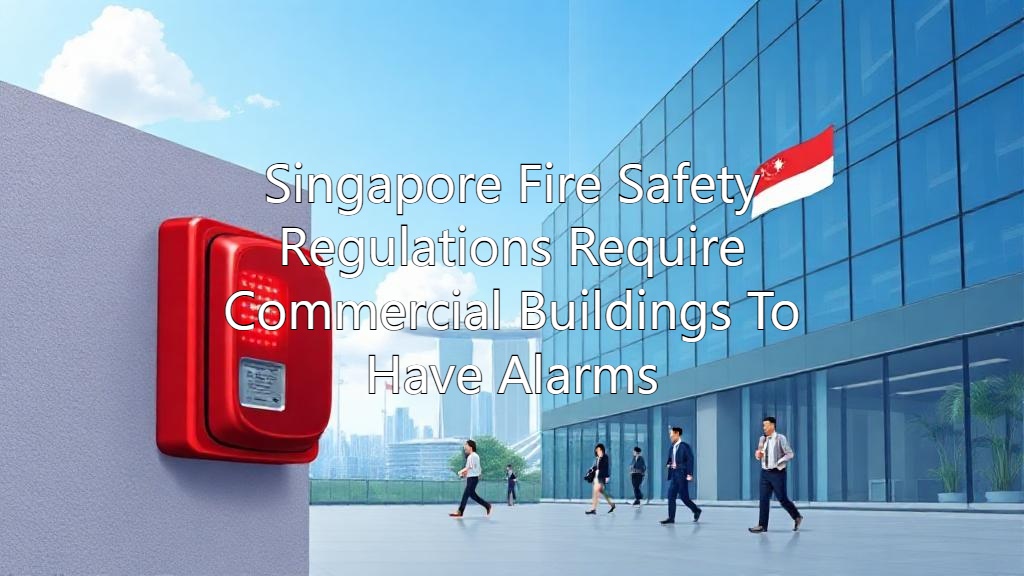
A robust firewall of regulations stands guard over Singapore’s commercial buildings, protecting them from the devastating impact of fire.
99.9% of fires in the city-state are extinguished before spreading beyond their point of origin.
A testament to the country’s stringent fire safety regulations, enforced by the Singapore Civil Defence Force (SCDF).
From the mandatory installation of fire alarm systems and emergency lighting to regular fire drills and audits, every layer of Singapore’s fire safety regime is designed to safeguard lives and property.
Singapore Commercial Buildings Must Comply With Fire Safety Regulations And Standards
Source: Pexels
Commercial buildings in Singapore are required to adhere to strict fire safety regulations to ensure the well-being of occupants and prevent devastating fires.
The Singapore Civil Defence Force enforces these regulations, which include the installation of fire alarm systems, sprinkler systems, and emergency lighting.
Building owners and managers must also conduct regular fire drills and training to prepare for emergencies.
- Fire safety audits are crucial in identifying potential hazards and ensuring compliance with regulations.
- Regular maintenance of fire safety equipment is essential to prevent system failures and false alarms.
- Penalties for non-compliance can include hefty fines and even prosecution, making it imperative for building owners to prioritise fire safety.
Understanding Fire Alarm System Requirements For Commercial Premises In Singapore
The Singapore Civil Defence Force has laid out specific guidelines and regulations that commercial premises must adhere to, including the installation, maintenance, and inspection of fire alarm systems.
These regulations are in place to prevent fires and minimise damage in the event of a fire.
Understanding the fire alarm system requirements is essential to ensure the safety of employees, customers, and assets.
Qualified Persons Must Install And Maintain Fire Protection Systems And Products
Regular maintenance of fire protection systems is crucial to ensure they function correctly in the event of a fire, and qualified persons must be hired to perform these tasks.
This includes inspecting and testing fire alarms, sprinkler systems, and fire extinguishers to identify potential issues before they become major problems.
Building owners and managers must take responsibility for ensuring that their fire protection systems are installed and maintained by qualified persons, as this is a critical aspect of fire safety.
Regular Inspections And Maintenance Of Fire Safety Equipment Are Mandatory Requirements
Regular inspections and maintenance of fire safety equipment are the backbone of a robust fire safety strategy, providing a safeguard against the unpredictable and devastating nature of fires.
The importance of these inspections cannot be overstated, as they help identify potential issues before they become major problems, allowing for prompt repairs and replacements.
Furthermore, regular maintenance ensures that fire safety equipment functions optimally, providing a strong defence against fires.
Obtaining a Fire Safety Certificate And a Temporary Fire Permit From SCDF Is Crucial
To ensure compliance with fire safety regulations in Singapore, it is essential to obtain a Fire Safety Certificate and a Temporary Fire Permit from the Singapore Civil Defence Force.
The Fire Safety Certificate is a mandatory requirement for all buildings, except for single-user residential premises, and is issued upon completion of a fire safety inspection.
Additionally, a Temporary Fire Permit is required for temporary occupations or uses of buildings, such as events or construction activities.
Non-Compliance With Fire Safety Regulations Results In Penalties And Fines Imposed
Non-compliance with fire safety regulations can have severe consequences for businesses and individuals.
- Violate safety protocols and face hefty fines and penalties
- Failing to conduct regular fire drills risks lives
- Ignore fire safety inspections and compromise building integrity
- Neglecting to install fire suppression systems increases liability
- Disregard emergency evacuation plans and put occupants at risk
Fire Safety Act And Civil Defence Shelter Act Govern Fire Safety Regulations In Singapore
In Singapore, the Fire Safety Act and Civil Defence Shelter Act are two key pieces of legislation that govern fire safety regulations.
The Fire Safety Act imposes severe penalties on building owners who fail to comply with fire safety regulations.
In the event of a fire, a well-maintained fire safety system can mean the difference between life and death.
Commercial Buildings Must Meet Fire Code Requirements Before Occupancy Approval
Most commercial buildings must adhere to strict fire safety standards to ensure the safety of occupants and visitors.
For example, high-rise buildings and large commercial complexes are typically subject to more stringent fire code requirements due to the increased risk of fire spreading quickly.
Fire Safety Managers And Emergency Response Plans Are Essential For Commercial Buildings
Source: Pexels
With continuous innovation and strict enforcement, Singapore remains a global benchmark in commercial fire safety.
A well-structured emergency response plan should include regular fire drills, employee training, and the establishment of a fire safety team, which can be overseen by a fire safety manager.
The fire safety manager plays a vital role in ensuring compliance with relevant regulations and standards, such as those related to fire alarm systems, sprinkler systems, and emergency lighting.
The importance of fire safety regulations remains a beacon of priority, particularly in commercial buildings where lives and livelihoods are at stake.
The stringent requirements for alarm systems serve as a testament to the government’s commitment to protecting its citizens and visitors alike.
With the ever-evolving landscape of fire safety technology, it will be intriguing to see how Singapore continues to adapt and innovate its regulations to ensure the well-being