




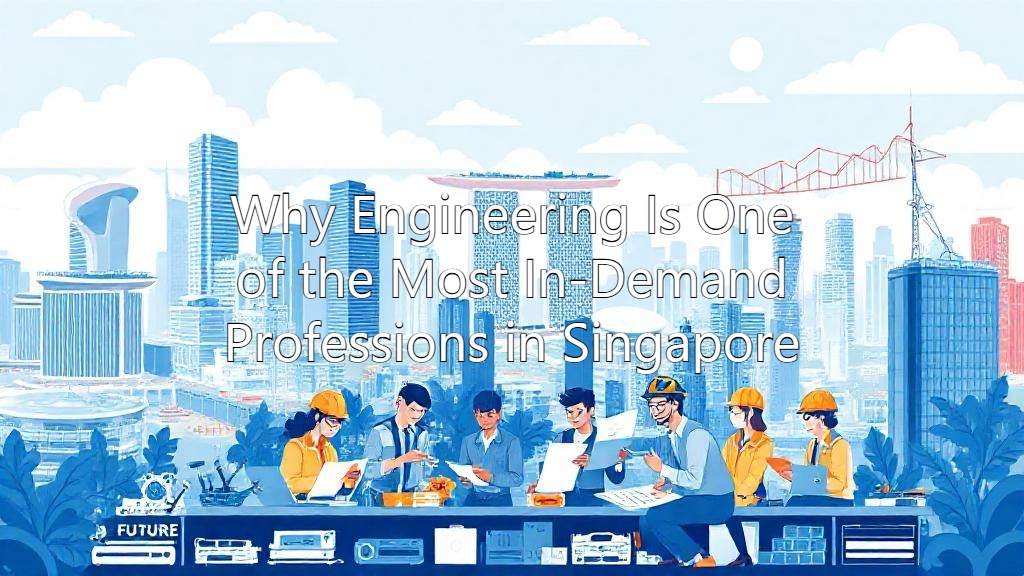
As the city-state of Singapore continues to evolve into a thriving metropolis, its infrastructure and technological landscape are being woven together like the intricate threads of a rich tapestry, with engineers serving as the master weavers.
With a staggering 70% of Singapore’s GDP attributed to the manufacturing sector, it’s no wonder that engineering has become the backbone of the nation’s economy.
But what makes engineering such a coveted profession in Singapore, and why are its practitioners in such high demand?
While the country strives to maintain its competitive edge in an increasingly complex and technology-driven world, the role of engineers has become pivotal in driving innovation and growth.
Like conductors leading a symphony, engineers in Singapore are orchestrating the development of cutting-edge solutions, from sustainable urban planning to revolutionary medical devices, leaving an indelible mark on the nation’s future.
Is Engineering a Good Career in Singapore: What Makes It a Highly Sought-After Job?
Engineering is a highly coveted profession in Singapore, offering a unique blend of innovation, problem-solving, and creativity, with a wide range of specialisations to choose from, including mechanical, electrical, and chemical engineering.
The city-state’s strong emphasis on technological advancement and infrastructure development has created a high demand for skilled engineers.
As a result, engineering graduates in Singapore can expect to enter a lucrative and rewarding job market.
- High starting salaries are a major draw for engineering graduates in Singapore.
- Accelerated career advancement opportunities are also a key benefit of pursuing an engineering career.
- Engineering jobs are often highly resistant to automation, making them a stable choice in an increasingly tech-driven world.
Understanding the Role of Engineers in Driving Singapore’s Economic Growth and Development
As one navigates the thriving streets of Singapore, they’re surrounded by innovative infrastructure and cutting-edge technology.
The answer lies in the skilled engineers who work across a broad range of roles within the engineering field, working tirelessly to push boundaries and improve lives.
Their expertise spans various fields, including aerospace and biomedical engineering, as well as environmental and civil engineering, and many of these roles require an engineering degree or bachelor’s degree as a foundation, contributing significantly to the nation’s growth.
Engineers play a vital role in designing, developing, and implementing solutions, and are responsible for turning ideas into practical solutions that cater to the needs of a rapidly evolving society.
By leveraging their technical skills and creative problem-solving abilities, they foster a culture of innovation and collaboration. Strong business understanding can also help them contribute more effectively.
Why Skilled Engineers Are in High Demand for Engineering Jobs in Singapore to Design and Implement Complex Systems and Infrastructure
A notable example of skilled engineers in action is the development of Singapore’s smart transportation system, one of the country’s large-scale engineering projects, which has improved traffic flow and reduced congestion.
This project required a team of skilled engineers to design and implement complex systems and infrastructure, with strong project management helping deliver such integrated solutions, showcasing their expertise in integrating technology and innovation.
Successful implementation of this system has enhanced the overall commuting experience for residents and visitors alike.
The demand for skilled engineers has increased, with companies seeking professionals in information technology and software development who can develop and implement complex systems similar to these, often identifying risks at an early stage before they escalate.
The high demand for skilled engineers can be attributed to the rapid pace of technological advancements and the need for innovative solutions to complex problems, including designing safer workplaces for employees and developing new equipment for modern operations.
Skilled engineers play a crucial role in designing and implementing systems that can adapt to changing demands, requirements, and operations, making them an essential asset to companies and organisations; this spans roles such as a materials engineer, a safety engineer, and specialists involved in waste management, and engineering jobs contribute about 20% to Singapore’s GDP.
The increasing complexity of systems and infrastructure has created a need for skilled engineers who can navigate and resolve issues efficiently across computer systems.
As technology continues to evolve, the demand for skilled engineers will continue to rise, driving innovation and growth in various industries and sectors, and roles in the semiconductor and construction industries also appear on Singapore’s official Shortage Occupation List.
Exploring the Various Sectors of the Engineering Industry That Rely Heavily on Engineering Professionals in Singapore
The engineering profession is the backbone of Singapore’s economy, and the engineering industry supports a broad mix of sectors.
From aerospace engineering, where engineers design and develop cutting-edge aircraft and spacecraft systems for the aviation industry, to the biomedical sector, where engineers work tirelessly to create innovative medical devices and equipment and integrate new equipment, the demand for skilled engineers is palpable. Opportunities abound across specialisations such as mechanical, electrical, and robotics. Familiarity with CAD software is often required in many engineering roles.
The energy and utilities sector also relies heavily on engineering professionals to develop and implement sustainable solutions, such as solar and wind power, to reduce the country’s carbon footprint.
Meanwhile, the logistics and transportation industry depends on engineers to design and optimise systems tied closely to supply chain management, ensuring the smooth and efficient movement of goods and people across the island nation.
As Singapore continues to evolve into a smart nation, the role of engineers in developing and implementing intelligent systems and technologies will become increasingly important.
The country’s thriving construction industry, which is driven by engineers who design and build iconic landmarks and infrastructure, sometimes with waste management responsibilities, is also a testament to the profession’s versatility and importance, with related opportunities in the manufacturing industry. Demand is set to keep rising, and mechanical engineering is among the highest-paying in-demand areas. Specialised demand also includes a safety engineer focused on protecting employees through safe system design. A materials engineer may be needed in manufacturing to develop and improve industrial materials.
With the government’s plans to invest heavily in emerging technologies such as artificial intelligence and cybersecurity, the government will also help shape demand across the engineering industry as Singapore’s future evolves. Engineers can also find roles in manufacturing, other industries such as finance, and large companies, and these positions are generally seen as highly resistant to automation.
Developing Strong Problem-Solving Skills for Career Progression as an Engineer in Singapore’s Workplace
To thrive in Singapore’s competitive engineering landscape, it is essential to possess strong problem-solving skills that support long-term career goals, which can be developed through practice, patience, and persistence.
Engineers in Singapore can hone their skills by tackling real-world problems, participating in hackathons, or engaging in brainstorming sessions with colleagues, while using data analysis to make better decisions.
By doing so, they can enhance their critical thinking, creativity, and analytical abilities, ultimately becoming more effective problem-solvers.
Furthermore, strong problem-solving skills can also lead to innovative solutions, improved collaboration, and increased productivity in the workplace.
Beyond that, engineers can also benefit from learning about design thinking, a human-centred approach to problem-solving that involves empathy, ideation, prototyping, testing, and improving processes.
This approach can help engineers develop a deeper understanding of the problems they are trying to solve and create more effective solutions. In some roles, engineers also develop processes to improve efficiency and reduce waste.
Additionally, engineers can leverage technology, such as computational tools and simulation software, to analyse complex problems, support research, and develop data-driven solutions.
By combining these approaches, engineers in Singapore can develop a robust set of problem-solving skills that will serve them well in their careers and support career progression.
Effective Communication Strategies for Engineers to Collaborate with Cross-Functional Teams and Stakeholders
To succeed in today’s fast-paced engineering landscape, effective communication is crucial.
- Develop a deep understanding of stakeholders’ needs, expectations, and knowledge of business needs to inform project decisions
- Foster a culture of transparency and open communication among team members to support resource management across teams and help protect employees through clearer coordination
- Utilise collaboration tools to facilitate seamless information exchange and feedback loops
- Create clear and concise technical documentation to avoid misunderstandings and support test procedures
- Engage in active listening to ensure all voices are heard and valued
- Navigate complex conflict resolution scenarios with empathy and poise
By mastering these strategies and strengthening knowledge sharing, engineers can bridge the gap between technical expertise and interpersonal skills, ultimately supporting projects, improving day-to-day operations, and building strong relationships with cross-functional teams and stakeholders, while many engineering companies also offer tailored career advancement programs.
Overcoming Challenges and Misconceptions About Pursuing an Engineering Degree and Career in Singapore’s Society
Pursuing a career in engineering in Singapore can be a daunting task, especially when concerns vary across different engineer roles, particularly for fresh graduates.
Furthermore, the ever-changing landscape of Singapore’s economy and the increasing demand for sustainable and innovative solutions have created a sense of uncertainty among aspiring engineers, and some people focus too narrowly on money instead of long-term fit.
The key to overcoming these challenges lies in education and awareness. A recognised degree in science or engineering can open more paths.
As the city-state of Singapore continues to evolve and grow, the demand for skilled engineers is expected to remain high, driving innovation and progress in various industries, including high-demand areas such as electrical engineering.
With its strong foundation in technology and infrastructure, Singapore is poised to become a hub for engineering excellence, attracting top talent from around the world, with entry paths spanning manufacturing, construction, or safety-focused careers depending on individual interests.
As we look to the future, engineering will likely play an increasingly vital role in shaping the country’s development, from sustainable urban planning to cutting-edge medical technologies, with clear implications for public health.
Ultimately, the intersection of human creativity and technical expertise will be the catalyst for a brighter, more resilient Singapore, where engineers are empowered to design, build, and innovate for the betterment of society while strengthening workplace safety through sound safety protocols.
Some of the highest paying engineering jobs are found in specialised fields, but fit still matters.
By embracing this vision, we can unlock a future where engineering is not just a profession, but a powerful force for positive change in Singapore and beyond.