




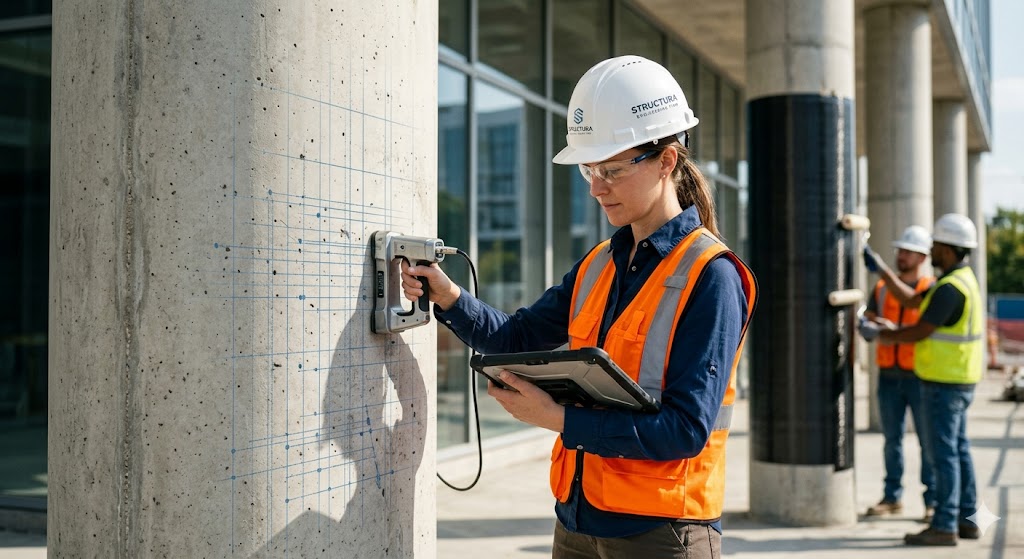
What to Do if Your Building Fails the PSI: Roadmap to Re-certification
Introduction to Periodic Structural Inspections
Building safety remains a paramount concern for property owners globally. Structures inevitably age and degrade over time. Continuous maintenance is necessary to ensure long-term safety. Consequently, regulatory bodies enforce strict building inspection regimes. The Periodic Structural Inspection (PSI) is a primary regulatory tool. It ensures buildings remain structurally sound for continued occupancy. Furthermore, it protects occupants from catastrophic building failures.
Failing a PSI causes significant operational disruptions for owners. Property owners often feel overwhelmed by the complex compliance process. Therefore, understanding the complete remediation roadmap is absolutely essential. This comprehensive report provides an exhaustive, step-by-step guide. It covers everything from defect identification to final re-certification.
The analysis relies on international building codes and standards. We will explore advanced structural repair techniques in extensive depth. Moreover, we will examine stringent quality control measures for contractors. Remedial works demand precision to ensure structural stability. Ultimately, achieving re-certification requires meticulous planning and execution.
The Global Regulatory Landscape for Structural Safety
Governments strictly mandate structural health checks to ensure public safety. These regulations prevent dangerous and fatal building collapses. Various jurisdictions have developed unique frameworks for building safety.
Singapore BCA Guidelines and Frameworks
Singapore provides a highly robust framework for structural safety. The Building and Construction Authority (BCA) oversees this regime. The Building Control Act regulates the entire inspection process.1 Inspection intervals depend heavily on building age and usage. Commercial buildings older than 20 years require a PSI. These mandatory inspections must occur every five years.2
Conversely, residential buildings face slightly different regulatory rules. Buildings where 90% of floor area is residential differ. These specific structures require inspections every 10 years.1 High-risk structures face much more frequent and rigorous evaluations. Buildings located near MRT tunnels are strictly monitored.2 Coastal properties also require regular and thorough structural assessments.2 Furthermore, post-renovation assessments verify ongoing structural stability after alterations.2
Ignoring a PSI notice carries severe and immediate consequences. Regulatory bodies simply do not tolerate structural negligence. In Singapore, non-compliance attracts incredibly heavy financial penalties. Fines can reach up to SGD 200,000 for non-compliance.2 Additionally, the SCDF can issue strict enforcement orders. These orders may completely restrict all building usage.2 Insurance implications are equally severe for property owners. Structural failures in non-compliant buildings void insurance claims.2 Consequently, property owners face massive and crippling financial liabilities. Therefore, compliance is both a legal and financial imperative.
Florida Senate Bill 4-D and Milestone Inspections
The tragic Surfside condominium collapse catalyzed massive legislative changes. Florida enacted Senate Bill 4-D in May 2022.3 This stringent law introduced mandatory “Milestone Inspections” across Florida.4 The legislation applies to condominium buildings three stories or taller.3
Initially, buildings required these inspections at 30 years of age.5 Coastal buildings within three miles of saltwater faced stricter rules. They required initial milestone inspections at 25 years.5 However, House Bill 1021 modified this provision in 2024.5 The 25-year mandate is no longer automatically required statewide.5 Local enforcement agencies now determine specific environmental risk conditions. They decide if proximity to saltwater justifies early inspections.5
The Florida Milestone Inspection features two distinct and rigorous phases. Phase One is a visual inspection of primary structural members.6 It identifies any substantial structural deterioration in the building.6 If unsafe conditions exist, Phase Two is immediately triggered.6 Phase Two involves destructive testing and extensive material probing.6 Ground penetrating radar is often utilized during Phase Two.6
Florida also mandates a Structural Integrity Reserve Study (SIRS).4 Associations must complete this comprehensive study every 10 years.4 The SIRS assesses structural elements and determines necessary reserve funds.4 Funds must be held in a separate, non-commingled account.4 Crucially, the law eliminated previous funding waivers for associations.3 This prevents associations from deferring critical maintenance indefinitely.3 Building owners must commence repairs within 365 days of reporting.3 Failure to initiate repairs leads to strict local enforcement actions.3
Miami-Dade Building Recertification Process
Miami-Dade County operates a highly structured building recertification program. Previously a 40-year requirement, it recently updated to 30 years.7 Buildings built in 1993 or later currently trigger this requirement.7 Subsequent building recertifications must occur every 10 years thereafter.7
Property owners receive official notification letters from the county.8 They must hire a Florida-licensed architect or structural engineer.8 The professional submits a Minimum Inspection Report certifying safety.7 Threshold buildings require a licensed structural engineer for certification.9 Non-threshold buildings allow either an architect or an engineer.9
If defects are found, owners must secure repair permits.7 While remedial works are ongoing, temporary certifications are required. Owners must submit a “Safe to Occupy” letter.7 This specific letter must be renewed every 180 days.7 Property owners can occasionally request a one-time, 60-day extension.7 This extension request carries a $500 municipal fee.8 It also requires a signed professional engineering endorsement.7
Certain buildings are entirely exempt from this rigorous process. Single-family homes and duplexes are excluded from recertification.9 Minor buildings under 2,000 square feet are also exempt.9 Buildings with an occupant load under ten receive exemptions.9
Hong Kong Mandatory Building Inspection Scheme
Hong Kong faces unique challenges due to hyper-dense urbanization. The Buildings Department (BD) enforces the Mandatory Building Inspection Scheme.10 This scheme targets buildings aged 30 years or older.10 Domestic buildings not exceeding three storeys are completely exempt.10
Owners served with statutory notices must take immediate action. They must appoint a Registered Inspector (RI) promptly.10 The RI conducts prescribed inspections of common building parts.10 External walls and projections are also thoroughly inspected.10 If remedial works are needed, owners appoint a registered contractor.10 The RI strictly supervises all prescribed repair works.10
Hong Kong also enforces a Mandatory Window Inspection Scheme (MWIS).11 This separate scheme applies to buildings aged 10 years.11 Owners must engage a Qualified Person (QP) for window inspections.11 Subsidies assist eligible owners with these mandatory inspection costs.12
Understanding Structural Failure and Professional Liability
A PSI failure indicates severely compromised structural building elements. This situation creates massive liability for owners and engineers. Operations must often be halted to ensure public safety.13
The Burden of Professional Engineering Ethics
Engineers carry a heavy ethical and legal burden. A structural failure notice requires immediate professional action. Engineers have a primary legal duty to the public.14 If an imminent risk exists, mitigation is entirely mandatory.14
Engineers must communicate these severe risks to the client.14 If clients fail to act, engineers must report them.14 Building department authorities must be notified of unsafe structures.14 New York City Department of Buildings enforces this strictly. If immediate risks exist, professionals must notify the DOB immediately.15 They must call 311 and email the SCB info address.15 Owners must immediately safeguard the area to protect lives.15
Insurance and Operational Risk Assessments
Failing a Periodic Structural Inspection triggers complex insurance mechanisms. The insurance carrier requires a preliminary assessment almost immediately.13 Corporate boards demand to know if other facilities face exposure.13
A single structural concern rapidly becomes a multi-facility risk assessment.13 Aging infrastructure meeting deferred maintenance budgets creates catastrophic scenarios.13 Risk managers must implement systematic structural inspection programs urgently.13 These programs prevent catastrophic failures while supporting defensible capital planning.13 Willful failure to inspect is a fiduciary duty breach.6 Association directors face severe legal consequences for such negligence.6
Advanced Diagnostic and NDT Testing Methodologies
Visual inspections cannot identify hidden or microscopic structural flaws. Therefore, engineers deploy Non-Destructive Testing (NDT) methodologies extensively. These tests quantify the exact extent of material degradation.
Concrete Strength and Rebound Hammers
Engineers frequently use the Schmidt Hammer test during inspections. This crucial tool assesses in-place concrete compressive strength.2 The testing process is strictly governed by ASTM C805 standards.17 A spring-driven steel hammer impacts the concrete surface.17 The device then measures the subsequent hammer rebound distance.17
This specific rebound number correlates with estimated concrete strength.17 However, surface conditions significantly affect the final results.17 Moisture content and carbonation depth profoundly alter the readings.17 Form material and finishing methods also skew the data.17 Therefore, users must exercise highly experienced professional judgment.18
Calibration on a rigid steel test anvil is mandatory.18 This verification must occur before making any correlation measurements.19 Different instruments of the same design yield differing numbers.19 Therefore, tests should utilize the exact same instrument consistently.19 Thick carbonated layers must be ground away before testing.18
Windsor Probe and Penetration Resistance
Another reliable method is the Windsor probe system. This specific penetration resistance test follows ASTM C803 standards.16 It relies on a known amount of kinetic energy.16 The device impacts the surface of the hardened concrete.16 Engineers measure the penetration depth of a steel probe.16
This penetration depth evaluates the relative strength of concrete.16 Like the rebound hammer, it measures dynamic concrete response.16 Both methods estimate in-place strength during structural evaluations.16
Ultrasonic Pulse Velocity and Rebar Scanners
Internal structural flaws severely compromise overall building integrity. Ultrasonic Pulse Velocity (UPV) testing identifies these hidden defects.2 This specific method detects internal cracks and hidden voids.2 UPV testing follows the strict ASTM C597 standard protocols.16
Furthermore, Infrared Thermography is deployed for large building facades. It efficiently finds hidden water ingress and concrete delamination.2 Steel reinforcement corrosion is a critical structural failure point. Engineers use advanced Rebar Scanners to map internal reinforcement.2 These advanced scanners also detect active corrosion within steel.2
Covermeter surveys are conducted to measure concrete cover depth. These surveys strictly comply with BS4408 Part 1 standards.20 Electrochemical potential testing provides deeper insights into steel health. Half-cell potential measurements evaluate the likelihood of active corrosion. This testing strictly follows ASTM C876 guidelines and procedures.20
Carbonation Depth Testing Procedures
Carbonation significantly reduces long-term concrete durability and strength. It destroys the protective alkaline environment around steel rebar. Engineers determine carbonation depth using the phenolphthalein indicator method.21 This essential test follows the BS EN 14630 standard.22
The chemical testing procedure is highly specific and controlled. Engineers drill small holes into the hardened concrete structure.21 They spray a phenolphthalein indicator solution onto the fresh surface.21 The solution contains 1g of phenolphthalein dissolved in ethyl alcohol.24 It is diluted to 100 ml with distilled water.24
Healthy concrete is highly alkaline and protective of steel. Its pH usually ranges safely between 12.5 and 13.5.20 The indicator turns bright pink in this healthy zone. Conversely, carbonated concrete has a dangerously lowered pH level. The pH drops to 11 or below during carbonation.20 In these affected areas, the indicator remains entirely colourless.21
This specific colour change accurately defines the depassivation front.22 Corrosion usually occurs just ahead of this defined front.22 Alternative indicators are sometimes used for carbonation depth testing. Thymolphthalein detects pH values closer to actual corrosion risk.25 Curcumin and black carrot are considered safer, natural alternatives.25 However, phenolphthalein remains the global industry standard for PSI.
| Indicator Chemical | Solvent Composition | Safety / Observation Notes | Reference |
| Phenolphthalein | 70/30 (ethanol/water) | Requires safety precautions; industry standard. | 25 |
| Thymolphthalein | 90/10 (ethanol/water) | Fades quickly; detects higher corrosion risk pH. | 25 |
| Curcumin | 100/0 (ethanol/water) | Colour change less sharp; influenced by light. | 25 |
| Black Carrot | 70/30 (ethanol/water) | Natural dye; considered a safe testing alternative. | 25 |
The Pathology of Common Concrete Defects
A PSI failure firmly indicates heavily compromised structural elements. Several common defects necessitate immediate and extensive remedial works. Understanding the origin of these defects is absolutely crucial.
Concrete Spalling and Concrete Cancer
Concrete spalling is extremely prevalent in older aging buildings.26 It involves the surface concrete cracking, peeling, or flaking.27 Persistent water leakage is a primary cause of spalling.26 Using salty water in original concrete mixes causes weakness.26
Water ingress accelerates the corrosion of embedded steel reinforcement.28 Rust occupies significantly more volume than the original steel. This expansion creates massive internal tensile stress within concrete. Consequently, the concrete cover is pushed outward and breaks.27 This devastating deterioration process is often termed “concrete cancer”.29
If left untreated, concrete spalling accelerates rapidly over time. More internal steel is exposed to corrosive environmental elements.28 This critically compromises the building’s overall structural integrity.28 The structure then poses severe safety risks to occupants.28 Immediate remedial works are essential to mitigate concrete cancer.28
Alkali-Silica Reaction (ASR)
Alkali-Silica Reaction is another severe cause of concrete degradation. It causes concrete to expand and crack over time.30 Highly reactive silica in aggregates reacts with alkali hydroxides. This creates a swelling gel that destroys the concrete. This expansion causes severe structural distress in concrete columns.30 Remedial works must directly address these complex chemical reactions.
Structural Cracks and Foundation Settlement
Structural cracks indicate serious underlying issues requiring structural repair. Excessive movement of the building structure causes severe cracking.26 Unwanted ground settlement is another major factor for cracks.26 Additionally, serious overloading exceeds the original design capacity limits.26
Engineers must determine if cracks are active or dormant. Active cracks require entirely different and flexible remediation strategies. Water intrusion through open cracks exacerbates the deterioration cycle.31 It leads to white mineral deposits and musty basement smells.31
The Remedial Works Roadmap: Repair Methodologies
Upon identifying defects, complex remedial works must commence immediately. These specific repairs restore the original load-bearing structural capacity. Proper execution is absolutely vital for subsequent building re-certification.
Concrete Spalling Repair Methodology
Spalling repair follows a strict, multi-step method statement protocol. Satisfactory repair results should never be left to chance.32
First, contractors execute precision cuts around the spalled area. They must hack off all the damaged surface concrete. They must reach a completely sound, uncontaminated structural substrate.26 The cut must have a vertical edge of ¾ inch.33 This ensures a seamless and highly durable structural repair.33
Second, the severely corroded steel reinforcement requires extensive preparation. Contractors scrape and aggressively clean the exposed steel bars.34 Wire brushes or sandblasting effectively remove all surface rust.34 Subsequently, two heavy coats of anti-rust paint are applied.34 If rebar diameter is substantially reduced, new steel is added.26 Complete demolition and re-casting might be required occasionally.26
Third, the patch material is applied to the void. A high-quality bonding agent is applied to the surface.34 This ensures proper chemical adhesion of the repair material.34 Contractors then apply a polymer-modified cement mortar patch.34 The material is troweled smoothly to match existing profiles.33
Fourth, the repaired surface is perfected and properly cured. Once fully cured, the patched area is ground down.33 Finally, the area is painted to match surrounding surfaces.34 Proper curing practices prevent cracks in the new concrete.35
Structural Crack Injection Techniques
Crack repair requires highly specialized, high-pressure injection methods. The choice of material depends entirely on the crack’s nature. Proper crack repair is often the most difficult task.35
Epoxy injection effectively restores lost structural strength to concrete. It acts as a highly rigid, load-bearing adhesive.36 It essentially ‘welds’ the cracked concrete back together permanently.36 This method is ideal for stable, non-structural concrete cracks.37 It is highly effective in completely dry concrete areas.38 High-pressure injection fills the crack completely through the wall.31 It travels from the interior surface to exterior soil.31
Conversely, polyurethane injection is utilized for active, moving cracks. Polyurethane foam is a highly flexible, expanding chemical material.36 It expands upon contact with moisture to fill voids.36 Therefore, it is the primary choice for stopping water leaks.39 It accommodates minor structural movements without cracking or failing.38
Carbon Fiber Reinforced Polymer (CFRP) Wrapping
Severely compromised structural columns require advanced strengthening and confinement. CFRP wrapping is a highly effective, non-invasive repair solution.40 It significantly increases load capacity and extends structural lifespan.40 Furthermore, it creates a robust external barrier against corrosion.40
The CFRP matrix consists of strong carbon fibers and resin. The resin must be a specialized thermoset epoxy formulation.41 This ensures perfect chemical compatibility with the carbon fibers.41 Design specifications must adhere strictly to ACI PRC guidelines.41
The physical shape of the column impacts CFRP effectiveness. CFRP applied on circular columns provides much stronger confinement.42 The carbon fibers resist outward hoop stress extremely effectively.42 When hoop stress reaches tensile strength, CFRP will fail.42
Conversely, square columns present unique and difficult engineering challenges. Sharp corners cause dangerous stress concentrations within the CFRP.42 These intense concentrations can cause tensile rupture of the jacket.42 Therefore, column corners must be rounded before wrapping begins.
Delamination failure is another known risk for CFRP wraps.42 Providing a sufficient length of CFRP overlap mitigates this.42 CFRP minimally impacts the stiffness or mass of structures.42 The Texas Department of Transportation uses CFRP for ASR mitigation. They applied 100% CFRP coverage at Lake OH Ivie.30 Previous checkerboard installation patterns proved completely ineffective against ASR.30
Cost Estimation and Financial Strategy
Strategic financial planning is critical for commercial building owners. Extensive remedial works require significant capital reserves and liquidity. Repair costs vary based on defect severity and methodology.
Spalling and General Concrete Repair Costs
Concrete spalling repair is an extremely labor-intensive construction process. In commercial settings, costs range from $30 to $80 per square foot.43 This price depends entirely on the depth of deterioration.43 Tilt-wall concrete panel repairs cost between $20 and $60 per square foot.43
Minor cosmetic patching of concrete steps costs $100 to $300.44 However, full commercial building restoration frequently exceeds $1,000,000 overall.43 Below-grade membrane waterproofing systems cost $8 to $20 per square foot.43 Protective coatings add an additional $3 to $12 per square foot.43
Crack Repair Injection Cost Estimations
Crack injection pricing depends heavily on the specific material used. Epoxy injection for structural repair is highly specialized work. It typically costs between $250 and $1,500 per crack.38 A 10-foot vertical crack might cost $400 to $1,200.38 This depends on how many injection ports are necessary.38
Polyurethane injection is often priced differently, by linear foot. It costs between $400 and $800 per linear foot.38 Alternatively, projects can range from $1,000 to $3,500 total.45 Volume discounts frequently apply for multiple crack repair jobs.36
CFRP Strengthening and Wrap Costs
Carbon fiber application requires highly skilled and certified technicians. The CFRP material itself is also considered premium-priced. CFRP strengthening costs between $25 and $85 per square foot.43 Overall carbon fiber reinforcement projects range from $350 to $4,000.38 Despite the high initial cost, it prevents column replacement.
| Remedial Repair Method | Purpose / Structural Application | Estimated Cost Range | Reference |
| Spalling Repair | Restores degraded surface concrete | $30 – $80 per sq. ft. | 43 |
| Epoxy Injection | Structural crack restoration (Rigid) | $250 – $1,500 per crack | 38 |
| Polyurethane | Water-stopping and active cracks | $400 – $800 per linear ft. | 36 |
| CFRP Wrap | Column strengthening and confinement | $25 – $85 per sq. ft. | 43 |
Quality Control and Assurance in Remedial Works
Remedial works demand extremely rigorous Quality Control (QC) oversight. Poorly executed repairs will absolutely fail subsequent re-certification inspections. A structured Quality Assurance (QA) program is legally mandatory.
QA focuses heavily on proactive process creation and prevention.47 Conversely, QC verifies actual product compliance in the field.47 The US Army Corps of Engineers requires strict CQC procedures.48 Federal Acquisition Regulation (FAR) Clause 52.246-12 dictates inspection standards.49
Essential Quality Control Execution Steps
Industry experts recommend a highly structured approach to QC. Following these steps significantly reduces construction defect liability risks.50
First, contractors must define strict quality objectives and criteria. These must tie directly to specific local building codes.51 Every project requires a named Quality Control Manager onsite.51
Second, firms must issue a written, site-specific QC document.50 This crucial manual outlines all responsibilities and aligns project goals.50 It must be shared with all involved project stakeholders immediately.50 Pre-construction meetings ensure everyone understands these quality control standards.50
Third, teams must establish strict inspection hold points.51 Work simply cannot proceed past a hold point without inspection.51 Constructability reviews help anticipate and alleviate specific field problems.50 Pre-work assessments verify that actual job site conditions match plans.50
Fourth, performance mock-ups visualize the exact repair method.50 Quality checks are strictly required when accepting delivered materials.50 Submittal logs and compliance records must track work-in-place accurately.51 Out-of-sequence or defective work must be escalated immediately.51
The Re-certification Process: Closing the Loop
Completing remedial works is not the final step required. The building must officially achieve structural re-certification from authorities. This requires stringent administrative and professional engineering oversight continuously.
Final Inspections and Documentation Submissions
The appointed Structural Engineer must verify all completed repairs. They conduct a final, exhaustive site walkthrough and assessment. They thoroughly review all QC documentation, including material test results.51 Furthermore, they ensure repairs match the originally approved design plans.26
In Singapore, the PE submits a Remedial Works Certification.52 This formal document is officially known as Form D7.52 Form D7 serves as the post-repair structural safety confirmation.52 It officially closes out the BCA PSI failure notice.52
The BCA demands total professional integrity during this critical phase. The PE must be physically present during all critical inspections.53 Delegating these inspections entirely to third parties is strictly prohibited.53 Fraudulent documentation leads to severe professional disciplinary action.53 The PE signs and stamps a formal declaration of compliance.54
Global Re-certification Portals and Forms
Different jurisdictions use highly specific portals for re-certification submissions. In Miami-Dade County, owners utilize the EPS Portal online.55 Electronic reports must be digitally signed and sealed properly.56 Alternatively, owners use the iBuild system for permit application submissions.8 In-person submissions occur at the Herbert S. Saffir Permitting Center.56
Hong Kong utilizes a distinct series of standardized MBI forms. Form MBI1 notifies the BD of the RI appointment.57 Form MBI2 nominates another RI for temporary supervision duties.57 Form MBI3 indicates that prescribed repairs are officially required.57 Form MBI3a certifies that no prescribed repairs are necessary.57 Form MBI4 serves as the final Certificate of Building Repair.57 Form MBI5 declares no business connection exists between parties.57
| Jurisdiction | Key Form / Portal Used | Purpose of Document | Reference |
| Singapore BCA | Form D6 | Significant Defect Certification | 52 |
| Singapore BCA | Form D7 | Remedial Works Certification | 52 |
| Miami-Dade | EPS Portal / iBuild | Recertification Record Submission | 8 |
| Hong Kong BD | Form MBI3 | Inspection Certificate (Repairs Needed) | 57 |
| Hong Kong BD | Form MBI4 | Certificate of Building Repair | 57 |
Issuance of Re-certification and Future Planning
Once building authorities accept the final reports, re-certification is granted. In Florida jurisdictions, an official Letter of Recertification is issued.58 This document legally proves the building is safe to occupy.58
However, re-certification is not a permanent shield against degradation. It merely resets the regulatory compliance clock for owners. Owners must immediately begin planning for the next inspection cycle. This involves updating maintenance logs and budgeting for future assessments.
Proactive maintenance actively prevents future PSI failure notices. Property owners should never wait for regulatory notices to act. Regular internal audits of building conditions are absolutely vital.59 Facility managers must continually prioritize building waterproofing integrity. Eliminating persistent water leakage prevents the onset of concrete cancer.26 Minor cracks must be sealed promptly before moisture penetrates.31
Conclusion
Failing a Periodic Structural Inspection is a highly serious event. However, it is entirely manageable with a structured approach. It demands immediate action and professional structural engineering expertise. Significant financial commitment is also required to execute remedial works.
The roadmap from structural failure to re-certification is highly complex. Property owners must navigate incredibly complex local regulatory landscapes. They must comply with Singapore’s BCA or Florida’s SB 4-D. They must understand the underlying pathology of concrete structural defects. Issues like carbonation and rebar corrosion require deep technical understanding. Moreover, owners must select highly appropriate and durable remediation strategies. They must balance repair cost against long-term structural necessity.
Techniques like high-pressure epoxy injection provide durable, proven solutions. CFRP wrapping offers advanced confinement for failing structural columns. However, the ultimate success of these advanced repair methods varies. Success relies entirely on stringent contractor quality control execution. Skipping hold points or ignoring material specifications leads to failure.
Ultimately, the PSI framework exists solely to protect human life. By embracing this exhaustive roadmap, property owners ensure compliance. They ensure their buildings remain structurally sound for decades ahead. Regular proactive maintenance remains the best defense against structural obsolescence. Adequate financial reserves guarantee that emergency repairs are funded promptly. This comprehensive approach transforms a PSI failure into a structural renewal.
Works cited
- BCA Periodic Structural Inspection (PSI), accessed May 24, 2026, https://structures.com.sg/bca-periodic-structural-inspection-psi/
- BCA Periodic Structural Inspection and Visual Inspection – AEC Technical Advisory Singapore Engineering Consultancy, accessed May 24, 2026, https://www.aectechnicalsg.com/bca-periodic-structural-inspection/
- Florida Senate Bill 4-D: What You Need to Know – Rimkus Consulting Group, accessed May 24, 2026, https://rimkus.com/article/what-sb-4-d-means-for-your-condo-a-closer-look-at-floridas-safety-legislation/
- Understanding the Senate Bill 4D (SB4D) Building Safety Law – Intertek, accessed May 24, 2026, https://www.intertek.com/building/sb4d/
- The Complete Guide to Florida Milestone Inspections (2025-2026), accessed May 24, 2026, https://www.m2e.com/blog/florida-milestone-inspections-guide/
- Florida SB 4-D Building Safety Law | Thornton Tomasetti, accessed May 24, 2026, https://www.thorntontomasetti.com/florida-sb4d-building-safety-law
- Building Recertification – City of Miami Beach, accessed May 24, 2026, https://www.miamibeachfl.gov/building-recertification/
- Get a Building Recertification – City of Miami, accessed May 24, 2026, https://www.miami.gov/Permits-Construction/Unsafe-Structures/Get-a-Building-Recertification
- Building Recertification – City of Miami Beach, accessed May 24, 2026, https://www.miamibeachfl.gov/city-hall/building/building-recert/
- Mandatory Building Inspection Scheme – Buildings Department, accessed May 24, 2026, https://www.bd.gov.hk/en/safety-inspection/mbis/index.html
- Mandatory Building and Window Inspection Scheme (MBIS/MWIS) – Housing Bureau, accessed May 24, 2026, https://www.hb.gov.hk/icu/eng/MBISandMWIS/index.html
- Mandatory Building Inspection Subsidy Scheme (MBISS), accessed May 24, 2026, https://www.brplatform.org.hk/en/subsidy-and-assistance/integrated-building-rehabilitation-assistance-scheme/schemes-for-buildings/mandatory-building-inspection-subsidy-scheme
- Structural Damage Inspection: Signs, Process and Costs – Rimkus, accessed May 24, 2026, https://rimkus.com/article/structural-damage-inspection/
- PE Stamped Structural Inspection liability for no action taken to rectify issue – Reddit, accessed May 24, 2026, https://www.reddit.com/r/StructuralEngineering/comments/1h666y7/pe_stamped_structural_inspection_liability_for_no/
- structurally-compromised-buildings – NYC.gov, accessed May 24, 2026, https://www.nyc.gov/site/buildings/safety/structurally-compromised-buildings.page
- Estimating In-Place Concrete Strength: Rebound Hammer and Windsor Probe, accessed May 24, 2026, https://www.atlantictesting.com/estimating-in-place-concrete-strength-rebound-hammer-and-windsor-probe/
- Determining the Rebound Number of Hardened Concrete – SCDOT, accessed May 24, 2026, https://www.scdot.org/business/pdf/materials-research/testProcedure/concrete/SCT49.pdf
- Standard Test Method for – Rebound Number of Hardened Concrete1, accessed May 24, 2026, https://dl.azmanco.com/standards/ASTM-C/ASTM-C-Series-Full/C/C805.pdf
- C805/C805M Standard Test Method for Rebound Number of Hardened Concrete – ASTM, accessed May 24, 2026, https://www.astm.org/c0805_c0805m-18.html
- Concrete Repair Method, accessed May 24, 2026, https://www.devb.gov.hk/filemanager/en/content_593/5_Part%203_Dennis%20Choi_Concrete_repair_method.pdf
- CTS | Concrete Deterioration and Testing Methods. – Construction Testing Solutions, accessed May 24, 2026, https://constructiontesting.co.uk/news-and-insights/spotlight-on-concrete-deterioration/
- Carbonation depth | Concrete Society, accessed May 24, 2026, https://www.concrete.org.uk/fingertips/carbonation-depth/
- BS EN 14630:2006 – Products and systems for the protection and repair of concrete structures. Test methods. Determination of carbonation depth in hardened concrete by the phenolphthalein method (British Standard) – ANSI Webstore, accessed May 24, 2026, https://webstore.ansi.org/standards/bsi/bsen146302006
- SIST EN 14630:2007 – iTeh STANDARD PREVIEW (standards.iteh.ai), accessed May 24, 2026, https://cdn.standards.iteh.ai/samples/26682/1976e6bb12274ef6a2e8c2b77ec539af/SIST-EN-14630-2007.pdf
- Recommendation of RILEM TC 281-CCC: RILEM CPC-18R1—guideline for measuring the carbonation depth of hardened concrete using a pH indicator solution – PMC, accessed May 24, 2026, https://pmc.ncbi.nlm.nih.gov/articles/PMC12960386/
- Defective Concrete – Building Rehab Platform, accessed May 24, 2026, https://brplatform.org.hk/en/page/detail/52
- What is Remedial Work in Construction? – SMA Estimating, accessed May 24, 2026, https://www.smaestimating.com/what-is-remedial-work-in-construction/
- Remedial Construction Works: What Owners Need to Know – MJ Engineering Projects, accessed May 24, 2026, https://mjengineeringprojects.com.au/blogs/what-does-remedial-construction-works-mean/
- What is Remedial Work in Construction – Prime Estimation, accessed May 24, 2026, https://primeestimation.com/what-is-remedial-work-in-construction/
- cfrp concrete protection and strengthening, accessed May 24, 2026, https://static.tti.tamu.edu/conferences/tsc14/presentations/struct-hydraulics/bettis.pdf
- Foundation Crack Injection Services CT & MA | Attack A Crack, accessed May 24, 2026, https://www.attackacrack.com/services/foundation-crack-injection/
- CHAPTER 6 STRUCTURE CONCRETE REPAIR AND REHABILITATION – Caltrans, accessed May 24, 2026, https://dot.ca.gov/-/media/dot-media/programs/engineering/documents/structureconstruction/ctm/sc-ctm-chpt6-a11y.pdf
- Repairing Spalled Concrete: A Practical Guide for Lasting Results – Runyon Surface Prep, accessed May 24, 2026, https://www.runyonsurfaceprep.com/repair-your-spalls-to-achieve-a-durable-concrete-fix/
- Spalling Concrete Repair Method Statement | PDF | Home & Garden – Scribd, accessed May 24, 2026, https://www.scribd.com/document/547027664/Method-of-statement-for-repairing-spalling-concrete
- Guide to Concrete Repair – Bureau of Reclamation, accessed May 24, 2026, https://www.usbr.gov/tsc/techreferences/mands/mands-pdfs/Guide2ConcreteRepair2015_Final.pdf
- Crack Injection Cost for Foundation Repair – Dryshield Basement Waterproofing, accessed May 24, 2026, https://www.dryshield.ca/cost-calculator/crack-injection-cost/
- How Much to Fix That Foundation Crack? – Total Foundation & Roofing, accessed May 24, 2026, https://totalfoundationandroofingrepair.com/blog/foundation-crack-repair-cost/
- How Much Does It Cost to Repair Foundation Cracks in the US [Quick Price Guide], accessed May 24, 2026, https://nedesestimating.com/cost-to-repair-foundation-cracks-in-the-us/
- 2026 Texas Concrete Repair Cost Guide | Real Pricing for, accessed May 24, 2026, https://texasstructuralconcrete.com/resources/2026-texas-concrete-repair-cost-guide
- Concrete Column Reinforcement with Carbon Fiber (CFRP), accessed May 24, 2026, https://www.structuralrs.com/articles/wrap-and-reinforce-concrete-column-strengthening-with-carbon-fiber
- FIBER REINFORCED POLYMER GUIDELINES (FRPG), accessed May 24, 2026, https://fdotwww.blob.core.windows.net/sitefinity/docs/default-source/structures/structuresmanual/currentrelease/2022/vol4frpg.pdf?
- Strengthening RC Columns with CFRP – Rhino Carbon Fiber, accessed May 24, 2026, https://rhinocarbonfiber.com/strengthening-rc-columns-with-cfrp
- Best Commercial Concrete Restoration Companies in Texas (2026) | Expert Comparison, accessed May 24, 2026, https://texasstructuralconcrete.com/resources/best-commercial-concrete-restoration-companies-texas
- How Much Does Concrete Step Repair Cost? (2026) – HomeGuide, accessed May 24, 2026, https://homeguide.com/costs/concrete-step-repair-cost
- Typical Foundation Repair Cost Estimates: Understanding Pricing and Options | CrackX, accessed May 24, 2026, https://crackx.com/typical-foundation-repair-cost-estimates-understanding-pricing-and-options/
- Commercial Concrete Repair in Houston TX | Complete Guide for, accessed May 24, 2026, https://texasstructuralconcrete.com/resources/commercial-concrete-repair-houston
- Construction Quality Control Explained: Plans, Phases, Roles – Document Crunch, accessed May 24, 2026, https://www.documentcrunch.com/blog/quality-control-in-construction
- CONSTRUCTION QUALITY MANAGEMENT FOR CONTRACTORS Student Study Guide – USACE-Albuquerque District – U.S. Army, accessed May 24, 2026, https://www.spa.usace.army.mil/portals/16/docs/business/cqm/cqm%20student%20study%20guide.pdf
- Contractor Quality Control Plans Contractor Guidelines and Example Quality Control Plan – Federal Highway Administration, accessed May 24, 2026, https://highways.dot.gov/media/44311
- 10 quality control steps to reduce construction defect risk, accessed May 24, 2026, https://business.libertymutual.com/insights/10-quality-control-steps-to-reduce-construction-defect-risk/
- Quality control in construction: processes & best practices – OpenSpace, accessed May 24, 2026, https://www.openspace.ai/blog/quality-control-in-construction-projects/
- What is BCA Periodic Structural Inspection? A Beginner’s Guide, accessed May 24, 2026, https://structures.com.sg/bca-periodic-structural-inspection-a-beginners-guide/
- Our ref : APPBCA-2026-02 02 Mar 2026 To: All Professional Engineers (Civil & Structural) and Industry Stakeholders REMINDER, accessed May 24, 2026, https://info.corenet.gov.sg/docs/default-source/bca-circulars/circular-on-reminder-on-proper-conduct-of-psi-and-expectations-of-structural-engineers_2march2026.pdf?sfvrsn=ad4bdb5e_1
- GUIDELINES FOR STRUCTURAL ENGINEERS, accessed May 24, 2026, https://isomer-user-content.by.gov.sg/338/7fefc1c0-6299-41fa-bf17-17c3a9896f1a/psi-guidelines-for-structural-engineers-(sep-2024).pdf
- Home – EPS – Miami-Dade County, accessed May 24, 2026, https://www.miamidade.gov/Apps/RER/EPSPortal
- Recertification – Miami-Dade County, accessed May 24, 2026, https://www.miamidade.gov/global/economy/building/recertification.page
- Forms, Mandatory Building Inspection Scheme – Buildings Department, accessed May 24, 2026, https://www.bd.gov.hk/en/resources/forms/form_mbis.html
- Guide to Building Recertification in Miami: 2026 Process, Requirements & Compliance – Bryntesen Engineering, accessed May 24, 2026, https://bryntesen.com/miami-building-recertification-guide/
Structural certification in Singapore: A compliance guide for developers, accessed May 24, 2026, https://www.amanengineering.com.sg/structural-certification-singapore-compliance-guide/