




Introduction
Industrial structures operating under extreme temperatures-from blast furnaces generating process heat above 1,500 °C to frozen storage environments reaching −35 °C-demand structural and civil engineering approaches fundamentally different from conventional building design. Thermal loads alter material behavior, compromise joint integrity, destabilize foundations, and impose massive demands on the building envelope and refrigeration systems. Getting any of these elements wrong leads to structural failure, energy waste, or regulatory non-compliance.
This guide covers thermal load analysis, structural material selection, foundation design and thermal management, building envelope integration, and regulatory compliance within Singapore’s tropical climate. It is written for developers, contractors, facility owners, and project managers who need to commission or oversee engineering design for temperature-controlled industrial facilities-whether a cold storage facility holding perishable goods at −35 °C or a smelting plant with sustained radiant heat loads.
Industrial structures for high thermal loads require specialized structural engineering that accounts for thermal expansion, material degradation at elevated temperatures, foundation stability under thermal cycling, and tight systems integration with refrigeration equipment and HVAC. Cold storage facility design adds the challenges of frost heave, moisture control, and maintaining a continuous thermal barrier across every surface of the cold storage envelope.
By the end of this article, you will understand:
-
Thermal load structural analysis methods for both high-temperature and low temperature industrial environments
-
Material selection criteria for steel, concrete, and protective coatings under temperature extremes
-
Foundation design principles including sub-floor heating, thermal insulation, and expansion joint detailing
-
Regulatory compliance requirements under Singapore’s BCA, SCDF Fire Code 2023, SFA licensing, and relevant Singapore Standards
Understanding Thermal Load Impacts on Industrial Structure Design
A thermal load is the force imposed on structural elements by temperature differences-whether instantaneous gradients across a single member, steady-state exposure to extreme heat or cold, or cyclic temperature swings from process start-up and shutdown. These loads generate expansion, contraction, differential strain, and long-term effects such as creep at high temperatures or embrittlement at low temperatures. Every structural property that engineers rely on-modulus of elasticity, yield strength, ductility, fracture toughness-shifts with temperature.
Designing for thermal movement is essential in cold storage to accommodate temperature variations, just as it is critical in high-heat industrial plants where unconstrained expansion can buckle steel framing. Operational safety, structural integrity, and energy performance all depend on how well the design anticipates and manages these effects.
High Temperature Thermal Loads
High temperature environments are defined as those exposing structural surfaces or internal volumes to sustained temperatures above approximately 60 °C-a threshold at which typical structural steel and concrete begin to experience measurable property changes. Industrial processes operate far beyond this: steel mills and foundries generate temperatures of 1,400–1,600 °C internally, while chemical reactors, kilns, and incinerators routinely sustain hundreds of degrees at their exteriors.
The structural challenges are significant. Steel’s thermal expansion coefficient of approximately 11–13 × 10⁻⁶ /°C means that a 20-meter beam experiencing a 400 °C rise will expand by roughly 90–100 mm if unrestrained. Where expansion is constrained, enormous compressive stresses develop, risking buckling or connection failure. Differential heating-one flange exposed to radiant heat while the other remains cooler-produces warping and localized stress concentrations at welded joints.
Creep, the time-dependent plastic deformation under sustained load at elevated temperature, becomes the governing failure mode for steel buildings in prolonged high-temperature service. Research on high-strength steels (Q550, Q690, Q890) shows that creep strain rates increase significantly above 500 °C, with rapid tertiary-stage deformation occurring at 700–800 °C when stress ratios exceed approximately 0.6 of yield strength. Foundation movement under high-temperature structures is also a concern: conducted heat can dry soil, reduce its bearing capacity, and cause settlement.
Low Temperature Thermal Loads
Cold storage environments span a range from chilled rooms at +4 °C down to deep-freeze facilities at −35 °C. Cold storage temperatures range from 4 °C to −35 °C, serving applications across food processing, pharmaceutical storage, and industrial cooling. Temperature zoning helps manage different thermal loads in cold storage facilities, with separate zones for fresh produce, chilled goods, and frozen storage each presenting distinct structural demands.
The dominant structural issue at low temperature is the ductile-to-brittle transition in steel. Many ferritic and carbon steels lose fracture toughness sharply at a critical temperature-the ductile-to-brittle transition temperature (DBTT)-which for common structural grades falls between −20 °C and −50 °C depending on alloy composition, grain size, and impurity levels. A cold room operating at −35 °C with structural steel whose DBTT sits at −30 °C is operating in the brittle fracture zone, risking catastrophic failure under impact or fatigue loading.
Thermal contraction imposes tension in restrained connections and differential shrinkage between steel and concrete, causing cracking. Frost heave can damage cold storage floors if not managed properly: even in Singapore’s tropical climate, where the natural frost line is effectively nonexistent, the ground beneath a freezer slab will freeze if the cold interior temperature is allowed to penetrate downward through the foundation. The high water table common in Singapore makes this risk acute, as there is abundant moisture available to form ice lenses. Moisture management is crucial to prevent condensation and ice formation in cold storage-repeated condensation-freeze cycles degrade concrete, corrode reinforcement, and destroy insulation performance.
With these thermal load impacts established, selecting the right structural materials becomes the critical next step in the design process.
Structural Material Selection for Extreme Temperature Applications
Material selection for extreme temperature applications cannot follow standard practice. The thermal load profile-whether sustained high heat, deep cold, or cyclic variation between the two-dictates every choice from steel grade to concrete mix to protective coating system. Engineering design shapes cold room thermal and mechanical performance, and the same principle applies to high-temperature industrial structures.
Steel Grade Selection and Treatment
For high-temperature service, structural steel must retain adequate strength and resist creep deformation over the facility’s design life. ASTM A572 Grade 50, with a yield strength of approximately 345 MPa at ambient temperature, is commonly specified for moderate-temperature structural applications, but its yield strength drops substantially above 500 °C. Studies confirm that ASTM A572 steel exhibits noticeable creep deformation between 400 °C and 800 °C, making it unsuitable for direct exposure to high process heat without refractory shielding. For sustained exposure above 500 °C, chromium-molybdenum alloy steels such as ASTM A387 offer superior creep resistance through carbide stabilization and solid-solution strengthening.
For low temperature cold storage applications, steel selection revolves around ensuring the DBTT falls well below the minimum service temperature-ideally 20–30 °C below the coldest operating condition. For a cold storage facility operating at −40 °C, this means specifying steels with DBTT below −60 °C to −70 °C, with Charpy impact energy of at least 27 J at −40 °C. ASTM A514 quenched-and-tempered steel, or low-alloy steels with nickel and molybdenum additions, achieve this performance. For the most demanding cryogenic applications, austenitic stainless steels retain ductility at temperatures far below what ferritic grades can tolerate. Welding procedures must include preheat and post-weld heat treatment to prevent cold cracking, and weld metal must match the base material’s toughness performance at the design service temperature.
Concrete Specifications for Temperature Extremes
High-temperature concrete for furnace linings and process containment uses refractory aggregates-firecite, silicon carbide, or alumina-bound with calcium aluminate cement rather than ordinary Portland cement, providing thermal shock resistance and service temperatures exceeding 1,000 °C. For structural concrete exposed to moderate heat (floors under process equipment, walls adjacent to hot zones), silica fume additions, low-thermal-expansion aggregates, and polypropylene fiber reinforcement reduce the risk of explosive spalling during rapid temperature excursions.
For cold storage, concrete must resist freeze-thaw cycling even in Singapore’s tropical climate. Singapore Standard SS 544 Part 1:2009 includes provisions for concrete properties in cold room applications, specifying air-entrained mixes that create microscopic voids accommodating water expansion during freezing. Low water-cement ratios and non-absorptive aggregates further reduce permeability. Insulated flooring is essential in cold storage environments to support heavy loads-floor slabs must handle forklift wheel loads often exceeding 5,000 kg per point while maintaining thermal and moisture integrity. Steel reinforcement embedded in cold-service concrete must have matched thermal expansion coefficients and maintain ductility at the design temperature to prevent delamination or microcracking at the steel-concrete interface.
Protective Coating and Fireproofing Systems
For high-temperature fire protection, intumescent coatings applied to structural steel expand under heat to form an insulating char layer. Under the SCDF Fire Code (Clause 3.15), intumescent paint systems on structural steel must meet BS 476 Part 20/21 or equivalent fire resistance standards and pass weathering tests per BS 8202 Part 2-with fire resistance ratings after weathering not permitted to drop more than 25%. Corrosion-resistant materials are preferred in high humidity areas of cold storage, where coatings face the dual challenge of sub-zero temperatures and persistent moisture. Vapor barrier coatings and moisture-resistant sealers on cold-side surfaces prevent condensation infiltration. Continuous vapor barriers prevent moisture migration in cold storage environments, and vapor barrier failures cause 30–40% insulation performance degradation-making coating integrity a direct driver of energy costs and refrigeration load.
Proper engineering prevents thermal bridging and moisture accumulation. With materials selected, the next critical design domain is the foundation system, where thermal management intersects directly with structural stability.
Foundation Design and Thermal Management Systems
Foundation design for extreme-temperature structures goes beyond conventional geotechnical engineering. The foundation must isolate the structure from thermal effects on the underlying soil while managing heat transfer, moisture movement, and the mechanical loads imposed by thermal cycling. Sub-floor heating is used to prevent frost heave in freezer environments, while high-temperature facilities require insulation and thermal breaks to prevent conducted heat from degrading soil bearing capacity.
Thermal Foundation Design Process
Thermal foundation analysis is required whenever the structure’s operating temperature will significantly alter the thermal regime of the ground beneath it-a condition present in virtually every cold storage facility and most high-temperature industrial plants.
-
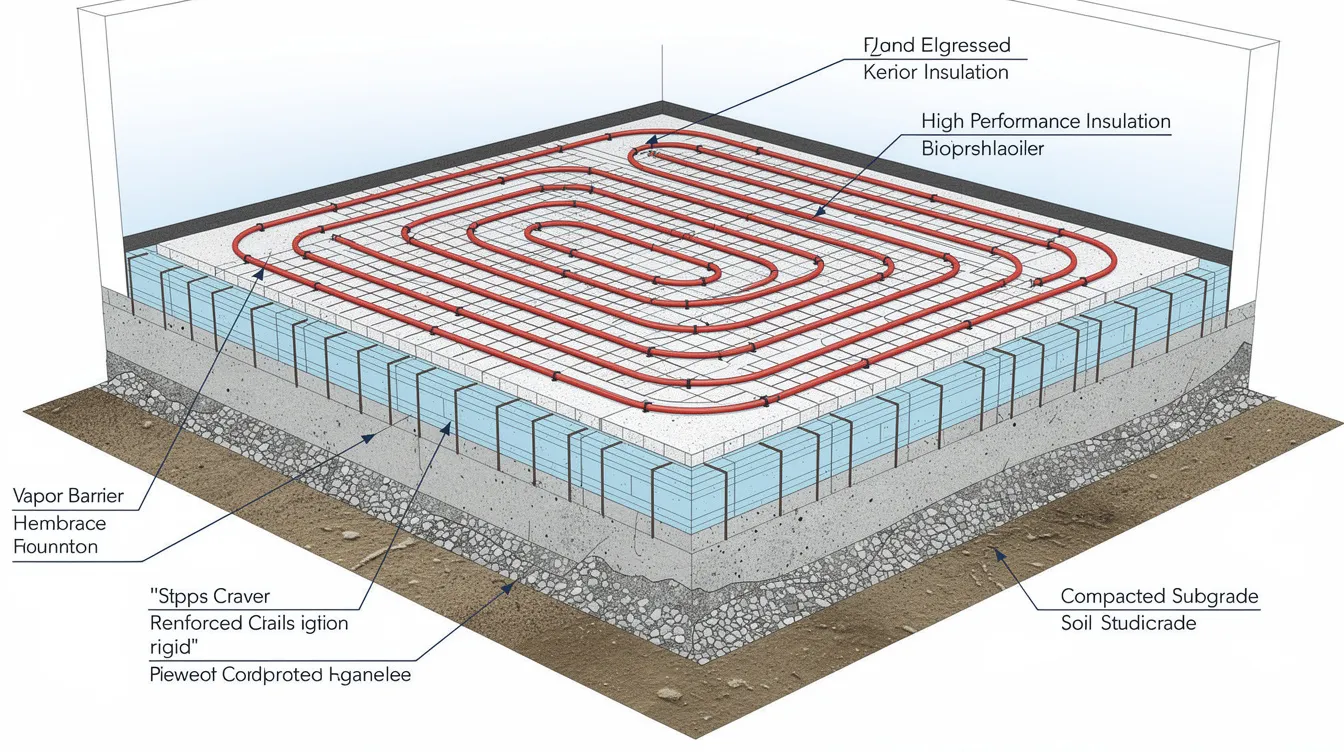
Soil thermal analysis and frost penetration depth calculation: Determine soil type, thermal conductivity, moisture content, and thermal capacity at the project site. For cold storage, model heat flow from the cold interior downward through the slab and estimate the depth at which the freeze front would stabilize under sustained operation. In Singapore’s high water table conditions, cold room flooring often requires heating beneath the insulation layer using glycol pipes or electric heating cables to prevent frost heave. For high-temperature structures, model heat conduction into foundations to evaluate soil drying, shrinkage, and potential settlement.
-
Foundation heating system design for cold storage applications: Floor heating systems-either glycol circulation loops or electric heating cables-are sized to maintain sub-slab soil temperature above 0 °C under steady-state cold storage operation. The system must account for the storage temperature, floor insulation R-value, soil thermal conductivity, and the temperature differential between the cold room and the ambient ground. For high-temperature applications, the equivalent challenge is cooling or isolating the foundation using refractory base layers and reflective surfaces.
-
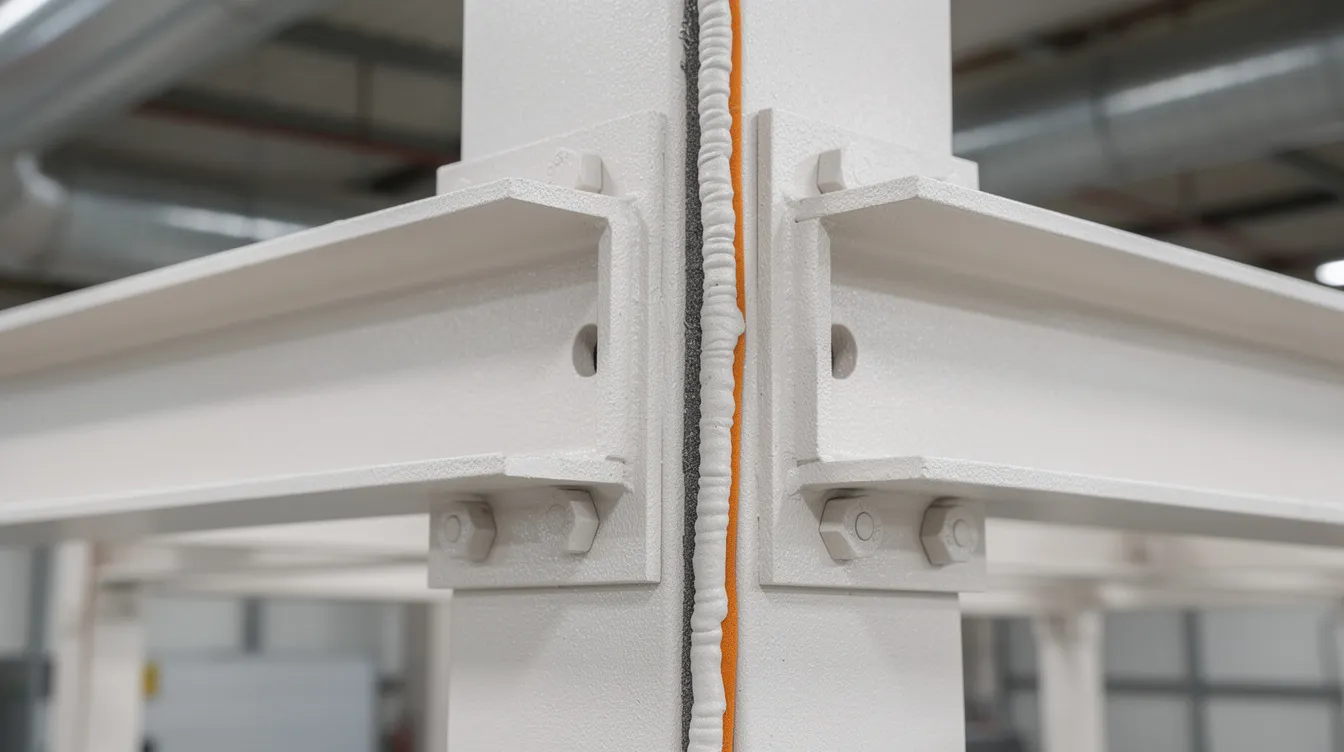
Thermal expansion joint placement and sizing: Calculate expansion or contraction using ΔL = α × L × ΔT for each structural element, then size joints to accommodate the full range of movement. Joints must address movement in floor slabs, roof decking, wall panels, and structural connections simultaneously. Even a small gap in joint coverage can create stress concentrations that propagate into cracks. For cold storage, joint sealants must function reliably from ambient temperatures down to the minimum storage temperature; for high-temperature zones, fire-rated flexible sealants or metal packing systems are required.
-
Foundation insulation specification and installation detailing: Specify insulation boards beneath slabs and around footings using thermally resistant, moisture-impervious materials. Polyurethane panels are standard for cold rooms in Singapore, with effective insulation thickness determined by the operating temperature and energy targets. Insulation thickness ranges from 100 mm to 200 mm for cold rooms-insulation thickness for chilled rooms is typically 100 mm, while deep-freeze applications require 150–200 mm of PIR or polyurethane foam. Floor insulation must extend continuously beneath and around slab edges to prevent thermal bypass. Better insulation reduces refrigeration system run time and directly lowers energy consumption.
Foundation System Comparison
|
Foundation Type |
High Temperature Suitability |
Cold Storage Suitability |
Cost Factor |
|---|---|---|---|
|
Pile Foundation |
Excellent for thermal isolation from surface soils; reaches stable-temperature bedrock |
Good with proper heating and insulation; isolates from shallow thermal cycling |
High initial cost; pile caps require thermal bridging mitigation |
|
Slab-on-Grade |
Moderate with refractory base insulation and thermal breaks |
Poor without sub-slab heating system; vulnerable to frost heave and moisture issues |
Low initial cost; higher risk of thermal-related damage |
|
Heated Slab System |
Not applicable (used only for cold environments) |
Excellent performance; prevents soil freezing and frost heave; maintains slab integrity |
Moderate installation cost; ongoing energy and maintenance costs |
For cold storage warehouses, the heated slab system combined with proper floor insulation is the default choice in Singapore, given the high water table and ambient ground temperature of approximately 28–30 °C. Pile foundations may be justified for large cold storage facilities where soil conditions are poor or where the structure also supports significant mechanical loads from high density storage racking and refrigeration equipment. Slab-on-grade alone is generally inadequate for frozen storage without sub-slab heating, regardless of insulation thickness.
Accurate thermal load analysis prevents oversizing or undersizing compressors and their associated foundation loads. Integrated engineering design reduces energy waste in cold storage facilities by ensuring that foundation thermal management, insulation, and refrigeration capacity are coordinated from the outset. Refrigeration systems must be sized for thermal load, and the foundation’s thermal performance directly influences the cooling load that those systems must handle.
These foundation decisions feed directly into regulatory compliance, which governs material specifications, fire resistance, compartment sizing, and operational licensing.
Common Structural Challenges and Engineering Solutions
Even well-designed thermal structures encounter recurring problems. The following challenges appear across both high-temperature industrial plants and cold storage facilities, and each has proven engineering solutions.
Thermal Expansion Joint Failures
Expansion joint failures are the most common structural deficiency in thermal-load facilities. Undersized joints, poorly located transitions, and sealants rated for the wrong temperature range all contribute. In high-temperature settings, sealant degradation from sustained heat and creep fatigue in metal joint connectors compound the problem. Thermal cycling must be considered in the structural design of cold storage facilities because repeated expansion-contraction cycles work joints loose over time.
The solution requires calculating joint sizing from the full ΔT range (including startup transients), specifying sealants rated for the complete operating temperature band, and ensuring joints accommodate movement in multiple directions. Careful detailing around structural joints can reduce thermal bridging in cold storage design-joints that also function as thermal breaks serve dual purposes. For extremely hot zones, non-metallic insulation with buffered joint packing replaces elastomeric sealants that would degrade.
Foundation Frost Heave in Cold Storage
Frost heave remains the most expensive foundation failure mode in cold storage. When the ground beneath a freezer slab drops below 0 °C, moisture migrates toward the freezing front, forms ice lenses, and lifts or cracks the slab. In Singapore, the high water table provides an almost unlimited supply of moisture for this process.
Prevention requires a combination of measures: adequate insulation thickness beneath the slab, sub-slab heating (glycol loops or electric heating cables), edge insulation extending below the slab perimeter, coarse gravel drainage layers, and continuous vapor barriers to control moisture ingress from below. Designing cold storage structures requires managing thermal loads and moisture control as an integrated system. Airtight construction minimizes warm air infiltration in cold storage designs, which would otherwise introduce additional moisture load.
Steel Frame Thermal Bridging
In cold storage, the building envelope must act as a continuous thermal barrier-but structural steel connections that penetrate the insulation layer create thermal bridges allowing heat gain into the refrigerated space. With Singapore’s ambient temperature of 30–35 °C outside and −35 °C inside a deep freezer, a single uninsulated steel column passing through the insulated wall creates a localized heat load that increases energy consumption and risks condensation and ice formation on the cold side.
Thermal bridging increases energy loss in cold storage facilities, and the solution involves thermal break connections, insulated cladding attachment systems using standoff brackets, insulation panels that wrap continuously around penetrations, and minimizing the number of structural members crossing the cold storage envelope. Building envelopes must act as continuous thermal barriers in cold storage design, and even a small gap in the insulation continuity can compromise performance significantly. A well-designed building envelope minimizes heat gain and energy costs.
The cumulative lesson from these challenges is clear: successful thermal-load industrial structures require an integrated engineering approach from the earliest design stages.
Conclusion and Next Steps
Designing industrial structures for high thermal loads and cold storage facilities is not a matter of applying standard structural engineering with temperature-resistant materials bolted on. It demands integrated structural, civil, and thermal engineering from project inception-where material selection, foundation systems, building envelope design, and refrigeration architecture are coordinated as a single system. Refrigeration accounts for 60–70% of cold storage energy consumption, making every structural decision that affects the thermal envelope a direct driver of operational costs and energy performance.
Cold room construction must comply with SCDF Fire Code 2023, with maximum floor area per compartment limited to 100 m² in non-sprinkler buildings and specialized fire protection systems necessary for cold storage areas where combustible insulation is present. Cold stores must be licensed by the SFA in Singapore, with SFA mandating chilled storage at 0 °C to 4 °C for perishables. Cold storage facilities must comply with HACCP principles for food safety, and MOM requires safe working conditions in cold rooms under the Workplace Safety and Health Act.
To move forward on an industrial thermal-load project:
-
Conduct a comprehensive thermal load analysis covering steady-state, transient, and cyclic temperature profiles for all structural elements
-
Engage structural and civil engineers experienced in thermal design early in the project-before architectural or mechanical layouts are finalized
-
Coordinate with HVAC and refrigeration engineering specialists for systems integration, ensuring that refrigeration capacity, control systems, and temperature monitoring align with the structural and envelope design
-
Initiate regulatory pre-consultation with BCA for structural submissions, SCDF for fire safety compliance, and SFA for cold chain facility licensing
Ammonia is the dominant refrigerant for large cold storage facilities, while R-404A and R-449A are commonly used refrigerants in cold rooms-and a standby compressor is recommended for high-value goods to ensure cold chain continuity. Variable frequency drives can achieve 15–25% energy savings on compressor motors, while floating head pressure control can reduce energy consumption by 10–15%. High-efficiency refrigeration systems reduce operational costs in cold storage facilities, and optimized zone adjacency can reduce refrigeration load by 8–12%. Separate temperature zones require independent refrigeration circuits, and cold room layout affects storage efficiency and stock movement-aisle widths and door placements impact operational flow, while vertical storage increases capacity in Singapore’s limited land areas. Rapid-roll doors and air curtains help control warmth in cold storage facilities at door openings, and automation systems including temperature monitoring further support operational efficiency.
Related topics worth exploring include cold chain infrastructure standards under SS 668:2021, advanced creep modeling methods for steel under variable temperature loading, and emerging alloy design approaches to improve creep strength in steels for ultra-high-temperature service.
Additional Resources
-
Singapore Standard SS 544 Part 1:2009: Concrete specifications for cold room and freeze-thaw applications, including air entrainment requirements and aggregate selection criteria
-
BCA Building Control Regulations: Structural load requirements including thermal loads, fire resistance ratings, material certification, and authority submission procedures for industrial buildings
-
SCDF Fire Code 2023: Requirements for structural fire precautions, intumescent coating systems, compartmentalization of cold storage with combustible insulation, and fire safety submission documentation
-
Stellar Structures’ industrial engineering design services: For specialist structural and civil engineering consultation on temperature-controlled industrial facilities in Singapore, contact Stellar Structures for project-specific thermal load analysis, foundation design, and regulatory coordination
Designing Industrial Structures for High Thermal Loads and Cold Storage Facilities: A Complete Engineering Guide
Introduction
Industrial structures operating under extreme temperatures-from blast furnaces generating process heat above 1,500 °C to frozen storage environments reaching −35 °C-demand structural and civil engineering approaches fundamentally different from conventional building design. Thermal loads alter material behavior, compromise joint integrity, destabilize foundations, and impose massive demands on the building envelope and refrigeration systems. Getting any of these elements wrong leads to structural failure, energy waste, or regulatory non-compliance.
This guide covers thermal load analysis, structural material selection, foundation design and thermal management, building envelope integration, and regulatory compliance within Singapore’s tropical climate. It is written for developers, contractors, facility owners, and project managers who need to commission or oversee engineering design for temperature-controlled industrial facilities-whether a cold storage facility holding perishable goods at −35 °C or a smelting plant with sustained radiant heat loads.
Industrial structures for high thermal loads require specialized structural engineering that accounts for thermal expansion, material degradation at elevated temperatures, foundation stability under thermal cycling, and tight systems integration with refrigeration equipment and HVAC. Cold storage facility design adds the challenges of frost heave, moisture control, and maintaining a continuous thermal barrier across every surface of the cold storage envelope.
By the end of this article, you will understand:
-
Thermal load structural analysis methods for both high-temperature and low temperature industrial environments
-
Material selection criteria for steel, concrete, and protective coatings under temperature extremes
-
Foundation design principles including sub-floor heating, thermal insulation, and expansion joint detailing
-
Regulatory compliance requirements under Singapore’s BCA, SCDF Fire Code 2023, SFA licensing, and relevant Singapore Standards
Understanding Thermal Load Impacts on Industrial Structure Design
A thermal load is the force imposed on structural elements by temperature differences-whether instantaneous gradients across a single member, steady-state exposure to extreme heat or cold, or cyclic temperature swings from process start-up and shutdown. These loads generate expansion, contraction, differential strain, and long-term effects such as creep at high temperatures or embrittlement at low temperatures. Every structural property that engineers rely on-modulus of elasticity, yield strength, ductility, fracture toughness-shifts with temperature.
Designing for thermal movement is essential in cold storage to accommodate temperature variations, just as it is critical in high-heat industrial plants where unconstrained expansion can buckle steel framing. Operational safety, structural integrity, and energy performance all depend on how well the design anticipates and manages these effects.
High Temperature Thermal Loads
High temperature environments are defined as those exposing structural surfaces or internal volumes to sustained temperatures above approximately 60 °C-a threshold at which typical structural steel and concrete begin to experience measurable property changes. Industrial processes operate far beyond this: steel mills and foundries generate temperatures of 1,400–1,600 °C internally, while chemical reactors, kilns, and incinerators routinely sustain hundreds of degrees at their exteriors.
The structural challenges are significant. Steel’s thermal expansion coefficient of approximately 11–13 × 10⁻⁶ /°C means that a 20-meter beam experiencing a 400 °C rise will expand by roughly 90–100 mm if unrestrained. Where expansion is constrained, enormous compressive stresses develop, risking buckling or connection failure. Differential heating-one flange exposed to radiant heat while the other remains cooler-produces warping and localized stress concentrations at welded joints.
Creep, the time-dependent plastic deformation under sustained load at elevated temperature, becomes the governing failure mode for steel buildings in prolonged high-temperature service. Research on high-strength steels (Q550, Q690, Q890) shows that creep strain rates increase significantly above 500 °C, with rapid tertiary-stage deformation occurring at 700–800 °C when stress ratios exceed approximately 0.6 of yield strength. Foundation movement under high-temperature structures is also a concern: conducted heat can dry soil, reduce its bearing capacity, and cause settlement.
Low Temperature Thermal Loads
Cold storage environments span a range from chilled rooms at +4 °C down to deep-freeze facilities at −35 °C. Cold storage temperatures range from 4 °C to −35 °C, serving applications across food processing, pharmaceutical storage, and industrial cooling. Temperature zoning helps manage different thermal loads in cold storage facilities, with separate zones for fresh produce, chilled goods, and frozen storage each presenting distinct structural demands.
The dominant structural issue at low temperature is the ductile-to-brittle transition in steel. Many ferritic and carbon steels lose fracture toughness sharply at a critical temperature-the ductile-to-brittle transition temperature (DBTT)-which for common structural grades falls between −20 °C and −50 °C depending on alloy composition, grain size, and impurity levels. A cold room operating at −35 °C with structural steel whose DBTT sits at −30 °C is operating in the brittle fracture zone, risking catastrophic failure under impact or fatigue loading.
Thermal contraction imposes tension in restrained connections and differential shrinkage between steel and concrete, causing cracking. Frost heave can damage cold storage floors if not managed properly: even in Singapore’s tropical climate, where the natural frost line is effectively nonexistent, the ground beneath a freezer slab will freeze if the cold interior temperature is allowed to penetrate downward through the foundation. The high water table common in Singapore makes this risk acute, as there is abundant moisture available to form ice lenses. Moisture management is crucial to prevent condensation and ice formation in cold storage-repeated condensation-freeze cycles degrade concrete, corrode reinforcement, and destroy insulation performance.
With these thermal load impacts established, selecting the right structural materials becomes the critical next step in the design process.
Structural Material Selection for Extreme Temperature Applications
Material selection for extreme temperature applications cannot follow standard practice. The thermal load profile-whether sustained high heat, deep cold, or cyclic variation between the two-dictates every choice from steel grade to concrete mix to protective coating system. Engineering design shapes cold room thermal and mechanical performance, and the same principle applies to high-temperature industrial structures.
Steel Grade Selection and Treatment
For high-temperature service, structural steel must retain adequate strength and resist creep deformation over the facility’s design life. ASTM A572 Grade 50, with a yield strength of approximately 345 MPa at ambient temperature, is commonly specified for moderate-temperature structural applications, but its yield strength drops substantially above 500 °C. Studies confirm that ASTM A572 steel exhibits noticeable creep deformation between 400 °C and 800 °C, making it unsuitable for direct exposure to high process heat without refractory shielding. For sustained exposure above 500 °C, chromium-molybdenum alloy steels such as ASTM A387 offer superior creep resistance through carbide stabilization and solid-solution strengthening.
For low temperature cold storage applications, steel selection revolves around ensuring the DBTT falls well below the minimum service temperature-ideally 20–30 °C below the coldest operating condition. For a cold storage facility operating at −40 °C, this means specifying steels with DBTT below −60 °C to −70 °C, with Charpy impact energy of at least 27 J at −40 °C. ASTM A514 quenched-and-tempered steel, or low-alloy steels with nickel and molybdenum additions, achieve this performance. For the most demanding cryogenic applications, austenitic stainless steels retain ductility at temperatures far below what ferritic grades can tolerate. Welding procedures must include preheat and post-weld heat treatment to prevent cold cracking, and weld metal must match the base material’s toughness performance at the design service temperature.
Concrete Specifications for Temperature Extremes
High-temperature concrete for furnace linings and process containment uses refractory aggregates-firecite, silicon carbide, or alumina-bound with calcium aluminate cement rather than ordinary Portland cement, providing thermal shock resistance and service temperatures exceeding 1,000 °C. For structural concrete exposed to moderate heat (floors under process equipment, walls adjacent to hot zones), silica fume additions, low-thermal-expansion aggregates, and polypropylene fiber reinforcement reduce the risk of explosive spalling during rapid temperature excursions.
For cold storage, concrete must resist freeze-thaw cycling even in Singapore’s tropical climate. Singapore Standard SS 544 Part 1:2009 includes provisions for concrete properties in cold room applications, specifying air-entrained mixes that create microscopic voids accommodating water expansion during freezing. Low water-cement ratios and non-absorptive aggregates further reduce permeability. Insulated flooring is essential in cold storage environments to support heavy loads-floor slabs must handle forklift wheel loads often exceeding 5,000 kg per point while maintaining thermal and moisture integrity. Steel reinforcement embedded in cold-service concrete must have matched thermal expansion coefficients and maintain ductility at the design temperature to prevent delamination or microcracking at the steel-concrete interface.
Protective Coating and Fireproofing Systems
For high-temperature fire protection, intumescent coatings applied to structural steel expand under heat to form an insulating char layer. Under the SCDF Fire Code (Clause 3.15), intumescent paint systems on structural steel must meet BS 476 Part 20/21 or equivalent fire resistance standards and pass weathering tests per BS 8202 Part 2-with fire resistance ratings after weathering not permitted to drop more than 25%. Corrosion-resistant materials are preferred in high humidity areas of cold storage, where coatings face the dual challenge of sub-zero temperatures and persistent moisture. Vapor barrier coatings and moisture-resistant sealers on cold-side surfaces prevent condensation infiltration. Continuous vapor barriers prevent moisture migration in cold storage environments, and vapor barrier failures cause 30–40% insulation performance degradation-making coating integrity a direct driver of energy costs and refrigeration load.
Proper engineering prevents thermal bridging and moisture accumulation. With materials selected, the next critical design domain is the foundation system, where thermal management intersects directly with structural stability.
Foundation Design and Thermal Management Systems
Foundation design for extreme-temperature structures goes beyond conventional geotechnical engineering. The foundation must isolate the structure from thermal effects on the underlying soil while managing heat transfer, moisture movement, and the mechanical loads imposed by thermal cycling. Sub-floor heating is used to prevent frost heave in freezer environments, while high-temperature facilities require insulation and thermal breaks to prevent conducted heat from degrading soil bearing capacity.
Thermal Foundation Design Process
Thermal foundation analysis is required whenever the structure’s operating temperature will significantly alter the thermal regime of the ground beneath it-a condition present in virtually every cold storage facility and most high-temperature industrial plants.
-
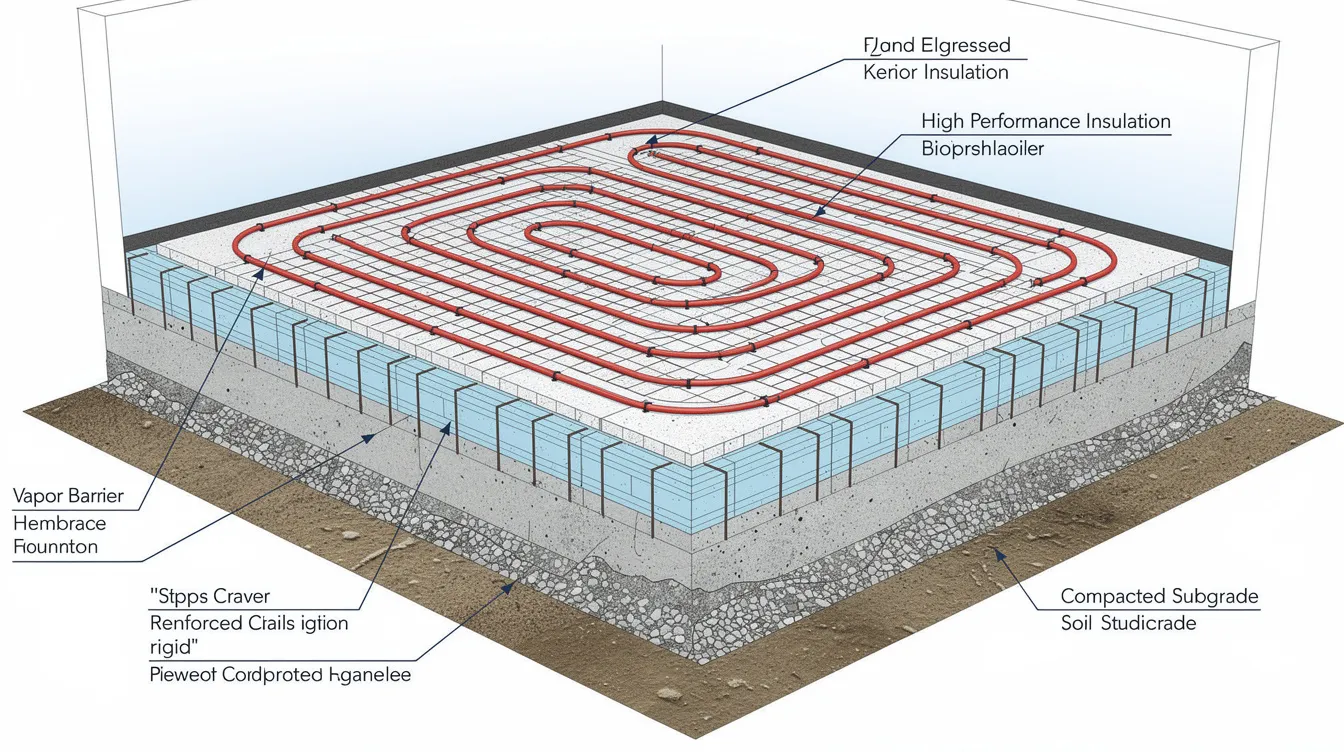
Soil thermal analysis and frost penetration depth calculation: Determine soil type, thermal conductivity, moisture content, and thermal capacity at the project site. For cold storage, model heat flow from the cold interior downward through the slab and estimate the depth at which the freeze front would stabilize under sustained operation. In Singapore’s high water table conditions, cold room flooring often requires heating beneath the insulation layer using glycol pipes or electric heating cables to prevent frost heave. For high-temperature structures, model heat conduction into foundations to evaluate soil drying, shrinkage, and potential settlement.
-
Foundation heating system design for cold storage applications: Floor heating systems-either glycol circulation loops or electric heating cables-are sized to maintain sub-slab soil temperature above 0 °C under steady-state cold storage operation. The system must account for the storage temperature, floor insulation R-value, soil thermal conductivity, and the temperature differential between the cold room and the ambient ground. For high-temperature applications, the equivalent challenge is cooling or isolating the foundation using refractory base layers and reflective surfaces.
-
Thermal expansion joint placement and sizing: Calculate expansion or contraction using ΔL = α × L × ΔT for each structural element, then size joints to accommodate the full range of movement. Joints must address movement in floor slabs, roof decking, wall panels, and structural connections simultaneously. Even a small gap in joint coverage can create stress concentrations that propagate into cracks. For cold storage, joint sealants must function reliably from ambient temperatures down to the minimum storage temperature; for high-temperature zones, fire-rated flexible sealants or metal packing systems are required.
-
Foundation insulation specification and installation detailing: Specify insulation boards beneath slabs and around footings using thermally resistant, moisture-impervious materials. Polyurethane panels are standard for cold rooms in Singapore, with effective insulation thickness determined by the operating temperature and energy targets. Insulation thickness ranges from 100 mm to 200 mm for cold rooms-insulation thickness for chilled rooms is typically 100 mm, while deep-freeze applications require 150–200 mm of PIR or polyurethane foam. Floor insulation must extend continuously beneath and around slab edges to prevent thermal bypass. Better insulation reduces refrigeration system run time and directly lowers energy consumption.
Foundation System Comparison
|
Foundation Type |
High Temperature Suitability |
Cold Storage Suitability |
Cost Factor |
|---|---|---|---|
|
Pile Foundation |
Excellent for thermal isolation from surface soils; reaches stable-temperature bedrock |
Good with proper heating and insulation; isolates from shallow thermal cycling |
High initial cost; pile caps require thermal bridging mitigation |
|
Slab-on-Grade |
Moderate with refractory base insulation and thermal breaks |
Poor without sub-slab heating system; vulnerable to frost heave and moisture issues |
Low initial cost; higher risk of thermal-related damage |
|
Heated Slab System |
Not applicable (used only for cold environments) |
Excellent performance; prevents soil freezing and frost heave; maintains slab integrity |
Moderate installation cost; ongoing energy and maintenance costs |
For cold storage warehouses, the heated slab system combined with proper floor insulation is the default choice in Singapore, given the high water table and ambient ground temperature of approximately 28–30 °C. Pile foundations may be justified for large cold storage facilities where soil conditions are poor or where the structure also supports significant mechanical loads from high density storage racking and refrigeration equipment. Slab-on-grade alone is generally inadequate for frozen storage without sub-slab heating, regardless of insulation thickness.
Accurate thermal load analysis prevents oversizing or undersizing compressors and their associated foundation loads. Integrated engineering design reduces energy waste in cold storage facilities by ensuring that foundation thermal management, insulation, and refrigeration capacity are coordinated from the outset. Refrigeration systems must be sized for thermal load, and the foundation’s thermal performance directly influences the cooling load that those systems must handle.
These foundation decisions feed directly into regulatory compliance, which governs material specifications, fire resistance, compartment sizing, and operational licensing.
Common Structural Challenges and Engineering Solutions
Even well-designed thermal structures encounter recurring problems. The following challenges appear across both high-temperature industrial plants and cold storage facilities, and each has proven engineering solutions.
Thermal Expansion Joint Failures
Expansion joint failures are the most common structural deficiency in thermal-load facilities. Undersized joints, poorly located transitions, and sealants rated for the wrong temperature range all contribute. In high-temperature settings, sealant degradation from sustained heat and creep fatigue in metal joint connectors compound the problem. Thermal cycling must be considered in the structural design of cold storage facilities because repeated expansion-contraction cycles work joints loose over time.
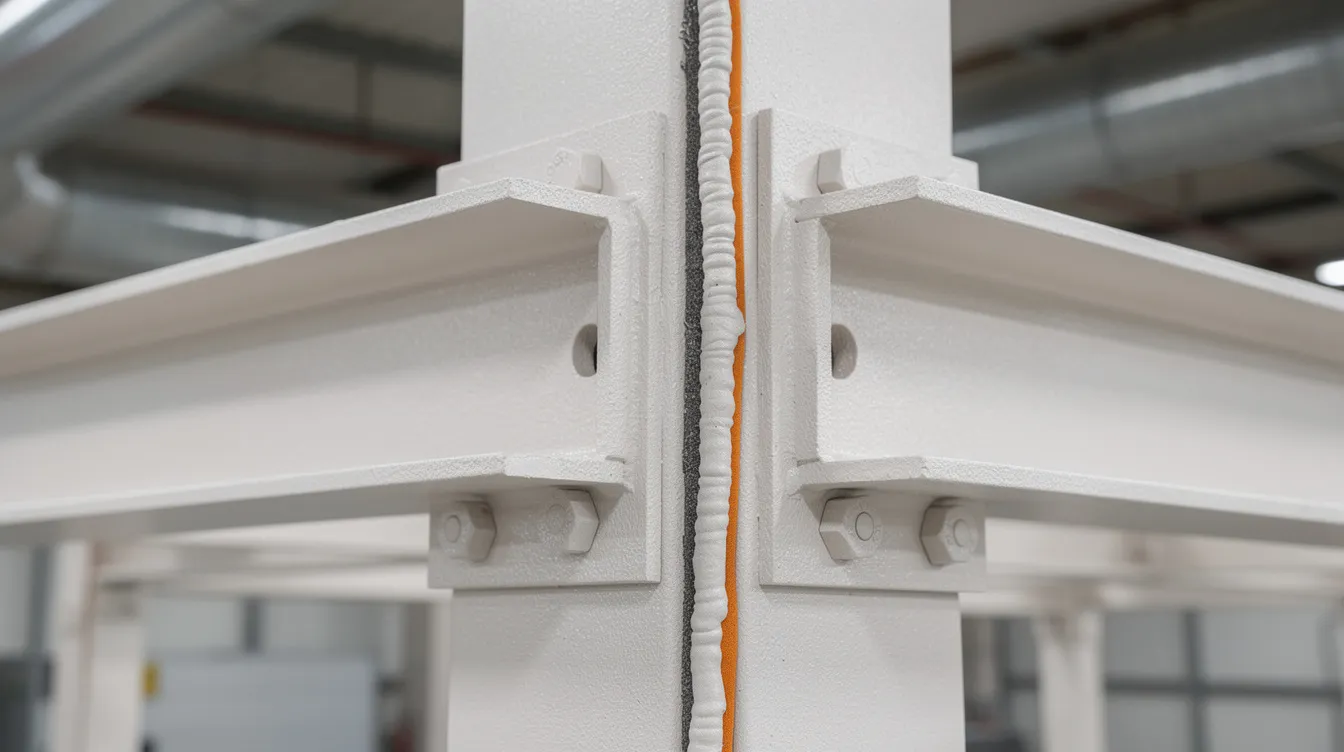
The solution requires calculating joint sizing from the full ΔT range (including startup transients), specifying sealants rated for the complete operating temperature band, and ensuring joints accommodate movement in multiple directions. Careful detailing around structural joints can reduce thermal bridging in cold storage design-joints that also function as thermal breaks serve dual purposes. For extremely hot zones, non-metallic insulation with buffered joint packing replaces elastomeric sealants that would degrade.
Foundation Frost Heave in Cold Storage
Frost heave remains the most expensive foundation failure mode in cold storage. When the ground beneath a freezer slab drops below 0 °C, moisture migrates toward the freezing front, forms ice lenses, and lifts or cracks the slab. In Singapore, the high water table provides an almost unlimited supply of moisture for this process.
Prevention requires a combination of measures: adequate insulation thickness beneath the slab, sub-slab heating (glycol loops or electric heating cables), edge insulation extending below the slab perimeter, coarse gravel drainage layers, and continuous vapor barriers to control moisture ingress from below. Designing cold storage structures requires managing thermal loads and moisture control as an integrated system. Airtight construction minimizes warm air infiltration in cold storage designs, which would otherwise introduce additional moisture load.
Steel Frame Thermal Bridging
In cold storage, the building envelope must act as a continuous thermal barrier-but structural steel connections that penetrate the insulation layer create thermal bridges allowing heat gain into the refrigerated space. With Singapore’s ambient temperature of 30–35 °C outside and −35 °C inside a deep freezer, a single uninsulated steel column passing through the insulated wall creates a localized heat load that increases energy consumption and risks condensation and ice formation on the cold side.
Thermal bridging increases energy loss in cold storage facilities, and the solution involves thermal break connections, insulated cladding attachment systems using standoff brackets, insulation panels that wrap continuously around penetrations, and minimizing the number of structural members crossing the cold storage envelope. Building envelopes must act as continuous thermal barriers in cold storage design, and even a small gap in the insulation continuity can compromise performance significantly. A well-designed building envelope minimizes heat gain and energy costs.
The cumulative lesson from these challenges is clear: successful thermal-load industrial structures require an integrated engineering approach from the earliest design stages.
Conclusion and Next Steps
Designing industrial structures for high thermal loads and cold storage facilities is not a matter of applying standard structural engineering with temperature-resistant materials bolted on. It demands integrated structural, civil, and thermal engineering from project inception-where material selection, foundation systems, building envelope design, and refrigeration architecture are coordinated as a single system. Refrigeration accounts for 60–70% of cold storage energy consumption, making every structural decision that affects the thermal envelope a direct driver of operational costs and energy performance.
Cold room construction must comply with SCDF Fire Code 2023, with maximum floor area per compartment limited to 100 m² in non-sprinkler buildings and specialized fire protection systems necessary for cold storage areas where combustible insulation is present. Cold stores must be licensed by the SFA in Singapore, with SFA mandating chilled storage at 0 °C to 4 °C for perishables. Cold storage facilities must comply with HACCP principles for food safety, and MOM requires safe working conditions in cold rooms under the Workplace Safety and Health Act.
To move forward on an industrial thermal-load project:
-
Conduct a comprehensive thermal load analysis covering steady-state, transient, and cyclic temperature profiles for all structural elements
-
Engage structural and civil engineers experienced in thermal design early in the project-before architectural or mechanical layouts are finalized
-
Coordinate with HVAC and refrigeration engineering specialists for systems integration, ensuring that refrigeration capacity, control systems, and temperature monitoring align with the structural and envelope design
-
Initiate regulatory pre-consultation with BCA for structural submissions, SCDF for fire safety compliance, and SFA for cold chain facility licensing
Ammonia is the dominant refrigerant for large cold storage facilities, while R-404A and R-449A are commonly used refrigerants in cold rooms-and a standby compressor is recommended for high-value goods to ensure cold chain continuity. Variable frequency drives can achieve 15–25% energy savings on compressor motors, while floating head pressure control can reduce energy consumption by 10–15%. High-efficiency refrigeration systems reduce operational costs in cold storage facilities, and optimized zone adjacency can reduce refrigeration load by 8–12%. Separate temperature zones require independent refrigeration circuits, and cold room layout affects storage efficiency and stock movement-aisle widths and door placements impact operational flow, while vertical storage increases capacity in Singapore’s limited land areas. Rapid-roll doors and air curtains help control warmth in cold storage facilities at door openings, and automation systems including temperature monitoring further support operational efficiency.
Related topics worth exploring include cold chain infrastructure standards under SS 668:2021, advanced creep modeling methods for steel under variable temperature loading, and emerging alloy design approaches to improve creep strength in steels for ultra-high-temperature service.
Additional Resources
-
Singapore Standard SS 544 Part 1:2009: Concrete specifications for cold room and freeze-thaw applications, including air entrainment requirements and aggregate selection criteria
-
BCA Building Control Regulations: Structural load requirements including thermal loads, fire resistance ratings, material certification, and authority submission procedures for industrial buildings
-
SCDF Fire Code 2023: Requirements for structural fire precautions, intumescent coating systems, compartmentalization of cold storage with combustible insulation, and fire safety submission documentation
-
Stellar Structures’ industrial engineering design services: For specialist structural and civil engineering consultation on temperature-controlled industrial facilities in Singapore, contact Stellar Structures for project-specific thermal load analysis, foundation design, and regulatory coordination