




Introduction
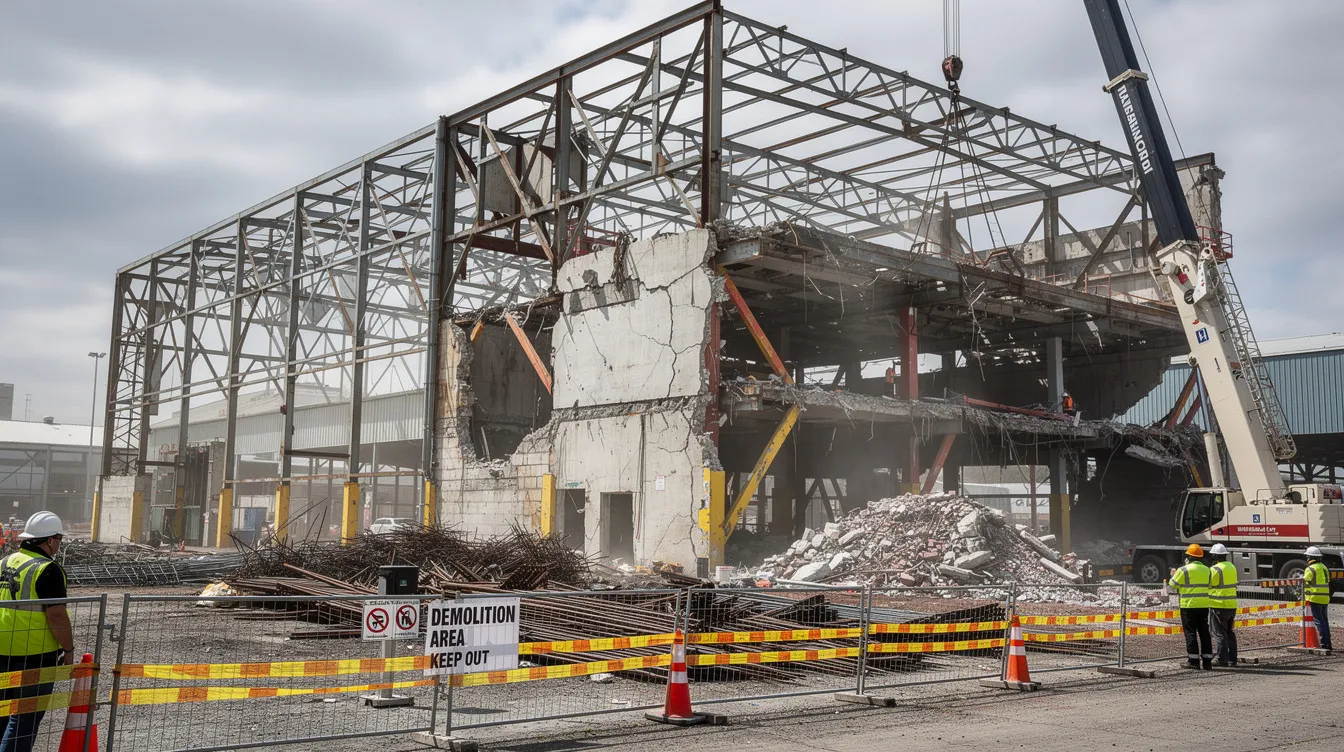
A safe structural approach to industrial facility decommissioning and demolition means that engineering decisions-not just demolition sequencing-govern every phase of dismantling. At every stage of the process, the remaining structural elements must safely support all applied loads without failure, load paths must be preserved or temporarily replaced, and workers and adjacent structures must be protected from structural collapse. This discipline separates controlled, compliant demolition from dangerous improvisation.
This article covers structural engineering protocols, safety standards, and regulatory compliance for industrial demolition in Singapore. The scope includes load-bearing analysis, temporary support systems design, phased demolition strategies, hazardous materials coordination, and the regulatory framework under the Building Control Act, SS 557:2026, and Workplace Safety and Health (WSH) laws. Environmental site assessments, waste management, and adjacent structure protection are addressed within the structural engineering context.
The target audience includes facility owners and developers who need Professional Engineer (PE) certified reports, contractors executing demolition, and project managers responsible for risk assessment, cost control, and regulatory approval. Decommissioning and demolishing an industrial facility requires a phased approach, where careful planning at the early stages determines the safety and efficiency of the entire lifecycle of the project.
Direct answer: A safe structural approach involves systematic pre-demolition structural survey (load-bearing capacity, foundation conditions, material deterioration), PE-certified method statements, engineered temporary support systems (shoring, bracing, props), phased demolition aligned with structural behavior, continuous monitoring, and strict adherence to local codes including BCA’s SS 557:2026 and WSH regulations. Demolition plans must include a stability report certified by a Professional Engineer.
By reading this article, you will understand how to:
-
Conduct structural risk assessment and load analysis for industrial structures
-
Implement safety protocols compliant with Singapore’s regulatory framework
-
Select appropriate demolition methods based on facility characteristics
-
Design temporary support systems that maintain stability throughout demolition
-
Manage common structural challenges including adjacent structure protection and hazardous material integration
Understanding Safe Structural Decommissioning Fundamentals
A safe structural approach in industrial decommissioning means ensuring that at every stage of dismantling, the structural elements remaining can safely support all dead loads, live loads, and temporary loads without failure. Decommissioning prepares a site for future use, while demolition is the physical act of tearing down structures. Both demand that load paths are preserved or temporarily replaced, that environmental contamination and hazardous materials risks are managed, and that adjacent buildings remain protected. The structural integrity assessment is the foundation that drives all safety planning and method selection-without it, no amount of heavy machinery or operational expertise can guarantee a safe outcome.
Structural Risk Assessment and Load Analysis
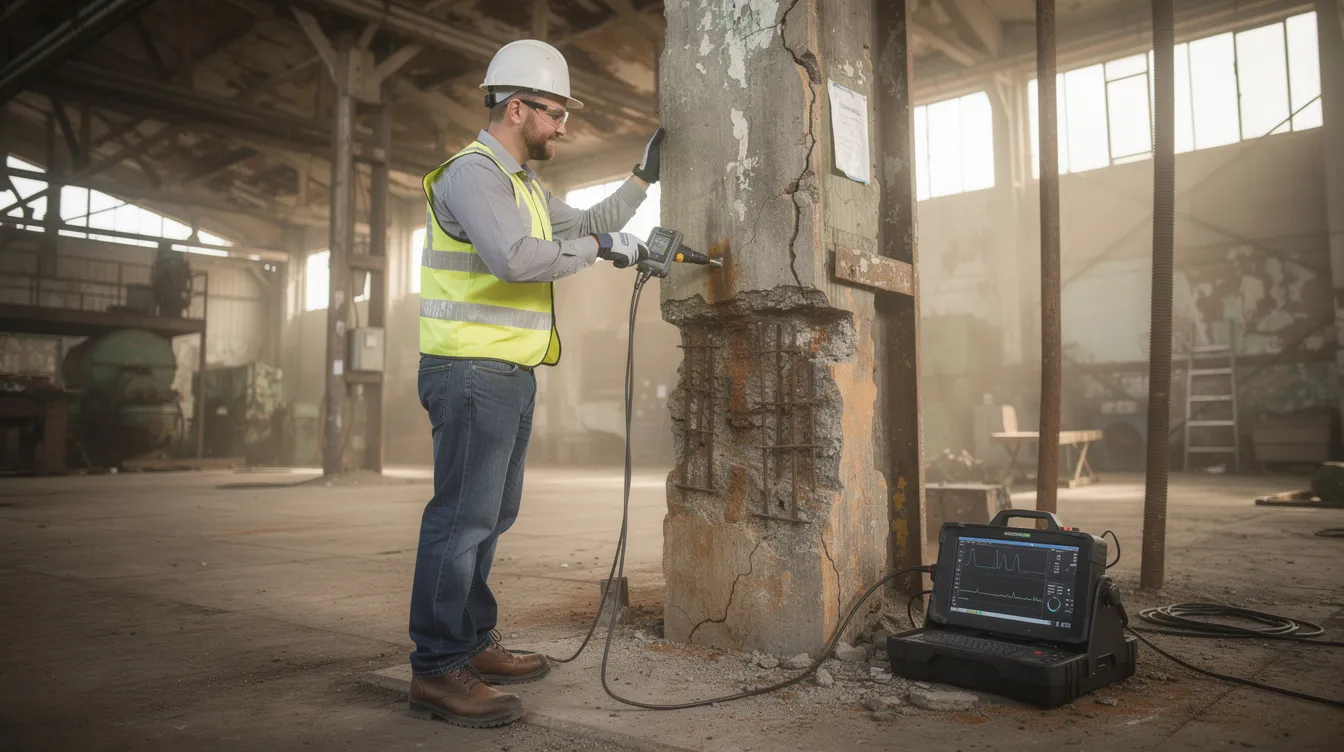
A pre-demolition structural engineering assessment is critical for safety. A structural engineering survey should evaluate load paths and foundation conditions, identifying how loads transfer through columns, beams, slabs, and connections to the ground. The Professional Engineer must evaluate concrete and steel deterioration-cracks, corrosion, spalling-through both non-destructive and destructive testing to quantify residual material properties.
Under Singapore’s Building Control Act, demolition works plans must include structural stability designs and calculations by a Qualified Person or Professional Engineer. The regulations require that impact assessment reports for neighbouring structures include design calculations “showing the stability and adequacy of every structural element the structural continuity of which is to be truncated by the demolition works.” Material strength testing follows SS EN 13791:2024 (with national annex) for assessing in-situ concrete compressive strength, while non-destructive methods-rebound hammer, ultrasonic pulse velocity, near-surface tests-are covered under the SS 78 series.
Structural inspections are mandatory every five years for buildings over 13 years old under BCA’s Periodic Structural Inspection programme. For older industrial structures, where Singapore’s average building lifespan is only 33 years, in-situ tests are particularly critical when concerns over concrete quality exist. PSI fees for large industrial complexes range from S$6,000 to S$12,000.
This risk assessment directly feeds into the development of method statements, temporary works design, and regulatory submissions-connecting structural reality to operational planning.
Safety Protocols and Regulatory Standards
The BCA’s SS 557:2026 Code of Practice for Demolition is effective from June 2026, superseding SS 557:2010. BCA’s SS 557:2026 introduces stricter demolition safety requirements, including enhanced clarity regarding structural appraisal and stability, mandatory “soft stripping” to fully expose the structural frame before detailed appraisal, specific guidelines for newer construction types (Prefabricated Prefinished Volumetric Construction and Mass Engineered Timber), and expanded requirements for temporary structural supports.
Demolition requires approval from four regulatory agencies in Singapore. Beyond BCA, the WSH (Construction) Regulations and WSH (Risk Management) Regulations require risk assessment, safe work procedures, permit-to-work systems, and competent persons for all demolition activities. If demolition involves removal of any load-bearing structure, the occupier must ensure work follows method statements prepared by a PE. Personnel should receive training on demolition-specific hazards and personal protective equipment. URA permissions via Form DC4 are required for demolition of existing buildings, and environmental permits may be needed depending on site conditions.
Asbestos surveys are required for buildings constructed before 1991. Environmental Site Assessments must be conducted before site return, and demolition requires coordination with environmental professionals to ensure environmental protection throughout the process.
Understanding these fundamentals is essential before examining how they translate into specific structural engineering applications during active industrial demolition.
Structural Engineering Applications in Industrial Demolition
With the regulatory framework and risk assessment fundamentals established, the next challenge is applying structural engineering principles to real demolition scenarios. Industrial facilities present unique complexities-heavy equipment mountings, crane rails, deep foundations, process infrastructure, and often decades of modifications that may not appear on original drawings.
Load-Bearing Analysis During Decommissioning
Removal of heavy machinery, overhead crane rails, plinths, and pits changes load distribution drastically. In the Daikin Factory demolition project, engineers analysed how loads would shift to structural frames and foundations once overhead crane rails, heavy M&E installations, and industrial ventilation systems were removed. The calculation of residual structural capacity after equipment removal and utility disconnection is critical-utilities must be disconnected before major demolition work begins, but the sequence of disconnection itself affects structural loading.
Foundation stability must be assessed especially in industrial sites where factory buildings may be built on soft fill, or where contaminated soils affect bearing capacity and settlement behaviour. During the demolition of the Senoko Energy 1983 power plants, geotechnical and structural assessment of two fossil-fuelled plant units (each 250 MW) was central to developing safe demolition procedures.
Large structural features demand special analysis. In a 29-storey office building demolition case documented by IStructE, three major transfer beams-each approximately 7.5 m deep, 30 m span, weighing roughly 1,000 tons each-supported approximately 3,000 tons of dead load from the upper structure. Analysis determined that destressing had to be delayed until the floors above were removed to maintain stability.
Temporary Support Systems Design
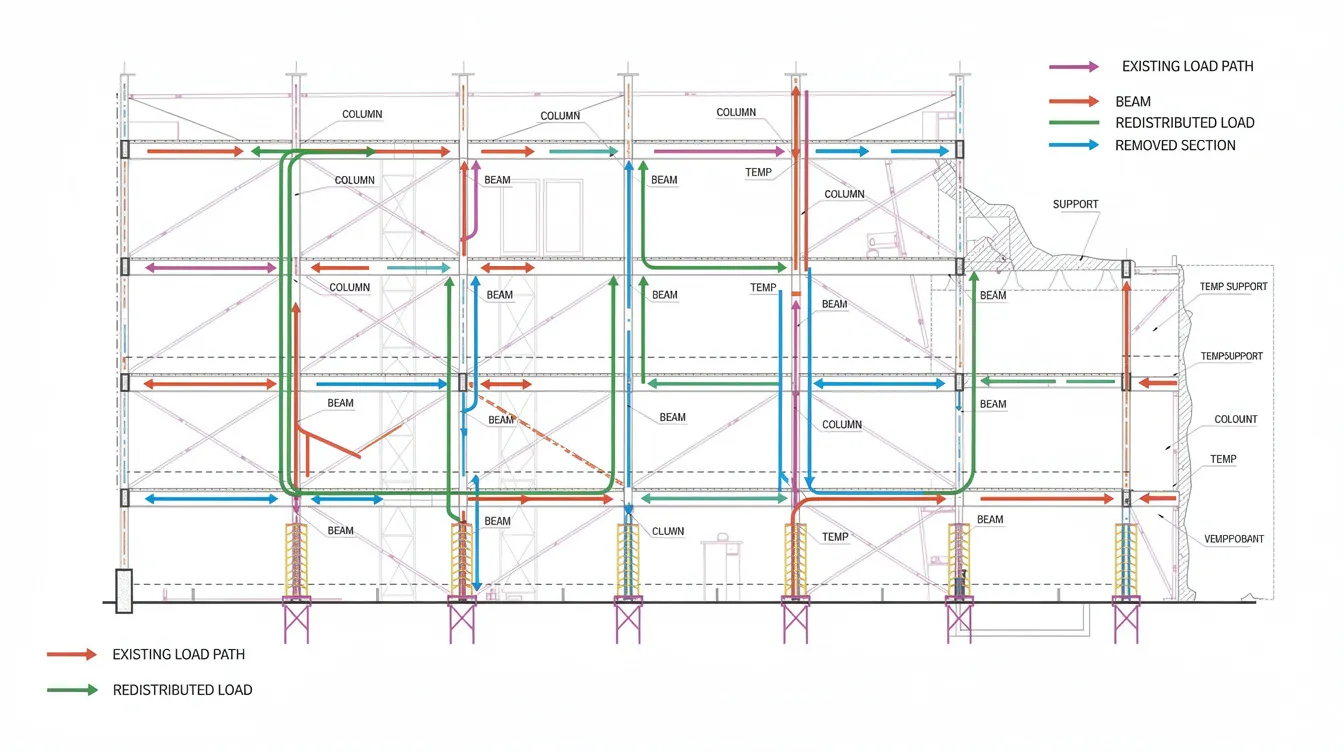
Temporary supports should be designed by engineers to maintain stability during demolition. Temporary works design encompasses shoring, bracing, props, scaffolding, and temporary ramps-all of which must meet strength, lateral stability, and dynamic load resistance requirements. Under SS 557, steel props must meet minimum axial capacity standards, include lateral bracing, and bear on adequate spreaders and secure foundations.
Temporary works are often the most failure-prone element in demolition. For adjacent structures, lateral supports-sheet piling, shoring, buttresses-must be installed before environmental loads (wind, vibration) or removal of structural continuity can compromise stability. Protection of neighbouring buildings is not optional; under both WSH and Building Control regulations, stability of walls, slabs, and beams adjacent to the structure being demolished must be maintained throughout.
The selection of temporary support systems connects directly to the load analysis: the residual capacity of each structural element determines what type of shoring is needed, where it must be placed, and how much load it must carry. Comprehensive temporary works design must account for all loading conditions including dynamic effects from demolition activity itself.
Phased Demolition Strategies
Controlled demolition methods ensure safety by prioritizing stability at every phase. Top-down mechanical demolition-beginning at roof or upper floors and progressively removing floors, beams, columns, and transfer beams-ensures gravity loads are gradually removed and tracked. Controlled mechanical demolition is the standard method in Singapore.
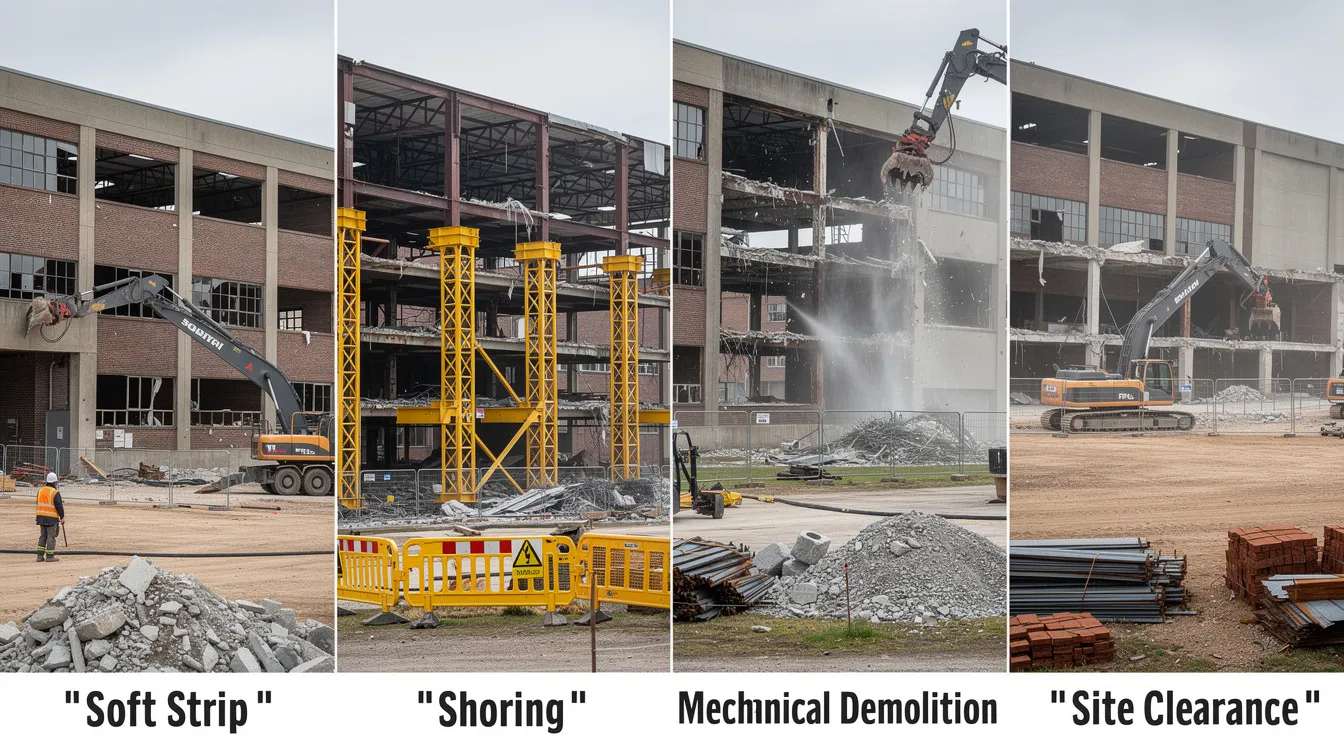
Selective dismantling is preferred where environmental contamination, hazardous materials, or operational constraints exist. In the Daikin Factory project, phases included soft-strip of non-structural elements, hazardous material survey, removal of industrial flooring, and then structural demolition. Regular removal of debris helps prevent overstressing partially demolished structures-a critical operational discipline.
The “delayed destressing” strategy represents an advanced phasing technique. In the 29-storey building demolition, transfer beams remained stressed until upper storeys were removed, then were destressed in stages. This approach reduced the need for massive temporary supports while maintaining structural integrity-a cost effective engineering solution that balanced safety risks against project economics.
Demolition planning should establish exclusion zones to protect personnel at all times during active structural takedown. The choice between methods depends on structural requirements, site constraints, adjacent structure sensitivity, and environmental factors.
Implementation of Safe Structural Demolition Methods
With structural engineering principles and phased strategies defined, implementation requires systematic execution. The process demands precise coordination between structural analysis, regulatory submissions, field operations, and continuous monitoring-each step building on the engineering foundations established in earlier planning.
Step-by-Step Structural Safety Protocol
This systematic approach applies to all industrial facility decommissioning projects, from single-storey factories to multi-level process plants. A phased approach ensures nothing is overlooked and that structural safety is maintained throughout.
-
Pre-demolition structural survey and PE certification: Engage a Professional Engineer to inspect the structure, foundations, and load paths. Identify hazardous materials (asbestos, lead, chemical residues), obtain original drawings where available, and perform material tests (in-situ concrete strength, steel condition). Conduct a full structural investigation rather than relying solely on visual assessment. Asbestos surveys are required for buildings constructed before 1991. Hazardous materials must be removed before demolition to reduce worker exposure.
-
Design approval and regulatory submissions: Prepare method statements, stability reports, and temporary works design. Submit structural plans under the Building Control Act. File URA Form DC4 for demolition approval. Ensure compliance with SS 557:2026. Demolition requires compliance with four regulatory agencies in Singapore-BCA, URA, MOM, and NEA.
-
Soft strip and industrial services disconnection: Remove all non-structural elements first-cladding, internal partitions, ceilings-and disconnect utilities (power, gas, water) in a safe shutdown sequence. This utility disconnection phase exposes the structural frame for detailed appraisal as required by SS 557:2026.
-
Temporary works installation: Install shoring, bracing, and props as per PE-certified design. Verify foundation adequacy for props, ensure bracing provides stability in all directions, install hoarding and protection for adjacent walls. All temporary works must be certified by the PE before demolition proceeds.
-
Phased removal of structural and non-structural elements: Follow the engineered sequence-roof, slabs, beams, columns-applying delayed destressing when large transfer beams or post-tensioned elements are present. At no point should the remaining structure be overloaded or have unsupported spans. Dust suppression and noise control are important during demolition activities, with noise limits for demolition varying by time and building type.
-
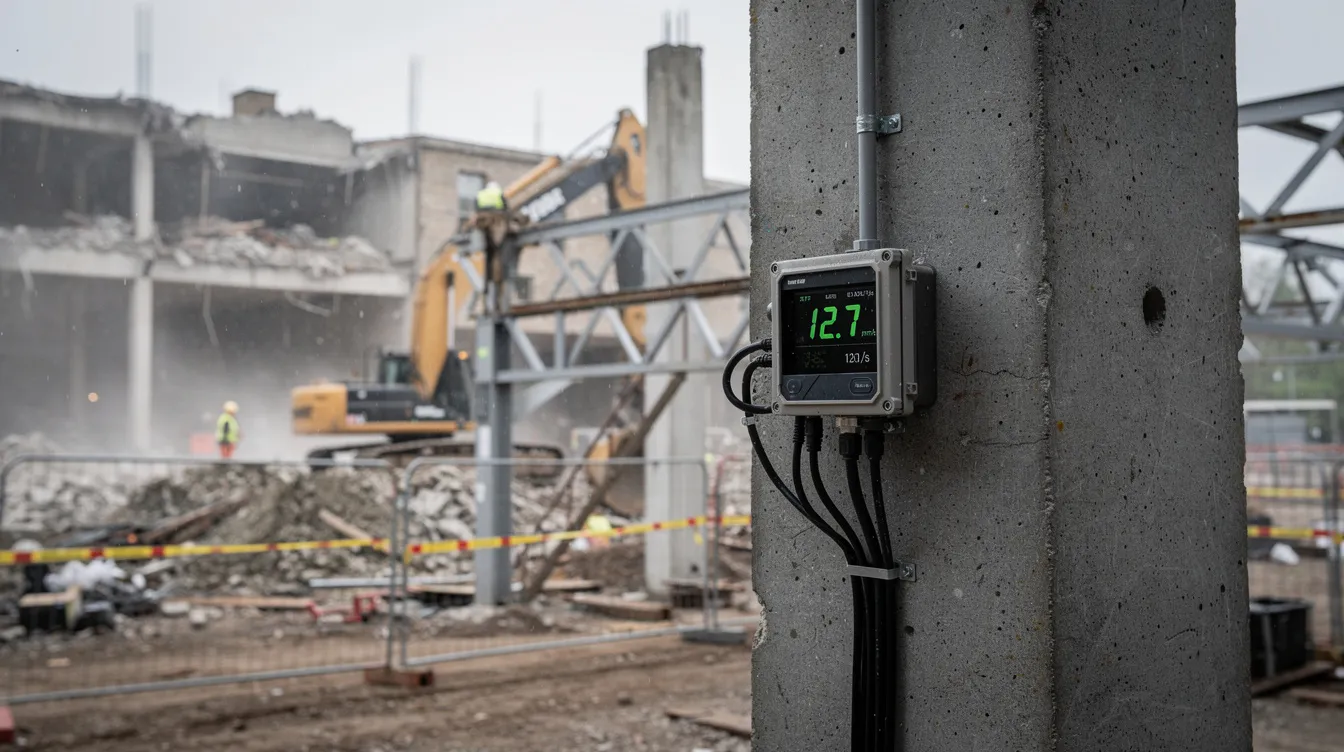
Continuous structural monitoring and adjustment: Continuous monitoring of structural behavior is essential during demolition. Deploy strain gauges, displacement sensors, and vibration monitors. Monitoring for vibrations protects neighboring structures during demolition. Control debris load accumulation and adjust sequence or temporary works if issues emerge. BIM enhances project management across the demolition lifecycle, and BIM is mandated for large-scale demolition projects in Singapore.
-
Foundation and substructure removal: Remove foundations, plinths, pits, and retaining walls while ensuring ground stability. Consider groundwater and soil support to avoid settlement or collapse of neighbouring structures.
-
Waste handling, site clearance, and reinstatement: Segregate demolition waste, test for contamination, ensure proper disposal. Sorting and recycling materials should be part of waste management in demolition. Singapore recycles over 99% of construction and demolition waste since 2013, having recovered 1.69 million tonnes of C&D waste in 2013. Concrete is primarily recycled into Recycled Concrete Aggregates for new construction. Prepare the site for redevelopment or restoration.
Demolition Method Comparison for Industrial Structures
Selecting the right method depends on the specific characteristics of the industrial facility, its surroundings, and project constraints. Robotic demolition reduces risks from falling debris during demolition and is increasingly used in confined or high-risk scenarios.
|
Criterion |
Mechanical Demolition |
Selective Dismantling |
Controlled Explosion |
|---|---|---|---|
|
Structural Requirements |
Moderate-requires load tracking and temporary supports at each phase |
High-detailed analysis of every element before removal |
Very high-complete structural modelling and blast engineering |
|
Safety Level |
High when properly sequenced; vibration and debris risks manageable |
Highest-minimal dynamic forces, maximum control |
Variable-high risk of uncontrolled debris; requires large exclusion zones |
|
Cost |
Moderate-standard heavy equipment and skilled operators |
Higher-labor intensive, slower pace |
Lower equipment cost but extremely high engineering and permitting costs |
|
Timeline |
Moderate-efficient for large volumes |
Longest-element-by-element removal |
Fastest execution but longest preparation |
|
Adjacent Structure Impact |
Moderate vibration and noise-manageable with monitoring |
Minimal-vibration control through low-impact techniques |
Severe-impractical in dense urban areas like Singapore |
For most industrial sites in Singapore, mechanical demolition with selective dismantling of sensitive areas represents the optimal balance. Controlled explosion is rarely used in high-density Singapore due to proximity risks-the Holcim Cement Terminal demolition at Jurong Port, involving 60 silos up to 67 m high with only 5 m clearance to neighbouring properties, illustrates why mechanical approaches with careful engineering dominate local practice.
The choice of method directly influences the structural challenges that arise during execution.
Common Structural Challenges and Engineering Solutions
Industrial structures present unique engineering challenges that distinguish them from residential or commercial demolition. The complexity of industrial decommissioning-heavy equipment mountings, process infrastructure, contaminated materials, and often decades of undocumented modifications-demands anticipatory engineering solutions.
Structural Instability During Progressive Demolition
The primary safety risks during progressive demolition include premature removal of load-bearing elements, unexpected pre-existing defects, sudden load redistributions, over-accumulation of debris on partially demolished floors, and dynamic loads during operations. Demolition budgets often exceed estimates by 20-25% due to unforeseen issues, many of which are structural in nature.
Engineering solutions include designing redundant support systems (backup shoring beyond minimum requirements), applying generous factors of safety to temporary works, continuous monitoring of deflections and crack propagation, and non-destructive testing to uncover hidden deterioration before it becomes critical. In the Fuji Xerox Towers incident, experts highlighted that failure to detect pre-existing defects, overloading with debris or machinery, and poor method sequencing contributed to structural collapse during demolition-reinforcing why demolition engineering with proper safety compliance is non-negotiable.
Adjacent Structure Protection and Vibration Control
Regulations under WSH (Construction) and SS 557 require impact assessment reports for all neighbouring structures. Engineering solutions include providing lateral bracing to walls shared with adjacent buildings, installing sheet piling or shoring, deploying vibration monitoring where proximity is close, and using low-vibration demolition techniques-diamond cutting, wire saws-when near critical or operational facilities. The Daikin Factory demolition used diamond cutting near vibration-sensitive equipment within the active facility. The Holcim Cement Terminal required special attention to post-tensioned silo tendons, with monitoring to prevent concrete fly-off given only 5 m clearance to neighbouring properties.
Integration of Hazardous Material Removal with Structural Works
Industrial facilities often contain asbestos, chemical residues, lead, contaminated flooring, or hazardous coatings. Decommissioning often includes hazardous material management as a critical early phase. In the Senoko power station and Daikin Factory projects, asbestos abatement and chemical residue removal occurred before structural demolition, ensuring that the remediation process did not compromise structural stability and that removal of surfaces did not destabilize the structure.
Coordination between structural dismantling and hazardous material remediation frequently triggers sequence changes-removing walls or roofs might expose or release hazards, requiring the demolition sequence to pause or adapt. This integration demands that structural engineers and environmental professionals work as a unified team, not in isolation.
An integrated approach-where structural safety, environmental protection, and regulatory compliance operate as a single coordinated process-delivers the safest and most efficient outcomes for industrial facility decommissioning.
Conclusion and Next Steps
A safe structural approach is the foundation for every successful industrial demolition project. From pre-demolition structural survey through phased dismantling, temporary works design, continuous monitoring, and waste management, each element depends on rigorous engineering analysis and regulatory compliance. The industrial facility decommissioning market reached USD 13.7 billion in 2024 and is projected to grow to USD 21.5 billion by 2030-reflecting accelerating demand as aging industrial infrastructure worldwide approaches the end of its operational life.
The financial consequences of poor structural planning are severe: project delays, regulatory stop-work orders, damage to adjacent structures, and-most critically-risk to human life. Conversely, renovating buildings could cut embodied emissions by nearly 70%, and deconstruction can remove up to 50% of construction and demolition waste from landfills, supporting circular economy objectives.
Immediate actionable steps:
-
Commission a PE structural assessment to evaluate load-bearing capacity, material condition, and foundation stability
-
Develop comprehensive method statements with phased demolition sequencing and temporary works design
-
Secure all regulatory approvals-BCA, URA, MOM, and NEA-before any work begins
-
Implement structural monitoring systems with defined trigger levels and response protocols
-
Coordinate hazardous material surveys and environmental site assessments with the structural demolition sequence
Related topics worth exploring include environmental site assessment integration for contaminated industrial sites, sustainable construction practices for the next phase of redevelopment, and BCA structural design approvals for new construction following demolition. As new technologies including robotic demolition, BIM-integrated demolition planning, and real-time structural health monitoring mature, the industry’s capacity for safe, efficient, and sustainable industrial decommissioning will continue to advance.
Additional Resources
-
BCA SS 557:2026 Code of Practice for Demolition – the updated standard effective June 2026, incorporating enhanced structural appraisal requirements and guidance for modern construction types. Demolition waste accounts for 30% to 50% of all waste in industrialized countries, and annual C&D waste has exceeded three billion tons by 2021, making proper compliance with disposal and recycling standards essential.
-
Professional Engineers Board Singapore – certification requirements for PE endorsement of demolition stability reports, method statements, and temporary works design
-
Structural monitoring equipment and temporary works design guidelines – including strain gauges, displacement sensors, vibration monitors, and standards for shoring and bracing systems
-
MOM workplace safety regulations – WSH (Construction) Regulations and WSH (Risk Management) Regulations governing industrial demolition sites, including permit-to-work systems and competent person requirements
-
SS EN 13791:2024 – assessment of in-situ concrete compressive strength, with Singapore national annex, for evaluating material condition in structures that may have been in service for decades