




Introduction
Singapore’s marine and coastal industrial zones-spanning Jurong Island, Tuas, and the East Coast corridor-face some of the most aggressive corrosion environments in Southeast Asia. With year-round temperatures averaging 27°C, relative humidity routinely reaching 80–100% during morning hours, and persistent salt spray driven by monsoonal winds, every piece of marine infrastructure in these zones is under constant electrochemical attack. High humidity and salt-laden air accelerate the corrosion process, making corrosion control a non-negotiable priority for facility owners and structural engineers alike.
This article covers the primary corrosion mechanisms affecting coastal structures in Singapore, the structural integrity challenges they create, proven protection systems and material selection strategies, regulatory compliance requirements under BCA and JTC frameworks, and practical solutions to common implementation barriers. It is written for facility owners, developers, contractors, and statutory boards responsible for managing marine industrial infrastructure-from jetties and warehouses to petrochemical plant supports and storage tank foundations.
In short: Effective corrosion control in Singapore’s marine environments requires an integrated approach combining proper material selection, protective coatings, cathodic protection for submerged elements, and regular structural inspections aligned with BCA’s Periodic Structural Inspection (PSI) guidelines. Corrosion costs global industries billions annually, and corrosion-related failures can lead to costly shutdowns-making prevention far more economical than repair.
By reading this article, you will:
-
Understand how chloride-induced corrosion, atmospheric degradation, and microbiologically influenced corrosion damage coastal structures
-
Learn how to select and integrate corrosion protection systems for different marine exposure zones
-
Navigate Singapore’s regulatory requirements including BCA PSI, the new Code of Practice on Coastal Protection, and ISO 12944 standards
-
Apply lifecycle cost strategies that reduce long-term maintenance costs
-
Implement risk-based inspection programs that prevent catastrophic structural failures
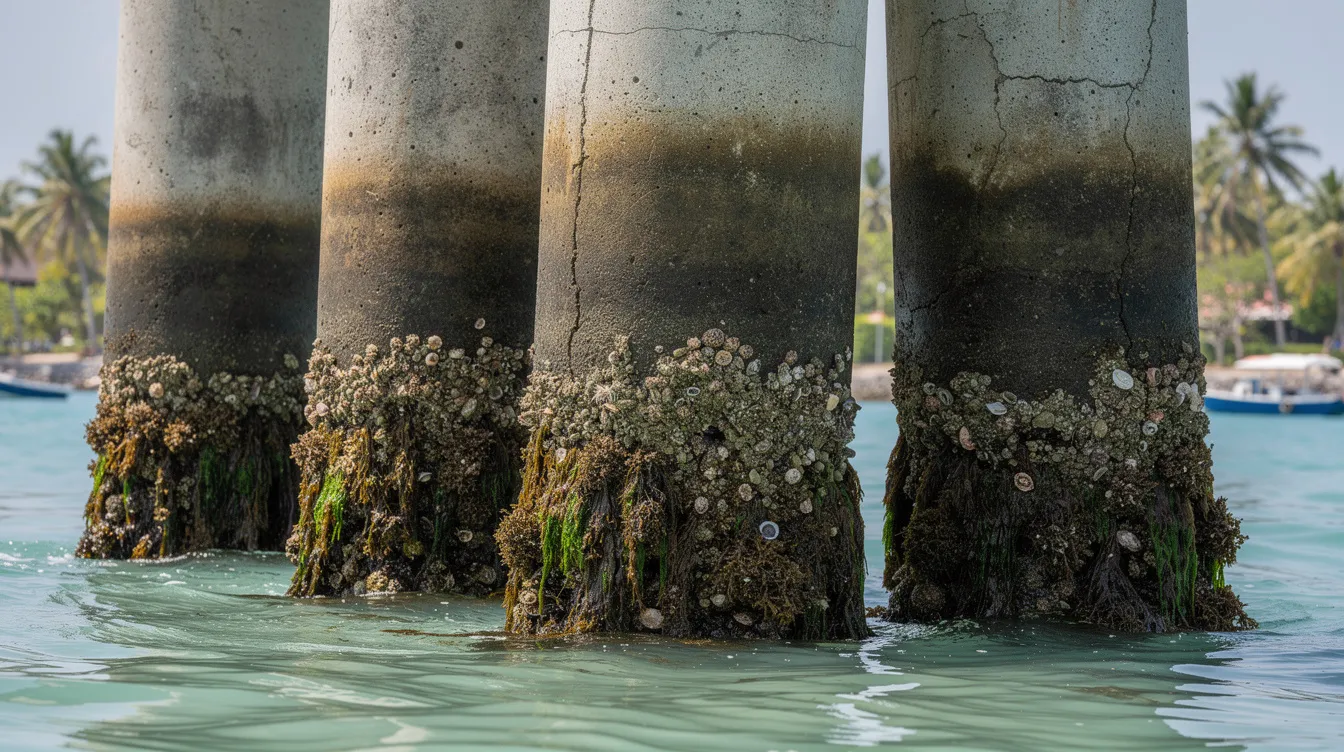
Understanding Corrosion Mechanisms in Singapore’s Marine Environment
Marine corrosion is the electrochemical degradation of metal components and embedded steel reinforcement when exposed to seawater, salt spray, humid air, and biological organisms. For a nation comprising 63 islands with an extensive coastline lined with port facilities, petrochemical complexes, and maritime infrastructure, understanding these mechanisms is foundational to ensuring structural integrity.
The consequences of unchecked metal corrosion in chemical processing plants and port facilities extend well beyond surface rust. Structural deterioration in coastal areas includes localized corrosion and microbiologically influenced corrosion, both of which can compromise load-bearing capacity without obvious visual warning signs. Environmental factors like humidity and salinity significantly affect structure integrity, and Singapore’s tropical maritime climate creates near-ideal conditions for every major corrosion pathway.
Chloride-Induced Corrosion in Tropical Coastal Zones
Chloride induced corrosion is the dominant degradation mechanism for both reinforced concrete and structural steel in Singapore’s coastal environments. Chloride ions penetrate concrete cover through diffusion and capillary absorption, eventually reaching embedded steel reinforcement and breaking down its passive oxide layer. Once the chloride threshold concentration-typically 0.4–0.6% by weight of cement paste-is exceeded, active corrosion initiates. Chloride concentrations exceeding 1% increase corrosion risk substantially, often leading to rapid section loss.
Field studies in tropical marine zones comparable to Singapore show that chloride diffusion coefficients increase significantly when the water-to-cement ratio exceeds 0.45. Surface chloride content is highest in tidal zones, followed by splash, submerged, and atmospheric zones. The “convection zone” phenomenon-where wet-dry cycling drives maximum chloride concentrations below the concrete surface rather than at it-makes splash and tidal zones particularly dangerous. This is the same environment where pitting corrosion can perforate structural steel even at low average corrosion rates.
Beyond chloride attack, pitting corrosion, crevice corrosion, and stress corrosion cracking represent distinct failure modes. Crevice corrosion occurs in gaps between connected components where stagnant seawater concentrates chloride ions, causing localized corrosion that is difficult to detect. Stress corrosion cracking initiates in 304L stainless steel at approximately 20°C-well within Singapore’s ambient temperature range-making alloy selection critical. These mechanisms are directly connected to Singapore’s year-round 27°C temperatures and persistent monsoon salt spray patterns, which ensure that corrosive elements remain active continuously.
High Humidity and Atmospheric Corrosion
Singapore’s atmospheric conditions sustain corrosion even on structures well above the waterline. Morning relative humidity frequently reaches 95–100%, falling to only 60–70% during afternoon dry spells. This means thin electrolyte films form on metal surfaces for extended periods each day, maintaining active electrochemical reactions even without visible wetness. The “time of wetness” metric-a key indicator in corrosion engineering practices-is exceptionally high in Singapore’s coastal zones.
Atmospheric corrosion rates for bare or poorly coated carbon steel in C5-M environments (coastal, high salinity, high humidity) under ISO 12944 can exceed 80–200 µm per year of thickness loss in the first year alone. One study found that mild steel on a raft exposed to full salt spray in marine exposure conditions recorded a corrosion rate of approximately 0.659 mm/year over six months, compared with just 0.016 mm/year at an inland site. This 40-fold difference underscores why direct exposure to aggressive marine environments demands fundamentally different protection strategies than standard industrial applications.
Microbiologically Influenced Corrosion (MIC) is driven by microorganisms in biofilms that colonize submerged and splash-zone surfaces. Marine organisms contribute to this process by creating localized acidic environments beneath fouling layers, accelerating seawater corrosion rates beyond what electrochemical models alone would predict. The combination of uniform corrosion, chemical corrosion from industrial vapors, and biological attack makes Singapore’s coastal industrial zones among the most demanding corrosive environments for structural design.
Understanding these environmental factors is essential before assessing the structural damage they cause-which brings us to the specific integrity challenges facing Singapore’s coastal industrial facilities.
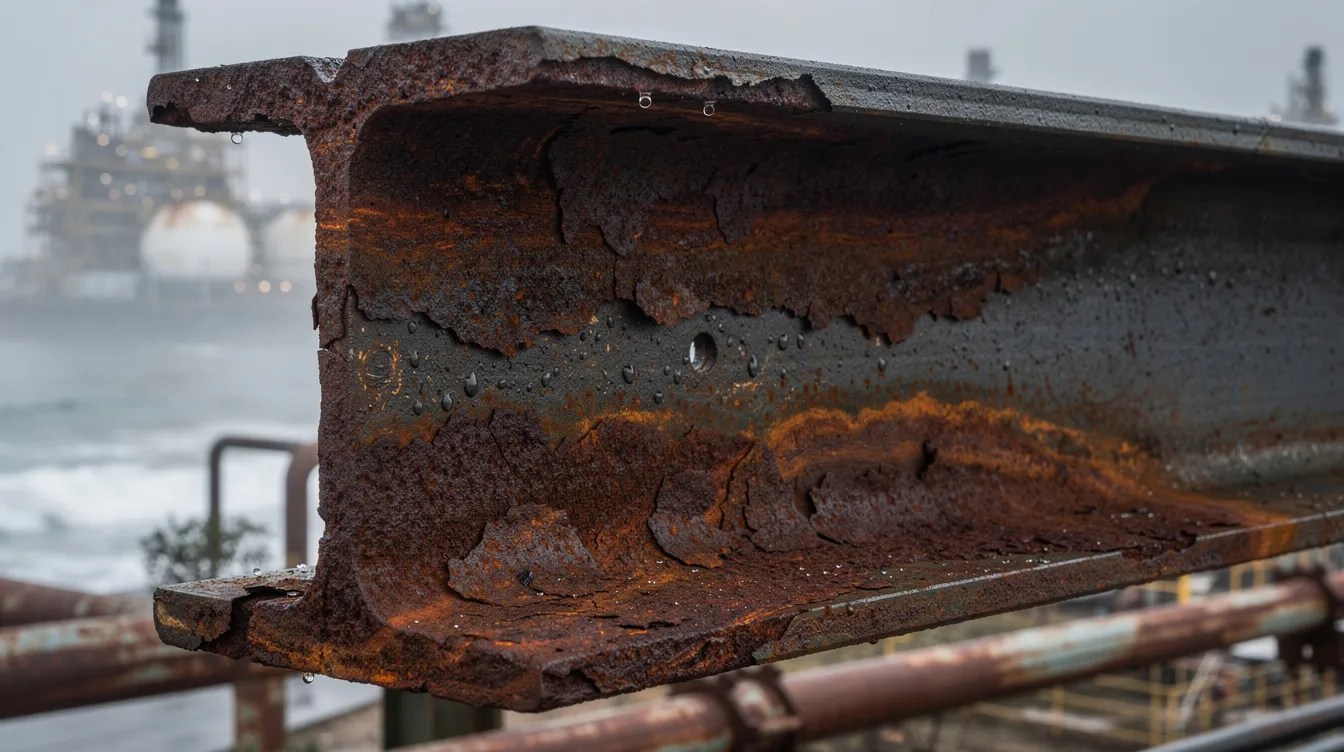
Structural Integrity Challenges in Coastal Industrial Zones
The corrosion mechanisms described above translate directly into measurable structural degradation. For coastal structures including jetties, warehouses, tank farms, and process plant supports, the progression from surface corrosion to structural failure follows predictable patterns-but the timelines can be alarmingly short in harsh marine environments.
Concrete Spalling and Steel Reinforcement Degradation
Concrete spalling is one of the most visible signs of structural failure in marine concrete structures. When corroding embedded steel reinforcement expands-iron oxide occupies roughly six times the volume of the original steel-it generates tensile forces that crack and delaminate the surrounding concrete. This process, combined with carbonation (where atmospheric CO₂ reduces concrete alkalinity), progressively depassivates reinforcement and exposes it to further corrosion. Concrete spalling occurs when corroding steel expands, breaking concrete cover-and once cover is lost, degradation rates accelerate dramatically.
Concrete carbonation rates in Singapore reach 5.5 to 8.6 mm per year in exposed conditions, meaning that structures with inadequate cover depth may see reinforcement depassivation within just a few years of service. At Jurong Port, for example, precast concrete beam soffits suffered severe spalling because insufficient concrete cover exposed rebar directly to the marine environment. The resulting loss of section in reinforcement reduced load-bearing capacity across approximately 260 beams-requiring an extensive FRP wrapping remediation program. Concrete reinforcement is crucial to prevent chloride-induced corrosion, and using low-permeability concrete helps control chloride ingress from the outset.
Structural Steel Deterioration in Marine Atmospheres
Structural steel elements-crane rails, storage tank supports, pipe racks, and wharf structures-face atmospheric corrosion classified at C4 to C5-M severity under ISO 12944 Part 2. At these corrosivity categories, first-year mass loss exceeds 50–80 µm, and without adequate protective coatings, thin cross-sections lose strength rapidly. Submerged steel piles can lose wall thickness through both uniform corrosion and localized pitting, compromising buckling strength and overall mechanical integrity.
The interaction between concrete and steel degradation compounds risk: as concrete cover spalls, exposed reinforcement becomes an additional corroding surface, and galvanic corrosion may develop where dissimilar metals are coupled without proper isolation. Corrosion increases maintenance costs for marine infrastructure significantly-frequent ship repairs due to corrosion disrupt operations, and structural steel replacement in active port environments requires expensive logistics and operational shutdowns.
Facility-Specific Vulnerabilities
Different zones within coastal facilities face distinct corrosion intensities. The splash and tidal zone-the band between low tide and wave crest-experiences the most aggressive conditions due to continuous wet-dry cycling, maximum oxygen availability, and high chloride deposition. Jetties face severe tidal scour, marine growth accumulation, and mechanical loading from vessel berthing forces. Marine facilities should include drainage to prevent water accumulation, as designing structures to avoid water pooling reduces corrosion risks in deck and platform areas.
On Jurong Island’s petrochemical complexes, chemical vapor exposure-including sulphuric acid fumes and chloride-containing process gases-can lower local pH and destroy protective coatings, adding chemical corrosion to the already severe marine atmospheric attack. Submerged piles face additional threats from abrasion, marine borer attack, and erosion corrosion from current-driven sediment movement.
Critical failure modes in these environments include: loss of steel section leading to buckling or collapse; delamination and concrete cover loss exposing reinforcement; excessive deflection in overhead crane beams; and deck collapse where pile capacity is reduced. These risks make regular structural inspections essential for maintaining structural integrity in coastal industrial operations. Early detection through systematic inspection programs is far more effective than reactive repair-a principle now embedded in Singapore’s regulatory framework.
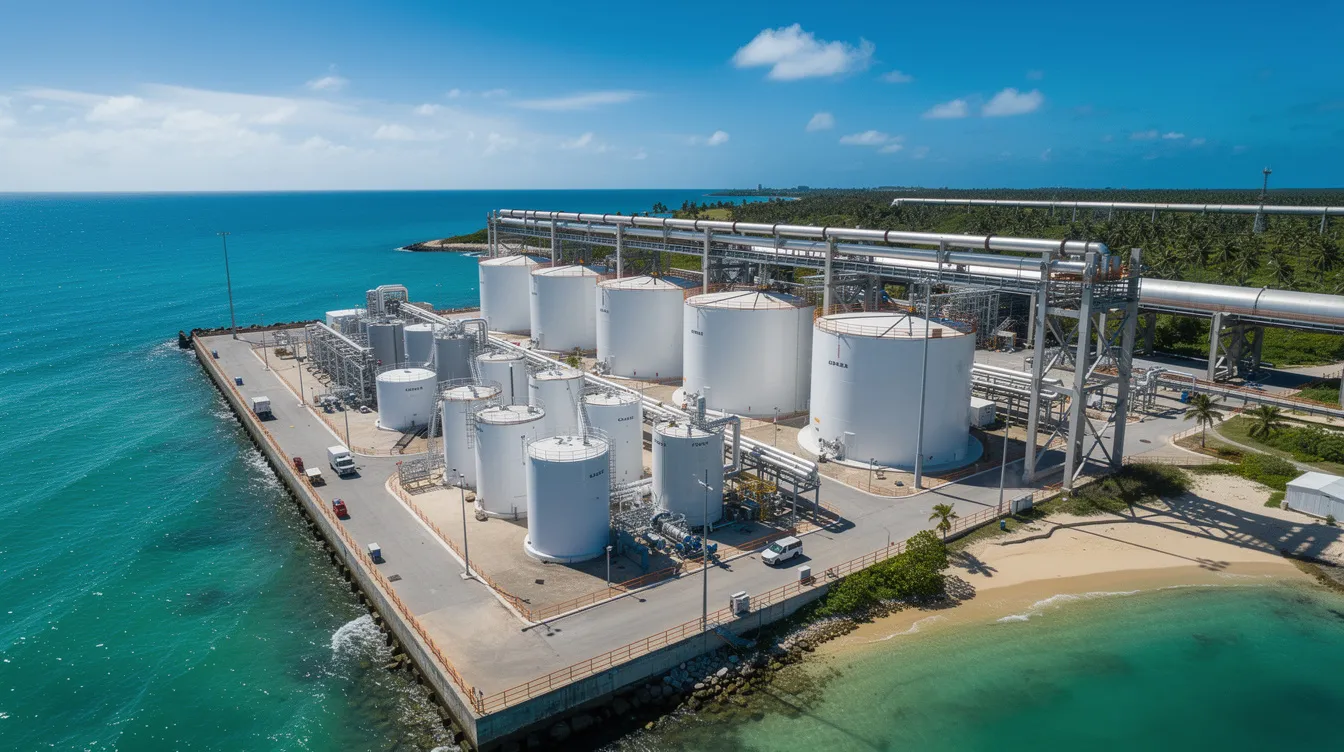
Corrosion Control Systems and Protection Methods
Addressing the structural challenges outlined above requires a layered corrosion protection strategy tailored to each structure’s exposure conditions, operational requirements, and design life. Corrosion control in coastal zones involves material selection and protective coatings working together with active protection systems and monitoring protocols.
Material Selection and Specification Process
Material selection is the first and most consequential decision in marine engineering for coastal structures. The right choice depends on the specific exposure zone, chemical environment, structural loading, and lifecycle economics. Using high-performance alloys and specialized surface barriers enhances corrosion resistance significantly over the structure’s service life, but the selection process must be systematic:
-
Environmental exposure assessment – Classify each structural element by zone (splash, tidal, submerged, atmospheric) and corrosivity category (C4, C5-M, CX, Im4) per ISO 12944. Splash zones require the most corrosion resistant alloys or heaviest coating systems.
-
Chemical compatibility analysis – For industrial process environments on Jurong Island or Tuas, evaluate exposure to chemical additives, acidic vapors, and process chemicals that may attack specific alloy families or coating chemistries.
-
Structural load and fatigue requirements – Assess whether the material must withstand cyclic mechanical stress from wave action, crane loading, or vessel berthing. Fatigue performance of stainless steel grades differs substantially from carbon steel.
-
Lifecycle cost analysis – Compare total ownership costs including initial material premium, inspection frequency, maintenance intervals, and expected replacement timeline. Marine-grade reinforced concrete significantly extends service life compared to standard mixes, and duplex stainless steel-while more expensive initially-often proves more economical over 30+ year design horizons.
For highly corrosive submerged applications, duplex stainless steels tolerate over 6,000 ppm chloride, offering superior resistance compared to 316L stainless steel, which withstands up to 1,000 ppm chloride exposure. Marine-grade stainless steels are recommended for structures exposed to high salinity where coating maintenance access is limited. For reinforced concrete, specifying a water-to-cement ratio below 0.40 with supplementary cementitious materials (fly ash, silica fume, or slag) substantially reduces chloride diffusivity and extends time to corrosion initiation. Adequate concrete cover-typically 40–60 mm minimum for splash zone piles per Eurocode and local norms-is essential, though many older structures were built to less stringent standards.
Protective Coating Systems Comparison
Employing advanced coatings protects structures against environmental factors and is typically the primary defense for carbon steel and reinforced concrete in marine atmospheres. Multi-layer coating systems include zinc-rich primers and polyurethane topcoats, providing both sacrificial and barrier protection. Selecting the appropriate coating system depends on the specific exposure conditions:
|
Coating System |
Splash Zone Performance |
Submerged Performance |
Industrial Vapor Resistance |
|---|---|---|---|
|
Epoxy Novolac |
Excellent |
Good |
Excellent |
|
Polyurethane |
Good |
Fair |
Good |
|
Thermal Spray Aluminum |
Excellent |
Excellent |
Fair |
|
Zinc-Rich Primer + PU Topcoat |
Good |
Good |
Good |
Epoxy coatings provide a tough protective barrier against corrosion and are particularly effective in splash zones and chemical processing environments. High-performance coatings can reduce chloride ingress by 97.3%, making them a critical component of the corrosion protection strategy for concrete structures. Anti corrosive paints formulated for ISO 12944 C5-M and CX categories must be specified with appropriate dry film thickness and application conditions-coatings applied in Singapore’s high humidity conditions can blister or fail if ambient moisture exceeds the product’s tolerance window.
For concrete pile repair, FRP composite wrapping systems (carbon, glass, or aramid fibre) applied with underwater-cure resins create both a resistant layer against chloride penetration and structural confinement that restores load capacity. These systems were successfully deployed at Jurong Port and Changi Naval Base, where traditional concrete jacketing had failed due to repeated spalling in the marine environment.
Cathodic Protection Implementation
Cathodic protection is mandatory for submerged steel structures in Singapore’s maritime operations. Cathodic protection systems utilize sacrificial anodes or impressed current methods to shift the electrochemical potential of protected metal surfaces to a range where corrosion becomes thermodynamically unfavorable. Cathodic protection uses sacrificial anodes to prevent corrosion in smaller structures, while impressed current cathodic protection is typically specified for larger offshore structures and extensive pile networks where current demand exceeds sacrificial anode capacity.
Implementation follows a structured process:
-
Structural assessment and current density calculations – Determine the total surface area requiring protection, measure existing corrosion rates using half-cell potential surveys and ultrasonic thickness gauging, and calculate the required protective current density based on environmental conditions.
-
Anode selection – Choose between sacrificial anodes (zinc or aluminum alloys for seawater, magnesium for brackish water) and impressed current systems based on structure size, design life, and electrical conductivity of the surrounding electrolyte.
-
Installation with marine contractor coordination – Coordinate with port operations for work windows governed by tidal access, ensure electrical continuity across all protected elements, and install reference electrodes for monitoring.
-
Monitoring system setup – Establish potential measurement points at critical locations, set up data logging for impressed current systems, and define intervention thresholds. Hydrogen-related issues can arise from excessive cathodic protection, making regular monitoring essential to avoid over-protection that can cause coating disbondment or hydrogen embrittlement of reactive metals.
Local contractors such as West Squadron Marine provide integrated underwater pile repair and cathodic protection services, combining visual and ultrasonic inspection with crack mapping, epoxy injection, jacketing, anti-spall coating, and CP installation in coordinated work campaigns.
Common Challenges and Solutions
Facility owners and engineers managing Singapore’s coastal industrial marine structures routinely encounter practical barriers to effective corrosion control. The financial burden of corrosion on industries is estimated in billions globally, but locally, solutions must address Singapore-specific regulatory, logistical, and environmental constraints.
BCA PSI Compliance for Marine Structures
Compliance with BCA guidelines is essential for structural safety. BCA mandates periodic inspections for buildings over 20 years old, and the updated PSI Guidelines for Structural Engineers (September 2024) now include Annex E specifically addressing civil engineering structures in marine environments. Solutions include engaging QP-endorsed structural integrity assessments that cover both above-water and underwater pile inspections, marine growth documentation and removal for condition assessment, steel thickness measurement at multiple elevations, and seabed embedment depth verification. Singapore requires QP-endorsed drawings for marine structures, and JTC’s Space Submission Handbook requires PE endorsement for modifications to coastal industrial facilities. Major Hazard Installations on Jurong Island must also prepare a Safety Case addressing corrosion-related structural risks.
Additionally, the new Code of Practice on Coastal Protection (first edition June 2026, coming into effect in 2028) introduces Eurocode-based design requirements and mandates Professional Engineers to assess existing coastal structures and identify necessary enhancements-creating new compliance obligations for owners of aging maritime infrastructure.
Access Limitations for Jetty and Submerged Structure Inspections
Inspecting submerged and tidal-zone elements presents significant logistical challenges: restricted access due to tides, safety coordination with active maritime operations, and limited work windows. The solution combines multiple inspection technologies: ROV surveys for underwater pile assessment, ultrasonic thickness gauging for quantitative section loss measurement, and drone-based inspections for above-water facades and splash zones. Structural health monitoring utilizes sensors for real-time assessment of integrity, and the use of digital tools enhances monitoring and maintenance of corrosion control-including AI-assisted defect detection, BIM-integrated asset management, and automated reporting. BCA is actively accrediting drone service providers for marine environment structure inspections, representing a significant step toward maritime innovation in inspection methodology.
Galvanic Corrosion in Mixed-Metal Industrial Systems
Galvanic corrosion is a persistent challenge in industrial facilities where dissimilar metals-such as carbon steel pipe supports connected to stainless steel process equipment-are coupled in the presence of seawater electrolyte. The solution requires systematic electrical isolation using non-conductive gaskets, bushings, and washers at every connection point; specification of compatible fastener materials with appropriate chemical composition; and integration of galvanic corrosion risk assessment into the cathodic protection design. Preventive maintenance schedules involve routine inspections and cleaning of isolation joints, and regular cleaning can decrease the rate of rust formation on structures by removing salt deposits and marine growth that trap moisture against metal surfaces.
Risk-based inspection programs prioritize maintenance schedules for critical infrastructure, focusing resources on the highest-risk elements-typically splash zone connections, submerged pile caps, and areas where chemical vapor exposure compounds marine atmospheric attack. This approach prevents further corrosion from developing into catastrophic structural failures while optimizing maintenance costs across large facility portfolios.
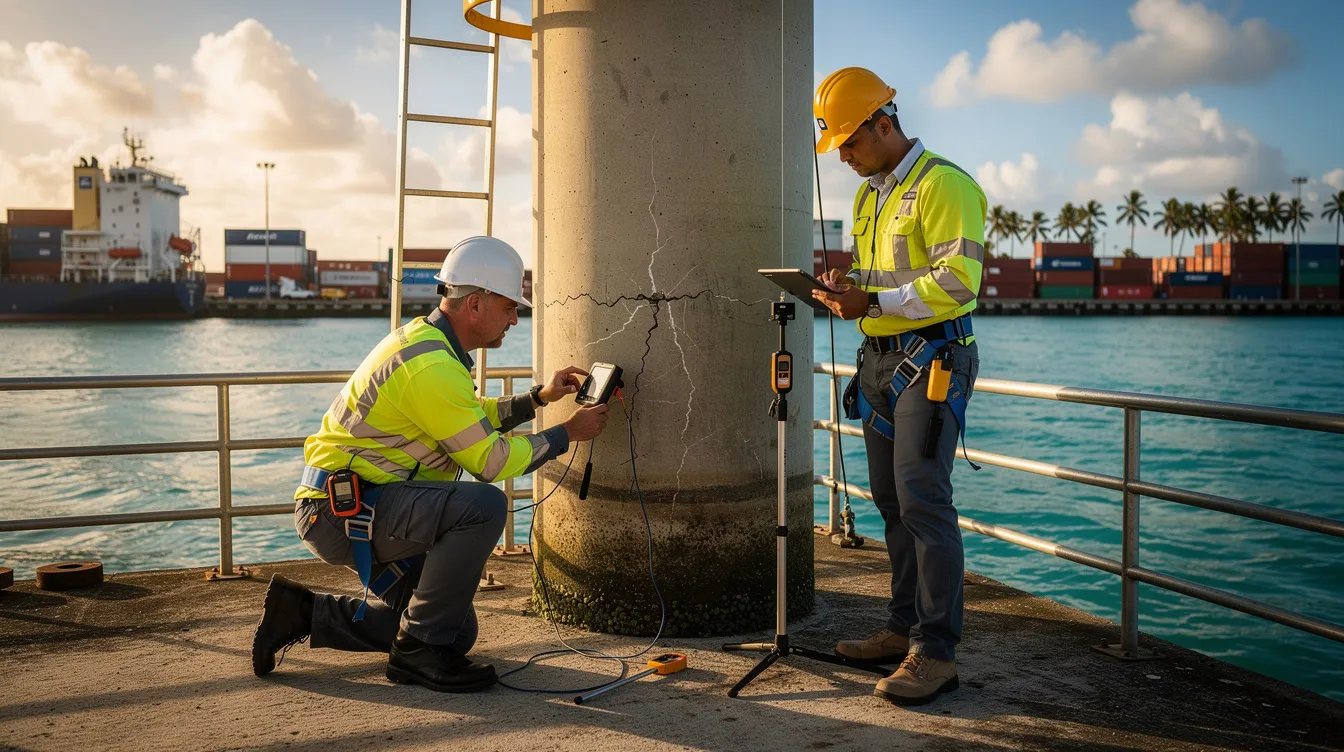
Conclusion and Next Steps
Maintaining structural integrity across Singapore’s marine and coastal industrial zones demands a comprehensive, integrated approach. The combination of persistent high humidity, aggressive salt spray, chloride ion penetration, and industrial chemical exposure creates a corrosive environment where no single protection method is sufficient. Effective corrosion control integrates material selection, protective coatings, cathodic protection, and systematic inspection-all governed by Singapore’s increasingly stringent regulatory framework.
The local case studies at Jurong Port and Changi Naval Base demonstrate both the consequences of inadequate initial specification and the effectiveness of modern remediation technologies like FRP composite wrapping and hybrid protection systems. With corrosion costs running into billions globally, the economic case for prevention over reaction is compelling. Environmental protection and environmental stewardship considerations further reinforce the value of durable, low-maintenance marine structures that minimize repair-related disruption to maritime operations.
To take action now:
-
Conduct a structural integrity assessment of existing coastal facilities, prioritizing splash and tidal zone elements where degradation rates are highest
-
Implement risk-based inspection programs aligned with BCA PSI requirements, including underwater inspections and marine growth documentation
-
Specify appropriate protection systems for planned industrial expansions-matching coating systems, alloy grades, and CP designs to classified exposure zones
-
Establish monitoring protocols for cathodic protection systems and coating condition, using energy efficient systems where possible for continuous data collection
-
Review compliance readiness for the incoming Code of Practice on Coastal Protection (effective 2028) and updated PSI guidelines
Related topics that coastal facility managers should also address include fire safety compliance for industrial buildings, façade inspection requirements, and structural retrofitting strategies for aging offshore platforms and marine infrastructure approaching the end of their original design service life.
Additional Resources
-
BCA PSI Guidelines for Structural Engineers (September 2024) – Including Annex E for marine and civil engineering structures, covering underwater inspection protocols and steel thickness measurement requirements
-
Code of Practice on Coastal Protection (First Edition, June 2026) – Eurocode-based design criteria for coastal structures, effective 2028, with requirements for PE assessment of existing installations
-
SS ISO 12944-9:2018 – Singapore Standard for protective paint systems on steel structures in offshore and marine atmospheres, defining corrosivity categories CX and immersion category Im4
-
JTC Space Submission Handbook v6 – Requirements for PE endorsement and authority submissions for coastal industrial development approvals
-
Stellar Structures’ structural inspection services – Professional engineer inspections, BCA periodic structural inspection, and authority submission support for marine industrial compliance