




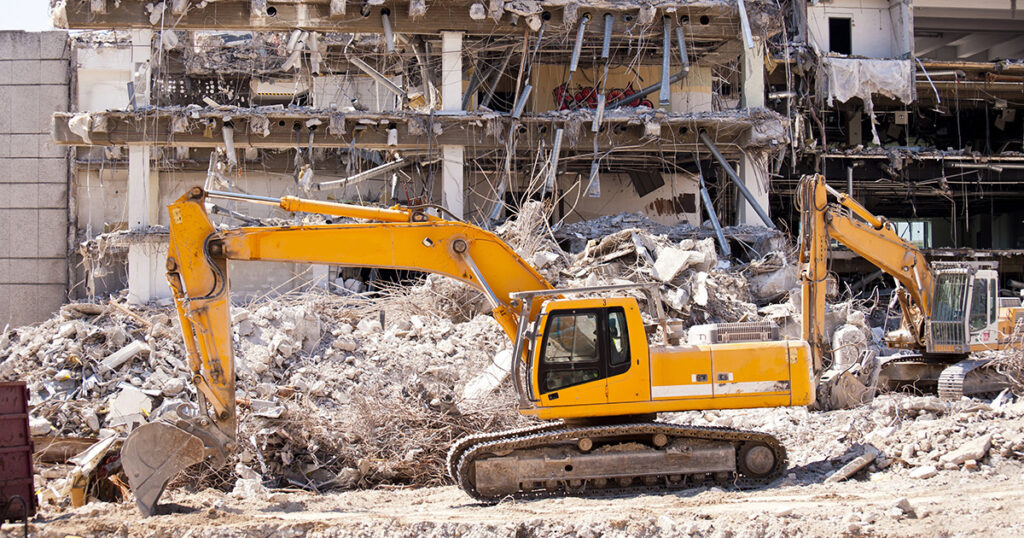
Demolition Engineering: Importance of Demolition Permit and Safety Compliance
Introduction to Modern Demolition Engineering
Demolition engineering represents a highly specialized discipline within structural engineering. Historically, dismantling structures relied heavily on brute force. Workers utilized sledgehammers and wrecking balls extensively.1
Today, the field requires advanced physics and precise structural analysis. Meticulous planning governs every single demolition project. The transition from crude methods to controlled implosions is profound.
Consequently, modern demolition emphasizes aggressive risk mitigation. Environmental protection also remains a paramount industry concern. Central to this highly regulated industry is the permitting process. Securing a legal demolition permit is an absolute necessity.
Demolition Engineering: Importance of demolition permit cannot be overstated. It serves as the foundational legal document for any project. Furthermore, a permit guarantees adherence to stringent municipal guidelines.
It also ensures compliance with federal safety regulations. Without a demolition permit, projects invite catastrophic legal risks. Physical dangers also multiply exponentially without regulatory oversight.
Therefore, understanding the comprehensive permitting process is vital. This report exhaustively details the multifaceted domain of demolition engineering. It explores critical safety protocols and advanced methodologies.
Additionally, it highlights the intersection of digital marketing and construction. Specifically, it addresses 2026 SEO strategies for modern contractors. Ultimately, this document demonstrates why regulatory compliance safeguards urban development.
The Historical Evolution of Demolition
The demolition sector possesses a relatively short history as a specialty. The 18th and 19th centuries brought unprecedented technological advancements.2 Steam-powered machinery completely revolutionized excavation and land clearance.2
This enabled the rapid development of railways and large factories.2 However, demolition emerged as a distinct sector after World War II.3 British Prime Minister Winston Churchill urgently requested contractor assistance.3 Cities desperately needed help clearing extensive wartime bomb damage.3
Many building contractors subsequently switched their primary focus.3 They concentrated entirely on professional demolition and site clearance.3 Public funds organized and paid for these massive work packages.3
Industrial giants also rebuilt their heavily damaged infrastructure.3 Initially, early demolition contractors worked directly for their clients.3 By the 1980s, developers began dealing with single principal contractors.3
Over six decades ago, companies began with simple tasks. They primarily dug holes and buried debris from small buildings.4 Gradually, the industry took on larger, more complex projects.4 Continuous improvement refined techniques and adopted cutting-edge technologies.4
Today, demolition engineering represents a highly sophisticated, multi-billion-dollar global industry. It continuously adapts to increasing urban density and environmental concerns.5
Demolition Engineering: Importance of Demolition Permit
Obtaining a demolition permit is never an administrative formality. It remains a critical safeguard for absolute public accountability. Demolition Engineering: Importance of demolition permit begins with strict legal compliance.
A demolition permit ensures adherence to local building codes.6 Furthermore, it mandates compliance with complex municipal zoning laws.6 Bypassing this regulatory requirement guarantees severe financial repercussions. Local authorities use permits to track and oversee high-risk projects.6
Consequently, unauthorized building demolition triggers immediate enforcement actions. Cities actively monitor construction sites to ensure maximum safety compliance.7 Unpermitted work frequently results in immediate stop-work orders.8 These administrative halts freeze all project momentum instantly.8
Subsequently, project owners accumulate massive labor and rental fees.8 Moreover, municipalities impose heavy fines for unauthorized demolition activities.9 These financial penalties can escalate rapidly for repeat regulatory offenders.9
Extreme cases of negligence occasionally warrant severe criminal charges.9 Beyond immediate fines, unpermitted demolition severely devalues the underlying property.6
Future buyers hesitate to invest in properties with legal violations. Additionally, unpermitted work exposes contractors to enormous liability issues.6 If adjacent properties sustain damage, responsible parties face crippling lawsuits.9
Furthermore, a valid demolition permit mandates utility disconnection verifications.9 Severing active gas, water, and electrical lines prevents catastrophic explosions.9
Demolition without proper permits violates established community trust. Therefore, the demolition permit stands as the ultimate safety barrier. It represents the core of responsible modern urban development.
Comprehensive Permit Application Checklists
Municipalities require exhaustive documentation before issuing any demolition permit. Application requirements vary significantly across different urban jurisdictions.
However, core safety and environmental mandates remain remarkably consistent. The application process demands meticulous attention to specific technical details.
| Municipality | Key Permit Requirement | Primary Regulatory Focus |
| Philadelphia | Site safety manager designation | Project leadership and accountability 10 |
| Philadelphia | Dust control permit from AMS | Air quality and pollution mitigation 10 |
| Passaic | Hydrant meter permit copy | Wet demolition dust suppression 11 |
| Passaic | Proof of exterminator certification | Urban rodent and pest abatement 11 |
| Boston | Dig Safe reference number | Underground utility protection 12 |
| Boston | Fire Department demolition permit | Combustible hazard management 12 |
| Brownsville | Landfill disposal receipts | Proper environmental waste management 13 |
| Brownsville | Historic Preservation Officer release | Heritage building protection 13 |
Table 1: Specific municipal requirements for demolition permit applications.
In Philadelphia, applications must list the designated demolition supervisor.10 Placed applications require the legal address established by property assessment.10 Furthermore, adjacent owner acknowledgements are mandatory for party wall protection.10
The City of Passaic demands a strict hold harmless insurance statement.11 Contractors must also submit specific recycling verification forms.11
In Boston, environmental services approval is a strict prerequisite.12 Pest control letters must verify pre-job and post-job extermination.12 Brownsville requires the lot to be completely cleared and leveled.13
Final inspections check that grass is mowed and trees trimmed.13 A demolition permit typically expires two weeks after issuance.13 This strict timeline forces rapid, efficient project execution. Thoroughly preparing these checklists prevents expensive municipal permitting delays.
Pre-Demolition Engineering Surveys and Safety Protocols
Safety protocols completely dominate structural demolition engineering. The Occupational Safety and Health Administration strictly governs these practices.14 OSHA standard 29 CFR 1926.850(a) is frequently cited.14 This standard governs critical preparatory operations on dangerous worksites.14
It mandates a comprehensive engineering survey before any work begins.15 A designated competent person must evaluate the entire structure thoroughly.15 They analyze the condition of framing, floors, and load-bearing walls.15
The primary goal is predicting any unplanned structural collapse.15 Structures damaged by fire or flood require specialized preparatory operations.15 In these instances, interior walls and floors demand robust shoring.15
Furthermore, engineers must identify hidden hazards within the structural members.16 Post-tensioned concrete presents unpredictable tension release dangers during dismantling.16 Therefore, the engineering survey establishes the safe demolition strategy.17
Planners use this vital data to sequence safe material removal.18 Additionally, the survey determines the precise heavy equipment required.17 Project managers must secure necessary safety equipment during this phase.19
The survey evaluates unusual structural conditions and previous physical damage.20 Adjacent structures receive meticulous inspections to prevent collateral damage.20 Proper planning ensures operations conclude without tragic accidents or injuries.16
| Pre-Demolition Best Practices | Prohibited Demolition Actions |
| Conduct thorough structural analysis prior to starting. | Neglect established site safety protocols and guidelines. |
| Use advanced diagnostic tools and engineering techniques. | Rely on outdated, uncalibrated, or poorly maintained equipment. |
| Prioritize safe material recovery and structural recycling. | Dispose of hazardous construction materials irresponsibly. |
| Train all site workers on industry best practices. | Ignore continuous worker education and required safety training. |
| Comply strictly with all local zoning regulations. | Overlook required permits and binding legal requirements. |
Table 2: Strategic guidelines for structural engineering demolition preparation.21
Catastrophic Failures: 2000 Commonwealth Avenue
History provides grim examples of demolition and construction failures. These disasters inevitably stem from bypassed regulations and missing permits. The 2000 Commonwealth Avenue collapse illustrates this perfectly.22
In January 1971, a 17-story concrete high-rise collapsed in Boston.22 The building was actively under construction when disaster struck.22 Investigators discovered a shocking lack of a proper building permit.22
Furthermore, the concrete utilized possessed dangerously low compressive strength.22 Cores showed concrete compressive strengths as low as 700 psi.22 The original design explicitly required 3,000 psi concrete.22
Low January temperatures severely retarded the concrete’s strength gain.22 Workers also removed critical structural formwork prematurely against engineering advice.22 There was improper shoring under the east side roof slab.22
Rebars were of insufficient length and inadequately placed overall.22 The contractor used rail steel instead of specified billet steel.22
Rail steel has a dangerously lower average ultimate elongation.22 Design and labeling errors caused improper material placement.22 Consequently, a punching shear failure triggered a massive collapse.22 The roof slab sagged and collapsed onto the sixteenth floor.22
A general progressive collapse destroyed two-thirds of the building.22 Four workers died, and twenty others sustained severe physical injuries.22 The investigation revealed a complete lack of proper field inspection.22
Designers failed to provide a continuous load path safely.22 This tragedy highlights the absolute necessity of rigorous municipal inspections. Permits enforce the engineering standards that ultimately protect human lives.
Catastrophic Failures: 2013 Philadelphia Collapse
Another horrific tragedy occurred in Philadelphia during the summer of 2013.23 A decrepit four-story structure underwent a reckless demolition process.24 The unstable building shared a common wall with an adjacent store.24
This adjacent business was an active Salvation Army thrift shop.24 On June 5, the unbraced masonry wall collapsed entirely.25 It crashed violently down onto the busy thrift store below.25
Six innocent civilians perished instantly beneath the falling structural debris.25 Fourteen other people sustained severe, life-altering physical injuries.25
Post-collapse investigations revealed shocking levels of gross criminal negligence. The heavy equipment operator had marijuana in his system.25 Furthermore, the demolition contractor flagrantly ignored repeated written safety warnings.26
The developer sent emails warning of an uncontrolled collapse.26 They explicitly cited threats to life and limb onsite.26
The Salvation Army was told demolition would use bucket trucks.27 Instead, aggressive mechanical demolition proceeded without adequate lateral bracing.23 OSHA cited the contractor for willful and serious safety violations.23
This catastrophic negligence resulted in a massive civil lawsuit.27 A Philadelphia jury ultimately awarded a record $227 million settlement.26 This stands as the largest personal injury settlement in Pennsylvania history.26
The disaster prompted intense scrutiny of the city’s expediter system.25 It highlighted severe shortcomings in municipal site inspections.25 Ultimately, this tragedy underscores the deadly consequences of ignoring regulations.
Residential Induced Collapse and Regulatory Positions
Residential demolition presents distinct hazards distinct from commercial projects. A highly dangerous method is the residential induced collapse.28
This involves systematically removing key structural members intentionally.28 Contractors apply force to trigger a controlled collapse.28 However, this method frequently results in totally uncontrolled building failures.28
Inspectors observe severe problems with induced collapse on residential properties.28 Residential homes exist in close proximity to neighboring family properties.28 Contractors often lack expert advice on pre-weakening structural members safely.28
Workers recklessly re-enter demolition footprints when initial collapses fail.28 They use poorly maintained wire ropes, slings, and heavy chains.28
Furthermore, contractors operate heavy machinery without necessary traffic control.28 Civilians often enter exclusion zones, risking fatal chain strikes.28 Regulatory bodies explicitly condemn these hazardous residential demolition practices.
Workplace health and safety regulations mandate managing these extreme risks.28 Duty holders must eliminate health and safety risks entirely.28 If elimination is impossible, they must minimize risks reasonably.28
Undertaking sequential demolition prevents the need for dangerous induced collapses.28 Sequential dismantling keeps workers safely out of hazardous exclusion zones.28
Demolition permits strictly regulate these methodologies to protect the public. Contractors attempting induced collapse without permits face immediate project shutdowns. Safety authorities demand strict adherence to approved sequential demolition plans.
Environmental Regulations and Hazardous Material Management
Demolition engineering intersects deeply with complex environmental science disciplines. Dismantling older structures releases dangerous toxins into the surrounding environment.
Consequently, environmental regulations require meticulous hazardous material management.29 Asbestos, a widely used fire-retardant mineral, causes deadly respiratory diseases.30 When disturbed, microscopic asbestos fibers become airborne and highly hazardous.30
Federal law mandates specialized abatement procedures prior to physical demolition.31 Workers must construct negative-pressure enclosures to contain the toxic fibers.32 High-efficiency particulate air vacuums capture residual asbestos dust safely.32
Lead-based paint is another pervasive hazard in legacy structures.30 Inhaling lead dust causes severe, irreversible neurological damage in humans.33
Contractors must utilize wet sanding techniques to suppress toxic particulate matter.34 Additionally, toxic polychlorinated biphenyls (PCBs) require immediate identification and removal.31
Environmental agencies oversee the safe demolition of PCB-contaminated buildings.35 A demolition permit mandates the proper disposal of all contaminants.6 Contractors must provide verifiable landfill receipts before passing final inspections.13
Furthermore, environmental regulations govern stormwater management on demolition sites. Runoff water easily carries toxic sediment into municipal drainage systems.33
Therefore, engineers must implement comprehensive stormwater pollution prevention plans.33 Compost-based best management practices significantly reduce toxic site runoff.33 Environmental sustainability requires strict compliance with every municipal disposal regulation.29
Urban Vector Control and Rodent Abatement
A highly specific but vital permitting requirement involves urban vector control. Abandoned buildings serve as breeding grounds for massive rodent populations. Rapid demolition suddenly displaces these pests into surrounding residential neighborhoods.36
Consequently, municipalities enforce strict rat abatement protocols before issuing permits. Extermination must commence weeks before the initial ground disturbance occurs.37
Licensed pest control operators must install secure, monitored bait stations.38 Seattle requires rat abatement to begin 15 days before clearing.37
Bait stations must show visible evidence of an ongoing program.37 In New York City, legislation established aggressive rat action plans.39 The city now mandates extermination funding for all major construction projects.39
These rules apply to projects altering 50% of floor area.39 Enlargements increasing floor area by 25% also trigger these rules.39
Contractors must submit a formal pre-demolition rodent extermination certificate.40 Site inspectors absolutely cannot waive this critical public health requirement.37 Without verifiable pest eradication, the local building department denies permits.40
All rodenticide applications must be made by licensed professionals.38 Baits must utilize EPA-registered pesticides consistent with legal labels.38
Large dumpsters near sites often attract new rat infestations quickly.39 Therefore, continuous monitoring remains essential throughout the entire demolition process. Vector control proves that demolition permits protect holistic community health.
High-Density Urban Demolition and Sidewalk Sheds
Demolishing structures in high-density urban environments presents extraordinary logistical challenges. Protecting passing pedestrians from falling debris is an absolute priority. Therefore, cities mandate the installation of heavy-duty sidewalk sheds.41
New York City’s Local Law 11 requires sheds for high-altitude work.41 The municipal building code dictates specific technical requirements for structures.42
| Shed Component | Common Material Used | Primary Structural Purpose |
| Support Posts | High-grade Steel | Support the overhead framework securely.43 |
| Main Beams | High-grade Steel | Provide the primary structural framework.43 |
| Decking Roof | Wood or solid Steel | Catch falling masonry and debris.43 |
| Guard Rails | High-grade Steel | Prevent objects from rolling off edges.43 |
| Safety Lighting | Electric lamps or LED | Keep the pedestrian walkway well-lit.43 |
| Protective Netting | Synthetic mesh material | Catch small debris and toxic dust.43 |
Table 3: Standard components and specifications for urban sidewalk sheds.
These temporary structures must withstand 300 pounds per square foot.42 Sheds for buildings under 100 feet require 150 pounds capacity.42
The passageway requires a strict eight-foot minimum clearance height.42 Furthermore, artificial lighting must illuminate the underlying passageway constantly.42 Egress routes and fire escapes must never be blocked entirely.42
Alongside overhead protection, contractors must actively mitigate site noise. Utilizing continuous water sprays effectively suppresses airborne particulate matter.44 Chemical dust suppressants bind particles together, preventing dangerous atmospheric suspension.44
Furthermore, acoustic sheeting encapsulates noisy machinery, minimizing community disruption.45 Engineers must isolate buildings to break harmful vibration transmission paths.45 Urban demolition demands constant vigilance and sophisticated safety engineering solutions.
The Physics and Methodology of Structural Implosion
Demolition engineering employs various methodologies tailored to specific structural typologies. Mechanical demolition remains the most common technique for standard buildings.
However, massive urban structures demand radically different, highly calculated engineering strategies. Controlled implosion is the absolute pinnacle of demolition engineering precision.46 It utilizes the fundamental laws of physics to destroy giant structures.46
Explosives do not blow the building outward into surrounding streets.46 Instead, strategically placed charges simply destroy primary load-bearing supports.47 Subsequently, immense gravity pulls the unsupported upper mass downward instantly.46
This tremendous kinetic energy obliterates the lower sections upon impact.46 The structure effectively collapses seamlessly into its own original footprint.48
Engineers use nitroglycerin and dynamite to shatter reinforced concrete supports.47 Linear shaped charges are utilized specifically to sever steel columns.47 Floor-by-floor detonation delays control the exact direction of structural collapse.18
Successful implosions require meticulous spatial planning to contain fragmented debris.49 Furthermore, the resulting massive dust cloud requires extensive prior mitigation.49
Engineers must ensure minimal charge weights of explosives are used.49 The 2000 demolition of the Seattle Kingdome set a volume record.50
Detroit’s J.L. Hudson Department Store was the tallest steel implosion.50 Implosions remain the fastest method for removing obsolete urban megastructures. However, they require exhaustive regulatory permits and unparalleled engineering accuracy.
Industrial Demolition: Power Plants and Chimneys
Industrial demolition requires specialized techniques distinct from commercial building removal. Power plants contain highly complex infrastructure requiring unique dismantling methodologies.51
Facilities include cooling towers, boilers, precipitators, transformers, and massive silos.51 Cooling towers require precise blasting concepts developed over several decades.52 Blast demolition provides an economic procedure for high-rise massive structures.52
Compared to mechanical demolition, blasting significantly shortens demolition timelines globally.52 It also fundamentally reduces prolonged dust, noise, and vibration emissions.52 The primary goal is the controlled collapse of the cooling tower.52
Afterwards, crews remove the fractured debris safely with small excavators.52 Chimney stacks present distinct physics challenges during explosive implosion events.49
While collapsing, tall chimneys can unexpectedly break into two pieces.49 This causes severe concern as the fall trajectory becomes uncontrollable.49 Engineers must evaluate if space accommodates the generated debris volume.49
Subsurface infrastructure and coal yards require extensive environmental soil testing.51 Contractors must maintain comprehensive working documentation and strict method statements.53
Unannounced safety walkarounds by industrial specialists guarantee strict procedural compliance.53 Rope access and innovative rigging techniques allow structure removal safely.54 This is vital when massive construction equipment is simply not practical.54
Ultimately, industrial demolition merges heavy engineering with delicate precision techniques.
Advancements in Demolition Technology and Robotics
The modern demolition industry rapidly integrates cutting-edge automation technologies globally. Removing human workers from hazardous zones drastically reduces site fatalities.55
Consequently, remote-controlled demolition robots are revolutionizing interior dismantling procedures.56 Outdated methods utilizing sledgehammers and brute force were incredibly dangerous.56 Manufacturers like Brokk and Husqvarna engineer highly agile robotic machines.57
Brokk robots utilize a unique, highly flexible three-part arm system.57 These machines outperform traditional excavators five times their physical size.58 Furthermore, they operate entirely on quiet, zero-emission electric power sources.58
This completely eliminates toxic exhaust fumes in poorly ventilated spaces.58 Operators control these powerful machines from a safe, vibration-free distance.58
This reduces worker exposure to collapsing floors and asbestos dust.56 Husqvarna DXR models are specifically designed for tight-access work environments.59 They provide ergonomic control within a wider construction equipment ecosystem.60
Heat-resistant covers and cylinders protect robots in extreme thermal conditions.58 Additionally, unmanned aerial vehicles provide continuous real-time demolition site monitoring.55
Drones capture high-resolution imagery and video to map topographical data.61 They identify structural weaknesses and risky zones beforehand with precision.55
Modern demolition technology changes how structures are dismantled safely today.56 Staying updated with these robotic advancements is necessary for competitive contractors.56
Digital Twins and Building Information Modeling (BIM)
Building Information Modeling optimizes the entire pre-construction demolition planning phase.62 Engineers use BIM software to simulate the complete demolition sequence.63 This digital twin technology identifies spatial clashes before physical work.64
Navisworks software displays critical building information intuitively through detailed animation.63 Integrating 4D modeling links the demolition plan with construction timelines.63
This allows for vastly better schedule coordination and resource allocation.63 BIM determines the type and exact location of reusable waste.65 It assists stakeholders in using the building as a material bank.65
Just-in-time delivery prevents long-term storage of materials and ensuing waste.65 Virtual Design and Construction vastly improves overall project team coordination.62
Modeling offers a consolidated platform to track complex building updates.62 Walking through designs virtually allows leaders to fine-tune accurate estimates.62
Simulating the process mitigates potential risks and optimizes decision-making capabilities.63 The software standardizes generated reports and maintains up-to-date central documentation.66
Finding the optimal scenario is particularly important for dangerous tasks.66 Customized views break down complex plans into easily digestible chunks.62
Therefore, BIM transforms demolition from unpredictable hazard into precise science. Digital twins ensure safer, more sustainable, and highly efficient operations.
The Circular Economy: Deconstruction Versus Demolition
Environmental sustainability fundamentally changes how engineers view obsolete urban buildings. The traditional take-make-waste demolition model generates staggering amounts of debris.67
Currently, progressive contractors champion the vital principles of the circular economy.68 This paradigm shift promotes meticulous structural deconstruction over rapid demolition.69 Deconstruction involves carefully dismantling a building in reverse construction order.69
This painstaking process allows workers to salvage valuable building materials.69 Urban mining views existing cityscapes as massive repositories of resources.70
Contractors reclaim structurally sound timber, structural steel, and masonry products.71 Consequently, recycling construction and demolition waste reduces local landfill congestion.71 It significantly lowers the embodied carbon footprint of new projects.67
| LEED v4 Credit Designation | Description of Achievement Requirements | Points Available |
| MR Credit 1 (C1) | Building Life-Cycle Impact Reduction | Varies |
| MR Credit 2 (C2) | Environmental Product Declarations (20 products) | Maximum 2 |
| MR Credit 3 (C3) | Sourcing of Raw Materials documentation | Maximum 2 |
| MR Credit 4 (C4) | Material Ingredients reporting and optimization | Maximum 2 |
| MR Credit 5 (C5) | Construction and Demolition Waste Management | Maximum 2 |
Table 4: LEED v4 Materials and Resources credits for circular economy practices.68
Furthermore, sustainable waste management earns highly coveted LEED certification credits.68 Building owners pursue these credits through detailed environmental product declarations.72 Transitioning to a circular economy creates thousands of green industry jobs.67
Economic analyses suggest massive financial returns from material reuse initiatives.67 New York State could unlock massive economic activity through deconstruction.67 Deconstruction represents the environmentally responsible future of demolition engineering globally.
Demolition Project Costs and Economic Factors
Financial planning dictates the scope and methodology of every project. Pricing structures vary wildly based on location, materials, and methodologies. Generally, residential demolition costs between four and ten dollars per square foot.73
For a typical 2,000-square-foot home, owners pay roughly fifteen thousand dollars.74 Commercial demolition commands different pricing due to complex structural reinforcements.73
| Demolition Methodology | Estimated Cost Per Square Foot | Typical Project Duration |
| Mechanical Demolition | $5 – $15 | 2 – 5 Days 75 |
| Partial Interior Demolition | $6 – $12 | 1 – 3 Days 75 |
| Full Manual Deconstruction | $20 – $30 | 2 – 4 Weeks 75 |
| Commercial Structure Removal | $4 – $10 | 1 – 2 Weeks 75 |
| Simple Garage/Shed Removal | $8 – $15 | 1 Day 75 |
Table 5: Estimated financial costs and standard durations for demolition projects.
The required demolition permit significantly influences the initial baseline costs. Standard administrative permit fees generally range from one to four hundred dollars.76
However, complex historic landmark demolitions incur exponentially higher municipal fees.76 Furthermore, rising diesel fuel prices continuously inflate mechanical transport costs.75 Landfill tipping fees also add massive expenses to masonry disposal.75
Urban areas command higher prices due to complex permit requirements.75 Limited equipment access in dense cities also increases overall expenses.75
Disconnecting utilities prior to work is a necessary preparatory expense.77 Despite these costs, securing a permit prevents disastrous legal penalties. Accurate cost estimation ensures demolition projects remain financially viable overall.
Risk Management and Professional Liability Insurance
Demolition engineering inherently involves massive financial and physical risks globally. Consequently, comprehensive insurance portfolios are absolutely vital for corporate survival.
General liability insurance protects firms against third-party property damage claims.78 Workers compensation policies cover medical expenses for employees injured onsite.78 However, basic policies often exclude complex, nuanced demolition-related environmental hazards.79
Therefore, contractors must carry specialized Contractors Pollution Liability (CPL) coverage.79 This specific insurance addresses accidental releases of asbestos or chemicals.79 Pollution Legal Liability (PLL) covers environmental risks for property owners.79
Furthermore, demolition engineers require robust Professional Liability or E&O insurance.80 E&O policies protect engineers from lawsuits alleging negligent design flaws.80
As alternative project delivery methods blur design lines, risks compound.80 Dimensional tolerances in modular builds require strict quality control protocols.81 Material mis-specification risks are avoided through comprehensive material reviews early.81
Successful firms mitigate these risks through rigorous contract reviews documentation.82 Engineers conduct peer reviews and utilize strict structural control checklists.82
Subcontractors must provide certificates of insurance proving their own coverage.83 Adding the primary contractor as an additional insured provides legal shielding.83 Self-insured retention deductibles require out-of-pocket payments before umbrellas respond.84 Ultimately, proactive risk management sustains the financial health of demolition enterprises.
Career Pathways in Demolition Engineering
The demolition sector offers highly lucrative and technically challenging career opportunities. Professionals enter this specialized field through various educational and vocational pathways. A demolition engineer typically holds a bachelor’s degree in civil engineering.85
These experts oversee the complex physical mechanics of dismantling operations. The average annual salary for a demolition engineer is $135,860.85
Experienced project managers plan entire projects and coordinate necessary subcontractors.86 Conversely, demolition specialists often advance through hands-on vocational trades apprenticeships.87
Obtaining an OSHA 10 or OSHA 30 safety certification is mandatory.88 These critical certifications demonstrate a profound understanding of hazardous materials.87 The Institute of Demolition Engineers provides continuing professional development globally.89
The IDE actively pioneers educational qualifications to elevate industry standards.89 The Asia-Pacific chapter expands the global reach of demolition engineering.90 Members attend rigorous seminars covering explosive physics and recycling technologies.91
NFDC promotes NDTG as the primary provider of certified training.92 Moving from manual labor to equipment operation happens with experience.86 Continuous education remains the absolute cornerstone of a successful career.
SEO Strategies for Demolition Contractors in 2026
In 2026, digital visibility is just as critical as engineering expertise. Demolition engineering firms must aggressively deploy Search Engine Optimization strategies. The landscape of digital marketing shifted dramatically toward Artificial Intelligence.93
Search Generative Experience evaluates digital content for deep, factual helpfulness.93 Consequently, traditional keyword stuffing strategies are heavily penalized and ineffective.93
To rank highly, contractors must optimize for a specific keyphrase. Integrating the focus keyphrase, “Demolition Engineering: Importance of demolition permit,” establishes authority. High-volume, broad keywords rarely convert traffic into actual signed contracts.94
Therefore, modern SEO relies heavily on hyper-specific, high-intent long-tail keywords.94 Long-tail keywords mimic natural human conversation, aligning with AI searches.94
| High-Intent Keyword Cluster | Average Monthly Searches | Expected Cost Per Click |
| general construction contractor | 110,000 | $9.26 95 |
| building contractor near me | 8,100 | $10.91 95 |
| commercial contractor | 8,100 | $13.32 95 |
| building contractor | 4,400 | $8.44 95 |
| civil contractor | 1,300 | $9.37 95 |
Table 6: High-volume, long-tail SEO keywords for construction and demolition.
Contractors must structure websites to answer specific commercial queries perfectly. Generic service pages fail to capture highly targeted local market demand.96 Instead, firms should publish location-modified content targeting specific services directly.97
Writing a 10,000-word blog post demands a meticulous, highly structured outline.98 Outlines prevent rambling and guarantee a logical, authoritative flow of information.98
Content must directly address the fears of corporate procurement committees.99 Trust pages highlighting OSHA safety ratings improve conversion rates significantly.99
By providing technical depth, websites generate predictable, measurable pipeline momentum.96 Furthermore, AI search evaluation demands structured information and semantic clarity.93 Ultimately, a well-tuned digital strategy converts organic search into revenue.
Best Practices for Content Structuring
Structuring demolition engineering content requires adherence to strict best practices. Writers must define a clear executive summary of key points.100
Outlines serve as a roadmap from introduction to the conclusion.98 Clear, descriptive headings communicate exactly what each section covers explicitly.100 Writers should avoid vague labels like “Additional Thoughts” entirely.100
Each section must cover one main idea thoroughly and completely.100 Balance is critical; sections should maintain relative equality in length.100 Writers should write down all takeaways before organizing the outline.101 Using SERPs helps understand the target audience’s frequently asked questions.101 Comparing multiple options helps readers make highly informed professional decisions.100
Furthermore, naturally incorporating keywords during the outlining stage is essential.100 Adding internal links to related resources builds crucial topical authority.100 Proper formatting directly increases the time users spend on pages.101 Increased dwell time signals to Google that content is valuable.101 Good outlines prevent generic slop and ensure high-quality, engaging content.98
Conclusion
Demolition engineering is a rigorous discipline demanding unparalleled physical precision. The transition from chaotic wrecking to strategic dismantling signifies massive evolution. The central pillar supporting this dangerous work is the demolition permit. Demolition Engineering: Importance of demolition permit cannot be overstated today. Permits enforce the legal frameworks that prevent catastrophic urban disasters. They mandate comprehensive engineering surveys, ensuring structural stability throughout dismantling.
Furthermore, permits enforce strict environmental protocols regarding asbestos and lead. Urban vector control requirements prevent dangerous rodent infestations in communities. Moreover, technological innovations continuously redefine the boundaries of demolition safety. Robotic excavators and advanced BIM software eliminate unnecessary risks entirely. The circular economy transforms demolition debris into valuable, sustainable resources. Navigating this complex industry requires extensive liability insurance and management.
Finally, as the marketplace digitalizes, sophisticated SEO strategies ensure viability. Integrating AI optimization ensures contractors capture high-intent local market demand. In conclusion, the intersection of regulatory compliance and engineering defines demolition. Prioritizing the demolition permit guarantees that urban renewal remains safe. It protects workers, civilians, and the broader natural environment simultaneously. Strict adherence to these principles ensures the continued advancement of civilization.
Works cited
- The Evolution of Demolition Techniques: From Wrecking Balls to Robotics, accessed April 13, 2026, https://coastaldemolitions.com/evolution-of-demolition-techniques/
- accessed April 13, 2026, https://diamonddemolish.com/the-history-of-demolition-and-excavation-2/#:~:text=The%2018th%20and%2019th%20centuries,railways%2C%20canals%2C%20and%20factories.
- The evolution of demolition, accessed April 13, 2026, https://www.demolitionandrecycling.media/news/the-evolution-of-demolition/8020754.article
- The Evolution of Demolition & Deconstruction Services: A 60-Year Journey, accessed April 13, 2026, https://coleman-group.co.uk/the-evolution-of-demolition-deconstruction-services-a-60-year-journey/
- How Demolition Has Changed Throughout History, accessed April 13, 2026, https://www.3ddemo.com.au/how-demolition-has-changed-throughout-history/
- Las Vegas Demolition Permits & Legal Requirements, accessed April 13, 2026, https://lvdemolition.com/how-to-navigate-the-legalities-of-demolition-permits-in-las-vegas/
- Unauthorized Building Demolition, accessed April 13, 2026, https://www.daeryunlaw.com/us/insights/unauthorized-building-demolition-in-new-york
- What Happens If You Skip Pre-Construction Demolition? (You Won’t Like The Answer), accessed April 13, 2026, https://junkedbyvets.com/what-happens-if-you-skip-pre-construction-demolition-you-wont-like-the-answer/
- What Happens if You Demolish Without a Permit in Florida?, accessed April 13, 2026, https://floridademolitionexperts.com/demolish-without-a-permit-in-florida/
- Get a Complete Demolition Permit | Services – City of Philadelphia, accessed April 13, 2026, https://www.phila.gov/services/permits-violations-licenses/apply-for-a-permit/building-and-repair-permits/get-a-complete-demolition-permit/
- DEMOLITION PERMIT APPLICATION CHECKLIST – Passaic City, accessed April 13, 2026, https://www.cityofpassaic.com/DocumentCenter/View/1691/Demolition-Check-List-PDF
- DEMOLITION CHECKLIST – Boston.gov, accessed April 13, 2026, https://www.boston.gov/sites/default/files/imce-uploads/2019-08/demolition_checklist19.pdf
- Required Documents – Demolition Permit Checklist – Brownsville, TX, accessed April 13, 2026, https://www.brownsvilletx.gov/DocumentCenter/View/8282/Required-Documents—Demolition-Submittal-Review
- Demolition – Standards | Occupational Safety and Health Administration, accessed April 13, 2026, https://www.osha.gov/demolition/standards
- 1926.850 – Preparatory operations. | Occupational Safety and Health Administration, accessed April 13, 2026, https://www.osha.gov/laws-regs/regulations/standardnumber/1926/1926.850
- Demolition – Overview | Occupational Safety and Health Administration, accessed April 13, 2026, https://www.osha.gov/demolition
- Essential Demolition Site Safety Tips for Construction Pros – ABC Southern California, accessed April 13, 2026, https://abcsocal.org/demolition-site-safety/
- Fundamentals of Controlled Demolition in Structures: Real-Life Applications, Discrete Element Methods, Monitoring, and Artificial Intelligence-Based Research Directions – MDPI, accessed April 13, 2026, https://www.mdpi.com/2075-5309/15/19/3501
- OSHA Technical Manual (OTM) – Section V: Chapter 1 | Occupational Safety and Health Administration, accessed April 13, 2026, https://www.osha.gov/otm/section-5-construction-operations/chapter-1
- NATIONAL DEMOLITION ASSOCIATION PROJECT PRE-START SURVEY, accessed April 13, 2026, https://www.demolitionassociation.com/Portals/0/pre-start%20survey_1.pdf
- Structural Engineering Demolition, accessed April 13, 2026, https://www.meegle.com/en_us/topics/structural-engineering/structural-engineering-demolition
- Building Failure Cases – William States Lee College of Engineering, accessed April 13, 2026, https://engr.charlotte.edu/asce-failure-case-studies/building-failure-cases/
- 2013 Philadelphia building collapse – Wikipedia, accessed April 13, 2026, https://en.wikipedia.org/wiki/2013_Philadelphia_building_collapse
- 22nd & Market Street (Salvation Army Building) – Penn State Engineering, accessed April 13, 2026, https://www.engr.psu.edu/ae/thesis/failures/MKP/failures/failures.wikispaces.com/22nd_and_Market_Street_Salvation_Army_Building.html
- Philadelphia Building Collapse Tragedy: Lessons Learned | MyPhillyLawyer, accessed April 13, 2026, https://www.myphillylawyer.com/2013/06/14/philadelphia-building-collapse-tragedy-lessons-learned/
- $227M Settlement In Salvation Army Thrift Store Collapse in PA, accessed April 13, 2026, https://www.smbb.com/verdict-settlement/227000000-salvation-army-thrift-store-collapse-trial-record-settlement/
- First wrongful death lawsuit in Center City building collapse – WHYY, accessed April 13, 2026, https://whyy.org/articles/another-lawsuit-in-center-city-building-collapse/
- Position paper: Risks associated with induced collapse on residential properties, accessed April 13, 2026, https://www.safework.nsw.gov.au/resource-library/construction/residential-building-construction/position-paper-risks-associated-with-induced-collapse-on-residential-properties
- Understanding Environmental Regulations in Demolition – Fulcrum Construction, accessed April 13, 2026, https://fulcrumconstruction.com/news/understanding-environmental-regulations-in-demolition
- Asbestos, Lead Based Paint and PCB Management – Haley Ward, accessed April 13, 2026, https://haleyward.com/asbestos-lead-based-paint-and-pcb-management/
- Guidance Document: Managing Demolition Debris Containing Hazardous Wastes – Government of Manitoba, accessed April 13, 2026, https://www.gov.mb.ca/sd/eal/haz-waste/pdf/managing_demolition_debris.pdf
- Departmental Safety Inspection Checklists – University of Alaska System, accessed April 13, 2026, https://www.alaska.edu/risksafety/download/Departmental-Safety-Inspection-Checklist.pdf
- Managing Stormwater and Dust at Demolition Sites | US EPA, accessed April 13, 2026, https://www.epa.gov/large-scale-residential-demolition/managing-stormwater-and-dust-demolition-sites
- What Do Demolition Contractors Do With Hazardous Materials Like Asbestos?, accessed April 13, 2026, https://junkedbyvets.com/what-do-demolition-contractors-do-with-hazardous-materials-like-asbestos/
- How to Find and Address PCBs in Building Materials – EZview, accessed April 13, 2026, https://www.ezview.wa.gov/Portals/_1962/Documents/PCBs/PCBsInBuildingsGuide_draft.pdf
- APPLICATION FOR DEMOLITION OR LAND CLEARING ABATEMENT – Maui County MAPPS, HI, accessed April 13, 2026, https://mapps.mauicounty.gov/DocumentCenter/View/209
- RAT ABATEMENT DECLARATION FOR DEMOLITION PROJECTS For compliance with Seattle Building Code 3303.15 and Seattle Residential Code R107.12, accessed April 13, 2026, https://web.seattle.gov/dpd/edms/GetDocument?id=6262181
- Asbestos Inspection Reports – City of Philadelphia, accessed April 13, 2026, https://www.phila.gov/media/20241213103315/Demolition_Requirements_Guide.pdf
- Contractors Required to Comply with New NYC Rat Laws – ENR, accessed April 13, 2026, https://www.enr.com/articles/56200-contractors-required-to-comply-with-new-nyc-rat-laws
- Pre-Demolition Rodent Extermination Certificate – NYC.gov, accessed April 13, 2026, https://www.nyc.gov/assets/doh/downloads/pdf/pesticide/pre-demolition-rodent-extermination-certificate.pdf
- The Ultimate Guide to Sidewalk Sheds in NYC: Safety, Compliance, and Choosing the Right Partner | Onrec, accessed April 13, 2026, https://onrec.com/news/news-archive/the-ultimate-guide-to-sidewalk-sheds-in-nyc-safety-compliance-and-choosing-the
- Sidewalk Sheds – Buildings – NYC.gov, accessed April 13, 2026, https://www.nyc.gov/site/buildings/safety/sidewalk-sheds.page
- NYC Sidewalk Sheds: Building Design Guidelines & Engineering | Nova Construction, accessed April 13, 2026, https://novaconstructionservices.com/blog/what-are-sidewalk-sheds/
- Demolition Noise Dust Debris | Hushtec Blog, accessed April 13, 2026, https://www.hushtecsolutions.com/blog/demolition-noise-dust-debris/
- Template Noise, Vibration Air Quality and Dust Management Plan (Basements) Site: Westminster Victoria Street, London, SW1E 6QP, accessed April 13, 2026, https://www.westminster.gov.uk/media/document/cmp-example-template
- How Building Implosions Work – Science | HowStuffWorks, accessed April 13, 2026, https://science.howstuffworks.com/engineering/structural/building-implosion.htm
- Building implosion – Wikipedia, accessed April 13, 2026, https://en.wikipedia.org/wiki/Building_implosion
- (PDF) Design criteria for a controlled demolition (implosion) – ResearchGate, accessed April 13, 2026, https://www.researchgate.net/publication/330716627_Design_criteria_for_a_controlled_demolition_implosion
- View of DESIGN CRITERIA FOR A CONTROLLED DEMOLITION (IMPLOSION) – GEOMATE Journal, accessed April 13, 2026, https://geomatejournal.com/geomate/article/view/2501/2121
- World Records – Controlled Demolition Inc., accessed April 13, 2026, https://www.controlled-demolition.com/world-records/
- CONSIDERATIONS FOR DEMOLITION OF POWER PLANTS, accessed April 13, 2026, https://www.demolitionassociation.com/Portals/0/Considerations%20for%20Demolition%20of%20Power%20Plants%209-24-23_FINAL.pdf
- HOW TO BLAST COOLING TOWERS – NC State Repository, accessed April 13, 2026, https://repository.lib.ncsu.edu/server/api/core/bitstreams/c87f0f17-7e29-449e-b477-82436fca9441/content
- Dismantling of Contaminated Stacks at Nuclear Facilities, accessed April 13, 2026, https://www-pub.iaea.org/MTCD/Publications/PDF/TRS440_web.pdf
- Industrial Chimney, Smokestack, and Tower Demolition Services, accessed April 13, 2026, https://www.industrialaccess.com/demolition/
- Top Demolition Techniques for 2025: What’s New and Effective, accessed April 13, 2026, https://oscardemolition.ca/blog/f/top-demolition-techniques-for-2025-whats-new-and-effective
- Innovations in Demolition Technology: The Future of Safe and Efficient Deconstruction, accessed April 13, 2026, https://www.bcgreendemolition.ca/blog/innovations-in-demolition-technology-the-future-of-deconstruction/
- Construction – Brokk Global, accessed April 13, 2026, https://www.brokk.com/industry/construction/
- Brokk Innovations Intelligent demolition power, accessed April 13, 2026, https://www.brokk.com/us/why-brokk/
- BROKK VS Husqvarna demolition robots, accessed April 13, 2026, https://www.hcrot.com/brokk-vs-husqvarna-demolition-robots
- Brokk Robotic Demolition vs Husqvarna Robotic Demolition: Key Differences Buyers Should Know, accessed April 13, 2026, https://www.hcrot.com/brokk-robotic-demolition-vs-husqvarna-robotic-demolition-key-differences-buyers-should-know
- 7 Construction Technology Innovations for 2025 | Trimble Resource Center, accessed April 13, 2026, https://www.trimble.com/blog/construction/en-US/article/seven-coolest-construction-technologies-coming-year
- Five Ways Building Information Modeling (BIM) Saves Time, Reduces Costs, and Prevents Headaches – Engineered Structures, Inc. (ESI Construction), accessed April 13, 2026, https://esiconstruction.com/bim-vdc-at-esi/
- BIM-driven digital twin for demolition waste management of existing residential buildings – PMC, accessed April 13, 2026, https://pmc.ncbi.nlm.nih.gov/articles/PMC12331990/
- BIM Benefits | Why Use BIM? – Autodesk, accessed April 13, 2026, https://www.autodesk.com/solutions/aec/bim/benefits-of-bim
- BIM-Based Tools for Managing Construction and Demolition Waste (CDW): A Scoping Review – MDPI, accessed April 13, 2026, https://www.mdpi.com/2071-1050/13/15/8427
- Application of a BIM model for demolition work planning – Biblioteka Nauki, accessed April 13, 2026, https://bibliotekanauki.pl/articles/64152827.pdf
- Building deconstruction, reuse would benefit NYS jobs, climate | Cornell Chronicle, accessed April 13, 2026, https://news.cornell.edu/stories/2024/10/building-deconstruction-reuse-would-benefit-nys-jobs-climate
- Circular Economy and LEED v4: Benchmarking Materials and Resources Credit Achievement – Purdue e-Pubs, accessed April 13, 2026, https://docs.lib.purdue.edu/cgi/viewcontent.cgi?article=1702&context=cib-conferences
- From Demolition to Deconstruction: A Path Toward Circularity – Healthy Materials Lab, accessed April 13, 2026, https://healthymaterialslab.org/blog/demolition-deconstruction-circularity
- Full article: Deconstruction, demolition and destruction – Taylor & Francis, accessed April 13, 2026, https://www.tandfonline.com/doi/full/10.1080/09613218.2011.585785
- Sustainable Management of Construction and Demolition Materials | US EPA, accessed April 13, 2026, https://www.epa.gov/smm/sustainable-management-construction-and-demolition-materials
- Circular Economy Integration in LEED: A Decade of Materials and Resources Credit Achievement Patterns | Journal of Management in Engineering – ASCE Library, accessed April 13, 2026, https://ascelibrary.org/doi/10.1061/JMENEA.MEENG-6100
- Demolition Costs Florida 2025 Guide, accessed April 13, 2026, https://demolitionpros.com/the-real-cost-of-demolition-in-florida-a-2025-guide/
- Residential Demolition Cost in Florida: 2026 Pricing Breakdown, accessed April 13, 2026, https://floridademolitionexperts.com/residential-demolition-cost-in-florida/
- House Demolition Cost Per Sq Ft (2026 Price Guide) – Demo Pros Plus, accessed April 13, 2026, https://demoprosplus.com/house-demolition-cost-per-square-foot/
- How Much Does a Building Permit Cost in 2026? | My Site Plan, accessed April 13, 2026, https://www.mysiteplan.com/blogs/news/building-permit-costs
- House Demolition Cost in Florida: 2025 Guide Overview, accessed April 13, 2026, https://pawdemo.com/house-demolition-cost-breakdown-in-florida/
- 7 Essential Types of Coverage for Demolition Contractors – BGES Group Insurance, accessed April 13, 2026, https://bgesgroup.com/demolition-insurance-coverage-types
- Contractors Pollution Liability vs. Pollution Liability – Element Risk Management, accessed April 13, 2026, https://elementrisk.com/blog/contractors-pollution-liability-vs-pollution-liability/
- Professional Liability Insurance for Construction Projects – IRMI, accessed April 13, 2026, https://www.irmi.com/articles/expert-commentary/professional-liability-insurance-for-construction-projects
- Design & Engineering — Risk Management Strategies & Insurance Considerations, accessed April 13, 2026, https://www.rcmd.com/blog/design-engineering-risk-management-strategies-insurance-considerations
- Top 5 in ’25 Management Practices for Architect & Engineering Firms to Reduce Professional Liability Claims – Great American Insurance Group, accessed April 13, 2026, https://www.greatamericaninsurancegroup.com/content-hub/news-details/top-5-in-25-management-practices-for-architect-engineering-firms-to-reduce-professional-liability-claims
- Demolition contractor insurance: Essential 2025 Guide, accessed April 13, 2026, https://www.kovalevinsurance.com/blog/demo-contractor-insurance-guide-2025
- Commercial Insurance Guide – California Department of Insurance, accessed April 13, 2026, https://www.insurance.ca.gov/01-consumers/105-type/95-guides/09-comm/commercialguide.cfm
- What does a Demolition Engineer do? Career Overview, Roles, Jobs | AIAS, accessed April 13, 2026, https://careers.aias.org/career/demolition-engineer
- Demolition Jobs: Your Path to a High-Paying Career in Construction | Flex Crew, accessed April 13, 2026, https://flexcrewusa.com/blog/demolition-jobs-career-guide-2025/
- How To Become a Demolition Specialist in 6 Steps (Plus Salary Data) – Indeed, accessed April 13, 2026, https://www.indeed.com/career-advice/pay-salary/how-to-become-demolition-specialist
- Online Training and Demolition Webinars, accessed April 13, 2026, https://www.demolitionassociation.com/Education-Events/Online-Training-and-Demolition-Webinars
- Institute of Demolition Engineers: IDE, accessed April 13, 2026, https://ide.org.uk/
- IDE expands globally with international chapter, accessed April 13, 2026, https://www.demolitionandrecycling.media/news/ide-expands-globally-with-international-chapter/8116900.article
- CPD – Continuing Personal or Professional Development – Institute of Demolition Engineers, accessed April 13, 2026, https://ide.org.uk/wp-content/uploads/2023/08/CPD-Guidance-Flyer-27.07.2023.pdf
- Training | National Federation of Demolition Contractors, accessed April 13, 2026, https://demolition-nfdc.com/focus/training/
- SEO Trends That Shaped 2025: AI, Voice Search & Zero-Click – DM Cockpit, accessed April 13, 2026, https://www.dmcockpit.com/articles/seo-trends-2025
- Long-Tail Keywords: The Ultimate 2026 Guide – Yotpo, accessed April 13, 2026, https://www.yotpo.com/blog/long-tail-keywords-guide/
- Top 100 Best Contractor Keywords in 2026 – SERPWARS Agency, accessed April 13, 2026, https://serpwars.com/contractor-keywords/
- Construction SEO for Contractors in 2026: The Ultimate Guide – Market Maestro, accessed April 13, 2026, https://www.marketmaestro.co.uk/blog/construction-seo-ultimate-guide-2026/
- SEO for Construction Companies: A Complete 2026 Guide – Digital Byteteck, accessed April 13, 2026, https://www.digitalbyteteck.com/seo-for-construction-companies/
- How to Write a Blog Post Outline – Empowered English, accessed April 13, 2026, https://empoweredenglish.org/how-to-write-a-blog-post-outline/
- SEO for Construction Companies: 2026 Pipeline Growth System – Percepture, accessed April 13, 2026, https://percepture.com/construction-insights/seo-for-construction-companies/
- How to Create Effective Blog Outlines – Jasper.ai, accessed April 13, 2026, https://www.jasper.ai/blog/how-to-create-effective-blog-outlines
Build blog outlines that foster perfect drafts – The HOTH, accessed April 13, 2026, https://www.thehoth.com/blog/blog-outline/