





What contractors need to know about structural plan approval under BCA
Structural plan approval is the formal authorization contractors must secure from the Building and Construction Authority (BCA) before any structural building works begin in Singapore. The process is governed by the Building Control Act and its regulations, and it places the Qualified Person (QP) at the center of every submission.
Key facts every contractor should have before starting:
- A registered Professional Engineer in civil or structural disciplines must act as the QP and file all submissions.
- Standard submissions are processed within 7 working days if complete at first lodgment.
- For projects involving an Accredited Checker, the first submission takes 10 working days, with subsequent submissions requiring 14 working days.
- Joint agency reviews through CORENET X may take up to 20 working days.
- A separate permit to carry out structural works is mandatory after plan approval, before any on-site structural activity commences
- Documentation must include signed structural plans, design calculations, planning permissions, and BCA checklists
Pro Tip: Schedule your permit application simultaneously with your structural plan submission where BCA regulations allow. This parallel-track approach can compress your overall project timeline by several working days.
Table of Contents
- How to get BCA structural plan approval step by step
- What the Qualified Person is actually responsible for
- How the Lodgment Scheme works and where the risks lie
- How to obtain the permit to carry out structural works
- Submission timelines and service standards you should plan around
- Fee structure and payment process for structural plan approval
- How to track your approval status and follow up with BCA
- How amendments and resubmissions are handled
- Coordination with building codes and compliance checks
- Why professional accountability defines BCA approval outcomes
- Key Takeaways
- Stellar Structures handles your BCA structural plan submissions
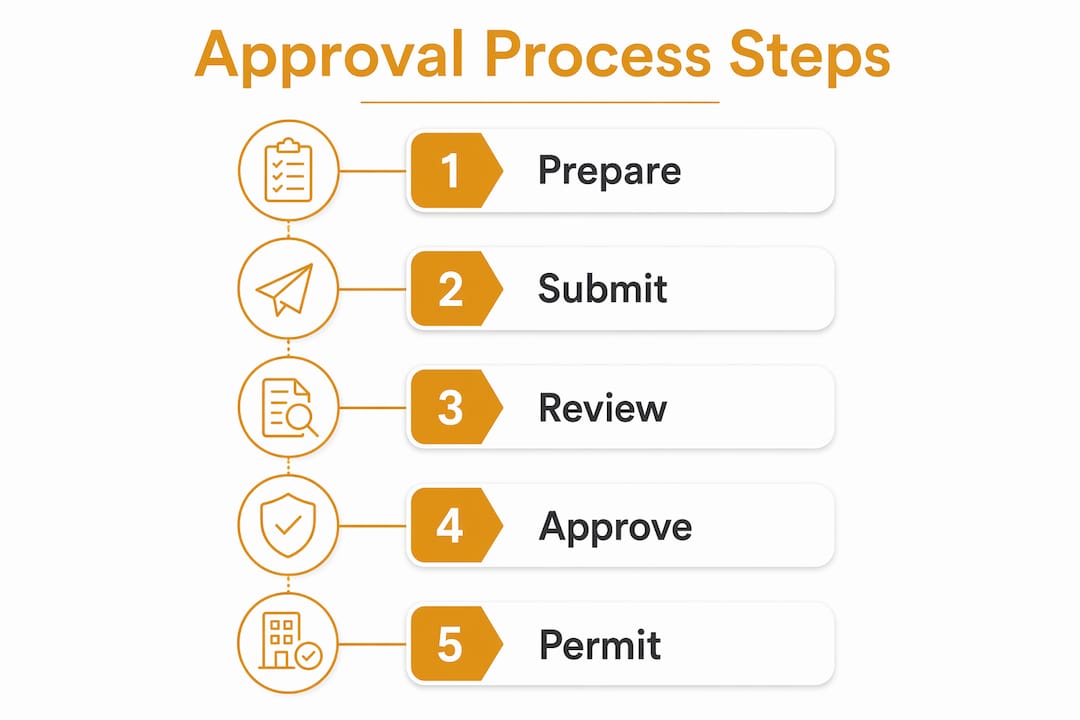
How to get BCA structural plan approval step by step
Navigating the BCA structural plan submission guide requires methodical preparation. Follow this sequence to avoid rejection and delays.
- Engage a qualified QP early. The QP must be a Professional Engineer registered with the Professional Engineers Board (PEB) in civil or structural disciplines. Confirm registration status before any design work begins.
- Secure URA written permission. Before filing with BCA, the QP must obtain written permission from the Urban Redevelopment Authority (URA) where required under planning regulations.
- Compile the full documentation package. Required documents include the application form, detailed structural plans and design calculations, pile layout plans where applicable, geotechnical building reports, planning permissions, and all BCA-prescribed checklists. Plans must carry QP and Accredited Checker endorsements on the first and last sheets.
- Determine the correct submission platform. From October 1, 2026, all new building plan submissions for projects with gross floor area of 30,000 sqm or above must be filed through CORENET X. Other submissions continue through CORENET 2.0 until further notice.
- Submit through the designated platform. Upload all documents and pay applicable fees at first submission in accordance with the Second Schedule of the Building Control Regulations.
- Respond to BCA review comments promptly. BCA may issue queries or require revisions. Delays in responding reset processing clocks, so assign a dedicated point of contact for correspondence.
- Manage Accredited Checker certification. For projects requiring an Accredited Checker, confirm certification is in order before submission to avoid triggering extended timelines.
Pro Tip: For phased or complex projects on CORENET X, submit each phase as a discrete package with its own complete documentation set. Bundling phases without clear delineation is one of the most common causes of processing delays.
What the Qualified Person is actually responsible for
The QP is not merely a signatory. Under the Building Control Act, the QP carries direct legal and professional accountability for every aspect of the structural submission.
Core QP responsibilities include:
- Preparing and certifying structural plans and design calculations for accuracy and code compliance
- Declaring that all submitted documents meet the requirements of the Building Control Regulations
- Supervising construction and issuing supervision certificates (C-Forms) at prescribed stages
- Distinguishing between material changes and immaterial changes to approved plans, a distinction with significant legal consequences
- Maintaining professional indemnity and responding to BCA audit notices
The QP’s liabilities extend beyond paperwork. Inaccurate declarations or non-compliant submissions can result in rejection, referral to the Professional Engineers Board, and reversion to the more stringent standard Section 5 approval route. Contractors who select QPs without verifying their active registration and relevant project experience expose themselves to costly compliance failures.
Pro Tip: Request a copy of the QP’s current PEB practicing certificate and confirm their experience with projects of comparable structural complexity before signing any engagement letter.

How the Lodgment Scheme works and where the risks lie
The Lodgment Scheme offers an expedited approval pathway for less complex, low-risk building works. Once the QP submits the required declarations through CORENET X, plans are deemed approved upon written acknowledgment from the Commissioner of Building Control (CBC). There is no standard review period to wait out.
Eligibility is limited to works that fall within prescribed categories of low structural risk. The scheme is not available for all project types, and the QP must confirm eligibility before opting in.
The risks are real and contractors must understand them clearly:
- The CBC retains full authority to audit any lodged submission at any time
- Non-compliant declarations or inaccurate plans can result in penalties and mandatory reversion to the standard Section 5 approval process
- Professional consequences for the QP include formal disciplinary action, which can affect the contractor’s project continuity
The Lodgment Scheme is a pro-enterprise mechanism that rewards diligent QPs with faster project starts. It is not a shortcut around compliance. Contractors should treat lodged approvals with the same rigor as standard approvals, maintaining complete documentation in case of audit. Staying current with site compliance obligations across all project phases reinforces this discipline.
Pro Tip: Keep a complete audit-ready file for every lodged project, including all declarations, calculations, and correspondence. BCA audits can occur months after acknowledgment.
How to obtain the permit to carry out structural works
Plan approval alone does not authorize construction. A separate permit to carry out structural works is mandatory, and it must be applied for jointly by the developer, the QP, and the builder.
- Confirm structural plan approval is in hand. The permit application cannot proceed without prior BCA approval of the structural plans, unless submitted simultaneously.
- Prepare joint application documents. The developer, QP, and builder must each execute their respective portions of the application. Missing signatures from any party will stall processing.
- Choose the submission timing. BCA allows the permit application to be filed simultaneously with the structural plan approval application or after approval is granted. Simultaneous submission is advisable for time-sensitive projects.
- Submit through the designated channel. File the completed application with all supporting documents through the applicable BCA portal.
- Await BCA processing. The standard processing time for permit issuance is 7 working days from receipt of a complete application.
- Receive and verify the permit. Confirm that the permit accurately reflects the approved structural plans and the scope of works before mobilizing on site.
Pro Tip: Align your contractor mobilization schedule with the permit issuance date, not the plan approval date. Starting structural works before permit issuance is a regulatory violation regardless of plan approval status.
Submission timelines and service standards you should plan around
BCA’s published service standards give contractors a reliable planning baseline, provided submissions are complete at first lodgment.
| Submission Type | First Submission | Subsequent Submissions |
|---|---|---|
| Standard (no Accredited Checker) | 7 working days | 7 working days |
| With Accredited Checker | 10 working days | 14 working days |
| CORENET X joint agency review | Up to 20 working days | Varies |
| Permit to carry out structural works | 7 working days | N/A |
Incomplete submissions restart the clock. BCA will issue a query or rejection notice, and the timeline only resumes once a compliant resubmission is received. For projects on the CORENET X platform, the integrated cross-agency review adds coordination time but reduces the need for separate submissions to other agencies.
Fee structure and payment process for structural plan approval
Fees for structural plan approval are payable at the first submission to BCA and are calculated in accordance with the Second Schedule of the Building Control Regulations. The fee structure is based on the gross floor area and the nature of the building works. Detailed fee schedules are published through the SGFA and Plan Fee reference on the BCA portal.
Payment must be made at the point of first submission. Late or incomplete payment will result in the submission being held pending clearance. Contractors should confirm the applicable fee category with the QP before submission to avoid administrative delays. No fee refunds are issued for withdrawn or rejected submissions, so accuracy at first lodgment directly protects the project budget.
How to track your approval status and follow up with BCA
Submission status for structural plans filed through CORENET X is accessible through the platform’s project dashboard. The QP holds primary access and is responsible for monitoring correspondence and action notices from BCA.
Contractors should establish a clear internal protocol: the QP notifies the project manager within one working day of any BCA query or status update. For submissions still on CORENET 2.0, status inquiries can be directed to BCA’s Building Plan Unit. When following up on outstanding queries, reference the submission reference number and the date of submission in all correspondence to expedite responses.
How amendments and resubmissions are handled
Changes to approved structural plans fall into two categories with distinct procedural requirements.
Material changes involve redesign of key structural elements. These require BCA approval before any on-site implementation. Proceeding without approval constitutes a breach of the Building Control Act and can trigger stop-work orders. The QP must prepare revised plans and submit them through the standard approval process.
Immaterial changes are minor deviations that do not affect structural integrity or compliance. These can be recorded in C-Forms after construction is complete, rather than requiring pre-approval. Contractors operating under project time pressure often misclassify material changes as immaterial, a practice that creates serious compliance exposure. The QP must make this determination in writing before any deviation proceeds on site.
Coordination with building codes and compliance checks
Structural plan submissions must satisfy multiple regulatory frameworks simultaneously. The BCA’s Approved Document sets out the objectives and performance requirements under the Fifth Schedule of the Building Control Regulations. Plans must also address accessibility requirements under the Code on Accessibility and, where applicable, civil defence shelter requirements integrated into BP and ST plan submissions from April 2023.
Performance requirements can be met through acceptable solutions prescribed in the Approved Document or through alternative solutions evaluated by the QP and acknowledged by BCA. For projects with fire safety obligations, coordination with SCDF requirements is necessary alongside BCA structural submissions. The 2026 building plan submission guide consolidates current regulatory requirements across these frameworks for reference.
Why professional accountability defines BCA approval outcomes
The structural plan approval process in Singapore is designed around professional accountability, not administrative formality. Every contractor who has navigated a BCA rejection knows that the documentation quality and the QP’s declaration accuracy determine outcomes more than any other factor.
Stellar Structures operates at the intersection of engineering rigor and regulatory compliance. The firm’s team of Professional Engineers and architects manages BCA structural plan submissions, Accredited Checker coordination, and authority approvals across residential, commercial, industrial, and infrastructure projects. Their authority submission services cover BCA, URA, HDB, JTC, SCDF, and other agencies, giving contractors a single point of coordination for complex multi-agency projects.
What distinguishes effective submission management is not familiarity with the forms. It is the ability to anticipate BCA queries before they arise, classify changes correctly under the material/immaterial distinction, and maintain audit-ready documentation throughout the project lifecycle. Contractors who treat the QP relationship as a compliance checkbox rather than a technical partnership consistently face longer approval cycles and higher resubmission rates.
Key Takeaways
Structural plan approval under BCA requires a registered Professional Engineer as QP, complete documentation at first submission, and a separate permit before structural works begin.
| Point | Details |
|---|---|
| QP is mandatory | Only a registered Professional Engineer in civil or structural disciplines may submit structural plans to BCA. |
| Timelines vary by complexity | Standard submissions take 7 working days; Accredited Checker projects extend to 10–14 working days; CORENET X joint reviews up to 20 working days. |
| Permit is a separate requirement | The permit to carry out structural works must be applied for jointly by the developer, QP, and builder, with a 7-working-day processing time. |
| Material changes need pre-approval | Any material change to approved structural plans requires new BCA approval before on-site implementation. |
| Stellar Structures | Stellar Structures manages BCA structural plan submissions and multi-agency authority approvals for contractors across all project types. |
Stellar Structures handles your BCA structural plan submissions
Contractors managing BCA structural plan approval face a process where a single documentation gap can add weeks to a project schedule. Stellar Structures provides end-to-end civil and structural design checks and authority submission management, covering BCA, URA, HDB, JTC, SCDF, and other regulatory bodies from a single coordinated team.

The firm’s Professional Engineers handle QP responsibilities, Accredited Checker coordination, CORENET X submissions, and permit applications, giving contractors a fully managed compliance pathway rather than a fragmented one. For residential, commercial, or industrial projects requiring BCA structural approval in 2026, contact Stellar Structures to discuss your submission requirements and confirm your project timeline.
Recommended
- A Complete Guide to BCA Submission: From BP to TOP — What Homeowners Need to Know – Stellar Structures
- Enhancing Your Skills with BCA: Top Training Opportunities Available
- A Complete Guide to BCA Submission: From BP to TOP — What Homeowners Need to Know – Stellar Structures
- BCA Structural Design Approvals in Singapore (2025 Edition)