




Introduction
QP(S) oversight is the regulatory mechanism that prevents deep excavation failures, protects adjacent structures, and keeps construction projects within legal tolerances across Singapore’s dense urban landscape. When a 30-meter excavation collapsed at Nicoll Highway in 2004, causing the adjacent highway to subside up to 13 meters, the investigation revealed failures in design detailing, analysis, and supervision. That event reshaped how Singapore regulates site supervision for deep excavation A&A works, MRT buffer zone projects, and basement construction.
This article covers the statutory duties of the QP(S) under the Building Control Act, risk mitigation strategies for deep excavation and Earth Retaining and Stabilising Structures (ERSS), supervision protocols for works near MRT lines, and compliance requirements for major Alterations & Additions projects. The scope excludes purely residential renovation works below the thresholds that trigger QP(S) appointment.
The target audience is developers, construction companies, and building owners undertaking excavation works exceeding 6 meters, basement construction in marine clay, or major A&A projects adjacent to existing structures and MRT infrastructure. If you are a project manager coordinating multiple stakeholders on such projects, the regulatory framework described here applies directly to your statutory duties.
QP(S) oversight mitigates site risk through mandatory supervision protocols scaled to project complexity, real-time instrumentation monitoring with defined alert thresholds, and immediate response procedures that halt works when readings exceed design tolerances. Singapore’s construction sector employs over 300,000 workers and contributes approximately 13% to GDP; this regulatory apparatus underpins construction safety, exists to protect workers, and safeguards the densely built environment surrounding every construction site.
By the end of this article, you will understand:
-
The legal obligations and accountability framework binding a QP(S) under the Building Control Act
-
How risk assessments for deep excavation are structured and dynamically reviewed as projects progress
-
Specific supervision protocols for ERSS, MRT buffer zone works, and A&A projects
-
Alert level thresholds and emergency response procedures that QP(S) must enforce
-
Compliance strategies that reduce liability, improve safety performance, and support adherence to safety standards on high-risk construction sites
Understanding QP(S) Role in High-Risk Construction Oversight
Under the Building Control Act (Cap 29), a Qualified Person (QP) is a registered architect or professional engineer holding a valid practising certificate with either the Board of Architects or the Professional Engineers Board. The Building and Construction Authority oversees all construction regulations and mandates that a developer appoint a QP to supervise building works. The “Supervising Qualified Person” or QP(S) is the individual appointed to oversee the construction stage, ensuring works conform to approved building plans and regulatory requirements, with the specialized knowledge needed to manage high-risk works in dense urban settings.
For geotechnical building works, a geotechnical engineer must be appointed as QP(Geo) to prepare plans and supervise geotechnical aspects. The QP implements a risk-based review system through agencies like CORENET X, which streamlines regulatory approvals through integrated digital delivery using a data-rich digital representation across the project lifecycle for coordination and review. Only QPs can submit formal building plans to authorities, and QP(D) is legally accountable for the accuracy of those plans.
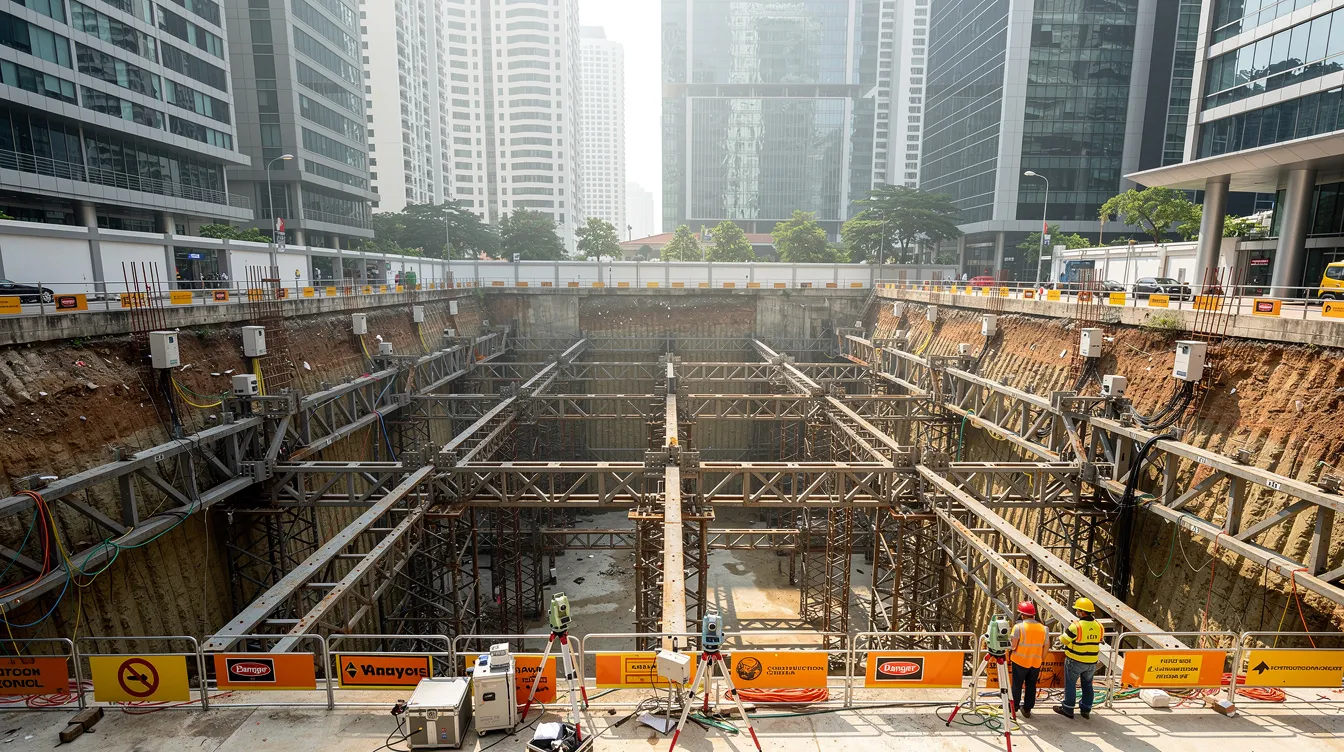
Statutory Supervision Requirements for High-Risk Works by Building and Construction Authority
The Building Control Act requires all building works to proceed under QP(S) supervision. For “large building works” (defined by contract value, structural complexity, or impact on adjacent properties), structural elements must be under full-time supervision by qualified site supervisors working under the QP(S)’s direction. Works over SGD $7.5 million require at least one Resident Technical Officer or Resident Engineer; higher contract values increase the required number of supervisors.
Critical structural works requiring immediate supervision by QP(S) or designated site supervisors include concreting, piling, pre-stressing, construction of earth retaining and stabilising structures, and lifting operations where relevant. These are non-delegable responsibilities. The QP(S) must ensure compliance with Building Regulations, report contraventions they know or ought to know about, and maintain oversight over all geotechnical and natural ground works. Strict site supervision frameworks are scaled according to project complexity to help manage risks, meaning a basement excavation in Kallang Formation marine clay receives a higher supervision intensity than a shallow foundation in Old Alluvium.
Failure to discharge these statutory duties carries penalties including stop-work orders, revocation of permits, fines up to SGD $200,000, and imprisonment up to 2 years. Non-compliance with WSH regulations can result in additional fines and imprisonment under the Workplace Safety and Health Act, the key Health Act governing site safety obligations. The QP’s role includes providing a documented trail of decisions and inspections, which serves as both a compliance record and a liability management tool.
QP(S) vs QP(D) Role Demarcation in Risk Management
QP(D) is responsible for preparing structural designs, ERSS configurations, and geotechnical design for underground or deep excavation works. QP(D) must ensure design integrity and safety compliance, specifying risk categories for bored tunnelling or works in MRT buffer zones, and establishing allowable over-excavation limits. QP(D) is responsible for regulatory compliance in building plans and must ensure designs satisfy BCA’s performance requirements and relevant Codes of Practice.
QP(S) takes the approved design and implements it during the construction process. This means enforcing construction sequences, supervising instrumentation installation and readings, handling site deviations through formal change-management protocols, and performing continuous and immediate supervision where prescribed. QPs manage material deviations through formal change-management protocols, and compliance audits verify that only approved materials with valid Certificates of Conformity are used on-site.
When QP(S) observes design non-conformance or unexpected site conditions (softer soil than predicted, unexpected groundwater inflow, underground obstructions), they must coordinate with QP(D) for design adjustments. Communication gaps among project parties often reflect coordination challenges between project stakeholders, especially where designers, site teams, specialists, and authorities are working to different timelines or priorities. The formal coordination structure between QP(S), QP(D), and QP(Geo) exists to close those gaps. The QP must coordinate with multiple regulatory agencies for approvals, including BCA, LTA, and the Urban Redevelopment Authority for development control matters, with clear role allocation across all involved parties to reduce delays and risk exposure.
Deep Excavation Risk Assessment and Mitigation Strategies
Singapore’s urban core sits on geological formations that create specific, measurable risks for deep excavation. Areas underlain by Kallang Formation marine clay exhibit high compressibility and low shear strength; residual soils over Bukit Timah Granite present different challenges related to groundwater drawdown. A field study of deep excavation in marine clay found the zone of settlement influence extending up to 11 times the maximum excavation depth when soft clay was underlain by dense silty sands, far exceeding the commonly assumed 4× depth parameter. Risk assessments for urban construction are reviewed dynamically as projects progress, because actual ground conditions often diverge from borehole predictions.
When excavation depths exceed 6 meters, or works are classified as “Underground Building Works” under BCA regulations, plan submissions must include QP(Geo), an Accredited Checker (AC), and full geotechnical submission components. Risk assessments must identify hazards and evaluate associated risks at each stage. The WSH Act mandates comprehensive risk management in construction, and Design for Safety (DfS) integrates risk control at the planning stage by addressing both safety hazards and health risks on construction sites; this is especially important because construction is among Singapore’s high risk industries, where stricter controls apply. The WSH (DfS) Regulations apply to projects over S$10 million, and the Design for Safety Professional (DfSP) must have at least ten years of relevant experience.
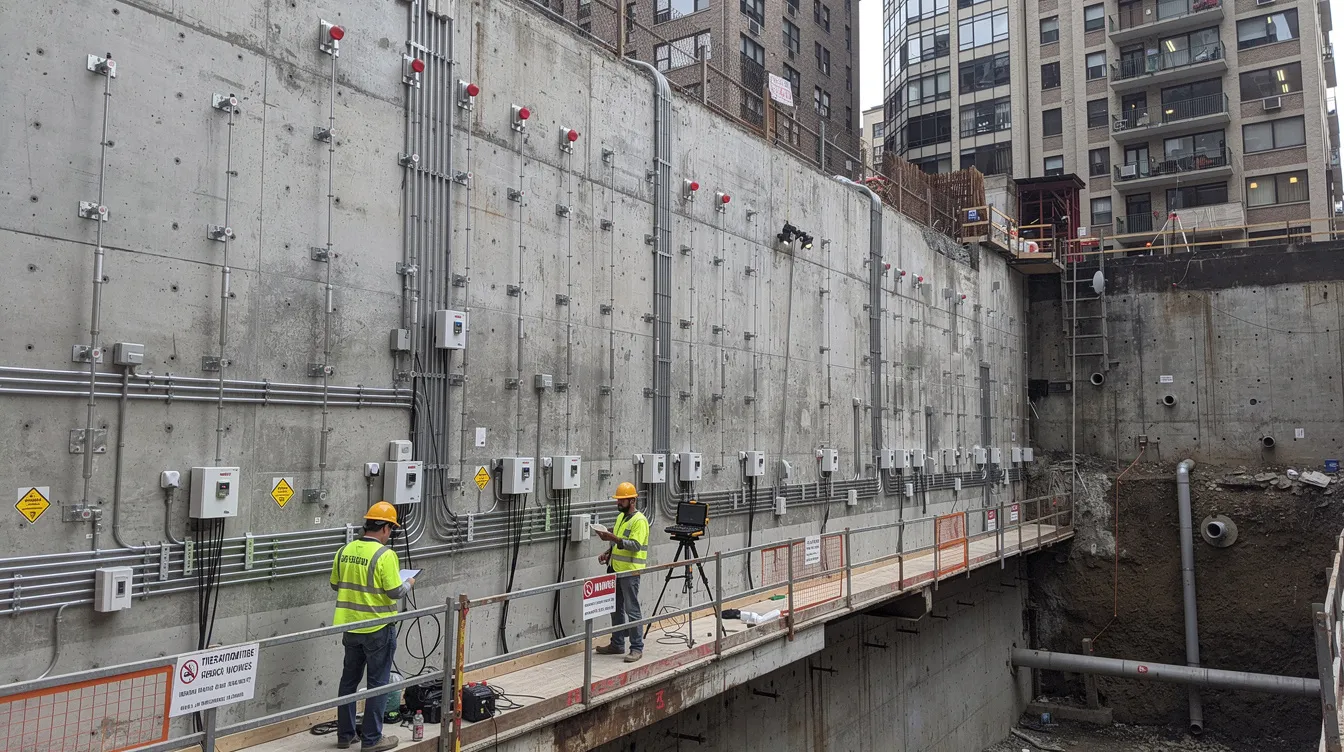
Adjacent Structure Protection Protocols
QP(S) supervision of ERSS installation and performance is the primary control measure protecting adjacent structures. ERSS elements include diaphragm walls, secant bored piles, steel strutting, walers, capping beams, and ground anchors. For excavation depths between 4 and 6 meters, an Accredited Checker is required. For depths exceeding 6 meters, QP(Geo) and AC(Geo) involvement becomes mandatory under BCA’s geotechnical submission requirements.
QP(S) must inspect ERSS elements during installation, ensuring wall panels interlock to prevent groundwater leakage through panel joints. A study of the Singapore Art Museum, adjacent to a deep excavation, demonstrated that building stiffness modifies deflection ratio predictions and reduces tensile strain effects on neighboring structures. This means QP(S) must assess not just ground movement, but the specific structural characteristics of each adjacent building when evaluating damage risk.
Continuous monitoring helps prevent structural failures in high-risk urban environments and supports Construction Safety for workers and neighboring occupants. Instrumentation includes inclinometers for wall deflection, settlement markers and extensometers for ground movement, piezometers for groundwater levels, and load cells on struts and walers. When readings remain within alert levels, periodic daily inspections suffice. When readings breach alert thresholds, supervision must shift to continuous and immediate presence on site. QPs enforce a hierarchical risk control system during construction projects; control measures escalate from routine monitoring through heightened vigilance to work suspension and remedial intervention, and the same system also addresses electrical safety and exposure to hazardous materials when site conditions require it.
MRT Buffer Zone Construction Oversight
Construction within MRT buffer zones triggers the strictest supervision regime under BCA and LTA requirements. For bored tunnelling near existing MRT structures, QP(D) defines risk categories based on proximity, soil conditions, and existing infrastructure. QP(S) must ensure over-excavation does not occur and must monitor excavation volume using prescribed forms (“Site Inspection & Approval Records for Tunnelling Works; Records of Excavation Volume”) from BCA’s bored tunnelling guide.
For those managing LTA projects, vibration monitoring is mandatory with sensors placed at prescribed intervals on existing MRT structures. Settlement monitoring uses automated systems with readings transmitted at intervals as short as every 15 minutes during active tunnelling. Emergency procedures must be documented and rehearsed before works commence, covering scenarios from minor alert exceedances through structural distress to full evacuation of affected MRT stations or tunnels, including incidents linked to transport interfaces or natural disasters. Emergency preparedness is a key aspect of managing high-risk construction sites near critical transport infrastructure.
Major A&A Works Risk Management
Major A&A works involving structural alterations, additions, or building envelope modifications carry specific risks related to load redistribution, temporary structural instability, and unintended effects on existing building elements. QP(S) oversight for A&A projects includes verifying that temporary works (propping, shoring, temporary strutting) are installed before any structural demolition or modification proceeds.
Load transfer monitoring becomes critical when columns or beams are removed or relocated during the construction process. QP(S) must verify existing structure integrity at each stage, comparing actual deflections and crack patterns against predicted values. The distinction from new-build supervision lies in the pre-existing structural system; every cut, opening, or addition changes the load path through an already-stressed structure, and verification must account for the actual condition of aged materials rather than relying solely on original design specifications.
Developers must integrate safety into project designs to comply with regulations, and the GUIDE process includes phased reviews to identify design risks early. DfS aims to reduce risks before construction begins through systematic reviews, which is particularly relevant for A&A works where the existing structure’s condition may reveal surprises during demolition; on major A&A works, early reviews also reduce rework, improve project efficiency, and help control project costs.
QP(S) Supervision Protocols and Implementation Framework
Translating the risk assessment framework into daily practice requires structured procedures that the project team follows consistently. The supervision intensity scales with risk level: routine structural works receive periodic inspections, while deep excavation in soft clay near occupied buildings demands continuous QP(S) presence during critical operations. Effective risk management processes help prevent accidents and injuries; the major injury rate in Singapore’s construction sector dropped to 15.5 per 100,000 workers in 2025, and the annualized fatal injury rate declined to 0.92 per 100,000 workers in 2025. MOM conducted over 3,000 workplace safety inspections in the first half of 2025, reflecting the regulatory intensity applied to this high risk industry.
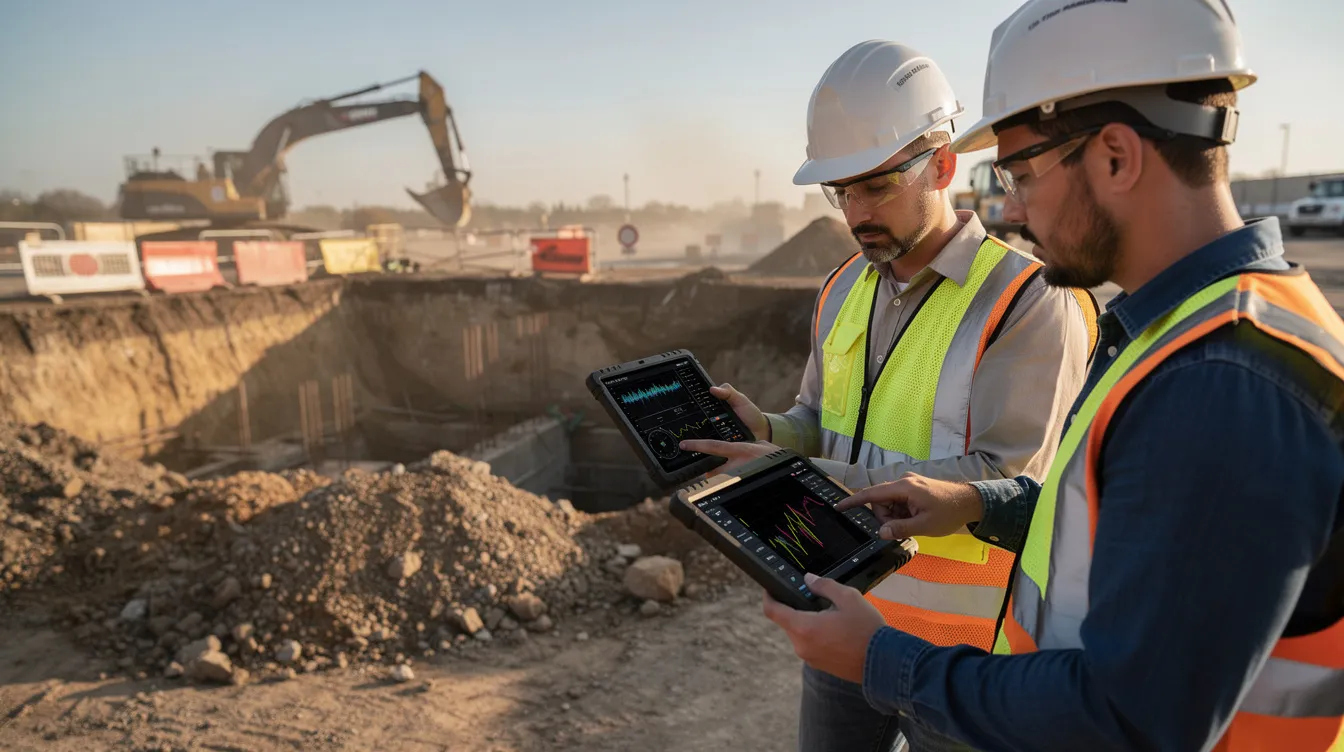
Site Inspection and Monitoring Procedures
Intensive QP(S) supervision is required during installation or removal of ERSS elements (struts, walers, lateral supports), during capping beam construction, during dewatering operations, and whenever instrumentation readings approach alert thresholds. The WSH Act mandates strict adherence to safety regulations, and employers must provide a safe working environment under the Act, with safety training implemented on site as part of the supervision framework.
The inspection and monitoring procedure follows this sequence:
-
Daily site walkthrough covering all active excavation faces, ERSS installations, and adjacent structure conditions. QP(S) or designated site supervisor records observations against the approved construction sequence and notes any deviations.
-
Instrumentation data review comparing current readings (wall deflection, ground settlement, strut loads, groundwater levels) against design thresholds. Readings are plotted on time-series graphs to identify trends before alert levels are reached.
-
Compliance verification confirming that the construction sequence matches the approved plan. Any deviation; whether in excavation depth, strutting timing, or dewatering rate; requires written approval from QP(D) and documentation in the site log.
-
Deviation and incident reporting to BCA and relevant authorities without delay when non-conformances or incidents occur. Failure to report is an offence under the Building Control Act. The QP’s role includes providing a documented trail of decisions and inspections.
-
Emergency response activation when readings exceed suspension criteria or when structural distress is observed in adjacent buildings. The permit to work system governs re-entry to affected zones after any emergency halt.
Toolbox talks can be used to share practical tips tied to the day’s excavation, access, or monitoring risks.
Documentation requirements include inspection logs, test reports, instrumentation readings, and non-conformance reports. These form the audit trail for BCA submissions and subsequent statutory completion certification. A temporary occupation permit cannot be issued without the QP(S) certifying that works comply with approved plans. Advanced digital tools facilitate real-time project performance visibility, enabling the QP(S) to track data trends remotely between site visits.
Instrumentation and Real-Time Monitoring Systems
The monitoring requirements scale with excavation depth and site risk classification. Digital technologies enhance construction project planning and coordination; in public sector projects, mandated BIM use has accelerated coordination and monitoring practices, and BIM improves hazard identification and conflict detection in construction as a data-rich digital representation for clash detection and information sharing, while digital twins optimize maintenance and operational safety in buildings.
|
Criterion |
Standard Risk (4–6 m depth) |
High Risk (>6 m depth, adjacent structures) |
MRT Buffer Zone Works |
|---|---|---|---|
|
Instrumentation |
Inclinometers, settlement markers, piezometers |
Full suite plus strut load cells, building tilt meters, crack gauges |
All above plus automated total stations, vibration sensors |
|
Reading Frequency |
Daily during excavation |
Every 4–8 hours during critical phases; daily otherwise |
Continuous automated (15-min intervals) during tunnelling |
|
Alert Level Response |
QP(S) reviews and documents; adjusts if trend persists |
Immediate continuous on-site supervision; coordination with QP(D) |
Immediate work suspension; LTA notification within 1 hour |
|
Suspension Criteria |
Wall deflection exceeds design allowable |
Settlement or lateral movement beyond building damage threshold |
Any vibration or settlement reading exceeding LTA-prescribed limits |
|
QP(S) Required Action |
Document and monitor trend |
Halt excavation; initiate remedial measures (re-strutting, ground improvement) |
Full stoppage; emergency assessment; written clearance required to resume |
When instrumentation readings at a 20–24 meter deep excavation in residual soil showed moderate wall deflections but large ground settlement from dewatering, the divergence between wall movement and surface settlement demonstrated why multiple instrument types are necessary. Relying on wall inclinometers alone would have missed the settlement mechanism caused by groundwater drawdown, which originated from a different failure mode than lateral earth pressure.
CORENET X streamlines regulatory approvals through integrated digital delivery, and the QP implements a risk-based review system through agencies like CORENET X. This digital infrastructure reduces the lag between monitoring data collection and regulatory reporting, a delay that historically allowed conditions to deteriorate before intervention.
Common High-Risk Construction Challenges and QP(S) Solutions
The construction industry in Singapore operates in conditions where geology, density, and infrastructure proximity create recurring challenges. The following three scenarios represent the situations most frequently encountered by QP(S) during deep excavation and complex projects.
Unexpected Ground Conditions During Deep Excavation
Borehole investigations sample discrete points; actual soil stratigraphy between boreholes can differ from interpolated profiles. When QP(S) encounters marine clay layers thicker than predicted, lenses of permeable sand within clay deposits, or underground obstructions (abandoned piles, unmapped utilities), the approved design may no longer be adequate. The field case where settlement influence extended to 11× the maximum excavation depth occurred precisely because the actual soil profile (soft clay underlain by dense silty sands) created pore pressure responses not captured in the original design model.
QP(S) response protocol: halt excavation at the affected location, document the actual conditions with photographs and soil descriptions, notify QP(D) with the deviation report, and request a design review. Construction cannot resume until QP(D) confirms the existing ERSS design is adequate for the actual conditions or provides a revised design. This sequence protects against the type of failure seen at Nicoll Highway, where design assumptions were not reconciled with observed site behavior. Residual risks remain even after design revision; QP(S) must increase monitoring frequency in zones where unexpected conditions were found.
Exceedance of Monitoring Alert Levels
Alert level exceedances follow a defined escalation path, not a discretionary judgment call. When wall deflection, ground settlement, or strut loads exceed the design alert threshold:
-
QP(S) initiates continuous on-site supervision and verifies that readings are not instrument errors by cross-checking with adjacent instruments.
-
Excavation is halted at the affected zone. Necessary safety precautions include restricting personnel access, inspecting strut connections, and verifying dewatering rates.
-
QP(S) contacts QP(D) with the reading data and trend analysis. QP(D) assesses whether remedial measures (additional struts, ground improvement, reduced dewatering rate) are needed or whether the readings are within the range addressed by the design’s safety margins.
-
Works resume only after readings stabilize below alert levels or after QP(D) approves revised safety measures for the modified condition.
Research on braced excavations in residual soil showed that dewatering-induced settlement can exceed ERSS wall deflection. Reducing dewatering rates or installing recharge wells are control measures that QP(S) can implement within the approved contingency plans. Proactive risk management at this stage prevents escalation to suspension criteria and potential structural damage.
Adjacent Structure Distress or Damage
When cracks, tilting, or foundation distress are observed in neighboring buildings during construction:
QP(S) must immediately halt all works that could contribute to further movement, notify the Commissioner of Building Control, and engage a structural assessment of the affected building. The emergency response includes installing temporary support if collapse risk exists, increasing monitoring frequency on the affected structure, and documenting all pre-existing conditions against baseline surveys taken before construction commenced.
The Singapore Art Museum case study demonstrated that stiffer buildings experience lower deflection ratios than flexible structures at the same ground settlement level. QP(S) uses this understanding to prioritize monitoring resources; flexible structures (older masonry buildings, structures with shallow foundations) receive higher monitoring priority than modern reinforced concrete frames. Insurance coverage considerations become relevant at this stage, as liability management requires clear documentation of the timeline between monitoring readings, observed damage, and QP(S) response actions.
Conclusion and Next Steps
QP(S) oversight is not a procedural formality; it is the mechanism through which design intent translates into safe construction outcomes in Singapore’s most constrained urban sites. The regulatory framework, refined after incidents like the Nicoll Highway collapse, ties personal legal liability to supervisory performance, creating strong incentives for thorough and technically competent oversight. Sustainable practices reduce construction costs by 10–30%, and environmental sustainability is now a legal requirement in construction, with Green Mark certification mandatory for most commercial developments. Singapore aims for carbon neutrality by 2050, making every construction decision, including supervision quality, relevant to the project’s entire lifecycle impact.
To implement effective QP(S) oversight on your next project:
-
Appoint QP(S) and QP(Geo) during the pre-construction phase, not after site works begin. Early involvement allows the supervision plan to be calibrated to actual site conditions from borehole and trial pit data.
-
Establish instrumentation and baseline readings for all adjacent structures before any excavation. Without pre-construction baselines, damage claims become impossible to adjudicate.
-
Implement structured supervision protocols with defined escalation triggers, documented in a site supervision plan reviewed by all key stakeholders before construction commences.
-
Use digital monitoring systems with automated alerts to reduce the gap between threshold exceedance and QP(S) notification. Continuous improvement in monitoring technology has made hourly or sub-hourly readings cost-effective for high-risk excavations.
For related technical guidance, explore ERSS design requirements for excavation works, BCA structural design approval procedures, and professional indemnity and liability considerations for QP appointments.
Additional Resources
-
BCA Guide Book for Site Supervision Plan: covers supervision plan templates, alert level frameworks, and documentation requirements for QP(S)
-
BCA Geotechnical Building Works Submission Requirements (March 2024): defines excavation depth thresholds, QP(Geo) and AC(Geo) appointment triggers, and plan approval requirements
-
BCA Circular on Bored Tunnelling Works: technical requirements for excavation volume monitoring, risk categorization, and QP(S) duties for tunnelling near MRT and existing structures
-
Professional Engineers Board continuing education requirements for structural engineers and professional engineers maintaining QP(S) competency
-
Emergency contact protocols: incidents must be reported to the Commissioner of Building Control without delay; workplace safety and health incidents are reported to MOM under the WSH Act