




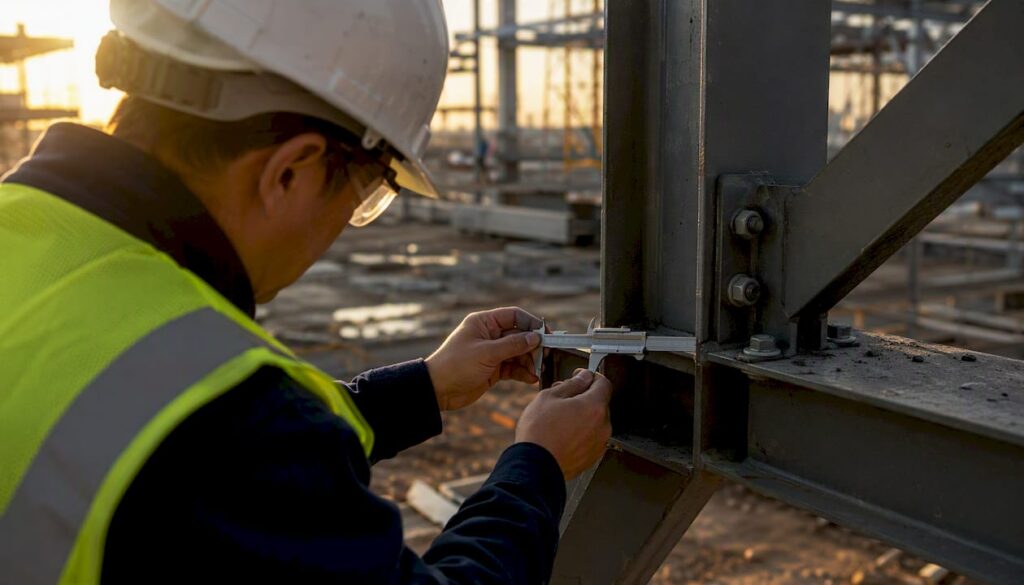
A site supervision plan is a formal, site-specific document that sets out how a construction project will be supervised for both safety and quality throughout its execution. Per the TECHNICAL MEMORANDUM FOR SUPERVISION PLANS, it must characterize site-specific hazards, specify the grade and number of Technically Competent Persons (TCPs) required, and define inspection frequencies and reporting procedures. The plan is not a generic safety statement — it is a project-specific governance document that the responsible party prepares before works commence and, in many jurisdictions, lodges with the relevant authority as a condition of permit consent.
Every complete supervision plan addresses several core elements.
- Project scope and complexity class — the nature, scale, and structural risk of the works
- Hazards and control measures — site-specific risks and the procedures that mitigate them
- Roles and competent persons — named TCPs, their grades, and attendance frequencies
- Inspection schedule — what gets inspected, by whom, and how often
- Documentation and reporting — daily records, nonconformity logs, and sign-off procedures
- Handover and record retention — how completed records are archived and transferred
The authorized person, registered structural engineer, or equivalent licensed professional named on the project is typically responsible for producing the plan. In U.S. practice, that responsibility falls to the licensed engineer of record or the contractor’s designated competent person, depending on the scope. The plan should be finalized before mobilization and attached to the permit application where local authorities require it. Note that a construction site plan — the diagrammatic document showing property lines, utilities, setbacks, and access — is a separate deliverable that complements but does not replace the supervision plan.
Key Takeaways
A site supervision plan is a formal, site-specific governance document that must address both safety and quality supervision, name competent persons with credentials, and define inspection frequencies before works commence.
| Point | Details |
|---|---|
| Define scope and complexity first | The complexity class drives TCP grade requirements and inspection frequencies throughout the plan. |
| Name individuals, not roles | Every TCP and supervisor must be named with credentials attached, not listed by title alone. |
| Address both pillars explicitly | Quality and safety supervision require separate hold points, frequencies, and sign-off records in the same plan. |
| Lodge before permit consent | In many jurisdictions, the supervision plan is a precondition for consent to commence works. |
| Treat the plan as a living document | Amend the plan after design changes, sequence revisions, or TCP substitutions before affected works proceed. |
Table of Contents
- Why a supervision plan matters more than most teams realize
- What every site supervision plan must include
- Who carries out site supervision and what each role requires
- U.S. regulatory and code considerations you need to check locally
- How to prepare, submit, and implement a supervision plan step by step
- The two pillars of supervision: quality and safety, and why both must be in your plan
- Digital tools and templates that make supervision plans operational
- Common pitfalls that undermine supervision plans during execution
- Why senior leaders should insist on a strong supervision plan from day one
- Sources
Why a supervision plan matters more than most teams realize
Safety and quality are the two primary outcomes the plan protects, and they are not interchangeable. A plan that addresses safety hazards but ignores quality inspection frequencies will produce structurally compliant work that still fails specification. A plan that documents quality hold points but omits temporary works controls creates conditions for collapse before the permanent structure is even in place. Both pillars must be explicit.
The regulatory consequences of a weak or absent plan are immediate. Inspection failures, stop-work orders, and permit delays all trace back to supervision gaps that a well-prepared plan would have prevented. The LEGISLATIVE COUNCIL BRIEF on the Revised Technical Memorandum makes clear that lodging a supervision plan is, in specified circumstances, a precondition for consent to commence works — meaning the project cannot legally start without it. In U.S. practice, local building departments increasingly require a supervision or safety plan as part of the permit package for complex or high-risk projects.
Operationally, a strong plan reduces rework, clarifies who owns each inspection, and produces the documentation trail that supports handover and warranty claims. Site supervision measures progress, prevents issues early, and links daily field oversight to higher-level project control — functions that are only possible when the plan defines the oversight structure in advance.
Industry context: Incomplete TCP credentials on the plan and missing inspection records are among the most frequent causes of non-compliance during regulatory inspections, according to the revised Technical Memorandum framework.
Pro Tip: Finalize the supervision plan before submitting the permit application, not after. Authorities that require the plan as a consent condition will not issue the permit without it, and revising the plan post-submission adds weeks to the approval timeline.
Key operational benefits of a well-prepared supervision plan include:
- Fewer reworks because inspection hold points catch defects before they are buried
- Clearer accountability when incidents or nonconformities occur
- Faster authority inspections because records are organized and accessible
- Stronger handover documentation for owners and facility managers
What every site supervision plan must include
The structure below reflects the components required by statutory guidance, including the CODE OF PRACTICE FOR SITE SUPERVISION 2009 (2024 Edition), which provides detailed guidance on TCP deployment, inspection frequencies, and nonconformity procedures. Use it as a sample table of contents when preparing your own plan.
Sample Table of Contents — Site Supervision Plan
- Project description and scope
- Class of supervision and complexity assessment
- Hazards and control measures register
- TCP deployment schedule (grades, attendance levels, and substitution protocol)
- Inspection schedule by work stage
- Temporary works arrangements and controls
- Documentation and reporting procedures
- Nonconformity and incident response procedures
- Handover and record retention protocol
The checklist below maps each component to the party responsible for signing or approving it.
| Plan Component | Responsible Party | Approval / Sign-Off |
|---|---|---|
| Project description and scope | Architect / Engineer of Record | Licensed professional seal |
| Class of supervision | Registered Structural Engineer | Written determination |
| Hazards and control measures | Safety officer / Competent person | Contractor and engineer review |
| TCP deployment schedule | Authorized person / Project manager | Named TCP signatures |
| Inspection schedule | Engineer of Record | Incorporated into permit set |
| Temporary works arrangements | Temporary works engineer | Separate design submission |
| Documentation and reporting | Site supervisor | Daily sign-off |
| Nonconformity response | Project manager | Incident log entry |
| Handover and record retention | Owner’s representative | Completion certificate |
For the hazards and control measures section, practical examples include geotechnical risks, excavation face stability, temporary works loading, utility strikes, and fall hazards. Detailed geotechnical hazard descriptions and field examples help teams populate this section accurately rather than relying on generic risk language.
The site inspection for structural safety process provides a useful reference for structuring the inspection schedule component, particularly for projects involving reinforced concrete, steel connections, or post-tensioned elements where hold points must be defined before concrete pours or weld completions.
Who carries out site supervision and what each role requires
Supervision is not a single role. The CODE OF PRACTICE FOR SITE SAFETY SUPERVISION defines a layered safety management structure with distinct responsibilities for heads of streams, representatives, and TCPs. In U.S. practice, the equivalent structure typically involves the engineer of record, the contractor’s superintendent, and the designated competent person under OSHA standards.
The role matrix below defines primary duties and the minimum evidence each role should contribute to the supervision plan.
| Role | Primary Duties | Minimum Evidence in Plan |
|---|---|---|
| Authorized Person / Engineer of Record | Prepares and signs the plan; responsible for overall supervision adequacy | Professional license number, seal, and signature |
| Registered Structural Engineer | Determines class of supervision; approves TCP deployment | Written complexity assessment |
| Competent Person (OSHA) / TCP | Conducts inspections; identifies hazards; records findings | Credentials, grade, and attendance frequency |
| Site Supervisor | Translates design into execution; runs daily briefings; maintains records | Named in plan with contact details |
| Foreman | Directs trade workers; enforces control measures at task level | Listed under TCP or supervisor chain |
| Safety Officer | Monitors compliance with safety plan; escalates nonconformities | Certification number and scope of authority |
TCP grades determine how frequently a competent person must attend site. Higher-complexity works — deep excavations, post-tensioned slabs, transfer structures — require higher-grade TCPs at greater attendance frequencies. The plan must state the grade required for each work stage, not just a generic “qualified engineer will supervise.” A qualified person supervision guide provides detailed documentation requirements for TCP roles and the records that must accompany each inspection visit.
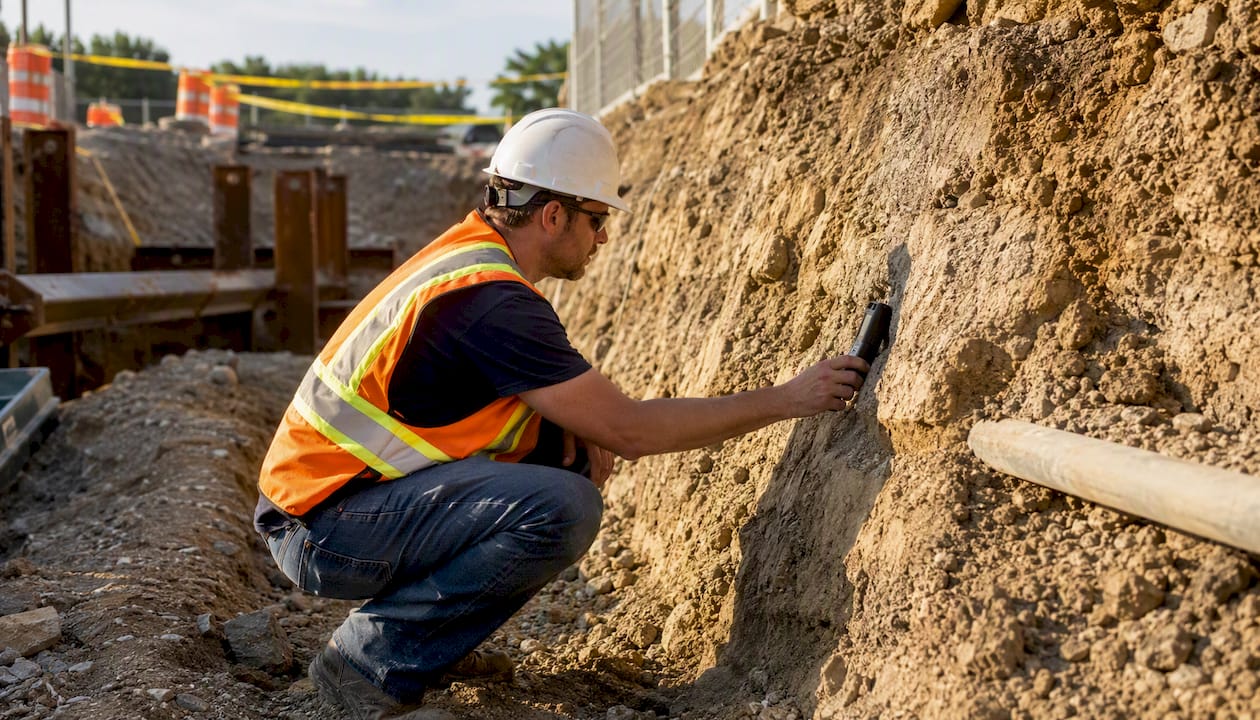
A site supervisor functions as the operational backbone on site, translating designs into execution, running daily briefings, monitoring workmanship, maintaining records, and coordinating trades. The foreman operates one level below, directing workers at the task level and enforcing the control measures the supervisor has established.
Pro Tip: When a named TCP is substituted during the project, document the substitution in writing, notify the relevant authority if required, and attach the replacement TCP’s credentials to the plan before the substituted person leaves site. Undocumented substitutions are a common compliance gap.
U.S. regulatory and code considerations you need to check locally
The supervision plan concept maps onto several distinct U.S. regulatory frameworks, and understanding how they interact is necessary before you draft the document.
OSHA requires employers to designate a competent person for specific high-hazard activities including excavation, scaffolding, fall protection, and confined space entry. OSHA’s competent person standard is not identical to a TCP grade system, but the principle is the same: a named, qualified individual must be present or available during those activities, and that designation must be documented. OSHA’s site safety program requirements, particularly under 29 CFR 1926 (Construction), define the safety supervision obligations that a supervision plan must address.
The International Building Code (IBC) and its adopted state variants govern structural safety, construction sequencing, and special inspection requirements. IBC Chapter 17 special inspections are a direct parallel to the inspection schedule component of a supervision plan — they specify which structural elements require third-party inspection, at what frequency, and by whom. Your supervision plan should reference the project’s special inspection program and confirm that TCP attendance levels align with IBC special inspection requirements.
Local building departments set permit conditions that vary significantly by jurisdiction. Some require a supervision or safety plan as part of the permit package; others require it only for projects above a certain value or complexity threshold. State licensing boards for engineers and contractors add another layer: the licensed professional of record must be named in the plan, and their license must be current in the project’s state.
The supervision plan is a project management and governance document. OSHA’s site safety program is a regulatory compliance document. They address overlapping concerns from different angles, and the most defensible projects coordinate both into a single, cross-referenced package rather than treating them as separate obligations.
The checklist below covers what local authorities commonly require on submission:
- Named authorized person or engineer of record with license number
- TCP or competent person identifiers and credential documentation
- Inspection frequencies by work stage
- Temporary works controls and design references
- Signature blocks for all responsible parties
- Version control and amendment log
State and local requirements vary. Confirm submission requirements with your local building department before finalizing the plan, and consult legal counsel or a licensed engineer for binding interpretation of permit conditions.
How to prepare, submit, and implement a supervision plan step by step
The sequence below covers the full lifecycle from pre-design through handover. Upstream hazard elimination during the design phase reduces the number of control measures the supervision plan must manage in the field.
- Conduct a pre-design hazard review. Identify geotechnical, structural, and site-access risks before the design is fixed. Use hazard identification examples to populate the hazards register with specific, site-relevant risks rather than generic categories.
- Determine the class of supervision. Assess project complexity and assign the appropriate supervision class. This drives TCP grade requirements and inspection frequencies throughout the plan.
- Assign authorized persons and TCPs. Name each individual, confirm their credentials, and document their attendance levels for each work stage.
- Draft the supervision plan. Use the sample table of contents in the Components section above. Coordinate the supervision plan with the OSHA site safety program so the two documents cross-reference each other without duplicating or contradicting.
- Internal review and sign-off. The engineer of record reviews and seals the plan. The contractor’s superintendent and safety officer confirm that the operational sections are achievable given the project schedule.
- Lodge with the permit application. Submit the plan to the local building department as part of the permit package. Where the plan is a consent condition, the permit will not issue without it.
- Finalize before mobilization. Confirm TCP appointments, distribute the plan to all named parties, and brief the site team on inspection hold points and reporting procedures.
- Implement inspections and daily records. Begin the inspection schedule on day one of site works. Maintain a daily site diary, TCP attendance register, and inspection record for every hold point.
- Escalate nonconformities promptly. When an inspection identifies a defect or deviation, log it in the nonconformity register, notify the engineer of record, and do not allow works to proceed past the hold point until the nonconformity is resolved.
- Update the plan after major changes. Design revisions, sequence changes, or TCP substitutions all require a plan amendment. Version-control every amendment and notify the authority if required.
- Conduct periodic plan reviews. At each major project milestone — groundworks complete, structure topped out, fitout commenced — review the plan against actual progress and adjust inspection frequencies if the scope has changed.
- Handover and archive. At practical completion, compile all inspection records, nonconformity logs, TCP attendance registers, and daily diaries into a single handover package. Retain records for the period required by local statute or contract.
Implementation timeline tied to permit milestones:
| Project Stage | Key Supervision Action | Responsible Party |
|---|---|---|
| Pre-construction | Hazard review; draft plan; lodge with permit | Engineer of Record |
| Groundworks | Excavation inspections; temporary works sign-off | TCP / Competent Person |
| Structure | Hold-point inspections; concrete pour sign-offs | TCP / Special Inspector |
| Fitout | Trade inspections; services coordination | Site Supervisor |
| Handover | Record compilation; archive submission | Project Manager |
Staffing models range from full-time TCP attendance for high-complexity structural works to periodic attendance for lower-risk fitout activities. The plan must state which model applies to each work stage and confirm that the attendance level meets the complexity class determined at step 2.
The two pillars of supervision: quality and safety, and why both must be in your plan
Statutory frameworks consistently split supervision into two distinct pillars: quality supervision and site safety supervision. The CODE OF PRACTICE FOR SITE SUPERVISION 2009 (2024 Edition) makes this split explicit, requiring plans to allocate TCP time and inspection frequency by pillar and by critical activity. A plan that addresses only one pillar is structurally incomplete, regardless of how detailed it is within that single domain.
Quality supervision confirms that construction conforms to approved drawings and specifications. Safety supervision confirms that the construction process itself does not create unacceptable risk to workers and the public. Both require named competent persons, defined inspection frequencies, and documented records — and both must appear in the same plan.
Framework for allocating TCP resources across both pillars:
- Identify critical activities for each pillar separately (e.g., reinforcement placement for quality; excavation face stability for safety).
- Assign TCP grade and attendance frequency to each critical activity based on its risk level.
- Where a single activity carries both quality and safety risk — a deep excavation with adjacent structures, for example — assign a TCP with competence in both domains or deploy two TCPs with defined handoff protocols.
- Schedule joint inspections for activities where quality and safety hold points coincide to reduce duplication and improve coordination.
The combined checklist below shows items that satisfy both pillars simultaneously:
- Reinforcement inspection before pour (quality: specification compliance; safety: formwork and shoring adequacy)
- Structural steel connection check (quality: weld or bolt specification; safety: temporary bracing adequacy)
- Excavation face inspection (quality: founding level confirmation; safety: slope stability and dewatering)
- Temporary works removal sequence (quality: load transfer verification; safety: progressive dismantling controls)
Pro Tip: The most common supervision plan failure is writing a safety-only plan because the safety officer drafted it without input from the engineer of record. Assign a co-author from the design team to every supervision plan to confirm that quality hold points are explicitly scheduled alongside safety inspections.
Engineering safety best practices provide a useful reference for integrating quality and safety supervision into a single governance framework, particularly for projects where the design and construction teams are operating under separate contracts.
Digital tools and templates that make supervision plans operational
A supervision plan that exists only as a PDF in a permit submission is not a working document. The tools and templates below convert the plan into a live operational system.
Template types to maintain in the plan set:
- OSSP/DSSP or equivalent supervision plan template (version-controlled master)
- Inspection checklists by trade and work stage (concrete, steel, excavation, services)
- Temporary works register with design reference numbers and sign-off columns
- Nonconformity log with status tracking (open, under review, closed)
- TCP attendance register with date, time, activity, and signature fields
- Daily site diary format with weather, workforce, and progress fields
Digital tool categories to consider:
- Inspection apps (such as Procore, PlanGrid, or Fieldwire) — allow field teams to complete checklists on mobile devices, attach photos, and generate timestamped records automatically.
- Document control platforms — manage plan versions, distribute amendments to named parties, and maintain an audit trail of who received each revision and when.
- BIM for safety reviews — Building Information Modelling can identify clash and hazard conditions in the model before they appear on site, reducing the number of unplanned nonconformities the supervision plan must manage reactively.
- Scheduling and attendance tracking tools — integrate TCP attendance requirements with the project program so gaps in coverage are visible before they occur rather than after.
When selecting software, prioritize offline capability (site connectivity is unreliable), a full audit trail exportable for authority review, customizable checklists that match your plan’s inspection schedule, and role-based access so TCPs can complete their records without accessing commercially sensitive project data.
A practical checklist format and record structure for building inspections provides a ready reference for teams setting up their documentation system for the first time.
For construction cleaning and turnover activities, crew supervision tips offer practical coordination guidance that applies directly to the housekeeping and temporary works removal stages of the supervision plan.
Common pitfalls that undermine supervision plans during execution
Weak plans share recognizable patterns. Identifying them before an inspector or incident does is the most cost-effective form of risk management available to a project team.
Common pitfalls:
- Vague responsibilities — the plan names a role (“the engineer”) rather than a named individual with contact details and credentials. When an incident occurs, no one is clearly accountable.
- Missing TCP credentials — the plan lists TCP grades required but does not attach the actual credentials of the named individuals. Inspectors will ask for them; not having them on file is an immediate compliance gap.
- Inspection frequency mismatch — the plan specifies weekly inspections for high-complexity structural works that require daily hold-point sign-offs. The frequency must match the complexity class.
- Inadequate temporary works control — temporary works are treated as a contractor responsibility with no supervision plan reference. Temporary works failures are among the most common causes of construction fatalities.
- Poor records — inspection records exist but are handwritten, undated, or unsigned. Digital tools with automatic timestamps eliminate this gap.
- Failure to update after changes — a design revision changes the structural system, but the supervision plan still references the original inspection schedule. The plan must be amended before the revised works commence.
Red flags inspectors commonly look for:
- No version control on the plan document
- TCP credentials expired or not attached
- Inspection records that do not match the scheduled hold points
- Nonconformity log with no closed items (suggesting issues are not being resolved)
- Temporary works with no design reference or sign-off record
Recovery checklist when an inspector or incident highlights a gap:
- Stop affected works immediately if a safety-critical gap is identified
- Document the gap in the nonconformity log with the date and circumstances
- Assign a named responsible party and a resolution deadline
- Amend the supervision plan to address the systemic cause, not just the immediate defect
- Notify the authority if the gap affects a consent condition
Pro Tip: Run a mock inspection of your supervision plan before the first authority visit. Have someone not involved in drafting the plan attempt to verify every named TCP’s credentials, locate every inspection record, and trace every nonconformity to its resolution. Gaps that are obvious to an outsider in 20 minutes are the same gaps an inspector will find in 10.
Why senior leaders should insist on a strong supervision plan from day one
The supervision plan is the single document that converts project governance intent into field-level accountability. Without it, safety and quality commitments exist only in contracts and design drawings — neither of which tells a site team what to inspect, when, or who is responsible.
Senior leaders should require three things in writing at project start: named TCPs with credentials attached, a recorded inspection schedule tied to the project program, and a documented incident escalation protocol that specifies who is notified within what timeframe. These three elements are the minimum governance structure that makes a supervision plan defensible during an inspection or a post-incident review.
Linking supervision plan performance to project KPIs — rework rates, safety incident frequency, and schedule variance — converts the plan from a compliance document into a management tool. Projects that track these metrics against supervision plan execution consistently identify gaps earlier and resolve them at lower cost than projects that treat the plan as a one-time submission artifact.
Sources
The sources below provide statutory text, code guidance, and practical role descriptions for teams preparing or reviewing supervision plans.
- TECHNICAL MEMORANDUM FOR SUPERVISION PLANS
- LEGISLATIVE COUNCIL BRIEF Buildings Ordinance (Cap. 123) Revised Technical Memorandum for Supervision Plans
- Construction Site Plans: A Guide – Digital Builder – Autodesk
Jurisdictional note: The statutory references above originate from Hong Kong’s Buildings Ordinance framework. U.S. projects must consult OSHA 29 CFR 1926, the applicable edition of the IBC as adopted by the project’s state, and the local building department’s permit conditions for binding requirements. Contact your local building department or a licensed engineer for jurisdiction-specific guidance.
If your project requires professional support to prepare, review, or lodge a supervision plan, Stellar Structures offers civil engineering consultancy services and civil and structural design checks that cover the technical review and documentation requirements at every project stage. For projects requiring authority submission support, the authority submission services team manages the full lodgment process from plan preparation through consent.

This article is general information, not a substitute for advice from a qualified lawyer. Consult a qualified legal professional about your own circumstances before acting on anything here.
Recommended
- Geotechnical Hazards on Construction Sites: A Field Guide
- Temporary Works Design in Singapore: Mastering Safety
- Top Contractors for Your Next Home Renovation Project in Singapore
- Value Engineering Design Build Projects: A Practical Guide