





The BCA TOP process consolidates every technical clearance required to legally occupy a completed building before full statutory completion, or CSC, is granted. The project’s Qualified Person applies through the TOP/CSC Portal, and BCA processes complete submissions within 7 working days. Express and virtual inspection routes exist for projects that qualify and prepare accordingly.
TL;DR:
- Only the appointed Qualified Person can submit the TOP application, and they must personally endorse all forms and representations regarding building compliance.
- Submission deadlines are strict, requiring forms and clearances to be completed at least three days before inspection; delays often cause application stalls or forfeited slots.
- Complete applications need statutory forms, building certificates, test reports, and approvals from multiple agencies, with missing clearances being a common reason for delays.
- Virtual inspections are an option for complex or phased projects, but require close-up measurements and pre-consultation with BCA, not just wide-angle video footage.
- The overall processing time is typically seven working days, with an expedited fee of $3,000 available to shorten the timeline to one day once BCA accepts the application.
Table of Contents
- Who Can Apply for TOP and What Does the QP Have to Do?
- What Documents and Clearances Does a TOP Application Need?
- How Does the TOP/CSC Portal Application Process Work?
- Which Inspection Mode Fits Your Project: Standard, Express, or Virtual?
- What Should the QP Do During and After the Inspection?
- Why Do TOP Applications Get Delayed?
- What We’ve Learned About Avoiding TOP Delays
- How Stellar Structures Supports Your TOP Application
- Where to Verify Official TOP Requirements
- Sources
- FAQ
Who Can Apply for TOP and What Does the QP Have to Do?
Only the appointed Qualified Person may submit a TOP or CSC application on a project’s behalf. This isn’t a delegable clerical task. BCA treats the QP as the accountable party for the accuracy of every form and every representation made about the building’s compliance with approved plans.
Two endorsements sit at the center of the QP’s administrative load: the Certificate of Supervision and the Declaration by QP. Both carry the QP’s professional certification that construction has followed approved drawings and that outstanding works pose no occupation risk.
Beyond paperwork, the QP is expected on site during the actual inspection. BCA’s TOP/CSC Portal requires the QP’s attendance, and if a scheduling conflict arises, the fix is procedural, not informal: the QP reschedules through the portal rather than sending a substitute or skipping the slot.
- Confirm QP appointment and authority before booking any inspection date
- Endorse the Certificate of Supervision and Declaration by QP personally
- Be physically present at the inspection or reschedule via the portal in advance
- Retain supervision records that support the declarations submitted to BCA
Projects that lean on a Qualified Person for ongoing supervision from an early stage tend to reach TOP with fewer surprises, simply because the paper trail already matches what BCA expects to see on inspection day.
What Documents and Clearances Does a TOP Application Need?
A complete TOP submission is really two checklists stacked together: statutory forms endorsed by the QP, and clearances issued by other technical agencies. Missing either category is the single most common reason applications stall.
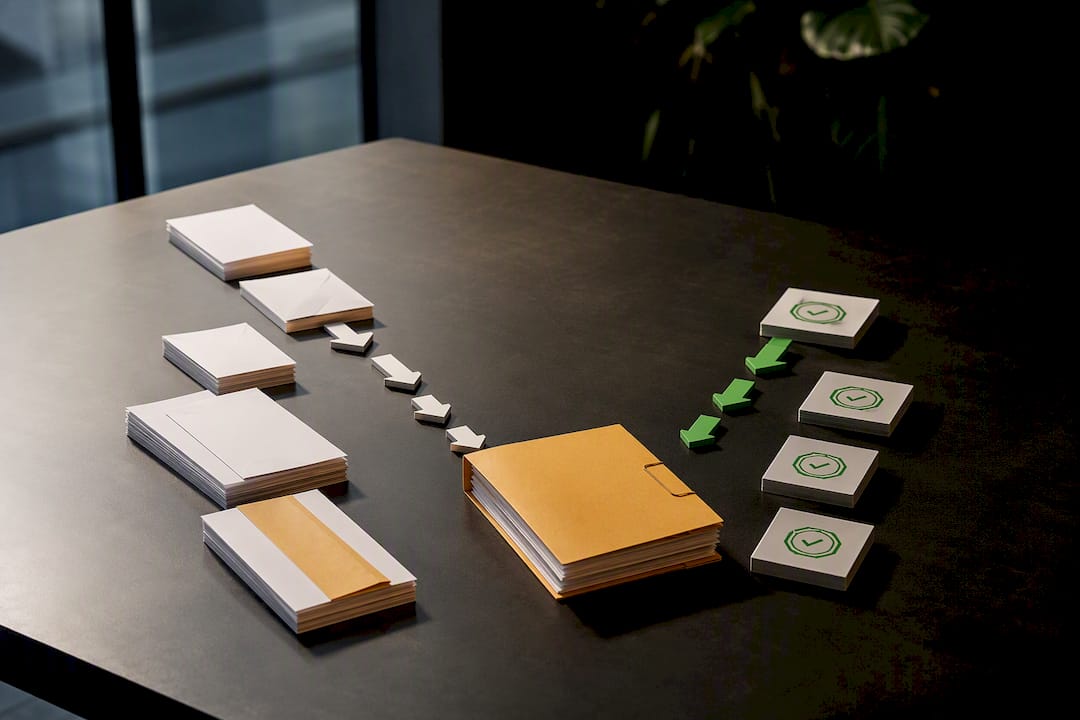
The statutory forms are non-negotiable and time-bound. Certificate of Supervision (Form BPD_CSC02, or e-form BCA-CSC-CSPBW) and Declaration by QP (Form BPD_CSC07, or e-form BCA-CSC-CSCDQP) must reach BCA no later than 3 days before the scheduled inspection. Miss that window and the booked slot is typically forfeited, not simply delayed.
Beyond the forms, expect to assemble:
- Builder’s completion certificates and as-built plans reflecting actual construction
- Technical test reports and permits, including lift Permit to Operate, lightning protection test results, and M&E commissioning reports
- Clearances from relevant technical agencies before BCA will consider the development fit for occupation
That last point deserves emphasis. TOP applications commonly require sign off from URA, LTA, NParks, SCDF, PUB, and NEA, depending on the project’s scope, and some developments trigger project-specific agencies on top of that list. A structured authority submission process that tracks each agency’s status separately avoids the trap of discovering a missing clearance the week before inspection.
How Does the TOP/CSC Portal Application Process Work?
Submission runs entirely through BCA’s TOP/CSC Portal, and the sequence matters as much as the content.
- Log in and select the project reference, then choose an available inspection date.
- Upload as-built plans, test reports, and completion certificates against the required document list.
- Submit the Certificate of Supervision and Declaration by QP at least 3 days before the chosen inspection date.
- Confirm agency clearance status for every technical agency tied to the project.
- Await BCA’s processing outcome and respond promptly to any queries raised during review.
Standard processing takes 7 working days for a complete submission. If the package is incomplete, that clock effectively resets once you resubmit, which is why the 3-day form deadline exists as a hard checkpoint rather than a suggestion.
Express TOP shortens that wait considerably. When BCA accepts an Express application, processing can complete within 1 working day, against a fee of $3,000. Some older BCA guidance references smaller historical fees for specific scenarios, so confirm the current fee against the official page before budgeting for it, since $3,000 is the figure BCA currently applies.
Once submitted, BCA audits the package, may select the project for physical or virtual inspection, and will raise queries directly through the portal. Build your internal calendar around the 3-day form deadline first, then work backward to confirm every agency clearance and inspector availability window before that date arrives.
Which Inspection Mode Fits Your Project: Standard, Express, or Virtual?
BCA offers three procedural routes, and picking the right one depends on project type, readiness, and how quickly occupation is needed.
Standard on-site inspection requires clear access to all areas under review, staged completion zones ready for walkthrough, and a QP who can respond to inspector questions in real time.
Virtual inspection using 360-degree capture or LiDAR is a formal BCA-supported pathway. It requires a pre-consultation with BCA, a submitted Virtual Inspection Plan, and close-up measurements meeting BCA’s checklist standards, not just wide-angle walkthrough footage. Phased submissions let teams send completed sections for review while finishing remaining areas, which cuts down on abortive site visits.
Express TOP layers expedited processing on top of either mode, provided BCA accepts the application and the $3,000 fee is paid.
- Standard: best for straightforward projects with full physical access
- Virtual: suited to complex or phased developments where remote review saves site visits
- Express: appropriate when occupation timing is tight and documentation is already airtight
Pro Tip: Broad photo sweeps do not satisfy virtual inspection requirements. BCA’s checklists call for close-up, measurable evidence saved digitally, so build that capture standard into your as-built documentation from the start rather than retrofitting it before submission.
What Should the QP Do During and After the Inspection?
Inspection day is where months of paperwork meet physical reality, and the QP’s conduct in that window shapes how fast any issues get resolved.
- Be present for the full inspection window and carry supporting documentation for every declared item.
- Record every Non-Compliance, or NC, item raised by the inspector with location, description, and photographic evidence.
- Contact the assigned BCA processing officer immediately if clarification is needed mid-inspection rather than after the fact.
- Rectify NC items on a clear internal timeline and submit rectification evidence through the portal.
- Book reinspection promptly once rectification evidence is ready, rather than waiting for BCA to prompt a follow-up.
Running an internal mock inspection a week or two ahead, using the same checklist BCA applies, catches most NCs before they ever reach an official report. Delegating specific zones to junior site staff works, but the QP still signs off on the final compliance picture, so nothing substitutes for a personal walkthrough before the real date.
Why Do TOP Applications Get Delayed?
Most delays trace back to a short list of preventable gaps rather than genuine construction defects.
- Statutory forms submitted after the 3-day deadline, forfeiting the booked slot
- Outstanding clearances from one or more technical agencies at submission time
- Virtual capture footage that lacks the close-up measurements BCA’s checklist requires
- QP absence on inspection day without a portal reschedule
- Missing or expired test certificates, particularly lift and lightning protection reports
When a gap surfaces, contact the BCA processing officer assigned to the application before assuming a full resubmission is necessary. Minor issues sometimes resolve through a pre-consultation rather than a new booking cycle.
Pro Tip: If a project is running close to its occupation deadline and full physical readiness is uncertain, a phased TOP submission or a virtual inspection for completed zones can buy time on remaining areas without forcing a full reschedule.
What We’ve Learned About Avoiding TOP Delays
Centralized document control beats distributed ownership every time. Projects that assign one team to track every statutory form, test certificate, and agency clearance against BCA’s own checklist tend to avoid the last-minute scramble that triggers missed deadlines.
Virtual inspection suitability deserves an early decision, not a late one. Planning phased captures from the start, rather than retrofitting them after a failed physical inspection, saves weeks. Stellar Structures coordinates agency clearances and QP submission support across civil, structural, and M&E authority approvals, which is precisely where most preventable TOP delays originate.
— Aman
How Stellar Structures Supports Your TOP Application
Services that handle coordination work for TOP applications include authority submission facilitation across various agencies, QP on-site presence support during inspection, pre-TOP mock audits against BCA’s checklist, and virtual-capture coordination for projects using the 360/LiDAR inspection method.
The practical payoff is fewer NC items on inspection day and clearances consolidated well before the 3-day form deadline arrives, instead of chased down in the final week. For property developers and QPs managing multiple agency approvals at once, that consolidation is what separates a smooth TOP from a reinspection cycle. Review our authority submission services and get a project-specific readiness check before you book your next inspection date.
Where to Verify Official TOP Requirements
Confirm every procedural detail against BCA’s own pages before finalizing a submission, since fees and checklist requirements can shift between updates.
- Application for TOP/CSC for forms, fees, and processing timelines
- Virtual Inspection guidance for capture standards and phased submission rules
- TOP/CSC Portal for booking, rescheduling, and application status
- TOP/CSC Helpdesk FAQ for portal troubleshooting and common submission questions
Sources
- Application for TOP/CSC | Building and Construction Authority
- Virtual Inspection | Building and Construction Authority
- BCA TOP/CSC Portal
- FAQ – TOP/CSC Helpdesk (BCA)
FAQ
What Is the BCA Express TOP Fee?
The Express Inspection fee is $3,000, and processing completes within 1 working day once BCA accepts the application. Some older guidance references smaller fees for specific past scenarios, so confirm the current fee on BCA’s official page.
How Long Does a BCA TOP Submission Take to Process?
Standard TOP and CSC applications are processed within 7 working days once the submission is complete. Missing statutory forms or outstanding agency clearances effectively restart that clock upon resubmission.
Where Can I Check a Condo’s TOP Date?
TOP dates for a specific development are not published on a general public lookup; developers and QPs track theirs through the TOP/CSC Portal tied to the project’s application. Prospective buyers should confirm timelines directly with the developer or sales team.
What Is a BCA Approved Document?
A BCA approved document, in the TOP context, refers to plans, forms, or reports that BCA has reviewed and accepted as meeting the Building Control Act’s requirements, including as-built plans and endorsed statutory forms. It signals that the submitted item matches what BCA requires for that stage of the approval process.
Who Actually Submits the TOP Application?
The project’s Qualified Person submits the TOP application through the TOP/CSC Portal; it cannot be filed by a contractor or developer directly. Firms offering authority submission support typically work alongside the QP to prepare documentation rather than replace that role.
Recommended
- Avoid TOP Delays in Singapore: BCA Buildability Score Fixes
- 5,000 sqm Threshold: How Singapore QPs Prevent CORENET X Delays
- Accredited Checker Submission Rules Every Singapore QP Must Know
- The Ultimate Guide: Qualified Person (QP) Supervision in SG