




Introduction
Hiring a qualified person (supervision) for precast and PPVC construction requires more than checking a CV – it demands structured due diligence across registration, technical experience, supervision scope, and contractual clarity. In Singapore, the Qualified Person (Supervision), or QP(S), bears statutory responsibility for ensuring that every structural element leaving a factory and arriving on site meets the approved plans, the Building Control Act, and BCA guidelines. For building projects using precast concrete or Prefabricated Prefinished Volumetric Construction (PPVC), the stakes are higher: modules weighing 25–31 tonnes must be fabricated to millimetre tolerances, lifted safely, and connected without gaps in quality oversight.
This article is written for developers, contractors, and any building owner planning a Singapore project that uses precast or PPVC under the regulatory framework administered by BCA, SCDF, and other authorities. It is not a legal guide for all jurisdictions – the focus is squarely on practical hiring decisions for Singapore construction.
The short answer: verify the candidate’s registration and valid practising certificate with the Professional Engineers Board, confirm hands-on experience with precast and PPVC building works, ensure alignment with the site supervision plan, clarify all deliverables and fee structures, and document everything in a written agreement before any work begins.
Here is what you will gain from this checklist:
-
A practical, stage-by-stage hiring checklist tailored to precast and PPVC projects in Singapore.
-
Understanding of the statutory requirements and regulatory requirements for QP supervision appointments.
-
Key questions to ask during interviews with potential QP(S) candidates covering technical and coordination competence.
-
Typical documents, certifications, and site supervision outputs you should expect from your QP(S).
-
How Stellar Structures can support your project as QP(S) or as an integrated design–supervision consultant.

Understanding Qualified Person (Supervision) in Precast and PPVC Projects
Under the Building Control Act, every developer undertaking structural works in Singapore must appoint a qualified person to supervise those works. The QP(S) must be a Professional Engineer registered with the Professional Engineers Board (or a registered architect, depending on the scope) holding a valid practising certificate. A QP(S) oversees site execution and compliance with plans – from verifying that reinforcement matches the approved bar bending schedule to certifying the completed structure at handover.
When a project uses precast elements or PPVC modules instead of conventional cast-in-situ concrete, the QP(S)’s responsibilities extend well beyond the construction site. Professional supervision must cover factory or yard production, transportation logistics, lifting operations, and the critical interfaces between modules. Risks unique to modular construction – tolerance stacking across storeys, connection integrity at joints, fire-stopping between volumetric units – mean that generic structural supervision experience is insufficient. The QP(S) you hire must understand these risks at a granular level.
Key responsibilities that distinguish QP supervision for precast and PPVC include:
-
Factory audits and mock-up approvals before mass production begins.
-
Dimensional verification and material testing of delivered modules on site.
-
Supervision of lifting plans, crane operations, and module stacking sequences.
-
Inspection of inter-module connections, grouting, waterproofing, and fire safety details.
Role of QP(S) Specifically for Precast Construction
Precast construction in Singapore encompasses façade panels, staircases, beams, slabs, and prefabricated bathroom units – structural elements produced in controlled factory environments and transported to site for assembly. The Guide to Precast Concrete vs. PPVC Construction in 2026 provides a detailed comparison of both systems.
The QP(S) supervising precast works must verify compliance of factory-produced elements with approved plans and specifications. This includes reviewing reinforcement placement against shop drawings, checking mould dimensions, witnessing concrete cube tests, and confirming curing procedures. Precast installation involves strict adherence to inspection protocols and dimensional tolerances – every panel must fit within the project’s specified alignment envelope.
On site, the QP(S) oversees handling, transportation, lifting, and installation, paying particular attention to connections and temporary stability. Critical inspections occur at defined hold points: delivery acceptance checks, pre-erection verification of lifting inserts, grout and connection works during installation, and post-installation joint sealing. Joint detailing and waterproofing knowledge is critical for precast and PPVC construction, as poorly sealed connections between panels can compromise the building envelope.
Hiring a QP(S) without specific precast experience creates tangible risks: misaligned panels that require costly remediation, cracking at joints due to improper connection details, and non-compliance with approved plans that delays TOP applications.
Role of QP(S) Specifically for PPVC Projects
PPVC (Prefabricated Prefinished Volumetric Construction) involves manufacturing complete room-sized modules – with internal finishes, MEP fittings, and external cladding already installed – in an accredited fabrication facility. Common applications in Singapore include public housing, student accommodation, hotels, and healthcare blocks. PPVC adoption has delivered up to 40% manpower and time savings on major building projects, with structural and architectural cycle times reduced by up to 30% per floor.
QP(S) duties unique to PPVC go beyond standard construction supervision:
-
Module interface verification – checking horizontal and vertical joints, tie-downs, diaphragm connections, and inter-module structural ties.
-
Lifting plan supervision – reviewing crane capacities, rigging configurations, staging areas, and stacking sequences according to the design intent. Coordination of crane operations requires thorough understanding of lifting plans and procedures.
-
In-module quality checks – where finishing works affect fire safety, acoustic performance, and waterproofing, the QP(S) must verify these before modules are sealed.
-
Supplier coordination – reviewing PPVC suppliers’ shop drawings and method statements, and reconciling them with the structural design and building plans.
Slippage in alignment tolerances for PPVC requires millimetre precision – guidance documents expect verticality checks for every module, with tolerances as tight as ±2 mm for module alignment. Cumulative misalignment across storeys (“tolerance stacking”) is one of the most significant risks in PPVC, making experienced supervision non-negotiable.
Cross-trade coordination is essential for the effective integration of architectural and mechanical systems in precast projects. Your hiring checklist must explicitly probe for PPVC-specific expertise, not just generic structural experience.

Regulatory Context and Site Supervision Plans (SSP)
Singapore’s supervision framework for structural works is defined by the Building Control Act and administered through BCA guidelines. Several regulatory requirements directly affect how you evaluate and appoint a QP(S):
-
Project value thresholds: Projects over S$7.5 million require full-time supervision by the QP(S) with deployed Resident Engineers and Resident Technical Officers. Small-scale building works under S$7.5 million need periodic supervision. Projects exceeding S$150 million may require 2 Resident Engineers (REs) and 3 Resident Technical Officers (RTOs). Resident Engineers earn an average monthly salary of S$6,817.
-
Risk based inspection regime: BCA guidelines classify building works by risk profile for inspections. The risk classification determines visit frequency, inspection intensity, and the number of qualified site supervisors required.
-
Practising certificate: A QP must hold a valid practising certificate – without it, the appointment is invalid.
-
Site supervisors: All Resident Engineers and RTOs must be accredited by the Joint Accreditation Committee of IES & ACES. Excavation deeper than 1.5 m requires formal submission under regulations.
The site supervision plan (SSP) is a critical document that the QP(S) must prepare for each project. A Site Supervision Plan must classify project risk levels, define the required supervision level (full time supervision vs immediate supervision), specify inspection frequency for critical works like PPVC module installation and precast façade erection, and identify the number of site supervisors deployed. For large building works over S$7.5 million, the SSP must be submitted during the permit application. The QP(S) must produce inspection records at defined frequencies as documented in the SSP.
Understanding these regulatory basics helps you see exactly what to verify in a candidate’s credentials and project approach – which leads directly into the specific hiring checklist.
The Core Hiring Checklist for QP(S) in Precast and PPVC Construction
This section is the heart of the article: a structured checklist you can print, share with your procurement team, and systematically tick off when evaluating candidates. Stellar Structures applies this same supervision framework internally when assigning QP(S) engineers to precast and PPVC projects.
The checklist is organised into five stages: basic eligibility checks, relevant project experience, technical and risk management competence, communication and coordination capability, and scope and fee alignment. Each stage builds on the previous one – do not skip ahead.
Stage 1: Basic Eligibility and Accreditation Checks
Do not proceed unless the candidate passes all checks in this stage.
-
☐ Professional registration: Verify that the Professional Engineer or Architect is registered in Singapore and eligible to act as QP(S) for structural works. Check online through the Professional Engineers Board or Board of Architects directory.
-
☐ Valid practising certificate: Confirm the certificate is current for the year of appointment. A lapsed certificate invalidates the appointment entirely.
-
☐ Familiarity with current regulations: Confirm they are familiar with BCA guidelines on precast and PPVC, including the latest circulars on supervision of precast structural elements (issued 2025–2026) and code updates.
-
☐ RE/RTO accreditation: Ensure that any proposed resident engineer or resident technical officer team members are accredited by the Joint Accreditation Committee and have experience with heavy lifts and modular assembly. Safety certifications are mandatory for construction supervisors in precast and PPVC projects.
-
☐ Professional indemnity insurance: Ask for proof of coverage adequate for the project’s risk profile and total cost.
Stage 2: Relevant Project Experience in Precast and PPVC
Experience on similar Singapore building projects within the last 5–10 years is a critical filter. The supervisor must have on-site experience in precast and modular installation projects.
-
☐ Project portfolio: Request a list highlighting at least 2–3 completed precast projects and 1–2 PPVC or modular projects, ideally after 2018 when PPVC adoption accelerated significantly.
-
☐ Similar project characteristics: Ask specifically about projects with comparable parameters – number of storeys, module weight range (e.g., 25–31 tonnes per module), use type (residential, dormitory, industrial), and structural system (reinforced concrete frame, hybrid steel–concrete). The Clement Canopy, for example, was a 40-storey, 505-unit residential PPVC project involving 1,866 concrete modules weighing approximately 26–31 tonnes each.
-
☐ Factory and site experience: Check for experience in both environments – audits at precast yards and PPVC factories as well as supervision of installation on congested Singapore sites. Supervisors should have experience managing tight delivery schedules and factory logistics.
-
☐ References: Ask for references from developers or main contractors who can speak to the candidate’s responsiveness and problem-solving during precast or PPVC coordination issues.
-
☐ Sample documentation: Review sample inspection forms, photographic records, and non-conformance reports (NCRs) to gauge their quality standards and approach to detailed site records.
Stage 3: Technical and Risk Management Competence
Use this stage as an interview guide. These questions reveal whether a candidate truly understands the construction process for modular building works.
-
☐ Supervision structure for precast: Ask how they typically structure site supervision for precast façade panels, staircases, and structural frames, including key hold points before, during, and after lifting. Quality control and inspection skills are vital for identifying defects before installation.
-
☐ PPVC tolerance management: Probe their understanding of cumulative misalignment, grout bedding preparation, joint waterproofing, and fire-stopping details in PPVC stacking. A candidate who cannot articulate how they manage tolerance stacking is a risk.
-
☐ Risk based inspection approach: Discuss their approach to risk classification for operations such as tandem crane lifts, night-time module installation, and work near live roads or MRT corridors. Many construction safety regulations and individuals involved in lifting operations require specific certifications.
-
☐ Shop drawing and temporary works review: Confirm they can read and critique precast and PPVC shop drawings, lifting diagrams, and temporary works bracing details – not just permanent works.
-
☐ Digital tools: Evaluate familiarity with BIM coordination, digital inspection forms, and photo logs. Candidates should possess digital literacy for managing quality assurance and project tracking.

Stage 4: Communication, Coordination, and Authority Interface
The QP(S) must liaise effectively with multiple parties: the QP(Design), fabricators, main contractor, and authorities. Effective communication skills are necessary for coordinating multi-disciplinary teams in construction.
-
☐ Design coordination: Assess how they coordinate with QP(Design) when factory quality issues or on-site deviations arise in precast or PPVC units.
-
☐ Problem-solving examples: Ask for specific examples of how they handled urgent issues – cracked precast elements on delivery, misaligned PPVC modules discovered during stacking, or connection defects requiring corrective actions.
-
☐ Authority interface: Verify that they are comfortable leading coordination with BCA, SCDF, and other authorities when supervision-related clarifications are needed. The QP(S) must issue Non-Conformance Reports for deviations from approved plans and notify the Commissioner of Building Control upon non-conformance.
-
☐ Response times: Confirm preferred communication channels and response times for site queries, especially during peak installation phases where decisions must be made within hours. Immediate supervision is required during critical construction phases.
-
☐ Client reporting: Check how they update the building owner with concise supervision reports and risk summaries to maintain transparency throughout the project timeline.
Stage 5: Scope, Deliverables, and Fee Structure Alignment
Hiring decisions are often derailed at this stage by unclear expectations. Written clarity on supervision scope prevents disputes and potential safety gaps later.
-
☐ Appointment scope: Define clearly whether the appointment is for QP(S) only, or also includes QP(Design), temporary works design, and factory audits. Precast and PPVC require specialized credentials in manufacturing assembly and structural oversight.
-
☐ Deliverables list: Agree on all expected outputs – site supervision plan (SSP), factory visit reports, site inspection records, non-conformance reports, monthly summary reports, supervision logs, and completion certifications. Completion certifications must be submitted within 14 days after completion. The QP(S) must maintain detailed records of supervision logs and test results.
-
☐ Inspection frequency: Agree on visit frequency at the factory (for precast/PPVC production) versus on-site, including peak installation windows when additional visits are needed.
-
☐ Fee clarity: Clarify the base fee (monthly retainers or fixed deliverables) and how variations are charged for extended project duration, design changes, or additional inspections. Monthly supervision fees for small projects range from S$2,000 to S$4,000, while monthly fees for large projects can reach S$10,000 or more. For detailed fee benchmarks, see the cost of hiring a QP(S) guide.
-
☐ Contract provisions: Ensure the contract includes dispute resolution and a change-order process for expanded supervision requirements (e.g., added PPVC floors or design changes mid-way through the construction process).
Implementing the Checklist on a Real Singapore Project
Consider a typical scenario: an 18-storey PPVC residential block with precast façade panels, planned for construction start in 2027. The developer has selected PPVC for the typical floors (approximately 200 modules at 25 tonnes each) and precast panels for the external cladding. This section walks through how the checklist applies chronologically, from tender stage to formal appointment.
Step-by-Step Use of the Checklist During Procurement
-
Market scan – Shortlist 3–5 consultancies or individual engineers with visible precast and PPVC portfolios. Sources include BCA project listings, industry networks, and firms like Stellar Structures with published track records in precast and PPVC supervision.
-
Pre-screening – Apply Stage 1 and Stage 2 checks to filter out candidates lacking valid registration, current practising certificates, or relevant modular experience. This step alone typically narrows the field to 2–3 serious contenders.
-
Technical interviews – Apply Stage 3 and Stage 4 questions in structured interview sessions. Ensure you are speaking with the key engineers who will actually handle the project – not just the firm’s business development team. Ask them to walk through how they would supervise the specific module weight, stacking sequence, and connection details relevant to your building.
-
Commercial and contractual finalisation – Negotiate scope, deliverables, supervision intensity, and fees per Stage 5. Formalise everything in a consultancy agreement before PPVC production begins.
Early engagement of the QP(S) before finalising PPVC supplier contracts is important. The QP(S) can review the supplier’s accreditation status under the PPVC Manufacturer Accreditation Scheme (administered by the Singapore Concrete Institute together with BCA) and identify supervision requirements that should be built into the construction schedule.
Comparison of Candidate Profiles: Conventional vs Precast/PPVC Specialist
|
Criterion |
Candidate A: Conventional RC Specialist |
Candidate B: Precast/PPVC Specialist |
|---|---|---|
|
Years of relevant precast/PPVC experience |
1–2 years, limited exposure |
8+ years across multiple complex projects |
|
Number of similar Singapore projects completed |
0 PPVC, 1 precast |
3+ PPVC, 5+ precast |
|
Factory supervision experience |
None |
Regular factory audits in Singapore and overseas |
|
Digital supervision tools |
Basic photo logs |
BIM coordination, digital inspection forms, cloud-based NCR tracking |
|
Proposed inspection frequency during installation |
Standard weekly visits |
Daily presence during peak installation, milestone-based at factory |
|
Proposed fee range |
Lower base fee |
Moderately higher, with clear variation clauses |
Even at slightly higher fees, the PPVC specialist typically reduces risk and rework significantly – especially for first-time PPVC clients unfamiliar with the supervision requirements of modular construction. The total cost of rework from poor supervision almost always exceeds the fee difference between candidates.
Visual Checklist and Example “Green Flag / Red Flag” Indicators
When evaluating candidates, look for these indicators to quickly assess fit:
Green Flags (Strong Candidate):
-
Recent PPVC project completions with verifiable references from contractors
-
Detailed, project-specific supervision plan proposed during the interview – not a generic template
-
Proactive discussion of risks: tolerance stacking, crane capacity constraints, factory QA gaps
-
Familiarity with BCA’s latest circulars on supervision of precast structural elements
-
Clear documentation samples showing detailed site records, supervision logs, and systematic photo evidence
Red Flags (Proceed with Caution):
-
No clear plan for factory supervision – assumes all oversight happens on site
-
Vague on SSP preparation or unfamiliar with BCA’s risk based inspection requirements
-
Cannot articulate hold points specific to precast/PPVC installation sequences
-
Unfamiliar with recent BCA circulars (2025–2026) on precast supervision or PPVC guidebook updates
-
Proposes a flat monthly fee with no provision for peak installation intensity
-
No experience with underground building works or underground works adjacent to PPVC sites where applicable
Common Hiring Mistakes and How to Avoid Them
Even experienced developers make avoidable mistakes when appointing QP(S) for precast and PPVC. The three most common challenges stem from underestimating the difference between modular and conventional construction, leaving supervision scope undefined, and failing to plan for installation intensity.
Mistake 1: Treating Precast and PPVC Like Standard RC Supervision
Some developers appoint a QP(S) based on conventional cast-in-situ experience alone, assuming that structural supervision is structural supervision regardless of the construction method. This typically leads to connection issues discovered late, fabrication defects reaching site undetected, and coordination issues between factory production and site readiness.
Solution: Insist on Stage 2 and Stage 3 checks. Require specific PPVC and precast case studies from the candidate. Include factory supervision explicitly in the supervision scope. A QP(S) who has never audited a PPVC fabrication facility is not equipped to verify compliance at the source – where most quality problems originate.
Mistake 2: Vague or Incomplete Supervision Scope
When the division of responsibilities between QP(Design), QP(S), factory QA teams, and RTOs is unclear, gaps emerge during critical works. No one takes ownership of inter-module joint inspections, or factory audit reports are assumed to be someone else’s responsibility.
Solution: Use the Stage 5 checklist to spell out every deliverable, hold point, and interface. Align these with the site supervision plan submitted to BCA. Ensure the written agreement specifies who is responsible for what – and who takes reasonable steps to verify compliance at each stage.
Mistake 3: Underestimating Time and Intensity During Installation Phases
PPVC and heavy precast installation is often compressed into intense phases where multiple modules are installed per day. A flat monthly supervision arrangement may leave the site without adequate QP(S) or RE presence during the most critical windows.
Solution: During hiring, ask candidates to propose inspection plans tied to programme milestones. Include fee provisions for peak installation periods – time supervision must be proportional to risk level, not averaged across quiet and active months. Projects over S$7.5 million require full-time supervision, and within that requirement, the intensity should match the installation pace.
Mistake 4: Ignoring Digital Coordination and Documentation Practices
Poor documentation of precast and PPVC inspections – missing photos, incomplete supervision logs, absent BIM markups – causes problems during TOP/CSC applications and when investigating defects post-completion. BCA expects systematic records, and gaps undermine the QP(S)’s ability to certify the completed works.
Solution: During interviews, require demonstration of documentation standards and digital tools. Treat robust, auditable documentation as a hiring criterion, not a bonus. The QP(S) should be able to show how they maintain detailed records of every inspection, test result, and corrective action in a format that satisfies both project requirements and authority audits.
Conclusion and Practical Next Steps
Hiring the right QP(S) for precast and PPVC construction comes down to structured due diligence – not just reviewing CVs and comparing fee quotes. The five-stage checklist in this article gives you a repeatable, project-specific framework that addresses registration, experience, technical depth, coordination ability, and commercial clarity. Applied consistently, it filters out candidates who lack the specialised expertise that modular construction demands and identifies those who can genuinely deliver professional supervision to the highest standards.
Your next steps:
-
Download or print the checklist and adapt it to your current or upcoming project’s specific project requirements.
-
Review any existing QP(S) appointments to confirm that precast/PPVC expertise and supervision scope are clearly documented.
-
Shortlist potential QP(S) providers – including Stellar Structures – and schedule technical interviews guided by Stage 3 and Stage 4 questions.
-
Update internal procurement templates to incorporate the checklist as part of your standard evaluation criteria for consulting engineers Singapore-wide.
-
Plan early engagement of the QP(S) before finalising PPVC supplier contracts and the construction schedule – early involvement reduces risk and improves buildability outcomes.
For related reading, consider exploring guides on QP(Design) vs QP(Supervision) separation, risk-based supervision planning, and steel vs concrete PPVC systems.
Additional Resources and Visual Aids
Recommended diagrams for your project team:
-
Supervision hierarchy diagram – showing the relationship between QP(Design), QP(S), resident engineer, resident technical officer, precast/PPVC supplier, and main contractor, with lines of reporting and responsibility clearly mapped.
-
Hiring process flowchart – illustrating the step-by-step checklist from market scan through to signed consultancy agreement.
-
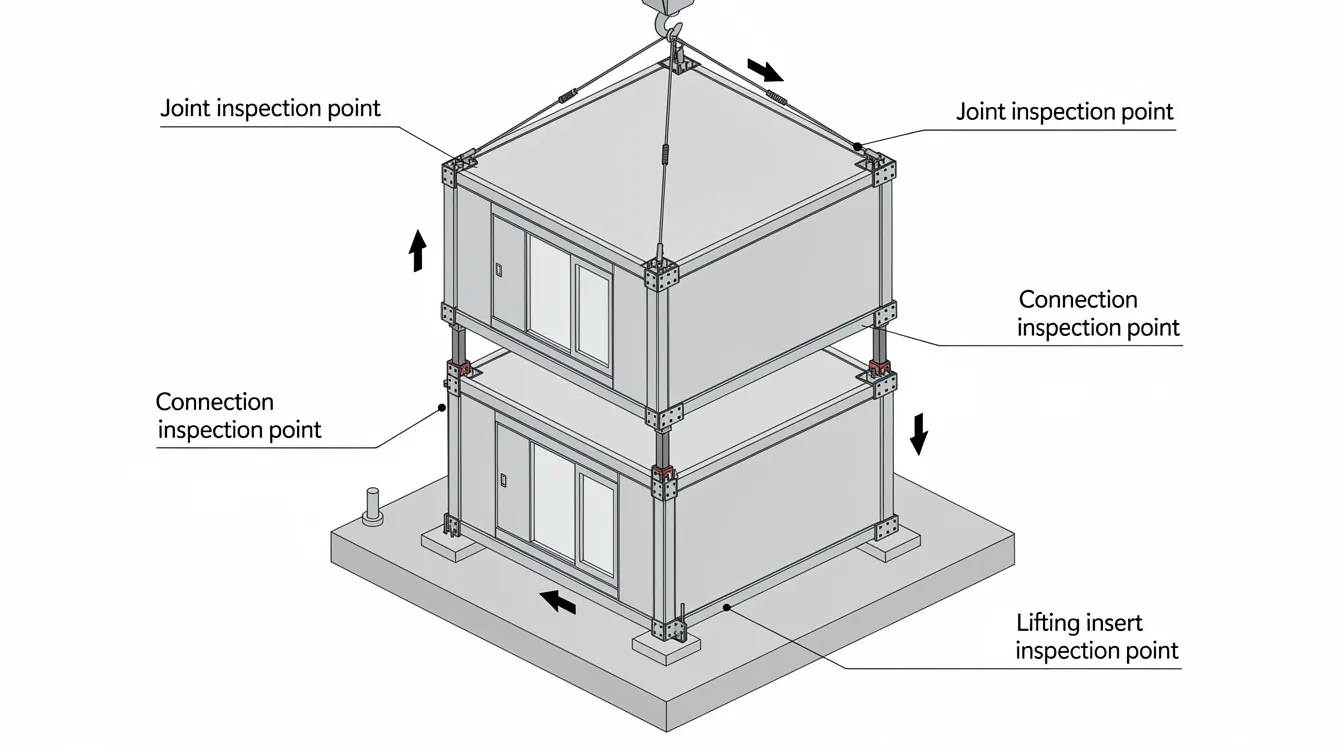
PPVC module installation schematic – an annotated view of module lifting and stacking, highlighting QP(S) inspection points at connections, grout beds, tie-downs, and fire-stopping layers.
Key reference documents:
BCA’s Guide Book for Site Supervision Plans provides the definitive template for SSP preparation and risk classification. The Circular on Supervision of Precast Structural Elements (2025) sets out mandatory onsite sampling tests and non-destructive testing requirements, particularly for overseas-fabricated elements. The PPVC Guidebook details tolerance control, module interface requirements, and supervision expectations for volumetric construction.
For QP(S) engagements or integrated design–supervision services on your next precast or PPVC project, Stellar Structures offers end-to-end support – from SSP development and factory audits through to completion certification. Our team of engineers in Singapore brings direct experience across residential, institutional, and industrial PPVC and precast building projects.
Frequently Asked Questions on Hiring QP(S) for Precast and PPVC
These questions address the most common practical concerns raised by Singapore developers and contractors considering precast or PPVC construction methods.
When must I appoint a QP(S) for precast or PPVC works in Singapore?
The Building Control Act mandates QP supervision for all structural works, including those using precast and PPVC. There is no exemption based on construction method – if the work is structural, a QP(S) appointment is required. Additional triggers affect the intensity of supervision: projects over S$7.5 million require full-time supervision, and risk factors such as building height, module weight, proximity to sensitive infrastructure (e.g., MRT tunnels), and underground works can elevate the risk level and supervision requirements further.
Can the same consultancy act as both QP(Design) and QP(S) for my PPVC project?
It is common and permissible in Singapore for one firm – such as Stellar Structures – to provide both QP(Design) and QP(S) roles. This offers strong benefits in coordination: the supervision team understands the design intent intimately, reducing the risk of misinterpretation during construction. However, contractual scopes must clearly separate design and supervision responsibilities to manage potential conflicts of interest. Clear internal processes, documented decision trails, and transparent reporting to the building owner are essential safeguards.
How many site and factory visits should I expect from the QP(S)?
Visit frequency depends on the project’s risk classification, construction programme, and SSP. PPVC and precast projects typically require more intensive periodic supervision during production and installation peaks than conventional builds. Indicative ranges include weekly or daily site presence during active module installation, and milestone-based visits at the factory (e.g., during mock-up approval, first production run, and random sampling). The actual numbers must be agreed in the site supervision plan and the consultancy contract – not left to assumption.
How do QP(S) supervision fees change when I adopt PPVC instead of conventional construction?
While precast and PPVC can shorten the overall project timeline, they require higher front-loaded supervision effort at factories and during compressed installation phases. This shifts the fee profile: expect higher monthly costs during production and installation months, even if the total project duration is shorter. Monthly supervision fees for small projects range from S$2,000 to S$4,000, while monthly fees for large projects can reach S$10,000 or more. Projects exceeding S$150 million may require 2 REs and 3 RTOs, which further affects fee structures. Budget for intensity, not just duration.
What should I prepare before approaching Stellar Structures for a QP(S) proposal?
Having the following information ready allows us to tailor a supervision plan, resource allocation, and fee proposal aligned with the checklist:
-
Concept and structural scheme indicating where precast and PPVC is proposed, including building plans and preliminary structural drawings.
-
Preliminary schedule showing factory production windows and on-site installation milestones.
-
Estimated project value and building dimensions (height, footprint, number of modules).
-
Known site constraints – adjacent buildings, MRT protection zones, access limitations, or underground works.
-
Preferred PPVC or precast suppliers if already identified, including their accreditation status.
This information enables Stellar Structures to assess the risk profile accurately, propose an appropriate risk based inspection regime, and define the supervision scope that meets both statutory requirements and your project requirements.