





An Accredited Checker (AC) is mandatory for any structural work falling under the Second Schedule of the Building Control (Accredited Checkers and Accredited Checking Organisations) Regulations, and submitting with AC certification changes your BCA processing time from 7 working days to 10 for a first submission. The immediate next step: confirm whether your project triggers the requirement, appoint or verify your AC’s registration, and assemble the AC certificate and checklist before you touch CORENET.
TL;DR:
- Engaging an Accredited Checker early influences foundation and structural assumptions, reducing rework and avoiding delays caused by late requirement confirmation.
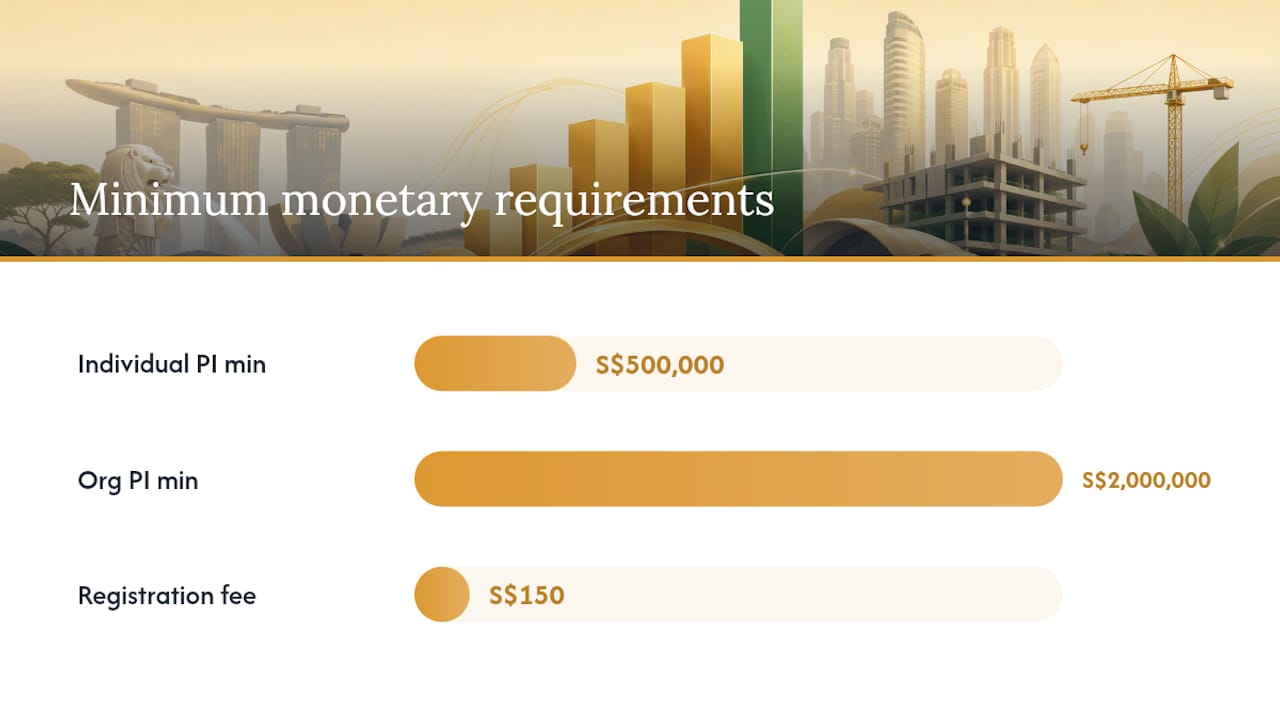
- Individual ACs must have at least 10 years of post-registration experience in Singapore, carry a minimum of S$500,000 professional indemnity insurance, and register through the BCA.
- Submission packages must include completed forms, detailed evaluation reports, full independent calculations, and certified checklists to prevent rejection and delays.
- Processing takes 10 working days for initial submissions with AC certification, but can extend to 20 days for joint agency reviews, emphasizing early engagement.
- Clear coordination, thorough documentation, and prompt responses to BCA queries are essential to meet deadlines and ensure smooth approvals.
Table of Contents
- What Is an Accredited Checker and When Do You Need One?
- Who Can Register as an Accredited Checker in Singapore?
- What Documents Does an Accredited Checker Submission Require?
- How Do You Submit an Accredited Checker Package Through CORENET?
- How Long Does BCA Take to Process an Accredited Checker Submission?
- Who Is Responsible for What: QP Duties vs. AC Duties
- When and How Do You Submit Record Plans and C-Forms?
- What Are the Most Common Accredited Checker Submission Errors?
- A Practitioner’s View on Coordination That Actually Saves Time
- How Stellar Structures Supports Your Accredited Checker Submission
- Where to Find Official BCA and CORENET Resources
- Sources
What Is an Accredited Checker and When Do You Need One?
An Accredited Checker is a Professional Engineer registered separately from the project’s Qualified Person (QP), engaged to independently verify structural design work before BCA approval. The AC does not design the structure. The AC checks it, catching errors the original design team might miss precisely because they are too close to their own calculations.
Singapore splits this role into two tracks: a general Accredited Checker for structural works, and a Specialist Accredited Checker, or AC(Geo), for geotechnical works involving deep excavations, retaining structures, or complex foundation systems. Not every building needs one. The Second Schedule sets out the classes of works that trigger the requirement, typically tied to building height, structural complexity, or site risk factors such as proximity to existing structures.
The practical mistake most project teams make is waiting until the structural plans are drawn before checking whether an AC is required. Confirm this at the schematic design stage instead.
- Review your project against Second Schedule thresholds before finalizing structural concepts
- Engage the AC (or AC(Geo) for geotechnical scope) early enough to influence foundation and structural assumptions
- Flag AC requirement status in your project program so procurement and contracts account for it
Getting this wrong late in design forces rework that a five-minute check at the outset would have avoided. Our guide to BCA building regulations covers how the requirement interacts with broader QP obligations.
Who Can Register as an Accredited Checker in Singapore?
Not every Professional Engineer qualifies. The Regulations set a specific bar, and BCA checks it against every AC certificate submitted.
To register as an Accredited Checker, an individual must hold Professional Engineer registration in the civil or structural discipline and have accumulated at least 10 years of post-registration practical experience in building design or construction within Singapore. Specialist AC(Geo) registration follows a parallel route, requiring demonstrated geotechnical project experience rather than general structural experience.
Organizations offering AC services face a separate layer of requirements:
- Sufficient in-house staffing to cover the scope of checking work undertaken
- An ISO 9001 quality management scope covering structural checking activities
- Minimum professional indemnity insurance of S$2,000,000 at the organizational level
Statutory Minimums: Individual Accredited Checkers must carry professional indemnity insurance of at least S$500,000, while accredited checking organizations must carry at least S$2,000,000. Registration itself carries a S$150 application fee.
These figures are not negotiable minimums. They set the floor BCA uses to assess whether an applicant, individual or organization, can absorb the professional risk that comes with certifying someone else’s structural design.
What Documents Does an Accredited Checker Submission Require?
BCA will reject an incomplete AC package outright, and an incomplete package is the single most avoidable cause of delay. Here is what belongs in the submission:
- Form BCA-BE-STAPPV01–ACC. This is the AC certification form confirming the checker’s registration status and scope of review for the specific submission.
- Form BCA-BE-ACCHECKLIST. The checklist form itemizes each design element the AC reviewed, from load assumptions to connection details, giving BCA a traceable record of what was actually verified.
- AC design evaluation report. This report documents the AC’s independent analysis, including any calculations performed separately from the QP’s own structural computations, and records areas where the AC’s findings converged with or diverged from the original design.
- Independent structural calculations. Where the AC has redone key calculations rather than simply reviewing the QP’s figures, these must be appended in full, not summarized.
- Certification appendices. BCA’s guidelines for ST plan applications include standard certification templates that should be used rather than custom-drafted equivalents.
For post-construction closeout, record-plan submissions carry their own certificate set (Forms C1, C2, and C3), covered later in this guide. Assemble the initial AC package with the same rigor, since a missing checklist item at this stage often resurfaces as a BCA query weeks later.
How Do You Submit an Accredited Checker Package Through CORENET?
CORENET is the platform, but the workflow around it determines whether your submission clears in one pass or bounces back with queries. CORENET handles both structural-plan and record-plan submissions, along with cross-agency joint submissions through the Construction Gateway when your project also requires clearance from agencies like SCDF or PUB.
The practical sequence looks like this:
- Compile all documents as a single, correctly named PDF set rather than scattered individual files
- Attach the AC certificate and checklist as distinct, clearly labeled attachments, not buried inside the main calculation package
- Select the correct submission type at the outset. Structural-plan submissions and joint cross-agency submissions follow different validation paths on CORENET
- Run a pre-submission check against BCA’s own checklist before uploading, since missing signatures and mismatched drawing revisions are the two most common rejection triggers
- Confirm your AC is on standby to respond to queries within your agreed turnaround window, since query response speed drives the overall approval clock more than the initial submission quality
Pro Tip: Build a shared document tracker between your QP and AC team before submission day. When BCA raises a query, whoever can answer fastest should own the reply, and a live tracker prevents both sides from independently drafting conflicting responses to the same question.
Our structural plan approval guide walks through the CORENET interface in more detail if this is your first submission cycle.
How Long Does BCA Take to Process an Accredited Checker Submission?
Processing time is one of the clearest, most quantifiable reasons to engage an AC early, and the numbers are worth memorizing.
- 10 working days for the first structural-plan submission certified by an Accredited Checker
- 14 working days for subsequent AC-certified submissions on the same project
- 7 working days for submissions without AC certification
- 20 working days for CORENET joint cross-agency submissions, given the added coordination across agencies
Timeline Reality Check: An AC-certified first submission processes in 10 working days, but that clock resets with every round of queries. Projects with clean, complete first submissions rarely see it stretch beyond the baseline.
Delays almost always trace back to the same handful of causes: missing forms, calculations that do not match the drawings, or an AC who is slow to respond once BCA raises a query. Set a response-time expectation with your AC in the engagement contract, not after the first query lands. Fixing errors before submission, rather than during a query cycle, is consistently the faster path.
Who Is Responsible for What: QP Duties vs. AC Duties
The QP retains ultimate legal accountability for the structural design, full stop. Engaging an AC does not transfer that responsibility. It adds an independent layer of scrutiny on top of it.
The AC’s statutory duty is to perform an independent evaluation and then submit both a certificate and an evaluation report documenting that analysis, as set out in the Regulations. Critically, the AC must also file a declaration confirming no professional or financial interest in the project beyond the checking engagement itself. A checker with a conflict of interest, even an indirect one through a shared parent company or prior design involvement, cannot certify the work.
Structure your contracts to reflect this division cleanly:
- Define scope precisely so the AC’s review boundaries do not overlap with the QP’s design responsibilities
- Include a non-conflict clause requiring the AC to disclose any prior involvement with the project or its stakeholders
- Set a service-level agreement for query turnaround, since BCA’s clock does not pause while your team debates who should respond
When and How Do You Submit Record Plans and C-Forms?
Once structural works finish, or once the QP ceases duties on a project, the clock starts on record-plan submission. This is a firm deadline, not a suggestion.
- Submit within 14 days. The QP must file record-plan certificates (Forms C1, C2, or C3, depending on the certification scenario) within 14 days of completing works or ceasing duties.
- Include AC certification where applicable. If the original submission required AC involvement, record plans typically require corresponding AC certificates and evaluation reports to close out the file.
- Document any departures. Where as-built conditions differ from approved plans, even immaterial departures need supporting calculations and a clear explanation in the record submission.
Treat record-plan closeout with the same document discipline as the original submission. A project that sails through initial approval can still stall at closeout if the C-form paperwork and AC sign-offs are not tracked from day one of construction.
What Are the Most Common Accredited Checker Submission Errors?
Most AC submission problems trace back to the same handful of preventable gaps. Run through this before every upload:
- Confirm both Form BCA-BE-STAPPV01–ACC and Form BCA-BE-ACCHECKLIST are present and correctly signed
- Verify independent calculations are appended in full, not referenced without attachment
- Check that drawing revision numbers match across the calculation package, the AC evaluation report, and the CORENET upload
- Confirm file formats match CORENET’s accepted types before upload, not after a rejection notice
- Verify the AC’s independence declaration is included and current
- Assign query response ownership in advance: technical design queries typically route to the QP, while checking-methodology queries route to the AC
- Flag early if any element of the works touches deep excavation or complex foundation systems, since this may require a Specialist AC(Geo) rather than a general AC
- Escalate AC(Geo) referrals immediately once flagged, since geotechnical review timelines run independently of the structural track
Pro Tip: When BCA raises a query that touches both design intent and checking methodology, have the QP and AC draft a single joint response rather than two separate replies. Split answers to the same query are a common source of second-round queries.
Our geotechnical engineering consultant guide breaks down when AC(Geo) referral becomes unavoidable.
A Practitioner’s View on Coordination That Actually Saves Time
The gap between a smooth AC submission and a stalled one rarely comes down to technical competence. It comes down to when the AC gets involved. Teams that bring the AC in during schematic design, rather than after drawings are finalized, consistently report shorter query cycles because the checker’s concerns get folded into the design before they harden into rework.
The other underused tactic: a single shared redline document that both QP and AC mark up, rather than parallel comment threads. It sounds mundane. It is also the difference between a BCA query getting one clear answer and getting two contradictory ones.
— Aman
How Stellar Structures Supports Your Accredited Checker Submission
Coordinating an AC submission alongside your own design and construction timeline is a full-time administrative burden on top of the technical one. We handle coordination services including liaising with your Accredited Checker, assembling the certificate and checklist package, managing the CORENET upload, and tracking record-plan closeout through to the final C-form certificate.
Our team has guided structural and geotechnical submissions through BCA review across residential, commercial, and industrial projects, and we work alongside your appointed AC rather than replacing that independent check, keeping scope, timelines, and query response clearly assigned from day one. If your project involves a Permit to Commence Structural Works, our step-by-step ST permit guide outlines exactly where AC certification fits into that approval chain. Reach out to us to review your project’s AC requirement and get your submission package organized before it reaches CORENET.
Where to Find Official BCA and CORENET Resources
Always work from primary sources when preparing an Accredited Checker submission, since forms and guidelines get updated periodically.
- BCA’s structural plan submission guidance for current processing timelines and submission requirements
- Record Structural Plan C-Forms page for closeout certificate templates
- Building Control (Accredited Checkers and Accredited Checking Organisations) Regulations on Singapore Statutes Online for the full statutory text
- CORENET e-submission portal for uploading structural and record-plan applications
For independent technical review practices and structural coordination workflows beyond Singapore’s regulatory framework, Xponexus Engineering’s services overview offers useful comparative context on CAD and BIM coordination standards. Always verify you are using the latest form versions directly from BCA’s official site before submission, since outdated templates are a routine cause of rejection.
Sources
- Structural Plan submission | Building and Construction Authority
- Building Control (Accredited Checkers and Accredited Checking Organisations) Regulations | Singapore Statutes Online
- Record Structural Plan (C-Forms) | Building and Construction Authority
Recommended
- Why Every Structural Work in Singapore Requires a QP S Legal Consequences of Non Compliance
- Checklist for Developers Contractors Choosing the Right QP S and Supervision Team for Your Next Build in Singapore
- What Are The Requirements For Building Plan Submission In Singapore
- The Qualified Person (QP) in Singapore: Roles, Responsibilities and Liabilities