




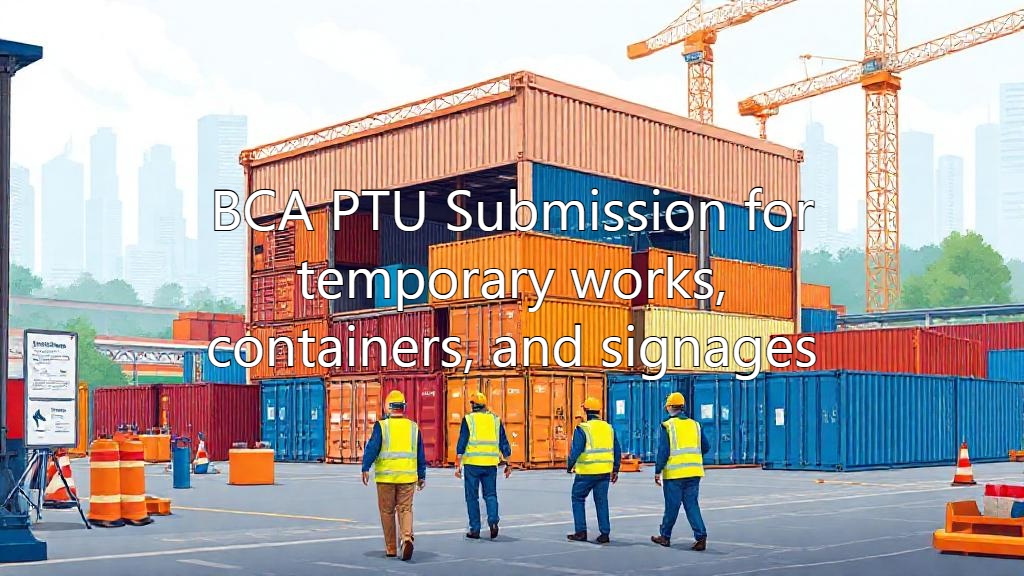
As the cityscape of Singapore continues to evolve, the intricate dance of construction and development weaves a complex tapestry of temporary works, containers, and signages, each playing a vital role in the grand symphony of progress.
With the Building and Construction Authority (BCA) serving as the maestro, orchestrating the harmony of building codes and regulations, the PTU submission process emerges as a critical crescendo, ensuring that these temporary elements are safely and compliantly integrated into the urban landscape.
But what happens when the rhythm of construction falters, and the melody of safety is disrupted?
The BCA PTU submission for temporary works, containers, and signages becomes the linchpin, providing a framework for developers and contractors to navigate the regulatory landscape and avoid the discord of non-compliance.
Understanding BCA PTU Submission Requirements for Temporary Construction Works
The Building and Construction Authority (BCA) of Singapore has implemented the PTU submission requirements to ensure safety and compliance in temporary construction works.
This regulatory framework is crucial for construction projects in Singapore, as it helps prevent accidents and ensures that temporary structures are properly designed and installed.
The PTU submission process involves careful planning, documentation, and approval from the BCA, which can be a complex and time-consuming task for contractors and developers.
The clock is ticking for contractors to comply with the BCA’s stringent PTU submission requirements or face severe penalties and project delays.
- Key documents such as method statements and structural calculations must be submitted to the BCA for approval.
- Non-compliance with PTU submission requirements can result in significant fines and reputational damage for contractors.
- Timely submission of PTU applications is essential to avoid project delays and ensure a smooth construction process.
Navigating Regulations for Container Placement and Signage Installation Onsite
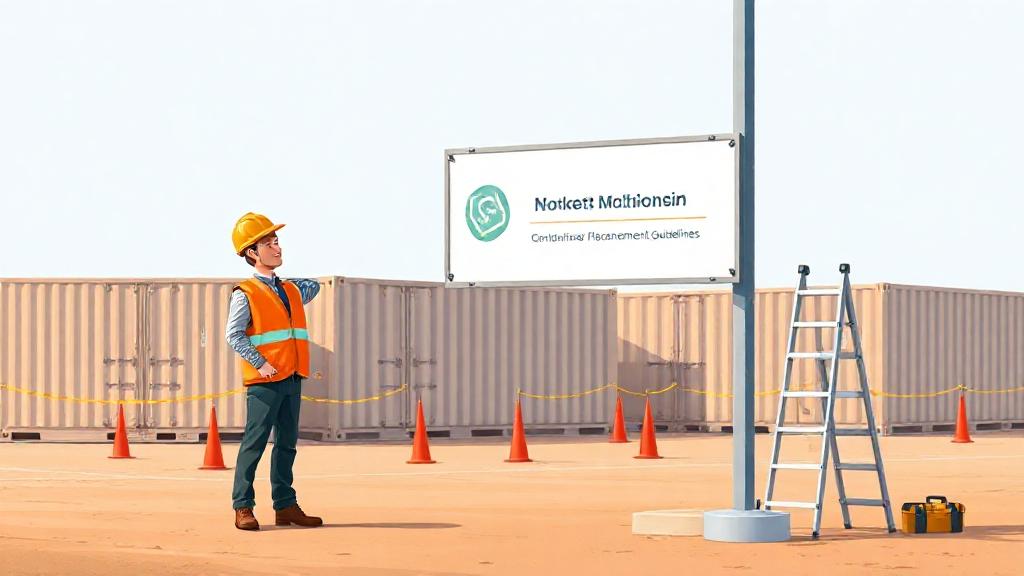
Understanding the regulations can seem overwhelming, but it’s essential to break down the requirements into manageable parts.
You’ll need to consider factors such as container size, placement, and signage visibility, as well as obtaining the necessary permits and approvals from local authorities.
The regulations are in place to ensure public safety and maintain a organized work environment.
You’re not alone in navigating these complex regulations, and with the right guidance, you can ensure a smooth and compliant project execution.
Comprehensive Guide to BCA PTU Submission for Temporary Fencing and Hoardings
A construction company in Singapore recently faced delays in their project due to incomplete BCA PTU submissions for temporary fencing and hoardings, highlighting the importance of adhering to regulations.
The company had to revisit their submission process, ensuring all necessary documents and plans were in order, to avoid further setbacks.
This experience underscores the need for a comprehensive guide to navigate the BCA PTU submission process efficiently.
By understanding the requirements and procedures, construction companies can avoid costly delays and ensure compliance with regulatory standards.
BCA PTU Approval Process for Temporary Cranes and Heavy Equipment Deployment
The BCA PTU approval process for temporary cranes and heavy equipment deployment in Singapore is a meticulous and multi-faceted procedure that requires careful planning, precise documentation, and stringent compliance with regulatory standards.
This process is akin to navigating a complex maze, where each step must be carefully executed to avoid dead ends and ensure a smooth passage.
The process begins with a thorough risk assessment and site evaluation, followed by the preparation and submission of detailed plans and specifications to the Building and Construction Authority (BCA) for review and approval.
Importance of Accurate Measurement and Calculation in BCA PTU Submission Forms

To ensure a smooth submission process, it is crucial to understand the importance of accurate measurement and calculation in BCA PTU submission forms.
The Building and Construction Authority (BCA) in Singapore requires precise calculations to verify compliance with regulations and standards.
Additionally, accurate measurements help prevent errors and discrepancies that may lead to delays or rejections.
By providing correct information, applicants can avoid unnecessary revisions and resubmissions.
Essential Documents Required for BCA PTU Submission for Temporary Site Offices
To ensure a smooth submission process, it’s crucial to have the necessary documents ready.
- Gather the Certificate of Registration from the relevant authorities
- Obtain a copy of the company’s ACRA business profile
- Prepare detailed drawings and layouts of the temporary site office
- Submit a completed Form B from the BCA website
- Compile all relevant supporting documents, such as insurance certificates and tenancy agreements
By having these essential documents in order, you’ll be well on your way to a successful BCA PTU submission, and your temporary site office will be up and running in no time, saving you from potential headaches and costly delays.
Temporary Works Design and Planning Considerations for Successful BCA PTU Submission
Temporary works design: a critical component— requiring careful planning and execution to ensure compliance with regulatory requirements.
A well-structured plan can make all the difference in a successful BCA PTU submission: it’s all about attention to detail.
Effective communication between stakeholders is crucial.
Because when it comes to temporary works design — everything hangs in the balance: safety, cost, timelines.
A comprehensive plan should include factors such as site conditions, material selection, and construction methodology— all of which impact the overall project outcome.
Mitigating Risks and Ensuring Compliance with BCA Regulations for Temporary Signages
Contrary to popular belief, temporary signages are not exempt from Building and Construction Authority (BCA) regulations in Singapore, and non-compliance can lead to severe penalties.
Many businesses assume that temporary signages are not subject to the same rules as permanent structures.
However, this misconception can result in costly fines and damage to a company’s reputation.
In reality, the BCA has strict guidelines for temporary signages to ensure public safety and maintain the aesthetic appeal of the city-state.
For instance, temporary signages must comply with the BCA’s requirements for structural integrity, fire safety, and accessibility.
“A single non-compliant temporary signage can lead to a fine of up to SGD 5,000 and even prosecution under the Building Control Act”
Streamlining BCA PTU Submission for Temporary Containers and Associated Structures Easily
The Building and Construction Authority (BCA) of Singapore has implemented the_PTU (Pre-Submission Technical Update) process to facilitate a smoother submission process for temporary containers and associated structures, which includes ensuring compliance with regulations and guidelines, such as those related to fire safety and structural integrity.
This process involves a thorough review of the design and construction plans to identify potential issues and address them before the formal submission, thereby reducing the risk of non-compliance and associated delays.
By streamlining the PTU submission process, stakeholders can benefit from a more efficient and cost-effective approach to obtaining the necessary approvals for temporary containers and associated structures.
Furthermore, the PTU process also enables stakeholders to engage with BCA officials and obtain feedback on their designs, which can help to identify and address potential issues early on.
As we consider the intricacies of BCA PTU submission for temporary works, containers, and signages, it becomes clear that the process is a delicate balance between ensuring safety and facilitating construction progress.
The meticulous planning and attention to detail required for a successful submission can be likened to assembling a complex puzzle, where each piece must fit perfectly into place.
Looking ahead, as Singapore continues to evolve and grow, the importance of streamlined BCA PTU submissions will only continue to escalate, prompting the question: what innovations will be introduced to enhance the efficiency and effectiveness of this process, ultimately shaping the city-state’s urban landscape.
With the ever-changing skyline of Singapore as a backdrop, the BCA PTU submission process remains a vital, though often unseen, component of the country’s architectural aspirations, weaving a narrative of growth, development, and precision.
Ultimately, the submission process serves as a testament to the power of human ingenuity, where creativity and regulatory compliance intersect to give rise to a unique, ever-evolving urban tapestry.