




A builder in Singapore is defined as any person or company that undertakes building works personally or on behalf of others, excluding subcontractors, under the Building Control Act 1989. Understanding what is a builder responsibility in Singapore means recognizing a set of statutory duties that go well beyond physical construction. Builders must hold a valid BCA Builder’s Licence for projects requiring plan approval, supervise works according to approved plans, maintain onsite documentation, and notify authorities of any non-compliance. Key entities involved in this framework include the Building and Construction Authority (BCA), Qualified Persons (QP), and appointed site supervisors. For property owners and developers, knowing these obligations protects your project from costly legal exposure.
What statutory duties must a builder fulfill in Singapore?
Builders carry specific legal obligations under Section 11(1) of the Building Control Act, which mandates compliance with approved plans, onsite documentation, and formal certification of completed works. These duties are not optional. They form the legal backbone of every construction project in Singapore.
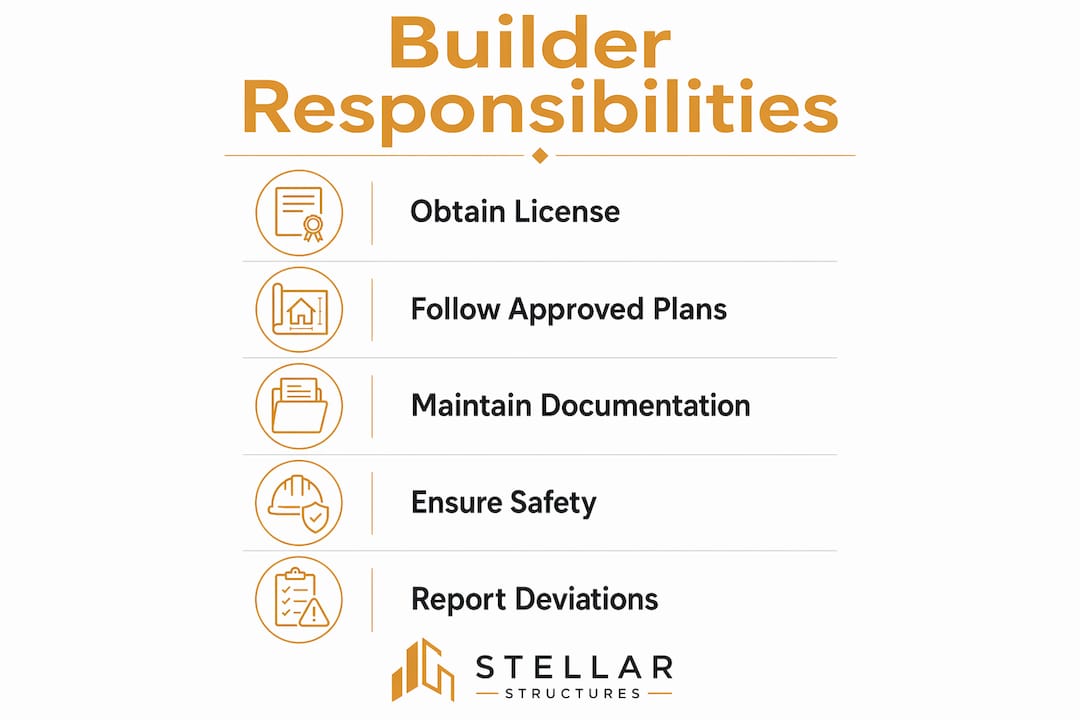
The core statutory duties include:
- Comply with approved plans and regulations. All building works must conform to the plans approved by the relevant authority. No deviation is permitted without prior written approval.
- Maintain onsite documentation. Current building plans must be kept on site and accessible at all times during construction.
- Notify authorities of contraventions. Builders must report any deviations or breaches to the relevant authority promptly.
- Certify completion of works. Builders must formally certify that building works are completed in accordance with approved plans and statutory requirements.
- Appoint and cooperate with Qualified Persons and site supervisors. Qualified Persons and site supervisors are integral to project compliance, and builders must work alongside them to fulfill regulatory duties.
Builders also carry responsibility for ensuring no part of the construction deviates from approved plans without prior approval. Unauthorized changes can trigger penalties and mandatory remediation, both of which create significant project delays.
Pro Tip: Before construction begins, confirm that your appointed QP has reviewed and signed off on all approved plans. This single step prevents the most common source of statutory breaches.
How does the BCA Builder’s Licence affect construction responsibilities?
The BCA Builder’s Licence is the primary mechanism through which Singapore enforces builder accountability. Builders undertaking projects that require plan approval must hold a valid licence issued by the Building and Construction Authority. Operating without one exposes both the builder and the developer to serious legal risk.
Licensing requirements mandate the appointment of an Approved Person (AP) for oversight and a Technical Controller (TC) for execution within the licensed firm. The AP is responsible for overall project governance, while the TC manages day-to-day technical compliance on site. This dual-role structure integrates technical expertise directly into the licensed builder’s operations.
The table below outlines key differences between licence classes:
| Licence Class | Minimum Paid-Up Capital | Scope of Works |
|---|---|---|
| Class 1 (General Builder) | S$300,000 | All building works requiring plan approval |
| Class 2 (General Builder) | S$100,000 | Building works up to a specified contract value |
| Specialist Builder | S$25,000 | Specific specialist trades (e.g., piling, pre-casting) |
Minimum paid-up capital ranges from S$25,000 to S$300,000 depending on the licence class. That capital threshold signals to regulators that the builder has the financial capacity to complete works and rectify defects if required.
Penalties for unlicensed building work are severe. Builders who breach licensing conditions face fines and potential suspension or revocation of their licence. Licensing directly protects public safety by ensuring only qualified, financially capable firms undertake regulated construction works.
Pro Tip: Check the BCA’s online register before engaging any builder. A valid licence number and current status confirm the firm meets all statutory requirements for your project type.
What are the legal consequences for builders who fail to meet their responsibilities?
Non-compliance with builder duties in Singapore carries penalties that reflect the seriousness of construction safety obligations. Section 11(6) of the Building Control Act 1989 sets fines of up to S$200,000 or imprisonment of up to two years for offences. These are not theoretical maximums. They apply to real breaches, including failure to comply with approved plans, failure to notify authorities of contraventions, and failure to certify completed works.
The consequences for non-compliant builders include:
- Fines up to S$200,000. Applicable for breaches of statutory duties under the Building Control Act.
- Imprisonment up to two years. Reserved for serious or willful violations.
- Continuing fines for ongoing breaches. Builders can be fined on a continuing basis for each day a violation persists.
- Mandatory work stoppages. BCA can issue stop-work orders, halting all construction until compliance is restored.
- Mandatory rectification. Builders must correct non-compliant works at their own cost, regardless of project timeline impact.
“The stringent penalties imposed on builders reflect their pivotal role in safeguarding public safety and ensuring structural integrity in Singapore’s construction industry.” — Legal Wires analysis of the Building Control Act 1989
For developers, a builder’s non-compliance directly affects your project timeline and budget. Understanding BCA fines versus regularization costs shows that early plan submission and proactive compliance are consistently cheaper than remediation after a breach.
How do builders maintain practical compliance on site?
Practical compliance requires continuous effort across documentation, supervision, and regulatory engagement. Building Control Regulations 2003 set out specific requirements for site records and progress reports that builders must maintain throughout the project lifecycle.
The following steps define effective on-site compliance practice:
- Maintain a complete site record file. Section 22 of the Building Control Regulations 2003 requires builders to keep accurate site records. These records must reflect current construction status and be available for inspection at any time.
- Submit progress reports on schedule. Section 23 mandates the submission of progress reports. Late or incomplete submissions are a common trigger for BCA scrutiny.
- Prepare for unannounced BCA inspections. BCA inspections may occur without prior notice under Part III of the Building Control Regulations 2003. Builders must maintain continuous compliance, not just compliance at scheduled checkpoints.
- Coordinate closely with your QP and site supervisor. Builders who delegate oversight to their QP and site supervisor reduce the risk of undetected deviations. Regular coordination meetings between the builder, QP, and supervisor are standard practice on compliant sites.
- Document all design changes immediately. Any variation from approved plans must be recorded, submitted for approval, and updated in the onsite plan set before work continues. Retroactive documentation is a red flag during inspections.
Thorough site documentation is often overlooked but is critical for project approvals and avoiding costly disruptions during BCA inspections. The most common compliance failures on Singapore construction sites trace back to incomplete records, not structural defects.
Pro Tip: Assign one dedicated person on site to manage all documentation. A single point of accountability for records reduces the risk of missing entries that trigger stop-work orders.
For developers, reviewing building plan submission requirements before construction begins gives you a clear picture of what your builder is legally required to maintain throughout the project.
Key Takeaways
A builder in Singapore carries full statutory responsibility for compliance, documentation, and certification under the Building Control Act 1989, and non-compliance carries penalties of up to S$200,000 or two years’ imprisonment.
| Point | Details |
|---|---|
| Builder definition | Any person or company undertaking building works, excluding subcontractors, under the Building Control Act 1989. |
| Licence requirement | Builders must hold a valid BCA Builder’s Licence for projects requiring plan approval, with capital thresholds from S$25,000 to S$300,000. |
| Core statutory duties | Comply with approved plans, maintain onsite records, notify authorities of contraventions, and certify completed works. |
| Penalties for non-compliance | Fines up to S$200,000 or imprisonment up to two years, plus continuing fines and mandatory stop-work orders. |
| Practical compliance | Continuous site documentation, scheduled progress reports, and readiness for unannounced BCA inspections are non-negotiable. |
Why builder responsibilities deserve more attention than they get
Most property owners and developers focus on cost and timeline when engaging a builder. Regulatory compliance rarely enters the conversation until something goes wrong. That is a costly mistake.
Builder responsibilities in Singapore have evolved to reflect the country’s national commitment to construction safety and quality. The framework is not bureaucratic overhead. It is a system designed to prevent structural failures, protect occupants, and give developers legal certainty. When a builder fails to maintain onsite records or deviates from approved plans without authorization, the developer often shares the legal and financial consequences.
The most common pitfall I see is the assumption that compliance is the builder’s problem alone. Developers who actively verify their builder’s licence status, confirm QP appointments, and request regular documentation updates are far less likely to face stop-work orders or remediation costs. Proactive engagement with your builder’s compliance process is not micromanagement. It is sound project governance.
Regulatory updates in 2026 continue to tighten oversight of licensed builders, particularly around documentation standards and inspection readiness. Builders and developers who treat compliance as a continuous process rather than a pre-handover checklist will consistently outperform those who do not.
— Aman
How Stellar Structures supports builders and developers in Singapore
Navigating Singapore’s construction compliance requirements is demanding for any builder or developer. Stellar Structures provides civil and structural design checks that verify building works meet BCA standards before and during construction, reducing the risk of costly non-compliance.

Stellar Structures also manages authority submission services across BCA, URA, HDB, JTC, SCDF, and other regulatory bodies, giving builders and developers a single point of contact for all compliance submissions. Their team of engineers and architects serves residential, commercial, and industrial projects across Singapore. Contact Stellar Structures to discuss how their integrated engineering and compliance services can support your next project.
FAQ
What is a builder under the Building Control Act 1989?
A builder is any person or company that undertakes building works personally or on behalf of others, excluding subcontractors, as defined in the Building Control Act 1989.
Does every builder in Singapore need a BCA licence?
Builders must hold a valid BCA Builder’s Licence for any project that requires plan approval. Unlicensed building work for regulated projects carries fines and potential imprisonment.
What happens if a builder deviates from approved plans?
Unauthorized deviations from approved plans must be reported to the relevant authority immediately. Failure to do so can result in fines, stop-work orders, and mandatory rectification at the builder’s cost.
Who is responsible for site documentation during construction?
The builder is legally responsible for maintaining accurate site records and submitting progress reports as required by the Building Control Regulations 2003. The appointed QP and site supervisor support this process but do not replace the builder’s primary obligation.
Can a developer be held liable for a builder’s non-compliance?
Developers can face project delays, financial losses, and shared legal liability when their appointed builder breaches statutory duties. Verifying your builder’s licence and monitoring compliance throughout the project reduces this exposure significantly.
Recommended
- Design and build contracts: Singapore developer guide
- Mezzanine Floor Approval Guide Singapore 2026
- Singapore A&A Works (2025): Essential Guide to Hiring a BCA-Certified Builder
- Structural & Façade Inspections in Singapore