




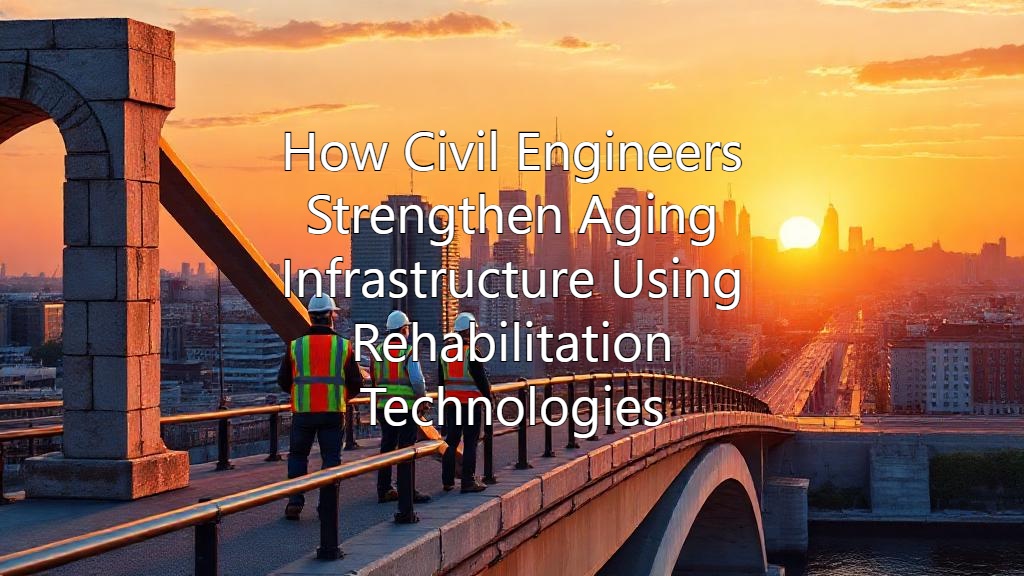
As the backbone of modern society, infrastructure is like a masterfully woven tapestry, with each thread representing a vital component that supports the fabric of our daily lives.
However, just as a tapestry can fray and unravel over time, ageing infrastructure can deteriorate, posing a threat to the very foundation of our communities.
In the United States alone, it’s estimated that over 40% of bridges are more than 50 years old, highlighting the urgent need for innovative solutions to revitalise these critical structures.
Civil engineers are rising to the challenge, leveraging cutting-edge rehabilitation technologies to breathe new life into ageing infrastructure, much like a skilled artisan meticulously restoring a priceless work of art.
By combining traditional techniques with modern materials and methods, these engineers are helping to ensure the long-term health and resilience of our infrastructure, ultimately safeguarding the safety and well-being of millions of people.
Rehabilitating Ageing Infrastructure Assets Through Advanced Inspection Techniques
Rehabilitating ageing infrastructure assets is crucial for ensuring public safety and preventing catastrophic failures; advanced inspection techniques play a vital role in this process.
The use of cutting-edge technologies such as drones, sensors, and artificial intelligence enables accurate and efficient inspection of infrastructure assets, allowing for timely maintenance and repair.
By leveraging these technologies, infrastructure managers can extend the lifespan of ageing assets and reduce the risk of failure.
- Predictive maintenance is revolutionising the way infrastructure assets are managed, enabling proactive repair and replacement of critical components.
- Artificial intelligence is being used to analyse vast amounts of inspection data, identifying potential failures and optimising maintenance schedules.
- Advanced sensor technologies are enabling real-time monitoring of infrastructure assets, providing critical insights into their condition and performance.
Evaluating Condition and Performance of Deteriorating Structures Using SHM Systems
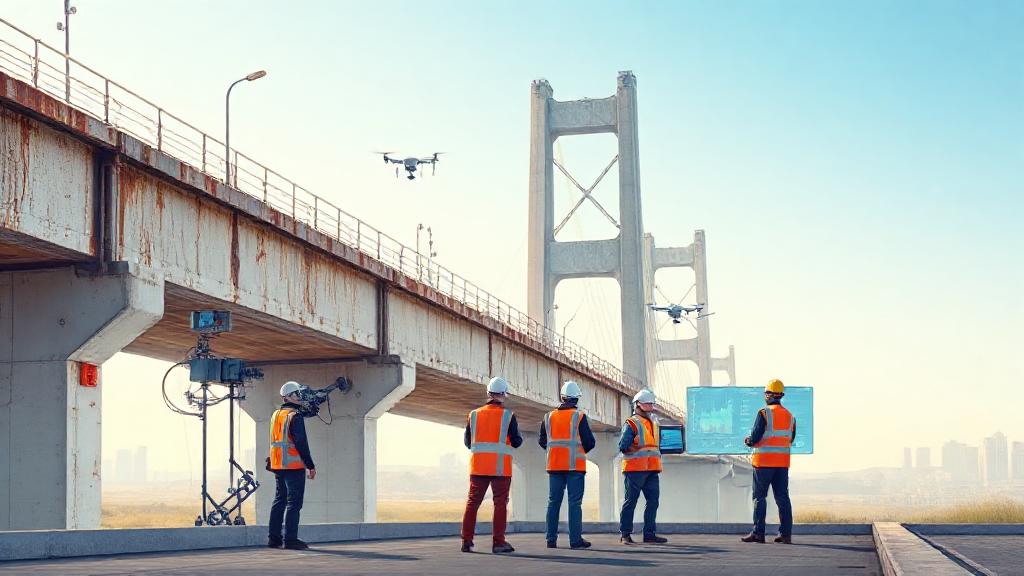
Structural Health Monitoring (SHM) systems are designed to address concerns about the stability of buildings and other structures by continuously assessing their condition and performance.
These systems utilize advanced sensors and algorithms to detect even minor changes in a structure’s behaviour, providing valuable insights for maintenance and repair.
By leveraging SHM systems, the safety and integrity of buildings, bridges, and other critical infrastructure can be ensured.
Non-Destructive Testing Methods for Assessing Structural Integrity and Safety
Non-destructive testing methods have become increasingly prevalent in the construction industry, as they enable engineers to evaluate the condition of structures without compromising their integrity.
The use of non-destructive testing methods is particularly crucial in areas where buildings are subject to harsh weather conditions and high traffic volumes, making regular assessments essential to prevent accidents and ensure public safety.
Non-destructive testing methods have also been applied in various other fields, including aerospace and automotive engineering, to inspect the condition of critical components and prevent potential failures.
Retrofitting and Repurposing Strategies for Enhancing Infrastructure Resilience
Retrofitting and repurposing existing infrastructure is a crucial step in enhancing resilience, where old, worn-out components are replaced or reused to create a stronger, more robust system.
Innovative materials and technologies, such as advanced composites and smart sensors, are integrated to create a seamless, efficient, and adaptive system, capable of responding to changing environmental conditions.
Ultimately, retrofitting and repurposing infrastructure provides a safe, reliable, and sustainable environment for communities to thrive.
Strengthening Techniques for Increasing Load Capacity and Extending Lifespan
To enhance the load capacity and extend the lifespan of a structure, it is essential to employ effective strengthening techniques, such as using fibre-reinforced polymer (FRP) composites or applying a protective coating.
Regular maintenance and inspection are crucial to identify potential weaknesses and addressing them before they become major issues.
By adopting these strategies, it is possible to significantly enhance the overall performance and longevity of the structure.
Sustainable Rehabilitation Approaches Using Smart Materials and Digital Tools
Rehabilitation is evolving with innovative technologies and materials, including the implementation of smart prosthetics with AI-powered sensors and the utilisation of virtual reality for immersive physical therapy sessions.
These advancements are transforming the field of rehabilitation, offering more effective and personalised treatment options, and ultimately improving the quality of life for individuals in need.
Overcoming Logistical and Funding Challenges in Large-Scale Rehabilitation Projects
Large-scale rehabilitation projects often require significant funding and resources, and a comprehensive strategy is essential to overcome logistical and funding challenges.
Securing funding, managing resources, and ensuring community engagement and support are critical components of a successful rehabilitation project.
Integrating Emerging Technologies like AI and 3D Printing into Infrastructure Rehabilitation
Emerging technologies like AI and 3D printing can significantly reduce costs and enhance efficiency in infrastructure rehabilitation, and countries like Japan and Singapore have already begun leveraging these innovations to revamp their infrastructure.
By 2025, the global market for 3D printing in construction is expected to reach $1.5 billion, growing at a CAGR of 104.7%.
Optimising Environmental Sustainability and Community Impact through Rehabilitation Practices
Rehabilitation practices have emerged as a crucial strategy for promoting sustainability and community development, with a growing body of research highlighting the potential of eco-friendly rehabilitation methods to mitigate the environmental footprint of construction projects.
The integration of green technologies and sustainable materials in rehabilitation practices can significantly reduce waste and pollution, while also creating jobs and stimulating local economies.
As we look to the future, the prospect of revitalising ageing infrastructure using cutting-edge rehabilitation technologies is a beacon of hope for communities worldwide.
The innovative approaches and materials being developed by civil engineers have the potential to not only extend the lifespan of existing structures but also to create more resilient and sustainable systems.
With the global population projected to continue growing, the importance of preserving and upgrading our infrastructure will only continue to intensify, making the work of civil engineers a vital component of building a better tomorrow.
The intersection of technology and infrastructure holds the key to unlocking a brighter, more sustainable future, one that is built upon the solid foundation of rehabilitated and strengthened ageing infrastructure.