




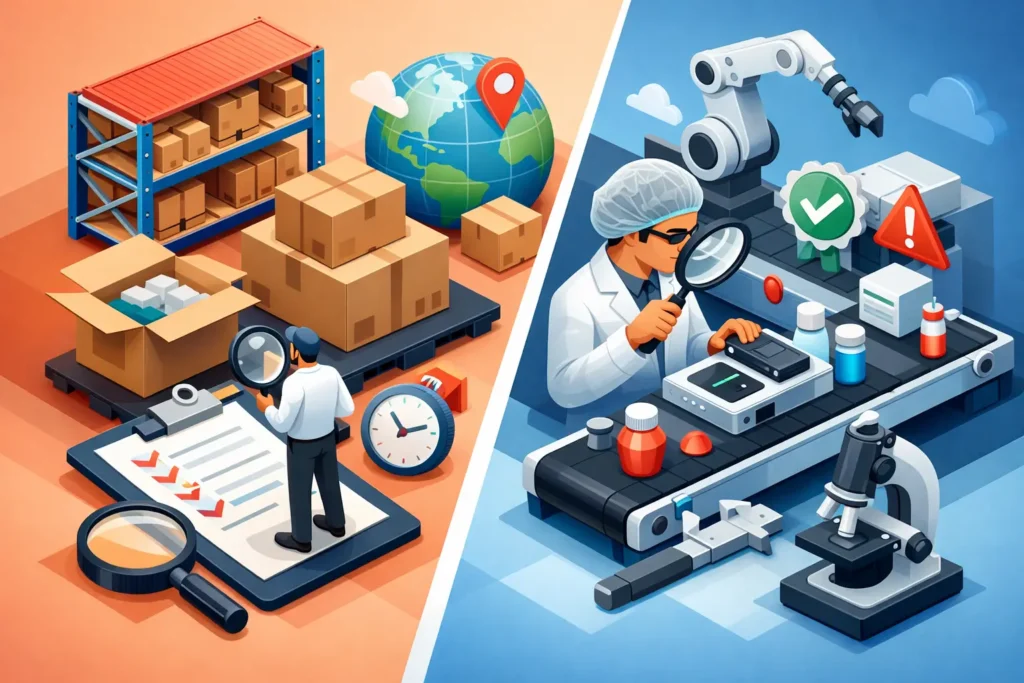
If a shipment fails after it leaves the factory, the argument usually starts with timing. Was the product already defective before packing, or did something go wrong at the final stage? That is where the distinction between psi inspection vs pfi inspection matters. For buyers, importers, and project teams managing quality risk, the two inspections serve different purposes, and choosing the wrong one can leave a costly blind spot.
PSI inspection vs PFI inspection: what each one means
In most quality-control workflows, PFI means pre-final inspection and PSI means pre-shipment inspection. The names sound close, but they are not interchangeable.
A PFI inspection is carried out when production is substantially complete but not yet fully finished for shipment. In practical terms, this often means around 70 to 90 percent of goods are completed, with enough finished units available for inspection and enough time left to correct defects, rework packaging, or adjust production issues.
A PSI inspection takes place later, when production is complete and goods are packed or ready for dispatch. Its main role is to confirm that the finished shipment matches the approved specifications, purchase order, packaging requirements, labeling standards, and quantity expectations before the goods leave the supplier.
That timing difference changes the value of each inspection. PFI is mainly about catching problems while there is still room to fix them. PSI is mainly about confirming the shipment you are about to pay for or release.
Why the timing matters more than the label
Many buyers treat inspection terms as standard industry language, but actual practice varies by supplier, inspection firm, and country. One party may call an inspection “pre-final” simply because production is almost done. Another may use “pre-shipment” even when only part of the order is packed. That is why relying on the name alone is risky.
What matters is the inspection stage, the sample availability, and the decision you need to make. If you need a checkpoint early enough to prevent a full-batch failure, PFI is usually the better tool. If you need a release decision before shipment, PSI is usually the correct one.
For commercial buyers, this is not just a technical distinction. It affects lead time, rework cost, booking schedules, payment release, and claim position if defects are discovered later.
What a PFI inspection is designed to catch
A PFI inspection is useful when there is still time to intervene. Inspectors typically review workmanship, dimensions, appearance, function, product consistency, and partial packaging readiness against approved references or specifications.
Because the goods are not yet fully packed for export, the inspection can reveal recurring production defects before the entire order is locked in. If stitching is inconsistent, coatings are uneven, welds are poor, finish quality is below standard, or accessories are missing, the factory still has a chance to correct the issue without unpacking or recalling a completed shipment.
This is especially valuable for customized products, large production runs, or orders with strict finish requirements. In those cases, late discovery can turn a manageable correction into a major commercial problem.
The trade-off is that PFI does not confirm the exact final shipped condition of every carton or pallet. Since packing may still be incomplete, quantity reconciliation and export packaging checks may only be partial.
When PFI makes the most sense
PFI is often the stronger choice when the product has a higher defect risk, the supplier is new, the order includes custom branding, or the manufacturing process has multiple finishing steps that can go wrong late in production.
It also helps when a failed final inspection would disrupt vessel booking, installation schedules, or downstream contractual commitments. Catching problems earlier gives the buyer leverage and time.
What a PSI inspection is designed to verify
A PSI inspection is the final checkpoint before goods move. At this stage, the focus is less on giving the factory time to improve and more on verifying shipment readiness.
Inspectors usually check finished goods against approved samples, technical specifications, quantity counts, assortment breakdown, labeling, barcodes, shipping marks, carton condition, packing method, and visible workmanship. They may also witness basic on-site tests or verify that previous defects were corrected.
For buyers working with letters of credit, milestone payments, or strict delivery windows, PSI often supports a release decision. If the goods pass, shipment can proceed with more confidence. If they fail, the buyer has evidence to hold shipment, request correction, or negotiate a remedy.
The limitation is obvious. If the inspection finds serious defects at this late stage, the factory may need to reopen cartons, rework goods, or delay dispatch. That can create storage charges, missed sailings, and strained commercial relationships.
When PSI is the better fit
PSI works best when production quality is already stable and the buyer mainly needs confirmation that the exact shipment is correct. It is also useful when packaging, labeling, and quantity accuracy are just as important as product quality itself.
For repeat orders from proven suppliers, some buyers rely on PSI alone because the main risk is shipment accuracy rather than process failure. That can be efficient, but only if supplier performance has already been established.
PSI inspection vs PFI inspection: the main practical differences
The easiest way to compare psi inspection vs pfi inspection is to look at the decision each one supports.
PFI supports correction. It is a management tool during the closing phase of production. It tells you whether the factory is on track and whether quality problems are forming before everything is packed.
PSI supports release. It is a control point at the end of production. It tells you whether the finished order, as prepared for shipment, is acceptable.
PFI generally gives you more room to act. PSI gives you more certainty about what is actually leaving the factory. Neither is automatically better. The right choice depends on whether your greater risk sits in production quality or shipment execution.
Should you choose one inspection or both?
For low-risk repeat orders, using only PSI may be commercially sensible. It keeps inspection costs lower and still provides a final shipment gate.
For higher-risk orders, using both can be the more cost-effective route even though it adds an extra inspection event. A PFI can identify production issues early, and a PSI can then confirm that corrections, packing, and quantity details were completed properly. This two-stage approach is common when product quality directly affects installation, safety, brand reputation, or contractual performance.
There is no universal rule. If the order value is small and replacement is easy, one final inspection may be enough. If the order is customized, time-sensitive, or expensive to remediate after arrival, relying on a single late-stage check may be false economy.
Common mistakes buyers make
One common mistake is booking a PSI too early. If production is not truly complete, the inspection result may not represent the final shipment. Another is using a PFI but treating it like final approval, even though packaging and shipment accuracy were not yet fully verified.
A second mistake is failing to define acceptance criteria clearly. Inspection timing helps, but it does not replace technical clarity. Product specifications, tolerances, workmanship standards, test methods, labeling details, and packaging requirements must be documented. Otherwise, disputes shift from quality to interpretation.
A third mistake is choosing inspection scope based only on price. The cheapest inspection is not necessarily the most useful one if it misses the stage where your real risk sits.
How to decide which inspection you need
Start with three questions. First, how costly is it if defects are discovered only after packing or shipment? Second, how much confidence do you have in the supplier’s production consistency? Third, is your main concern product quality, shipment readiness, or both?
If early correction matters most, schedule PFI. If shipment release matters most, schedule PSI. If both matter and the commercial exposure is meaningful, use both at planned milestones.
This is the same logic applied in construction, engineering, and regulatory work: inspection is most useful when it matches the decision point. A checkpoint that comes too early may not verify the final result. A checkpoint that comes too late may confirm a problem you no longer have time to fix.
For teams that manage technical deliverables, approvals, or product compliance, that distinction is not academic. It affects cost, schedule, and accountability.
When you set inspection timing correctly, quality control stops being a box-ticking exercise and becomes a practical tool for protecting the job, the budget, and the handover.