




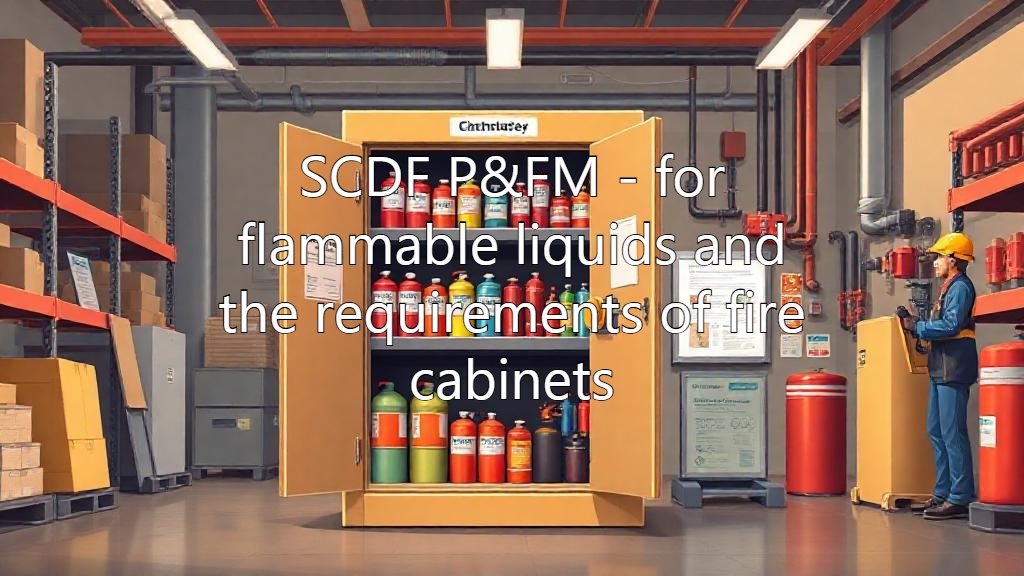
The risks of handling flammable liquids can quickly escalate into a raging fire, highlighting the critical importance of proper storage and safety measures.
In Singapore, the Singapore Civil Defence Force (SCDF) plays a vital role in ensuring that businesses and organizations adhere to strict guidelines for storing flammable liquids, with the Prevention and Fire Management (P&FM) regulations serving as a backbone for these efforts.
Companies must carefully choose the right fire cabinets to store their flammable liquids, as these cabinets are the first line of defense against potential fires.
The SCDF P&FM regulations outline specific requirements for fire cabinets, and companies must navigate a complex landscape of rules and guidelines to ensure compliance and safeguard their employees and premises.
Understanding Exemption Quantities for Flammable Liquids in SCDF Regulations
The Singapore Civil Defence Force (SCDF) regulations play a crucial role in ensuring the safe storage and handling of flammable liquids, with specific exemption quantities in place to minimize risks.
The regulations aim to balance the needs of industries that use flammable liquids with the need to protect people and the environment from potential hazards.
Incorrect storage of flammable liquids can have catastrophic consequences, including devastating fires and explosions that can claim lives and destroy properties.
Key points to consider include:
- Exemption quantities vary depending on the type of flammable liquid and its storage location.
- Classifying flammable liquids correctly is essential to determine the applicable exemption quantities and storage requirements.
- Understanding the SCDF regulations is critical for industries to ensure compliance and prevent accidents.
Navigating SCDF Classification Systems for Petroleum and Flammable Materials

Ensuring compliance with the Singapore Civil Defence Force (SCDF) regulations is crucial for safety and legal purposes when handling petroleum and flammable materials.
The SCDF classification system can seem complex, but understanding it is essential for businesses or organizations to avoid potential risks or penalties.
The classification process is a systematic approach to identifying the hazards associated with each material, which helps in implementing the necessary safety measures.
Determining Exemption Limits for Scheduled Chemicals in P&FM Storage
In a real-world scenario, a pesticide and fertilizer manufacturer in Singapore was found to have exceeded the exemption limits for scheduled chemicals in their storage facilities, resulting in hefty fines and damage to their reputation.
The company had failed to properly determine the exemption limits for their stored chemicals, highlighting the importance of accurate calculations and compliance with regulations.
To determine exemption limits, P&FM facilities must consider the types and quantities of scheduled chemicals stored on-site, as well as the specific regulations and guidelines set forth by local authorities.
Assessing Aggregate Limits for Mixed Storage Scenarios of Flammable Liquids
Assessing aggregate limits for mixed storage scenarios of flammable liquids is a complex task that requires careful consideration of various factors, including the types and quantities of liquids stored, the storage conditions, and the potential risks and hazards associated with each substance.
The process involves evaluating the individual and combined hazards of the stored liquids, taking into account their flash points, boiling points, and explosion limits, as well as the storage facility’s design and layout.
Chemical Dispensing Activities and Regulatory Exemptions under SCDF Order

The Singapore Civil Defence Force (SCDF) has implemented regulations to ensure the safe handling and dispensing of chemicals, and understanding these regulations is crucial for industries that work with hazardous materials.
To comply with the SCDF order, businesses must first identify the types of chemicals they are using and determine if they are exempt from certain regulations.
Implementing Tiered Fee Structures for Volume-Based P&FM Licensing Requirements
To optimize licensing costs, companies must strategically approach fee structures, including streamlining operations, developing a tiered pricing model, analyzing market trends, implementing automated licensing management tools, and monitoring regulatory changes.
By implementing these strategies, businesses can effectively navigate complex licensing requirements and reduce costs, ultimately gaining a competitive edge in their industry.
Engaging Qualified Persons for P&FM Plan Preparation and Risk Assessments
A comprehensive approach is necessary for the successful preparation of P&FM plans, involving various stakeholders and experts, including engineers, architects, and project managers.
Risk assessments are crucial, identifying potential hazards and taking proactive measures, and the key to a well-prepared P&FM plan lies in the ability to identify and mitigate risks.
Mitigating Operational Hazards with Rigorous Containment Standards and Bund Walls
Implementing rigorous containment standards and bund walls can significantly reduce the risk of operational hazards, as seen in the petroleum industry where such measures have become a standard practice.
A single major spill can cost a company upwards of $1 billion in damages and cleanup efforts, highlighting the importance of proactive containment strategies.
Optimizing Storage Cabinet Selection for Flammable Liquids under OSHA and NFPA Guidelines
When selecting storage cabinets for flammable liquids, it is crucial to consider the guidelines set forth by OSHA and NFPA to ensure a safe working environment.
The NFPA guidelines provide detailed information on the classification and storage of flammable liquids, including the use of cabinets to separate and protect these materials from ignition sources.
The key to safe storage is proper cabinet selection, and a well-chosen storage cabinet can mean the difference between a safe working environment and a potentially catastrophic incident.
The Singapore Civil Defence Force’s (SCDF) guidelines for Proper Storage and Management (P&FM) are not just regulatory necessities, but rather a cornerstone of safety in the face of potentially devastating fires.
The precise specifications for fire cabinets, designed to store flammable liquids safely, underscore the meticulous attention to detail required to prevent such disasters.
Looking ahead, the ongoing refinement of these guidelines will undoubtedly play a critical role in safeguarding Singapore’s workplaces and communities, much like the reassuring presence of a fire cabinet standing sentinel in a laboratory or factory, ever-ready to contain the unpredictable power of flammable liquids.