




The world’s population continues to urbanise, and the roads that connect cities are becoming increasingly congested, with some estimates suggesting that the average commuter spends over 40 hours per year stuck in traffic.
The highway system, once a marvel of modern engineering, is now a complex network of roads that can be likened to a living organism, with its own circulatory system, nervous system, and even its own unique personality.
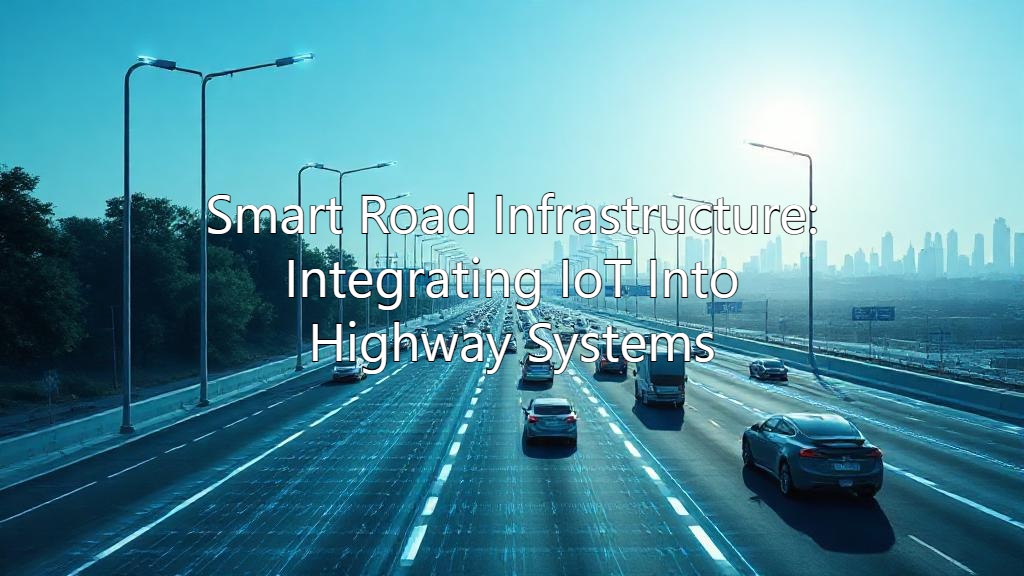
Just as a smartwatch can monitor vital signs and provide real-time feedback to improve health, smart road infrastructure aims to integrate Internet of Things (IoT) technology into highway systems to create a more efficient, safe, and sustainable transportation network.
By embedding sensors, cameras, and other IoT devices into the road itself, smart road infrastructure can provide real-time data on traffic flow, road conditions, and weather patterns, allowing for more informed decision-making and optimised traffic management.
Integrating IoT Technology Into Highway Systems For Enhanced Traffic Management
The integration of IoT technology into highway systems has revolutionised the way traffic is managed, enabling real-time monitoring and data analysis to optimise traffic flow and reduce congestion.
By leveraging interconnected devices and advanced sensors, smart highway systems can detect and respond to traffic incidents, minimising delays and improving overall safety.
The role of IoT in traffic management continues to expand, with protocols such as Zigbee playing a crucial part in enabling seamless communication between devices.
- Real-time traffic updates can be pushed to drivers’ smartphones, enabling them to make informed decisions about their routes and avoid congested areas.
- Advanced traffic signal control systems can be optimised using IoT data, reducing wait times and minimising the risk of accidents.
- By analysing traffic patterns and trends, city planners can make data-driven decisions to improve infrastructure and reduce congestion.
Enhance Your Wireless Connectivity with LoRa

LoRa, or Long Range, is a wireless communication technology that offers a solution to issues of unreliable wireless connections, providing a wide range of benefits, including low power consumption and high scalability.
As the world of wireless connectivity is explored, LoRa can specifically address needs by providing a reliable and efficient wireless solution.
And 5G In Smart Road Infrastructure Applications
In Singapore, the implementation of 5G technology in smart road infrastructure has revolutionised traffic management, with real-time data from traffic cameras optimising traffic signal control and reducing congestion.
The integration of 5G technology with traffic cameras has enabled real-time video analytics, allowing for prompt incident detection and response.
The use of 5G-enabled traffic cameras has also facilitated the implementation of intelligent transportation systems, which can dynamically adjust traffic signal timing to optimise traffic flow.
Speed Sensors
Speed sensors are the unsung heroes of modern technology, working tirelessly behind the scenes to monitor and control the velocity of various machines and vehicles, providing crucial data to ensure safe and efficient operation.
Speed sensors must accurately detect and respond to changes in speed to prevent accidents and maintain optimal performance, with some sensors using advanced technologies like radar or lidar to measure speed with pinpoint accuracy.
And Intelligent Transportation Systems In Smart Roads
To create efficient and safe transportation systems, it is essential to leverage real-time data from traffic sensors for adaptive signal control and congestion reduction.
By enabling predictive algorithms to anticipate peak traffic hours and adjust signal timings accordingly, cities can reduce congestion and minimise travel times.
The integration of intelligent transportation systems (ITS) in smart roads can have a profound impact on urban mobility, optimising traffic signal timings, reducing congestion, and decreasing travel times.
As we look to the future of transportation, the integration of IoT into highway systems is poised to revolutionise the way we travel, making our roads safer, more efficient, and more sustainable.
With the potential to reduce congestion, lower emissions, and improve driver experience, smart road infrastructure is an exciting development that will continue to shape the urban landscape.
The marriage of IoT and highway systems will give rise to a new era of intelligent transportation, one that will transform the daily commute into a seamless, high-tech experience.