




Introduction
In Singapore, the Building Control Act draws a clear regulatory line between QP(Design) and QP(Supervision), and that distinction is the reason one engineer might not be enough. QP(Design) prepares and submits structural plans for approval, while QP(Supervision) oversees construction on site to confirm the works match those approved plans; these are separate statutory roles with different legal responsibilities, different skill demands, and independent accountability under the law, so combining them can weaken oversight, increase project risk, and fail compliance expectations on more complex jobs.
This article explains the regulatory framework for both QP roles, the statutory duties attached to each under the Building Control Act, the project situations where separate appointments are needed, how the two QPs coordinate in practice, and the liability issues that affect project planning. It is written for developers, contractors, property owners, and other industry stakeholders in Singapore who need to manage BCA submissions, structural works permits, and construction oversight for residential projects, commercial builds, or complex multi-agency developments where compliance, safety, and programme certainty all matter.
The direct answer: QP(Design) is responsible for plan preparation, design compliance, and regulatory approval, while QP(Supervision) is responsible for site oversight, conformity with approved plans, and reporting contraventions. One engineer may not be enough because the law treats these as distinct functions, and separating them often provides the independent focus, risk control, quality assurance, and statutory compliance required to protect public safety and avoid costly delays or enforcement issues.
By the end of this article, you will:
-
Understand the statutory separation between QP(Design) and QP(Supervision) under Singapore’s Building Control Act
-
Know when a single QP can handle both roles and when separate appointments are mandatory
-
Identify the project complexity factors that trigger the need for two QP professionals
-
Learn how to plan QP appointments to avoid regulatory delays and costly corrections
-
Recognise the liability and public safety implications of each role

Understanding the Qualified Person Framework Under Singapore’s Building Control Act
A Qualified Person (QP) is a registered Professional Engineer or Architect accountable for regulatory submissions and structural safety. Under the Building Control Act, a qualified person must hold a valid practising certificate – either as a registered architect under the Board of Architects, or as a registered professional engineer under the Professional Engineers Board (PEB). Only registered Professional Engineers can act as QPs for structural works.
QP roles are divided into QP(Design) and QP(Supervision). This separation is not administrative convenience. The Building Control Act defines the QP’s legal responsibilities as non-delegable in many respects: even when assistants or site supervisors assist, the ultimate legal responsibility remains with the formally appointed QP. Registration under the relevant professional board brings statutory accountability – the QP is bound by law, not merely professional guidelines.
The Building and Construction Authority (BCA) enforces this separation because design and construction are interdependent; effective communication is essential for addressing site issues, but the oversight mechanisms for each phase require different competencies, different timing, and different modes of professional accountability.
The Legal Foundation: Building Control Act Requirements
The statutory definition of QP roles centres on Sections 8 and 9 of the Building Control Act. Section 9(1) requires the QP appointed for plan preparation to “take all reasonable steps and exercise due diligence” to ensure designs comply with the Act and its Regulations, including performance requirements and acceptable solutions. Section 9(4) imposes parallel duties on the supervising QP: reasonable steps and due diligence during construction oversight, including inspecting building works, verifying conformance with approved plans, and reporting contraventions.
Non-compliance can have catastrophic consequences. The Act provides for fines up to SGD 200,000, imprisonment up to 2 years, and further daily fines for continuing contraventions. The BCA strengthened penalties after the Nicoll Highway collapse, which occurred on April 20, 2004, when inadequate supervision contributed to one of Singapore’s worst construction disasters. These penalties underscore that professional accountability is backed by criminal law, not just professional disciplinary processes.
Why Two Distinct QP Roles Exist
Separating QP roles creates checks and balances for effective project delivery. The logic is straightforward: if the same person designs a structure and supervises its construction with no independent review, errors in design can propagate unchecked into the built form. Independent quality control is compromised if the same person designs and supervises a project.
Each role demands different expertise and timing. Plan preparation requires deep familiarity with structural codes, regulatory requirements, design calculations, and coordination across multiple agency submission pathways. Site supervision requires practical experience with construction methods, the ability to conduct visual inspection of workmanship and materials, real-time detection of deviations from approved plans, and rigorous record-keeping. A single engineer cannot simultaneously manage design calculations and site inspections effectively – particularly in Singapore’s dense urban environment where complex projects involve multiple agencies, tight timelines, and significant public safety exposure.
The Building Control Act mandates independent oversight during the construction process precisely because this separation prevents single points of failure and ensures that both plan integrity and construction fidelity receive dedicated professional attention.

The Critical Distinction: QP(Design) vs QP(Supervision) Roles
Understanding how this separation affects project planning is essential for anyone initiating building works in Singapore. The distinction determines when professionals must be engaged, what each one is responsible for, and where legal responsibility falls if something goes wrong.
QP(Design): Plan Submission and Regulatory Approval Expert
The QP(Design) is responsible for structural plan preparation, BCA CORENET submissions, and design compliance verification. This includes preparing detailed structural plans, performing design calculations for all key structural elements – foundations, beams, columns, slabs, retaining wall systems, and stabilising structures – and verifying compliance with Building Control Regulations, the Fifth Schedule performance requirements, and related codes.
A Qualified Person (QP) must apply for structural plan approval. Structural plan applications are processed within 7 working days, meaning the QP(Design) must ensure submissions are complete and code-compliant before entering the submission pathway. The QP(Design) coordinates with multiple agencies – BCA, URA, SCDF, PUB – during the approval phase, responding to authority comments and ensuring alignment across all regulatory requirements.
Beyond initial plan approval, the QP(Design) also manages amendment plans when proposed changes arise during construction. Upon project completion, they issue certifications for record structural plans (Form C3), declaring any deviations or material changes and confirming that departures do not affect structural adequacy. The QP must submit Form BPD_CSC07 for TOP/CSC applications, linking design accountability through to the temporary occupation permit stage.
QP(Supervision): On-Site Compliance and Construction Oversight
The QP(Supervision) carries statutory duties under Section 9(4) for reasonable steps and due diligence during construction. Once building works commence, the QP(S) must inspect and supervise structural works to ensure they conform with approved plans, the Act, any conditions from the Commissioner, and all building control regulations.
The QP(S) must develop a comprehensive Site Supervision Plan (SSP) that details which works require full-time supervision, which require immediate supervision via site supervisors, the frequency of inspections and testing, and criteria for selecting the site supervision team. Critical tasks – concreting, piling, pre-stress operations, high-friction bolt tightening – demand heightened oversight.
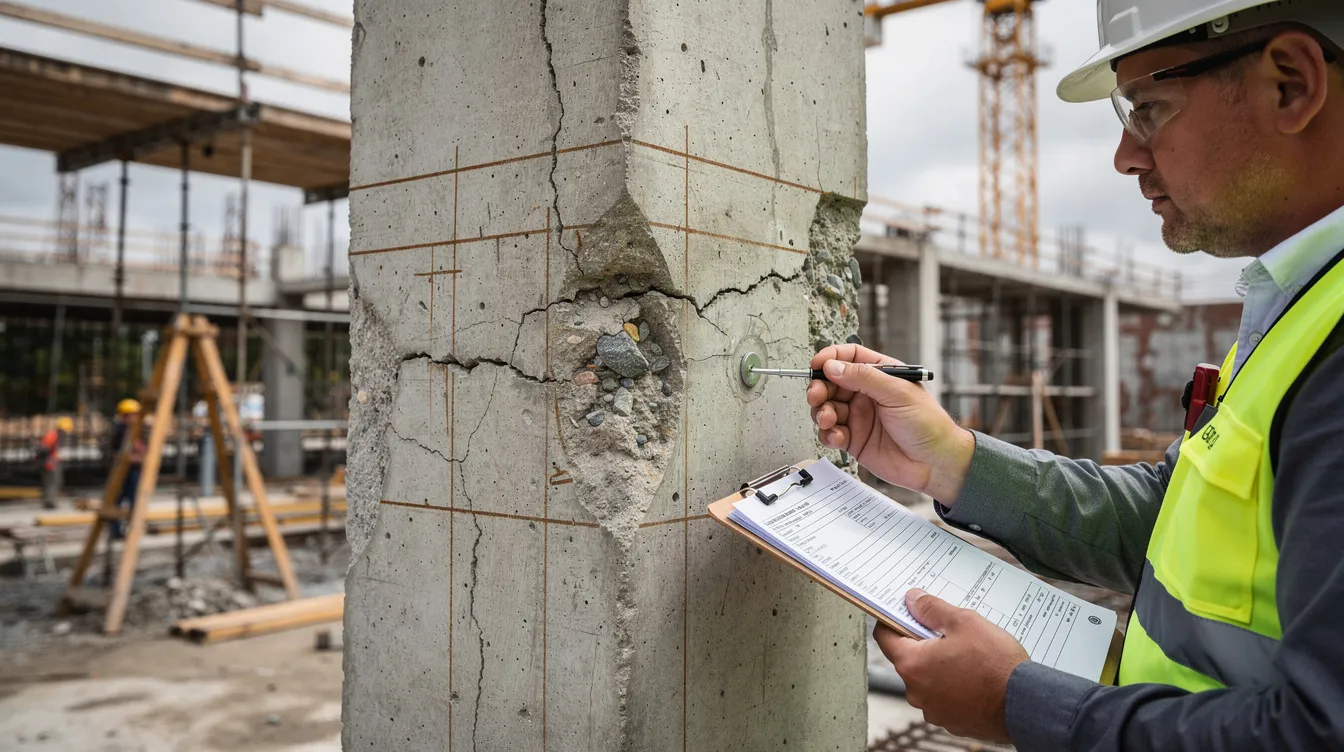
The QP(S) must maintain detailed supervision records as evidence of compliance. These include site photographs, test results, inspection logs, and deviation reports. QP(S) must report any contraventions of the Building Control Act immediately to BCA. Upon completion, the QP(S) submits C1/C2 forms certifying supervision of completed works. Only one QP(S) can supervise an entire construction project, ensuring singular accountability for construction-phase oversight.
When the Same Professional Can Serve Both Roles
For smaller or simpler projects – such as landed property development, non-AC residential projects, or works below certain monetary thresholds – a single qualified person can legally serve both design and supervision roles. This offers continuity benefits: the same professional who designed the structure understands the design intent intimately, reducing handover friction. Project costs are also lower with a single QP appointment.
However, limitations emerge quickly. Modern construction requires multidisciplinary expertise that a single engineer rarely possesses. When a single QP handles both roles, any capacity constraint during critical phases – say, simultaneous submission deadlines and on-site concreting – can compromise either design quality or supervision rigour. The risk concentration is significant: if one professional fails in either domain, liability is compounded and there is no independent check.
Regulatory frameworks emphasize the importance of clearly defining supervision roles to prevent safety gaps. The question of whether one engineer is enough depends entirely on project type, scale, complexity, and regulatory demands.
When One Engineer Is Not Enough: Project Scenarios Requiring Separate QPs
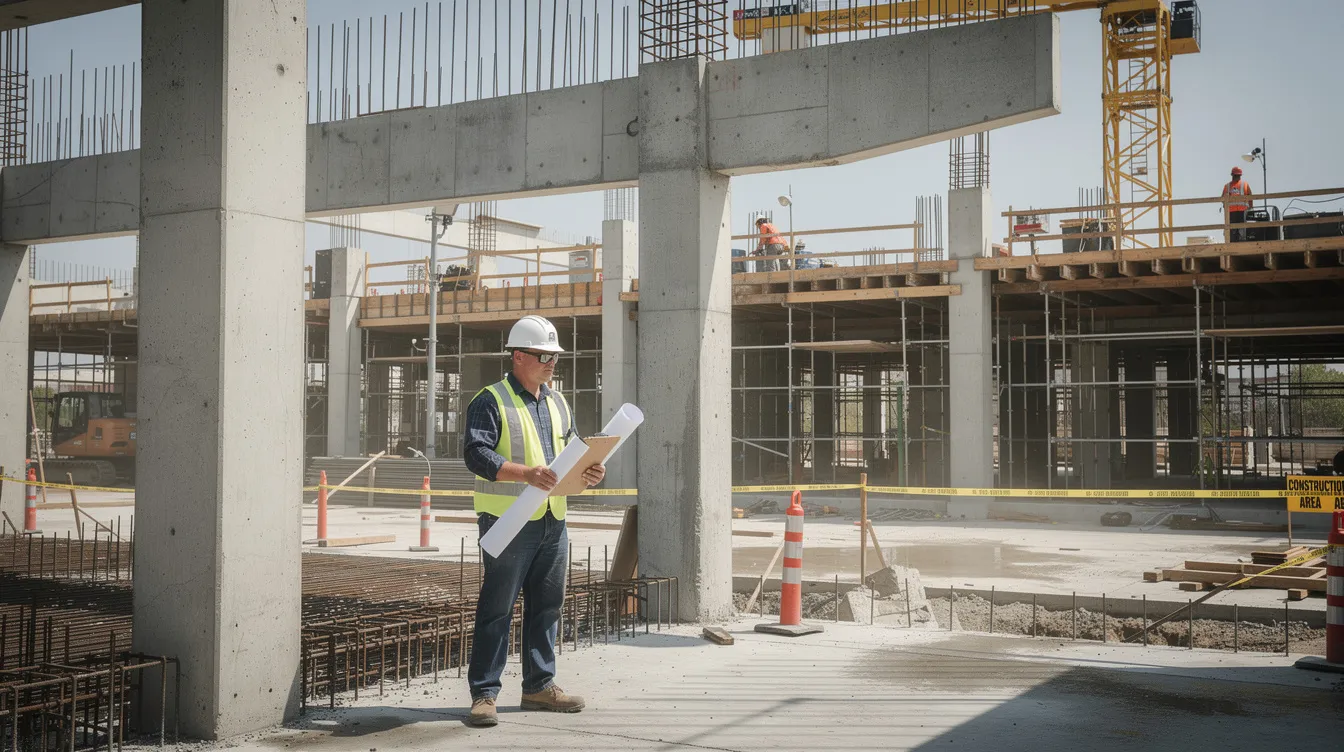
Several factors push projects beyond what a single QP can responsibly manage. Understanding these triggers helps developers and contractors make informed QP appointment decisions early – before construction begins and regulatory timelines create pressure.
Large-Scale Development Projects
For building works with project values exceeding SGD 7.5 million, BCA requires full-time site supervision and multiple site supervisors (resident engineer, resident technical officer) depending on the project stage and monetary scale. These large-scale developments involve multi-discipline coordination – structural, civil works, mechanical, electrical systems, façade engineering, and architectural interfaces – that demand specialised knowledge at both the design and supervision stages.
Timeline pressures compound the challenge. The design phase may require parallel submissions to multiple agencies while early-stage structural works are already underway. A single QP attempting to manage QP submission processes, respond to authority requirements, and simultaneously conduct site supervision across the entire project will inevitably stretch thin. Risk distribution across multiple professional appointments is not a luxury for these projects; it is a necessity for statutory compliance.
Specialised expertise needs vary by project phase. Substructure works (piling, excavation support, ground treatment) demand geotechnical competence. Superstructure phases require different structural engineering focus. Finishing phases introduce fire safety, accessibility, and fixed installation complexities. Appointing a separate QP for design and supervision ensures each professional can focus on their core competency without divided attention.
Complex Regulatory Scenarios
Projects requiring cross-agency approvals present particular challenges. Fixed installations (FI) under the Building Control (Fixed Installations) Regulations 2025 explicitly require a plan submission QP and a supervising QP, each with distinct duties – the design QP reviews and submits plans, while the supervision QP oversees installation, functional testing, commissioning, and certifies works before applying for the permit to operate. Fixed installation inspectors also play a role in ongoing compliance.
Complex buildings – tall structures, mixed-use developments, large-span designs, deep underground works – trigger early pre-consultation with BCA for structural robustness. A December 2025 circular refined the definition of “major” versus “minor” complex buildings, with different pre-consultation requirements for each category. Projects involving existing structures, amendment works during construction, or integration with public infrastructure add further layers where a separate QP for each role provides essential oversight.
Professional Capacity and Availability Constraints
QP supervision duties require physical presence during critical works. If a single QP handles multiple projects simultaneously, scheduling conflicts between design document review and mandatory on-site inspections become inevitable. Delayed inspections or unreported deviations violate the “reasonable steps” standard and expose the QP – and the project owner – to enforcement action.
Professional liability and insurance considerations also favour separation. Design errors and construction deviations carry different risk profiles. Adequate professional indemnity coverage requires clear boundaries between design responsibility and supervision responsibility. When these overlap in a single appointment, insurance claims become more complex and coverage gaps more likely.
Decision Matrix: Single QP vs Separate QP Appointments
|
Project Factor |
Single QP Suitable |
Separate QPs Recommended |
|---|---|---|
|
Project Value |
≤ SGD 7.5M, simple scope |
> SGD 7.5M or phased developments |
|
Project Complexity |
Low – straightforward structure, single-use |
Medium to High – multi-storey, mixed-use, underground works |
|
Agencies Involved |
BCA only |
Multiple (BCA, URA, SCDF, PUB, LTA) |
|
Structural Elements |
Standard foundations, columns, slabs |
Key structural elements including retaining wall, deep foundations, temporary structures, temporary works |
|
Timeline |
Sequential design then build |
Overlapping design and construction phases |
|
Risk to Public |
Low exposure |
Adjacent to public infrastructure, roads, MRT |
|
Regulatory Triggers |
No FI works, no accredited checker system requirement |
FI works, complex building classification, prior approval requirements |
Synthesis: For residential projects with straightforward structural scope and low project complexity, a single qualified person may suffice and offers cost efficiency. As key parameters increase – value, complexity, number of agencies, public safety exposure – the cost-benefit analysis shifts decisively toward separate QP appointments. The additional coordination cost is minor compared to the risk of enforcement action, safety failures, or costly corrections after construction.

Implementation Process: Managing Multiple QP Appointments
When separate QPs are appointed, coordination becomes a critical success factor. Without clear protocols, the separation that provides checks and balances can instead create gaps – where each QP assumes the other is handling a responsibility that falls between them.
Appointment and Coordination Protocol
Engage the QP(Design) early – ideally during the conceptual or schematic design phase. This ensures regulatory compliance is embedded from the start, avoiding late design changes that trigger costly amendment plans and submission delays. The QP(Design) should address site information, geotechnical investigations, and authority requirements before detailed structural plans are developed.
The QP(Supervision) should be formally appointed before construction begins. A permit is required before starting any structural works, and the QP(S) must have their Site Supervision Plan approved and integrated into the construction contract before ground is broken. A Joint BCA/REDAS/ACES/IES/SCAL Circular (December 2024) clarified that projects must have appropriate QP(Design) and a single QP(Supervision) with clear role demarcation.
Handover procedures between design and supervision phases should include comprehensive transfer of design intent documentation, structural calculations, approved plans with all authority comments addressed, and any site conditions or constraints identified during the design phase. This ensures the QP(S) can verify construction against the designer’s intentions, not just the drawing set.
Professional Coordination Requirements
Contracts must define clear role boundaries to avoid overlap or gaps. The main QP for design should not informally direct construction without the QP(S)’s involvement, and the QP(S) should not approve deviations from approved plans without the QP(Design)’s assessment. Version control of building plans and design modifications is essential – the QP(S) must always work from the latest approved drawings.
Joint responsibility areas require explicit protocols. When a proposed change arises on site, the QP(S) identifies the deviation, the QP(Design) assesses structural adequacy, and if necessary, amendment plans are submitted to BCA for BCA approval. Integration with other consultants – M&E engineers, architects, the main contractor – must follow defined communication channels to maintain professional integrity and prevent conflicting instructions.
Common Challenges and Strategic Solutions
Several recurring issues arise when QP roles are separated. Addressing them proactively prevents the coordination overhead from undermining the benefits of role separation.
Design-Construction Interface Problems
The gap between design intent and site conditions is where most construction quality issues originate. Establish formal handover procedures with comprehensive design intent documentation, including assumptions about ground conditions, material specifications, and key parameters for critical structural elements. Schedule regular coordination meetings between QP(Design) and QP(Supervision) throughout construction – not just at handover. This reflects the reality that design and construction are interdependent; effective communication is essential for addressing site issues.
Authority Communication Coordination
When multiple agencies are involved, conflicting authority comments or sequential approval requirements can stall a project. Designate a lead QP for authority correspondence – typically the QP(Design) during the submission and approval phase – and maintain a unified submission strategy with shared document review systems. The QP(S) should be copied on all authority communications that affect construction methodology or sequencing.
Timeline and Cost Management Issues
Separate QP appointments increase project costs and coordination effort. Plan overlapping appointment periods during critical phases – particularly the transition from design completion to construction commencement, and during the as built drawings and record structural plan preparation phase approaching the temporary occupation permit application. Establish cost allocation agreements early so that additional coordination effort does not become a source of disputes between parties.
Professional Liability and Insurance Gaps
Design errors and supervision negligence carry different consequences. Define clear liability boundaries in QP appointment contracts. The Nicoll Highway collapse demonstrated how inadequate supervision led to a S$50,000 fine for QP Pok Ming Wee, and a 2019 engineer received six months in jail for negligence – illustrating that professional liability in Singapore’s construction industry carries real criminal exposure. Ensure adequate professional indemnity coverage for all QPs, with coverage terms that reflect the specific scope of each role. A high CONQUAS score indicates superior construction quality and supervision – evidence that rigorous QP(S) oversight has tangible, measurable value.
Conclusion and Next Steps
The separation of QP(Design) and QP(Supervision) roles under Singapore’s Building Control Act is not bureaucratic duplication – it is a deliberate regulatory mechanism to ensure safety, distribute risk, and maintain professional accountability across the entire project lifecycle. For complex projects involving significant structural works, multiple agencies, or high public safety exposure, one engineer is genuinely not enough. Separating these roles provides the independent quality control and statutory compliance that Singapore’s regulatory framework demands.
Immediate action items:
-
Assess project complexity early – Use the decision matrix above to determine whether your project warrants a single QP or separate appointments based on project type, value, and regulatory triggers
-
Engage QP(Design) during schematic design – Secure prior approval pathways and submission requirements before committing to construction timelines
-
Appoint QP(Supervision) before construction begins – Ensure the Site Supervision Plan is developed and approved, and the supervision records framework is in place
-
Define role boundaries contractually – Establish clear demarcation, communication protocols, and liability allocation in all QP appointment agreements
-
Budget for coordination – Account for the additional cost of managing two QP appointments as a risk management investment, not an overhead
For further guidance on specific BCA submission procedures, Professional Engineer responsibilities, or the design check process and accredited checker system for Singapore projects, explore the related resources below.
Additional Resources
-
The Qualified Person (QP) in Singapore: Roles, Responsibilities and Liabilities – Comprehensive guide to QP legal obligations
-
BCA Building Control Act and Regulations – Primary legislation governing QP duties and penalties
-
BCA Structural Design Approvals in Singapore (2025 Edition) – Detailed walkthrough of plan approval and submission requirements
-
CORENET eSubmission System Guide – Practical guidance for QP submission processes
-
BCA Site Supervisor Requirements and Risk-Based Inspection Framework – Supervision thresholds and site supervision team requirements