




Introduction
Qualified Person (QP) sign-off for scaffolding and formwork is a legal requirement under Singapore’s Workplace Safety and Health (WSH) Act. Every construction project involving temporary works, from concrete formwork falsework to multi-storey scaffold systems, requires independent engineering verification before workers can access the structure or apply load. Skipping this step has measurable consequences: a 2023 scaffold platform collapse at 9 metres injured nine workers, and a formwork failure involving corroded frames resulted in a S$150,000 fine under WSH Section 16(1)(b).
This article covers the regulatory basis for QP supervision of construction temporary works and temporary structures, the inspection and sign-off procedures specific to scaffolding and formwork, common compliance failures on construction sites, and the documented consequences of bypassing these protocols. The focus is on Singapore’s WSH and BCA regulatory environment, with reference to international standards including BS 5975:2024.
The target audience includes project managers, principal contractors, developers, and building owners responsible for managing temporary works on construction sites and ensuring compliance with BCA and WSH regulations.
Direct answer: Sign-off by a QP creates professional accountability and traceability for temporary work designs. QPs ensure compliance with approved requirements and safety regulations before loading structures, which prevents progressive structural collapse and protects workers from the leading cause of construction fatalities tied to temporary works failures.
After reading this article, you will understand:
-
The legal obligations requiring QP sign-off for scaffolding and formwork in Singapore
-
Specific inspection requirements and hold points for each structure type
-
How QP supervision prevents the failure modes documented in recent enforcement cases
-
Documentation and procedural control requirements for temporary works compliance
-
Practical guidance for integrating QP inspection schedules into construction project timelines

Understanding QP Supervision and the Role of the Temporary Works Coordinator for Temporary Works
A Qualified Person under the WSH Act and Building Control Act is a Professional Engineer (PE) registered in Singapore who holds relevant experience in temporary works design and supervision. Their role covers structural stability verification, material adequacy checks, load path analysis, and formal certification that temporary structures meet design and safety standards before use. Temporary works are critical for construction safety and efficiency; without independent verification by a competent person with engineering qualifications, the gap between design intent and physical execution creates uncontrolled safety risks.
QP Responsibilities and Qualifications
QPs serving as temporary works supervisors must hold Professional Engineer registration and demonstrate experience in formwork design, scaffold design and erection, and load computations under WSH (Design-for-Safety) and WSH Construction Regulations. Their responsibilities include reviewing design calculations, verifying material certificates, assessing site conditions such as ground conditions and adjacent structures, and issuing formal sign-off at defined hold points.
Qualified Persons (QPs) provide independent engineering verification for temporary works. This independence is the mechanism that catches errors the temporary works designer or principal contractor might miss. In the 2025 High Court case (SGHC 179), corroded scaffold frames had been painted over to conceal reduced load capacity. An independent QP inspection focused on material integrity would have identified this defect before the formwork collapse that followed.
Beyond the QP, the supervisory chain includes trained scaffold supervisors (who must complete MOM-certified courses such as the Supervise Metal Scaffold Erection Course), scaffold erectors with Work-at-Height certification, and Temporary Works Coordinators who ensure safe management of temporary works on a day-to-day basis. A Temporary Works Coordinator ensures compliance and safety on-site by maintaining the temporary works register, managing hold points, and coordinating between the temporary works designer, QP, and site teams.
Regulatory Framework, BS 5975, and Compliance
Singapore’s regulatory framework for temporary works supervision operates through multiple interconnected instruments:
-
WSH (Scaffolds) Regulations 2011 require design by a professional engineer for metal scaffolds, modular scaffolds, and scaffolds exceeding specified configurations. Violations carry fines up to S$50,000, imprisonment up to two years, or both. Maximum fines for breaches with potential for serious harm increased from S$20,000 to S$50,000 effective 1 June 2024.
-
WSH (Construction) Regulations 2007 Section 58 stipulate that formwork must have a safety factor of at least 2, be free of defects, and be properly tied and braced.
-
Building Control Act mandates that all building works, including temporary structures interfacing with permanent works, be carried out under supervision of an appropriate qualified person for both plan submissions and execution.
-
WSH Act penalties for non-compliance with stop-work orders reach S$500,000. Under WSH Act Section 13 or 15, violations related to formwork safety can result in fines up to S$200,000 or imprisonment up to two years.
The Building Control Act mandates QP inspection for high-risk temporary structures. Failure to comply with regulatory sign-off can result in stop-work orders and criminal liability. Statutory compliance is essential to bridge design intent with physical execution in construction.
Internationally, BS 5975:2024 governs temporary works management procedures. BS 5975 is the definitive code for temporary works procedures, and the 2024 revision splits management procedures from technical design, clarifying the temporary works coordinator’s (TWC) authority to halt works when safety risks are identified. CDM 2015 establishes a framework for managing temporary works in the UK context, while temporary works must also comply with Work at Height Regulations 2005. OSHA governs temporary works through 29 CFR 1926 regulations in the United States. Singapore’s WSH framework draws on these international safety standards while imposing its own set of enforcement mechanisms.
These regulatory layers connect directly to how QP sign-off functions during scaffolding erection and formwork installation, which the next section addresses.
Critical Applications for Scaffolding and Formwork Systems
Scaffolding and formwork each present distinct engineering challenges that require QP verification at different construction stages. Scaffolding must provide access, support workers and materials at height, and resist wind loads and lateral forces. Formwork must contain wet concrete under pressure, transfer construction loads to the ground, and maintain dimensional accuracy for permanent structures. Both categories of temporary works must be designed to support construction activities while withstanding dynamic loads such as concrete placement pressures and wind forces.
Scaffolding QP Inspection Requirements
Under WSH (Scaffolds) Regulations 2011, scaffolds must be inspected before first use, at intervals not exceeding 7 days, after adverse weather events, and after any alterations. For scaffolding exceeding specified heights or supporting equipment loads, QP sign-off is mandatory at erection completion and before worker access.
Inspection focus areas follow defined key components:
-
Base stability and ground conditions: bearing capacity of the ground or crane bases supporting the scaffold, adequacy of sole plates, and levelling of standards
-
Bracing systems: diagonal and ledger bracing providing lateral stability, connections between ledgers and transoms
-
Platform loading: verification that imposed loads (workers, materials, equipment) remain within designed capacity
-
Access arrangements: safe condition of ladders, stairways, and gates that provide access to working platforms
-
Weather protection: tie-in frequency to permanent structures, sheeting loads increasing wind loads on the scaffold
Temporary scaffolding must provide access and support workers and materials at height, but it is not intended to be fully self supporting where ties or other restraint are required by design. Temporary scaffolding may aid in inspections and maintenance of structures, but only when the scaffold itself has been verified as safe by a competent person. 66% of scaffolding collapses are linked to management failures, according to the Health and Safety Executive, making procedural control and regular inspections by qualified personnel the primary defence against collapse.
Formwork QP Certification Protocols
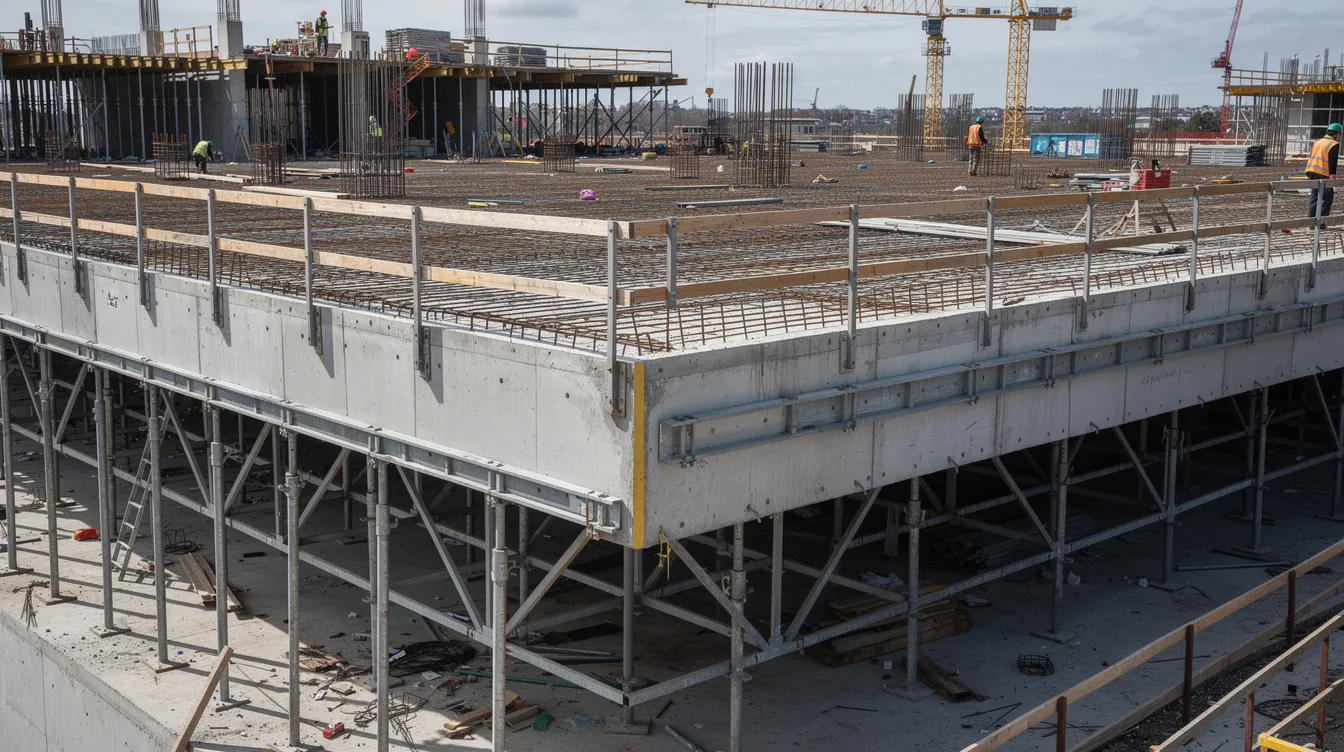
Formwork and falsework require QP verification at several critical points in the construction sequence. Before any concrete pour, the QP must confirm that the formwork system can sustain dead loads, live loads, impact loads, and concrete placement pressures with the required safety factor of at least 2 under WSH Construction Regulations Section 58.
The MOM Advisory for Professional Engineers on Formwork Safety specifies that PEs must verify:
-
Falsework stability under vertical and lateral loading, including the temporary condition during concrete placement
-
Concrete pressure calculations matching pour rate and concrete temperature
-
Removal (striking) sequences after verifying curing period and concrete strength
-
Structural adequacy of formwork during the curing phase, when loads can exceed those of the permanent structure in its final state
Temporary works can sustain loads exceeding those of permanent structures; this is why formwork falsework integrity demands the same level of engineering rigour as permanent works design. Temporary works design requires coordination with permanent works designers and principal designers to ensure temporary support does not compromise the structural integrity of the permanent works.
Risk Assessment and Load Analysis
QP oversight mitigates risks associated with progressive structural collapse in temporary works. The QP’s role in risk assessments covers verification of design loads, wind resistance for exposed scaffolding, and temporary loading scenarios that change as construction activities progress.
Dynamic environmental factors affect ground stability after initial assembly of temporary works. Rainfall can reduce soil bearing capacity beneath scaffold bases; temperature changes affect concrete curing rates and formwork pressures. Temporary works require a Qualified Person’s oversight to manage these dynamic environmental adaptations through revised calculations and additional inspections when site conditions change from the design stage assumptions.
Load path verification confirms that every load from workers, materials, wind, and construction equipment follows a continuous chain from application point through the temporary structure to the ground. Where this chain is interrupted by a missing brace, an overloaded platform, or inadequate ground bearing, the risk of progressive collapse increases.
QP Inspection and Sign-Off Procedures
Temporary works must be designed and checked before construction begins. The QP inspection process follows a structured sequence from design review through installation to final certification, with defined hold points where work stops until the QP grants written approval to proceed.
Pre-Installation QP Review Process
Before any temporary works installation commences, the QP reviews the following at the design stage:
-
Design calculations and load paths: verification that the temporary works designer’s calculations account for all anticipated loads, including construction loads, environmental loads, and accidental loading scenarios
-
Site condition assessment: soil bearing capacity testing results, proximity to adjacent structures, groundwater levels, and slope stability where relevant to scaffold foundations or formwork falsework bases
-
Material certification review: mill certificates for steel components, timber grading certificates, inspection of scaffold tubes and fittings for corrosion or deformation, and confirmation that no defective components enter the temporary works register
-
Method statement approval: the construction sequence, safety measures during erection and dismantling, agreed procedures for modifications, and quality control checkpoints aligned with the inspection schedule
Independent verification ensures structural integrity and safety before use of temporary works. The TWC must be competent and trained for their role, serving as the link between the QP, the temporary works supervisor on the ground, and the principal contractor’s project management team.
Installation Inspection and Certification
During scaffolding erection and formwork installation, the QP conducts progressive inspections and certification at critical hold points to ensure temporary works remain safe before use and after any changes or events:
-
Foundation stage: after sole plates and standards are placed, before vertical construction begins
-
Intermediate levels: at defined height intervals (typically every third lift for scaffolding), verifying bracing, tie-ins, and loading at each stage
-
Pre-load / pre-pour: the final QP certification before worker access to scaffolding at full height, or before concrete pour commences on formwork. This is the formal sign-off point where the QP issues a permit confirming the temporary structure meets all design, material, and installation requirements
-
Post-event inspections: after adverse weather, seismic activity, or any incident affecting the temporary structure, the QP must re-inspect and re-certify before work resumes
Documentation at each stage includes inspection checklists signed by the QP, photographic and video evidence of key connections and components, material test certificates cross-referenced to the temporary works register, and any change orders documenting deviations from the original design. Poor communication increases risks associated with temporary works; formal documentation at hold points eliminates ambiguity about what was inspected, approved, or flagged for correction.
The LTA Engineering Group Document E/GD/09/104/A2 states that the PE is responsible for temporary works “including any intermediate inspections… if the Works are in place for more than one week or after adverse weather conditions.” This puts explicit scheduling responsibility on the QP.
Comparison of QP Requirements by Structure Type
|
Structure Type |
QP Inspection Frequency |
Critical Sign-Off Points |
|---|---|---|
|
Standard Scaffolding |
Before use and at intervals not exceeding 7 days |
Initial erection completion, after modifications, after adverse weather |
|
High-Rise Scaffolding |
Every 3 levels and after weather events |
Foundation, every 30m height increment, final completion |
|
Concrete Formwork |
Before pour and during curing period |
Installation completion, pre-pour authorization, striking authorization |
|
Suspended Scaffolding |
Before each use |
Suspension point verification, platform load test, safety device check |
The key distinction: standard scaffolding requires weekly inspections by a scaffold supervisor with QP oversight at erection and modification points, while formwork demands QP sign-off at every pour cycle because each pour creates a new, unrepeatable loading event. Understanding when QP involvement is a legal requirement versus a good practice recommendation helps duty holders allocate resources effectively without creating compliance gaps.
Common Challenges, Temporary Works Failures, and Solutions in QP Supervision
Compliance failures in temporary works supervision follow identifiable patterns. In the past three years before mid-2025, 98 Approved Scaffold Contractors (ASCs) were found with unsafe scaffolds and non-compliance issues, prompting MOM to introduce enhanced licensing conditions effective 1 July 2025. Temporary works failures can lead to severe accidents and project delays; identifying and resolving these common challenges is essential for every construction project.
Inadequate QP Engagement During Design Phase
Engaging the QP only after temporary works designs are finalized means defects are discovered late, forcing redesign and causing project delays. The Health and Safety Executive identifies temporary works as high risk, and the risk multiplies when QP review happens after installation has begun.
Solution: Bring the QP into the project at the design stage. The Principal Designer must consider temporary works in their designs, and early QP involvement allows coordination between temporary works designers, permanent works designers, and the temporary works coordinator (TWC) before materials are ordered or construction sequences are locked in. Temporary works must be designed and checked by competent engineers before any physical work begins.
Incomplete Documentation and Record Keeping
The 2023 scaffold collapse case revealed that the site superintendent used improvised erection methods; the investigation found that supervision and inspection protocols had been bypassed. Without documented hold points, photographic records, and signed checklists, there is no evidence trail proving that inspection requirements were met.
Solution: Implement a digital temporary works register that tracks every inspection, material certificate, design change, and QP sign-off. Photographic evidence at each hold point creates an auditable record. BS 5975:2024 clarifies the TWC’s authority to halt works when documentation is incomplete, giving the temporary works coordinator TWC the procedural backing to enforce compliance.
Pressure to Skip QP Inspections for Schedule
Construction programme pressures lead teams to treat QP inspections as optional checkpoints rather than mandatory hold points. This is the scenario that produces the most severe outcomes: in the SGHC 179 case, corroded scaffold frames were painted over and reused, bypassing material integrity checks, resulting in a formwork collapse and a S$150,000 fine.
Solution: Integrate QP inspection schedules into the master construction programme at the planning stage, not as afterthoughts. Educate all duty holders on the penalties: fines up to S$500,000 for breaching stop-work orders, imprisonment up to two years for WSH Act violations, and criminal liability for individuals who authorize work without required sign-offs. Temporary works require a Temporary Works Coordinator for safety management on each site, ensuring these hold points are non-negotiable.
QP Availability and Scheduling Conflicts
Many construction projects rely on one PE covering multiple worksites, leading to rushed sign-offs or delayed inspections that hold up construction activities. Resource allocation for QP supervision is often treated as an overhead cost rather than a safety-critical function.
Solution: Establish relationships with engineering consultancies that provide dedicated QP supervision services. Stellar Structures offers responsive QP supervision for temporary works projects, including scaffolding and formwork certification, ensuring that inspection schedules align with construction timelines without compromising on verification quality. For your next project, plan QP resource allocation during tender stage rather than during execution.
Temporary Works Supervisors assist in managing temporary works on-site between QP visits, handling day-to-day checks and flagging issues that require QP attention, including site support systems such as trench boxes where relevant. This layered supervision model, with clear key roles for the TWC, temporary works supervisor, and QP, ensures temporary works are effectively managed without creating bottlenecks.
Conclusion and Next Steps
QP sign-off for scaffolding and formwork is not a bureaucratic formality. It is the mechanism that catches corroded components, verifies load paths, and creates professional accountability for the structural adequacy of every temporary structure on a construction site. The documented consequences of bypassing this step, from S$150,000 fines to nine-worker injuries to six-month jail sentences, confirm that managing temporary works without proper QP oversight exposes every duty holder in the project chain to measurable legal and physical risk.
To ensure your temporary works comply with WSH and BCA requirements, take these steps:
-
Verify current QP supervision compliance on all active construction sites with scaffolding or formwork
-
Review temporary works inspection schedules against WSH (Scaffolds) Regulations 2011 and WSH Construction Regulations Section 58 to confirm inspection frequency meets or exceeds minimum intervals
-
Update documentation systems to include digital inspection records, photographic evidence at hold points, and a maintained temporary works register
-
Engage qualified engineering consultants for ongoing QP support; contact Stellar Structures for temporary works supervision and certification services
Related topics that complement QP supervision include BCA structural design approvals for temporary works, WSH Design for Safety regulations governing risk assessment protocols, and the role of Accredited Checkers for independent verification of structural designs. Temporary works training for scaffold supervisors, erectors, and TWCs is also essential; MOM-certified courses are required before personnel can fulfil these key roles on construction sites.
Additional Resources
-
WSH (Scaffolds) Regulations 2011 and WSH (Construction) Regulations 2007 Section 58 for statutory requirements on temporary works inspection and design
-
MOM Advisory for Professional Engineers on Formwork Safety (Annex A) for PE-specific duties and practical guidance on formwork certification
-
MOM Enhanced Licensing Conditions for ASCs (Circular, June 2025) for updated compliance requirements
-
Stellar Structures’ QP supervision and temporary works engineering services for project-specific consultation on scaffolding and formwork sign-off