




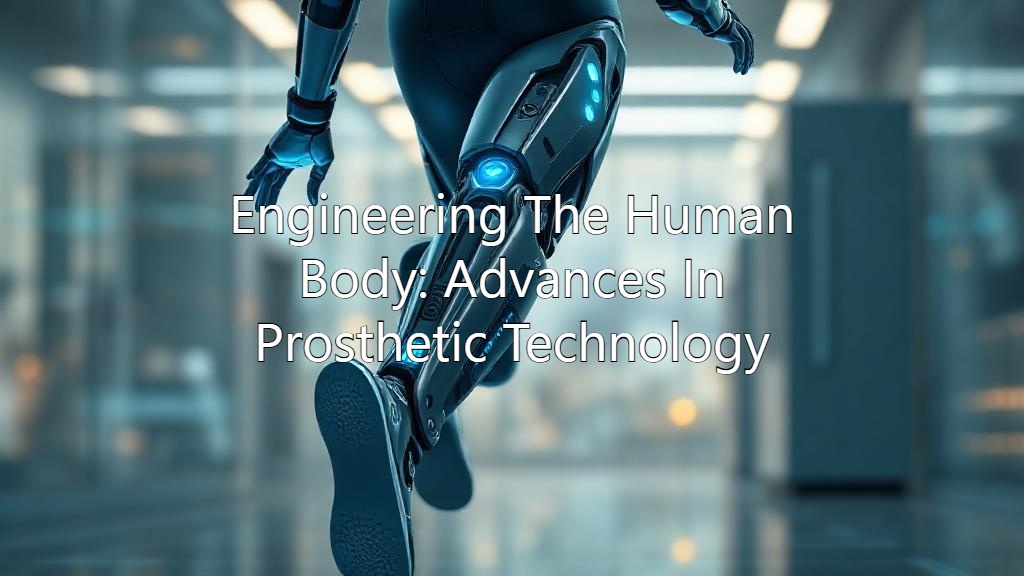
The human body can be likened to a masterfully crafted orchestra, with each limb and organ playing a vital role in the grand symphony of life.
But what happens when a crucial instrument is damaged or missing, disrupting the harmony of the entire ensemble?
With over 30 million people worldwide living with limb loss or paralysis, the need for innovative prosthetic solutions has never been more pressing.
Advances in prosthetic technology are revolutionising the field, enabling individuals to regain their independence and reclaim their place in the orchestra of life.
By harnessing the power of artificial intelligence, robotics, and cutting-edge materials, engineers are creating prosthetic devices that are not only highly functional but also remarkably lifelike.
Advances in Prosthetic Limb Technology for Upper Extremity Amputations
Prosthetic limb technology has undergone significant advancements in recent years, revolutionising the lives of individuals with upper extremity amputations by providing them with increased mobility and independence.
These advancements have enabled the development of more sophisticated and lifelike prosthetic limbs, allowing individuals to perform daily tasks with greater ease and precision.
The integration of artificial intelligence and machine learning has further enhanced the capabilities of these prosthetic limbs, enabling them to learn and adapt to the user’s needs.
The future of prosthetic limb technology holds unparalleled promise, as scientists and engineers continue to push the boundaries of innovation, transforming the lives of amputees forever.
- Artificial muscles are being developed to create more realistic and responsive prosthetic limbs.
- Brain-computer interfaces are being explored to enable seamless communication between the user’s brain and the prosthetic limb.
- Advanced sensor technologies are being integrated into prosthetic limbs to provide real-time feedback and enhanced control.
Recent Developments in Targeted Muscle Reinnervation for Prosthetic Control
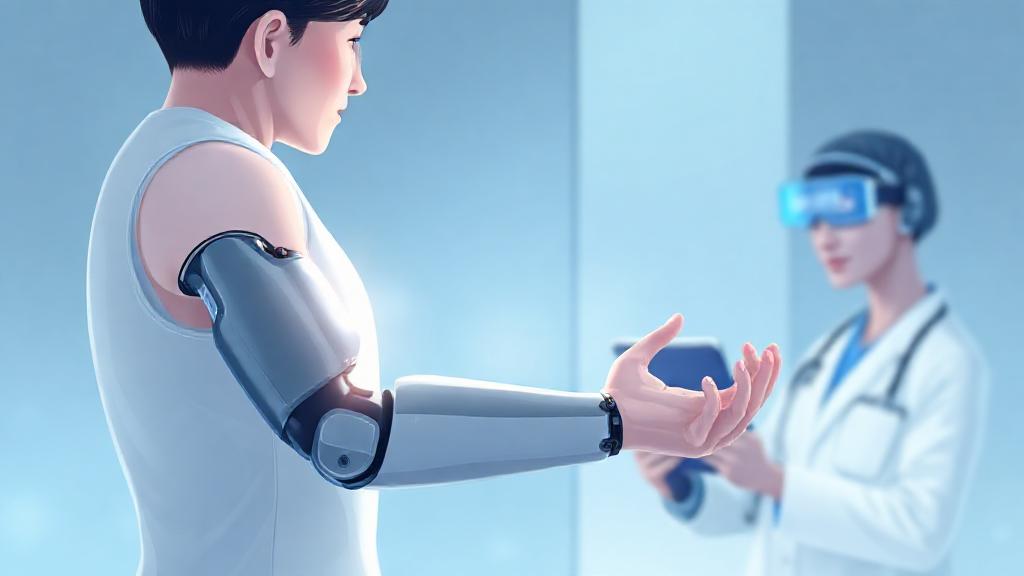
Targeted muscle reinnervation (TMR) is a surgical procedure that aims to restore intuitive control over prosthetic limbs by reassigning remaining muscle signals.
This innovative approach has shown promising results in clinical trials, allowing individuals to control their prosthetics with greater precision and ease.
By harnessing the power of TMR, individuals can potentially regain a sense of autonomy and confidence in their daily lives.
Advances in TMR are continually being made to improve prosthetic control and enhance the quality of life for individuals with limb loss.
Osseointegration and Its Role in Improving Prosthetic Stability and Function
Osseointegration is a game-changer for individuals with prosthetic limbs, as it allows for a direct connection between the prosthetic and the bone, providing unparalleled stability and control.
This direct connection enables individuals to move with greater ease and confidence, reducing the risk of falls and other accidents.
The benefits of osseointegration extend beyond just physical mobility, as it also has a profound impact on an individual’s mental and emotional well-being.
By providing a sense of security and stability, osseointegration can help individuals with prosthetic limbs to regain their independence and live life with greater freedom and confidence.
Bioengineered Prosthetic Limbs for Restoring Natural Movement and Function
Bioengineered prosthetic limbs are revolutionising the field of rehabilitation, offering individuals with amputations a chance to regain natural movement and function.
These cutting-edge prosthetics are designed to mimic the intricacies of human anatomy, with artificial muscles, tendons, and nerves that work in harmony to recreate the subtle nuances of human movement.
By leveraging advances in biomaterials, robotics, and artificial intelligence, researchers can craft prosthetic limbs that are not only highly functional but also remarkably lifelike.
Individuals with bioengineered prosthetic limbs are able to perform a wide range of activities with ease and precision, from delicate tasks like playing a musical instrument to more rigorous pursuits like hiking or dancing.
Microprocessor-Controlled Prosthetic Knees for Enhanced Mobility and Support
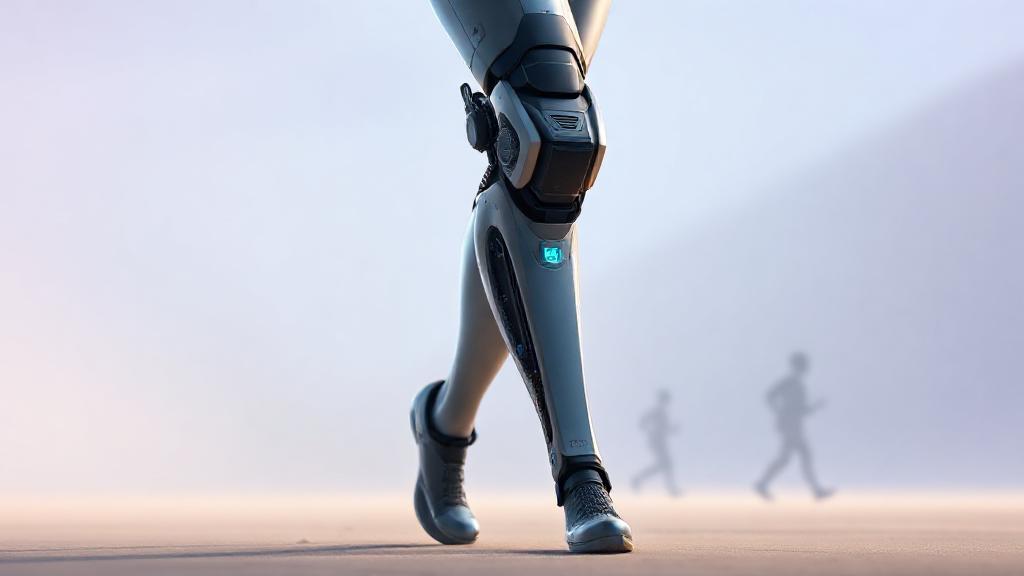
Microprocessor-controlled prosthetic knees have revolutionised the field of prosthetics, offering individuals with amputations a range of benefits, including improved stability, enhanced mobility, and increased support.
These advanced prosthetic knees utilise microprocessors to analyse and adapt to the user’s movements, providing a more natural and intuitive walking experience.
By adjusting to various terrain and activities, microprocessor-controlled prosthetic knees enable users to engage in a wide range of activities, from walking and running to climbing stairs and hiking.
Smart Prostheses and the Internet of Medical Things for Personalised Care
Revolutionising healthcare with innovative technologies is transforming patient outcomes.
- Enhancing prosthetic limbs with sensors and artificial intelligence for improved mobility.
- Utilising the Internet of Medical Things (IoMT) to collect and analyse patient data.
- Developing personalised care plans with machine learning algorithms and predictive analytics.
- Improving patient engagement and empowerment through mobile health applications and wearables.
- Integrating electronic health records with IoMT devices for seamless communication and coordination.
Additive Manufacturing and 3D-Printed Prostheses for Customised Fit and Comfort
The world of prosthetics is undergoing rapid change with the aid of additive manufacturing.
The process allows for intricate designs and precise fittings, enabling individuals to regain mobility and confidence in their daily lives.
Prosthetic devices that were once bulky and uncomfortable are now being replaced by sleek, customised alternatives that can be designed to mimic the appearance and function of natural limbs.
The use of 3D printing in prosthetics has also led to a significant reduction in production time and cost, making these customised devices more accessible to people worldwide.
Artificial Intelligence and Robotics in Prosthetic Technology for Enhanced Rehabilitation
Prosthetic limbs are not just mere replacements for lost limbs, but rather an integral part of rehabilitation and recovery.
With the integration of artificial intelligence and robotics, prosthetic technology has taken a significant leap forward, enabling individuals to regain mobility and independence.
Advanced prosthetic limbs can now be controlled by the user’s thoughts, thanks to brain-computer interfaces and machine learning algorithms.
“The future of prosthetics is not just about replacing a lost limb, but about enhancing human capability and restoring dignity”
Regulatory Considerations and Ethical Standards for AI-Based Prosthetic Development
The development of AI-based prosthetics raises significant regulatory considerations and ethical standards, as these devices have the potential to greatly impact the lives of individuals with disabilities.
The integration of AI technology into prosthetic devices also raises concerns about data privacy and security, as these devices may collect and transmit sensitive user data.
Developers of AI-based prosthetics must navigate a complex landscape of regulatory requirements and ethical guidelines, balancing the need for innovation with the need for protection of user rights and safety.
The key to successful AI-based prosthetic development lies in balancing innovation with regulation.
The development of AI-based prosthetics must prioritize user safety, data privacy, and ethical considerations to ensure responsible innovation and deployment.
As we continue to push the boundaries of what is possible with prosthetic technology, we are reminded that the human body is a complex and dynamic system, full of intricacies and nuances that are still not fully understood.
The advancements in prosthetic technology have the potential to not only restore physical function but also to enhance human capabilities, raising important questions about what it means to be human.
With the ability to create prosthetic limbs that can be controlled by the user’s thoughts, we are entering a new era of human-machine interaction, one that blurs the lines between biology and technology.
As we look to the future, we are left to wonder what other possibilities this technology may hold and how it may ultimately change the way we interact with and understand the human body.