




The tide of climate change rises, and Singapore finds itself walking a thin line between the fury of the sea and the tranquillity of its shores.
With sea levels projected to increase by up to 1 meter by 2100, the city-state’s very existence is threatened, prompting the question: Can Singapore tame the untamable sea?
The country’s unique geography, with its extensive coastline and low-lying areas, makes it particularly vulnerable to the ravages of rising waters, which could inundate homes, businesses, and infrastructure, causing catastrophic damage and displacement.
Like a master builder constructing a mighty fortress against the invading forces of nature, Singapore is turning to coastal engineering to defend its borders and ensure the continued prosperity of its people.
Singapore’s Coastal Expansion Efforts to Combat Rising Sea Levels and Flooding
Singapore, being a low-lying island nation, is taking proactive measures to protect its coastline from the impending threats of rising sea levels and flooding, with a focus on innovative engineering solutions and sustainable urban planning.
The city-state’s unique geography makes it particularly vulnerable to these environmental challenges, prompting the government to invest heavily in coastal defence systems and land reclamation projects.
As the global climate crisis continues to worsen, Singapore’s efforts to safeguard its shores have become a pressing necessity.
- Rapid urbanisation and land scarcity are driving the need for innovative coastal expansion solutions in Singapore.
- Sustainable engineering approaches are being explored to mitigate the impact of flooding and sea level rise on the city’s infrastructure.
- The Singaporean government is investing heavily in coastal resilience measures, including the construction of seawalls and levees to protect against extreme weather events.
Rising Waters and Land Reclamation Strategies in Singapore’s Urban Planning
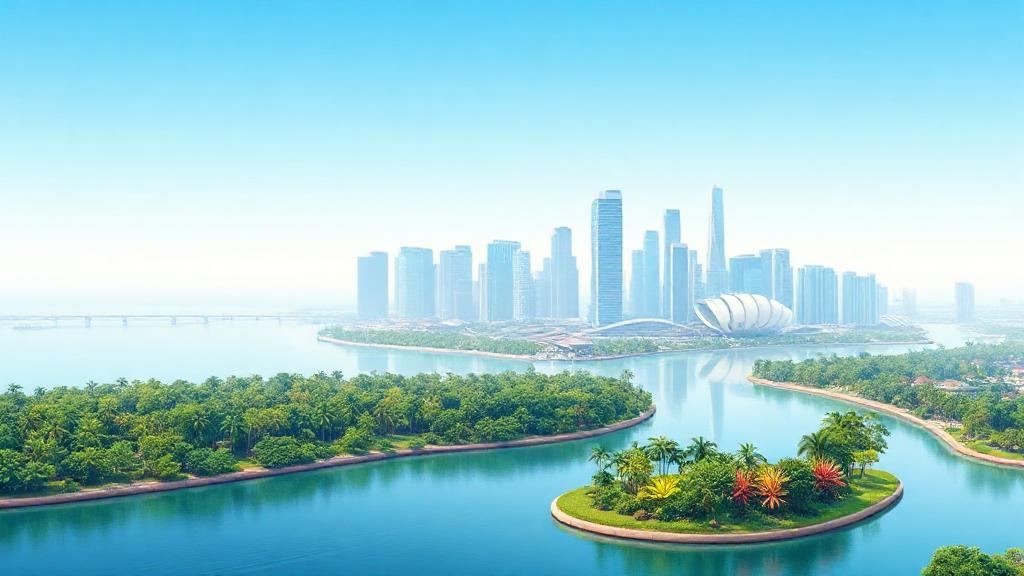
As the city-state manages to balance its growing population with the threat of rising sea levels, all while maintaining its stunning coastal views, it has implemented various strategies to mitigate the effects of rising waters.
The Singaporean government has implemented various strategies to mitigate the effects of rising waters, including the construction of seawalls, dunes, and pumps to drain excess water.
These measures are designed to safeguard the city’s infrastructure and ensure the continued viability of its urban planning initiatives.
By leveraging innovative engineering solutions and forward-thinking policies, Singapore aims to maintain its position as a thriving, resilient city in the face of environmental challenges.
Protecting Prime Real Estate from Flood Risks with Innovative Coastal Engineering
In Singapore, a city-state surrounded by water, the risk of flooding is ever-present, as seen in the recent flooding of the Marina Bay area, which highlighted the need for innovative coastal engineering solutions to protect prime real estate.
The government has since implemented a range of measures, including the construction of seawalls and flood gates, to mitigate the risk of flooding.
For instance, the Marina Barrage, a cutting-edge flood control system, has been instrumental in preventing flooding in the area.
This proactive approach has not only protected the city’s infrastructure but also ensured the continued attractiveness of its prime real estate.
Government Initiatives and Funding for Coastal Protection and Flood Resilience Measures
The Singapore government has been actively implementing various initiatives and allocating significant funding to enhance coastal protection and flood resilience measures.
One of the key initiatives is the development of a comprehensive coastal protection plan, which involves the construction of seawalls, dunes, and other coastal defense structures to safeguard against rising sea levels and intense storms.
Additionally, the government has been investing in flood resilience measures, such as the installation of smart drainage systems and the creation of green infrastructure, like parks and green roofs, to mitigate the impact of heavy rainfall and storm surges.
Advanced Computer Modelling for Simulating Sea-Level Rise and Rainfall Effects

To effectively simulate the impacts of sea-level rise and rainfall effects, researchers employ advanced computer modelling techniques, such as finite element methods and computational fluid dynamics.
These methods allow for the creation of detailed, high-resolution models that can accurately predict the behaviour of complex systems, including ocean currents and precipitation patterns.
By leveraging these techniques, scientists can better understand the potential consequences of climate change and develop more effective strategies for mitigating its effects.
Implementing Storm Surge Barriers and Coastal Reservoir Dikes for Enhanced Protection
Protecting coastal communities from flooding and erosion requires innovative solutions.
- Constructing storm surge barriers to prevent saltwater intrusion and damage to infrastructure
- Designing coastal reservoir dikes to store excess water and reduce flood risk
- Installing flood gates and pumps to control water flow and prevent backflow
- Monitoring water levels and weather patterns to predict and prepare for potential floods
- Maintaining existing barriers and dikes to ensure their effectiveness and longevity
Mangrove Forests and Combined Mangrove-Rock Revetments for Shoreline Stabilisation
Mangrove forests have long been recognised for their role in shoreline stabilisation.
The combination of mangrove forests and rock revetments can reduce wave energy by up to 70%.
Fragments of a solution: using mangroves and rocks to mitigate erosion.
As the waves crash against the shore, the mangroves and rocks work together to dissipate the energy, preventing the soil from being washed away — a testament to the power of nature-based solutions.
Adapting Dutch Polder Methods to Tropical Environments for Land Reclamation
Contrary to popular belief, Dutch polder methods are not inherently unsuitable for tropical environments, as they can be adapted and modified to accommodate the unique challenges of these regions.
In fact, many experts argue that these methods can be highly effective in tropical environments with proper planning and execution.
The notion that Dutch polder methods are exclusive to temperate climates is a misconception that has hindered their adoption in tropical regions.
Long-Term Coastal Protection Measures and Flexible Adaptation Strategies for Singapore’s Coastlines
As Singapore continues to experience the impacts of climate change, including rising sea levels and increased storm intensity, the implementation of long-term coastal protection measures and flexible adaptation strategies becomes crucial for safeguarding its coastlines and ensuring the resilience of its communities.
The city-state’s unique geography, with its extensive coastline and low-lying areas, makes it particularly vulnerable to coastal erosion and flooding, highlighting the need for proactive and adaptive approaches to coastal management.
Effective strategies may include the integration of natural and nature-based solutions, such as mangrove restoration and beach nourishment, alongside traditional hard infrastructure measures like seawalls and dikes.
Yet, as the waters continue to rise, the question remains: what will be the next line of defence in this ongoing struggle, and how will Singapore’s engineers and scientists adapt to the evolving challenges of a changing climate?