




Imagine a sprawling underground network of tunnels, a hidden labyrinth that weaves beneath the bustling streets of a city, much like the intricate roots of a tree that dig deep into the earth without disturbing the soil above.
As cities continue to grow and expand, the need for efficient and safe transportation systems has become increasingly important, with tunnels playing a vital role in connecting communities and facilitating the flow of people and goods.
The process of building tunnels under busy cities is a remarkable blend of art and science, involving cutting-edge technology, innovative materials, and meticulous attention to detail.
Understanding Soil Mechanics and Tensile Strength for Tunnel Construction Safety
Soil mechanics play a crucial role in tunnel construction, as they directly affect the stability and safety of the tunnel.
The tensile strength of the soil is a key factor in determining the tunnel’s structural integrity, and any miscalculation can lead to catastrophic consequences.
Understanding the complex relationships between soil properties, tensile strength, and tunnel design is essential for ensuring the safety of tunnel construction projects.
The collapse of a tunnel can be a devastating event, resulting in loss of life and significant economic damage, making it imperative to get the soil mechanics right from the start.
- Soil composition is a critical factor in determining tensile strength, with different types of soil exhibiting unique properties that must be carefully considered.
- Tunnel depth and orientation also impact soil mechanics, requiring specialised expertise to navigate these complex interactions.
- Accurate geotechnical modelling is essential for predicting soil behaviour and ensuring the structural integrity of the tunnel.
Assessing Rock Formations and Their Ability to Transfer Forces Around Tunnels

Understanding rock formations and their behaviour is crucial in tunnel engineering, as it helps predict and prepare for potential challenges.
The ability of rock to transfer forces around tunnels depends on various factors, including the type of rock, its density, and the presence of fractures or faults.
By analysing these factors, engineers can design a more robust and secure tunnel system.
Many engineers and geologists have developed innovative solutions to assess and mitigate the risks associated with rock formations in tunnel construction.
Mitigating Tensile Stress Zones in Tunnel Excavations to Prevent Collapse
The importance of identifying and mitigating tensile stress zones in tunnel excavations cannot be overstated, as it is crucial for preventing tunnel collapse.
Tensile stress zones can be mitigated through the use of advanced excavation techniques, such as the New Austrian Tunnelling Method (NATM), which emphasises careful planning and monitoring of the excavation process.
This approach allows for real-time assessment of the tunnel’s stability and enables prompt intervention to prevent collapse.
The key to preventing tunnel collapse lies in the ability to identify and manage tensile stress zones effectively, which can be achieved through a combination of advanced technologies and expertise.
Implementing Support Systems in Soil Tunnels to Ensure Structural Integrity
Implementing support systems in soil tunnels is a crucial step in ensuring the structural integrity of these underground passages.
The support system typically consists of a combination of steel arches, concrete lining, and soil reinforcement, which work together in harmony to distribute the loads and maintain the tunnel’s shape.
The choice of support system depends on various factors, including the soil type, tunnel depth, and intended use, and must be carefully selected to ensure the long-term safety and durability of the tunnel.
A well-designed support system is the backbone of a soil tunnel, providing the strength and stability needed to ensure its structural integrity and long-term safety.
Utilizing Rock Bolts for Reinforcement and Stabilization in Jointed Rock Excavations
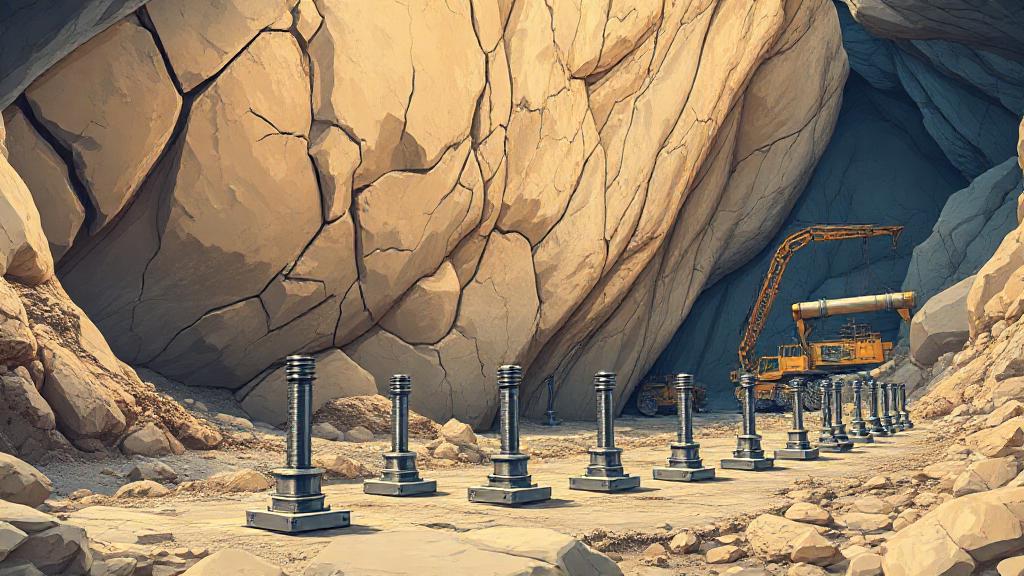
Rock bolts are a crucial component in the reinforcement and stabilisation of jointed rock excavations, providing a means to anchor and support the rock mass.
The installation of rock bolts involves drilling holes into the rock and inserting the bolts, which are then grouted in place to create a secure bond between the bolt and the rock.
This technique helps to prevent rock falls and ensures the stability of the excavation, making it a vital aspect of rock engineering.
The use of rock bolts can also help to reduce the risk of rock bursts and other geological hazards, which can be catastrophic in underground excavations.
Temporary Shoring Methods for Tunnel Roofs Before Installing Permanent Support
Ensuring tunnel stability is crucial during construction.
- Anchoring systems to secure the tunnel roof and prevent collapse
- Installing steel ribs to provide temporary support and protection
- Constructing a concrete lining to stabilise the tunnel and facilitate excavation
- Deploying inflatable shoring systems to provide flexible and adaptable support
- Implementing soil nailing techniques to reinforce the surrounding soil and rock
These temporary shoring methods play a vital role in maintaining tunnel stability, allowing for safe and efficient construction of permanent support systems, and ultimately ensuring the structural integrity of the tunnel.
Optimising Tunnel Design and Construction with Advanced Geotechnical Applications
Advanced geotechnical applications are revolutionising the field of tunnel design and construction, enabling engineers to create safer, more efficient, and more sustainable tunnel systems.
The integration of advanced geotechnical applications enables engineers to better understand the complex interactions between the tunnel and the surrounding soil or rock, allowing for more precise design and construction.
The use of advanced geotechnical applications can significantly reduce the risk of tunnel collapses and other safety hazards, ultimately saving lives and reducing economic losses.
Managing Public Safety and Emergency Response in Underground Tunnel Environments
Underground tunnels are not inherently more dangerous than above-ground structures, and with proper planning and management, they can be just as safe.
The key to managing public safety and emergency response in underground tunnel environments is to have a comprehensive and well-rehearsed plan in place, which includes regular training, drills, and maintenance of safety equipment.
Many underground tunnels have robust safety features and emergency response systems in place, such as fire suppression systems, emergency exits, and regular drills to prepare for potential emergencies.
Advancements in Tunnel Boring Machines and Ventilation Systems for Efficient Construction
The integration of advanced technologies in tunnel boring machines (TBMs) has significantly enhanced the efficiency and safety of underground construction projects.
The development of sophisticated ventilation systems has improved air quality and reduced the risk of accidents, creating a healthier working environment for construction workers.
As the demand for underground infrastructure continues to grow, the advancements in TBMs and ventilation systems are expected to play a crucial role in shaping the future of construction.
The future of construction relies heavily on the continued advancement of tunnel boring machines and ventilation systems, driving growth and innovation in the industry.
As our cities continue to grow and evolve, the demand for efficient and safe tunnel construction will only continue to rise, prompting engineers to push the boundaries of innovation and technology.
The next time we walk through a busy city street, we might pause to appreciate the hidden world beneath our feet, a world that is at once invisible and indispensable, a tribute to the engineers who build the unseen foundations of our urban landscapes.