





An integrated design engineering project in Singapore is defined as a coordinated delivery method that unifies architectural, structural, mechanical and electrical, and regulatory disciplines into a single, concurrent workflow. This approach replaces the traditional sequential handoff model, where each discipline waits for the previous one to finish before contributing. For property developers and investors, the practical result is faster authority approvals, fewer design conflicts, and lower construction risk. Singapore’s regulatory environment, particularly the CORENET X platform and the Building and Construction Authority’s (BCA) federated BIM requirements, has made integrated delivery not just preferable but operationally necessary for competitive project timelines.
What does an integrated design engineering project in Singapore require?
Integrated design engineering, formally known in the industry as Integrated Project Delivery (IPD) or multidisciplinary consultancy, requires three foundational elements before a single drawing is submitted: a digital modeling standard, a regulatory platform, and a coordinated team structure.
Digital modeling standards are non-negotiable. Singapore’s authorities require federated BIM models that follow Industry Foundation Classes (IFC) and IFC+SG standards for interoperability. A federated BIM model is a single coordinated file environment where architectural, structural, and M&E models are linked but maintained separately, allowing each discipline to update its model without overwriting another’s work. This structure enables early identification of buildability issues and reduces site rework significantly.
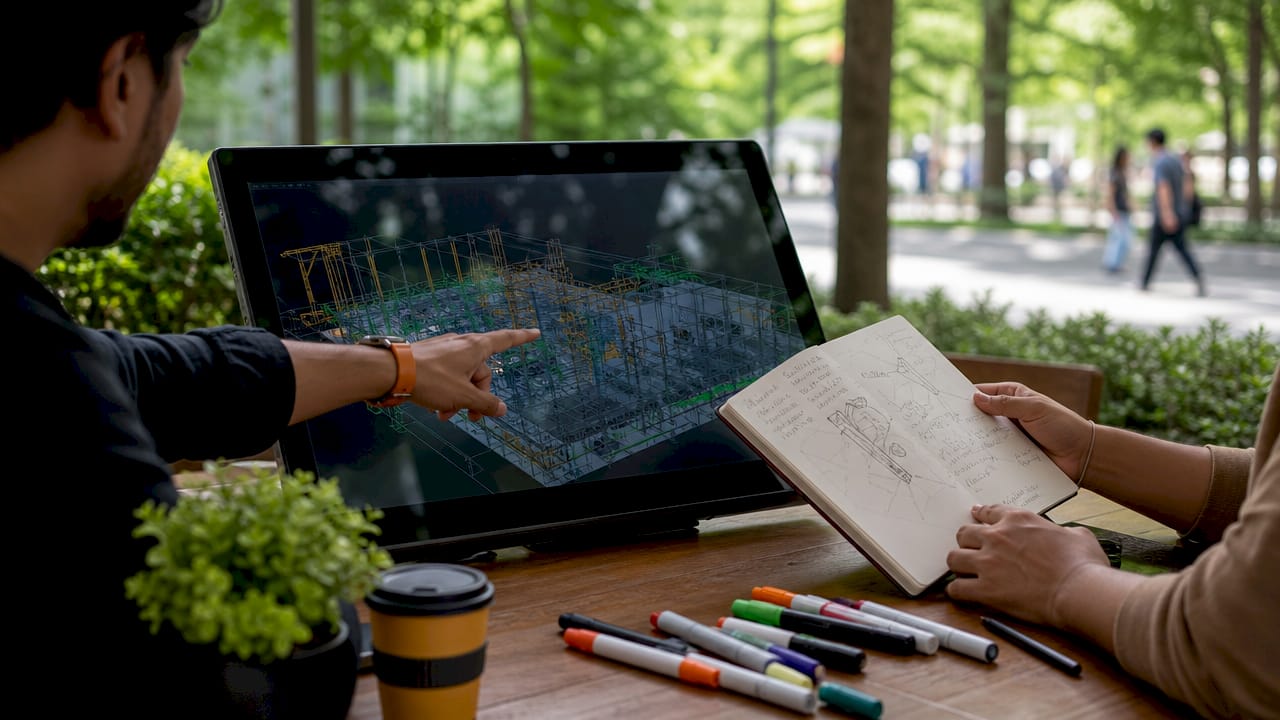
The CORENET X platform is the digital regulatory ecosystem that consolidates approvals from seven regulatory agencies into a single submission portal. These agencies include BCA, URA, HDB, JTC, SCDF, PUB, and LTA. CORENET X reduces approval times by up to 20%, with standard commercial approval cycles typically running 6 to 12 months. That reduction translates directly into schedule savings that affect financing costs and project returns.
The multidisciplinary team is the third prerequisite. Design engineering services in Singapore that operate in silos cannot leverage the platform’s simultaneous review capability. You need architects, civil and structural engineers, M&E engineers, and a regulatory submission specialist working from a shared model from day one.
| Prerequisite | Requirement | Purpose |
|---|---|---|
| Federated BIM model | IFC and IFC+SG compliant | Interoperability across disciplines |
| CORENET X access | Registered QP (Qualified Person) | Simultaneous multi-agency submission |
| Multidisciplinary team | Architects, C&S, M&E, regulatory | Coordinated design and compliance |
| Documentation package | Plans, structural calcs, M&E specs | Complete submission for review |
- Architectural drawings must align with URA planning parameters before structural design begins
- Structural calculations must reference the same grid and level data as the architectural BIM model
- M&E coordination drawings must be clash-checked against structural elements before submission
- Authority submission documentation must be prepared by a registered Qualified Person (QP)
Pro Tip: Engage your engineering design consultancy in Singapore at the concept design stage, not after architectural drawings are finalized. Late engineering engagement is the single most common cause of model misalignment and resubmission.
How to implement an integrated design engineering project step by step
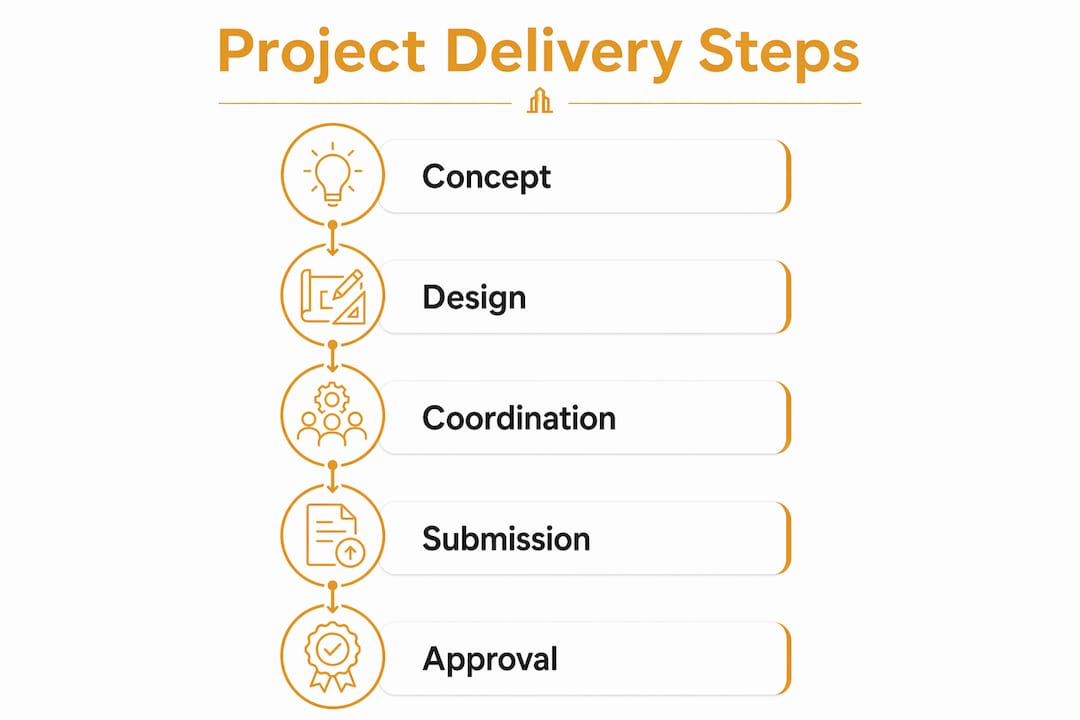
The implementation sequence for an integrated engineering project in Singapore follows five defined stages. Each stage has a specific deliverable that gates entry to the next.
-
Project kickoff and team alignment. Convene architects, civil and structural engineers, M&E engineers, and the authority submission specialist in a single briefing. Define the BIM execution plan (BEP), establish model ownership, and agree on the IFC export protocol. The Promenade Peak project demonstrated that early builder engagement accelerated construction gateway approval to under 11 months from land tender award. That result is only achievable when the team is aligned before design work begins.
-
Schematic and design development with federated modeling. Each discipline develops its model concurrently within the agreed BIM environment. Architectural models define spatial parameters; structural models develop the load-bearing system within those parameters; M&E models route services through the coordinated space. Clash detection runs continuously, not as a final check. Construction project management systems that integrate planning, documentation, and compliance tracking reduce reliance on manual coordination at this stage.
-
Pre-submission coordination review. Before uploading to CORENET X, the QP leads a final coordination review across all models. This review checks for IFC+SG compliance, confirms that all agency-specific data fields are populated, and validates that structural calculations reference the current architectural model version. Skipping this step is the primary cause of automatic rejections.
-
Digital submission via CORENET X. The QP submits the federated model package to CORENET X, which routes it simultaneously to all relevant agencies. The platform’s simultaneous agency review capability eliminates the sequential waiting that previously added weeks to approval timelines. Developers receive consolidated agency feedback through a single interface rather than managing separate correspondence with each authority.
-
Feedback resolution and final approval. Agency comments are addressed within the federated model environment, not through ad hoc drawing revisions. Each change is tracked, and the updated model is resubmitted through CORENET X. Once all agencies clear the submission, the project proceeds to construction with a complete, authority-approved digital record.
Pro Tip: Request a pre-application consultation (PAC) with BCA before formal submission. PAC sessions allow the QP to clarify agency expectations on complex structural or M&E elements, reducing the probability of a major revision request after formal submission.
What are the common challenges in integrated design engineering projects?
The most frequent failure point in project management engineering in Singapore is model misalignment between architectural and structural submissions. Misaligned design submissions where architectural and engineering models conflict lead to automatic rejections and weeks of approval delays. The root cause is almost always a failure to coordinate early, specifically when structural engineers receive a frozen architectural model late in the design process and develop their model independently.
The second common challenge is fragmented communication. Without a shared digital platform, design changes communicated by email or PDF markup create version control failures. A structural engineer working from an outdated architectural plan will produce calculations that do not match the submitted model, triggering a rejection.
“Standardizing interoperable federated BIM data early is critical to avoid multi-week approval delays. The primary cause of those delays is failure to coordinate architectural and engineering models before submission.” — CNA, reporting on Singapore’s digital regulatory ecosystem
The third challenge is the learning curve associated with CORENET X submissions, particularly for teams transitioning from legacy paper-based or eSubmission workflows. Industry forums and resource toolkits help project teams adapt quickly to digital submission requirements, and regular regulatory engagement mitigates the initial adjustment period.
Common mistakes to avoid during design coordination:
- Freezing the architectural model before structural and M&E engineers have reviewed it
- Using different grid reference systems across architectural and structural models
- Submitting without running a formal IFC+SG compliance check
- Treating CORENET X as a document upload portal rather than a coordinated model submission system
- Failing to update structural calculations when architectural revisions occur late in design development
For developers working with a new engineering design consultancy in Singapore, ask directly whether the firm has completed CORENET X submissions before. Firms with prior experience will have established BIM execution plan templates and IFC export protocols that reduce setup time significantly.
How integrated engineering contributes to sustainability and long-term value
Integrated design engineering delivers measurable sustainability outcomes because environmental performance strategies are validated during design, not retrofitted after construction. When architectural, structural, and building services engineers work from a shared model, decisions about facade orientation, structural mass, and mechanical system sizing are made with full visibility of their interdependencies.
Integrated design assures sustainability strategies are validated early, contributing to certifications like the BCA Green Mark Platinum (Super Low Energy). Green Mark Platinum is Singapore’s highest sustainability rating for buildings, and achieving it requires demonstrating energy performance targets that depend on coordinated facade, structural, and M&E design decisions. Attempting to achieve this certification through post-design optimization is significantly more expensive and often requires abortive structural or M&E work.
Key sustainability contributions from integrated engineering:
- Facade coordination with structural systems reduces thermal bridging and improves envelope performance
- Early M&E integration allows right-sizing of mechanical systems based on actual structural and architectural parameters
- Multidisciplinary consultancy services covering planning, engineering, construction supervision, and testing manage long-term sustainability goals and optimize operational performance
- Prefabricated Prefinished Volumetric Construction (PPVC) modules, as used in Promenade Peak, require early facade coordination to achieve both structural efficiency and energy performance targets
The long-term financial case is equally direct. Integrated engineering reduces abortive work, which is design or construction work that must be redone due to coordination failures. For a mid-scale residential development in Singapore, abortive work costs from poor coordination can reach hundreds of thousands of dollars. Early integration eliminates most of that exposure before it materializes on site.
Key takeaways
Integrated design engineering projects in Singapore succeed when federated BIM models, CORENET X digital submissions, and multidisciplinary team coordination are established at project inception, not introduced after architectural design is complete.
| Point | Details |
|---|---|
| Start integration at inception | Engage structural and M&E engineers at concept stage to prevent model misalignment and resubmission. |
| CORENET X cuts approval time | The platform consolidates seven agency reviews, reducing approval cycles by up to 20%. |
| Model alignment prevents rejection | Misaligned architectural and engineering models trigger automatic rejections and multi-week delays. |
| Early integration enables Green Mark | Coordinated design from day one is required to achieve BCA Green Mark Platinum certification cost-effectively. |
| Multidisciplinary teams reduce abortive work | Concurrent discipline coordination eliminates costly design rework before it reaches the construction stage. |
Why integrated delivery is no longer optional in Singapore
Having worked across residential, commercial, and industrial projects in Singapore, I have observed a clear pattern: developers who treat integrated engineering as a procurement convenience rather than a delivery methodology consistently encounter the same problems. They freeze architectural designs before engineers are engaged, submit models that conflict at the structural-architectural interface, and then spend weeks resolving agency rejections that were entirely preventable.
The shift to CORENET X has made this pattern more visible and more costly. The platform’s automated compliance checks surface model conflicts immediately, whereas the old sequential submission process allowed teams to paper over coordination gaps with supplementary drawings. That workaround no longer exists.
What I find most significant for developers entering the market now is that integrated delivery is not primarily a technology question. The BIM tools and the CORENET X platform are well-established. The real variable is team structure and engagement timing. Developers who appoint an integrated design and construction partner early, before architectural design is locked, consistently achieve faster approvals and lower coordination costs than those who assemble disciplines sequentially.
My advice for investors evaluating development opportunities in Singapore: assess your consultancy’s CORENET X submission track record before appointment, not after. A firm that has completed multiple federated BIM submissions will have resolved the workflow issues that slow down first-time submitters. That experience is worth more than a lower fee proposal from a firm still building its digital submission capability.
— Aman
How Stellar Structures supports your integrated engineering project
Stellar Structures provides end-to-end civil engineering consultancy services that cover architectural design, structural and M&E engineering, and authority submissions across BCA, URA, HDB, JTC, SCDF, PUB, LTA, NEA, and NParks. The firm’s team of registered Qualified Persons manages CORENET X digital submissions and federated BIM coordination for residential, commercial, industrial, and infrastructure projects across Singapore. For developers seeking a single point of accountability across all design and regulatory disciplines, Stellar Structures delivers integrated architectural and engineering solutions tailored to your project’s scale, timeline, and compliance requirements. Contact the team for a project consultation.
FAQ
What is integrated design engineering in Singapore?
Integrated design engineering is a project delivery method that coordinates architectural, structural, M&E, and regulatory disciplines concurrently within a shared digital environment. In Singapore, this practice is formalized through federated BIM submissions on the CORENET X platform.
How does CORENET X reduce approval times?
CORENET X consolidates reviews from seven regulatory agencies into a single digital submission, reducing approval times by up to 20% compared to sequential agency submissions. Standard commercial approval cycles run 6 to 12 months, and the platform’s simultaneous review capability removes weeks from that schedule.
What causes automatic rejections in CORENET X submissions?
Automatic rejections occur when architectural and engineering models conflict, typically because structural or M&E models were developed from an outdated architectural reference. Running a formal IFC+SG compliance check and a cross-discipline coordination review before submission prevents most rejections.
When should I engage an engineering design consultancy in Singapore?
Engage your consultancy at the concept design stage, before architectural drawings are finalized. Late engineering engagement is the primary cause of model misalignment, abortive work, and resubmission delays in Singapore development projects.
Can integrated engineering help achieve BCA Green Mark Platinum?
Yes. Integrated design validates sustainability strategies during design development, allowing coordinated facade, structural, and M&E decisions that meet BCA Green Mark Platinum (Super Low Energy) energy performance targets without costly post-design retrofits.
Recommended
- Integrated design and construction for efficient Singapore projects
- Design and build contracts: Singapore developer guide
- Value Engineering in Singapore’s Civil & Structural Projects
- Design Check Process for Singapore Projects: 2026 Guide