




Introduction
Managing sub-tenant A&A works lessor liabilities authorisation letters is one of the most consequential-yet frequently mishandled-responsibilities facing primary lessees who sublet industrial or commercial space in Singapore. When a sub-tenant proposes Addition & Alteration works inside your demised premises, the legal exposure does not transfer with the sublease. Instead, liability cascades upward: from contractor to sub-tenant, from sub-tenant to head tenant, and ultimately to the master lessor or head landlord. Without a properly structured authorisation letter on your company letterhead, you risk regulatory penalties, lease termination, and substantial reinstatement costs.
This article focuses on commercial leases in the industrial and business parks context-particularly JTC lessees subletting factory, warehouse, or logistics space-where the head lessee must endorse sub-tenant renovation proposals for authority submissions to BCA, JTC, SCDF, and URA. The principles apply equally to private industrial properties, though JTC’s plan consent regime introduces additional compliance layers. We exclude private residential properties and HDB flats except for brief comparison, since the subletting rules and legal framework differ fundamentally.
The core answer is straightforward: before any sub-tenant A&A works begin, the head tenant must issue a clear, project-specific authorisation letter on official letterhead confirming landlord’s consent to the defined scope of works, naming the parties authorised to submit plans to regulatory agencies, and explicitly allocating design responsibility, insurance obligations, and reinstatement obligations. Failure to do so can expose the primary lessee to fines of up to SGD 500,000 under the Building Control Act, SCDF enforcement orders, or JTC lease termination.
Here is what you will learn:
-
The legal framework governing sub-tenant A&A works and why liability traces back to the head lessee
-
What a robust authorisation letter must contain and how it interacts with the head lease
-
A step-by-step workflow for evaluating, approving, and documenting sub-tenant A&A proposals
-
How to compare different authorisation approaches and choose the safest model for your portfolio
-
Common pitfalls-from unapproved mezzanines to reinstatement disputes-and how to prevent them
Understanding Sub-Tenant A&A Works, Lessor Liability, and the Legal Framework
Under Singapore’s building control regime, “building works” includes the alteration, addition, or repair of a building, as well as the provision or alteration of air-conditioning, ventilation, and mechanical/electrical systems. When a sub-tenant occupying part of your leased premises proposes any such work, the legal position is clear: the primary lessee’s obligations under the master lease do not disappear simply because a sublease exists. Regulatory authorities and the head landlord look through the subletting arrangements and hold the anchor lessee accountable.
This matters commercially because unapproved or unsafe works can trigger stop-work orders, fines, higher sublet fees imposed by JTC, or outright lease termination. Lessor can be held liable for unauthorized modifications by sub-tenants, even when the sub-tenant acted without the lessee’s knowledge. The financial standing of the primary lessee, not just the sub-tenant, is what the head lessor evaluates when deciding enforcement action.

What Counts as A&A Works for Sub-Tenants
Addition & Alteration works in the Singapore context cover structural modifications (cutting openings, adding columns), mezzanine platforms, change-of-use fit-outs, fire safety upgrades such as sprinkler installations, and new M&E systems. Simple non-A&A activities-moveable furniture, desktop equipment, lightweight shelving that does not attach to the structure-generally fall outside the scope, though even these may need to comply with building management rules and fire load limits.
Concrete examples for industrial properties include adding a second-level steel platform in a JTC factory for storage, cutting new openings in structural walls to connect adjacent sublet space, reconfiguring production line layouts in ways that affect fire escape routes, and installing heavy machinery foundations that increase structural loading. Each of these triggers different regulatory thresholds. BCA distinguishes between notifiable works requiring building plan submission and minor works that may be exempt. SCDF requires separate fire safety submissions for sprinkler modifications or changes in fire load. JTC’s plan consent process applies when works involve an increase in gross floor area or change of use beyond the baseline approved in the original lease.
A&A projects may require endorsements from qualified professionals for compliance-typically a Professional Engineer for structural works and a Fire Safety Engineer for SCDF submissions. Stellar Structures frequently assists clients in classifying proposed works correctly at the feasibility stage, preventing costly reclassifications later.
Roles in the Head Lease–Sublease–Authority Chain in Commercial Leases
The key parties in any sub-tenant A&A scenario are the head landlord (JTC Corporation or a private property owner), the primary lessee (the anchor tenant holding the master lease), the sub-tenant occupying the subleased premises, and the professional consultants-PE, architect, and fire safety engineer-appointed to design and submit the works.
Contractual obligations flow downward through the tenancy agreement: the sub-tenant is bound to the primary lessee under the sublease, and the primary lessee is bound to the head lessor under the head lease. But statutory responsibilities often flow in reverse. Agencies such as BCA and SCDF look first to the building owner or the person in control of the premises. Sub-tenants typically lack direct contractual authority with the head lessor, while the head tenant keeps the direct relationship with the head lessor and acts as the sub landlord to the sub-tenant, which means they cannot make submissions to JTC or obtain plan consent on their own. The head tenant must bridge this gap through formal authorisation.
Consider a practical scenario: a primary lessee of a JTC flatted factory sublets 30% of gross floor area to a logistics company. The incoming tenant wants to build high racking and install sprinklers. Before JTC will process any plan consent application, it requires a letter of consent from the primary lessee on official letterhead, addressed to the sub-tenant’s consultant, confirming no objection and authority to submit to JTC and other agencies. Without this letter, the submission stalls-and if the sub-tenant proceeds without it, the primary lessee faces breach of lease.
Because of this layered structure, clear authorisation letters are needed to define who is allowed to act and who is liable for what at every stage of an A&A project.
How Liability Arises for A&A Works
“Lessor liabilities” in this context encompass several distinct categories: breach of head lease covenants, non-compliance with BCA or SCDF statutory requirements, damage to common property or adjacent units, workplace safety breaches under the WSH Act, and resulting commercial losses including business interruption.
Typical head lease clauses prohibit the lessee from carrying out structural works, altering the external appearance, or changing the proposed use of the premises without the landlord’s prior written consent. JTC’s standard lease conditions explicitly require the lessee to procure all-risk insurance during fitting-out works and to maintain the property in good repair. In subletting, the original tenant remains liable to the landlord for everything that happens within the demised premises, including works initiated by sub-tenants. Tenants remain fully liable for subtenant actions-this is a fundamental principle across most commercial leases.
Under section 12 of the Building Control Act, occupying any part of a building that has undergone building works without a statutory completion certificate is an offence carrying fines of up to SGD 500,000, imprisonment of up to two years, and daily fines for continuing offences. Failure to monitor A&A works can expose the lessor to regulatory and financial risks that dwarf the rental income generated by the subletting arrangement.
Even when the sublease explicitly assigns design and construction responsibility to the sub-tenant, the head lessee’s residual liability to JTC or the head landlord remains intact. This is why properly drafted authorisation and consent letters are the primary lessee’s most important tool to control and allocate these liabilities.
Authorisation Letters for Sub-Tenant A&A Works: Core Concepts
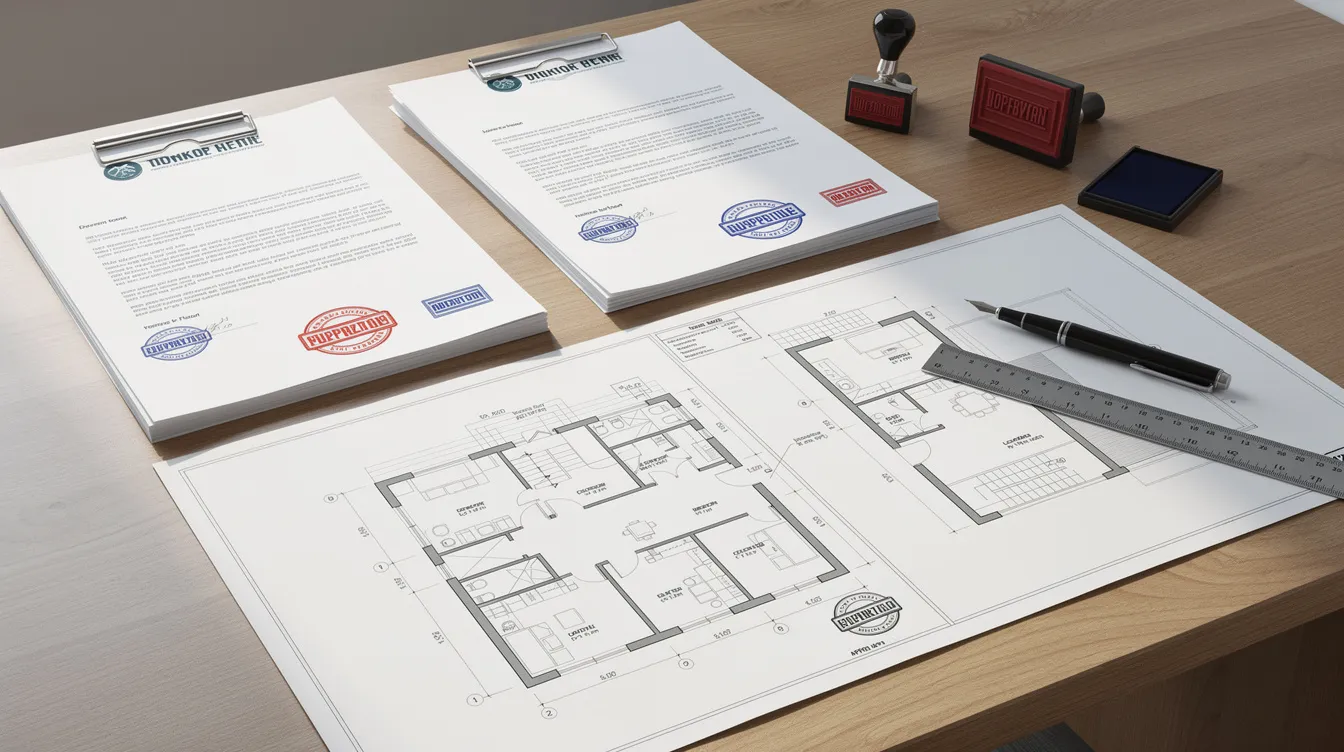
Authorisation letters and consent forms on the primary lessee’s letterhead are routinely requested by consultants, contractors, and regulatory authorities before any A&A submission can proceed. These documents serve a dual purpose: they satisfy the agency’s requirement to confirm that the sub-tenant is acting with the lessee’s knowledge and consent, and they create a documented paper trail that defines the boundaries of what has been approved.
It is important to distinguish between “landlord’s consent to sub-tenant works”-a broader concept covering in-principle agreement to allow modifications-and “authorisation to act for and on behalf of the lessee” in specific regulatory applications. The first is a commercial decision; the second is a legal instrument with precise consequences.
What an A&A Authorisation Letter and Landlord’s Consent Actually Are
An authorisation letter is a formal, signed document from the primary lessee (and sometimes jointly from the master lessor) allowing a sub-tenant or their appointed consultant to submit plans, applications, and compliance documentation to specific government agencies for defined works at a named address. It is a series of specific documentation required to authorize A&A works by sub-tenants.
The typical elements of a proper authorisation letter include:
-
Company letterhead with full legal name, UEN, and registered address of the primary lessee
-
Clear identification of the site-unit number, lot number, floor plan reference, and gross floor area of the sublet space
-
Description of the proposed A&A works: nature, scope, design concept, and, where relevant, the proposed sublease or related sublease file reference / drawing reference
-
Named party being authorised (e.g. “Stellar Structures Pte Ltd” or the sub-tenant’s appointed QP)
-
Specific authorities for which authorisation is given: BCA, SCDF, JTC plan consent, URA, PUB
-
Express confirmation that the lessee has reviewed the proposal and has no objection
-
Statement of which party bears design responsibility, costs, and reinstatement obligations
-
Signature by an authorised officer with name, designation, and date
In JTC cases specifically, the QP submission process requires evidence that the head lessee consents to the scope of proposed A&A before JTC assesses technical compliance. Lessor’s consent does not constitute approval of technical compliance with regulations-that responsibility sits with the Qualified Person and the relevant agency.
Types of Letters Used in Practice
Three main types of authorisation letters are used in practice, and the choice depends on the nature and risk profile of the proposed works:
Simple consent letter from the head lessee to the sub-tenant for internal minor A&A works-non-structural partitions, small office reconfigurations, or cosmetic renovations that do not require statutory submissions. This is a short “no objection” letter confirming the landlord agrees to proceed, typically with conditions attached regarding reinstatement and insurance.
Full authority-to-submit letter appointing a consultant to deal with BCA, JTC, and SCDF on the sub-tenant’s behalf. This is required for structural works such as mezzanine floor installations, works that increase gross floor area, or changes of use requiring plan consent. The letter must satisfy JTC’s format requirements and name the specific authorities involved.
Indemnity and undertaking letters where the sub-tenant assumes defined risks, acknowledges reinstatement obligations, and undertakes to maintain adequate insurance coverage. Third-party indemnity letters may be required to manage liability risks during A&A, particularly when the works involve high-value structural modifications or fire safety installations. These are often issued alongside-or incorporated within-the authority-to-submit letter.
Stellar Structures regularly prepares recommended templates aligned with JTC and BCA expectations for its clients, ensuring consistency and reducing the risk of missing critical clauses.
How Authorisation Letters Interact with the Head Lease and Sublease
Authorisation letters do not replace the lease or sublease. They sit on top as project-specific instruments clarifying consent and authority for a particular scope of works. The original lease and the sublease remain the governing documents for the broader landlord–tenant and tenant–sub-tenant relationships.
A key risk here is careless wording. An overly broad authorisation can inadvertently extend rights beyond the intended scope or weaken the lessee’s ability to enforce reinstatement at end of term. For example, a letter that generically authorises “all works necessary to fit out the premises” without reference to specific drawings or authority submissions may be construed as blanket consent-exposing the head tenant to liability for works that were never reviewed or approved.
Best practice is to ensure that every authorisation letter consistently refers back to specific lease clauses-for instance, “without prejudice to Clause 12.3 of the Head Lease dated 1 March 2023, which requires the Lessee to obtain the Lessor’s prior written consent before undertaking any structural alteration.” This tie-back preserves the lessee’s contractual protections while granting narrow, defined authority to the sub-tenant’s consultant.
Structuring and wording these letters correctly requires a deliberate process and an internal workflow, which we cover next.
Designing a Safe Workflow to Manage Sub-Tenant A&A Proposals
This section provides a practical roadmap for primary lessees and estate managers to handle A&A requests from sub-tenants without losing control over compliance and liabilities. The workflow is especially relevant for SMEs subletting JTC units who may not have an in-house technical team. Each step should be documented-proper risk management involves both contractual and regulatory compliance for A&A works, and documentation of all authorizations and approvals is crucial.

Step-by-Step Approval and Documentation Process
Follow this numbered sequence for handling any new sub-tenant A&A proposal. Each step produces a document or decision record that protects the head tenant’s legal position.
-
Receive written request from sub-tenant with a concept description, layout plans, intended use, and the identity of the proposed subtenant if the occupancy or works are tied to a new subletting arrangement. Insist on written form-verbal requests create ambiguity and should never trigger consent.
-
Check head lease and JTC/landlord guidelines for restrictions. Review GFA caps (JTC allows subletting up to 30% of gross floor area for non-related businesses), structural loading limits, fire load boundaries, external appearance restrictions, and permitted use conditions. JTC’s subletting policy limits subletting terms to non-related businesses to three years.
-
Engage or require the sub-tenant to engage qualified consultants (PE, architect, fire safety engineer) to evaluate feasibility. This is the stage where Stellar Structures typically assists clients in determining whether the proposed works are notifiable, require BCA structural design approvals, or trigger SCDF fire safety submissions.
-
Conduct internal risk and liability review. Assess structural safety, fire safety implications, insurance adequacy, workplace safety requirements, business interruption risk, and reinstatement cost. Identify whether works may trigger JTC plan consent, BCA building plan submission, SCDF approval, or land betterment charges. The lessor is responsible for the structural integrity of the building during A&A works. Repeated late payments by the sub-tenant should be treated as a warning sign during this review because they may indicate financial distress and weaker covenant strength.
-
Draft conditional in-principle consent stating that final approval is subject to the head tenant first confirming or helping the sub-tenant obtain approval from the head lessor under the head lease where applicable, together with authority approvals, compliant detailed plans, and insurance confirmation. This preliminary approval protects the head tenant from claims that consent was given unconditionally.
-
Issue the formal authorisation letter on official company letterhead, narrowly defining the scope and naming the parties authorised to submit to BCA, JTC, SCDF, or URA. Prior written consent from the head lessor is needed before A&A works begin. Ensure the letter satisfies JTC’s specific format requirements for plan consent and assumption of liability submissions.
-
Monitor authority submission and approval status. Track BCA plan approvals, JTC plan consent outcomes (JTC typically informs the outcome within seven working days for subletting applications), and SCDF permits. Keep copies of all approved drawings and permits. Sub-tenants must obtain approvals from relevant authorities for A&A works before construction begins.
-
Require method statements and a safety plan from the appointed contractor. Verify that the contractor holds valid insurance, that consultants are registered Qualified Persons, and that the works will be properly supervised. Insurance is required for risks arising from A&A works by sub-tenants. The lessor must oversee how sub-tenant contractors integrate with building services.
-
Conduct joint inspections during and after works, with written completion and compliance confirmation by consultants. Obtain statutory completion certificates where applicable, as-built drawings, and PE/fire safety engineer sign-off.
-
Update asset records and sublease annexes with as-built drawings, reinstatement requirements, and any changes to the floor plan or gross floor area calculations. A reinstatement obligation typically exists at the expiration of leases, and this must be clearly documented against each sub-tenant’s A&A.
Stellar Structures typically assists at Steps 2–3 (feasibility checks and classification), Step 4 (risk assessment including structural and fire engineering review), and Steps 6–7 (authority submissions and monitoring).
Allocating Responsibilities and Liabilities Between Parties
Effective risk management starts with clearly documented allocation of roles for each A&A project:
-
Design responsibility: Assigned to the Qualified Person-PE, architect, or fire safety engineer-appointed by the sub-tenant but named in the authorisation letter
-
Construction safety: Sits with the contractor under the WSH Act, with supervision by the appointed QP and site supervisor
-
Regulatory liaison: The consultant named in the authorisation letter handles submissions, but the head tenant retains oversight and approval rights
-
Maintenance and reinstatement: Sub-tenant bears reinstatement obligations as specified in the sublease and referenced in the authorisation letter; security deposit or performance bond secures compliance, including damage or nuisance affecting other occupants where the works interfere with shared areas or services
Sub-tenants must bear the costs of compliance with statutory requirements for A&A, including design fees, submission fees, and any land betterment charges. The sublease should include explicit indemnity provisions requiring the sub-tenant to hold the primary lessee harmless from any claims, fines, enforcement costs, or losses caused to other tenants arising from the sub-tenant’s A&A works.
To illustrate: if a sub-tenant’s mezzanine triggers a BCA enforcement notice two years after installation because the structural design was deficient, the head lessor can face claims for damage caused by a sub-tenant’s A&A works. The primary lessee will be the party JTC holds accountable. With a properly drafted authorisation letter and sublease indemnity, the primary lessee has a clear contractual path to recover costs from the sub-tenant-and the insurance requirements specified in the letter provide a financial backstop.
Subtenants may lose ownership of leasehold improvements made, since fixtures on leased land become part of the landlord’s property. Subtenants must clarify ownership of improvements with landlords at the outset, especially since cash for leasehold improvements may be considered taxable income. Conversely, subtenants can deduct costs of leasehold improvements if they retain ownership-making early documentation of these arrangements both a legal and a tax priority.
Comparing Different Authorisation Approaches
Primary lessees generally adopt one of three models for managing sub-tenant A&A authorisations. Each has distinct trade-offs for control, cost, and risk.
|
Criterion |
Case A: Project-Specific Letter |
Case B: Blanket Authorisation |
Case C: Lessee’s Consultant Handles All |
|---|---|---|---|
|
Scope |
Narrow, per-project |
Multi-year, threshold-based |
All submissions via lessee’s QP |
|
Control & Traceability |
High |
Low |
Highest |
|
Administrative Burden |
Moderate to high |
Low |
Moderate |
|
Risk of Uncontrolled Works |
Low |
High |
Very low |
|
Cost to Head Tenant |
Minimal (sub-tenant pays) |
Minimal |
Higher (lessee funds consultant) |
|
Suitability for JTC |
Recommended |
Not recommended |
Recommended for complex estates |
Case A offers the best balance for most subletting arrangements-the head tenant reviews each proposed subletting and issues a narrowly scoped letter. This ensures due diligence on every A&A project. The trade-off is more administrative effort, and small urgent alterations may face delays.
Case B-giving the sub-tenant a standing, multi-year authorisation to handle internal A&A subject only to notification-reduces paperwork but carries elevated risk. The sub-tenant might exceed the defined scope, and the lessee may lose oversight of works that affect structural integrity or fire safety. This approach is generally inadvisable for JTC industrial properties where GFA, fire safety, and usage restrictions are tightly controlled.
Case C routes all authority submissions through the primary lessee’s appointed consultant (e.g. Stellar Structures). The sub-tenant provides designs and specifications, but the consultant submits under the lessee’s authorisation. This delivers strong technical oversight and catches non-compliance before it reaches the agency. The trade-off is higher upfront cost and potentially longer lead times.
For JTC spaces with multiple rotating sub-tenants, Case A or Case C is usually safer from a risk and liability perspective. The landlord remains exposed under the head lease regardless of which model is chosen, so investing in tighter oversight at the authorisation stage is almost always cheaper than dealing with enforcement consequences later.
Many problems arise when sub-tenant A&A works are rushed or handled informally, leading to the common disputes and enforcement issues discussed next.
Common Challenges and How to Address Them
Even well-intentioned sub-tenant improvements can create legal and technical headaches if not correctly controlled. Alterations and additions (A&A) works require careful legal and operational oversight at every phase. Below are recurring issues Stellar Structures encounters when assisting lessees and their counsel with A&A approvals-and practical solutions for each.
Unapproved or Over-Engineered Works by Sub-Tenants
The scenario plays out frequently: a sub-tenant installs a heavy steel mezzanine or machinery foundation without proper PE design, BCA building plan approval, or landlord’s consent. The non-compliance surfaces during a routine inspection-or worse, after a structural incident. Compliance with local statutory requirements is necessary for A&A projects, and bypassing them does not eliminate liability; it merely delays and amplifies it.
Practical solutions include commissioning an immediate structural assessment by a PE, exploring retroactive plan submissions where BCA permits regularisation, and negotiating compliance timelines with the agency. Going forward, the head tenant should adopt stricter authorisation letter templates that explicitly require written consent before any works commence and include a clause that the lessee reserves the right to order cessation of works at the sub-tenant’s cost if unapproved deviations are discovered. Importantly, the head lessee can still be held responsible for the sub-tenant’s actions even if the lessee never gave express written consent-because the head lease imposes an obligation to ensure compliance within the demised premises. The cost differential between early plan submission and retroactive regularisation fines is substantial.
Misaligned Scope Between Letter, Drawings, and Actual Site Works
The authorisation letter and approved plans cover only an office fit-out, but the contractor adds extra partitions, storage racks, or utility connections on site-changes that affect egress routes, fire safety, or structural loading. Subletting increases wear-and-tear on the property, and unauthorised modifications accelerate that damage while creating regulatory exposure.
Corrective measures include mandating “no-deviation” clauses in every authorisation letter, requiring pre-start shop drawings signed off by the QP, conducting mid-construction inspections, and insisting on updated as-built drawings at completion. A recommended clause states that any variation from approved plans automatically voids the original authorisation until re-confirmed in writing. This forces the sub-tenant to re-engage the lessee before deviating, preserving control and traceability.
Compliance with building management rules is necessary for all A&A works, and routine inspections during the construction phase are the most effective way to catch deviations before they become expensive problems.
Reinstatement and End-of-Term Disputes
At lease expiry, the sub-tenant vacates, but A&A works remain. The head landlord demands reinstatement from the primary lessee, who discovers there is no clear documentation allocating reinstatement costs. Evicting a defaulting subtenant can take weeks to months, and in the interim, the primary lessee bears all obligations under the head lease-including paying rent and maintaining the premises.
Properly drafted consent and authorisation letters pre-allocate reinstatement responsibility and costs to the sub-tenant, backed by a security deposit or bank guarantee specific to the A&A works. Best practice includes maintaining a “reinstatement schedule” attached to each authorisation letter, updated with photographs and as-built drawings after routine inspections. When the sub-tenant changes or when the head lease ends, this schedule provides an unambiguous record of what must be removed and restored.
It is also worth noting the distinction between subletting and assignment. In subletting, the original tenant remains liable to the landlord and the original lease continues; assignment transfers the entire lease to a new tenant, and after assignment, the original tenant may still remain liable under an authorised guarantee agreement, where one is required. Subletting adds risk while assignment provides a cleaner exit-but assignment is rarely available for partial premises in industrial estates.
Proactive documentation and technical oversight are far cheaper than resolving disputes or rectifying unsafe works after the fact.

Conclusion and Next Steps
Managing sub-tenant A&A works is fundamentally about controlling consent, clarifying liability, and ensuring all design and construction passes through qualified hands and proper authorisation letters. The head tenant’s exposure under the master lease does not diminish simply because a sub-tenant initiates the works-regulatory authorities and the head landlord will hold the primary lessee accountable. Properly structured authorisation letters, backed by a consistent internal workflow, are the most cost-effective defence against statutory penalties, reinstatement disputes, and uncontrolled modifications.
Immediate actions for primary lessees:
-
Review your head lease and current subleases to identify all A&A, alteration, and subletting request clauses-paying particular attention to conditions attached to landlord’s consent and reinstatement provisions
-
Audit existing sub-tenant fit-outs for undocumented or poorly documented works; engage a PE for structural or fire safety concerns identified during the audit
-
Standardise authorisation and consent letter templates aligned with JTC and BCA expectations, incorporating indemnity, insurance, no-deviation, and reinstatement clauses
-
Set up an internal approval workflow involving legal, operations, and technical advisors-ensuring every subletting request triggers a documented review process before any written consent is issued
Consider involving a consultancy like Stellar Structures at the feasibility stage for new sub-tenant works, when regularising past unauthorised works, or when responding to agency queries or enforcement notices. Professional advice at the front end consistently prevents disproportionate costs at the back end.
Related topics worth exploring include change-of-use approvals for industrial premises, fire safety upgrading in multi-tenant industrial buildings, and structural due diligence before accepting new sub-tenants-particularly where the proposed subtenant’s operations involve heavy machinery, chemical storage, or high fire loads.
Additional Resources and Practical Checklists
This section provides condensed tools that primary lessees can adapt for their organisation when processing sub-tenant A&A requests.
Sample Head Lessee Checklist Before Issuing an Authorisation Letter
-
Confirm property type and controlling agency-JTC, private landlord, or strata-and whether BCA, URA, or SCDF submissions are needed for the proposed works; also check whether the premises are a residential unit in private properties or an HDB flat, as different subletting rules apply. For hdb owners or the flat owner, confirm HDB approval requirements; for private-property cases, consult URA for further details on occupancy rules, including the 3-month minimum occupancy for subletting in private residential properties
-
Verify proposed works against structural loading capacity, fire safety requirements, and permitted use conditions in the head lease
-
Confirm that the proposed subtenant’s operations and A&A scope do not breach occupancy cap, GFA limits, or usage covenants
-
Ensure sub-tenant’s consultants are suitably qualified and registered in Singapore (valid practising certificates for PE, architect, or fire safety engineer)
-
Check insurance coverage-contractor’s all-risk, professional indemnity, and public liability-for both construction phase and completed works
-
Define reinstatement obligations and security arrangements (deposit, bank guarantee) in writing before works commence
-
Include “no-deviation” and “approval condition” clauses in the authorisation letter
-
Reference specific head lease clauses in the letter to preserve contractual protections
-
Keep copies of all letters, drawings, approvals, inspection reports, and as-built records in an organised digital folder
-
Schedule milestone inspections (pre-start, mid-construction, completion) and record findings in writing
FAQ: Managing Sub-Tenant A&A Works in Singapore
Do I always need JTC’s approval for my sub-tenant’s A&A works in a JTC factory unit? Yes, for any works that affect structure, increase gross floor area, change approved use, or modify fire safety installations. Even minor internal fit-outs should be checked against JTC’s plan consent requirements to confirm whether a submission is needed.
Can I rely on my sub-tenant’s contractor to handle compliance without issuing an authorisation letter? No. Sub-tenants typically lack a direct contractual relationship with the head lessor and cannot make regulatory submissions without the primary lessee’s written consent. The head tenant still retains the direct relationship with the head lessor even if the sub-tenant’s contractor manages the fit-out. Agencies will reject applications that lack evidence of the head lessee’s authorisation. Consent to sublet cannot be unreasonably withheld by landlords, but the head tenant retains full control over whether specific A&A works are endorsed.
Who is liable if SCDF finds fire safety non-compliances caused by a sub-tenant’s fit-out? The primary lessee is liable under the head lease, and potentially under statute as the occupier or person in control of the premises. Landlords can face fines for unauthorized subletting or non-compliant works. The head lessee’s recourse is to claim against the sub-tenant under the sublease indemnity-but only if that indemnity was properly documented.
How narrow should the scope of an authorisation letter be to protect the head lessee? As narrow as practical. Limit the letter to specific drawings (identified by date and revision number), named consultants, and specified authorities. Include a clause that the authorisation does not extend to any further subletting, additional works, or variations unless expressly approved in a separate written consent.
What happens to A&A works when the sub-tenant changes or leaves mid-lease? The reinstatement schedule attached to the authorisation letter governs whether works must be removed or can remain. If no schedule exists, the head landlord may demand full reinstatement from the primary lessee at the lessee’s cost. The assessed sublet rent and cash flow benefits of subletting can quickly be wiped out by unexpected reinstatement expenses.
Should landlords issue written reasons for refusing consent to proposed A&A works? Yes. Landlords should issue written reasons for refusing consent where there are reasonable grounds relating to the proposed subtenant or the works-such as financial or operational suitability, structural risk, fire safety concerns, or breach of head lease terms. Documenting the refusal protects both parties and avoids disputes about whether consent was unreasonably withheld. Landlords may also charge an administrative fee for processing consent.
Do residential subletting rules follow the same approach? No. For private residential properties, the minimum subletting term is 3 months, and stamp duty generally applies to the tenancy agreement or sub-tenancy. Check the relevant authority’s current rules before proceeding.
When should I engage an engineering consultancy like Stellar Structures versus external legal counsel? Engage Stellar Structures for technical feasibility, authority submissions, structural assessment, and fire safety compliance. Seek legal advice when negotiating sublease terms, drafting indemnity clauses, or responding to enforcement notices. In practice, both disciplines work in parallel-technical compliance informs contractual protections, and vice versa.