




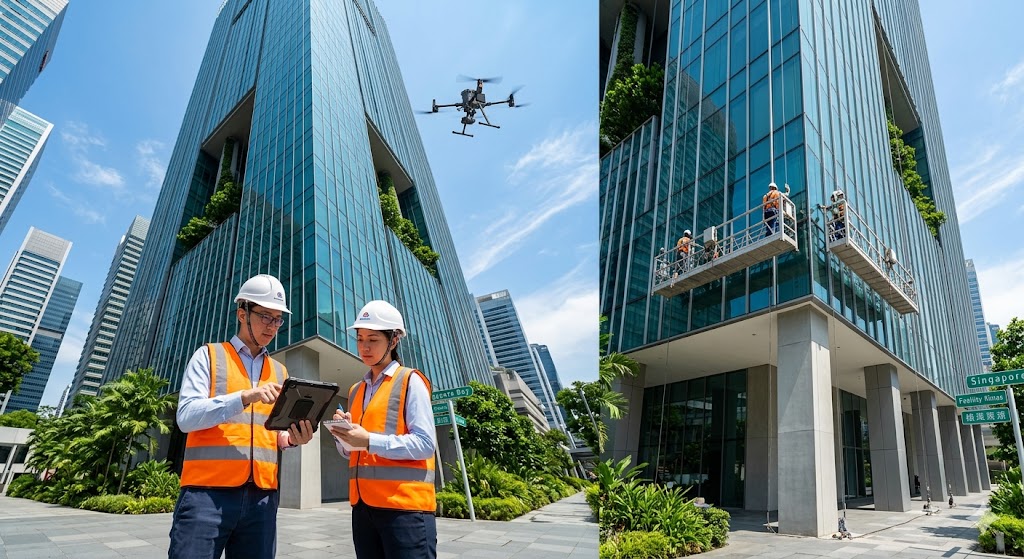
Preparing Your Building for Inspection: A Checklist for MCSTs
SEO Metadata
Focus Keyphrase: Preparing your building for inspection
SEO Title: Preparing Your Building for Inspection: A Checklist for MCSTs
Meta Description: Preparing your building for inspection is crucial. Discover the ultimate building inspection checklist for MCSTs and facility managers here.
Tags: preparing your building for inspection, building inspection checklist, MCSTs, facility managers, Singapore building compliance, property maintenance.
Introduction to Building Maintenance and Compliance
Preparing your building for inspection requires meticulous operational planning. Facility managers face numerous strict regulatory challenges every single year. Management Corporation Strata Title (MCST) bodies share this immense burden. Singapore enforces incredibly strict building maintenance regulations nationally. Consequently, a comprehensive building inspection checklist is absolutely vital. This guide provides an exhaustive compliance roadmap for professionals.
MCSTs must understand their legal obligations thoroughly and completely. Facility managers must execute these statutory duties flawlessly. Regular maintenance enhances overall property value substantially over time. Furthermore, tropical climates accelerate building wear and tear significantly.1 High humidity and intense rain degrade building materials constantly.1 Intense sunlight causes structural degradation and severe water damage.1 Therefore, a proactive facility management approach is an absolute necessity. Preparing your building for inspection prevents highly costly emergency repairs.
Legal Framework Governing MCST Operations
The Building Maintenance and Strata Management Act governs these estates. This legislation defines the roles of MCSTs and facility managers. Preparing your building for inspection requires understanding this legal framework.
Defining Common Property
The Act defines common property very specifically and clearly.2 Common property includes land not comprised in any individual lot.2 It includes areas enjoyed by occupiers of multiple strata lots.2 Importantly, pipes, wires, cables, and ducts are common property.2 However, false ceilings are explicitly excluded from this definition.2 MCSTs must manage common expenses related to this shared property.2 A management corporation relies on its established management fund.3 They also utilize a sinking fund for major replacements.3 Preparing your building for inspection involves allocating these funds wisely.
Statutory Duties and Liabilities
Section 29(1)(b) dictates the maintenance of common property strictly.4 MCSTs must keep common property in good, serviceable repair.4 However, the law does not impose absolute strict liability.4 Justice Andre Maniam clarified this in a recent High Court case.4 The case involved a leaking communal pipe causing property damage.4 The mere fact that a pipe leaked is not enough.4 The MCST must have breached its statutory duty of care.4 If the MCST acted reasonably, it avoids legal liability.4 Therefore, routine inspections demonstrate this required reasonable standard of care.4
Sometimes, MCSTs wish to permanently discard old common property.3 For example, they might remove a central air-conditioning system.3 The legislative framework regarding discarding property is somewhat unclear currently.3 Section 29(1)(d) does not clearly confer disposal powers.3 Facility managers must consult legal advisors before discarding major systems.3
Strata Management Administrative Fees
MCSTs must manage administrative applications with the regulatory authorities. The Building and Construction Authority provides strata management guides.5 These guides highlight good practices for daily estate management.5 Facility managers use the BMSM Portal for these applications.5 Preparing your building for inspection involves administrative financial planning.
| Application Type | Development Category | Statutory Fee |
| Share Value Allocation | Single-use development | $20 per unit 5 |
| Share Value Allocation | Mixed-use development | $40 per unit 5 |
| Minimum Fee Limit | Single-use development | $3,000 minimum 5 |
| By-laws Lodgment | Mixed-use development | $1,000 per application 6 |
| By-laws Lodgment | Other developments | $500 per application 6 |
BCA Periodic Structural Inspection (PSI)
Structural integrity forms the ultimate foundation of building safety. The Building and Construction Authority regulates this aspect strictly. The Periodic Structural Inspection detects severe structural flaws early. Preparing your building for inspection involves tracking these PSI schedules. A proper building inspection checklist prioritizes structural integrity above all.
PSI Frequency and Applicability
PSI frequency depends entirely on the building’s specific intended usage. Non-residential buildings undergo PSI once every five years.7 Residential buildings undergo PSI once every ten years.7 Buildings become subject to PSI from their thirteenth year.8 Facility managers must monitor these statutory timelines very closely.
Recent regulatory updates include permanently moored floating structures now.9 Specific commercial fish farms now require approved structural plans.9 Jetties and wharves received inspection notices starting December 2024.9 Bridges and floating structures receive notices from March 2025.9 However, utility bridges carrying only mechanical services remain exempt.9 Underground culverts and retaining walls are currently excluded entirely.9
Appointing a Professional Engineer
Upon receiving a PSI notice, MCSTs must act incredibly swiftly. Building owners must appoint a registered Professional Engineer promptly.7 The engineer must specialize specifically in civil engineering.8 They must hold a current, valid practicing certificate.8 Typical engineering fees range from S8,000.8 The exact fee depends on building size and structural complexity.8 Facility managers must verify the engineer’s registration number beforehand.8 Preparing your building for inspection requires engaging competent external professionals.
The Structural Inspection Process
The appointed engineer conducts a rigorous on-site visual inspection.8 They assess all accessible structural elements comprehensively and systematically.8 They take precise measurements and detailed reference photographs.8 If necessary, the engineer specifies further intrusive diagnostic investigations.8 This includes concrete core tests or instrumented structural monitoring.8
Owners must provide original as-built structural layout plans promptly.9 They must supply the building’s complete, detailed maintenance history.9 Information regarding unauthorized structural alterations is absolutely vital here.9 Previous periodic inspection reports must also be surrendered immediately.9 Owners must provide safe access to all hidden structures.10 This might require removing false ceilings or architectural claddings.10 Furthermore, owners must provide necessary access equipment like ladders.10
Subsequently, the engineer submits the final inspection report.7 If structural repairs are needed, the owner instructs a contractor.8 The engineer must verify the structural rectification works thoroughly.8 If building units are tenanted, scheduling becomes incredibly complex.9 In such cases, owners can formally request time extensions.9 They must state highly valid logistical reasons for these delays.9
BCA Periodic Facade Inspection (PFI)
Singapore features a highly dense and aging urban landscape. Falling building facades pose catastrophic risks to general public safety. Historically, Singapore recorded over twenty fallen facade incidents yearly.11 Consequently, BCA introduced the Periodic Facade Inspection regime recently.11 The PFI regime officially commenced on January 1, 2022.11 Preparing your building for inspection demands strict PFI compliance.
PFI Criteria and Regulatory Deadlines
The PFI regime applies to older, taller urban buildings. Buildings over twenty years old require these facade inspections.11 The building must also exceed thirteen meters in height.11 Inspections must occur once every seven years strictly.11 Landed residential houses are generally exempted from these rules.12 Temporary buildings are also excluded from the PFI regime.11 If a building fails these criteria, PFI is omitted.11 A building inspection checklist must reflect these specific age criteria.
Sometimes, owners plan to demolish their buildings very soon. They can write to BCA to request an inspection exemption.11 If owners are selling the building, PFI is still required.11 The statutory duty to repair defects remains with the owner.11 However, buyers can agree to assume this legal liability formally.11
Competent Persons and Facade Inspectors
Building owners must appoint a Competent Person within two months.11 A Competent Person is a Professional Engineer or Registered Architect.11 They must pass the Certificate in Facade Inspection course.11 The Competent Person remains ultimately responsible for the entire inspection.11 They must not possess financial interests in the building.11 They must formulate safe inspection methodologies and comprehensive risk assessments.11
A Facade Inspector may assist the Competent Person on-site.11 The inspector works under the Competent Person’s direct supervision.11 They must follow the provided instructions and checklists exactly.11 The inspector maintains a physical presence during all checks.11 They immediately report unsafe defects to the Competent Person.11
Failing to appoint a Competent Person invites severe penalties. Owners face fines up to twenty thousand dollars.11 If a Competent Person fails their duties, fines escalate significantly. They face massive fines up to fifty thousand dollars.11 Preparing your building for inspection requires highly competent personnel. Owners can change their Competent Person if problems arise.11 They must notify BCA within seven days of the change.11
The PFI Methodological Process
The PFI process involves extremely thorough examination methodologies. First, a complete visual inspection is strictly required.11 This covers all elevations from available ground vantage points.11 Second, a close-range inspection is completely mandatory.11 This close-range check must cover ten percent of each elevation.11 It involves tactile assessment using physical probing tools.11 Inspectors check for delamination, cracking, and structural hollowness.11 They utilize tapping rods, mallets, and scanning equipment.11
If widespread severe defects exist, full investigations are required.11 The Competent Person must apply to BCA for full investigations.11 They submit an interim report detailing the proposed methodology.11 This might involve exposing concealed brackets or removing panels.11 On-site sealant pull-out tests evaluate material adhesion strength.11
Drone Usage in Facade Inspections
BCA allows advanced drone technology for visual facade inspections.11 Unmanned Aircraft Systems offer highly efficient visual data collection.11 However, the Competent Person must use accredited drone service providers.11 The Competent Person must notify the Commissioner of Building Control.11 Drone operations must strictly adhere to TR 78:2020 standards.11
Furthermore, drones must never invade residential privacy during flights.11 Drones capture facade defects, not private interior residential footage.11 Operators must comply with the Personal Data Protection Act fully.11 They must provide at least three days of advance notice.11 Preparing your building for inspection involves notifying residents early.
Common Facade Defects and Safety Reporting
Facility managers must recognize common exterior structural defects. Common defects include bulging or severely cracked exterior plaster.13 Spalling concrete poses immediate and severe falling hazard risks.14 Delamination of cladding materials occurs due to poor adhesion.14 Corroded metal fixtures and stainless steel brackets fail unexpectedly.14 Damaged sealants allow destructive water ingress over long periods.13 Efflorescence on brick walls indicates trapped internal moisture.13 Cracked glass balustrades and dangling window frames are extremely dangerous.13
Any dangling elements require immediate emergency removal.13 Unsafe defects require immediate BCA notification within six hours.11 The Competent Person classifies the facade as safe or unsafe.11 The final report must be clear, professional, and conclusive.11 Generic, copied reports lacking technical analysis are strictly rejected.11 Preparing your building for inspection requires high-quality documentation.
Scaffold and Gondola Safety for Inspections
Facade inspections require safe vertical access for all personnel. Gondolas and suspended scaffolds provide this essential working access.15 The Ministry of Manpower regulates suspended scaffold safety strictly.15 Preparing your building for inspection involves securing safe vertical access.
Installation and Structural Design
An Approved Scaffold Contractor must erect the gondola systems.15 They must follow the WSH Scaffolds Regulations meticulously always.15 The outriggers require a proper Professional Engineer design plan.16 Installation must adhere strictly to the site-specific layout plan.16 Singapore Standard 598 provides the code of practice.16 Deviating from the layout plan invites massive safety disasters.16
Equipment Testing and Maintenance
An Authorised Examiner must inspect and test the gondola.15 They issue an Authorised Examiner certificate before operational use.15 The drive mechanisms require deep servicing every twelve months.17 Personnel work platforms require load tests every six months.18 Material platforms require load tests every twelve months.18 Equipment records must be kept for every single winch.17
Relocating gondolas across facades creates massive failure risk opportunities.15 Every relocation tests the integrity of the anchorage system.15 Consequently, fall protection protocols are absolutely critical during inspections.15 Working at height requires extreme safety precautions and harnesses.11 Facility managers must verify all scaffold contractor certifications beforehand. A robust building inspection checklist includes scaffold safety verification.
SCDF Fire Certificate and Safety Requirements
Fire safety is paramount in dense urban living environments. The Singapore Civil Defence Force regulates fire safety rigorously. A valid Fire Certificate proves complete fire system compliance. Preparing your building for inspection involves strict fire safety protocols.
Applicability of Fire Certificates
Under the Fire Safety Act, many buildings require certificates.19 Public buildings with over two hundred occupants require certification.19 Industrial buildings with over one thousand occupants require certification.19 Industrial buildings exceeding five thousand square meters require certificates.19 Industrial buildings exceeding twenty-four meters in height require certificates.19
Private residential buildings exceeding twenty-four meters require certification.19 This applies if they possess automatic fire alarm systems.19 Wet riser systems also trigger the Fire Certificate requirement.19 Hospitals universally require a valid Fire Certificate without exception.19 Foreign dormitories with large occupant loads also require certification.19 Engineered timber buildings need certificates if utilizing automatic systems.19 Fully automated mechanized car parks also require fire certificates.19 This applies if their volume exceeds 1400 cubic meters.19
The SCDF Inspection Methodology
To maintain fire protection integrity, buildings undergo rigorous inspections. SCDF inspects emergency power supplies and atrium smoke control systems.19 They test voice communication systems and basement mechanical ventilation.19 The site inspection occurs in three distinct, rigorous stages.19
First, systems operate under a simulated fire alarm activation.19 Second, systems operate using a secondary generator power supply.19 Third, inspectors test individual fire protection installations throughout buildings.19 If non-compliances emerge, owners must rectify them immediately.19 Failure to renew certificates leads to severe criminal prosecution.19 SCDF can revoke certificates for misrepresentations or hazard increases.19
The Three-Year Regime Transition
Historically, SCDF required annual Fire Certificate renewals from owners. However, a major regulatory shift is rapidly approaching Singapore. SCDF is introducing a three-year Fire Certificate validity regime.19 This new regime commences officially on April 1, 2026.19 This transition aims to reduce regulatory compliance costs significantly.19
For certificates starting after April 2026, validity spans 36 months.19 Application fees are only payable once every three years.19 However, strict annual compliance checks remain completely mandatory still. Building owners must submit annual FC Forms to SCDF.21 The first annual form is due by May 2027.21 The second annual form is due by May 2028.21 Professional Engineer inspections must still occur every single year.21 SCDF sends reminder notices four months before official deadlines.21 Preparing your building for inspection requires mastering this transition.
Common Fire Safety Failures and Penalties
SCDF inspections are notoriously stringent and highly detailed operations. Facility managers must address common non-compliance issues proactively always.23 Blocked emergency exits are severe and common fire hazards.23 Locked exit doors trap occupants during critical fire emergencies.23 Expired fire extinguishers result in immediate inspection audit failures.23 Poorly maintained sprinkler systems compromise entire building safety protocols.23 Missing fire safety signage confuses occupants during chaotic evacuations.23
Furthermore, unauthorized structural platforms constitute severe building safety violations.24 A Kranji warehouse faced seven severe fire safety violations.24 They built an unauthorized steel platform illegally without approval.24 They suffered from faulty exit signs and obstructed doors.24 Consequently, they experienced three separate accidental fires recently.24
Violations incur massive fines up to ten thousand dollars.19 Imprisonment for up to six months is also possible.19 The Building and Construction Authority ordered the warehouse closed.24 MCSTs must maintain all emergency power supply systems flawlessly.19 Fire command centers must remain perfectly operational and accessible.19
Fire Safety Managers and Audits
Fire Safety Managers play a critical role in compliance. They must conduct annual fire drills and evacuation exercises.25 They formulate the essential in-house Emergency Response Plan.25 SCDF enforcement statistics show many compliance failures historically.26 During 2019, SCDF issued over a thousand abatement notices.26 Notice of Fire Safety Offence figures reached similar heights.26
Qualified Persons must endorse fire safety plans properly.27 Missing endorsements cause severe delays during SCDF safety audits.27 The Fire Code edition must be stated on plans.27 SCDF issued the fifth batch of Fire Code amendments.28 A six-month grace period applies to these new amendments.28 Qualified Persons must provide URA clearance letters during submissions.28 Preparing your building for inspection requires updated Fire Codes.
EMA Electrical Systems and LEW Inspections
Electrical failures cause catastrophic fires and prolonged operational downtime. The Energy Market Authority oversees national electrical safety regulations. Preparing your building for inspection requires engaging licensed professionals. A building inspection checklist must prioritize electrical condition monitoring.
Licensed Electrical Workers (LEW)
Only a Licensed Electrical Worker can install or test systems.29 LEWs hold immense legal authority from the Energy Market Authority.29 They ensure national electrical safety standards are strictly upheld.29 There are three distinct classes of LEW operational licenses.29 Preparing your building for inspection requires hiring the correct grade.
| LEW License Class | Maximum Approved Load | Voltage Level |
| Grade 7 Electrician | Not exceeding 45kVA 31 | 1,000 volts and below 31 |
| Grade 8 Technician | Up to 500kVA (Operation) 31 | 1,000 volts and below 31 |
| Grade 9 Engineer | No limit 31 | Subject to conditions 31 |
Grade 7 Electricians handle simple home repairs and shops.30 Grade 8 Technicians service offices and standard commercial spaces.30 Grade 9 Engineers manage large buildings, factories, and projects.30 Non-domestic installations exceeding 45kVA require an electrical installation license.31 Installations used in hazardous trades always require this license.31 Facility managers must appoint an LEW to manage installations.31 The LEW submits license applications via the ELISE portal.31
Electrical Inspection Frequencies
Inspection frequencies vary based on the specific installation type.
| Installation Type | Required Inspection Frequency |
| Trade fairs and festive lightings | Daily 32 |
| Construction worksites | At least once per month 32 |
| Multi-tenanted buildings and condos | At least once in six months 32 |
| High voltage installations (6.6kV+) | At least once a year 32 |
| Other licensed installations | Annually before license renewal 32 |
For condominiums, communal electrical services require extremely frequent monitoring.32 Risers, lightings, and socket-outlets must be inspected bi-annually.32 This prevents electrical dangers to the general public safely.32
Exposed junction boxes pose significant safety risks universally everywhere.35 A resident once complained about exposed boxes in Bishan.35 The EMA requires all operational junction boxes properly covered.35 Loose covers indicate poor maintenance practices over long periods.35 Therefore, MCSTs must replace flimsy covers on electrical boxes.35 Preparing your building for inspection resolves these public hazards.
Common Electrical Failures and Condition Monitoring
Facility managers must watch for dangerous hidden compliance gaps.36 Overloaded circuit breakers are incredibly common severe electrical violations.37 Outdated wiring components cannot support modern heavy power loads.37 Improper wire sizing leads directly to massive short circuits.37 Missing Ground Fault Circuit Interrupters cause catastrophic electrocution failures.37 Exposed wiring remains a clear and highly dangerous violation.37 Loose connections degrade further due to continuous thermal cycling.38
Consequently, predictive condition monitoring prevents unplanned massive electrical downtime.39 Continuous condition monitoring utilizes permanent sensors tracking voltage fluctuations.39 Periodic condition monitoring uses portable instruments during scheduled inspections.39 Infrared thermography finds hidden heat and dangerous electrical resistance.39
However, thermography alone cannot replace comprehensive physical visual inspections.40 Thermography misses early-stage electrical arcing and subtle carbon tracking.40 Legacy systems often lack proper equipment-grounding conductor wires completely.36 Weak grounding connections break easily under very light tension.36 OSHA violations occur when workers skip proper lockout/tagout steps.36 Untrained staff without safety certifications create massive legal liabilities.36 Therefore, preparing your building for inspection requires comprehensive electrical audits.
PUB Water Storage Tank Certifications
Clean drinking water represents a fundamental public health requirement. The Public Utilities Board regulates water storage extremely heavily. Preparing your building for inspection involves strict water hygiene. MCSTs must secure their water service installations properly always.41 A building inspection checklist must include water tank maintenance.
Mandatory Annual Certification
A Licensed Plumber must inspect potable tanks annually strictly.41 This mandatory certification occurs strictly every twelve months.41 Landed residential properties with sub-meters are generally exempted.41 However, landed owners should still engage plumbers for cleaning.41
For commercial buildings, the plumber cleans and disinfects tanks.41 Water samples must go to a SINGLAS-accredited laboratory.41 The laboratory performs strict chemical and bacteriological water examinations.41 They test for turbidity, specific conductivity, and pH levels.41 They strictly monitor total colony counts and E. Coli.41 The tank must be completely free from dangerous contamination.41 Furthermore, the plumber ensures no leakage exists anywhere.41
Administrative Deadlines and Penalties
MCSTs are legally responsible for monitoring annual certification deadlines.41 They must not simply wait for PUB reminder emails.41 Late certification is a serious criminal regulatory offense.41 Fines for non-compliance can reach ten thousand dollars maximum.41 Imprisonment for up to twelve months is also possible.41 PUB contractors conduct random, unannounced joint site inspections.41 Smart City Integrated Consultancy conducts these spot checks frequently.41 Building owners must cooperate fully with these random checks.41
Preventing Severe Water Contamination
Water contamination occurs through various preventable physical tank vulnerabilities.42 Sediment accumulation at the tank bottom breeds dangerous bacteria.42 Outdated filtration technologies sometimes miss dangerous Cryptosporidium protozoan pathogens.42 Damaged ventilation screens allow insects and debris inside easily.43 Missing roof hatches compromise the entire municipal water supply.45
Animal intrusions cause massive disease outbreaks in residential communities.43 Raccoons easily enter unused industrial water tanks through gaps.44 Bats and birds leave droppings inside the water tanks.45 This causes massive boil water orders for entire neighborhoods.43 Furthermore, large debris ruins expensive float switches and pumps.44
Therefore, comprehensive visual inspections are absolutely crucial for safety.45 Inspectors must recognize improperly maintained vents and structural defects.45 Metal storage facilities eventually require sandblasting and protective painting.45 Some facilities utilize specialized remote-operated divers for tank inspections.42 A building inspection checklist must cover these vulnerability points. Preparing your building for inspection secures the water supply.
NEA Cooling Tower and Water Fountain Protocols
Cooling towers are essential for central building air conditioning. However, they present massive biological risks to public health. The National Environment Agency enforces strict cooling tower regulations.47 Preparing your building for inspection involves meticulous microbial control. Facility managers must manage water quality perfectly every day.
Maintenance and Cleaning Regulations
Cooling towers must remain in good structural repair always.47 They must be completely free of biological algae growths.47 Rust, scale, and foreign matter must be eliminated quickly.47 Thorough cleaning and chemical disinfection must occur bi-annually.47 The system must use approved PUB water mains exclusively.47 Drift eliminators must effectively minimize dangerous water aerosol release.47
If a tower remains unused, it must be drained.47 It must be kept completely dry during dormant periods.47 If unused for five days, thorough disinfection is mandatory.47 This disinfection must happen before restarting the cooling system.47 A building inspection checklist must track these dormant periods.
Microbial Testing Frequencies
Facility managers must arrange regular laboratory water sampling schedules.47
| Test Type | Maximum Allowed Limit | Required Frequency |
| Standard Plate Count | 100,000 CFU per ml | At least once a month 47 |
| Legionella Bacteria | 10 CFU per ml | At least once every 3 months 47 |
Weekly physical inspections check for dangerous organic fouling buildup.47 Records of all tests must be kept meticulously updated.47 Public health officers inspect these records during site visits.47 Non-compliance incurs a five thousand-dollar fine for first offenses.47 Subsequent offenses incur massive fines reaching ten thousand dollars.47
Legionella outbreaks cause severe respiratory illnesses in human populations.48 Therefore, Eurofins and other labs test these critical samples.48 Some buildings recycle air-conditioning condensate water for cooling towers.49 However, this condensate requires extreme filtration and ozone disinfection.49 Preparing your building for inspection requires managing these water systems.
BCA Lift and Escalator Permit to Operate (PTO)
Vertical transportation systems are critical in high-rise building environments. Passenger lifts must operate safely and entirely reliably always.50 The BCA regulates the annual Permit to Operate strictly.51 Preparing your building for inspection requires timely lift renewals. MCSTs depend entirely on functional elevators for resident satisfaction.
The PTO Renewal Process
A valid PTO proves all lift fail-safes function correctly.51 Emergency brakes and automatic door sensors undergo rigorous testing.51 Facility managers manage renewals via the digital LEAP portal.52 They log in using their secure Corppass business credentials.51 Owners can commence renewals three months before certificate expiry.52
A Specialist Professional Engineer conducts the required physical inspection.51 The engineer tests the various operations systems of lifts.50 The engineer uploads the final test results to LEAP.51 If rectifications are needed, mechanical contractors must execute them.51 BCA issues the final digital safety permit upon compliance.51 Subsequently, the physical certification sticker must be displayed clearly.51 It must remain visible inside the lift cabin constantly.51 Preparing your building for inspection prevents dangerous lift breakdowns.
Playground Safety and SS 457 Standards
Many residential condominiums feature outdoor communal playground equipment areas. MCSTs must ensure these play areas remain entirely safe.53 Playgrounds in Singapore adhere to the SS 457:2017 standard.54 This standard replaced older playground regulations a few years ago.55 Preparing your building for inspection involves checking play equipment.
SS 457 outlines general requirements for playground equipment surfacing.54 The standard heavily references the American ASTM F1487-17 specification.55 Equipment must feature proper impact attenuation surface rubber systems.57 Playgrounds exclude equipment intended for users over twelve years.57 Maximum equipment heights must not exceed strict statutory limits.54
Facility managers must assign dedicated personnel for routine inspections.54 They must check for dangerous mechanical wear and vandalism.54 Entrapment probes check for dangerous gaps in playground structures.57 Damaged components must be replaced immediately to prevent injuries.54 A building inspection checklist must detail these playground safety protocols.
General Facility Management Checklist
A building inspection checklist streamlines operations for facility managers. Systematic approaches prevent overlapping deadlines and massive compliance failures. This structured checklist covers essential building maintenance operational areas. Preparing your building for inspection requires highly organized daily routines.
| Area of Maintenance | Specific Operational Task | Recommended Frequency | Responsible Party |
| Lighting Systems | Test emergency bulbs and exit signs 58 | Quarterly 58 | Facility Manager |
| Plumbing Systems | Check leaks, flush unused fixtures 58 | Monthly 58 | Maintenance Team |
| Fire Safety Gear | Inspect extinguishers, test alarm panels 58 | Monthly/Annually 58 | Fire Safety Inspector |
| Security Cameras | Test cameras, verify access controls 58 | Monthly 58 | Security Specialist |
| Parking Lot Area | Inspect lighting, repaint line markings 58 | Annually 58 | Ground Crew |
| Exterior Grounds | Trim shrubs away from building entrances 58 | Bi-Weekly 58 | Ground Crew |
Consistent upkeep preserves aesthetic and structural building integrity effectively.1 It prevents small issues from escalating into highly costly repairs.1 Clean interiors create positive impressions for residents and tenants.59 Faulty electrical wiring disrupts daily commercial operations severely everywhere.59 Air conditioning systems are incredibly crucial for tropical comfort.59 Therefore, checklists enforce necessary discipline among maintenance staff daily.58 Preparing your building for inspection starts with these daily tasks.
Conclusion
Preparing your building for inspection is a massive continuous responsibility. Facility managers must navigate a highly complex regulatory web. MCSTs must fulfill their statutory duties under the BMSMA. Building compliance involves coordinating multiple specialized engineering professionals constantly. A comprehensive building inspection checklist prevents severe operational disasters.
Structural integrity requires timely PSI reporting every few years. Facade safety relies on rigorous PFI visual and close-range checks. Fire safety demands adherence to SCDF’s evolving certification regimes. Electrical reliability depends on licensed LEW interventions and thermography. Water hygiene relies on strict PUB and NEA testing. Each element intertwines to ensure absolute holistic public safety.
Consequently, facility managers must maintain immaculate operational records always. Missing a deadline triggers severe financial and legal criminal penalties. Proactive condition monitoring is cheaper than reactive emergency repairs. MCSTs must allocate sufficient sinking funds for these scheduled inspections. Ultimately, a well-maintained building protects lives, assets, and reputations. Utilizing this comprehensive building inspection checklist guarantees absolute compliance. Preparing your building for inspection ensures peace of mind permanently.
Works cited
- Building Maintenance Checklist for Property Managers in Singapore – Athena Team, accessed May 21, 2026, https://athenacleaningservices.sg/building-maintenance-checklist/
- Building (Strata Management) Act 2004 – Singapore Statutes Online, accessed May 21, 2026, https://sso.agc.gov.sg/Act/BSMA2004
- DISPOSAL OF COMMON PROPERTY IN STRATA SCHEMES – NUS Law, accessed May 21, 2026, https://law.nus.edu.sg/sjls/wp-content/uploads/sites/14/2024/07/2254-2018-sjls-sep-85.pdf
- [2021] SGHC 260 – :: eLitigation ::, accessed May 21, 2026, https://www.elitigation.sg/gdviewer/s/2021_SGHC_260
- MCST / Strata Management | Building and Construction Authority, accessed May 21, 2026, https://www1.bca.gov.sg/home-and-building-owners/condo-strata/mcst-strata-management/
- BUILDING MAINTENANCE (STRATA MANAGEMENT) REGULATIONS 2005, accessed May 21, 2026, https://www.bca.gov.sg/publications/BMSM/BM_strata_mgt_reg.html
- Periodic Structural Inspection (PSI) | Building and Construction …, accessed May 21, 2026, https://www1.bca.gov.sg/safety-and-standards/periodic-building-inspections/periodic-structural-inspection/
- BCA Periodic Structural Inspection (PSI) Singapore Guide – CVC Engineers, accessed May 21, 2026, https://www.cvcengineers.com/post/bca-periodic-structural-inspection-singapore
- What is BCA Periodic Structural Inspection? A Beginner’s Guide, accessed May 21, 2026, https://structures.com.sg/bca-periodic-structural-inspection-a-beginners-guide/
- BUILDING OWNER’S GUIDE, accessed May 21, 2026, https://isomer-user-content.by.gov.sg/338/4afd5888-86c9-4c29-863a-598f42888be5/frequently-asked-questions-for-building-owner-(sep-2024).pdf
- Periodic Facade Inspection (PFI) – Building and Construction Authority, accessed May 21, 2026, https://www1.bca.gov.sg/safety-and-standards/periodic-building-inspections/periodic-facade-inspection/
- Improving facade safety through Periodic Facade Inspection (PFI) Regime, accessed May 21, 2026, https://www1.bca.gov.sg/resources/past-articles/improving-facade-safety-through-periodic-facade-inspection-pfi-regime/
- Guidelines on Periodic Facade Inspection, accessed May 21, 2026, https://isomer-user-content.by.gov.sg/338/e7f2efc1-36fe-4ed3-a563-ae69d04a23eb/pfi-guidelines-for-competent-person.pdf
- BCA Periodic Facade Inspection CP services, accessed May 21, 2026, https://www.aectechnicalsg.com/bca_periodic_facade_inspection/
- Gondola Safety Singapore: Facade Inspection Guide – Facade …, accessed May 21, 2026, https://facadeinspection.com.sg/gondola-safety-singapore-facade-inspection-guide/
- Circular: Safe design and installation of outriggers or overhead supports for suspended scaffolds – MOM, accessed May 21, 2026, https://www.mom.gov.sg/-/media/mom/documents/safety-health/circulars/2025/circular-20250110-safe-design-and-installation-of-outriggers-or-overhead-supports.pdf
- Workplace Safety and Health (Scaffolds) Regulations 2011 – Singapore Statutes Online, accessed May 21, 2026, https://sso.agc.gov.sg/SL/WSHA2006-S518-2011?DocDate=20110909&ProvIds=P1V-
- EXAMINATION AND TESTING REQUIREMENTS FOR STATUTORY LIFTING EQUIPMENT – MOM, accessed May 21, 2026, https://www.mom.gov.sg/-/media/mom/documents/safety-health/circulars/2020/circular-20200224-examination-and-testing-requirements-for-le.pdf?la=en&hash=90B139A1035F09AA388F9FB44AD24E48
- Fire Certificate – Singapore – SCDF, accessed May 21, 2026, https://www.scdf.gov.sg/fire-safety-services-listing/permits-and-certifications/fire-certificate
- Fire Safety Certificate & Temporary Fire Permit – Singapore – SCDF, accessed May 21, 2026, https://www.scdf.gov.sg/fire-safety-services-listing/plans-submission-process/fire-safety-certificate-temporary-fire-permit
- Fire Certificate | Licence & Accreditation – GoBusiness Licensing, accessed May 21, 2026, https://licensing.gobusiness.gov.sg/licence-directory/scdf/fire-certificate
- SCDF – Introduction of a Three-year Fire Certificate (FC) Regime …, accessed May 21, 2026, https://www.scdf.gov.sg/docs/default-source/fire-safety-docs/permits-and-certification/introduction-of-three-year-fire-certificate-regime-from-1-april-2026.pdf?sfvrsn=e66df331_1
- Preparing for an SCDF Fire Safety Inspection: Tips for Success – National City Corporation, accessed May 21, 2026, https://nationalcitycorporation.sg/preparing-for-an-scdf-fire-safety-inspection-tips-for-success/
- Kranji fire: Facility cited 7 times for fire safety violations between 2018 and 2024, says SCDF, accessed May 21, 2026, https://www.straitstimes.com/singapore/kranji-warehouse-ravaged-by-fire-flouted-fire-safety-on-7-occasions
- Fire Safety Certificate Requirements Singapore | Sage Shield, accessed May 21, 2026, https://sageshield.com/fire-safety-certificate-requirements-singapore/
- FSM BRIEFING 2021 – Enforcement Statistics & Common Fire Safety Non-Compliances – SCDF, accessed May 21, 2026, https://www.scdf.gov.sg/docs/default-source/fire-safety-docs/fire-safety-manager-(fsm)/fsm-2021/fsm-briefing-2021—enforcement-statistics-and-common-fire-safety-non-compliances.pdf?sfvrsn=866a21e1_1
- Common Fire Safety Audit Findings | PDF – Scribd, accessed May 21, 2026, https://www.scribd.com/document/906958238/Common-audit-issues-IES-2025-For-Circulation
- SCDF – Singapore, accessed May 21, 2026, https://info.corenet.gov.sg/docs/default-source/scdf-circulars/circular-amendments-to-fire-code-2023—5th-batch-of-amendments.pdf?sfvrsn=8d510320_1
- Licensed Electrical Worker (LEW) Requirements in Singapore – I2R Consulting, accessed May 21, 2026, https://www.i2r.com.sg/the-complete-guide-to-licensed-electrical-worker-lew-requirements-in-singapore-certification-responsibilities-compliance/
- Electrical License in Singapore: Why It Matters for Installation & Maintenance Services, accessed May 21, 2026, https://www.tayengsvc.com/post/electrical-license-singapore-why-it-matters-for-installation-maintenance-services
- Electrical/Supply Installation Licences – Energy Market Authority, accessed May 21, 2026, https://www.ema.gov.sg/regulations-licences/licences/electrical-supply-installation-licences
- EMA | Electrical/Supply Installation: Inspection Requirements – Energy Market Authority, accessed May 21, 2026, https://www.ema.gov.sg/regulations-licences/licences/electrical-supply-installation-licences/inspection-requirements
- Maintenance of Electrical Systems – Licensed Electrical Workers Singapore | LC Engineering Services – 5W1H of Lew, accessed May 21, 2026, https://lew.com.sg/maintenance-of-electrical-systems/
- Handbook for – Application of Electrical Installation Licence – Energy Market Authority, accessed May 21, 2026, https://www.ema.gov.sg/content/dam/corporate/resources/educational-materials/handbook/handbook-pdfs/english/EMA-Resources-Educational-Materials-Handbook-Application-Electrical-Installation-Licence.pdf
- Operational junction boxes to be properly installed, covered – EMA, accessed May 21, 2026, https://www.ema.gov.sg/news-events/news/forum-replies/2012/operational-junction-boxes-to-be-properly-installed-covered
- Electrical Compliance Issues: Hidden Risks & Expert Solutions for 2025, accessed May 21, 2026, https://dominionelectric.com/electrical-compliance-issues/
- What Will Fail an Electrical Inspection?, accessed May 21, 2026, https://www.integraelectrical.co/blog/what-will-fail-an-electrical-inspection-
- Preventing Common Electrical Failures in Commercial Buildings – Oxmaint, accessed May 21, 2026, https://oxmaint.com/industries/property-management/electrical-system-common-failures-buildings
- Preventing Electrical Failures: Condition Monitoring Guide Singapore – I2R Consulting, accessed May 21, 2026, https://www.i2r.com.sg/preventing-electrical-failures-with-timely-condition-monitoring-and-electrical-maintenance-what-every-building-manager-should-know/
- 5 Common Electrical Inspection Mistakes and How to Avoid Them – IRISS, accessed May 21, 2026, https://iriss.com/discover/blog/5-common-electrical-inspection-mistakes-and-how-to-avoid-them/
- Water Storage Tanks | PUB, Singapore’s National Water Agency, accessed May 21, 2026, https://www.pub.gov.sg/Professionals/Requirements/Water-Supply-Services/Water-Storage-Tanks
- Preventing Tank Contamination | Water Contamination – MIDCO Diving & Marine Services, accessed May 21, 2026, https://midcodiving.com/preventing-tank-contamination-water-contamination/
- Microbial Contamination of Water Storage Tanks – PUB0172 | Missouri Department of Natural Resources, accessed May 21, 2026, https://dnr.mo.gov/document-search/microbial-contamination-water-storage-tanks-pub0172/pub0172
- Water Tank Inspections are Critical, accessed May 21, 2026, https://pttg.com/blogs/water-tank-inspections-are-critical.php
- Technical Guidance for Inspection of Water Storage by Divers – PUB2043 – | Missouri Department of Natural Resources, accessed May 21, 2026, https://dnr.mo.gov/print/document-search/pub2043
- Storage Tank Inspection and Maintenance – Illinois Environmental Protection Agency, accessed May 21, 2026, https://epa.illinois.gov/topics/drinking-water/field-operations/storage-tanks.html
- Environmental Public Health (Cooling Towers and Water Fountains …, accessed May 21, 2026, https://sso.agc.gov.sg/SL-Supp/S37-2001/Published/20020131?DocDate=20010122
- Treatment Water of Cooling Tower – Eurofins Singapore, accessed May 21, 2026, https://www.eurofins.sg/our-services/environment-testing/non-potable-water/treatment-water-of-cooling-tower/
- Technical Reference for Water Conservation in Cooling Towers – PUB, Singapore’s National Water Agency, accessed May 21, 2026, https://www.pub.gov.sg/-/media/Images/Feature/Content-Pages/Public/Singapore-Water-Loop/Water-Conversation/Resources-on-Water-Efficiency-Measures/TechnicalReference_WaterConservation_CoolingTowers.pdf
- Lift & Escalator Inspector Course – Temasek Polytechnic, accessed May 21, 2026, https://www.tp.edu.sg/schools-and-courses/adult-learners/all-courses/short-courses/lift-and-escalator-inspector-course.html
- Annual Lift Permit to Operate (PTO) Renewal in Singapore – BELIFT, accessed May 21, 2026, https://www.beliftsg.com/post/annual-lift-permit-to-operate-pto-renewal-in-singapore
- Application for permit to operate (PTO) – Building and Construction Authority, accessed May 21, 2026, https://www1.bca.gov.sg/safety-and-standards/lifts-escalators-and-mechanised-car-parking-systems/fixed-installations-legislations/application-for-permit-to-operate/
- How to Ensure Playground Safety: Tips for a Secure Play Environment – Retro Max, accessed May 21, 2026, https://www.retromax.asia/post/how-to-ensure-playground-safety-tips-for-a-secure-play-environment
- How to Ensure Your Playground Meets Singapore’s Safety Standards, accessed May 21, 2026, https://www.ulssg.com/post/how-to-ensure-your-playground-meets-singapore-s-safety-standards
- Specification for playground equipment for public use – Singapore Standards, accessed May 21, 2026, https://www.singaporestandardseshop.sg/Product/GetPdf?fileName=180620093026SS%20457-2017%20-%20Preview.pdf&pdtid=e550ae3f-1ebd-4607-acab-00a44f48e026
- SS 457-2017 – Preview PDF | PDF | Playground | Specification (Technical Standard) – Scribd, accessed May 21, 2026, https://www.scribd.com/document/467121026/SS-457-2017-Preview-pdf
- SS 457:2017 Specification for playground equipment for public use – Singapore Standards, accessed May 21, 2026, https://www.singaporestandardseshop.sg/Product/SSPdtDetail/e550ae3f-1ebd-4607-acab-00a44f48e026
- Stop Missing Crucial Tasks with This Facility Maintenance Checklist, accessed May 21, 2026, https://colepainting.com/stop-missing-crucial-tasks-with-this-facility-maintenance-checklist/
- Facility Maintenance 6-Point Checklist: Tips and Best Practices – Abacus Property, accessed May 21, 2026, https://www.abacusproperty.sg/post/facility-maintenance-checklist
Facilities Management Checklist: 14 Must-Have Items on Your List – FMX, accessed May 21, 2026, https://www.gofmx.com/blog/facilities-management-checklist/