





A Professional Engineer (PE) in Singapore is defined as an engineer licensed by the Professional Engineers Board (PEB) to legally perform and endorse professional engineering work within regulated disciplines. This designation is not honorary. It carries statutory authority under the Professional Engineers Act 1991, which governs who may legally practice engineering in Singapore. The Act covers four core branches: civil, mechanical, electrical, and chemical engineering. For property owners, developers, and contractors asking what is a professional engineer Singapore, the answer is clear: a PE is the only individual legally authorized to sign off on engineering submissions for regulated projects.
What are the qualifications and registration requirements for a Professional Engineer in Singapore?
Becoming a licensed PE in Singapore requires meeting four distinct requirements set by the PEB. These are not flexible guidelines. They are statutory conditions that every applicant must satisfy before receiving registration.
-
Approved engineering degree. Applicants must hold a recognized engineering degree from an institution accepted by PEB. Degrees from local universities such as the National University of Singapore (NUS) and Nanyang Technological University (NTU) are typically recognized, as are degrees from approved overseas institutions.
-
Minimum four years of practical experience. At least four years of relevant engineering experience is required after graduation. This experience must demonstrate progressive responsibility, not just task completion. PEB expects applicants to show they have exercised independent engineering judgment.
-
Written examinations. Applicants must pass the Fundamentals of Engineering Examination (FEE) and the Practice of Professional Engineering Examination (PPE). Alternatively, candidates with sufficient experience may qualify for an oral examination in place of the PPE. Both routes assess technical competence and professional understanding.
-
Professional interview. The professional interview is the final and most demanding step. PEB assessors evaluate engineering judgment, ethical reasoning, and professional accountability. Written exams test knowledge. The interview tests whether a candidate can apply that knowledge responsibly under real conditions.
Once all requirements are met and documents are submitted, practising certificate applications are processed within 30 working days. That timeline applies only after PEB receives a complete submission, so incomplete documentation is the most common cause of delays.
Pro Tip: Before submitting your PE application, have a senior registered PE review your experience log. PEB looks for evidence of independent decision-making, not just years of employment. A well-documented log of specific engineering decisions you made independently will strengthen your application significantly.

What legal obligations do Professional Engineers have under Singapore law?

The Professional Engineers Act 1991 creates binding obligations for both individuals and organizations. Registration with PEB is not optional for anyone carrying out professional engineering work in Singapore’s regulated branches.
Key legal obligations include:
- Individual registration. Every person performing professional engineering work in civil, electrical, mechanical, or chemical engineering must be registered with PEB and hold a valid practising certificate.
- Corporate licensing. The Act also regulates corporations and partnerships that supply professional engineering services. These entities must obtain separate licenses from PEB, independent of the individual registrations held by their engineers.
- Practising certificates. Practising certificates confirm ongoing eligibility to practice. They are renewed periodically, and lapsed certificates mean the engineer cannot legally endorse engineering documents until renewal is complete.
- Disciplinary framework. PEB holds authority to investigate complaints and impose sanctions. Failure to comply with the Act can result in disciplinary measures affecting both individual engineers and the firms they work for.
- Ethical standards. PEs are bound by a professional code of conduct. Breaches of ethics, not just technical failures, fall within PEB’s disciplinary scope.
“The Professional Engineers Act establishes a strict licensing framework not only for individuals but also for corporate entities providing engineering services, ensuring accountability and high standards industry-wide.”
This dual coverage of individuals and firms is significant. A business cannot avoid regulatory accountability by arguing that its engineers are registered while the firm itself is not licensed. Both must comply independently.
How can you verify the credentials of a Professional Engineer in Singapore?
Verification is not a formality. Engaging an unregistered engineer or the wrong class of engineer can delay project approvals or result in outright regulatory rejection. PEB provides official online directories that are the authoritative source for confirming an engineer’s legal standing.
The PEB directory system, current as of april 2026, lists:
- Registered professional engineers with valid practising certificates
- Licensed corporations and partnerships authorized to supply engineering services
- Registered foreign engineers approved for specific projects
- Specialist professional engineers with distinct registrations
Steps to verify a PE’s credentials:
- Visit the PEB official website and access the “Find a Professional Engineer” directory.
- Search by name or registration number to confirm current registration status.
- Check that the practising certificate is active, not lapsed or suspended.
- Confirm the engineering branch matches the scope of your project.
- For specialist work, verify the engineer holds specialist PE registration, not just general PE registration.
| Verification check | Why it matters |
|---|---|
| Active practising certificate | Confirms current legal authority to endorse documents |
| Correct engineering branch | Ensures the PE’s scope covers your project type |
| Specialist registration (if applicable) | Required for high-risk or specialized project endorsements |
| Corporate license (for firms) | Confirms the firm itself is authorized, not just its engineers |
Pro Tip: Always verify the PE’s credentials directly through PEB’s official directory before signing any engagement contract. Do not rely on a certificate copy provided by the engineer alone. Registration status can change between the date of the document and the date of your project.
For projects involving authority submissions to bodies such as BCA, URA, or LTA, the PE’s registration details will be scrutinized by the relevant authority. Any discrepancy will halt the submission process.
What are specialist Professional Engineers and how do they differ from general PEs?
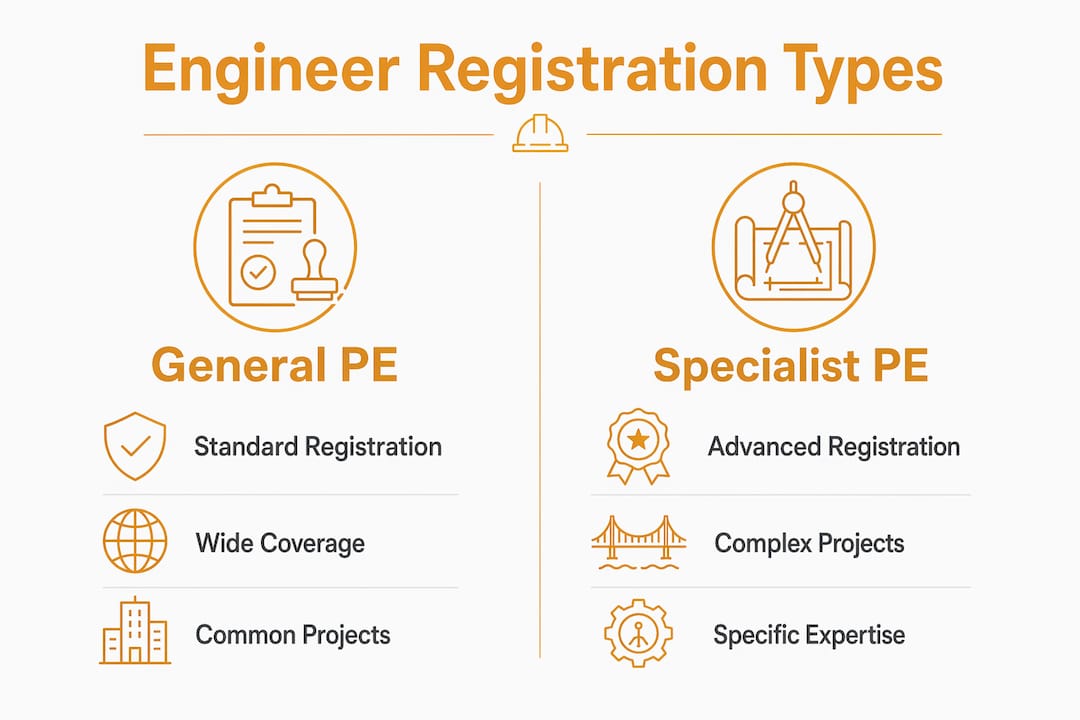
A specialist professional engineer holds a distinct registration that goes beyond standard PE registration. Specialist PE registration is governed by provisions under the Professional Engineers Act and is designed to recognize advanced expertise in specific engineering domains.
The difference between a general PE and a specialist PE is not simply a matter of experience level. It is a formal regulatory distinction with direct consequences for project compliance.
| Feature | General Professional Engineer | Specialist Professional Engineer |
|---|---|---|
| Registration basis | Standard PEB registration | Separate specialist registration under the Act |
| Scope of endorsement | Regulated engineering branches | Specific high-risk or specialized domains |
| Project applicability | Standard regulated projects | Projects requiring advanced or specialized expertise |
| Verification method | PEB general PE directory | PEB specialist PE directory |
Specialist PEs are required for projects where standard engineering registration does not cover the technical complexity or risk profile of the work. For project owners, engaging a general PE for work that legally requires a specialist PE is a compliance failure. The endorsement will not be accepted by the relevant authority.
Pro Tip: When scoping a new project, identify early whether specialist PE endorsement is required. Consult the relevant authority’s submission requirements before engaging any engineer. Discovering this requirement late in the project cycle causes costly delays and may require re-engagement of a different engineer.
Understanding the PE endorsement process in full, including the distinction between general and specialist registration, is one of the most practical steps a developer or contractor can take before project commencement.
Key takeaways
A Professional Engineer in Singapore is a licensed professional whose registration, practising certificate, and engineering branch must all be verified before engagement to avoid regulatory rejection and project delays.
| Point | Details |
|---|---|
| PE registration is statutory | Only PEB-registered engineers with valid practising certificates may legally endorse engineering work. |
| Four requirements for registration | Applicants need an approved degree, four years of experience, written exams, and a professional interview. |
| Corporate licensing is separate | Firms supplying engineering services must hold their own PEB license, independent of individual PE registrations. |
| Verification is mandatory | Use PEB’s official online directories to confirm registration status, branch, and certificate validity before engagement. |
| Specialist PEs are a distinct class | Projects requiring specialized expertise need specialist PE registration, not standard general PE registration. |
Why the professional interview is the real test of a PE
The written examinations for PE registration are demanding, but they are not the final word on a candidate’s readiness. The professional interview is where PEB makes its actual judgment. I have seen candidates with strong academic records and years of experience struggle in the interview because they could not articulate the reasoning behind their engineering decisions. PEB is not looking for someone who followed instructions well. They are looking for someone who understood why those instructions were correct and what they would do when the instructions ran out.
For businesses, this matters more than most realize. A registered PE has already passed a rigorous test of professional judgment. That is the assurance behind the endorsement. When you engage a PE for a project, you are not just hiring technical knowledge. You are engaging someone who has been formally assessed for their ability to make independent, ethical engineering decisions under pressure.
The verification step is where I see businesses make the most avoidable mistakes. Assuming a PE’s credentials are current because they were valid six months ago is a real risk. Practising certificates lapse. Registration can be suspended. A quick check through the PEB directory before any engagement takes minutes and eliminates a category of risk that has derailed more than a few projects I am aware of.
The benefits of PE endorsement extend well beyond regulatory compliance. A properly engaged PE adds defensible technical authority to your project documentation. That matters when authorities review submissions and when disputes arise.
— Aman
How Stellar Structures supports your engineering compliance needs

Stellar Structures provides certified professional engineers for civil and structural design checks across residential, commercial, and industrial projects in Singapore. The firm’s engineers hold current PEB registration and practising certificates, covering the full scope of regulated engineering branches. Stellar Structures also manages authority submission services for BCA, URA, HDB, JTC, SCDF, PUB, LTA, NEA, and NParks, handling the documentation and endorsement requirements that projects in Singapore must satisfy. If your project requires a licensed PE for design endorsement or regulatory submission, contact Stellar Structures to confirm the right scope of engagement from the outset.
FAQ
What is a Professional Engineer in Singapore?
A Professional Engineer in Singapore is an engineer registered with the Professional Engineers Board (PEB) and authorized under the Professional Engineers Act 1991 to perform and endorse professional engineering work in regulated disciplines including civil, mechanical, electrical, and chemical engineering.
How long does PE registration take in Singapore?
Once a complete application is submitted to PEB, practising certificate applications are processed within 30 working days. Incomplete submissions reset this timeline, so document accuracy is critical.
Can a company practice professional engineering without a licensed PE?
No. The Professional Engineers Act 1991 requires corporations and partnerships supplying professional engineering services to hold a separate PEB license, independent of any individual PE registrations held by their staff.
What is the difference between a general PE and a specialist PE in Singapore?
A general PE holds standard PEB registration covering regulated engineering branches. A specialist PE holds a distinct registration under the Professional Engineers Act for advanced expertise in specific domains, required for high-risk or specialized project endorsements.
How do I verify a Professional Engineer’s credentials in Singapore?
Use PEB’s official online directory at the PEB website to search by name or registration number. Confirm the practising certificate is active and that the engineer’s registered branch matches your project’s engineering scope.
Recommended
- The Ultimate Guide: Qualified Person (QP) Supervision in SG
- The Professional Engineer in Singapore: A Definitive Guide to Endorsement, Responsibilities, and Liabilities
- Benefits of Obtaining Professional Engineer Endorsement for Engineers in Singapore – Stellar Structures
- Why Engineering Is One of the Most In-Demand Professions in Singapore – Stellar Structures