




Imagine a world where devices are free from the shackles of cables, much like a bird set loose from its cage, soaring into the sky without any hindrance.
Wireless power transfer, a technology that has been years in the making, is finally taking shape, with the potential to revolutionise the way devices are charged.
Like ripples on a pond, the impact of this technology will be felt across various industries, from consumer electronics to healthcare, and even automotive.
As the world stands at the cusp of this revolution, a question lingers – what does the future hold for wireless power transfer, and how will it transform daily lives?
With companies like WiTricity and Belkin already making waves in the market, it’s clear that the concept of wireless power transfer is rapidly becoming a commercial reality.
Understanding Wireless Power Transfer Technology And Its Historical Background
Wireless power transfer technology has been gaining momentum in recent years, with its ability to charge devices without the need for cables or wires, making it a game-changer in the world of technology.
This innovative technology has a rich historical background, dating back to the 19th century when Nikola Tesla first experimented with wireless power transmission.
The concept has since evolved, with various companies and researchers working to develop more efficient and practical wireless power transfer systems.
As the world stands at the threshold of a wire-free revolution, the question on everyone’s mind is: what does the future hold for this groundbreaking technology?
- Wireless power transfer is poised to transform the way devices are charged, making it faster, safer, and more convenient.
- Inductive coupling and resonant coupling are two of the most common methods used in wireless power transfer, each with its own advantages and limitations.
- The potential applications of wireless power transfer technology extend far beyond consumer electronics, with possibilities in medical implants, electric vehicles, and even space exploration.
Exploring Near-Field And Far-Field Techniques For Efficient Energy Transfer

The complexities of energy transfer can be navigated by considering the most efficient methods to power devices.
Near-field and far-field techniques have distinct advantages and disadvantages, with near-field techniques offering high efficiency over short distances, while far-field techniques provide more flexibility and longer range capabilities.
Understanding the fundamentals of each method is crucial for optimising energy transfer in various applications, from consumer electronics to industrial systems.
By grasping the principles of near-field and far-field techniques, it’s possible to design and implement efficient energy transfer systems.
Inductive Coupling And Resonant Inductive Coupling For Wireless Power Transmission
A team of engineers successfully implemented inductive coupling to wirelessly charge electric vehicles, revolutionising the transportation industry.
This technology enabled the transfer of electrical energy over short distances without the need for cables or direct contact.
The principle of inductive coupling relies on the interaction between two coils, a transmitter and a receiver, to facilitate the transfer of energy.
When an alternating current flows through the transmitter coil, it generates a magnetic field that induces a voltage in the receiver coil, allowing energy to be transferred wirelessly.
Resonant inductive coupling takes this concept a step further by optimising the frequency of the transmitter coil to match the resonant frequency of the receiver coil, resulting in a more efficient energy transfer.
Capacitive Coupling And Resonance For Short-Range Wireless Energy Transfer
Capacitive coupling and resonance are used in short-range wireless energy transfer, enabling the efficient transmission of power over short distances.
The capacitive coupling creates a conduit for the energy to flow, and the resonance amplifies the signal, ensuring that the energy is transmitted with maximum efficiency.
As the technology continues to evolve, it’s possible to see even more innovative applications of capacitive coupling and resonance in the realm of short-range wireless energy transfer.
Applications Of Wireless Power Transfer In Medical Implants And Devices
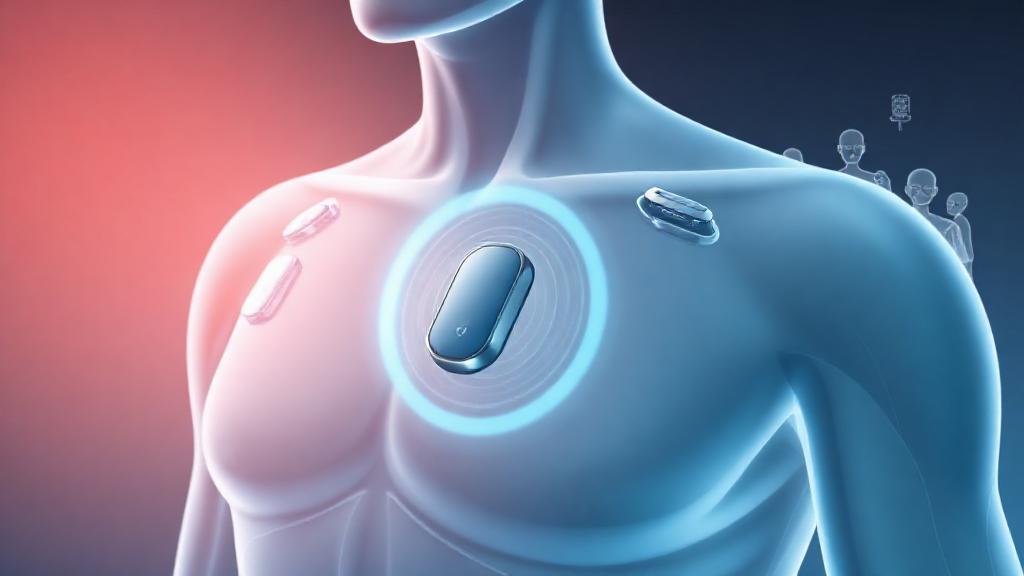
Wireless power transfer technology has been increasingly used in medical implants and devices, offering a convenient and safe way to power these devices without the need for wires or batteries.
This technology has the potential to revolutionise the field of medicine, enabling the creation of implantable devices that can be powered wirelessly, reducing the risk of infection and improving patient outcomes.
The use of wireless power transfer in medical implants and devices also eliminates the need for surgical procedures to replace batteries, reducing the risk of complications and improving the quality of life for patients.
Wireless Charging For Cordless Devices And Electric Vehicles Is Becoming Popular
Wireless charging technology is transforming the way devices and vehicles are powered.
- Powering electric vehicles without cables, reducing clutter and increasing convenience
- Enabling cordless devices to charge on the go, improving the user experience
- Supporting the development of innovative products, such as wireless charging furniture
- Enhancing safety by reducing the risk of electrical shocks and fires
- Driving the adoption of sustainable energy solutions, reducing the carbon footprint
Energy Harvesting And Induction Heating For Sustainable Power Solutions
Energy harvesting and induction heating are becoming increasingly important as the world moves towards a more sustainable future.
Sustainable power solutions are crucial for reducing reliance on non-renewable energy sources.
Induction heating offers a highly efficient way to generate heat, reducing energy consumption by up to 50%.
Energy harvesting captures and converts ambient energy into usable power, like harnessing the vibrations of a train moving down the tracks, or the kinetic energy of a person walking.
Overcoming Challenges In Wireless Power Transfer Efficiency And Distance Limitations
Wireless power transfer is often believed to be inefficient and limited in distance, but this is not entirely true as advancements in technology have improved its capabilities.
Researchers have made significant breakthroughs in recent years, allowing for more efficient and longer-range wireless power transfer.
Companies like WiTricity are already developing wireless charging systems for electric vehicles, showcasing the potential for wireless power transfer to be used in real-world applications.
Commercialising Wireless Power Transfer Technology For Widespread Adoption And Use
As wireless power transfer technology continues to advance, its commercialisation is becoming increasingly crucial for widespread adoption and use.
The integration of wireless power transfer into various industries, such as consumer electronics, automotive, and healthcare, is expected to drive growth and innovation.
The development of standardised protocols and regulatory frameworks is essential for ensuring interoperability and public safety.
As the technology matures, it is likely to have a significant impact on the environment, reducing electronic waste and energy consumption, and contributing to a more sustainable future.
The world is becoming increasingly reliant on wireless technology, and the concept of Wireless Power Transfer is poised to revolutionise the way people live and interact with devices.
The journey from concept to commercial reality has been marked by significant milestones, from the early experiments with magnetic resonance to the current widespread adoption in consumer electronics.
As the world looks to the future, it is exciting to consider the potential applications of Wireless Power Transfer, from powering entire cities to enabling new forms of sustainable energy harvesting.
With the boundaries of what is possible continuing to expand, one cannot help but wonder what the next breakthrough will be and how it will shape the world of tomorrow.
Ultimately, the future of Wireless Power Transfer holds much promise, and its impact will be felt for generations to come, leaving a lasting legacy that will continue to inspire innovation and progress.