




Introduction
The WSH (Construction) Regulations 2007 are Singapore’s principal subsidiary legislation governing workplace safety and health on construction sites. Enacted under the Workplace Safety and Health Act (Cap. 354A), these construction regulations apply to every building operation and works of engineering construction carried out in Singapore-including new builds, renovation, alteration and addition (A&A), and demolition. Since 2023, Singapore’s regulatory landscape has tightened substantially: maximum fines for contraventions likely to cause death or serious injury have risen from S$20,000 to S$50,000, video surveillance is now required at sites with project values of S$5 million or above, and the Safety Disqualification Framework has been extended across more tiers of main and subcontractors.
This article provides a structured, practical reference for developers, main contractors, specialist subcontractors, building owners, safety officers, and project managers working in Singapore’s construction industry. The scope covers the WSH Act and its subsidiary regulations, approved codes of practice (ACOPs), Singapore Standards, and their application to design, site management, authority submissions, and safety audits. Non-Singapore regimes such as OSHA (US) or the UK CDM Regulations are outside scope.
Quick answer: To comply with WSH construction regulations in Singapore, know your duties under the WSH Act, apply the WSH (Construction) Regulations 2007 and related subsidiary legislation, conduct regular risk assessments, implement a comprehensive safety management system where required, maintain documentation for MOM and BCA inspections, and keep current with evolving ACOPs and standards.
Key takeaways from this guide:
-
Understand the legal duties assigned to each party-developer, designer, main contractor, subcontractor, and professional engineer
-
Know the technical requirements for high risk construction work including work at height, scaffolding, excavation work, and lifting operations
-
Prepare for MOM inspections and client safety audits with robust documentation and living safety systems
-
Recognise common compliance pitfalls and how to avoid them through early design engagement, training, and supervision
-
Learn how Stellar Structures supports clients with WSH compliance across design, temporary works, and project documentation
Throughout this article, simplified diagrams and annotated visuals are referenced to illustrate responsibilities, compliance workflows, and regulatory hierarchy.
Understanding WSH Construction Regulations in Singapore
Workplace safety and health in Singapore’s construction sector is governed by a layered regulatory framework. At its apex sits the Workplace Safety and Health Act 2006, which replaced the older Factories Act in March 2006 and established general duties for all workplaces. The WSH Act applies to all workplaces in Singapore, including construction. Beneath it, the WSH (Construction) Regulations 2007 set detailed, sector-specific requirements for construction sites-covering everything from excavation and scaffolding to formwork design and demolition sequencing.
Construction is treated as a high-risk sector because of its persistently elevated fatality and major injury rates. During the Heightened Safety Period (HSP) from September 2022 to May 2023, the construction fatality rate dropped from approximately 1.5 to 0.8 per 100,000 workers. Under the national WSH2028 strategy, Singapore targets a fatality rate below 1.0 and a major injury rate below 12.0 per 100,000 workers. Achieving these targets requires that every party in the construction industry-from developer to construction workers on the ground-understands and discharges their legal duties.
Related subsidiary legislation works alongside the Construction Regulations: the WSH (Risk Management) Regulations 2006, the WSH (Work at Heights) Regulations 2013 (amended by S 434/2024), the WSH (Design for Safety) Regulations 2015, and the WSH (Operation of Cranes) Regulations 2011, among others. Together, they form a comprehensive regulatory system that addresses hazard identification, control measures, competency, and accountability at every project stage.
Key WSH Authorities and Their Roles
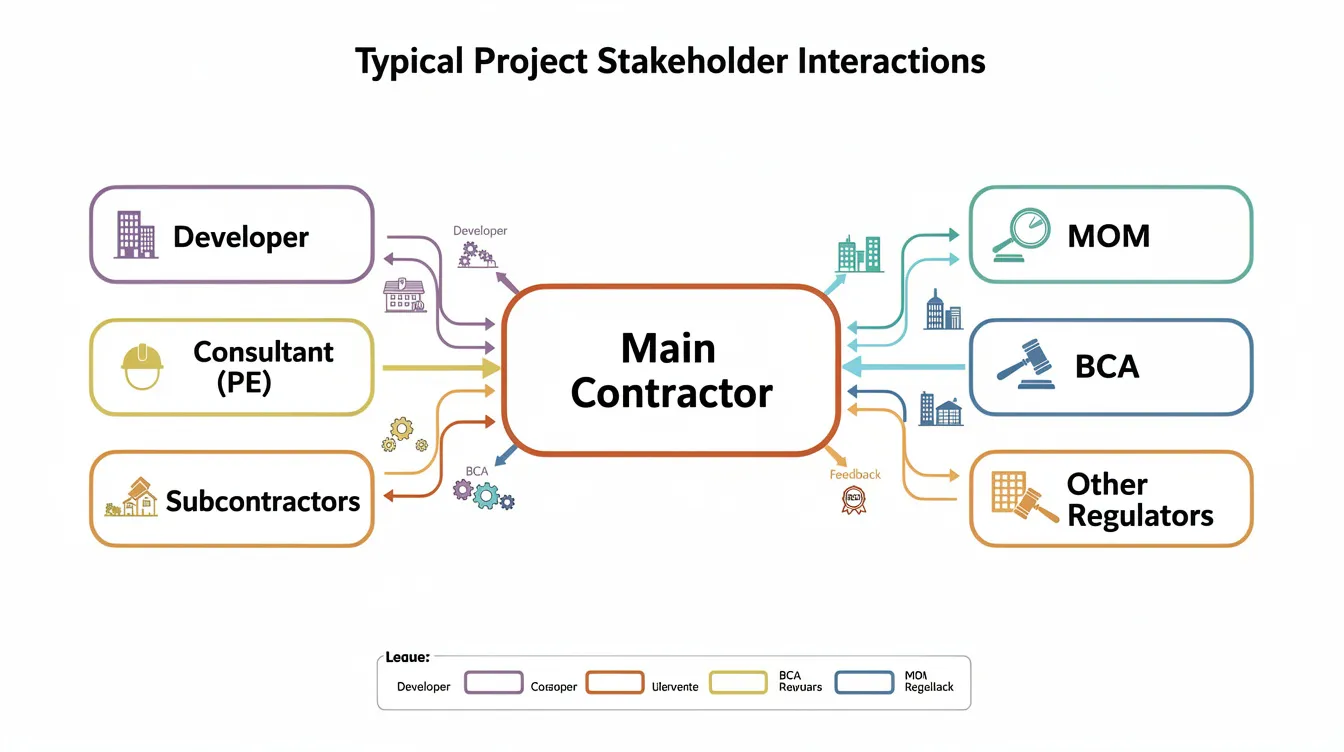
The Ministry of Manpower (MOM) is the primary regulatory authority for workplace safety in the construction sector. MOM conducts safety inspections at construction sites, issues stop-work orders where imminent danger exists, levies composition fines for breaches, and prosecutes serious offences. The Workplace Safety and Health Council (WSHC), operating under the Ministry, serves as the advisory and standards body-publishing approved codes of practice, running safety initiatives, and setting national safety performance benchmarks.
Other agencies intersect with WSH requirements at various project stages. The Building and Construction Authority (BCA) administers tender conditions for public sector construction projects and, since 1 April 2024, has imposed enhanced WSH requirements in construction tenders-including safety disqualification criteria, stricter evaluation weightings, and WSH Bonus Schemes. SCDF, JTC, LTA, and other statutory boards may impose additional WSH conditions through their own permits and approval processes. Regulatory authorities oversee WSH compliance in construction through these overlapping but coordinated mechanisms.
In practice, MOM inspectors arrive unannounced and assess both physical site conditions and documentary compliance. Common enforcement actions include composition fines, demerit points under the Safety Disqualification Framework, stop-work orders, and-in the most serious cases-criminal prosecution. Non-compliance with WSH regulations can lead to severe penalties in Singapore, including fines and imprisonment. The Safety Disqualification Framework affects contractor eligibility for public sector projects, making safety performance a commercial as well as legal concern.
Legal Structure: Act, Regulations, ACOPs and Singapore Standards
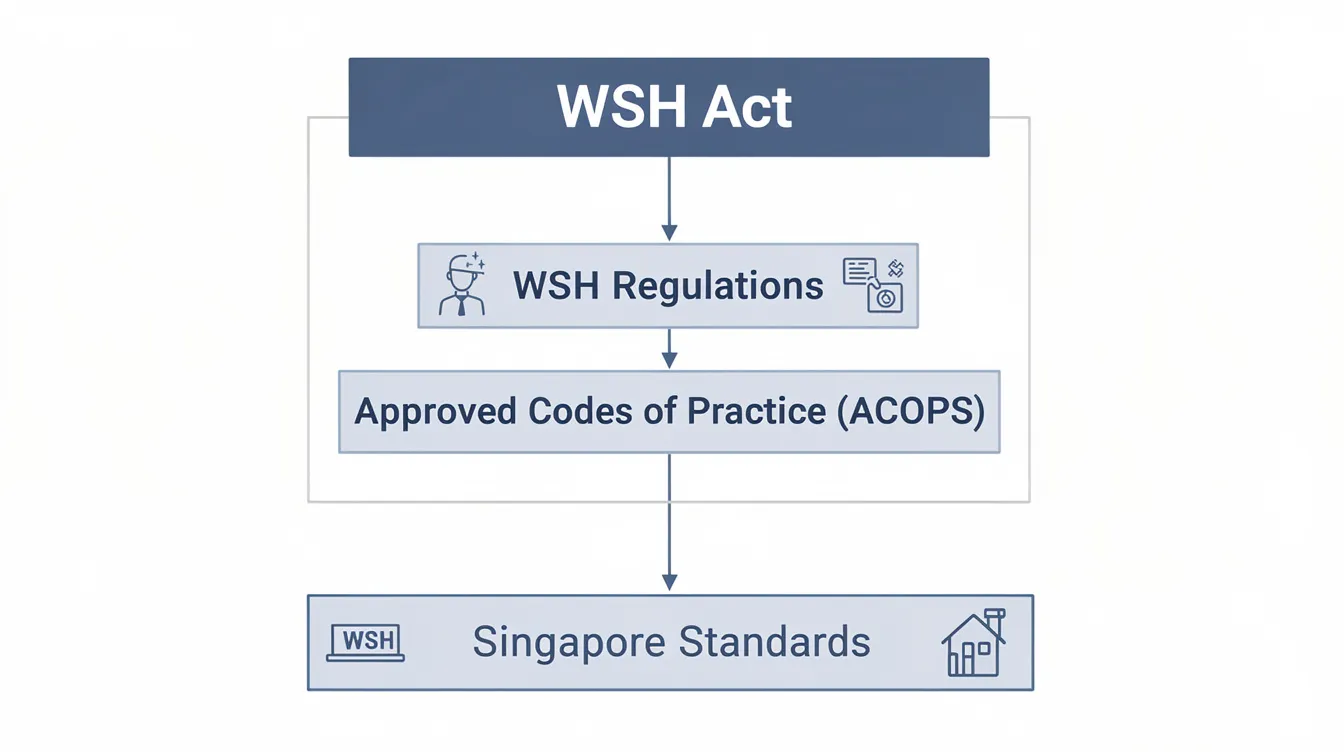
The legal hierarchy governing safety and health construction in Singapore operates on four tiers:
-
WSH Act (Primary Legislation): Establishes general duties for employers, occupiers, principals, self-employed persons, and employees. Sets the foundation for all subsidiary regulations.
-
Subsidiary Regulations: The WSH (Construction) Regulations 2007, WSH (Risk Management) Regulations, WSH (Work at Heights) Regulations, WSH (Design for Safety) Regulations, and others carry mandatory legal force. The WSH (Construction) Regulations require specific safety measures for various activities on construction sites.
-
Approved Codes of Practice (ACOPs): Published by the WSH Council, ACOPs explain what constitutes reasonably practicable measures for compliance. They are not law in themselves, but MOM uses them as the benchmark for what is “reasonably practicable,” meaning failure to follow an ACOP can establish liability. Approved Codes of Practice provide benchmarks for achieving safety compliance in construction.
-
Singapore Standards (SS, SS EN, SS ISO): Technical standards such as SS 280 (Frame and Modular Scaffoldings), SS 536 (Safe Use of Mobile Cranes), SS 98 (Safety Helmets), SS 513 (Safety Footwear), and SS 679:2021 (Code of Practice for WSH Management System for Construction Worksites) are frequently cross-referenced in ACOPs, tender specifications, and contract documents.
Key ACOPs relevant to construction include the Code of Practice for Working Safely at Height (2013), the Code of Practice on WSH Risk Management (2021), the Code of Practice on Safe Lifting Operations (2014), and the Code of Practice on Chief Executives’ and Board Directors’ WSH Duties (2022). As of 1 January 2025, the ACOP list was expanded with new entries-including the Code of Practice for Platform Services and SS ISO 12100:2024 on Safety of Machinery. Stellar Structures prepares its designs and authority submissions to align with current ACOPs and key Singapore Standards, ensuring clients start from a position of compliance.
Core Duties Under WSH Construction Regulations
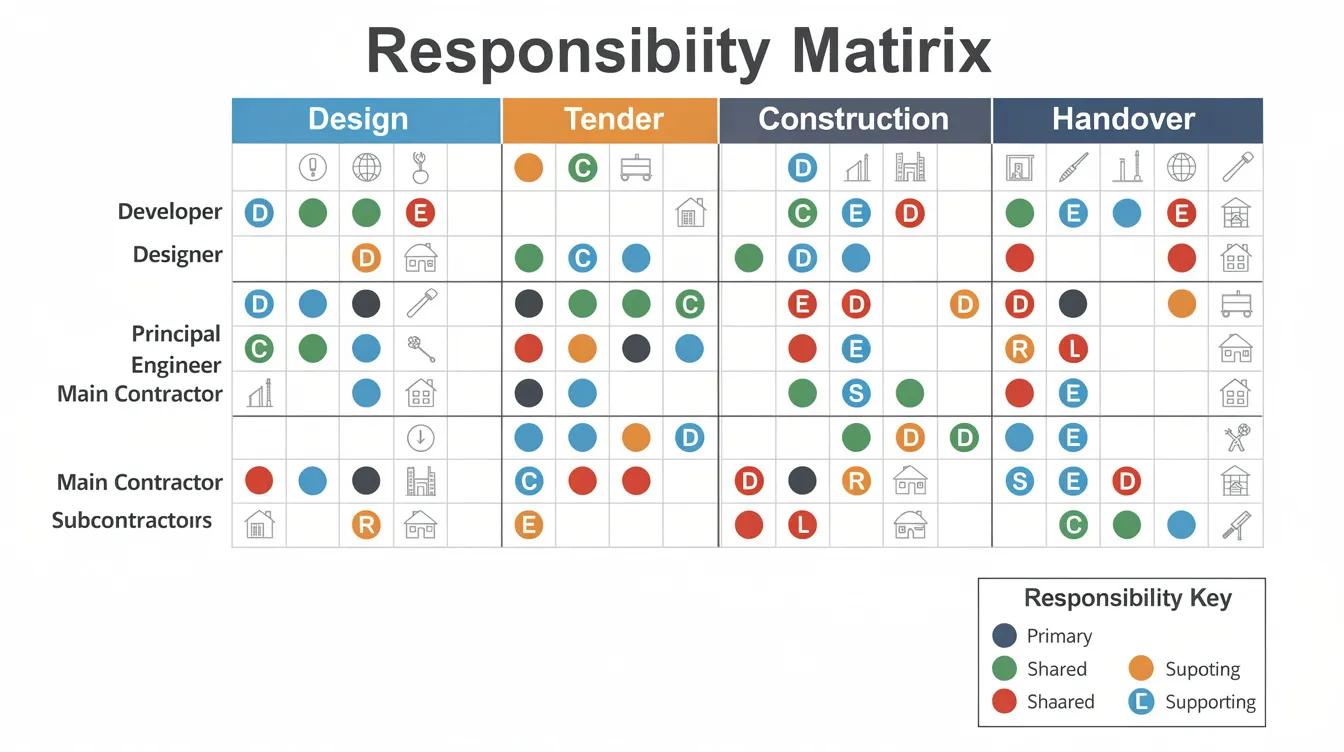
WSH construction regulations allocate duties across multiple parties, not just “the contractor.” The safety and health act places obligations on developers, occupiers, principals, employers, designers, professional engineers, main contractors, subcontractors, and individual employees. Stakeholder accountability extends to developers, contractors, and subcontractors. Roles frequently overlap: a developer may simultaneously be an occupier; a specialist subcontractor may act as principal for its own employees.
Understanding who is responsible at each stage-design, tender, construction, handover-is essential for avoiding gaps in safety coverage and for demonstrating compliance during inspections and safety audits.
Duties of Developers, Owners and Occupiers
Under the WSH Act, occupiers and principals bear foundational obligations. Any person exercising control over a construction worksite must ensure workplace safety of premises and common areas. Employers must provide a safe working environment. The principal-whoever engages contractors-must verify contractor competency, ensure safe equipment is provided, and oversee that appropriate control measures are in place.
For public sector developers, obligations have intensified. From 1 April 2024, all public sector construction tenders require harmonised safety disqualification criteria, minimum WSH performance standards, and more stringent evaluation weightings. Safety performance can impact tender success for public sector construction projects. Private sector developers, while not bound by identical procurement rules, increasingly adopt similar due-diligence practices: pre-qualification based on WSH track record (via CRS registration, BCA registry, and safety certifications), embedding safety KPIs into contracts, and requiring safety plan submissions.
Stellar Structures supports building owners and developers through design-for-safety reviews, constructability assessments, and safety advice during A&A planning-helping identify potential hazards before they become site-level problems.
Duties of Main Contractors and Subcontractors
Main contractors under the WSH (Construction) Regulations must coordinate workplace safety across the entire site. When contract value or manpower thresholds are met, a comprehensive safety management system (SHMS) must be established and maintained. The main contractor supervises subcontractors, ensures adherence to safe work procedures, manages the permit to work system for high-risk activities, and maintains critical documentation: Safety Plans, risk assessments, SWPs, training matrices, and equipment registers.
Subcontractors carry their own obligations: developing and following safe work procedures, ensuring workers have received adequate safety and health training, maintaining training records, participating in toolbox meetings, and complying with permit to work requirements. Employees must report unsafe conditions to supervisors, and supervisors ensure safety measures are implemented on-site.
Non-compliance consequences are material. Contractors face composition fines, demerit points, stop-work orders, and-critically-possible disqualification from future public sector tenders. Failure to comply with safety regulations can result in legal repercussions including fines and imprisonment. Accidents in construction can lead to significant financial losses for companies, making compliance both a legal and commercial imperative.
Duties of Designers and Professional Engineers
The WSH (Design for Safety) Regulations 2015 require that designers and professional engineers eliminate hazards at source during the design stage. Construction management must integrate safety into design decisions and procurement processes. Where a DfS coordinator is appointed, architects, structural engineers, and M&E engineers must provide residual risk information and coordinate to ensure that design choices do not create unnecessary hazards for construction workers or future maintenance personnel.
Concrete examples of design choices that materially reduce risk include integrated edge protection designed into permanent structures, use of precast elements to minimise work at height, safer façade access systems that eliminate the need for temporary scaffolding during maintenance, and plant room layouts that allow safe equipment access without confined space entry.
The WSH (Construction) Regulations further specify that certain temporary works-formwork supporting structures, underpinning, sheet-piling for excavation-must be designed and endorsed by a professional engineer, with method statements and supervision plans. Stellar Structures integrates WSH considerations into architectural, structural, and civil design from concept stage, helping clients avoid the costly rework and safety concerns that arise when compliance is treated as an afterthought.
Key Technical Requirements of WSH (Construction) Regulations
The WSH (Construction) Regulations set minimum standards for specific high risk activities that dominate construction fatality and injury statistics. This section provides a practical overview of the most critical areas-working at height, scaffolding, excavation, lifting, and demolition. It is not a full legal reproduction; construction professionals should refer to the Singapore Statutes Online for complete regulatory text.
Working at Height and Fall Protection
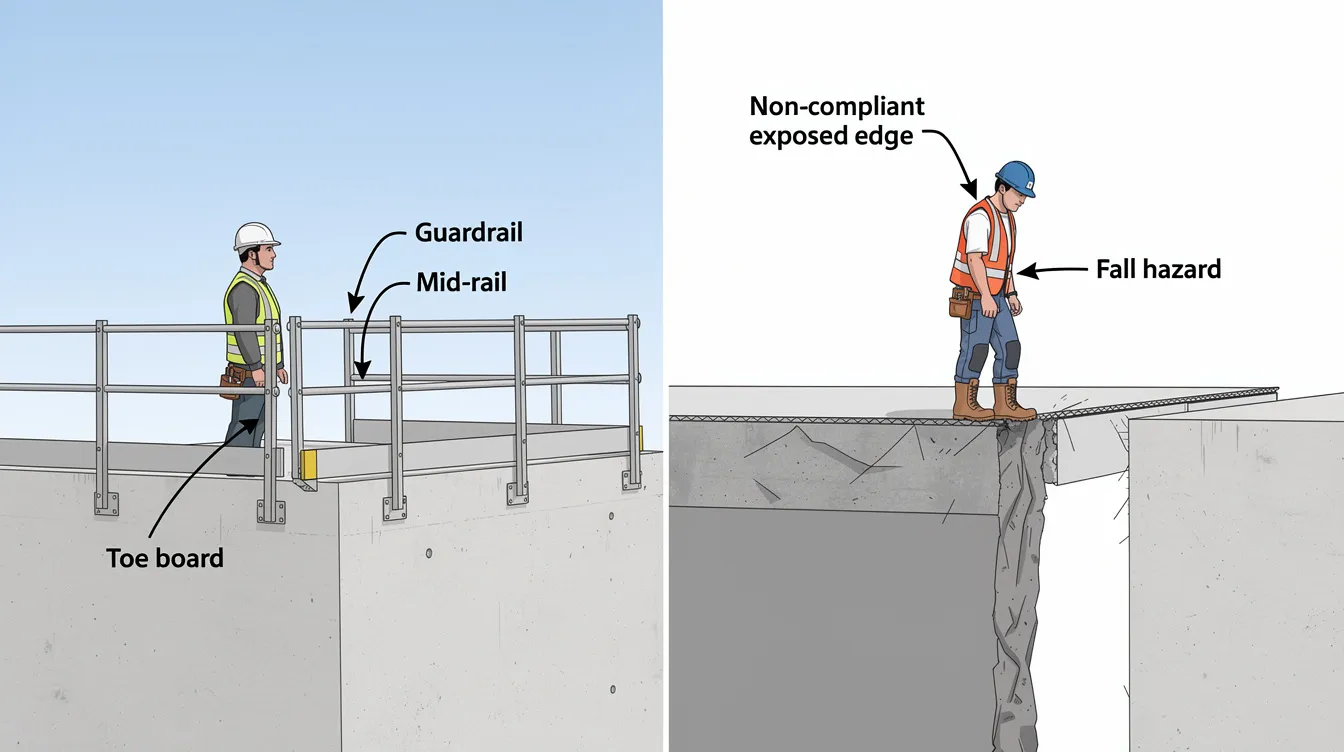
Falls from height remain the leading cause of construction fatalities in Singapore. The WSH (Work at Heights) Regulations set safety measures for work performed at height, defining “hazardous work at height” as work involving risk of falling more than 3 metres, or work in the vicinity of unprotected edges or openings. Before such work begins, the employer must prepare a site-specific fall prevention plan. A competent person must be appointed for anchorage design and supervision, and all workers must have completed the relevant WAH safety training courses.
Core requirements include:
-
Installation of guardrails with top rails and mid-rails at all exposed edges and floor openings
-
Provision and inspection of travel restraint systems or fall arrest systems appropriate to the task
-
Secured ladder access with proper footing and tie-off points
-
Mandatory permit to work issued by an authorised manager before hazardous work at height commences
Typical non-compliance MOM inspectors identify includes missing mid-rails on guardrails, unsecured ladders, unprotected floor openings, inadequate anchorage for lifelines, and workers without valid WAH training certificates. The WSH Act mandates a permit-to-work system for high-risk activities, and permits must be authorized by a competent person before work starts.
Scaffolds, Formwork and Temporary Works
Scaffolds on Singapore construction sites must be erected, altered, and dismantled by Approved Scaffold Contractors (ASCs) licensed by MOM. From 1 July 2025, enhanced licensing conditions apply: if an ASC accumulates 5 or more composition fines for scaffold or work-at-heights contraventions within a rolling 12-month period, its licence will be suspended for 3 months. Over the past three years, 98 ASCs have faced enforcement actions for unsafe scaffolds-demonstrating how seriously MOM treats recurring non-compliance among specialist contractors.
Design, erection, and inspection requirements follow SS 280 (Frame and Modular Scaffoldings) and relevant ACOPs. Scaffolds and formwork supporting structures that bear significant loads or become part of permanent works must be designed and endorsed by a professional engineer. Regular inspections and tagging are mandatory-daily checks, inspections after any alteration, and periodic formal inspections at prescribed intervals by a competent person.
Common issues include overloading, inadequate bracing, missing access ladders, and lack of handover certificates between erection crews and users. Stellar Structures provides temporary works design, PE endorsements, and method statements that meet WSH requirements-helping main contractors and subcontractors close one of the most common gaps in construction safety.
Excavation, Trenching and Earthworks
Excavation work carries risks of collapse, engulfment, damage to adjacent structures, and contact with underground utilities. The WSH (Construction) Regulations require that for deep excavations or underpinning, shoring, sheet-piling, and bracing must be designed by a professional engineer. The engineer must provide design documentation, calculations, and construction procedures to those performing the works.
Mandatory risk assessment procedures must address:
-
Location and protection of underground utilities (electric wiring, water, gas, telecommunications)
-
Safe access and egress from excavations
-
Protection of adjacent structures and services
-
Monitoring for ground movement, water ingress, and changes in soil conditions
A real-world example: deep basement excavation adjacent to an existing MRT tunnel or party wall requires detailed WSH documentation-PE-endorsed shoring designs, real-time instrumentation monitoring, and method statements for each construction phase. Such work demands close coordination between the designer, main contractor, and regulators.
Lifting Operations, Cranes and Heavy Plant
Lifting operations are among the highest-consequence activities on any construction site. Under the WSH (Operation of Cranes) Regulations, tower cranes must be registered, designed, and inspected by a professional engineer. Every lift requires a written lifting plan, and the site must appoint a lifting supervisor and signalmen. Pre-use inspections, maintenance logs, exclusion zones, and communication protocols are mandatory.
MOM’s focus areas during crane-related inspections include verification of safe load charts, adequacy of crane foundations, proximity to adjacent structures or overhead power lines, and evidence of daily pre-use checks. Penalties for unsafe lifting practices-including operating without a valid lifting plan or with an unqualified signalman-can include stop-work orders, composition fines, and prosecution. Falling objects from lifting operations are a persistent hazard, and hard hats protect against head injuries from falling objects-one of the most fundamental safety precautions on any site.
Demolition, Structural Alteration and A&A Works
Demolition and major A&A works require engineering assessments, method statements, safe sequencing, and debris removal plans before any physical work begins. The WSH (Construction) Regulations mandate that stability of the structure must be maintained throughout the demolition sequence, and temporary works must be in place where needed.
Works in occupied buildings and strata properties introduce additional complexity: segregation of work areas from occupied zones, noise and dust control measures, safe access routes for residents, and robust debris control. For high-risk A&A projects, construction companies should appoint a designated person responsible for coordinating safety between the building’s occupants and the construction team.
Stellar Structures provides structural assessments for A&A works and develops safe demolition methodology plans-ensuring that the approach satisfies both regulatory requirements and practical site constraints.
Risk Management, PTW and Safety Management Systems
Technical requirements for specific activities exist within an overarching system of risk management, permit to work controls, and safety management systems. MOM expects a demonstrable, living system rather than a paper plan filed away and forgotten. WSH (Risk Management) Regulations require systematic hazard identification and control measures as a continuous process, not a one-time exercise.
Mandatory Risk Assessments (RA) and Safe Work Procedures (SWP)
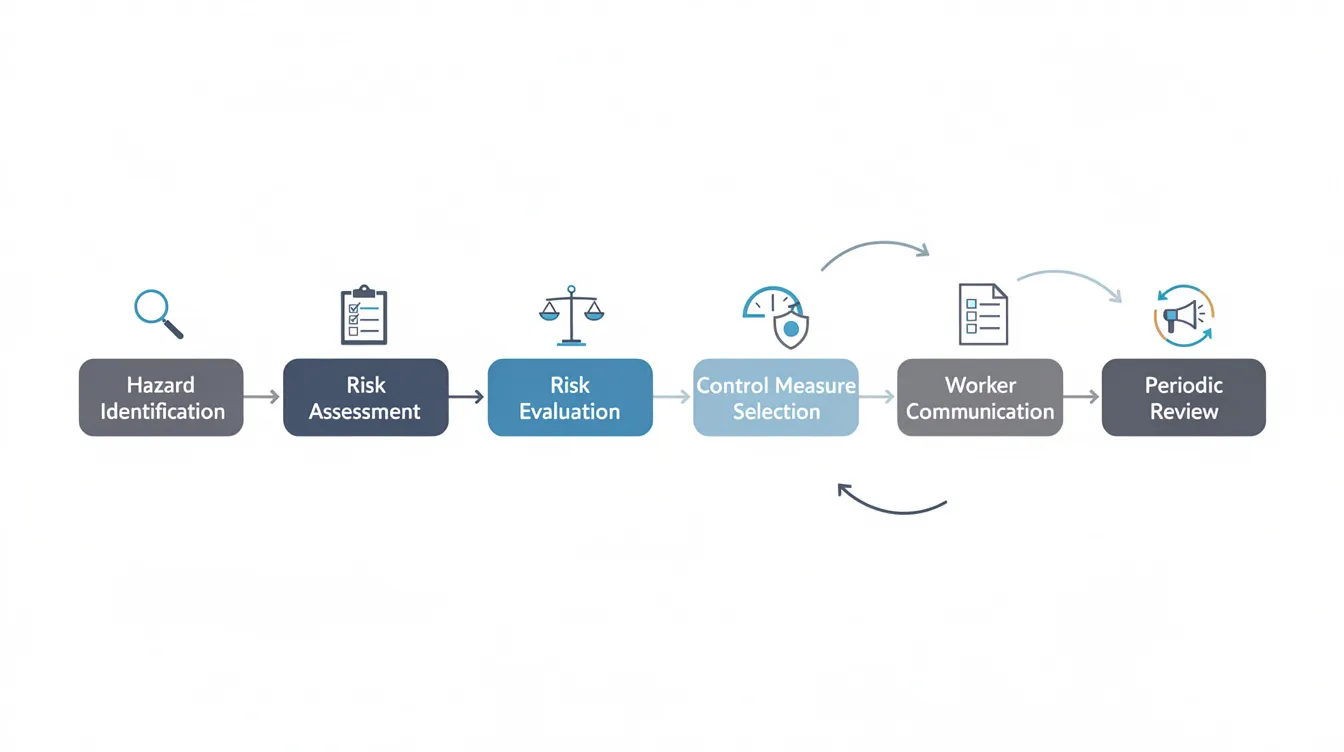
The WSH (Risk Management) Regulations 2006 require employers, principals, and self-employed persons to conduct risk assessments: identify hazards, evaluate likelihood and consequences, implement control measures, document findings, and review at least every three years-or sooner if conditions change or an incident occurs. Risk management involves identifying, assessing, and controlling hazards across every task and work phase.
The hierarchy of control prioritizes eliminating risks at the source, followed by substitution, engineering controls, administrative controls, and personal protective equipment (PPE) as the last line of defence. Risk assessments must be documented and communicated to workers-in languages they understand, through briefings, visual aids, and written acknowledgement.
Structuring task-based RAs for common activities-rebar work, blocklaying, crane lifting, concrete work, hot works-ensures that each activity has its own hazard profile, control measures, and monitoring requirements. Conducting risk assessments is not a bureaucratic formality; it is the mechanism by which safety precautions are identified, resourced, and enforced.
Permit-to-Work (PTW) for High-Risk Work
A permit to work system is required for high-risk construction activities. The PTW system ensures that safety checks are completed before work begins, and it includes hazard identification and risk assessment specific to the task. Examples of high-risk works requiring a permit to work include confined space entry, hot work, work at height on fragile surfaces, lifting near live traffic, and electrical isolation involving electric wiring and socket outlet assembly near overcurrent protective devices.
The PTW workflow follows a structured sequence:
-
Application: The work team submits a permit request describing the task, location, duration, and hazards
-
Review: A competent person verifies that all control measures, equipment checks, and safety procedures are in place
-
Issuance: The permit to work issued by an authorised manager confirms that conditions are safe to proceed
-
Monitoring: Daily checks confirm ongoing compliance; the permit is revoked if conditions change or incompatible work begins nearby
-
Closure: On completion, the permit is formally closed with sign-off and records retained
The system includes hazard identification and risk assessment at each stage. The permit-to-work system enhances regulatory compliance in construction and creates a documented trail that MOM inspectors expect to see-permit forms, checklists, photographs, and closure records.
Safety and Health Management System (SHMS) Requirements
A Safety and Health Management System is legally required for construction projects above specified contract value or manpower thresholds, and many government and private sector contracts impose SHMS requirements regardless; effective implementation depends on formal safety practices embedded in daily operations. SS 679:2021 (Code of Practice for WSH Management System for Construction Worksites) provides detailed guidance on building an effective SHMS.
Core SHMS elements include:
-
Policy: Management commitment to workplace safety, signed by senior leadership
-
Organisation: Clear roles, responsibilities, and authority for WSH-including safety committees, a safety and health co-ordinator (health co ordinator), and designated persons for specific functions
-
Planning and Implementation: Risk assessment procedures, safe work procedures, training programmes, emergency preparedness
-
Measurement and Evaluation: Safety inspections, regular safety audits, incident investigation, trend analysis
-
Review and Improvement: Management review, corrective actions, continual improvement cycle
An SHMS aligned with ISO 45001 can support regulatory compliance, though ISO certification is not legally mandated. Leadership commitment is crucial for fostering a safety culture, and employee involvement enhances safety culture and accountability across the project. Stellar Structures helps clients integrate WSH considerations into project management and documentation flows-connecting design decisions to site-level safety systems.
Practical Compliance: Processes, Documentation and Inspections
Many construction companies struggle not with understanding the law but with day-to-day execution under commercial and schedule pressure. This section focuses on pragmatic steps: what to prepare before work starts, what to maintain during construction, and what to keep after completion.
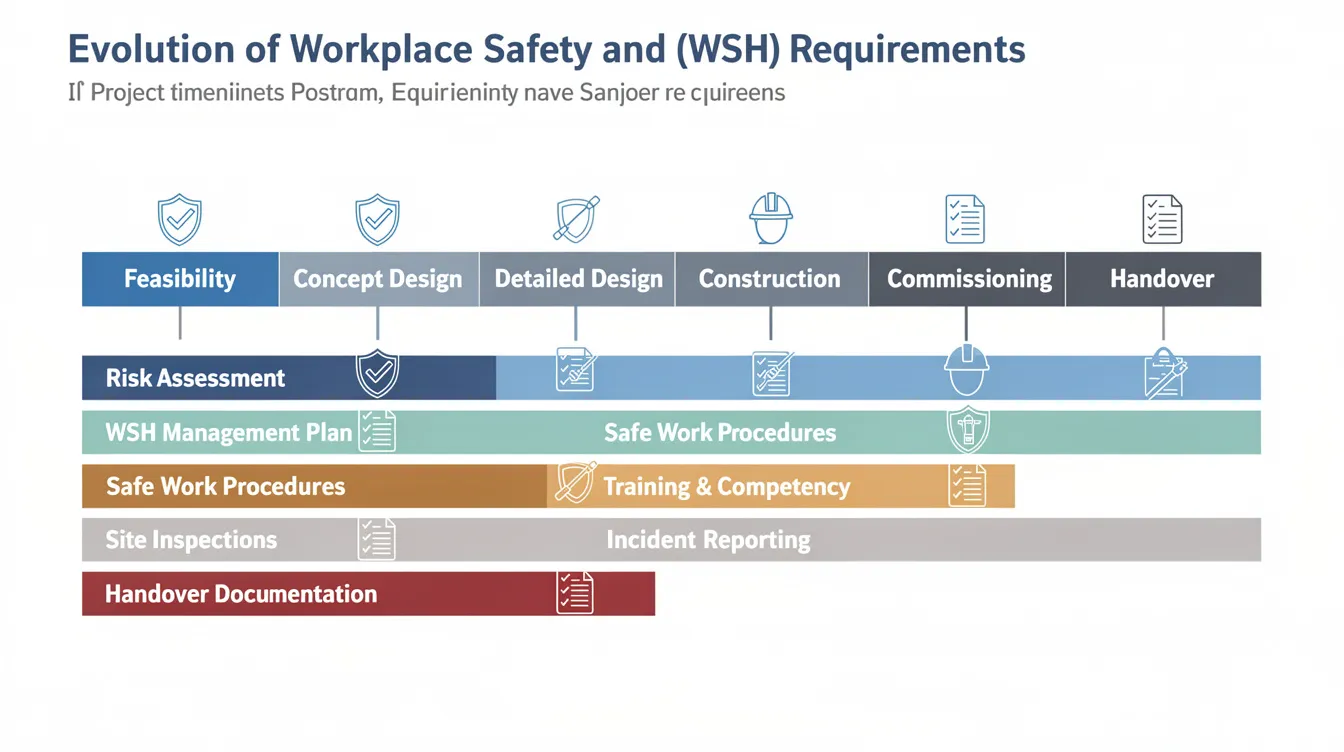
Step-by-Step Compliance Workflow for a Typical Project
-
Pre-Design / Feasibility: Appoint DfS coordinator where required; conduct early hazard identification workshop; identify high risk construction work inherent in the design concept
-
Design Development: Professional engineer and design team eliminate or reduce hazards through design choices; prepare residual risk register; coordinate with DfS coordinator
-
Pre-Tender: Embed WSH requirements in tender documents-specify ACOP compliance, documentation expectations, competency requirements, safety KPIs, and safety disqualification criteria for public projects
-
Pre-Start / Mobilisation: Main contractor compiles risk assessments, safe work procedures, training matrix, and equipment registers; establishes SHMS; sets up PTW system; conducts worker induction and necessary safety training
-
Construction Phase: Implement safety measures daily-toolbox meetings, PTW issuance and monitoring, regular safety inspections, equipment checks, incident reporting; maintain living documentation
-
Periodic Audits: Conduct regular safety audits (internal and third-party); address findings promptly; update RAs and SWPs as conditions change
-
Incident Management: Incident response procedures need to be established for proper accident management; employers must report workplace incidents to the Ministry of Manpower within specific timeframes; thorough investigations help prevent future incidents; late reporting can lead to significant penalties
-
Completion / Handover: Close out all PTWs; compile final safety documentation package; archive records per regulatory retention requirements; conduct lessons-learned review
Key Documents and Records to Maintain
Essential records that construction sites must keep current and accessible:
-
Risk assessment records (retain minimum three years under Risk Management Regulations)
-
Safe work procedures for each activity
-
Permit-to-work forms, checklists, and closure records
-
Worker induction and health training records, including WAH and confined space certifications
-
PPE issuance and inspection logs
-
Equipment inspection and maintenance records (scaffolds, cranes, lifting gear, electrical safety equipment)
-
Incident and dangerous occurrence reports (mandatory incident reporting is required for workplace accidents leading to medical leave or fatalities)
-
Safety audit findings and corrective action close-out records
-
SHMS review minutes and management sign-offs
Digital documentation platforms increasingly replace paper-based systems. MOM’s expectation for traceability-including the video surveillance requirement for projects ≥ S$5 million-makes digital record-keeping not merely convenient but strategically important. Construction projects must incorporate technology mandates to enhance workplace safety.
Preparing for MOM and Client Safety Audits
MOM inspections and third-party SHMS audits typically assess both physical conditions and documentary evidence. Practical preparation steps include:
-
Maintain site housekeeping standards at all times-not just before announced audits
-
Ensure all PTW files are current and accessible at the point of work
-
Brief supervisors and safety committees on inspection protocols and their individual responsibilities
-
Verify that training records match personnel on site; ensure no worker is performing tasks without valid competency certification
-
Keep corrective action registers up to date, demonstrating that previous findings have been closed out
Common audit findings include expired permits, unsigned risk assessments, missing mid-rails, absent PPE on workers in hazard zones, and training certificates that do not match the work being performed. The ability to demonstrate prompt corrective action-with dated evidence-significantly influences how MOM and clients assess a contractor’s safety performance.
Common Compliance Pitfalls and How to Avoid Them
Many enforcement actions stem from recurring, preventable issues. A positive safety culture reduces workplace accidents significantly, but building that culture requires more than documentation-it demands consistent on-site behaviour.
Paper Compliance Without On-Site Implementation
The most pervasive pitfall: risk assessments, PTW forms, and SWPs exist in filing cabinets but are not understood or followed by workers. This gap between documentation and practice is what MOM inspectors are trained to detect.
Solutions: Conduct multilingual briefings before each new activity. Use visual work instructions-photographs and diagrams-at work stations. Implement spot-checks by supervisors with documented findings. Establish clear consequences for repeated breaches. Regular safety training is essential for maintaining a strong safety culture, and recognition programs can motivate employees to prioritize safety.
Inadequate Supervision and Competency
Inexperienced site supervisors, untrained signalmen, or casual workers without proper induction create systemic risk. Self-employed persons must ensure their own safety, but employers bear responsibility for verifying competency.
Solutions: Build robust competency frameworks tied to regulatory requirements. Track mandatory courses (CSOC, BCSS, WAH courses) centrally. Assign experienced mentors to new supervisors. Verify that every worker on site has received adequate safety induction and task-specific training before commencing such work. Employers must provide safety training to ensure compliance with WSH standards.
Design Decisions That Ignore Buildability and Safety
When design omits safe access for façade maintenance, plant room servicing, or rooftop equipment, the result is unsafe ad-hoc solutions during construction and throughout the building’s operational life. Health risks multiply when designers fail to consider how construction workers will actually build and maintain what has been drawn.
Solutions: Engage professional engineers and DfS professionals at concept stage-not after detailed design is complete. Conduct constructability reviews that assess temporary works requirements, safe access provision, and long-term maintenance needs. Stellar Structures routinely identifies and resolves such issues during early design, preventing the costly rework and safety concerns that arise from late-stage changes.
Trends, Technology and the Future of WSH Construction Regulations
Singapore continues to tighten WSH expectations. The SAFE (Safety, Accountability, Focus, Empowerment) measures introduced post-HSP are now permanent features of the regulatory landscape. Public sector procurement reforms, expanded demerit point systems, and stricter accountability for senior leadership (CEs and Board Directors) signal that the regulatory direction is toward greater transparency, data-driven enforcement, and upstream accountability.
As Singapore tackles megaprojects, ageing infrastructure, and new construction methods-prefabrication, Design for Manufacturing and Assembly (DfMA), robotics-regulations will continue to evolve. WSH regulations influence project planning, tendering, and resource allocation in construction, making early compliance planning a competitive advantage.
Digital Tools for WSH Compliance
Digital technology is transforming how construction sites manage safety protocols. Electronic permit-to-work (e-PTW) systems replace paper-based workflows, ensuring that permits cannot be issued without verified prerequisite checks. Mobile inspection apps allow real-time capture of safety inspections findings with geotagged photographs. BIM-based hazard identification enables project teams to visualise high risk activities before ground is broken-integrating risk assessments and method statements directly into the digital model.
IoT sensors monitor environmental conditions (air quality, noise levels, structural movement) and alert supervisors when thresholds are exceeded. Video surveillance-now mandatory for projects ≥ S$5 million-provides both deterrence and forensic evidence. Investing in WSH enhances operational efficiency and reduces project costs by catching issues before they become incidents. Stellar Structures works with clients’ digital platforms to embed WSH data into design and documentation workflows.
Raising Safety Standards Through Design and Innovation
DfMA, modular construction, and permanent edge protection systems reduce the volume of high-risk on-site activities-fewer workers at height, less temporary scaffolding, reduced exposure to hazardous substances. Concrete examples include factory-fabricated bathroom pods that eliminate wet trades at height, permanent maintenance catwalks designed into façade systems, and precast stairwells that provide safe access from the earliest construction stages.
Effective WSH practices protect workers’ lives and prevent occupational diseases. A strong safety culture improves company reputation and attracts skilled workers. By driving design innovation within current regulations, consultants like Stellar Structures help clients achieve outcomes that go beyond minimum compliance-enhancing project efficiency while implementing safety measures that protect every person on site.
Conclusion and Next Steps
WSH construction regulations in Singapore establish a framework for preventing harm across every phase of a construction project. Compliance is not the responsibility of any single party; it requires shared accountability among developers, designers, main contractors, subcontractors, and individual workers. The most effective approach integrates compliance early-into design decisions, tender documents, and project planning-rather than treating safety as a site-level add-on.
The regulatory trajectory is clear: higher penalties, broader accountability, more demanding procurement standards, and increasing expectation of digital traceability. Construction companies that build strong safety culture and robust safety management systems position themselves not just for compliance, but for commercial success in a market where safety performance directly affects tender eligibility and project economics.
Immediate actions you can take:
-
Review your current risk assessments and SHMS against the latest WSH (Construction) Regulations and 2025 ACOP updates
-
Audit a live project for gaps in PTW coverage, training records, and equipment inspection logs
-
Involve your design team in safety reviews at concept stage-before detailed design locks in hazards
-
Verify that your subcontractors’ WSH track records meet current safety disqualification criteria
-
Engage a consultancy like Stellar Structures for pre-tender design review, A&A planning, temporary works design, or responding to MOM feedback
Stay current with evolving ACOPs, Singapore Standards, and MOM circulars. The cost of compliance is always lower than the cost of an incident.
Additional Resources and Reference Checklist
This section compiles key legal references and a practical checklist to support day-to-day use of this guide.
Core Legal References:
-
Workplace Safety and Health Act 2006 (Cap. 354A)
-
WSH (Construction) Regulations 2007
-
WSH (Risk Management) Regulations 2006
-
WSH (Work at Heights) Regulations 2013 (amended S 434/2024)
-
WSH (Design for Safety) Regulations 2015
-
WSH (Operation of Cranes) Regulations 2011
Quick Compliance Checklist:
-
☐ Have we appointed a DfS coordinator where required?
-
☐ Are all high risk activities covered by a permit to work system?
-
☐ Are risk assessments and SWPs documented, current, and communicated to workers?
-
☐ Have all workers completed necessary safety training (WAH, confined space, CSOC, BCSS)?
-
☐ Is PPE issued, inspected, and recorded? PPE protects workers from various construction hazards-safety boots protect feet from sharp objects and heavy items, gloves protect hands from cuts, abrasions, and chemicals, and respirators protect against inhalation of hazardous substances.
-
☐ Are scaffold and temporary works inspections current with valid tagging?
-
☐ Is the SHMS established, with management review cycle in place?
-
☐ Are incident reporting procedures established, with timeframes understood by all supervisors?
-
☐ Can we demonstrate corrective actions from previous audit findings?
-
☐ Are video surveillance systems installed (for projects ≥ S$5 million)?
Useful Public Resources:
Frequently Asked Questions on WSH Construction Regulations
This FAQ addresses common questions Stellar Structures receives from clients about safety and health WSH in the construction industry.
What are the WSH (Construction) Regulations and who do they apply to? The WSH (Construction) Regulations 2007 are subsidiary legislation under the Workplace Safety and Health Act. They apply to any person carrying out building operations or works of engineering construction in Singapore-including developers, main contractors, subcontractors, professional engineers, and self-employed persons. The health construction regulations 2007 cover everything from excavation and scaffolding to formwork design and demolition. Contractors must comply with the Workplace Safety and Health Act and subsidiary regulations.
When must a Safety and Health Management System be implemented on a construction project? An SHMS is legally required when a project exceeds specified contract value or manpower thresholds. Beyond legal triggers, many government tenders and private sector contracts require an SHMS regardless of project size. SS 679:2021 provides the framework. Even for smaller projects, implementing core SHMS elements-policy, risk assessment, training, monitoring-is considered good practice and demonstrates due diligence.
How do WSH construction regulations affect small A&A works in existing buildings? Many WSH obligations apply even to small A&A works. MOM inspectors increasingly focus on smaller-scale projects-renovations in occupied buildings, strata property upgrades-because these often have weaker supervision, informal subcontracting chains, and missing documentation. Building owners commissioning A&A works should ensure that even modest projects have documented risk assessments, trained workers, and implement safety measures appropriate to the hazards present.
What MOM penalties can arise from non-compliance at construction sites? Penalties range from composition fines (up to S$50,000 for contraventions likely to cause death or serious injury) to stop-work orders, demerit points, licence suspensions (for ASCs), debarment from public sector tenders, restrictions on foreign worker employment, and criminal prosecution. Incident reporting must occur within specific timeframes; late reporting can lead to significant penalties for companies.
How early in design should WSH considerations be built in? At the concept or feasibility stage-before detailed design begins. The WSH (Design for Safety) Regulations require hazard elimination and risk reduction at the design stage. Early engagement allows designers to eliminate hazards through design choices (e.g., permanent edge protection, precast construction, safer plant room access) rather than relying on administrative controls or PPE during construction. Engaging a consultant during pre-design enhances project efficiency and avoids costly late-stage redesign.
Can a consultant like Stellar Structures act as DfS professional or support DfS coordination? Yes. Under the WSH (DfS) Regulations, a suitably qualified consultant can be appointed as the DfS professional or support the DfS coordinator in preparing residual risk registers, coordinating between design disciplines, and ensuring that safety considerations are embedded throughout the design process. Stellar Structures regularly fulfils this role across residential, commercial, and infrastructure projects. Project-specific advice should always be sought to confirm the appropriate appointment structure.
What personal protective equipment is required on construction sites? The specific PPE requirements depend on the hazards identified through risk assessments. At minimum, construction sites typically require hard hats (to protect against head injuries from falling objects), safety boots, high-visibility vests, and hearing protection where noise levels exceed thresholds. For specific tasks, gloves, respirators, eye protection, and fall arrest harnesses may be required. PPE is the last line of defence in the hierarchy of control-engineering and administrative controls should be exhausted first.
How do safety audits differ from safety inspections? Safety inspections are routine, often daily or weekly, checks of physical site conditions and worker behaviour-verifying guardrails are in place, PTWs are current, PPE is worn. Regular safety audits are broader, systematic reviews of the entire safety management system-assessing whether policies, procedures, training, documentation, and corrective action processes are effective and compliant. Employers must conduct regular safety audits to ensure compliance, and both activities are essential components of a robust WSH programme.