




Hiring a Risk Management Facilitator (RMF) for Infrastructure Projects: A Simple Checklist
Introduction
Hiring a risk management facilitator (RMF) for infrastructure projects is one of the most consequential decisions a project owner or contractor can make-and one that is frequently left too late or handled without clear criteria. Whether you are delivering an MRT line extension, a major road viaduct, a deep drainage tunnel, or a utilities relocation package in Singapore, the quality of your risk management process depends heavily on the person leading it.
This article provides a practical, structured checklist that developers, EPC contractors, consultants, and public-sector project teams can use to evaluate, shortlist, and appoint the right RMF. The scope is deliberately focused: infrastructure projects (roads, rail, bridges, utilities, drainage, public facilities) in Singapore and the region, covering when and how to hire an RMF. This is not a full technical risk management manual.
When should you appoint an RMF? For complex or high-risk infrastructure works, the RMF should be engaged early in design-ideally at the concept or preliminary design stage-so that construction methods, alignments, and temporary works can still be influenced. Before hiring, check five core items: relevant infrastructure competence, demonstrated facilitation experience, regulatory familiarity (WSH Act, Design for Safety Regulations), a clear methodology, and strong documentation quality.
By the end of this article, you will have:
- A simple screening test to decide if your infrastructure project needs an RMF.
- A step-by-step hiring checklist covering competencies, documentation, process, cost, and timing.
- Clarity on how an RMF fits alongside existing safety roles and Design for Safety Professionals.
- Specific questions to ask during RMF interviews or proposal evaluations.
- Awareness of common pitfalls and how to avoid them.
Stellar Structures provides RMF and allied engineering support for Singapore infrastructure projects. The guidance below draws on that practical experience, but the article is written to be useful regardless of which provider you choose.
Visual aids and picture suggestions are included in relevant sections to help non-technical readers follow along.
Understanding RMF in Infrastructure Projects
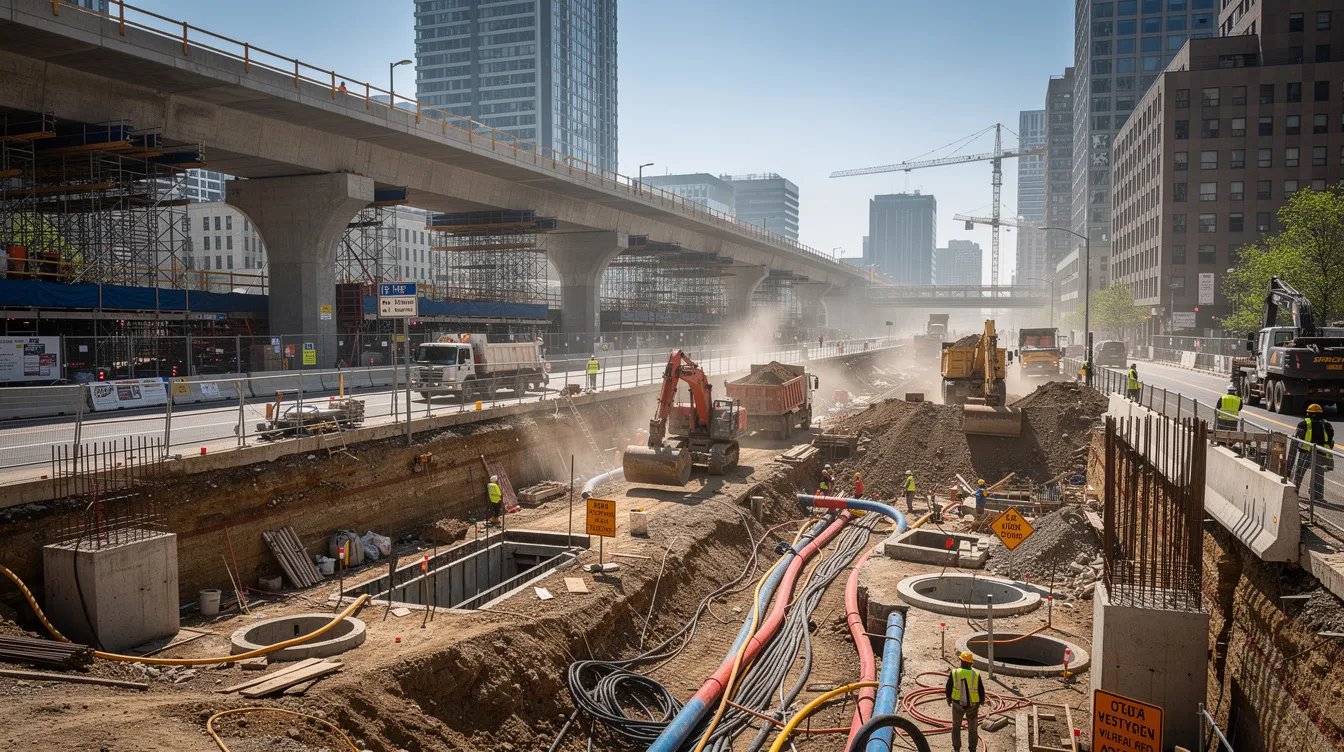
Infrastructure projects-expressways, MRT lines, water mains, viaducts-carry a concentration of construction risks and public-safety exposures that most building projects do not. Deep excavation adjacent to live traffic, tunnelling beneath occupied structures, and heavy lifting operations over public areas all demand a disciplined, structured approach to risk management. That is the role a dedicated Risk Management Facilitator fills.
This section establishes the foundational concepts. It defines the RMF role, distinguishes it from related positions, and explains why infrastructure projects specifically benefit from one. The checklist that follows later will build directly on these foundations.
What Is a Risk Management Facilitator (RMF) in the Infrastructure Context?
A risk management facilitator (RMF) is a trained, neutral professional who leads structured risk assessments across the complex construction and operational stages of infrastructure projects. The RMF role is not simply about compiling paperwork; the RMF facilitates hazard identification and risk management sessions with multidisciplinary teams, ensuring that every significant risk is surfaced, assessed, and paired with effective controls.
The core purpose is straightforward: to systematically identify, assess, and control risks so that a road, rail, or utility asset is safe to build, safe to operate, and safe to maintain. The RMF ensures compliance with the WSH Act-Singapore’s primary workplace safety legislation-and the WSH (Design for Safety) Regulations established in 2015. The RMF operates throughout the entire project lifecycle, from tender design through method statements for deep excavation or traffic diversion, temporary works design, commissioning, and maintenance access planning.
Facilitators should link risks to project objectives and integrate risk management into decision-making, rather than treating it as a standalone exercise. The RMF prepares and submits Civil Design Safety and Construction Safety documents, updates the hazard register during the construction phase, and validates risks across different project stages, from feasibility to construction. This is a process-oriented function-facilitation of the risk management process itself-not a rubber stamp.
Picture suggestion: simple infographic showing the RMF at the centre of a circle connecting designers, contractors, operators, and authorities.
How RMF Differs from DfS Professional, WSHO and Project Manager
Understanding the distinction between the RMF and related roles prevents gaps and duplication in your project team:
- Design for Safety (DfS) Professional – Focuses on design hazards and client obligations under the 2015 DfS Regulations. Convenes DfS review meetings and maintains the DfS Register. The Civil Design Safety Submission is part of the Design for Safety process.
- Workplace Safety & Health Officer (WSHO) – A health officer focused on on-site enforcement, inspections, incident investigations, and ensuring compliance with safety management systems.
- Project Manager / Resident Engineer – Focused on cost, schedule, quality, and coordination. May not have the structured facilitation skills or independence to challenge assumptions across design, contractor, and operator perspectives.
The RMF, by contrast:
- Leads multi-disciplinary risk workshops-for example, for TBM tunnelling under buildings, jacking pipes under expressways, or simultaneous operations near live carriageways.
- Ensures risks and controls are documented, traceable, and embedded in method statements and permits.
- Connects design decisions with construction risks and future maintenance risks.
- The RMF challenges assumptions during risk management discussions-effective facilitators challenge assumptions without alienating participants during workshops.
In many projects, one person may wear several hats. But the checklist below will help you ensure the “RMF function” is properly covered even when roles overlap.
Why Infrastructure Projects Specifically Need an RMF
Key risk drivers unique to infrastructure justify dedicated facilitation:
- Deep excavation near live roads, railways, or adjacent buildings-often requiring ERSS engineering and staged construction sequences.
- Works within Railway Protection Zones or close to critical utilities (gas mains, water tunnels), where the consequences of failure extend well beyond the construction site.
- Heavy temporary staging over traffic, live carriageways, or water bodies, involving temporary works design that must be rigorously assessed.
- Long-term public usage and maintenance in harsh outdoor environments, requiring safe work procedures for maintenance teams long after construction ends.
Regulatory and client expectations reinforce this. Agencies such as LTA, JTC, PUB, SCDF, and BCA typically expect robust risk management for major works, often reflected in tender specifications. Safety Submissions are critical for project progression in LTA projects-they must demonstrate risks are reduced to ALARP (As Low As Reasonably Practicable) levels. Safety submissions are required at critical phases of the project lifecycle.
The next section translates this context into a simple, practical framework for deciding whether and when to appoint an RMF.
When You Should Appoint an RMF for Your Infrastructure Project
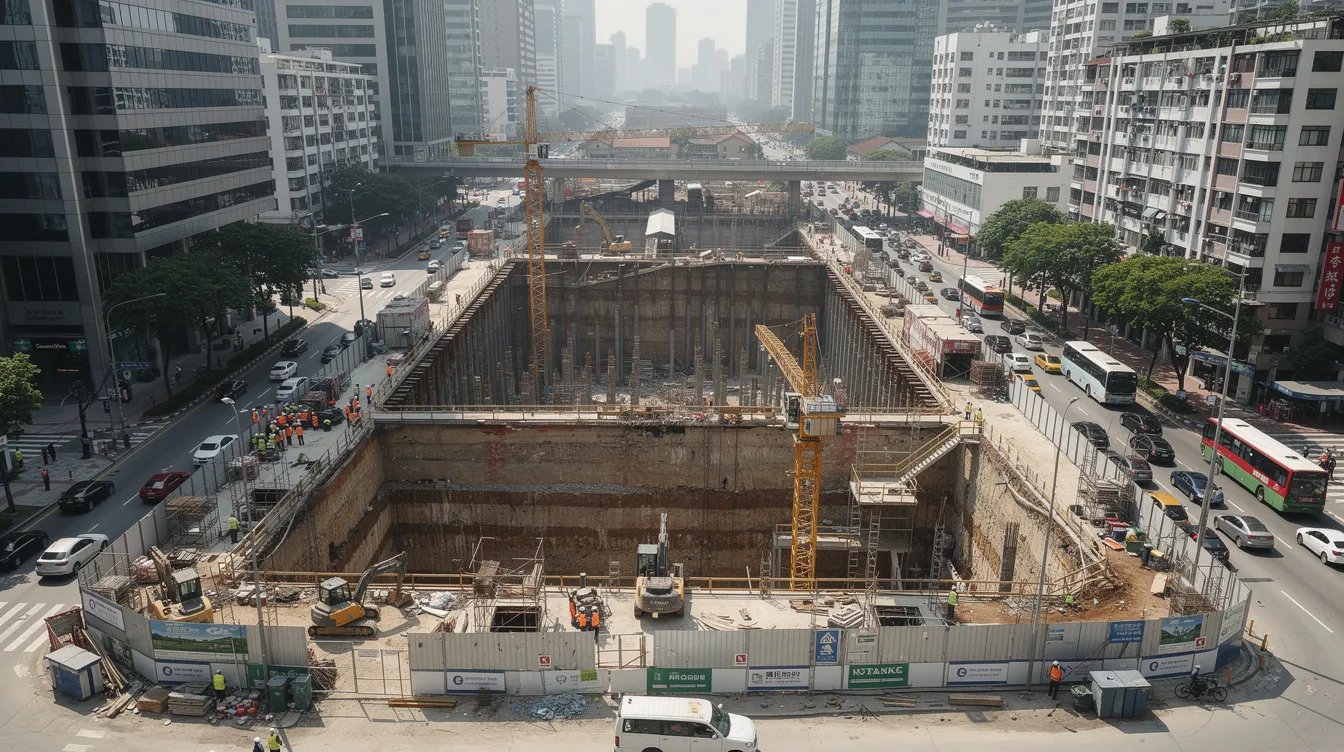
Not every minor civil works contract requires a full external RMF engagement. But certain triggers-regulatory, contractual, risk-based, and capability-based-make it highly advisable or effectively mandatory. This section provides a quick screening framework before you move into the detailed hiring checklist.
Regulatory and Contractual Triggers
Scan your contract conditions and Employer’s Requirements for the following Singapore-relevant triggers:
- Large public infrastructure contracts referencing PSR (Project Safety Review), DfS, or RMF-type facilitation requirements. LTA civil contracts from about 2010 onwards have increasingly included such clauses.
- Works falling under WSH (Risk Management) Regulations requiring documented, reviewed risk assessments for high-risk activities. The RMF ensures compliance with the WSH (Risk Management) Regulations. Under these regulations, risk assessment records must be kept for a minimum of three years and reviewed at least every three years-or sooner if there is a major incident, change in work process, or new hazard information.
- Projects with contract sums ≥ S$10 million automatically trigger the WSH (Design for Safety) Regulations, requiring design risk elimination/reduction processes, DfS review meetings, and a DfS Register.
- Railway Protection Zone or works over/adjacent to public roads requiring approvals from LTA, BCA, or other relevant authorities.
From 1 April 2024, harmonised WSH requirements for public-sector tenders require enhanced evaluation of safety and risk assessment for projects above certain sums-with evaluation weightage of at least 5% overall, or 15% of ‘Quality’ weightage in BCA’s PQM framework. This increases demand for competent RMF services.
Even where “RMF” is not named explicitly, the contractual obligations-formal facilitated risk assessments, structured workshops, documented registers-are functionally equivalent.
Risk-Based Triggers: Complexity and Consequence
Use this qualitative “red flag” checklist. If your project involves two or more of the following, engaging an RMF early in design and method planning is strongly recommended:
- Deep excavation > 6–10 m or staged excavation next to critical assets (MRT tunnels, water mains, building foundations).
- Tunnelling under existing developments, sensitive facilities, or watercourses.
- Long-span temporary bridges, launching gantries, or heavy lifting operations over live traffic-where a single crane operator error could have catastrophic consequences.
- Exclusion zones near high-voltage power lines, gas pipelines, or telecommunications infrastructure.
- High public footfall-transport hubs, hospitals, schools, or mixed-use podiums.
- Simultaneous operations (SIMOPS) where multiple high-risk activities overlap in space or time.
Real-world examples (anonymised):
A deep basement excavation adjacent to an MRT running tunnel proceeded without a structured risk management process. Settlement monitoring data was reviewed only by the contractor’s site team. A trend towards warning signs in ground movement was not escalated until lateral displacement approached trigger levels, forcing an emergency stop-work order and costly remedial measures. An upstream HAZID session led by an experienced RMF would have identified the monitoring-and-escalation gap before excavation commenced.
On another project, a temporary traffic diversion scheme for a viaduct demolition was developed without formal risk facilitation. The initial design did not account for heavy vehicle turning radii and emergency-vehicle access. Only after a near miss during trial diversions was the scheme redesigned-delaying the programme by eight weeks.
Internal Capability Triggers
Even technically strong project teams may lack:
- Structured facilitation skills for large multi-disciplinary workshops with 15–30 participants from different organisations.
- Relevant experience with specific high-risk methods (pipe jacking, ground freezing, long cantilever staging, underground works).
- Time and independence to challenge assumptions across design, contractor, and operator perspectives. An independent facilitator can more effectively challenge project assumptions and biases.
Quick self-test (4 questions):
- Do we have someone trained in formal risk methodologies (HAZID/HAZOP/QRA) for civil works?
- Has our team delivered comparable infrastructure projects in the last 5 years?
- Can our internal team dedicate sufficient time to prepare for and facilitate multi-day workshops without impacting their primary duties?
- Does our team have a good understanding of LTA, PUB, BCA, and SCDF authority-submission processes?
If several answers are “no” or “not sure,” proceed to the hiring checklist below to select the right RMF partner.
The Simple Checklist for Hiring an RMF for Infrastructure Projects
This is the core of the article: a structured, itemised checklist that project leaders can print, adapt into their internal SOP, or embed in their RFP evaluation matrix. The checklist is divided into five clusters: competency and experience; methodology and tools; fit with your project scope; delivery process and culture; and commercial considerations.
Checklist 1: Core Competency and Qualifications
Risk management facilitators need domain expertise in civil engineering or construction. Use these questions to screen candidates:
- ☐ Does the RMF have a civil engineering, structural engineering, or construction management background relevant to bridges, tunnels, roads, and utilities?
- ☐ Are they a Registered Professional Engineer (PE) or hold equivalent credentials with a valid Practising Certificate?
- ☐ Have they completed MOM-recognised risk management training (e.g. WSQ Risk Management courses via SSG) or equivalent formal facilitation courses?
- ☐ Have they attended and passed the Design for Safety Professionals course (MOM-recognised)?
- ☐ Do they understand Singapore’s WSH Act, Risk Management Regulations, and 2015 Design for Safety Regulations? Local statutory compliance includes regulations like Design for Safety and Workplace Safety and Health.
- ☐ Have they acted as RMF (or equivalent) on at least 2–3 infrastructure projects in the last 5–7 years of similar scale and complexity?
- ☐ Can they provide references or case summaries showing successful risk workshops and outcomes-not just generic template outputs?
- ☐ Risk management facilitators should have relevant qualifications in risk management, project management, or engineering.
Stellar Structures’ RMF team typically pairs facilitation with in-house PE-registered structural engineers where project scope demands integrated structural and risk management input.
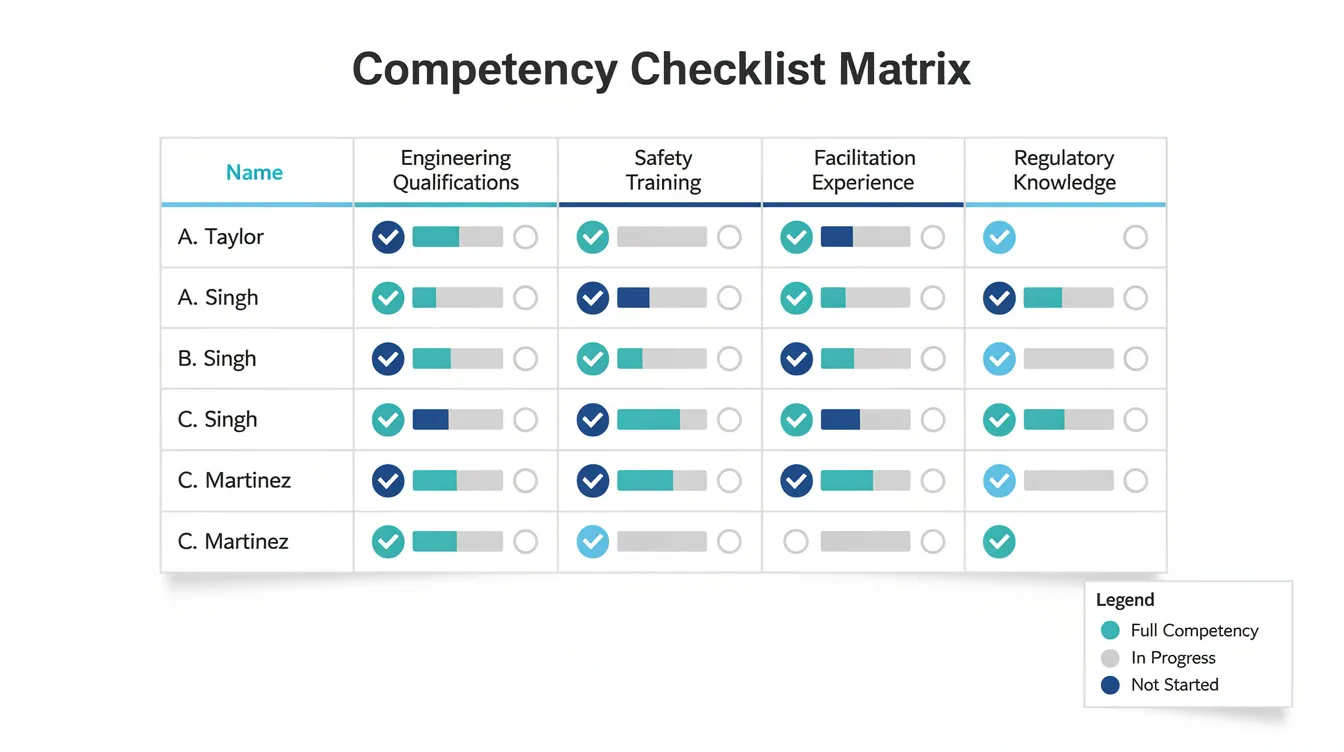
Picture suggestion: simple “competency matrix” visual showing ticked boxes for engineering, safety, facilitation, and regulatory knowledge.
Checklist 2: Risk Assessment Methodology and Tools
Methodology determines how robust and defensible the risk management output will be. Qualitative and quantitative risk assessment methods are both important for infrastructure projects.
- ☐ Can the RMF clearly explain which methodologies they will use? HAZID is used at project phase starts; HAZOP is adapted for tunnelling and E&M systems; quantitative risk assessment (QRA) is for major hazards. Quantitative risk analysis fluency is crucial for major infrastructure projects.
- ☐ Do they tailor their approach to infrastructure works-e.g. excavation risk matrices, ground settlement assessments, SIMOPS analysis-rather than applying a generic template?
- ☐ Can they integrate with your digital tools, such as BIM models, 3D clash detection, or e-Permit-to-Work systems?
- ☐ Do they provide clear templates for risk registers, bow-tie diagrams, and action tracking?
- ☐ Do their risk registers clearly assign risk ownership and include action plans for mitigation, with explicit residual risk levels?
- ☐ Can they conduct risk assessments that assess strategic and emerging risks throughout the project lifecycle, not just at a single point in time?
Picture suggestion: screenshot-style mock of a risk register or bow-tie diagram (non-branded), showing likelihood-consequence matrix for typical construction risks.
Checklist 3: Fit with Your Project Scope, Authorities and Stakeholders
A technically strong RMF still needs domain familiarity with local authorities and stakeholder expectations. Risk management facilitators should have local regulatory familiarity, especially in dense urban environments like Singapore.
- ☐ Has the RMF worked on projects requiring approvals from LTA, BCA, PUB, JTC, URA, or SCDF (depending on your project type)?
- ☐ Are they comfortable facilitating risk management sessions with mixed stakeholder groups-client, designers, contractors, operators, regulators?
- ☐ Can they schedule workshops around critical milestones: Preliminary Design, Detailed Design, start of major excavation, traffic diversion, and commissioning?
- ☐ Are they able to produce documentation in formats that match your contract or authority-submission requirements-e.g. PSR submissions, DfS records, method statement annexes?
- ☐ Do they understand public-facing risks such as traffic safety, noise/vibration, and community interfaces?
- ☐ Understanding commercial and contractual interactions is vital for risk management in infrastructure projects-does the RMF appreciate how risk decisions affect programme and cost?
Checklist 4: Delivery Process, Communication Style and Culture
“Soft skills” often determine workshop effectiveness and buy-in from the project team.
- ☐ Do they provide a clear facilitation plan (number of workshops, expected duration, stakeholders required) before appointment?
- ☐ Can they explain how they will manage disagreements between design, construction, and operations teams during risk management meetings? Facilitation skills are essential for conflict resolution among diverse project stakeholders.
- ☐ Are their sample outputs (minutes, risk registers, action lists) clear and actionable for engineers and site supervisors-not academic exercises?
- ☐ Do they promote a “no-blame” culture in workshops so near misses, design weaknesses, and site challenges are openly discussed? Facilitators must create psychological safety in project teams to encourage open discussions.
- ☐ Will they support follow-up actions after the workshop rather than just issuing one-off reports? A facilitator should maintain accurate and current risk registers and meeting documentation.
- ☐ Will they track residual risk and confirm that agreed controls are being implemented on site?
Picture suggestion: photo of a multi-disciplinary workshop environment with drawings, risk matrices, and digital screens visible.

Checklist 5: Commercials, Timing and Scope Clarity
This checklist group helps avoid misunderstandings over fees, duration, and deliverables.
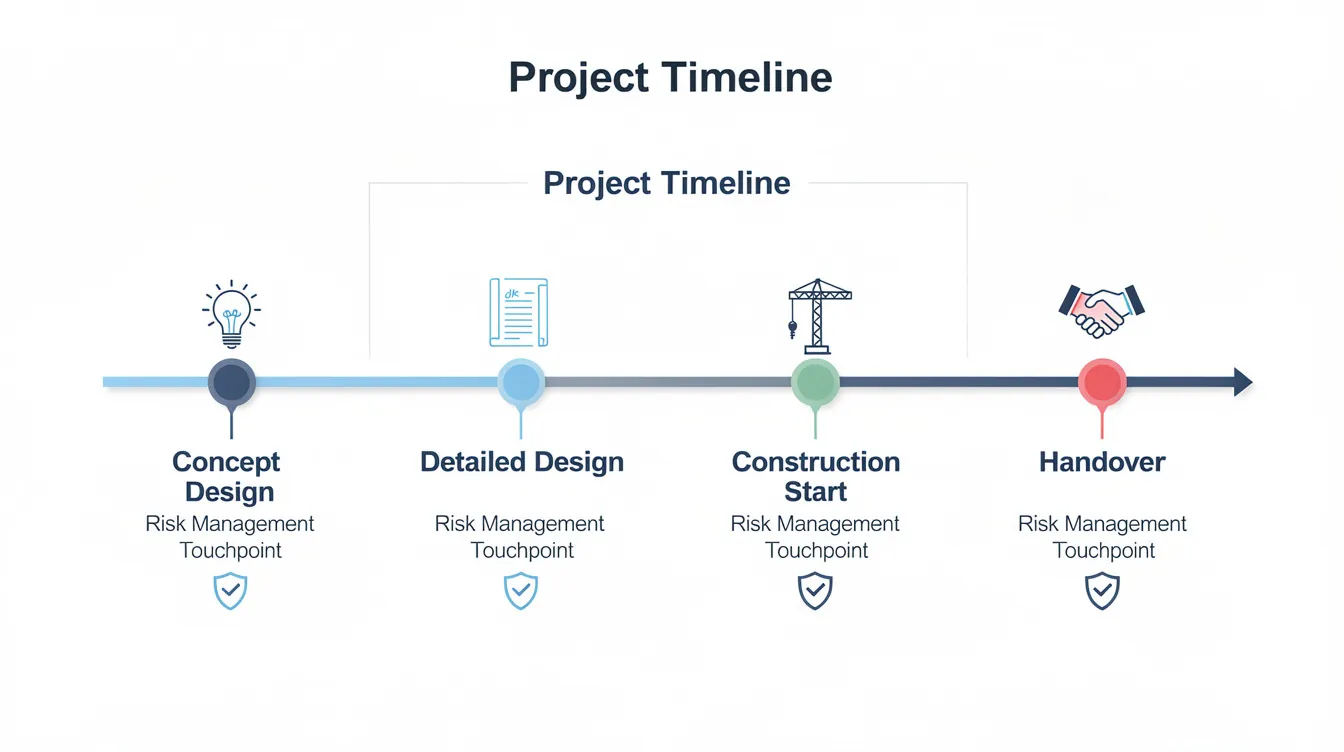
- ☐ Is the RMF’s scope of work clearly broken down by project phase (concept, detailed design, construction, handover)?
- ☐ Are site visits, preparation time, and follow-up meetings explicitly included or excluded?
- ☐ Is the pricing structure transparent-fixed fee per phase, per workshop, or blended retainer?
- ☐ Are assumptions on project duration, design freezes, and major method changes clearly documented?
- ☐ Have you agreed on ownership and confidentiality of risk registers and reports?
- ☐ For reference, RMF roles on major infrastructure projects in Singapore typically command SGD 7,000–12,000 per month-but engagement models for external consultants may differ from salaried positions.
Request a short written proposal before committing. Key commercial questions to ask shortlisted RMFs:
- What is included if the project programme extends beyond the assumed duration?
- How are additional workshops (triggered by design changes or new major hazards) priced?
- What is the handover process for risk registers and documentation at contract completion?
Note: only shortlisted candidates who meet the criteria in Checklists 1–4 should progress to commercial discussions.
Implementing RMF Support Across the Infrastructure Project Lifecycle
A good RMF does not simply deliver a workshop and disappear. The value lies in how risk management integrates into the actual project timeline-from early concept through operations. This section shows who does what, when.
Where the RMF Adds Value in Each Project Phase
Planning & Concept Design The RMF leads early HAZID sessions to compare alignment options, construction methods, and staging approaches. At this stage, the RMF prepares Civil Design Safety Submissions for LTA projects as part of the DfS process. Facilitators should validate risks across different project stages, from feasibility to construction. The goal is to eliminate or reduce foreseeable risks “at source”-before design is locked in. Early engineering consultation pays dividends here.
Detailed Design Deeper detailed risk assessment follows for confirmed methods: traffic management sequences, temporary works staging, utility protection measures, and ground treatment strategies. The RMF leads hazard identification sessions with multidisciplinary teams-structural engineers, geotechnical specialists, traffic engineers, M&E consultants. Safe Work Procedures (SWP) begin to be developed at the site execution level.
Construction Method-specific risk reviews before key activities: launching gantries, deep shaft excavation, cut-over works, heavy lifting operations. The RMF updates the Hazard Register during the construction phase, ensuring that site conditions encountered in the field are reflected in the live risk register. The RMF prepares the Civil Construction Safety Submission before excavation permits are issued. Safety must be demonstrated as ALARP at each critical phase.
Handover & Maintenance The Handover Safety Submission occurs one month before system testing. The RMF ensures that access provisions, fall protection, confined-space protocols, and maintenance procedures for long-term O&M are documented and risk-assessed for maintenance teams. This is often where enterprise risk management objectives intersect with operational safety requirements.
Schedule RMF engagement at least 3–6 months before high-risk works to avoid last-minute scrambling that turns facilitation into a box-ticking exercise.
Picture suggestion: timeline graphic with icons marking RMF touchpoints at concept, detailed design, construction, and handover.
Example Engagement Flow with Stellar Structures
A typical RMF engagement by Stellar Structures on a mid-size infrastructure project-say a new overhead bridge or linkway over an arterial road, or a drainage upgrade with deep box culvert-follows this general sequence:
- Initial scoping call – Review of project constraints, geotechnical data, authority requirements, and programme milestones.
- Proposal with tailored RMF scope – Indicative workshop schedule tied to design and construction phases, with clear deliverables and assumptions.
- Baseline HAZID workshop – Using available design drawings, survey data, and site conditions to identify major hazards and assign initial risk ratings.
- Follow-up risk management sessions – Keyed to specific construction stages (e.g. start of piling, traffic diversion activation, heavy lifting operations) and authority submissions.
- Interim reviews and action tracking – The RMF maintains the risk register, tracks action closeout, and flags residual risk levels that remain above acceptable thresholds.
- Final consolidation – Risk register closure, lessons-learned documentation, and handover package for future operations.
Where Stellar Structures is also engaged for structural design, temporary works, or authority submissions, the RMF work is coordinated with these streams-ensuring that risk decisions flow directly into engineering deliverables rather than sitting in isolated documents.
Common Pitfalls When Hiring an RMF – And How to Avoid Them
Many project teams treat the RMF as a formality-a governance task to satisfy a contract clause. The result is weak outcomes that add cost without adding safety or value. Here are the most common mistakes and how to correct them.
Problem 1: Treating RMF as a Box-Ticking Exercise
Typical warning signs: Last-minute appointment weeks before excavation, a rushed one-hour “workshop,” copy-paste risk registers with no project-specific content.
Solution:
- Engage RMF early-align their timeline with design and method statement milestones, not with the start of construction.
- Insist on live, facilitated sessions with real participation from design, construction, and operations representatives, rather than purely document-based assessments.
- Request sample outputs from previous projects to verify depth of analysis before award. Reject anything that looks like a generic template with find-and-replace project names.
Problem 2: Hiring Someone Without Infrastructure or Local Experience
The risk: A facilitator with generic workplace safety credentials but no deep excavation, tunnelling, or traffic management experience in the construction industry will miss critical infrastructure-specific hazards-ground settlement, vibration impacts on adjacent structures, geotechnical risks, utility strike scenarios.
Solution:
- Use the checklist’s competency and project-fit sections to probe specific infrastructure case studies.
- Ask how they have dealt with local approvals (e.g. LTA traffic management plans, Railway Protection Zone clearances, PUB crossings).
- Prefer teams who can “speak the same language” as your designers and contractors-people with relevant experience in civil engineering construction, not just in enterprise risk management frameworks from other industries.
Problem 3: Poor Integration with DfS and Authority Submissions
The issue: RMF outputs exist in isolation-risk registers that are never referenced in DfS reports, PSR submissions, or method statements. Construction safety suffers when documents do not talk to each other.
Solution:
- Map at the start how RMF deliverables will feed into DfS reviews and authority submissions (e.g. LTA PSR, SCDF fire safety submissions).
- Ensure your RMF and DfS Professional communicate regularly and share risk registers and action lists.
- Use compatible templates and version control so risk decisions are traceable across documents. The RMF ensures that risk management outputs are living documents, not filing-cabinet archives.
Problem 4: No Follow-Through on Agreed Controls
Even well-run workshops fail if actions are not tracked into site practice. A lifting plan agreed in a risk workshop is useless if the lifting supervisor on site has never seen it.
Solution:
- Request that the RMF produces a clear action tracker assigning responsibility and due dates.
- Integrate key risk controls into method statements, permits-to-work, and inspection checklists used on construction sites.
- Schedule short, periodic review meetings (or online updates) with the RMF during critical phases-preventing accidents requires sustained attention, not one-off events.
- Confirm that residual risk levels are re-assessed after controls are implemented.
Conclusion and Next Steps
The RMF role is fundamental to managing the inherent construction risks and public-safety exposures of infrastructure projects. From deep excavation adjacent to live rail lines to heavy lifting operations over arterial roads, the consequences of poor risk management are measured in lives, public disruption, and project-threatening delays.
This article’s checklist-spanning core competency, methodology, project fit, delivery culture, and commercials-gives project teams a systematic way to decide when an RMF is needed and how to choose the right facilitator. The goal is not perfection on paper; it is ensuring that risk management meetings produce actionable outcomes that flow into every method statement, every permit, and every safety protocol on site.
Practical next steps:
- Review your current or upcoming infrastructure projects against the regulatory and risk-based triggers described above.
- Adapt the five-part hiring checklist into a one-page internal SOP for your organisation’s procurement or project-initiation process.
- Gather key project information-alignment drawings, geotechnical data, outline construction methods, authority requirements, and programme milestones-in readiness for RMF engagement.
- Shortlist 2–3 RMF providers and use the checklist questions in your RFP or interviews.
- Consider integrating RMF with DfS, structural engineering, and authority-submission support for a more coherent, less fragmented approach to development safety.
Stellar Structures can support as RMF and as an integrated engineering and authority-submission partner for infrastructure works in Singapore and nearby markets.
Related topics you may want to explore:
- Design for Safety (DfS) for MRT and road projects
- Temporary works design and independent checking for deep excavation
- Managing high-risk construction in urban Singapore
Additional Resources and Picture Ideas
This short section lists genuinely useful add-ons for teams implementing the checklist:
Suggested downloadable or internal tools:
- A one-page printable RMF hiring checklist summarising the five checklist clusters above.
- A simple RMF screening decision tree (yes/no flow chart based on the regulatory, risk-based, and capability triggers).
- A sample anonymised risk register layout tailored for civil infrastructure-showing hazard identification, risk rating, control measures, residual risk, ownership, and action status.
Visual aid ideas for article placement:
- Lead hero image: Busy infrastructure worksite (road + MRT + utilities) with overlay text “RMF Checklist.”
- Process diagram: RMF involvement across the project lifecycle-concept, design, construction, handover.
- Workshop photo: Multi-disciplinary risk workshop with drawings, risk heat maps, and BIM on screen.
- Risk heat map: Stylised graphic showing likelihood vs. consequence for typical infrastructure risks (settlement, structural failure, traffic incident, utility strike).
FAQ: Quick Answers on Hiring an RMF for Infrastructure Projects
These frequently asked questions are designed for quick reference by project directors, quantity surveyors, and owners who need fast answers.
Is an RMF legally required for every infrastructure project in Singapore?
“RMF” as a specific job title is not mandated for every project. However, competent facilitation of risk assessments is required for higher-risk works under the WSH (Risk Management) Regulations, and the DfS Regulations apply to projects with contract sums ≥ S$10 million. Many public infrastructure contracts now explicitly require structured risk management and PSR processes-which in practice necessitate an RMF-type role to ensure compliance and to conduct risk assessments that meet regulatory standards.
At what stage should I appoint an RMF for a new road, bridge, or rail project?
Involve the RMF from early design-preliminary or concept stage-so that construction methods and alignments can be influenced before they are locked in. As a ballpark, plan to have the RMF engaged 3–6 months before major excavation, launching, or traffic diversions are scheduled. The RMF operates throughout the entire project lifecycle, so early appointment allows them to build context that improves every subsequent risk management session.
Can my internal safety team act as RMF instead of hiring externally?
Internal teams can take on RMF functions if they have the right competence, independence, relevant training, and facilitation skills-and if contract conditions allow it. However, an external RMF brings independence (ability to challenge assumptions without organisational pressure), specialist infrastructure experience, and dedicated focus during intense project phases. For jobs where the RMF must also serve as the qualified person for DfS, verify that internal candidates hold the required DfS Professional certification.
How much does it typically cost to engage an RMF for an infrastructure project?
Costs vary widely. For smaller single-structure projects (e.g. a pedestrian overhead bridge), the engagement may involve a handful of workshops over several months. For multi-year MRT-adjacent works, the RMF may be embedded for the full construction duration. Job postings in Singapore show RMF salary ranges of SGD 7,000–12,000 per month for major infrastructure roles. External consultancy fees will reflect project duration, number of workshops, and need for site visits or advanced modelling. In all cases, RMF costs are a tiny fraction of project value-and far less than the impact of major incidents, redesigns, or schedule overruns.
What information should I prepare before speaking to potential RMFs?
Gather and share these key documents: preliminary drawings, alignment or layout plans, geotechnical reports, outline construction methods, authority requirements (LTA, PUB, BCA as applicable), and key programme milestones. Providing these early allows the RMF to propose a realistic scope and fee, and to flag major risk hotspots from the outset-turning the first risk management meeting from a general discussion into a focused, productive session.