




Introduction
Managing dangerous goods hazardous substances in JTC facilities plan consent guidelines is a multi-layered process that demands coordinated regulatory approval from JTC, the National Environment Agency (NEA), and the Singapore Civil Defence Force (SCDF) before any diesel tank, LPG bullet, boiler, chimney, or petroleum and flammable materials installation can be commissioned. Operations managers working in Singapore’s industrial developments-across estates like Jurong, Tuas Biomedical Park, and Woodlands-must understand that no single agency grants blanket permission; each authority controls a distinct dimension of fire safety, environmental protection, and estate management.
This article is written for chemical, biomedical, pharmaceutical, and manufacturing operations and EHS managers running processes in JTC-leased premises, as well as project teams and Qualified Persons (QPs) responsible for design and submission. The scope covers fixed installations: diesel storage tanks for generators, LPG tanks for process heating, industrial boilers and associated chimneys, P&FM rooms, and chemical storage in JTC units. It excludes aviation and shipping DG transport and non-JTC freehold sites.
Any dangerous goods or hazardous substances installation in JTC premises must be planned together with a qualified person and typically requires SCDF fire safety and P&FM approval, NEA pollution control and hazardous substances clearances, and JTC plan consent before construction or renovation works commence. Prior or concurrent approvals from national agencies are required for JTC landowner consent, and JTC’s consent is conditional upon statutory clearances from NEA and SCDF.
By reading this guide, you will:
-
Understand which activities in JTC facilities trigger P&FM, hazardous substances, and pollution control approvals.
-
See the correct sequence of NEA, SCDF, and JTC submissions for tanks, boilers, LPG, and chimneys.
-
Learn the main technical and layout constraints that affect facility design, corrosion resistant racking, and storage planning.
-
Identify common pitfalls that delay JTC plan consent and how to avoid them.
-
Know when and how Stellar Structures can support with engineering design and authority submissions.
Throughout this article, annotated photos and diagrams-such as compliant tank bunds, boiler rooms, and P&FM stores-visually support each explanation.
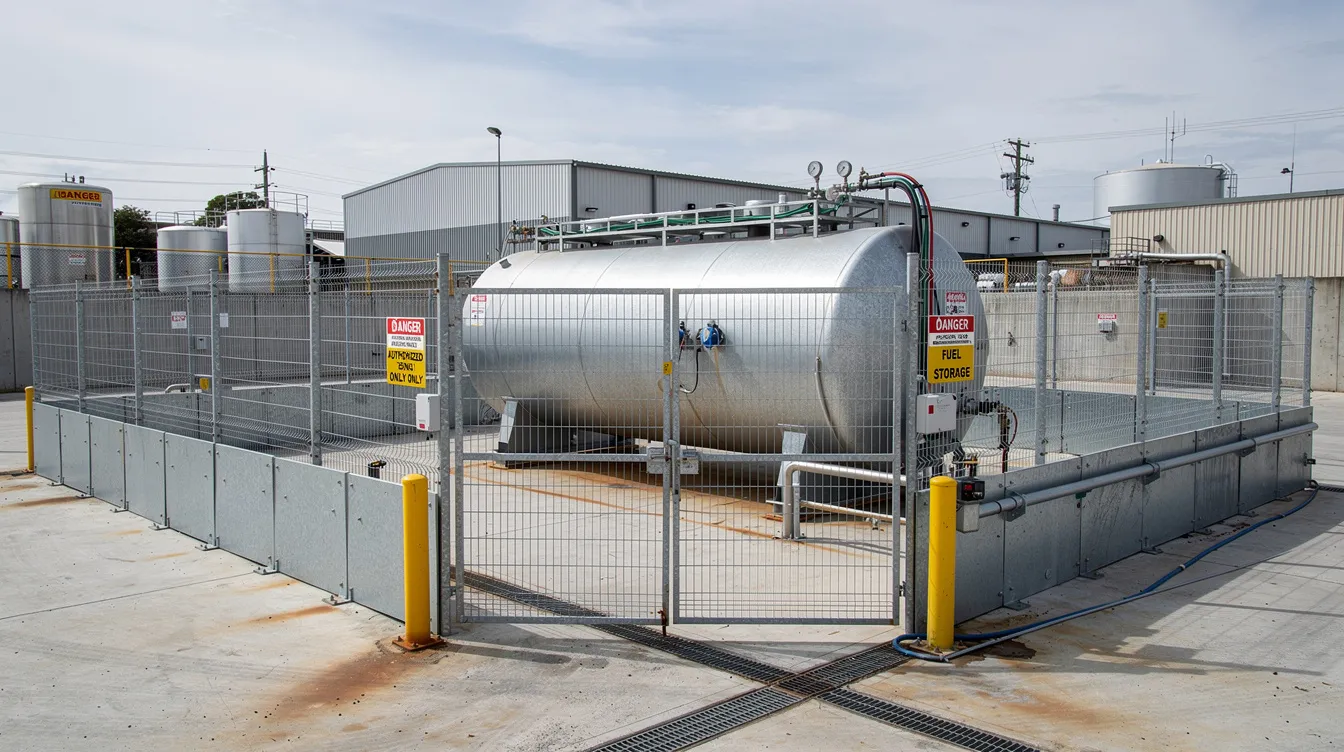
Understanding Dangerous Goods Management in JTC Industrial Facilities
In Singapore’s regulatory framework, “dangerous goods” and “hazardous substances” are governed by distinct but overlapping regimes. SCDF regulates petroleum and flammable materials under the Fire Safety Act, while NEA controls hazardous chemicals under the Environmental Protection and Management Act (EPMA). JTC, as landlord and estate master planner, imposes additional estate-specific rules that further restrict what can be installed, where, and how.
These three sets of requirements-fire safety, environmental protection, and estate management-must be synchronised at the design stage, not after tenants move in. Failing to coordinate from the outset leads to conflicting layouts, rejected submissions, and hefty fines or enforcement action.
Key Regulatory Concepts and Definitions
Petroleum & Flammable Materials (P&FM) are regulated by SCDF under the Fire Safety Act. P&FM includes petroleum products classified by flash point: Class 0 (LPG), Class I (flash point below 23 °C), Class II (23–60 °C, which includes diesel), and Class III (60–93 °C). When quantities exceeding exemption thresholds are stored, SCDF issues P&FM storage licences. Flammable materials such as solvents, paints, and process chemicals also fall under this regime.
Hazardous Substances are regulated by NEA under the Environmental Protection and Management Act (EPMA), often referred to as the protection and management act. These include chemicals with high toxicity, mass-disaster potential, persistence, bioaccumulation characteristics, or ozone-depleting properties. Activities such as storing, manufacturing, and importing controlled hazardous substances require a hazardous substances licence or hazardous substances permit depending on quantity and substance type. Chemicals must be classified according to Singapore’s Globally Harmonized System, and proper documentation including Safety Data Sheets must be maintained for hazardous substances.
Some installations are governed by both regimes simultaneously. A diesel tank feeding emergency generators, for example, triggers SCDF P&FM licensing for fire safety while also requiring NEA oversight for spill containment and environmental conditions. Certain substances may additionally fall under MOM’s Workplace Safety and Health Act for workplace control measures involving toxic gases, carcinogens, and corrosives.
JTC plan consent and space submission refer to JTC’s regulatory approval of architectural, structural, and internal layout plans for any development, renovation works, additions, or change of use within a JTC unit. JTC requires submissions to be prepared and endorsed by a qualified person. The sections that follow map these definitions to practical facility-planning steps.
How JTC, NEA and SCDF Roles Interact
JTC functions as the landlord and estate master planner. It controls what can be installed in each estate and specific unit, setting baseline restrictions through lease conditions, site zoning (aligned with the urban redevelopment authority Master Plan classifications of B1, B2, Business Park, and similar zones), and development parameters such as GFA, building height, and structural load limits. JTC requires formal consent before storing hazardous materials in its facilities, and JTC land-use approvals are separate from SCDF and NEA licensing approvals.
NEA serves as the environmental and hazardous-substance regulator, overseeing pollution control, hazardous substances licensing, air emission permits for chimneys and industrial plant, noise impacts, and-under the newer mandatory chemical reporting framework-reporting obligations for chemicals manufactured or imported at quantities exceeding one metric tonne per year. A hazardous substances licence is required for importing chemicals, and a hazardous substances permit is required for local chemical usage.
SCDF-the Singapore Civil Defence Force-acts as the fire safety and P&FM regulator, enforcing the Fire Code, issuing P&FM storage and transport licences, reviewing fire safety works, and conducting inspections. Transport approval is needed for hazardous substances over specified limits.
Consider a practical example: an SME installing a 10,000-litre diesel tank in a JTC Tuas unit. JTC must first confirm that the estate zoning and unit lease allow bulk fuel storage. NEA must assess environmental containment and, depending on use, may require a hazardous substances licence. SCDF must review the fire safety plan, issue a P&FM storage licence, and inspect the completed works. Without all three agencies aligned, the project cannot proceed.
URA zoning (B1 vs B2, for instance) and JTC’s own estate controls set the baseline for whether DG or P&FM uses are even allowed on a given site. These checks must be completed before any NEA or SCDF applications are submitted. The next section drills into specific DG installations and what managers must consider before applying.
Core Installation Types and Their Regulatory Triggers in JTC Units
Different equipment types-diesel tanks, LPG systems, boilers, chimneys, chemical stores-each trigger specific consent routes and design safety requirements. This section helps operations managers quickly identify which rules may apply to their planned project and what documentation to prepare.
Diesel Storage Tanks and Generator Day Tanks
Diesel storage is among the most common DG installations in JTC estates, supporting emergency generators, process equipment, and forklift refuelling. Typical tank sizes range from 2,000 to 30,000 litres, with smaller day tanks of around 500 litres sometimes used for single generators.
The main regulatory triggers include:
-
SCDF P&FM storage licence: Diesel is classified as Class II petroleum. In a standard factory, exemption thresholds allow up to 1,000 litres of Class II petroleum stored in airtight containers without a valid licence. Above that volume, a P&FM storage licence is mandatory.
-
NEA hazardous substances or pollution control considerations, particularly when diesel additives are present, throughput is significant, or spill risk affects drainage.
-
JTC requirements on location-open yard versus rooftop versus within the unit-and structural loading checks by a Professional Engineer.
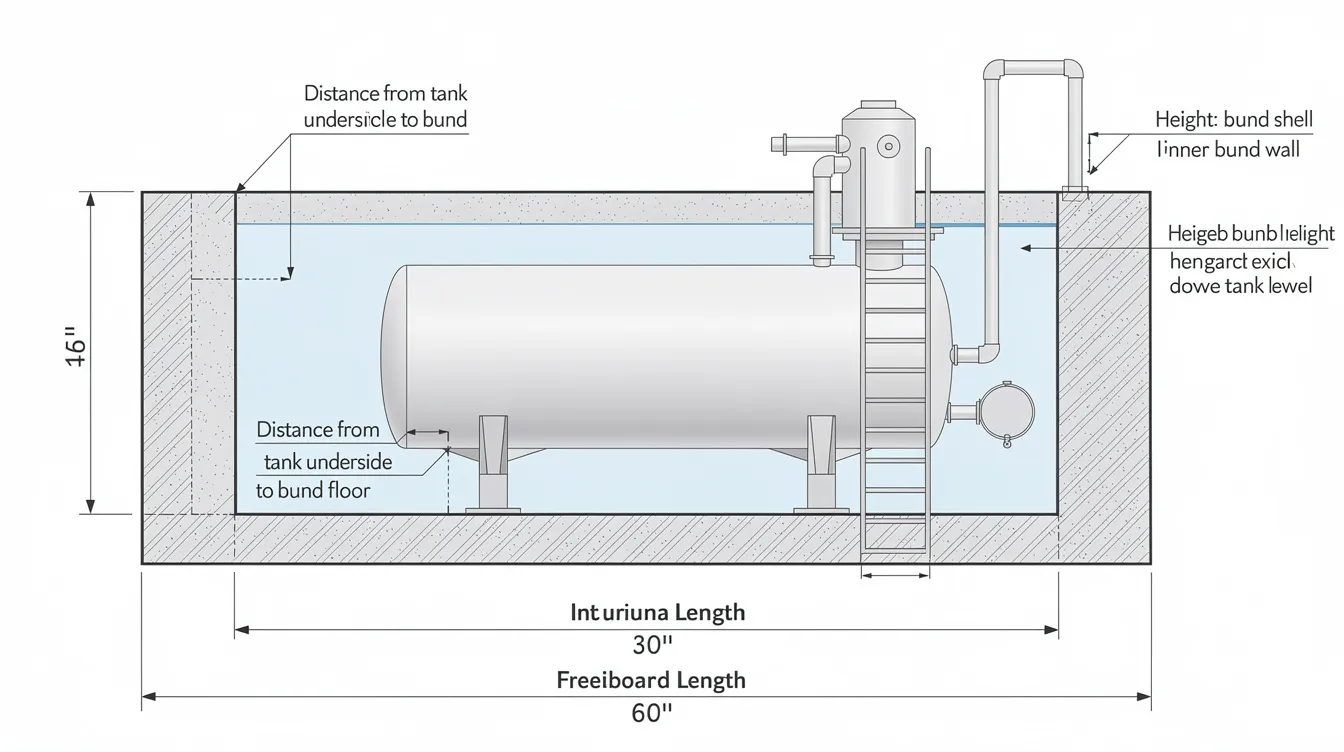
Design elements that must be planned include: bund capacity (secondary containment systems must be in place to prevent spills and environmental runoff, sized at a minimum of 110% of the largest tank volume), separation distance from property boundaries and openings, vent and fill pipe routing, access for SCDF inspection, and integration with fire protection and detection systems.
LPG Tanks, Manifolds and Cylinder Installations
LPG is used across JTC facilities for process heating, industrial ovens, pilot plants, and even canteens within multi-tenant blocks. Typical systems include central LPG bullet tanks, cylinder banks stored safely in locked cages, and pipe manifolds running into production halls.
Key controls include:
-
SCDF approvals for LPG bulk storage (Class 0 petroleum), with stringent separation from ignition sources, boundary lines, and openings. Crash barriers, fencing, and gas-leak detection with emergency shutoff valves are required. Storage areas must be sheltered, fenced, and locked.
-
JTC estate limitations: in multi-tenant blocks, LPG storage may only be allowed at ground floor level or in external yards, avoiding internal penetrations. Shared walls, ventilation, and potential leak pathways must be carefully managed. JTC’s restrictions on approved location and placement depend on whether the site is a high-density business park or a heavy industrial estate such as Jurong Island.
-
NEA concerns arise where LPG combustion contributes to stack emissions-particularly NOx, CO, and VOCs-that may require monitoring or an industrial plant permit if firing rates are high or the site is near sensitive receptors.
Photos of compliant LPG cages and external bullet locations can be embedded in project submissions to guide non-engineers through expected layouts.
Industrial Boilers, Furnaces and Chimneys
Steam boilers and process heaters are common in pharmaceutical, biomedical, and surface-treatment operations occupying JTC sites. These installations link to multiple regulatory systems simultaneously:
-
Fuel systems (diesel, LPG, town gas, or dual fuel) trigger the relevant P&FM licensing requirements.
-
Stacks and chimneys for flue gas discharge must meet NEA emission limits for particulates, NOx, SO₂, and VOCs, with stack heights often dictated by dispersion modelling and distance to sensitive receptors.
-
Blowdown and wastewater systems may be governed by NEA and PUB.
Regulatory triggers span all three agencies:
-
SCDF: combustion-room fire safety including compartmentation, fire-rated walls and doors, fuel-line routing, gas detection for gas-fired systems, and emergency shutdown procedures.
-
NEA: emission limits, requirement for a permit to operate chimneys and industrial plant, noise impact assessment, and potential requirement for abatement devices such as filters or scrubbers.
-
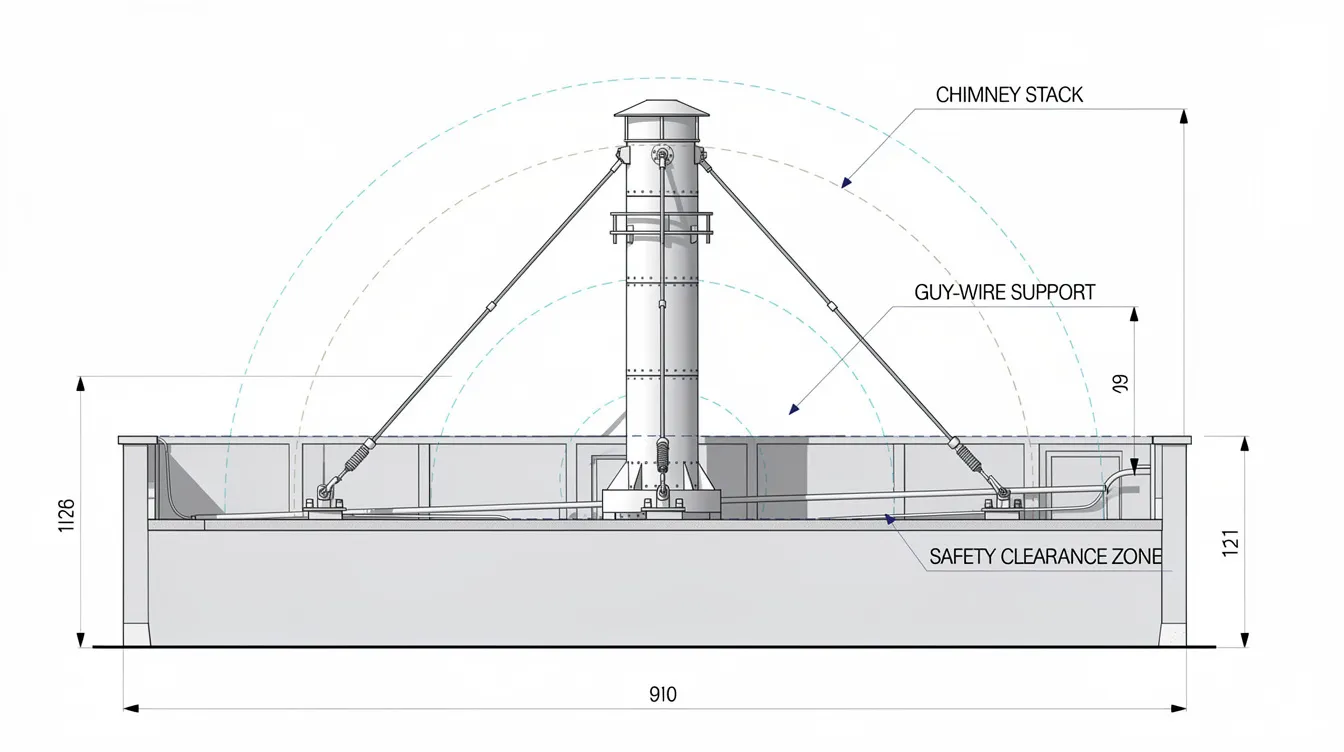
JTC: building height controls for chimneys, visual and estate considerations affecting the skyline, structural submissions for stack foundations and supports, and roof-penetration details.
Chemical Storage Rooms and Hazardous-Substance Stores
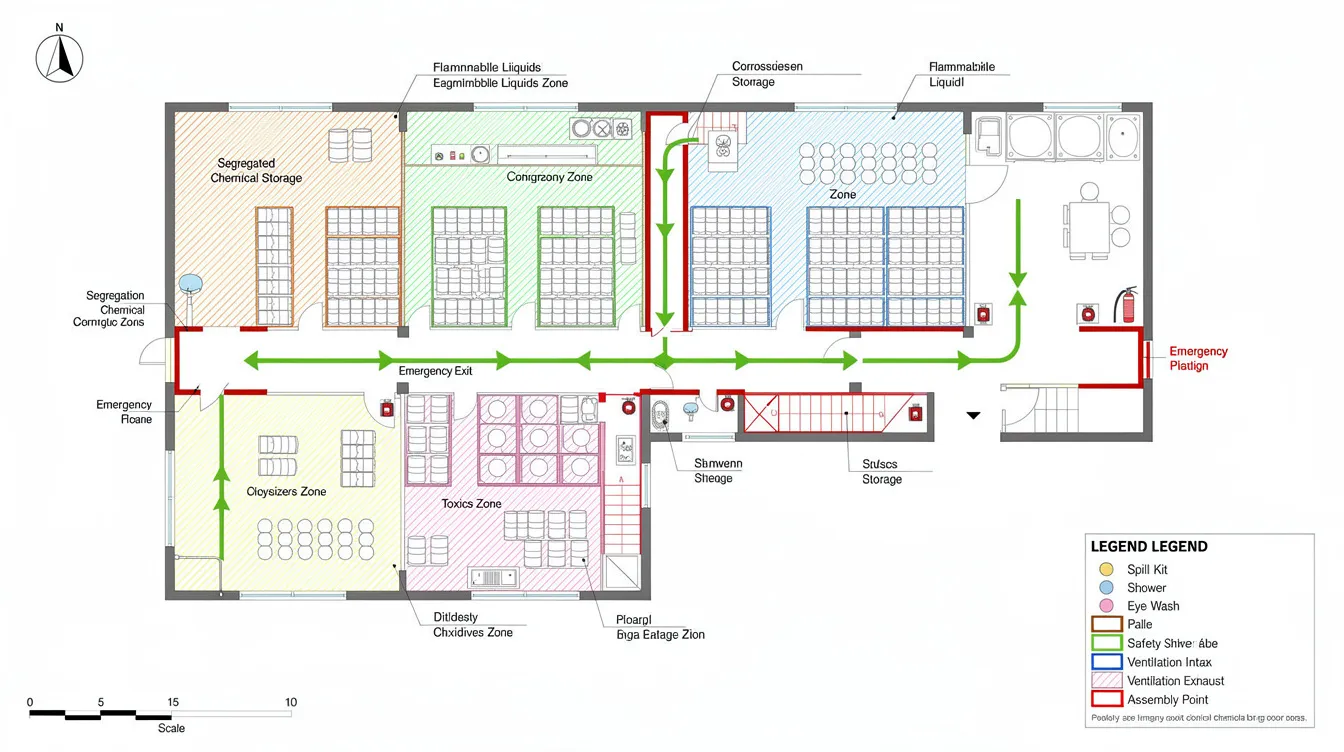
Typical chemical and biomedical facility layouts include raw-chemical stores, flammable-liquid stores, corrosive storage areas, and waste holding areas. Facilities storing hazardous substances must comply with NEA and SCDF regulations simultaneously, and facilities must implement proper chemical segregation to avoid incompatible materials.
NEA requires a hazardous substances licence for storage, and containers must meet internationally-acceptable design standards. Emergency equipment must be readily available in storage areas, and storage facilities may require enhanced security measures. Under recent amendments, substances such as long-chain perfluorocarboxylic acids and medium-chain chlorinated paraffins added from 1 August 2025 now require HS licensing.
JTC internal renovation rules directly affect chemical stores: limits on racking heights and floor loading in B1/B2 units apply, and Professional Engineer endorsements are required when installing mezzanines, heavy corrosion resistant racking, or fixed tanks within stores.
Layout requirements include egress paths, separation between chemical stores and work areas, distance from office or common corridors, chemical waste holding areas, and drainage that avoids mixing acidic or toxic runoff into standard drains without treatment.
In summary, the four core installation types-diesel tanks, LPG systems, boilers/chimneys, and chemical stores-each carry distinct but overlapping obligations across JTC, NEA, and SCDF. The next section provides a step-by-step workflow for navigating these submissions efficiently.
Planning and Submission Workflow for DG Installations in JTC Facilities
Poor sequencing of submissions-such as applying to SCDF before JTC agrees to siting, or neglecting NEA until late in the project-is among the most common causes of delays in DG projects. This section provides a clear, practical step-by-step workflow from concept to operation for operations managers and project teams.
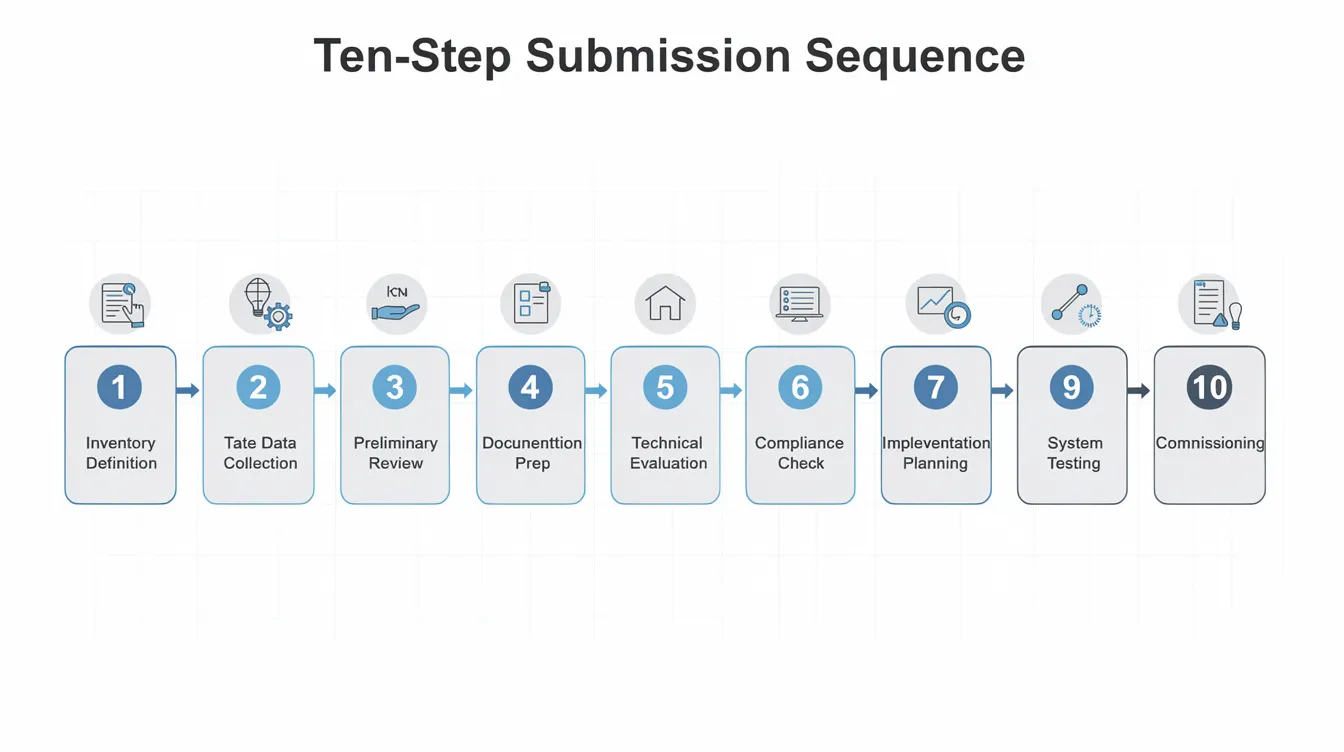
Step‑by‑Step Planning and Consent Process
Use this process for any new tank, LPG system, boiler, chimney, or hazardous-substance store in a JTC unit, or for any significant upgrade that increases capacity.
-
Define inventory and processes: List all dangerous goods and hazardous substances, maximum quantities, hazard classes, and intended operations. Include Safety Data Sheets and UN number references for each substance.
-
Engage a qualified person and consultants early: Appoint a QP (architect or PE) and, where needed, an EHS consultancy like Stellar Structures to interpret NEA, SCDF, and JTC requirements across all installation types.
-
Confirm land use, estate rules, and building constraints: Verify B1/B2 classification with the urban redevelopment authority Master Plan, check JTC estate-specific DG allowances, height limits for chimneys, and environmental site assessment requirements. Managing dangerous goods requires alignment with land-use policies and safety regulations.
-
Develop preliminary layouts: Produce plan and section drawings showing tank, boiler, LPG, and chemical store locations, access routes, separation distances from boundaries and neighbouring tenants, and secondary containment.
-
Conduct internal risk assessment: Where thresholds are met (large diesel tanks, extensive chemical inventories, LPG bullets), initiate a quantitative risk assessment discussion with MOM’s Major Hazard Department. A quantitative risk assessment may be required for high-risk chemical storage.
-
Submit concept to JTC: Initiate Industrial Siting Consultation or space-use discussion to confirm permissibility before committing to detailed design. JTC requires formal consent before storing hazardous materials in its facilities.
-
Prepare and submit NEA applications: NEA environmental submissions include pollution control studies, hazardous substances licence or permit applications, chimney and industrial plant permits, and emission modelling where needed. Emergency response plans must be included in permit applications.
-
Prepare and submit SCDF applications: File Fire Safety Plans and P&FM licence applications via the relevant portal, coordinated with the QP. Include storage layouts, bunding details, fire protection drawings, and safety precautions.
-
Make formal JTC plan and space submissions: Submit through Corenet or JTC’s ESPro system as outlined in the JTC submission requirements, including structural calculations for heavy equipment, racking, and mezzanines. Refer to JTC’s space submission handbook for formatting requirements.
-
Coordinate inspections and commission: SCDF inspects storage works and fire safety installations; NEA inspects pollution controls; JTC may inspect structural works. Close out all conditions, formalise internal SOPs and emergency action plan documentation, then commission.
Coordinating NEA, SCDF and JTC Timelines
NEA hazardous substances licences typically require approximately 30 working days for processing, though complex cases involving emission modelling or import of multiple controlled hazardous substances may take longer. SCDF plan approval and P&FM licensing involves plan review, potential revision cycles, and on-site inspections-often taking several weeks for straightforward installations and considerably longer for larger projects. JTC space consent cycles vary by complexity but generally run on a similar multi-week timeline.
Some submissions can proceed in parallel-NEA and SCDF applications, for example-provided the underlying layout is stable and consistent across all drawings. JTC’s in-principle agreement to usage should come early, as it forms the foundation for all subsequent technical submissions.
Chemical reporting becomes mandatory from January 1, 2026, under the mandatory chemical reporting framework. Companies must report chemicals meeting specific criteria to NEA, and reporting obligations depend on strict threshold quantities in metric tonnes. The framework includes two chemical classification tables covering acute toxicity, aquatic toxicity, CMR properties, and persistence/bioaccumulation. Companies must submit five-year storage forecasts under new regulations. For facilities storing larger volumes of hazardous substances, this framework adds a reporting layer to project timelines that must be factored in from the outset.
Operations managers should allow contingency in project schedules for additional clarifications, resubmissions, or site inspections from all relevant authorities.
Design Considerations for Racking, Floor Loads and Equipment Layout
DG plan consent interacts directly with warehouse and plant layout design within JTC units:
-
Floor loading: Older JTC buildings may have typical slab capacities of 2–4 kPa, which can be insufficient for heavy diesel tanks, LPG bullets, or densely palletised chemical storage. Newer units may offer higher capacities, but verification through original structural drawings is essential.
-
Fire safety layout: SCDF requires adequate aisle widths, ceiling clearance, and in-rack sprinkler systems when storing flammable materials on racking. These requirements interact with racking height limits imposed by JTC.
-
Structural restrictions: Installing heavy mezzanines under chimneys or above P&FM rooms is generally restricted and requires PE sign-off with careful load analysis.
Photos or diagrams comparing compliant and non-compliant racking layouts in JTC factories serve as valuable references for project teams. These design considerations reinforce the critical need for early QP and consultant involvement.
Detailed Multi‑Agency Requirements for Specific Installation Types
This section provides a deeper, more technical look at what each authority specifically evaluates, using diesel tanks, LPG systems, and boilers/chimneys as worked examples. The content is aimed at readers who need to prepare data and drawings for their QPs-it does not replace professional design or legal advice.
Diesel Storage: Fire Safety, Environmental and Structural Criteria
SCDF Fire Code expectations for diesel storage include compartmentation of storage areas, separation distances from property boundaries (underground tanks must maintain at least 2.5 m from property boundaries and 1 m from building foundations), venting with flame arrestors, leakage detection systems, and integration with fire detection and suppression. For quantities below the exemption thresholds-up to 1,000 litres of Class II petroleum in airtight containers within a factory-a P&FM storage licence may not be required. Above that threshold, a valid licence from SCDF is mandatory. Recent amendments to the Fire Safety Act introduce class licensing for certain lower-risk premises, such as buildings storing diesel solely for emergency generators.
NEA pollution control concerns centre on secondary containment: bunds must be sized for at least 110% of the largest tank container volume, lined with impermeable and chemically resistant materials, and drained through oil interceptors rather than directly to public drains. Contaminated drainage must be managed to prevent environmental runoff.
JTC structural and estate requirements demand a Professional Engineer’s assessment of slab capacity and tank foundations. Rooftop or upper-storey bulk tanks in multi-tenant buildings are typically restricted. Underground tank capacity is limited to not more than 30 kL per tank.
|
Data Required |
SCDF |
NEA |
JTC |
|---|---|---|---|
|
Tank size & type |
✓ |
✓ |
✓ |
|
Bund design & sizing |
✓ |
✓ |
– |
|
Separation distances |
✓ |
– |
✓ |
|
Structural calculations |
– |
– |
✓ |
|
Fire protection drawings |
✓ |
– |
✓ |
|
Spill containment plan |
– |
✓ |
– |
|
Layout showing access routes |
✓ |
✓ |
✓ |
LPG Installations: Safety Zoning and Estate Constraints
SCDF safety zoning rules mandate generous clearance around LPG bullets and cylinder manifolds, with specific separation from drains, basements, ignition sources, and ventilation openings. Fencing and crash-protection barriers are required, alongside gas-leak detection systems with automatic shutoff valves. All equipment must be contained within properly demarcated safety zones.
JTC concerns focus on the location of LPG systems relative to pedestrian circulation paths, neighbouring tenants, and shared loading bays. In high-density business parks, restrictions are more stringent than in heavy industrial estates. On Jurong Island, for instance, process-related LPG installations may face additional controls due to cumulative risk considerations across the estate.
NEA’s role becomes significant where combustion emissions or odour from LPG use is substantial-particularly in food processing, surface-coating, or other operations generating visible or measurable stack output. An industrial plant permit may be required.
Photos of correctly and incorrectly configured LPG cage layouts serve as effective visual references for distinguishing compliance from non-compliance.
Boilers and Chimneys: Air Emission and Fire‑Safety Integration
NEA chimney and industrial-plant permitting requires detailed documentation: process descriptions, stack drawings with height and diameter specifications, emission calculations for particulates, NOx, SO₂, and VOCs, proposed abatement devices (filters, scrubbers), and ongoing stack monitoring schedules. The national environment agency will assess dispersion modelling results to verify that environmental conditions around the site remain within acceptable limits.
SCDF’s view of boiler rooms encompasses compartment fire rating, emergency power shutoff, fire detection, and gas detection for gas-fired systems. Fuel-line routing must comply with safety requirements including necessary routing instructions for piping through occupied spaces.
JTC controls address stack height relative to building height limits, roof-penetration structural details, and visual impact on the estate skyline. Chimney supports, guy wires, and foundations all require structural engineering submissions.
Information operations managers should gather early includes:
-
Firing rate and fuel type (diesel, LPG, town gas, dual fuel)
-
Planned operating hours per day/week
-
Emission data from equipment supplier
-
Stack height and diameter specifications
-
Proposed abatement equipment details
Case‑Style Mini Examples
Biomedical plant in Tuas Biomedical Park: A facility adding a 20,000-litre diesel tank for standby power and a steam boiler for autoclave sterilisation found that diesel volumes far exceeded the factory exemption threshold, triggering a mandatory SCDF P&FM licence. The boiler’s emissions required an NEA industrial plant permit with dispersion modelling for NOx and particulates. During JTC plan consent review, the original layout placed the tank near a neighbouring lot’s ventilation louvre; the design was revised to relocate the tank to meet separation distances, adding structural foundations and a tanker access road.
Chemical blending facility in Jurong: A tenant needed a flammable-liquid store for solvent racking and an LPG-fired process heater. The LPG bullet triggered SCDF licensing; flammable liquids at quantities exceeding exemption thresholds required a separate P&FM licence; NEA issued a hazardous substances permit for solvents. JTC plan consent and space submission included structural load verification for solvent racks. The chemical store layout was designed to segregate incompatible chemicals-flammables separated from oxidisers-with clear egress routes and hazard warning panels.
These examples demonstrate how proactive multi-agency planning, with a single coordinating consultant maintaining consistent layouts across all submissions, saved time and prevented costly redesign.
Common Challenges in JTC DG Projects and How to Solve Them
Many DG projects in JTC premises encounter similar obstacles: late recognition of DG implications, underestimated structural or Fire Code constraints, and misaligned submission timelines across the relevant authorities. This section lists frequent challenges and practical, actionable responses from an engineering and authority-submission perspective.
Underestimating Floor Loads, Structural Limits and Space Constraints
The problem: Tanks, heavy racking, and boilers are placed on slabs not designed for such loads, or crammed into limited yard spaces, leading to JTC or PE rejection. Older JTC buildings often have structural capacities inadequate for bulk fuel or chemical storage.
Solutions:
-
Always obtain original building structural drawings and JTC’s allowable floor load data before selecting equipment or finalising layouts.
-
Engage a structural PE early to run load checks and propose plinths, load-spreading solutions, or relocation of equipment to ground level or open yard areas.
-
Use 3D visualisations or site photos in planning documents to confirm clearances, especially in cramped multi-tenant environments.
Misaligned or Incomplete Authority Submissions
The issue: Different consultants prepare separate submissions to JTC, NEA, and SCDF without coordination, resulting in conflicting layouts, inconsistent drawings, and repeated queries from each agency.
Solutions:
-
Nominate a single coordinator-often the QP or a consultancy like Stellar Structures-to maintain a “master” layout and track all agency comments in one register.
-
Hold a multi-disciplinary design review before any submission to verify consistency of tank, boiler, LPG, and stack locations and safety distances.
-
Prepare a concise design basis document summarising all key assumptions and cross-reference it in every application to ensure compliance across agencies.
Overlooking Environmental Site Assessment (ESA) and Legacy Contamination
Environmental site assessment requirements can catch project teams off guard. DG installations involving underground tanks, fuel piping, or high-risk SSIC activities within JTC estates may trigger ESA obligations that delay lease approvals or complicate exit strategies.
Solutions:
-
Check JTC’s ESA triggers and SSIC classifications early in project feasibility planning, ideally during the Industrial Siting Consultation phase.
-
Where high-risk DG processes are planned, integrate containment, drainage control, and monitoring wells into the design to ease future ESA and remediation.
-
Record as-built tank and pipeline routes with thorough photographs for future reference during exit ESA processes.
Inadequate Emergency Planning and Training
Even with perfect design, SCDF, NEA, and JTC will scrutinise spill and fire emergency preparedness and staff competence. Emergency response plans must be clear and include mitigation procedures for hazardous substances. Emergency Response Plans must detail immediate responses to chemical spills, and emergency contact numbers must be prominently displayed onsite.
Solutions:
-
Develop integrated emergency action plan documentation covering diesel spills, LPG leaks, boiler fires, and chemical releases, aligned with SCDF and NEA expectations. Emergency plans must list engaged toxic waste collectors for rapid disposal.
-
Ensure personnel complete a manage hazardous substances course. The course duration is forty hours and includes chemical safety management. Training is required for compliance officers managing hazardous substances. Drivers must attend a HazMat Driver Course every two years to handle dangerous goods transport safely.
-
Annual emergency response drills are mandatory for compliance. Use regular drills and photo-documented exercises to demonstrate operational readiness to regulators and insurers.
These challenges are preventable with early planning and professional coordination-a principle that leads directly to actionable next steps.
Conclusion and Practical Next Steps
Successful safe management of dangerous goods and hazardous substances in JTC facilities hinges on three pillars: early multi-agency planning, robust technical design that satisfies all relevant chemical regulations, and careful submission sequencing that avoids the delays caused by misaligned or incomplete applications. The interplay between JTC estate rules, SCDF fire safety and P&FM licensing, and NEA environmental and hazardous-substance permitting creates a complex but navigable process when approached systematically.
The key takeaway is clear: before installing diesel tanks, LPG systems, boilers, chimneys, or hazardous-substance stores in JTC units, operations managers must align JTC plan consent, SCDF P&FM and fire safety approvals, and NEA environmental and hazardous substances permits from the earliest design stage. No single regulatory approval is sufficient on its own, and attempting to obtain approvals retroactively exposes businesses to enforcement action, project delays, and hefty fines.
Immediate action list:
-
Compile a clear inventory of all dangerous goods and hazardous substances, including planned maximum quantities, hazard classes, and storage methods.
-
Map which installations-tanks, LPG, boilers, chimneys, chemical rooms-you currently have or intend to add in your JTC facility.
-
Engage a QP and, where needed, a consultancy like Stellar Structures to review estate rules and design constraints before committing to equipment purchases.
-
Prepare conceptual layouts and supporting photos or diagrams for use in early discussions with JTC, NEA, and SCDF.
-
Build realistic project timelines that incorporate potential ESA work, quantitative risk assessment, submissions, and inspections across all agencies.
Related topics worth exploring next include designing compliant chemical stores and flammable-liquid racking within JTC B1/B2 units, integrating Fire Code and emission-control requirements into new plant layouts from day one, and planning for lease exit, ESA, and decommissioning of DG installations in JTC estates.
For project-specific advice, authority-submission management, and engineering design support tailored to your JTC facility, contact Stellar Structures to discuss your requirements with experienced QPs and EHS professionals.
Additional Resources and Reference Checklist
This section provides practical references and a pre-submission checklist to support project planning. It is not a substitute for professional or legal advice.
Key Regulatory References for Singapore DG Management
Operations managers should maintain an internal library of the latest versions of these documents:
-
SCDF Fire Code and P&FM Storage Licence guidelines, including exemption quantity tables and class licensing provisions (available via the SCDF website).
-
NEA Management of Hazardous Substances information, chimney and industrial plant permit requirements, and the mandatory chemical reporting framework effective from January 2026.
-
JTC guidelines for space submissions, racking, renovation works, and achieving compliance with JTC regulations in industrial and commercial properties.
-
Relevant Singapore Standards for flammable liquids storage (e.g. SS 532), LPG installations, and chemical storage.
Annotate each document with project-specific notes and photos for rapid reference during submission preparation and inspections.
Quick Pre‑Submission Checklist for Operations Managers
-
☐ Have you identified all dangerous goods and hazardous substances, with quantities, hazard classes, and UN numbers?
-
☐ Is there a confirmed list of planned installations (tanks, LPG, boilers, chimneys, chemical rooms)?
-
☐ Has a QP reviewed structural capacity, fire safety, and layout options in your JTC unit?
-
☐ Have you verified JTC estate and unit-specific constraints (B1/B2 zoning, DG allowances, ESA triggers)?
-
☐ Are draft layouts, sections, and equipment specifications ready for NEA, SCDF, and JTC review?
-
☐ Have you mapped the intended sequence and indicative timelines for all authority submissions?
-
☐ Is an integrated Emergency Response Plan drafted or updated to reflect new DG installations?
-
☐ Are Safety Data Sheets current and filed for every substance on the inventory?
-
☐ Has the mandatory chemical reporting obligation been assessed for any chemicals imported or manufactured at one metric tonne or more per year?
Use this checklist with your project team and consultants before committing to equipment purchases or construction works. Early preparation and coordinated submissions remain the most reliable path to obtaining regulatory approval efficiently and keeping your JTC facility fully compliant.