





Most property owners and developers assume architects stop at drawings. They deliver the design, hand it to a contractor, and step back. That assumption costs projects time, money, and accountability. The role of architect design build contract arrangements challenges this entirely. Under a design-build model, the architect operates as a project leader, not just a draftsman, holding responsibility for both design quality and construction delivery within a single contractual relationship. Understanding how this works gives owners and developers a meaningful competitive advantage before the first foundation is poured.
Table of Contents
- Key takeaways
- Role of architect design build contract: the foundational structure
- Architect responsibilities across all project phases
- Benefits of architect-led design-build for owners and developers
- Challenges and considerations before committing
- Evaluating and selecting an architect design-build firm
- My perspective on architect-led design build
- How Stellar Structures can support your design-build project
- FAQ
Key takeaways
| Point | Details |
|---|---|
| Single contract, one firm | Design and construction services combine under one agreement, placing full accountability on one entity. |
| Architect as project leader | The architect coordinates design, engineering, and construction teams from start to finish. |
| Fewer change orders | Integrated teams catch constructability issues early, reducing costly surprises during construction. |
| Faster project delivery | Overlapping design and construction phases shorten overall project timelines. |
| Due diligence matters | Owners should vet the architect firm’s construction management experience before signing. |
Role of architect design build contract: the foundational structure
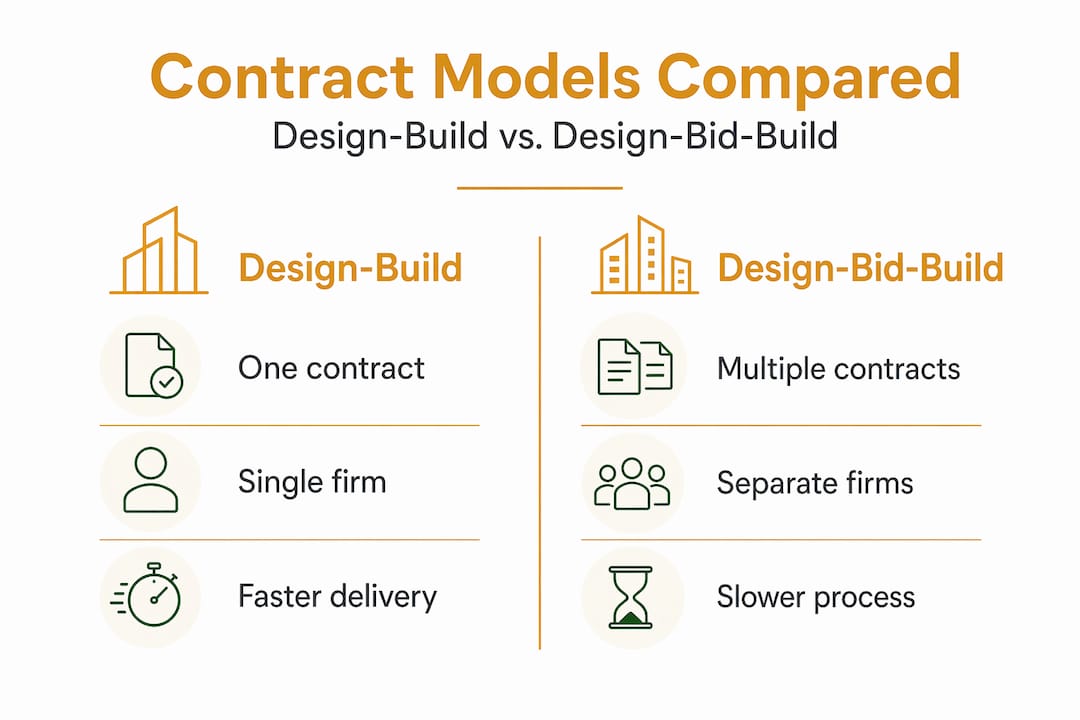
A design-build contract consolidates design and construction services under a single agreement between the project owner and one firm. That firm, typically led by an architect or a combined design-build entity, is responsible for delivering the completed project on time, on budget, and to specification. This is a structural departure from the traditional design-bid-build model, where an owner signs separate contracts with an architect and a contractor.
The difference is more than administrative. In the conventional model, the architect produces fully completed drawings, the owner puts the project out to bid, and a separate contractor is appointed. Disputes between designer and builder become the owner’s problem to mediate. In a design-build arrangement, one point of accountability eliminates that dynamic entirely.
| Feature | Design-Build | Design-Bid-Build |
|---|---|---|
| Number of contracts | One | Two or more |
| Accountability | Single firm | Split between parties |
| Owner mediation required | No | Frequently |
| Timeline | Shorter | Longer |
| Early cost certainty | Higher | Lower |
The architect’s position within this model varies by firm. In some arrangements, the architect leads the design-build entity and subcontracts construction. In others, the architect partners with a construction firm under a joint venture. Either way, the architect’s role expands from pure design authorship into project coordination and delivery oversight. You can review architect roles explained across different delivery models to better understand these distinctions.
Key characteristics of architect-led design-build include:
- Direct responsibility for schematic design and construction documents
- Coordination with structural engineers, M&E consultants, and subcontractors
- Alignment of design decisions with construction cost realities
- Single communication channel between the project team and the owner
Architect responsibilities across all project phases
Understanding architect responsibilities in design build requires looking at every phase of the project, not just the design portion. This is where the integrated model most clearly demonstrates its value.
-
Pre-design and feasibility. The architect engages with the owner to define project requirements, site constraints, and budget targets. Unlike in traditional models, the construction team participates in this phase, which means cost assumptions are grounded in real procurement and labor data from the start.
-
Schematic design and design development. The architect leads design documentation while simultaneously consulting with builders on constructability. This prevents the common problem of designs that are architecturally sound but operationally expensive or impractical to build on schedule.
-
Construction documents. Drawings and specifications are prepared with direct input from the construction team. Change orders caught earlier in design-build models avoid the expensive surprises that frequently surface when a separate contractor first reviews completed drawings.
-
Authority submission and compliance. In Singapore’s regulatory environment, this phase involves submissions to agencies such as BCA, URA, HDB, and SCDF. The architect manages these submissions as part of the broader delivery obligation, coordinating directly with the construction team to address compliance conditions.
-
Construction phase consulting. The architect remains actively engaged during construction to maintain design integrity, respond to field queries, and confirm that execution matches specification. Design adjustments in response to field conditions can occur within hours rather than days, which is critical for projects with tight financing schedules.
-
Completion and handover. The architect participates in inspections, defects rectification, and project close-out, ensuring the owner receives a finished product that matches the agreed brief.
Pro Tip: Before signing any design-build agreement, ask the architect to provide a detailed responsibility matrix showing exactly which tasks they own at each project phase. This removes ambiguity and protects your interests if disputes arise.
Benefits of architect-led design-build for owners and developers
The benefits of design build contracts reach across cost, time, risk, and quality. Property owners who have moved from traditional delivery to design-build frequently cite reduced stress and better project outcomes as their primary observations.
“Owners no longer mediate disputes between architect and builder, saving time and reducing stress. Miscommunication and split responsibilities in traditional contracts often lead to delays, cost overruns, and disputes, which design-build contracts help avoid by uniting teams.” — Carey Bros
Cost predictability. Research indicates design-build projects show 2.4% to 3.8% less cost escalation than projects using separate contracts. When the design and construction teams share the same commercial interest in delivering within budget, early cost discipline becomes a shared priority.
Reduced administrative burden. Owners managing traditional contracts spend significant time relaying information between designer and contractor, resolving scope disputes, and managing competing professional opinions. Design-build internalizes these conflicts within the single firm, returning that time to the owner.
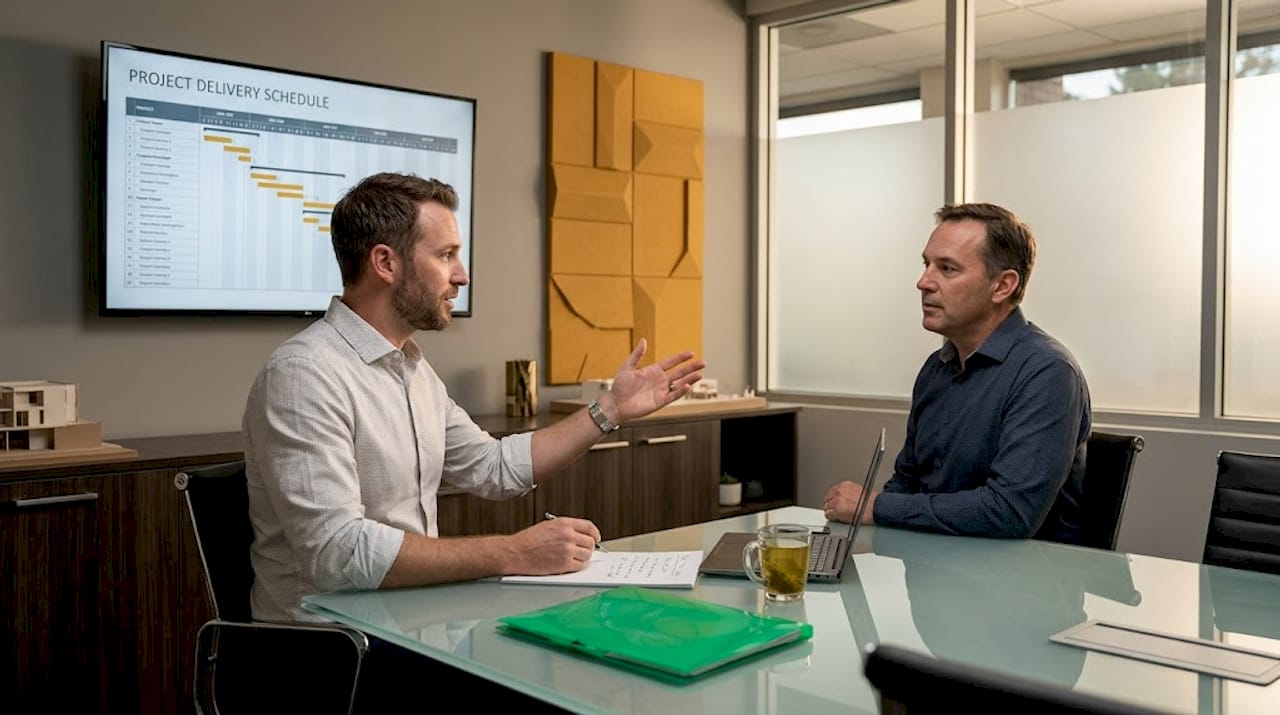
Faster delivery. Design and construction phases overlap in the design-build model, which means construction can begin on completed portions while design continues on others. This phased parallel processing shortens overall project timelines without sacrificing quality controls.
Reduced legal exposure. The design-build contract shifts liability for both design errors and construction defects to the design-build team. Owners avoid the difficult position of proving which party caused a defect when architect and contractor point at each other.
Enhanced coordination and quality. When architects design with knowledge of how something will be built, and by whom, the resulting documents are more precise and the execution more faithful to intent. For commercial developments and industrial facilities, this translates into fewer site instructions, fewer delays, and fewer quality non-conformances.
You can explore how integrated design and construction delivers these outcomes for Singapore-based projects specifically.
Challenges and considerations before committing
No delivery model is without trade-offs. Owners considering design-build should enter the arrangement with clear awareness of where the risks concentrate.
The most significant consideration is reduced independent oversight post-design. In a traditional model, the architect acts as a quasi-independent certifier during construction, checking the contractor’s work on the owner’s behalf. In design-build, the owner’s involvement narrows after the initial design phases, and there is no separate architect holding the builder accountable. That function must be addressed through contract terms, milestone reviews, and owner due diligence.
Other factors to evaluate include:
- Construction management experience. An architect-led design-build firm must have demonstrable experience managing construction, not just producing designs. Weak construction management capability in the lead firm undermines all the model’s benefits.
- Risk concentration. Placing design and construction responsibility in one firm concentrates your project risk in one place. Firm financial stability, professional indemnity cover, and track record matter significantly.
- Project suitability. Design-build delivers its clearest advantages on mid to large-scale projects with defined parameters. Very small or simple projects may not generate enough complexity to justify the arrangement’s administrative overhead.
- Scope definition at contract signing. Because design and construction proceed together, the initial project brief must be thorough. Scope changes after contract execution are harder to manage and more expensive to price in.
Pro Tip: Ask any design-build firm for references from owners, not just contractors or consultants. A project that satisfied the construction team but left the owner with unresolved defects tells a very different story.
Understanding common submission delay causes during authority approval stages can also help owners identify where proactive engagement with their design-build firm is most needed.
Evaluating and selecting an architect design-build firm
When you have determined that the design-build model suits your project, the selection and onboarding process requires deliberate preparation.
-
Assess project complexity and scope. Design-build is best suited to projects where the owner can define performance and functional requirements clearly but prefers to leave design-construction methodology to the delivery team.
-
Ask targeted questions during procurement. Request that firms explain how they managed a previous project where design needed to change during construction. Their answer reveals how coordinated their internal teams actually are.
-
Review contract terms for warranties and defect liability. Design-build contracts should include a defect liability period covering both design and construction elements. Verify that the warranty language does not exclude design-origin defects from construction liability clauses.
-
Set communication protocols in writing. Agree on reporting cadence, milestone sign-off requirements, and escalation procedures before work begins. This ensures the owner remains informed without bearing daily management responsibility.
-
Engage an independent project monitor if required. For large investments, owners can appoint a separate quantity surveyor or project manager to review progress on their behalf without disrupting the design-build team’s integrated workflow.
| Selection Factor | What to Verify |
|---|---|
| Design-build track record | Completed projects of similar scale and complexity |
| Construction management depth | In-house construction team or qualified subcontractor network |
| Authority approval experience | Familiarity with relevant regulatory agencies |
| Warranty and liability terms | Coverage of both design errors and construction defects |
| Financial stability | Firm size, insurance coverage, and bonding capacity |
Reviewing Singapore developer guidelines on design-build contracts can help owners structure their selection criteria before issuing a request for proposal.
My perspective on architect-led design build
I have watched owners struggle through traditional delivery arrangements where the architect and contractor spend months establishing who caused a problem while the owner absorbs the cost of delay. The design-build model does not eliminate problems. It changes who is accountable for resolving them.
What I find consistently underestimated is how much the architect’s construction-phase role shapes project quality. When an architect has a financial and contractual stake in construction outcomes, their design decisions become more practical. They specify materials they know can be sourced. They detail connections that the labor force can execute accurately. That alignment between design intent and construction reality produces finished projects that perform as specified.
The challenge I see most often is owners entering design-build without an adequate brief. The model gives the delivery team latitude. If your project parameters are vague at contract execution, that latitude gets used in directions you may not intend. The clearest predictor of design-build success I have observed is the quality of the owner’s pre-contract brief, not the architect’s portfolio.
For complex commercial developments, industrial facilities, and institutional projects, architect-led design-build consistently delivers better cost outcomes and shorter programs than split delivery models. The key is selecting firms with genuine construction depth behind their design credentials. Trust matters in this model more than in any other.
— Aman
How Stellar Structures can support your design-build project

Stellar Structures offers integrated architectural and engineering services purpose-built for the design-build delivery model. Their team covers architectural design, civil and structural engineering, M&E coordination, and authority submissions across BCA, URA, HDB, JTC, SCDF, and other Singapore regulatory agencies. For developers and property owners who need one accountable firm from concept through completion, their civil and structural design checks service confirms buildability and code compliance before construction proceeds. Whether your project is residential, commercial, or industrial, Stellar Structures brings the technical depth and regulatory expertise that architect-led design-build requires. Contact their team today to discuss how your project requirements align with this delivery model.
FAQ
What is the role of an architect in a design-build contract?
The architect in a design-build contract leads both the design and construction delivery phases under a single agreement, functioning as the primary point of accountability for the project owner. Their responsibilities span design documentation, constructability review, authority submissions, and construction phase oversight.
How do design-build contracts work for property owners?
Design-build contracts give the owner one firm to contract with for both design and construction services, eliminating the need to manage separate agreements. The delivery team coordinates internally, and the owner engages primarily at milestone approvals and key decision points.
What are the main benefits of design-build contracts?
Research shows design-build reduces cost escalation by 2.4% to 3.8% compared to traditional contracts, while also shortening delivery timelines through overlapping design and construction phases and reducing the owner’s administrative involvement.
When is design-build not the right choice?
Design-build is generally less suitable for very simple or small-scale projects where the complexity savings are minimal, or for projects where the owner requires independent architectural oversight of the construction process throughout delivery.
Can owners still control design decisions in a design-build arrangement?
Yes, but that control is most effective during the pre-contract brief and early design phases. Once construction begins, design-change authority should be exercised carefully because modifications carry integrated cost and schedule implications across both design and construction workstreams.
Recommended
- What Is a Design Build Contractor Role: A Clear Guide
- Design and build contracts: Singapore developer guide
- Why hire an architect for your new build in Singapore
- Architectural Design for Commercial Buildings – Stellar Structures