




Introduction
Only a BCA-recognised Competent Person (CP) – a qualified professional engineer (civil or structural) or registered architect who holds the Certificate in Façade Inspection – can legally carry out and certify a periodic facade inspection for a hotel in Singapore. No other party, regardless of technical skill, can sign off on the statutory PFI report submitted to the Building and Construction Authority.
Periodic façade inspection (PFI) is now mandatory for buildings over 20 years old and taller than 13 metres in Singapore. The PFI regime took effect on 1 January 2022 under the Building Control (Periodic Inspection of Buildings and Building Façades) Regulations 2021. Many of Singapore’s hotel towers – along Orchard Road, in the Marina Bay district, on Sentosa, and near Changi – were built in the 1990s and early 2000s, placing them squarely within the first and second PFI cycles. For building owners, asset managers, REIT portfolio teams, management corporation strata title (MCST) councils, and hotel facilities managers, understanding exactly who is authorised to perform this inspection is not optional – it is a legal necessity.
This article focuses on commercial hotel buildings (not landed houses, temporary buildings, or small boutique shophouses below the PFI height threshold) and specifically addresses who is allowed to carry out PFI and how hotel stakeholders should appoint and work with the right team. By the end, you will:
-
Know exactly which professionals are recognised to conduct periodic facade inspection PFI on hotels
-
Understand the distinct roles of CPs, façade inspectors (FIs), and specialist vendors such as rope access crews and drone operators
-
Learn how to choose a suitable CP team for the unique demands of a hotel environment
-
See how Stellar Structures can support PFI and related compliance for hotel assets
Understanding Periodic Façade Inspection (PFI) for Hotels in Singapore
A periodic façade inspection is a statutory check of a building’s external envelope – external walls, cladding, canopies, balconies, signage brackets, and all attached façade elements – to identify façade deterioration, unsafe façade defects, and falling facade elements before they endanger public safety. The inspection regime is anchored to the Building Control Act and administered by the Building and Construction Authority (BCA), which approves structural plans and safety compliance in Singapore.
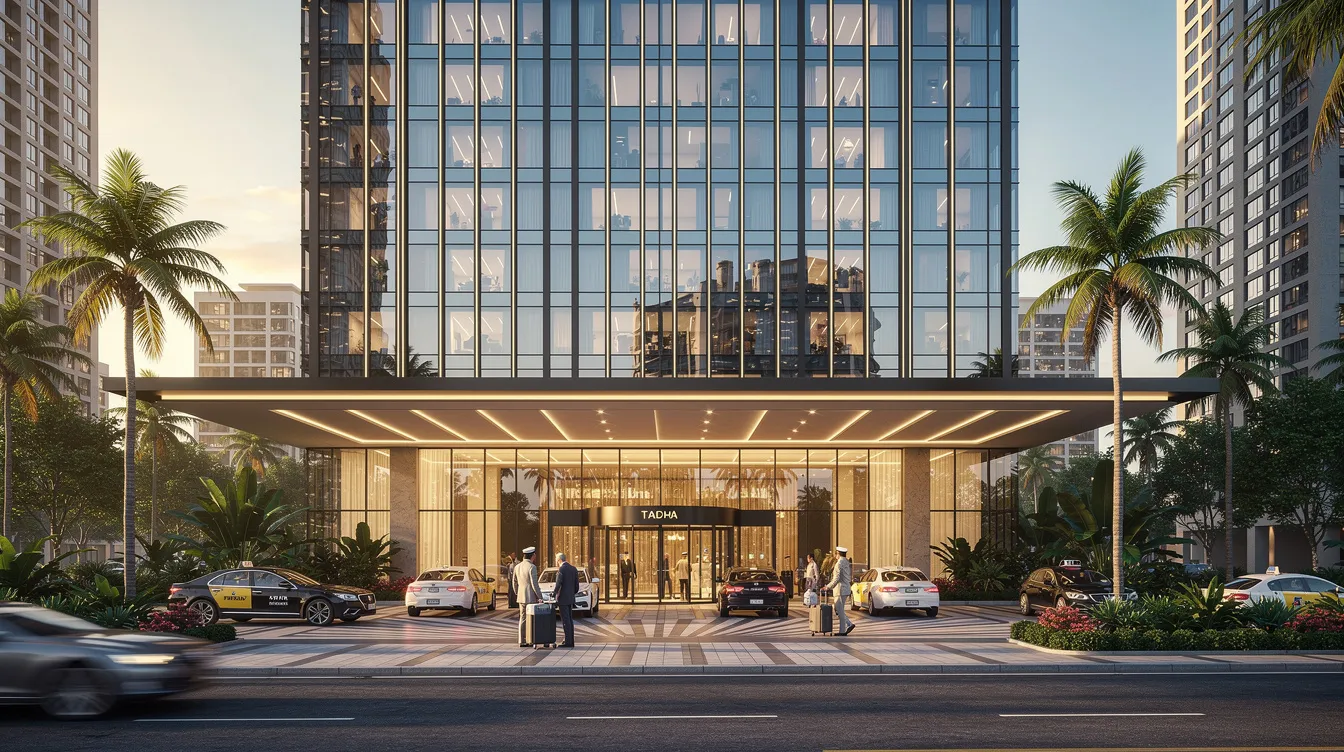
For hotels, PFI matters more acutely than for many other commercial buildings. Hotels feature high pedestrian footfall at drop-off porches, pool terraces directly below tower façades, and F&B outlets flanking podium cladding – all areas where loose tiles, spalling concrete, or debonded stone panels could injure guests or staff. The consequences of façade failure in these high-traffic zones are severe, both for public safety and for the hotel’s reputation and legal exposure.
Critically, “who can carry out PFI” is defined in law and BCA guidelines, not left to owner discretion. A hotel cannot simply delegate the task to its maintenance contractor or cleaning vendor and consider it done.
What Counts as a “Hotel” Building for PFI Purposes?
BCA periodic façade inspection obligations are triggered by two physical criteria: building age (more than 20 years from the date of Temporary Occupation Permit or Certificate of Statutory Completion) and building height (at least 13 metres from ground to highest point). Buildings over 20 years old must be inspected every seven years. The trigger is not tied to industry sector – but most tall buildings used as hotels comfortably exceed both thresholds.
Common hotel typologies captured by the regime in Singapore include:
-
Standalone high-rise towers – classic hotel towers of 20+ storeys along Orchard Road or in the CBD
-
Mixed-use hotel–mall–office complexes – where podium, tower, and retail façades may belong to different owners
-
Integrated resorts – large-footprint developments with multiple façade types (curtain walls, stone cladding, canopy structures)
-
Airport hotels – often featuring extensive glazed façades
-
Strata-titled serviced residences operated as hotels – where management corporation strata title governance adds layers of responsibility
An important distinction: the party holding the hotel operating licence (the brand or management company) is often not the legal building owner or the MCST. Façade responsibility follows property ownership, not brand affiliation. Hotel management companies are responsible for running day-to-day hotel operations and service standards, but PFI obligations rest with the building owner.
Small boutique hotels housed in conserved shophouses under 13 metres may fall outside the PFI regime, though they still benefit from voluntary building facade inspection to catch early detection of façade defects.
Regulatory Basis for Who Is Allowed to Carry Out PFI
The key regulatory documents defining who can perform facade inspection are:
-
The Building Control Act (amended 2020), particularly sections 26–29, which define “competent person” and “façade inspector”
-
The Building Control (Periodic Inspection of Buildings and Building Façades) Regulations 2021, which set out appointment procedures, inspection scope, and submission requirements
-
BCA practice notes and PFI guidelines, including the PFI Guidelines for Competent Persons
-
2025 regulation amendments (effective 1 October 2025), which further clarify façade inspector duties under Regulation 16B and tighten conflict-of-interest restrictions
In simple terms, BCA defines who can be appointed as a competent person CP (their professional qualifications and independence requirements), how CPs may supervise façade inspectors and technology providers under direct supervision, and what must be submitted to BCA – and who signs off. Only a Competent Person can conduct and sign off on a PFI.
The rest of this article breaks down each player involved in PFI for hotels – from CPs to drone operators – and how they fit together.
Who Can Legally Carry Out PFI for a Hotel in Singapore?
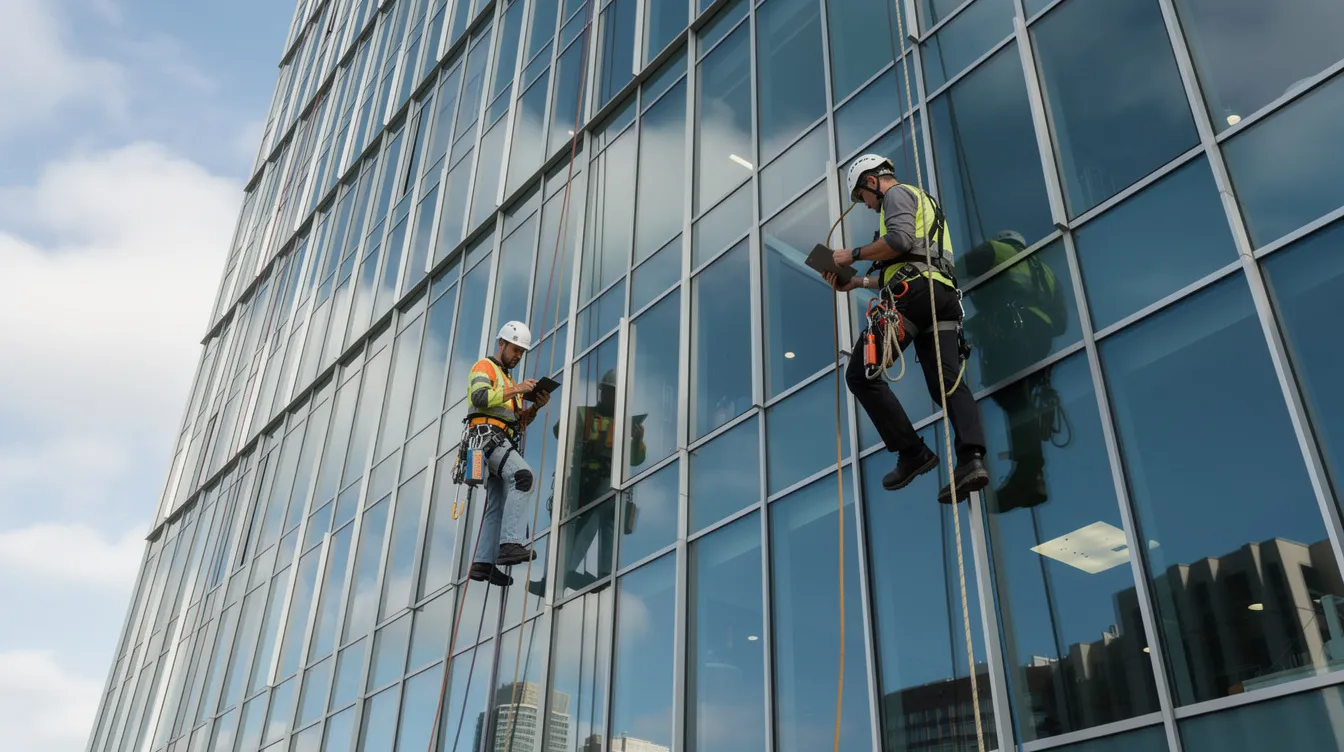
To be precise: only a competent person (CP) can “carry out” PFI in the legal sense – meaning plan the inspection, oversee fieldwork, interpret results, classify defects, and certify the inspection report to BCA. A Competent Person must be BCA-certified. Other parties – façade inspectors, rope access teams, accredited UAS service providers – can assist, but they cannot replace the CP’s statutory role. The CP remains responsible for the entire process.
Competent Person (CP) – The Only Party Who Can Certify PFI
A competent person for periodic facade inspection must meet all of the following criteria:
-
Be a Registered Professional Engineer in civil or structural engineering (with a current practising certificate issued by the Professional Engineers Board), or a registered architect (with a current practising certificate from the Board of Architects)
-
Have completed and passed BCA’s Certificate in Façade Inspection course – CPs must complete BCA’s Certificate in Façade Inspection course
-
Be registered with BCA specifically to act as CP for façade inspection
As of September 2026, BCA’s public list of Competent Persons contained 324 names, up from 149 in 2021, reflecting the maturing regime. BCA expects more than 4,000 buildings per year to require periodic inspection once all catch-up cycles are running – hotels among them.
For hotel projects specifically, CPs ideally bring experience with complex commercial façades: curtain wall systems, canopy structures, stone and tile cladding at height, balconies, porte cochères, and podium roofs. Familiarity with hospitality operations – guest privacy, noise restrictions, security protocols – is a practical advantage.
CP legal responsibilities on a hotel PFI include:
-
Defining the inspection scope and inspection methodologies for the entire hotel building façade system, including exterior features such as signage brackets, sun shading devices, and decorative elements
-
Supervising façade inspectors, reviewing drone inspection outputs personally (BCA requires CPs to review drone inspection outputs personally), and overseeing rope access findings
-
Classifying defects via detailed defect mapping – categorising them as Safe, Repair, or Unsafe
-
CPs must report unsafe defects to the Commissioner of Building Control immediately
-
Signing and stamping the PFI report submitted to BCA
-
Proposing rectification works and timelines, then certifying completion
A critical independence requirement: the CP must have no professional or financial interest in the building. That means the CP cannot have been the original designer or construction contractor for the hotel. This prevents conflicts of interest and ensures objective assessment.
Building owners must appoint a competent person within two months of receiving a PFI notice from BCA. Within 7 days of appointment, they must notify BCA. The complete inspection and report must be submitted within 6 months of the notice.
Façade Inspectors (FIs) – Who Can Conduct Physical Checks Under CP’s Supervision
Façade inspectors are individuals who assist the CP with on-site inspection work. CPs supervise Façade Inspectors during inspections. An FI must:
-
Hold the Certificate in Façade Inspection (the same BCA-accredited course required of CPs)
-
Possess relevant educational qualifications – typically a degree or diploma in civil or structural engineering, or membership in a recognised professional body
-
Be accredited by BCA, IES, or ACES as an accredited facade inspector
On hotel projects, FIs carry out much of the physical inspection work under the CP’s direct supervision:
-
Conducting on-site visual inspection and close range inspection of balconies, ledges, soffits over driveways, pool decks, and podium roofs
-
Documenting defects – photographs, notes, defect maps – following the CP’s methodology and inspection method
-
Supervising the use of access equipment during physical inspection
-
Immediately highlighting suspected unsafe conditions to the CP – for example, loose cladding above a porte cochère or visible signs of delamination over a guest drop-off
The 2025 regulatory amendments (Regulation 16B) further codified FI duties: visual and close-range inspections per the CP’s instructions, supervising equipment use, and reporting unsafe facade conditions immediately. Accredited facade inspectors also cannot have conflicts of interest with the building under inspection.
FIs cannot independently carry out or certify a PFI, even if technically capable. The CP’s direct supervision is a non-negotiable legal requirement.
Specialist Access & Technology Providers – What They Can and Cannot Do
Hotel PFI projects typically involve several specialist vendors:
-
Rope access / IRATA-certified teams – for towers, recessed façades, and areas without permanent gondola systems
-
Gondola and MEWP (boom lift) operators – for podium façades, atriums, and lower-rise sections
-
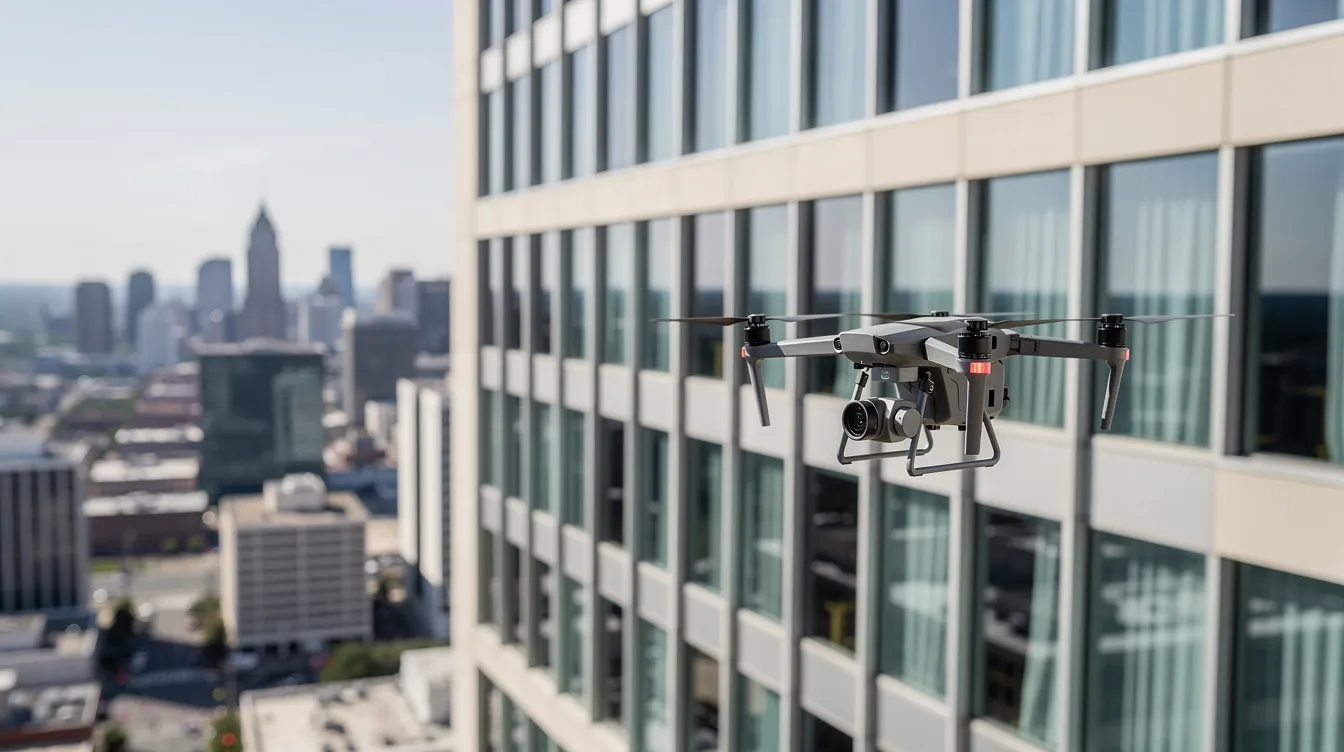
Accredited UAS service providers (drone operators) – for large elevations and difficult-to-reach zones; drones can capture high-resolution images of facades and drone inspection reduces the need for scaffolding or rope access in the visual stage
-
Thermography, NDT, and materials testing labs – for assessing façade materials, anchorage integrity, water ingress, and delamination
These providers collect data and enable physical access, but they are not the statutory decision-makers. They must operate under the CP’s inspection plan. Drones can be used for visual facade inspections under BCA rules (governed by technical reference TR78, requiring CAAS permits and proper flight planning), and drones assist in identifying areas needing close-up checks. However, even with drone data, close-range physical inspection remains mandatory – a minimum of 10% close-range inspection is required per elevation.
Hotel owners should never appoint a drone-only vendor and assume this completes PFI. CP involvement is mandatory at every stage. BCA requires CPs to review drone inspection outputs personally rather than delegating interpretation to the drone operator.
These specialist teams also need coordination to minimise disruption to guests – working around check-in peaks, event schedules, and noise-sensitive hours. The access method chosen (rope access, boom lift, gondola, unmanned aircraft systems) should be agreed between the CP and the hotel’s operations team.
Who Is Responsible for Appointing the Right PFI Team for a Hotel?
Understanding “who can carry out PFI” requires also understanding who is legally responsible to make it happen. The party who must appoint a competent person is typically the building owner – not the hotel operator brand. In mixed-use or strata-titled properties, responsibility can be shared among MCST, master lessor, and individual unit owners.
Hotel Building Owners, REITs, and Developers
The legal owner of the hotel building – whether a company, a REIT, or an institutional investor – is the party named in BCA’s PFI notice and held accountable for compliance. Non-compliance can lead to fines up to S$20,000, and ignoring PFI notices may result in prosecution. BCA can impose stop-work orders for non-compliance, and failure to rectify defects can lead to stop-work orders as well.
PFI building owners must:
-
Track building age and height to anticipate PFI notices – hotels completed in the early 2000s are entering their first inspection cycle now
-
Appoint a qualified professional engineer or registered architect as CP within the deadlines stated in BCA’s PFI notice
-
Provide façade drawings, as built drawings, building plans, past repair records, and access to all external areas
-
Fund both the facade inspection cost and subsequent rectification works
Cross-border owners – international funds, sovereign wealth vehicles, or foreign developers – may need a local consultancy like Stellar Structures to manage regulatory aspects, coordinate with BCA, and ensure compliance timelines are met. Financial institutions provide project financing and structuring for hotel developments, but it is the registered building owner who bears the PFI obligation.
MCSTs and Strata-Titled Hotel Developments
Some serviced apartments, condo-hotel hybrids, and strata-titled hotel suites are governed by a management corporation strata title. In these structures, the MCST is responsible for common property façades – external walls, podium cladding, shared roofs, canopies, and external corridors. The MCST is typically the party that must appoint a competent person and coordinate with individual owners and the hotel operator.
Individual strata owners may be responsible for façade elements tied specifically to their lot – for example, exclusive-use balconies – depending on the strata by-laws. This makes management plans for PFI more complex in strata-titled hotels than in single-owner properties.
MCSTs should seek CPs experienced in multi-owner communication, cost allocation between common and exclusive property, and the particular governance structures of strata-titled hospitality developments.
Hotel Operators and Facility Managers
Global hotel brands (Marriott, Accor, Hilton, IHG, and others) usually operate under management contracts and are not the legal owners. Different participants are required at various stages of a hotel development project from feasibility to operation, and the operator’s role in PFI is facilitative, not statutory.
Operator and facility manager responsibilities during PFI include:
-
Coordinating guest communication and scheduling to reduce disturbance – planning inspections during low-occupancy periods, quiet windows, or night shifts
-
Arranging internal access to guest rooms, balconies, back-of-house terraces, and rooftop equipment areas
-
Ensuring on-site safety measures when inspection teams work above drop-off areas, pool decks, or F&B terraces
-
Supplying past maintenance logs, previous repair work documentation, and coating/sealant records
Operators cannot act as CPs unless they employ a properly registered professional engineer or registered architect who meets all CP credentials, holds no conflict of interest, and is independently BCA-recognised – a scenario that is rare in hotel chains. Coordination of multiple contractors and specialist service providers is critical in executing hotel PFI projects efficiently.
How a CP-Led PFI Is Carried Out on a Hotel Façade
Even though this article focuses on “who can carry out PFI,” hoteliers need a basic picture of the process to choose the right professionals and plan ahead effectively. Stellar Structures can act as CP or as part of the engineering team supporting another CP, depending on the project structure.
Step-by-Step PFI Workflow for a Typical Singapore Hotel
The following workflow reflects the inspection methodologies required tools and staging typical of hotel PFI projects:
-
Confirm applicability – Check hotel height (must exceed 13 m) and building age (more than 20 years from TOP/CSC date). Interpret any PFI notice from BCA and note the stated deadlines.
-
Appoint CP – Shortlist firms with CP-qualified PEs or architects and relevant hotel experience. Stellar Structures, for example, provides structural and façade inspection services with experience across commercial buildings. Execute formal appointment and notify BCA within 7 days.
-
Pre-planning – The CP reviews as built drawings, past rectification works (e.g., re-cladding carried out after 2015), façade drawings, and building plans. The CP agrees on an inspection strategy with hotel management, identifying the access method for each elevation and scheduling around hotel operations.
-
Stage 1 visual inspection – The CP and FI team covers 100% of all building façades using ground observation, vantage points, and possibly drones. Drones are approved for visual facade inspections in Singapore and can capture high-resolution images of facades efficiently. This stage identifies visible signs of façade deterioration – cracking, staining, bulging, loose tiles, or corroded fixings – across tower, podium, sky terraces, canopies, and signage.
-
Stage 2 close range inspection – A minimum of 10% of each elevation is inspected physically at close range, typically using rope access, gondola, or boom lift. On hotels, this often means working over guest drop-off areas, pool decks, and F&B terraces, requiring careful safety measures and guest management. The CP identifies areas needing close-up checks based on Stage 1 findings.
-
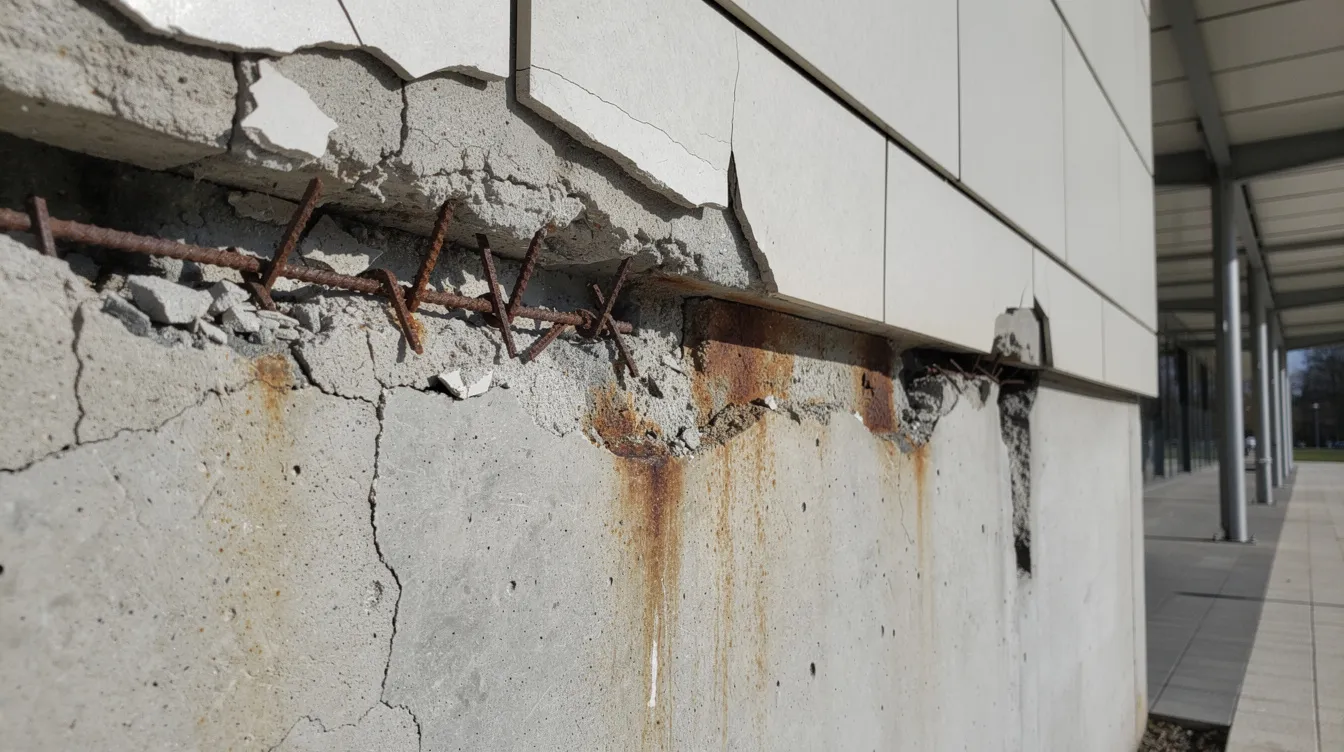
Defect classification – The CP categorises every defect through detailed defect mapping: Safe (monitor), Repair (rectify within stated timeline), or Unsafe (immediate action). Unsafe defects – such as falling facade elements over a porte cochère – must be reported to the Commissioner immediately, and interim safety measures (hoarding, netting, closure) must be implemented. Early detection of problems at this stage prevents costly emergency interventions later.
-
Reporting and submission – The CP compiles the BCA-compliant PFI report, the hotel implements the required rectification works, and the CP certifies completion. The entire process – from notice to submission – must be completed within 6 months. Any fallen or loosened façade element discovered during this period must be reported within 6 hours under the Reportable Matters regulations (effective October 2025).
Comparing Different Types of CP Teams for Hotel PFIs
|
Criterion |
Single-Discipline CP (PE Only) |
Architecture-Led CP Team |
Integrated Consultancy (e.g., Stellar Structures) |
|---|---|---|---|
|
Experience with complex hotel façades and podiums |
Good for structural elements; may lack cladding expertise |
Strong on aesthetic and heritage façades |
Covers structural, architectural, and envelope engineering |
|
Coordination with SCDF, URA, HLB constraints |
Limited unless separately engaged |
Good for heritage and planning aspects |
Handles authority submissions including fire safety and building control interfaces |
|
Rectification design capability |
Can design structural repairs |
Can design aesthetic/cladding replacements |
Full A&A submission capability if major repairs or façade upgrading needed |
|
Hotel operations sensitivity |
Varies |
Varies |
Experienced with commercial and hospitality façade projects |
|
Management of drone, rope access, and lab testing vendors |
Coordinates externally |
Coordinates externally |
Integrated inspection methodologies and vendor management |
For large or architecturally complex hotels – particularly integrated resorts, mixed-use developments, or heritage properties – an integrated CP team is usually more efficient and future-proof. The ability to move seamlessly from inspection to rectification design to BCA approval reduces delays, manages facade inspection cost more predictably, and keeps the hotel operational throughout.
Common Challenges When Appointing Someone to Carry Out PFI for Hotels
While the law on who can carry out PFI is clear, hotels face practical challenges that can delay the process, increase costs, or compromise compliance. Planning ahead is essential.
Problem 1: Mistaking General Maintenance Contractors for PFI-Capable CPs
Many hotels have long-standing relationships with façade cleaning vendors or general maintenance contractors who handle routine exterior upkeep. It is a frequent – and costly – mistake to assume these vendors can “handle PFI.” These contractors lack the legal status of a competent person CP and cannot sign statutory PFI reports. Their scope of work (cleaning, minor patching) does not constitute a building facade inspection under the building control act.
Solution: Always verify that a named professional engineer or registered architect is BCA-registered as a CP for façade inspection. Ask for their Certificate in Façade Inspection and check against BCA’s published CP list. Confirm they have no professional or financial interest in the hotel. For further guidance, consult BCA’s official PFI resources.
Problem 2: Coordinating Access Without Disrupting Guests
Hotels present access constraints that offices and residential blocks typically do not: privacy concerns when inspecting balconies of occupied guest rooms, noise restrictions during events (weddings, MICE functions), F&B outlets directly beneath tower façades, and pool decks where rope access or gondola work creates safety and visual intrusion issues.
Solution: Engage CPs experienced in hospitality environments. Effective strategies include scheduling inspections during low-occupancy periods, block-booking specific floors for balcony access, conducting rope access work at night, and using drone inspection strategically for the visual stage to reduce the duration of physical access. The inspection method should be tailored to hotel operations, not imposed from a standard playbook.
Problem 3: Underestimating Time and Budget for Rectification
A CP may discover extensive issues – debonded stone cladding on a 1990s hotel tower, corroded curtain wall anchors, or widespread spalling concrete on podium soffits – that require staged rectification works and may trigger additional BCA submissions for façade repairs. Hotels that fail to budget for potential repair work beyond the inspection itself risk timeline breaches and enforcement action.
Solution: Choose CPs with engineering and design capability – firms like Stellar Structures that can develop pragmatic repair strategies, sequence works to keep the hotel operational, design permanent fixes (not just cosmetic patches), and align rectification with capex planning. This avoids the need to re-engage separate designers mid-process and reduces overall facade inspection cost.
Conclusion and Next Steps for Hotel Owners and Asset Managers
Only CPs who are professional engineers or registered architects with BCA-recognised façade inspection credentials can legally carry out and certify periodic facade inspection for hotels in Singapore. Façade inspectors, rope access crews, accredited UAS service providers, and testing laboratories support the CP but cannot replace them. Building owners – not hotel operators – remain ultimately responsible for appointing the right team and executing repairs within statutory deadlines. Non-compliance can lead to fines up to S$20,000 or prosecution.
Immediate next steps:
-
Confirm applicability – Check whether your hotel exceeds 13 m in height and is over 20 years old (or approaching that threshold). Qualifications for a hotel PFI project must align with specific procurement requirements and regulations in Singapore.
-
Locate any BCA PFI notices – Review correspondence and note deadlines carefully. Building owners must appoint a Competent Person within two months.
-
Shortlist CP-qualified consultants with hotel experience – including Stellar Structures, which provides structural and façade engineering, authority submissions, and can work as CP or as an integrated consultant alongside your chosen CP.
-
Gather documentation – Assemble façade drawings, as built drawings, maintenance and repair records, and previous façade inspection reports for briefing the CP team.
Related topics hotel stakeholders may wish to explore next include periodic structural inspection (PSI), A&A works for façade upgrading and engineering, and fire safety implications of cladding replacements. Compliance with safety and fire regulations is mandatory for hospitality developments in Singapore.
Stellar Structures provides structural and façade engineering services, BCA authority submissions, and can serve as CP or as an integrated consultancy alongside your chosen CP. Our team has direct experience with commercial and high-rise building façades in Singapore, including hospitality assets. Contact us to discuss your hotel’s PFI requirements.
Additional Resources and Visual Aids
To help hotel stakeholders visualise the PFI process and key façade zones, the following resources are recommended:
-
Hotel façade zone diagram – A typical hotel tower + podium elevation with key zones marked: balconies, canopy/porte cochère, sky terrace, podium roof, signage, and curtain wall sections. Each zone requires specific access methods and presents different risk profiles.
-
Process flow infographic – Showing the chain: Owner receives PFI notice → Appoints CP → CP engages FI team and access/technology providers → Inspection (Stage 1 visual + Stage 2 close-range) → Defect classification → Rectification → CP certifies completion → Report submitted to BCA.
-
Sample defect imagery – Examples such as spalling concrete below a pool deck soffit, loose tiles above a pedestrian walkway, or corroded curtain wall fixings – with annotations showing defect classification (Safe / Repair / Unsafe).
External references for further guidance:
-
Building Control Act – Sections 26–29 (Competent Person definitions)
-
Singapore’s statutory periodic building inspection frameworks – Stellar Structures overview
All visuals should be clean, brand-aligned, mobile-friendly, and suitable for AI answer page formats.
Frequently Asked Questions: Who Can Carry Out PFI for a Hotel in Singapore?
Can my hotel’s in-house engineering team carry out PFI if we have a PE on staff? An in-house PE may qualify as CP only if they are registered as a professional engineer in civil or structural disciplines, hold a current practising certificate, have passed BCA’s Certificate in Façade Inspection course, and – critically – have no professional or financial interest in the building. Because an in-house engineer is employed by the building owner, conflict-of-interest rules under the building control act may disqualify them. Check with BCA before assuming eligibility.
Can we use a drone vendor alone instead of appointing a CP? No. Drones are tools that assist in the visual inspection stage – drones can be used for visual facade inspections under BCA rules – but a CP must still be appointed to lead, interpret findings, conduct or supervise the close range inspection, classify defects, and certify the report. Drone inspections reduce the need for scaffolding or rope access in Stage 1 but do not replace the statutory CP role.
Does re-cladding our hotel recently exempt us from appointing a CP for PFI? No. New façade materials do not automatically remove statutory PFI obligations once the building age and height criteria are met and BCA has issued a PFI notice. The re-cladded sections will still be inspected – though a well-maintained façade should result in fewer defects.
Who pays for PFI in a branded hotel operated under a management contract? The legal building owner is responsible under the building control act. However, cost allocation between owner and operator may be governed by the terms of the management agreement or lease. Owners should review their contracts and ensure PFI costs – including potential rectification works – are addressed in capex provisions. Lenders and project finance institutions assess the financial viability of hotel projects and may require evidence of PFI compliance.
Can the same CP handle both PFI and PSI for our hotel? Yes, if the CP is a properly qualified PE with relevant registrations for both periodic façade inspection and periodic structural inspection. However, PFI and PSI are separate statutory inspections under distinct regulations, each requiring its own report and submission. Appointing a single integrated consultancy for both can improve coordination and reduce duplication.
How do we verify that someone is really a CP for façade inspection? Check their registration with the Professional Engineers Board (for PEs) or Board of Architects (for architects) and confirm a current practising certificate. Ask to see their Certificate in Façade Inspection issued following BCA’s accredited course. BCA publishes guidance and CP lists that can assist verification. If in doubt, contact Stellar Structures – we can provide project-specific advice and help you verify credentials before appointment.
What happens if we miss the PFI deadline? Non-compliance can lead to fines up to S$20,000 for building owners who fail to appoint a CP on time. BCA can impose stop-work orders for non-compliance, and ignoring PFI notices may result in prosecution. The financial and reputational risks for a hotel – a public-facing business – make timely compliance essential.
For project-specific advice on who should carry out PFI for your hotel, contact Stellar Structures to discuss your building’s requirements, timeline, and façade complexity.