




Introduction
How much does PSI for a condominium cost in Singapore? For most private condominiums managed by a Management Corporation Strata Title (MCST), Stage-1 PSI fees typically range from S$3,500 to S$25,000+ per inspection cycle, with the final price driven primarily by development size, number of blocks, building age, access complexity, and structural scope.
This article breaks down actual fee ranges, explains every factor that influences pricing, and shows MCSTs and condominium owners how to budget effectively. The focus is on residential private condominiums and apartments under MCST management – not HDB SERS inspections, pre-purchase structural surveys, or façade-only inspections (which fall under a separate Periodic Façade Inspection regime).
The target readers here are council members of MCSTs, managing agents, MC chairpersons who need to plan sinking fund usage and secure AGM approvals, and curious condo owners who want to understand this statutory obligation. Periodic Structural Inspection (PSI) is mandated every 10 years for residential buildings aged 13 years and older under Section 28 of the Building Control Act, making it a predictable – and plannable – cost for every ageing condominium in Singapore.
By reading this article, you will gain:
-
Typical PSI cost ranges by condominium size and complexity, with an indicative pricing table.
-
A clear breakdown of what is included (and excluded) in a PSI quotation.
-
How BCA regulations and Professional Engineer (PE) requirements influence fees.
-
Practical guidance on comparing quotes and avoiding surprise variations or add-ons.
-
Budgeting timelines aligned with the 10-year BCA inspection cycle.
Understanding Periodic Structural Inspection (PSI) For Condominiums
Periodic Structural Inspection is a statutory requirement under Singapore’s Building Control Act (Section 28) that ensures ageing buildings remain structurally safe for occupants. For condominiums, the Management Corporation Strata Title is responsible for arranging compliance inspections – appointing a registered Professional Engineer (PE) in civil or structural engineering, coordinating site access, and submitting the completed PSI report to BCA.
Understanding what PSI actually covers is essential because the inspection scope directly determines how consultants price the work. A broader scope, more structural elements, or limited access all create more manhours – and higher fees.
What Exactly Is PSI For A Condominium?
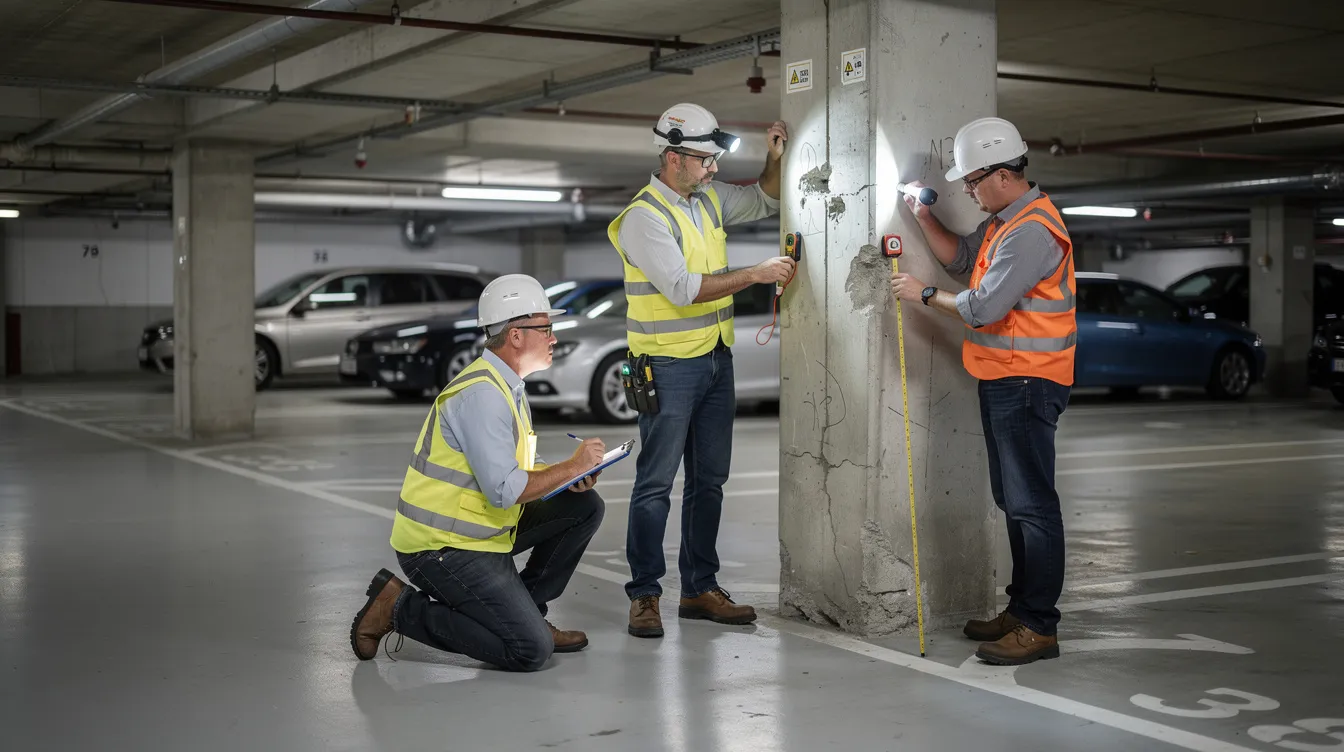
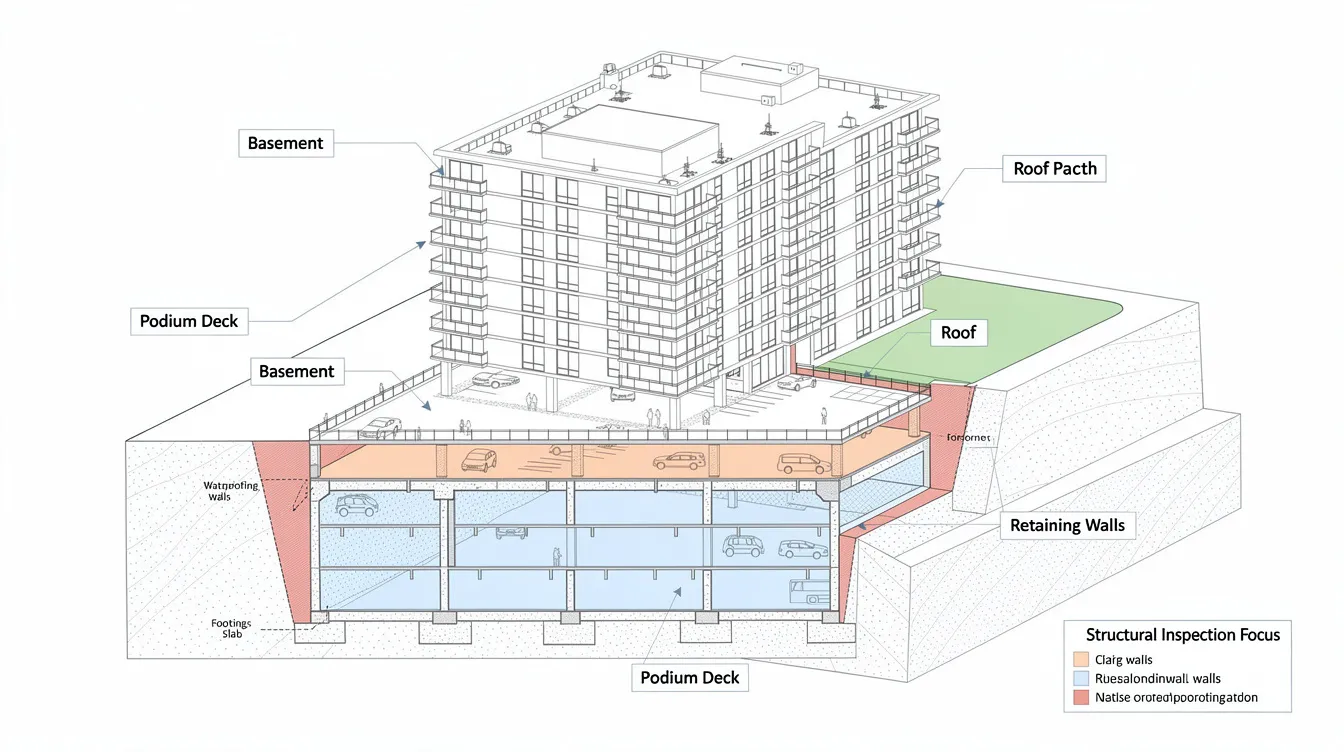
PSI is the periodic structural inspection required to assess the structural safety of common property in private strata developments. Condominiums under 30 years of age require at least 20% of units inspected during PSI, while older estates may need more extensive coverage. The inspection focuses on load-bearing structural elements – beams, slabs, columns, transfer plates, retaining walls, carpark structures, and rooftop water tanks – rather than interior unit renovations or cosmetic finishes.
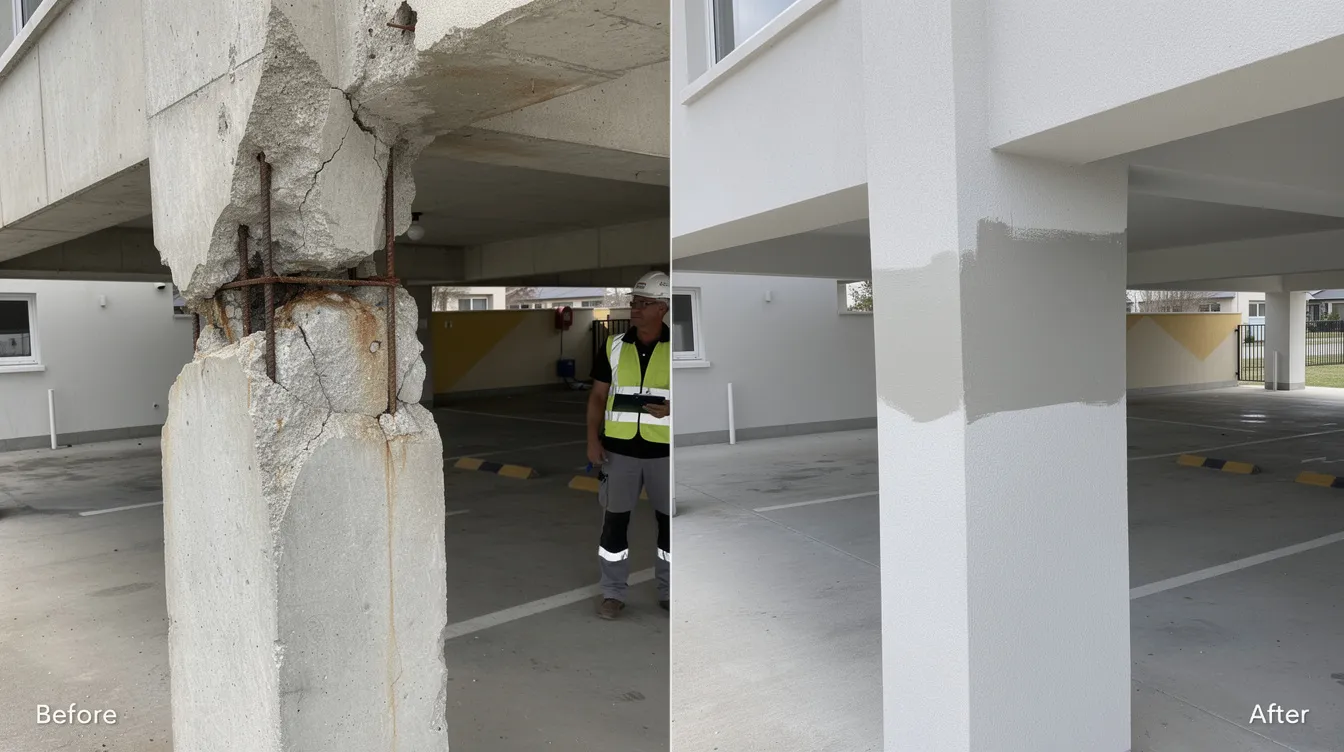
Typical inspection activities include visual assessments, hammer tapping of concrete surfaces, crack mapping, checking for reinforcement corrosion and spalling concrete, and in some cases non-destructive testing. The PE issues a formal PSI report with findings and recommendations. If structural defects that may endanger building stability are discovered, a Stage 2 full structural investigation may be triggered – involving core sampling, cover meter surveys, carbonation testing, load tests, or even reconstruction of missing structural drawings. Any follow-up repair works are costed and managed separately from the PSI fee itself.
Key Regulatory Requirements That Influence PSI Scope And Cost
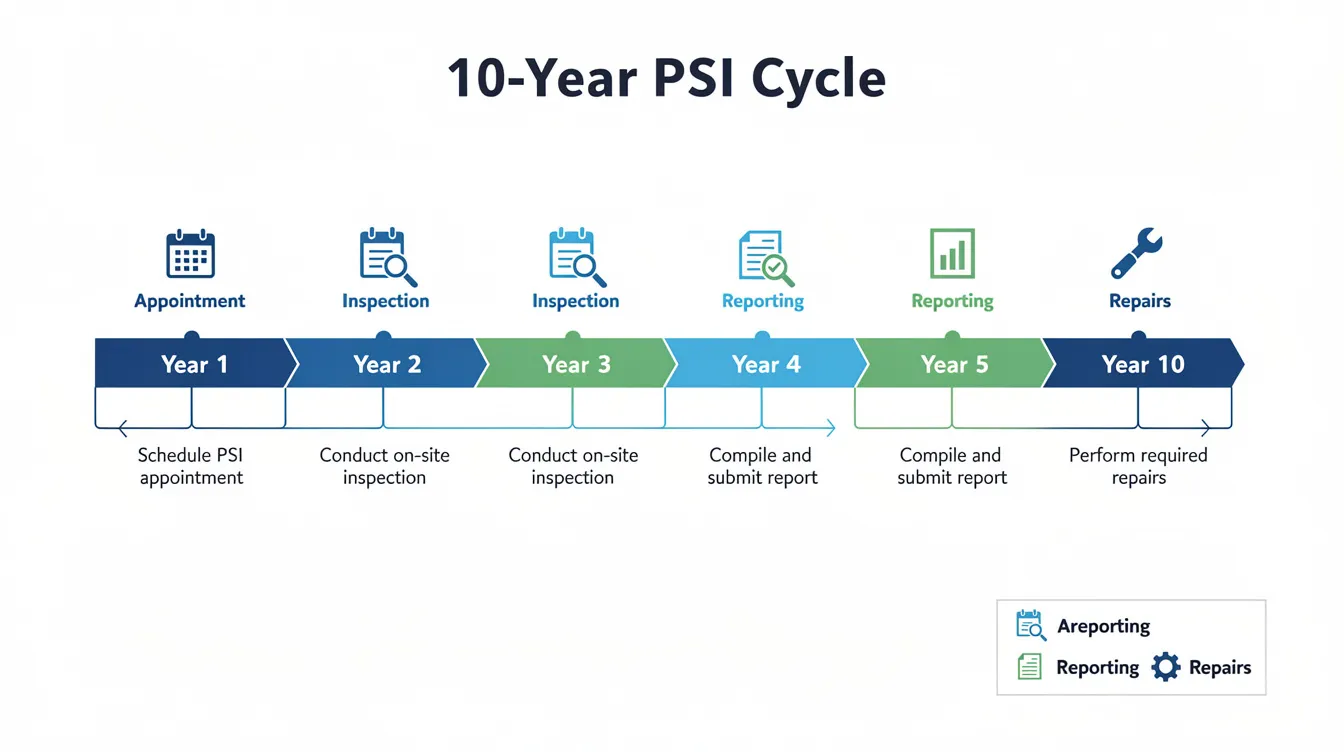
Under BCA’s Periodic Structural Inspection regime, residential strata-titled buildings used solely for residential purposes must undergo PSI every 10 years, starting from the 13th year after Temporary Occupation Permit (TOP) or Certificate of Statutory Completion. Non-residential buildings follow a shorter 5-year cycle. Commercial and regulatory requirements influence the costs for structural inspections in Singapore – the mandated scope, the qualifications of the appointed PE, and the consequences of non-compliance all feed into pricing.
If an MCST fails to appoint a structural engineer or submit the PSI report within the prescribed time (two months to appoint a PE after receiving BCA’s notice), it may face fines of up to S$20,000 under the Building Control Act. Only a registered Professional Engineer (Civil/Structural) listed with the Professional Engineers Board (PEB) can sign off on the report, which directly affects the professional fee level.
Scope can also widen when a condominium has special features – sky bridges, complex basement carparks, cantilevered balconies, or post-tensioned slabs – increasing inspection manhours and cost. These regulatory and technical factors feed directly into how consultants structure their pricing tiers.
Typical Cost Ranges For PSI Of Condominiums In Singapore
With the regulatory framework in mind, here are concrete PSI cost ranges for different condominium profiles. Development size affects the pricing of Periodic Structural Inspections, with larger developments incurring higher costs. The numbers below are indicative ranges based on recent market quotations in Singapore from 2024–2026.
Indicative PSI Cost For Bigger Units By Estate Size And Complexity
The following table provides a starting point for budgeting. Actual fees will vary based on the specific cost drivers discussed later, but this estimate gives MCSTs and managing agents a realistic benchmark for planning purposes.
|
Estate Profile |
Typical Units |
Blocks / Storeys |
Common Features |
Indicative Stage-1 PSI Fee |
Typical Duration |
|---|---|---|---|---|---|
|
Small condominium |
50–100 |
1–2 blocks, ≤10 storeys |
Surface carpark, basic facilities |
S$3,500–S$5,500 |
2–3 weeks on site; 5–7 weeks total |
|
Medium condominium |
100–300 |
2–4 blocks, 10–20 storeys |
Basement carpark, pool deck, clubhouse |
S$5,500–S$9,000 |
3–5 weeks on site; 6–9 weeks total |
|
Large condominium |
300–600 |
3–6 blocks, 20–30 storeys |
Multi-level basement, podium deck, sky garden |
S$9,000–S$15,000 |
4–8 weeks on site; 8–12 weeks total |
|
Mega development |
600+ |
5+ blocks, 30+ storeys |
Mixed-use podium, extensive retaining walls, link bridges |
S$15,000–S$25,000+ |
6–12 weeks on site; 10–14 weeks total |
For mega-condominiums exceeding 1,000 units or mixed-use developments with commercial podiums, fees can exceed S$25,000–S$60,000+ due to expanded scope and the multiplicative effect of inspecting numerous blocks and complex structural systems. Some firms also quote on a per-block basis – for example, S$6,000–S$15,000 per block – meaning a multi-block estate’s total cost is the sum across all blocks.
How PSI Fees Are Usually Structured
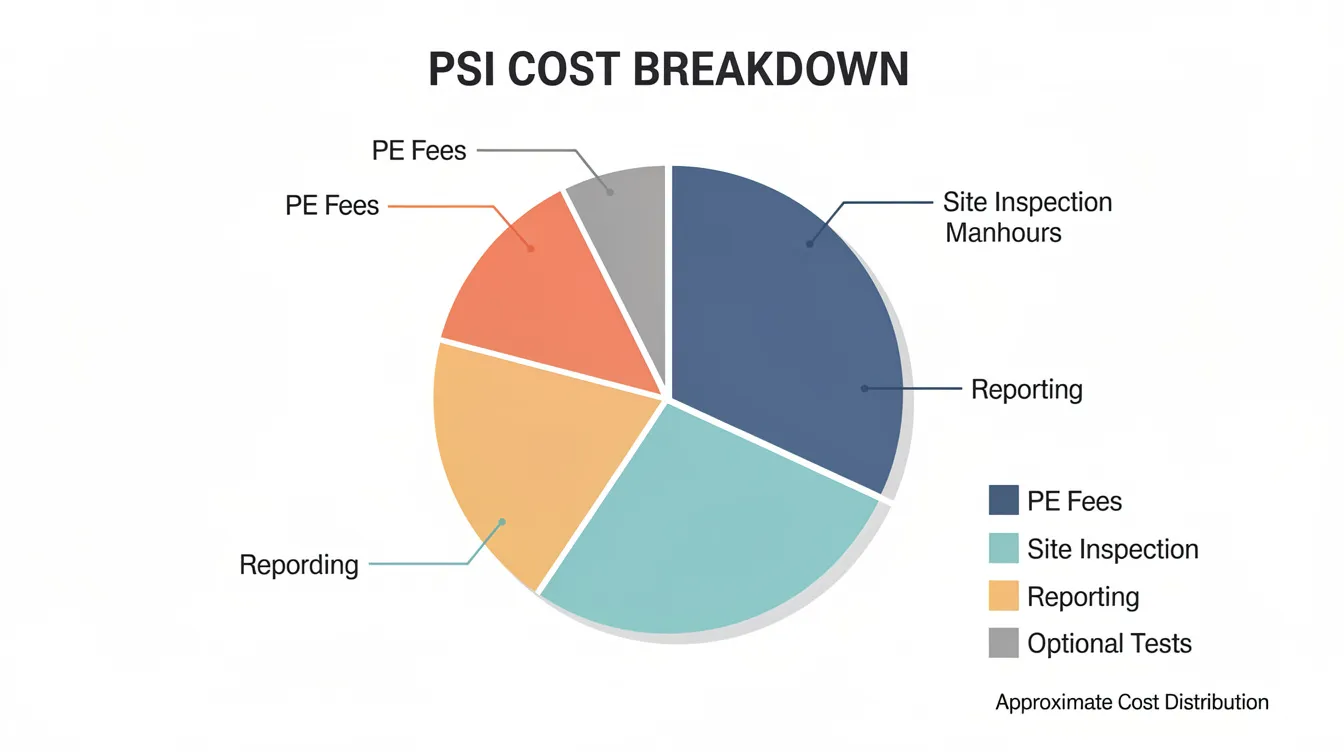
Most firms quote PSI as a lump-sum professional fee based on estimated site inspection manhours and team size, senior PE review time and report preparation, and administrative time for BCA submissions via the CORENET-X system and responding to queries.
Common pricing models include:
-
Lump-sum for full PSI scope – the most common approach, covering everything from site inspection to report submission.
-
Base fee plus provisional sums – a core fee with unit rates for additional testing (e.g., core tests, ultrasonic pulse velocity, pull-out tests) that may be triggered if defects are found.
-
Multi-year framework agreements – fixed rates when an MCST appoints the same PE for several estates or consecutive inspection cycles, offering price predictability over time.
Rectification works and repair design are typically excluded from PSI quotations and quoted separately. The inspection identifies problems; fixing them is a distinct scope of work.
What Is Usually Included vs Excluded In A PSI Quote
Understanding line items in PSI quotations helps MCSTs avoid hidden costs and compare proposals on a like-for-like basis.
Commonly included items:
-
Pre-inspection review of as-built structural drawings and past reports
-
On-site structural inspection of common property – basements, carparks, roofs, corridors, retaining walls, structural columns and beams
-
Photographic documentation and defect mapping for structural issues
-
PE’s formal PSI report with condition assessment and recommendations
-
Submission of PSI report to MCST and BCA via CORENET-X
-
Coordination visits and basic liaison with managing agent
Commonly excluded or optional items that may incur extra charges:
-
Non-destructive tests and laboratory tests (e.g., concrete core sampling, rebar scanning, carbonation depth testing) – typically S$1,500–S$3,000 per test element, potentially S$8,000–S$20,000+ if widespread
-
Access equipment costs such as boom lifts, gondolas, scaffolding, or rope access for difficult façades or high roofs
-
Detailed repair design, tender documentation, and supervision of rectification works
-
Inspection inside individual strata units (unless a defect is specifically traced from common property)
-
Reconstruction of structural plans if original drawings are missing or incomplete
Transparent proposals that clearly separate these line items help MCSTs budget accurately and avoid surprise variation orders.
What Drives PSI Cost For Your Condominium?
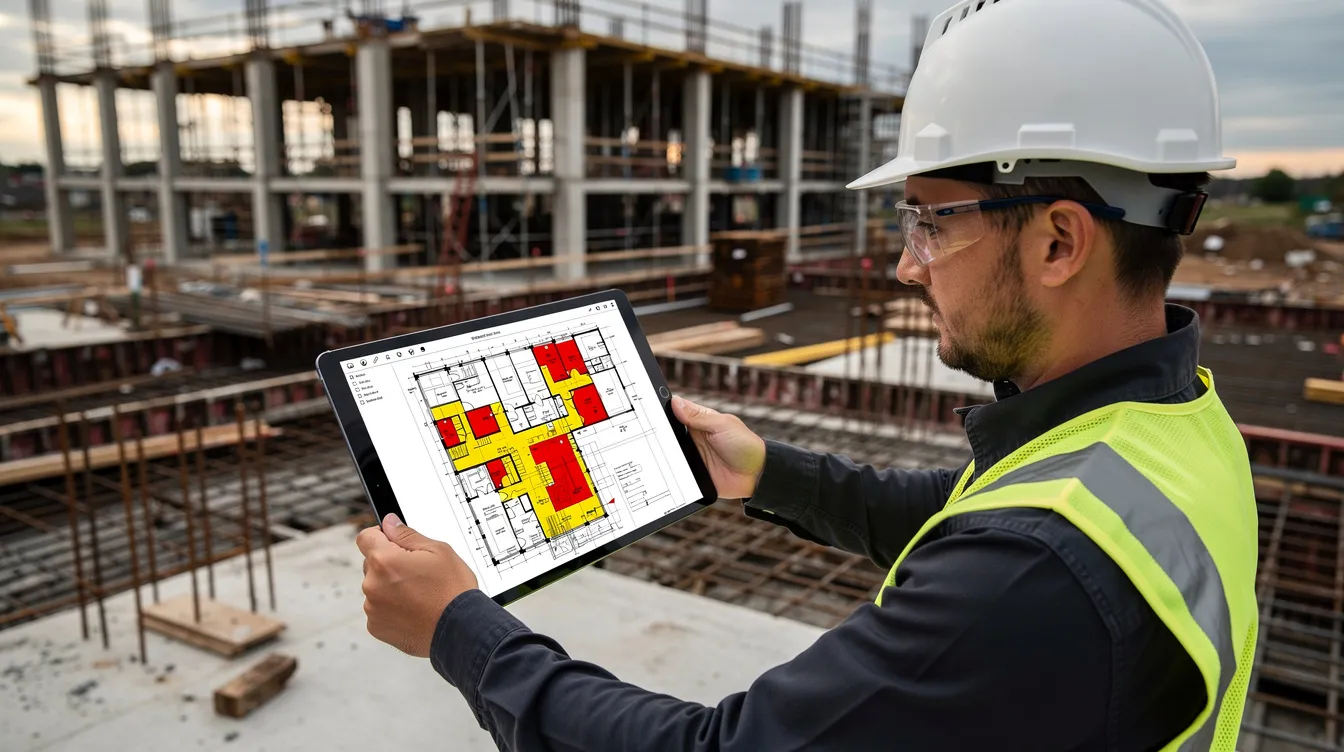
Beyond estate size, several technical and logistical factors significantly influence PSI fees. Understanding these cost drivers helps MCSTs justify budgets at AGMs and EGMs and negotiate fair quotes with confidence.
Physical Characteristics Of The Estate
The number of blocks, tower heights, and presence of podium decks and basements directly affect time and manpower. A 10-storey condominium with surface parking is fundamentally different from a 40-storey tower sitting atop a three-level basement carpark with extensive ramps and retaining walls.
Features that increase PSI cost include:
-
Multi-storey or basement carparks with extensive ramps, retaining walls, and water-tank structures
-
Sky gardens, link bridges, and extensive cantilevered balconies requiring detailed structural assessment
-
Older estates (built in the 1980s–1990s) with structural retrofits, lower concrete cover, or unusual load-transfer systems
Older developments tend to show more age-related deterioration – concrete spalling, reinforcement corrosion, settlement cracks, water ingress – making Stage 2 investigations more likely and raising the overall cost. Among the more than 7,000 buildings inspected annually in Singapore, over 600 show structural defects needing attention.
Accessibility And Safety Considerations
Ease of access has a direct bearing on pricing. If a condominium has existing maintenance gondolas or façade walkways, inspecting higher structural elements is faster and cheaper. Without them, the MCST may need to rent mobile elevated work platforms (MEWPs), boom lifts, or engage rope access specialists – costs that can add thousands of dollars.
Confined areas such as pump rooms, tank rooms, and basements with restricted headroom require special safety measures, additional supervision, and permits-to-work. Operational constraints – for example, inspections limited to certain hours to minimise disruption to residents – also extend the inspection timeline and increase fees.
Documentation Quality And Past Inspection History
Complete as-built drawings, past PSI and façade inspection reports, and previous repair records enable a more targeted and efficient inspection. When the PE knows exactly what structural system exists and what was previously flagged, the time spent on site drops significantly.
Estates with poor records or substantial unauthorised alterations – hacked structural walls, planters converted to rooms, undocumented additions – may require extra investigative work. If previous PSIs found many critical defects, the new PE may need more in-depth checks and monitoring at those locations, increasing fees. This is particularly relevant for condominiums that have changed hands multiple times in the market over the years.
Professional Expertise, Liability And Insurance
PSI fees reflect not only time on site but also the significant professional responsibility carried by the PE who signs off on structural safety. This includes professional indemnity insurance coverage, the risk profile of the specific project, and specialist knowledge required for unusual structures such as post-tensioned slabs or complex transfer beams.
Choosing the lowest quote without checking the team’s experience can be risky for MCSTs. An inexperienced team may rush inspections, miss defects, or submit reports that trigger BCA queries – creating delays and additional cost down the line. Understanding these drivers prepares MCST councils to interpret and compare quotations logically.
How To Plan, Procure And Manage PSI For Your Condominium
Beyond understanding costs, MCSTs need a practical step-by-step approach to align PSI with regulatory deadlines and estate budgets. Starting procurement early – ideally 6–12 months before the BCA deadline – avoids last-minute premium pricing and gives time for proper evaluation.
Step-By-Step Process For Appointing A PSI Consultant
-
Review BCA notification and confirm the PSI due date for your estate. Understand the time constraints – you have two months from the notice to appoint a PE. Refer to how to read your BCA inspection notice for guidance.
-
Gather existing documentation – as-built structural drawings, past PSI reports, façade inspection reports, and repair records. Compile these into a single digital folder to share with prospective consultants.
-
Prepare a clear scope of services and evaluation criteria covering technical competence, proposed methodology, timeframe, and fees.
-
Invite quotations from 2–4 BCA-registered Civil/Structural PE firms with demonstrated condominium experience.
-
Evaluate proposals at a council meeting based on methodology, team CVs, scope coverage, and exclusions – not price alone.
-
Seek MCST approval and, if required, AGM/EGM resolution for appointment and fee, supported by a clear cost estimate and justification.
-
Coordinate site access, resident notifications, key handover for restricted areas, and safety arrangements during the inspection period.
-
Review the draft PSI report with the PE, clarify recommendations, and finalise submission to BCA.
Comparing PSI Quotes: What MCSTs Should Look Out For
Comparing only the bottom-line total fee is a common pitfall. Two quotes with a S$3,000 price difference may actually have very different value propositions once you examine their scope.
|
Comparison Criterion |
What To Check |
|---|---|
|
Scope coverage |
All blocks, basements, external retaining walls, roofs included? |
|
Access equipment |
Boom lift / rope access costs included or excluded? |
|
NDT allowances |
Any provisional sums for testing, or entirely excluded? |
|
Drawings review |
Time allocated for reviewing or reconstructing structural plans? |
|
Timeline & manpower |
Team size, PE involvement, number of site visits? |
|
Similar experience |
Track record with estates of comparable size and age? |
|
Exclusions & VO conditions |
Clearly stated variation order rates for additional work? |
A higher quote from a firm with deep experience inspecting similar condominiums may deliver significantly better value than a lower quote that excludes critical items. Look for consultants who explain their assumptions transparently, provide clear exclusion lists, and include provisional rates for likely additional tests. When the sale of professional services is evaluated on value rather than price alone, MCSTs avoid costly surprises. The best approach is to weigh technical competence and scope completeness equally against fee levels.
Budgeting And Cash Flow Planning For PSI
PSI should be anticipated in the MCST’s long-term sinking fund plan. Since the cycle is a predictable 10 years for residential condominiums, annual set-asides can be calculated easily. Monthly Management Corporation Strata Title (MCST) fees are charged based on the size and value of the condominium, and a portion of sinking fund contributions should cover future PSI obligations.
There are specific budgeting considerations for the costs associated with managing a condominium’s structural inspections. Indicative annual sinking fund allocations for PSI alone:
-
Small estate (~80 units): S$350–S$550 per year set aside over 10 years
-
Medium estate (~300 units): S$550–S$900 per year
-
Large estate (>600 units): S$1,500–S$2,500+ per year
Critically, repair works identified in PSI often cost significantly more than the inspection itself – concrete spalling repairs, waterproofing, steel corrosion treatment – and should also be budgeted for. Staging repairs over phases helps manage cash flow, especially for larger estates where rectification costs may run into six figures.

Common Challenges And Cost Pitfalls In Condominium PSI
MCSTs in Singapore frequently encounter recurring issues that can unexpectedly increase PSI costs or cause delays. Here are the most common problems and their solutions.
Underestimating Scope And Getting Hit By Variations
A common scenario: an MCST accepts the lowest quote, only to discover it excludes access equipment, NDT testing, and drawings reconstruction. Multiple variation orders later, the total cost exceeds what a more comprehensive proposal would have charged.
Solution: Insist on a detailed scope document, request unit rates for likely provisional items (core tests, cover meter surveys), and choose a consultant who explains assumptions clearly. Ask specifically what is excluded.
Delays Due To Poor Access Coordination
Restricted access to M&E rooms, rooftops, and basement areas can extend inspection duration and require expensive repeat site visits. Every additional mobilisation costs time and money.
Solution: The management office should prepare a comprehensive access schedule, arrange keys, assign escorts, and issue resident notifications well in advance. Clear coordination during the inspection period is limited effort that yields significant cost savings.
Insufficient Budget For Follow-Up Repairs
Some MCSTs can afford the PSI fee but not the recommended rectification works, leading to extended structural risk and potential regulatory pressure from BCA.
Solution: Use PSI results to prioritise critical works based on safety urgency, plan phased repairs, and integrate rectification costs into a 3–5 year maintenance budget. A visual vs. full structural investigation approach can help scope the most cost-effective follow-up.
Choosing Consultants Solely On Price
Appointing inexperienced or overstretched teams who rush inspections, miss defects, or submit weak reports that BCA queries leads to delays, supplementary reports, and ultimately higher total cost.
Solution: Check the PE’s PEB registration, PSI track record, and evidence of similar condominium projects. Mid-range quotes from experienced firms often deliver better outcomes than the cheapest option. When building inspections are done properly, they prevent costly surprises rather than create them.
Conclusion And Next Steps
For most condominiums in Singapore, PSI costs are a predictable, cyclical obligation that can be budgeted for sensibly when MCSTs understand the main cost drivers. Small condominiums (50–100 units) can expect to pay S$3,500–S$5,500 for Stage-1 PSI; medium estates (100–300 units) typically fall in the S$5,500–S$9,000 range; large condominiums (300–600 units) generally cost S$9,000–S$15,000; and mega developments (600+ units) may require S$15,000–S$25,000 or higher depending on complexity and whether Stage 2 investigations are triggered.
Your actionable next steps:
-
Check your condominium’s building age and confirm the next PSI due date with BCA notices or your managing agent.
-
Compile existing structural drawings and past reports into a single digital folder for prospective consultants.
-
Shortlist 2–3 qualified Civil/Structural PE firms and request detailed PSI proposals.
-
Evaluate proposals at a council meeting and integrate the estimated PSI cost into the upcoming AGM budget.
-
Engage a consultant early – ideally 6–12 months before the due date – to avoid last-minute premium pricing and ensure thorough inspection.
Stellar Structures offers complimentary reviews of your estate’s profile to provide a tailored PSI fee estimate. If your condominium’s PSI cycle is approaching, reach out to discuss scope, timeline, and pricing suited to your development.
Related topics you may wish to explore include façade inspections for high-rise buildings, the differences between residential and commercial PSI, and how PSI findings can trigger addition and alteration works that MCSTs need to manage.
Additional Resources And Visual Aids
The following visuals and references support understanding of the PSI process and cost structure for condominiums.
Authoritative references:
Frequently Asked Questions About PSI Cost For Condominiums In Singapore
How much does PSI usually cost for a 200-unit condominium in Singapore? A 200-unit condominium with standard features typically falls in the S$5,500–S$9,000 range for Stage-1 visual inspection and reporting. The price may be higher if the development has multiple blocks, deep basements, or limited access requiring special equipment.
Is PSI mandatory for all condominiums, and who pays for it? PSI is mandatory for residential buildings aged 13 years and older under the Building Control Act. The Management Corporation Strata Title is responsible for arranging compliance inspections, and costs are borne by the MCST through sinking fund contributions. Monthly MCST fees are charged based on the size and value of the condominium, so all unit owners contribute proportionally.
How often must PSI be done, and can we combine it with façade inspection to save cost? Periodic Structural Inspection is mandated every 10 years for residential buildings. Periodic Façade Inspection (PFI) follows a separate 7-year cycle for buildings over 20 years old and above 13 metres in height. While the cycles differ, MCSTs can sometimes coordinate both inspections to reduce mobilisation costs and access equipment rental when timelines overlap. Bundling with the same consultant may create savings on administrative overhead.
What happens if our MCST skips or delays PSI to save money? Failure to appoint a PE within two months of BCA’s notice can result in fines of up to S$20,000 under the Building Control Act. Beyond regulatory penalties, delaying PSI risks missing critical structural defects – concrete spalling, reinforcement corrosion, or settlement – that worsen over time and become exponentially more expensive to rectify.
Can we negotiate PSI fees, and what parts of the scope are most flexible? PSI fees are not regulated, so consultancies set their own rates. The most negotiable elements are typically access equipment provisions, the extent of provisional sums for NDT testing, and administrative services. The core PE inspection and reporting time is less flexible because it is driven by estate size and regulatory requirements. Getting multiple quotes creates healthy competition in the market.
How early should we start procuring PSI services before the BCA deadline? Start procurement 6–12 months before the PSI due date. Budget approval processes at AGM or EGM can take 4–8 weeks, and firms need lead time to prepare proposals. Allowing sufficient time avoids last-minute premium pricing and ensures the appointed PE has adequate time for thorough inspection and reporting.
Does PSI cover defects inside individual units? PSI covers common property structural elements only – columns, beams, slabs, basements, carparks, roofs, and retaining walls. Inspection inside individual strata lots is generally excluded unless a structural defect is specifically traced from common property into a unit. Buyers of resale units concerned about structural condition within their apartments should commission a separate pre-purchase survey.
Can Stellar Structures provide a bundled price for PSI plus repair design and supervision? Yes. Stellar Structures offers integrated services covering PSI inspection, repair design, tender documentation, and construction supervision of rectification works. Bundling these services under one consultant improves coordination, reduces handover gaps, and often delivers cost savings compared to engaging separate parties for each phase. Contact us for a tailored proposal based on your condominium’s specific profile and development characteristics.