




Introduction
PE endorsement fees for crane platforms and crane foundations in Singapore typically range from about SGD 2,000–5,000 for a straightforward mobile crane hardstand on competent ground, up to SGD 10,000–25,000 or more for complex tower crane bases requiring pile mat foundations, 3D modelling, and coordination with multiple regulatory authorities. The type of temporary works being assessed directly influences the PE’s pricing and responsibilities, and fees almost always hinge on crane capacity, ground conditions, the number of positions to be analysed, and the documentation standards demanded by the project’s authority or client.
This article focuses specifically on the Professional Engineer (PE) design, analysis, and endorsement costs for temporary crane platforms and foundations in Singapore. It does not cover crane rental rates, MOM lifting supervision charges, statutory examination of lifting equipment (which is a separate requirement), or construction work permit fees for crane erection. The target readers are main contractors, specialist lifting contractors, and project managers working on infrastructure and building projects who need to budget accurately for compliant temporary works.
Getting the cost right matters. Crane platforms and heavy lifting foundations fall under the Ministry of Manpower (MOM) regulations, and temporary structures require compliance with Building and Construction Authority (BCA) guidelines. A platform or foundation that has not been properly engineered and endorsed can result in stop-work orders, project delays, or – in the worst case – catastrophic structural failure. Obtaining a Professional Engineer (PE) endorsement for temporary works involves compliance with safety frameworks that exist precisely to prevent these outcomes.
From low four figures for simple mobile crane hardstands to low five figures for complex multi-crane platforms on soft ground, here is what you will take away from this guide:
-
Typical PE fee ranges by complexity level for crane platforms and foundations
-
The main cost drivers that push fees up or keep them manageable
-
What is normally included in an endorsement quote – and what is not
-
How to prepare information so you get accurate, competitive pricing
-
When to engage Stellar Structures for infrastructure and building temporary works
Understanding Temporary Works PE Endorsement for Crane Platforms and Foundations
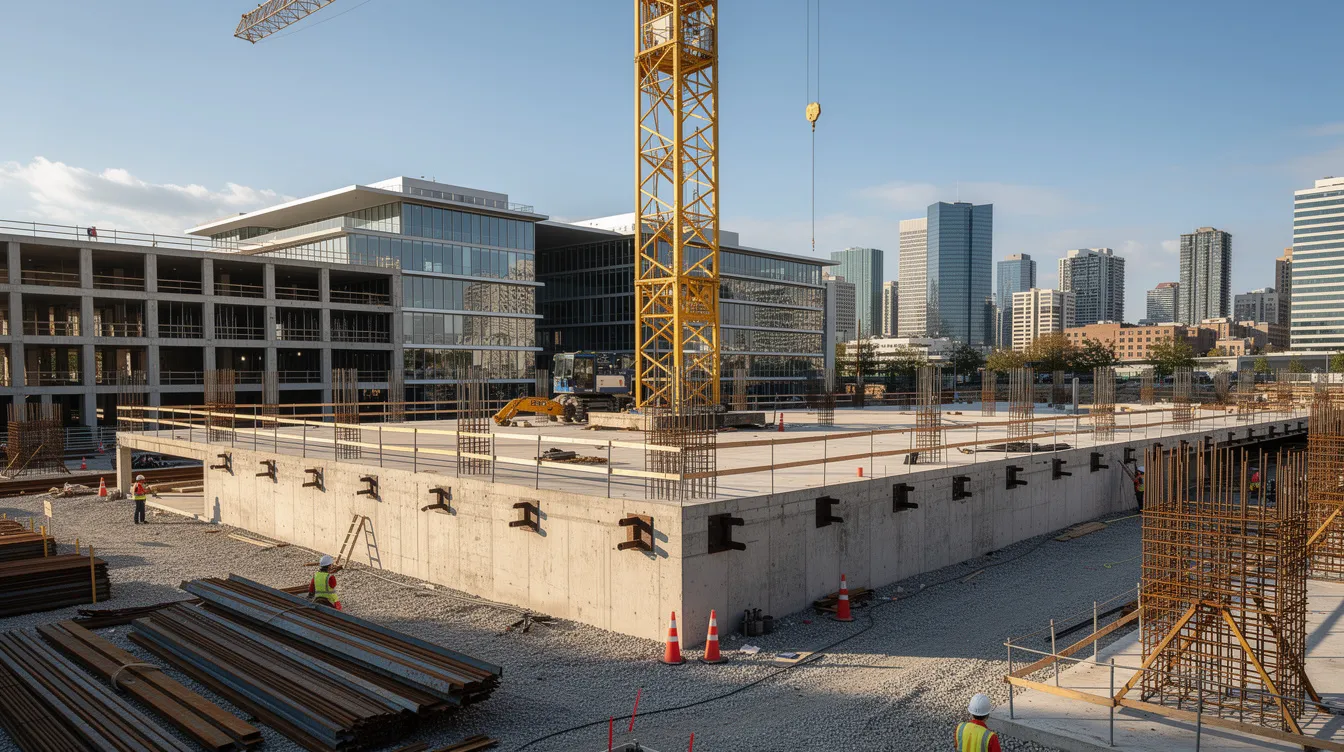
In Singapore’s construction context, “temporary works” refers to any structure or support erected during construction that does not form part of the permanent works – scaffolds, hoardings, falsework, formwork, and critically, crane platforms and crane foundations. Under BCA and WSH regulations, these structures must be designed and checked by a qualified Professional Engineer before they can be built and loaded. Temporary works endorsements are necessary for crane operations because the loads involved are high, the consequences of failure are severe, and the ground conditions across Singapore vary enormously.
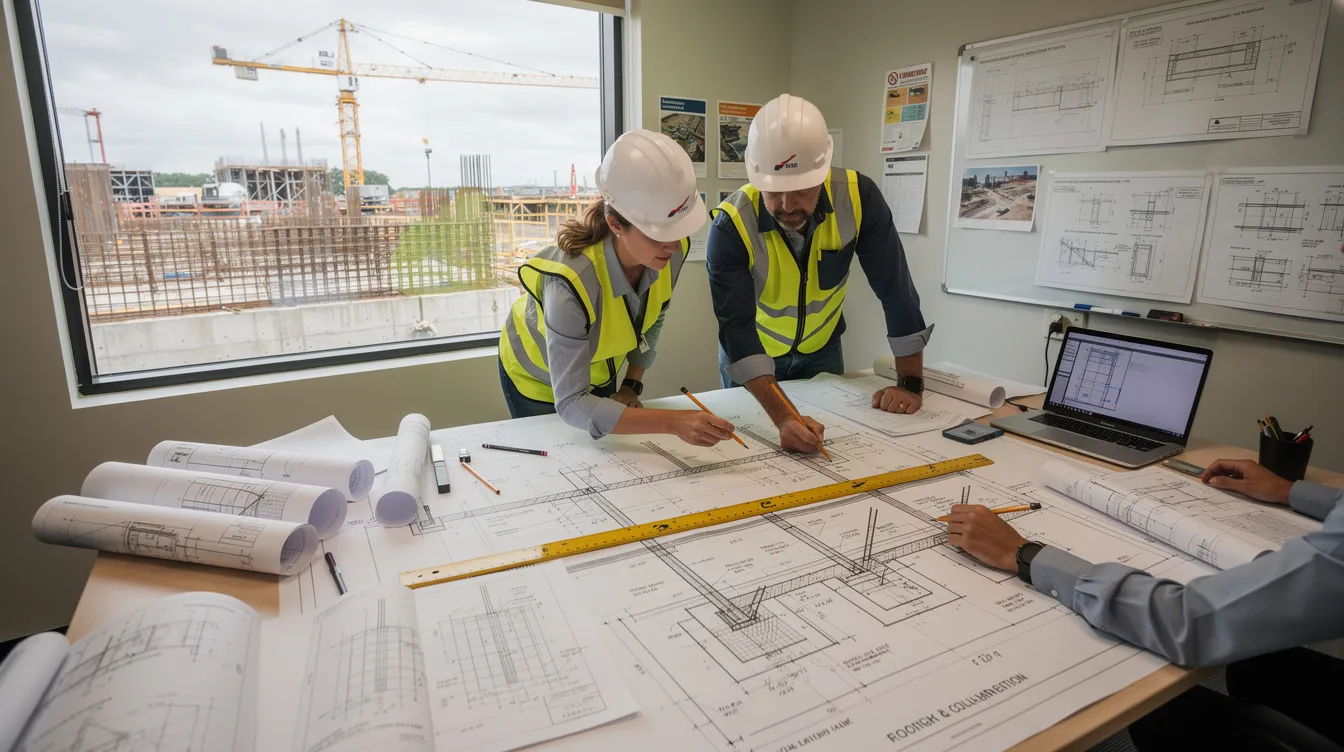
A PE endorsement is not just a rubber stamp. It comprises structural design calculations, load analysis against the crane manufacturer’s load data, engineering drawings, and a signed PE certificate that main contractors and authorities recognise as confirmation that the temporary work is fit for purpose. PE certification covers engineering work within the appointment, and the endorsed documents become the basis on which the platform or foundation is constructed and inspected.
For infrastructure projects – LTA rail corridors, PUB drainage works, JTC industrial developments, port and marine works – endorsed temporary works are often mandatory under both contract and WSH regulations. Lifting operations must comply with WSH Act regulations, and any construction company working on these projects will find that authority reviewers and safety committees expect fully endorsed crane foundation designs before crane mobilisation is approved.
What Counts as a Crane Platform, Lifting Equipment, or Crane Foundation?
A crane platform is an engineered working surface or hardstand that distributes crane loads – including outrigger reactions, track pressures, or wheel loads – into the underlying ground. Examples include compacted gravel platforms reinforced with steel mats on soft clay, timber grillage platforms on existing deck structures, or layered crushed-rock hardstands for mobile cranes.
A crane foundation is a more substantial base, often semi-permanent, designed to carry heavier or sustained loads. Reinforced concrete pads for tower cranes, pile mat foundations for crawler cranes operating over weak soil, and grillage systems spanning voids or culverts all fall into this category. Crane foundation design requires manufacturer’s load data, and the structural design for cranes must account for dynamic loads and overturning moments that can be several times the static weight of the equipment.
Concrete examples from Singapore infrastructure work include:
-
A mobile crane platform beside an MRT viaduct, engineered to avoid overloading the tunnel below
-
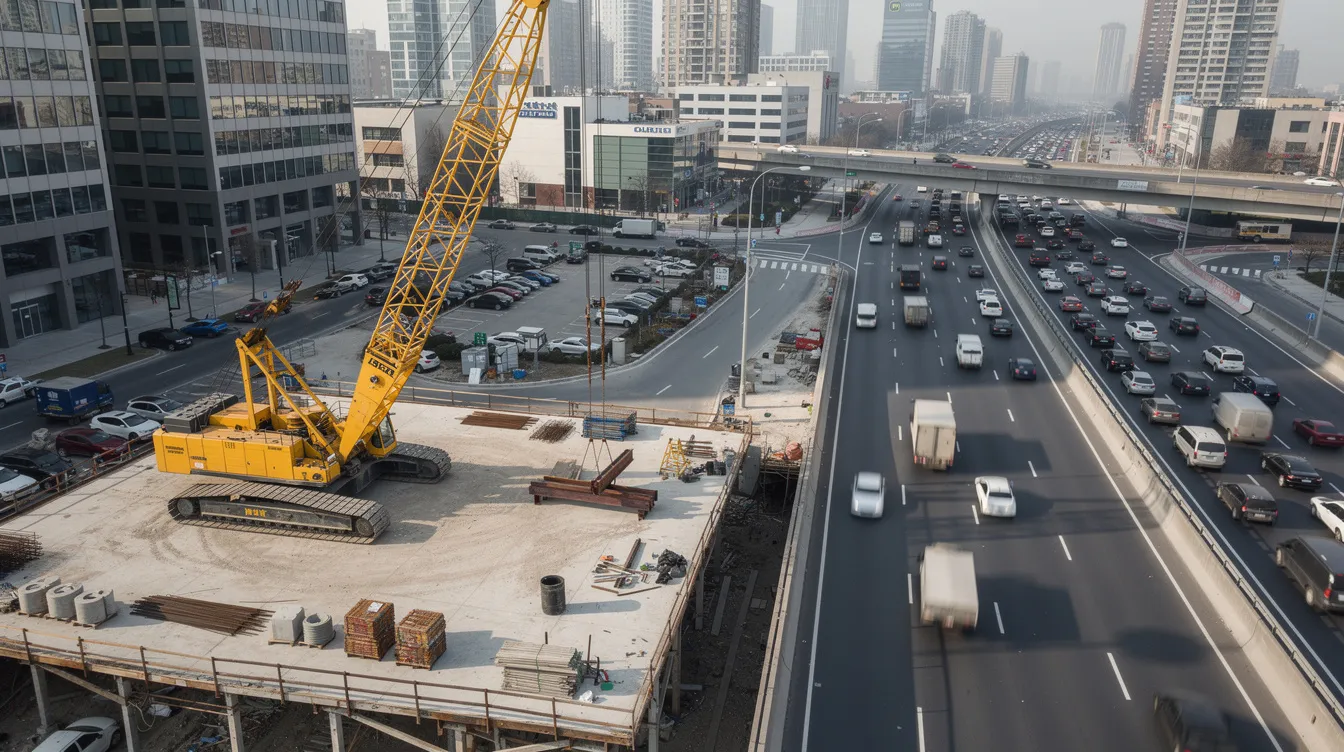
A 300-tonne crawler crane platform adjacent to a live expressway, where ground bearing capacity is limited by marine clay
-
A tower crane base on an elevated transfer beam for a high-rise building project in the CBD
These scenarios need rigorous design because of high point loads, variable ground conditions, and proximity to existing utilities or structures. PE consultants can design crane foundations in Singapore to meet these demands, but the engineering effort – and therefore the cost – varies significantly based on project specifics.
Role of the Professional Engineer (PE) in Temporary Works
A Singapore-registered Civil/Structural PE who endorses crane platforms and foundations is responsible for reviewing soil data, designing the platform or foundation thickness and reinforcement, and checking that allowable ground bearing pressures are not exceeded under the worst-case crane loading. Comprehensive load cases must be considered under Singapore standards for structural calculations, including crane self-weight, maximum lifted load, wind loading, dynamic effects, and asymmetric outrigger reactions.
Key deliverables from the PE typically include:
-
Design calculations covering all critical load cases
-
General arrangement (GA) drawings and reinforcement or mat detail drawings
-
Construction notes and specifications
-
PE endorsement forms, certificates, and – for tower crane foundations – the PE’s Letter of Undertaking as required by MOM’s tower crane guidelines
The PE interfaces with several other parties: the lifting supervisor, crane supplier (who provides load charts and equipment specifications), geotechnical specialist (for soil data), and the main contractor’s project team. Proper documentation of lifting equipment is required, but the PE endorsement scope is usually limited to the temporary works themselves – not crane mechanism safety certification or MOM lifting machine registration. Statutory examination of lifting equipment is a separate requirement handled under different regulations.
The more information and coordination required between these parties, the higher the professional fee. This relationship between scope and cost is what the next section addresses directly.
Typical Cost Range for Temporary Works PE Endorsement in Singapore
The pricing for PE endorsements varies based on engineering complexity and ground conditions, crane capacity, the number of positions to be endorsed, and the documentation depth required by the project’s authority or client. The figures below reflect indicative 2024–2026 market ranges based on infrastructure and building projects in Singapore and are subject to formal quotation for any specific project.
Indicative Fee Bands by Complexity
Simple case – SGD 2,000 to 4,000 per platform layout This covers one to two mobile crane positions on competent ground where a recent soil investigation report already exists. The crane is typically under 100 tonnes capacity, with a single boom configuration and standard outrigger layout. Design effort is modest: a few load cases, one or two drawing sheets, and minimal coordination with authorities. Turnaround is usually five to seven working days.
Moderate case – SGD 5,000 to 9,000 depending on iterations This applies to projects involving a combined platform for a 200–300 tonne crawler crane, or multiple positions with variable fill or mixed ground conditions. Crane foundation design must consider ground investigation data in more detail, and there may be several loading configurations to analyse. Expect three to five drawing sheets, at least one coordination meeting, and potentially a site visit to verify existing conditions.
Complex infrastructure case – SGD 10,000 to 25,000+ Platforms over underground utilities, near live rail or expressways, or heavily loaded tower crane bases on soft marine clay fall here. PE endorsements may involve multiple regulatory authorities depending on the project specifics – for example, both BCA (structural plan review) and MOM (lifting base safety). CVC Engineers quotes SGD 8,000–25,000 per crane for tower crane base and pile mat endorsements at this complexity level. Site constraints such as urban settings or proximity to existing structures complicate design assessments, pushing fees toward the upper range.
Economies of scale apply when many near-identical platforms are endorsed under a single project appointment. A construction company erecting ten similar mobile crane hardstands along a highway corridor, for instance, may negotiate a lower per-platform fee than individual standalone engagements.
Disbursements – site visits, printing of endorsed drawings, courier – are sometimes included in lump-sum quotes for moderate and complex cases but are commonly billed separately for simple engagements. Geotechnical investigation costs (boreholes, CPTs, plate load tests) are almost always excluded.
What Is Usually Included in the PE Endorsement Fee?
Core inclusions in a typical PE endorsement fee for crane platforms and foundations are:
-
Structural/geotechnical design checks for specified crane loads, including bearing capacity verification and overturning stability
-
2D CAD drawings: general arrangement, cross-sections, reinforcement details, connection details
-
Basic constructability review and construction notes
-
One round of comments and revisions based on contractor or authority feedback
-
PE certificate, seal, and endorsement documentation (including Letter of Undertaking for tower crane foundations)
-
One site inspection visit for moderate and complex cases (site inspections are mandatory during construction for safety compliance and verification purposes)
For infrastructure works, Stellar Structures also aligns designs with LTA, PUB, or JTC requirements where relevant to temporary works, ensuring that submission format and content meet authority expectations.
Typical exclusions include:
-
Geotechnical investigation costs (boreholes, CPTs, lab testing)
-
Detailed method statements or lifting plans (unless specifically scoped)
-
Monitoring plans or instrumentation
-
Extended site supervision beyond the agreed number of visits
-
Authority submission fees
Fast-track delivery, night or weekend coordination meetings, or repeated redesigns due to scope changes may attract variation fees. Tight project schedules can lead to increased fees due to expedited service demands, so planning ahead is the single most effective way to control endorsement costs.
Key Factors That Influence PE Endorsement Costs
Understanding what drives the cost of a crane platform or foundation endorsement helps contractors budget realistically and negotiate clearer scopes with their PE consultant. The following factors consistently account for the largest variations in fee levels.
Crane Capacity, Configuration and Operating Envelope
Crane capacity and loading dynamics significantly influence the design complexity and PE endorsement fees. A 500-tonne crawler crane generates outrigger reactions many times larger than a 60-tonne mobile crane, requiring thicker platforms, deeper foundations, and more reinforcement – all of which demand more engineering time.
Multiple boom or jib configurations, slewing over different quadrants, or overlapping working radii with adjacent cranes multiply the number of design cases the PE must analyse. Each unique load case requires separate calculations, additional drawing annotations, and internal review. Structural design for cranes must account for dynamic loads and overturning moments, which become more complex as crane capacity and reach increase.
Providing complete load charts and worst-case configurations upfront – including the crane manufacturer’s load data – can significantly reduce redesign cycles and fees. PE consultants can design crane foundations in Singapore far more efficiently when they receive this information at the outset.
Ground Conditions and Site Constraints
Ground conditions affect the foundation type required for cranes, impacting engineering assessments in fundamental ways. Sites on reclaimed land, marine clay, or near retaining structures require more detailed analysis and sometimes staged construction checks. Singapore’s many soft-ground and reclaimed-land sites mean that geotechnical inputs are increasingly demanded as standard practice.
When there is no recent soil investigation near the proposed platform location, the PE must either adopt ultra-conservative design assumptions – leading to heavier, more expensive platforms – or the contractor must commission targeted boreholes or CPTs through a geotechnical partner. Either path adds cost. Crane foundation design must consider ground investigation data, and the absence of that data almost always raises the endorsement fee.
Additional complexity arises when platforms are near existing piles, basements, drains, or underground services that constrain platform thickness, layout, or load distribution. These constraints require more careful analysis and coordination with other disciplines.
Number of Crane Positions and Reuse Strategy
Each unique crane position, orientation, or platform geometry adds analysis and drafting time. A project with eight distinct crane positions scattered across a site requires more engineering effort than one with two standardised positions.
Significant savings are possible if one standard platform layout is designed and reused across many positions – provided ground conditions and crane loads are consistent. Conversely, fully bespoke layouts for every position multiply the PE’s work. Changes in crane model midway through a project – for instance, upgrading crane capacity after the original endorsement – usually trigger redesign costs because the load cases, reactions, and foundation requirements change fundamentally.
Level of Authority/Client Requirements
Infrastructure clients such as LTA, PUB, JTC, and port operators typically require more extensive documentation, safety review committee submissions, and sometimes independent checking of designs. PE endorsements may involve multiple regulatory authorities depending on the project specifics, and the additional coordination, documentation, and review cycles increase PE hours and therefore fees.
Some contracts mandate specific safety margins above code requirements, third-party peer reviews, or detailed safe work procedures that must accompany the endorsed drawings. Private industrial or building projects may have simpler documentation needs, leading to lower fees for comparable technical complexity.
Professional engineering support is necessary for crane foundation projects regardless of sector, but the regulatory overhead varies considerably based on the project authority.
Programme, Turnaround Time and Revisions
Urgent turnarounds – for example, less than three working days – often attract premium fees, sometimes at OT 1.5x the standard rate for after-hours or weekend work. Tight project schedules can lead to increased fees due to expedited service demands, and this is one of the most common sources of budget overrun.
Multiple rounds of layout change due to site coordination issues can quickly add cost if not covered in the original quote. The earlier you lock in crane positions during planning, the fewer redesign iterations you will face. Planning ahead avoids the costly u-turn of redesigning a platform layout after endorsed drawings have already been issued.
What the PE Endorsement Process Looks Like (and Where Costs Arise)
Most PE endorsement costs are tied to specific steps in a structured workflow. Stellar Structures follows a clear process for infrastructure and building projects in Singapore, ensuring that each stage adds value and that the contractor knows where fees are incurred.
Step-by-Step Process from Request to Stamped Drawings
-
Information gathering and crane data – The contractor provides crane specifications (model, capacity, load charts, outrigger configurations), preliminary platform locations, and project context. This step is largely administrative but sets the foundation for accurate pricing. Incomplete data at this stage is the single biggest cause of downstream cost increases.
-
Review of ground conditions and site drawings – The PE reviews available soil investigation data, topographical surveys, and existing structural drawings. If data gaps exist, the PE flags them and may recommend targeted geotechnical investigation. This review shapes the design approach and directly affects the level of effort required.
-
Conceptual platform or foundation design – Based on the crane loads and ground data, the PE develops a preliminary design: platform thickness, material type, reinforcement layout, or pile mat configuration. For complex cases, this step may include initial 3D modelling or finite element analysis.
-
Detailed analysis and iteration with contractor – The PE runs full structural calculations for all load cases, checks bearing capacity and stability, and iterates with the contractor on constructability. This is typically the most labour-intensive step and the largest component of the fee. Comprehensive load cases must be considered under Singapore standards for structural calculations.
-
Final drawings and calculations – The PE produces authority-ready or contract-ready drawings (GA, sections, reinforcement details, construction notes) and compiles the calculation report. PE endorsements for crane platforms require structural design calculations and site inspections, and the drawing package must be complete before endorsement.
-
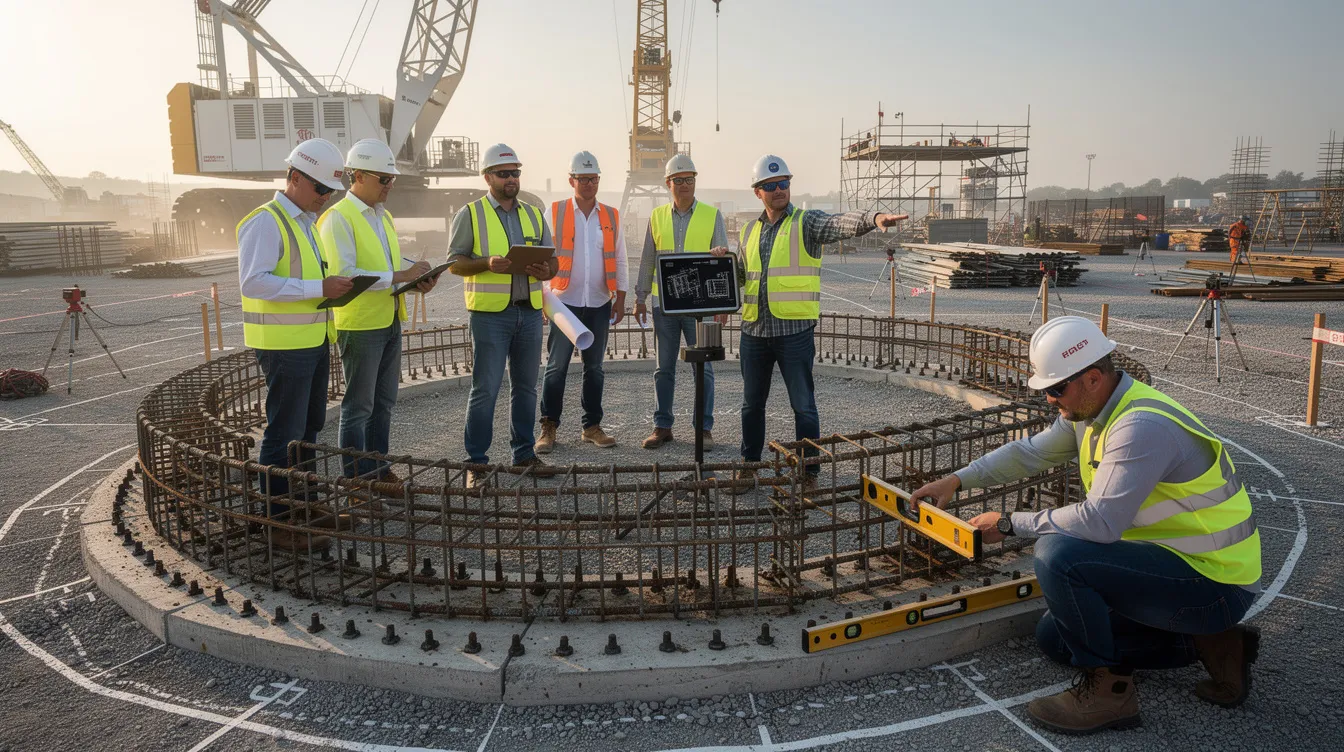
PE endorsement and optional site verification – The PE stamps and signs the final documents, issues the PE certificate and Letter of Undertaking (for tower crane foundations), and may conduct a site verification visit during construction. Site inspections are mandatory during construction for safety compliance and verification purposes, and statutory approvals for crane foundations are issued by local authorities based on these endorsed documents.
Payment milestones commonly apply: a deposit on appointment (typically 30–50%), with the balance due upon issuance of endorsed documents.
Simple vs Complex Endorsement Effort
For a straightforward crane platform on firm ground – say, a 100-tonne mobile crane on compacted granular fill with known bearing capacity – expect two to three load cases, one to two drawing sheets, and minimal coordination meetings. The PE’s work can often be completed within one week, and the fee stays in the SGD 2,000–4,000 range.
By contrast, a complex platform over a culvert or near a retaining wall – or a tower crane base on marine clay requiring pile mat foundations – may involve ten or more load cases, five to eight drawing sheets, multiple coordination meetings with the main contractor and authority reviewers, and possibly a staged construction verification programme. This level of effort pushes fees into the SGD 10,000–25,000+ range.
Complexity is not only about crane size. Site geometry, traffic management constraints, integration with other temporary works (such as ERSS or temporary diversions), and the turn-around requirements of the project programme all contribute to the total engineering effort.
Common Cost-Related Challenges and How to Avoid Them
Many contractors face avoidable fee variations or programme delays because of incomplete information, last-minute changes, or misaligned expectations between commercial and safety teams. Here are the most common issues and how to prevent them.
Incomplete or Late-Provided Crane and Site Data
The most frequent problem is missing load charts, uncertain crane make or model, or outdated topographical plans. When the PE cannot confirm the equipment specifications or site layout, they must either delay the design or build in conservative assumptions – both of which increase cost.
Solution: Coordinate early with the crane supplier to obtain confirmed load charts and crane specifications. Use a standard checklist covering crane model, capacity, outrigger spacings, boom lengths, and maximum lifted loads. Share the latest BIM or 2D site layouts with the PE at the point of enquiry. This working experience of structured data handover consistently produces more accurate quotes and faster turnarounds.
Frequent Changes in Crane Position or Access Routes
Late shifts in platform location – for example, to clear newly discovered utilities or accommodate traffic management changes – trigger re-analysis and new drawings. Each change can add several days of engineering time and several thousand dollars in variation fees.
Solution: Freeze crane positions at a defined design stage, ideally before detailed analysis begins. Alternatively, agree upfront on a limited number of free revisions (e.g. one position shift per platform) before variation fees apply. Building some flexibility into the original scope avoids the sharp cost escalation of ad hoc changes.
No Recent Ground Investigation Near the Platform
Relying on distant or old soil data forces the PE to adopt ultra-conservative designs – potentially resulting in platforms that are far thicker or more heavily reinforced than necessary. In some cases, the PE may decline to endorse without adequate geotechnical data, causing programme delays.
Solution: Commission targeted boreholes or CPTs through a geotechnical partner at an early project stage. Where full investigation is not feasible, staged verification (e.g. plate load tests during platform construction) can provide the data the PE needs to finalise the design. Either approach is far cheaper than over-engineering the platform or facing a stop-work order.
Misalignment Between Safety Expectations and Budget
Cutting corners on engineering design to save a few thousand dollars can lead to stop-work orders, MOM enforcement action, or incidents that are orders of magnitude more costly than proper PE endorsement. PE endorsements for crane platforms require structural design calculations and site inspections – they are not optional extras on any project where WSH regulations apply.
Solution: Align internal safety, WSHO, and commercial teams early in the project so that budgets reflect realistic engineering requirements. Include PE endorsement costs as a line item in tender submissions rather than treating them as an afterthought. This ensures the budget is based on actual regulatory requirements, not wishful estimates.
How to Budget and Plan for PE Endorsement of Crane Platforms and Foundations
Building PE endorsement costs into tender and execution budgets is straightforward once you understand the cost drivers. Early engagement with a firm like Stellar Structures reduces the risk of surprise costs and programme delays, and ensures that the endorsement process runs in parallel with – not behind – crane mobilisation planning.
Information to Prepare Before Asking for a Quote
Before requesting a fee proposal, compile the following:
-
Crane details: Make, model, maximum capacity, load charts for all planned configurations, outrigger spacings, track gauge (for crawler cranes)
-
Preliminary platform locations: Mark-ups on site layout drawings showing crane positions, swing radii, and access routes
-
Expected lift weights and radii: Heaviest lifts, maximum reach, critical lift cases
-
Project authority: Identify whether the project falls under LTA, JTC, PUB, or private-sector requirements
-
Known underground services: Utility drawings, existing pile records, basement or tunnel locations beneath or adjacent to proposed platforms
-
Ground data: Any existing soil investigation reports, borehole logs, or geotechnical assessments provided by the project’s geotechnical consultant
Providing this package in one go allows the PE to offer a firm, transparent fee instead of broad ranges with multiple caveats.
Typical Timeline from Appointment to Endorsement
For a simple case – one or two mobile crane positions on known ground – expect five to seven working days from formal appointment to issuance of endorsed drawings.
For a moderate case – multiple positions, combined platform, or variable ground – allow two to three weeks, including at least one coordination meeting and one round of revisions.
For a complex infrastructure case – tower crane bases, pile mat foundations, authority submissions, or multi-party coordination – plan for three to four weeks, potentially longer if authority-driven comments require substantive design revisions.
Programme pressure – for example, a crane mobilisation date that is only ten days away – constrains options and almost always raises costs. Integrating temporary works design lead time into overall project schedules and method statements is essential. A last-minute turn towards expedited delivery is significantly more expensive than planned engagement.
When to Engage Stellar Structures
The ideal engagement point is early in method statement planning or during tender clarification – not days before the crane arrives on site. At this stage, Stellar Structures can review the crane and site requirements, flag potential issues (such as the need for geotechnical investigation or authority submissions), and provide a budgetary fee proposal that the contractor can incorporate into the project budget.
Stellar Structures specialises in infrastructure, industrial, and building projects in Singapore, handling both design and authority-aligned documentation for temporary works PE endorsement. The firm can also coordinate with other consultants – geotechnical, traffic, safety – when projects demand a multi-disciplinary approach, and can oversee the technical interface between crane supplier, main contractor, and regulatory bodies.
Conclusion and Next Steps
PE endorsement for crane platforms and foundations in Singapore is a relatively modest investment – typically SGD 2,000 to 25,000+ depending on crane capacity, ground complexity, and authority requirements – but it is a critical one. The cost protects the project against far more expensive outcomes: stop-work orders, structural failures, regulatory penalties, and programme delays that can dwarf the endorsement fee many times over.
Indicative fee ranges serve as planning guides only. Every project has unique conditions, and a tailored quote based on actual crane data, ground information, and project requirements is essential for accurate budgeting.
Here are your immediate next steps:
-
Compile crane and ground information – Gather crane specifications, load charts, and any existing soil investigation data for the project
-
Map out tentative crane positions – Mark proposed locations, swing radii, and access routes on the latest site layout
-
Consult internal safety teams – Ensure your WSHO and project management teams agree on the scope of temporary works requiring endorsement
-
Request a budgetary fee proposal – Contact Stellar Structures with your compiled information to receive a project-specific quote
Related topics worth exploring include temporary retaining structures (ERSS), working platforms for heavy transport, PE endorsement responsibilities and liabilities, and when a PE (Geo) is required alongside a structural PE for crane foundation projects.
Frequently Asked Questions About PE Endorsement Costs for Crane Platforms in Singapore
Is PE endorsement legally required for every crane platform in Singapore, or only for certain projects? Under MOM’s WSH framework and BCA guidelines, any crane platform or foundation that forms part of construction temporary works on a worksite generally requires PE endorsement. Contract requirements from infrastructure authorities (LTA, PUB, JTC) make this effectively mandatory for all regulated projects. Even on private projects, main contractors routinely require endorsed designs as part of their safety management system.
Can I reuse one endorsed crane platform design on different projects? Typically not without modification. PE endorsement is project-specific because ground conditions, crane configurations, and site constraints differ between locations. A design endorsed for one site cannot simply be transferred to another without the PE reviewing and re-endorsing it for the new conditions.
Do I need both structural and geotechnical PEs, and how does that affect cost? For crane foundations on competent ground, a Civil/Structural PE is usually sufficient. However, where pile mat foundations, deep soft clay, or complex ground improvement are involved, a geotechnical PE (PE Geo) may be needed alongside the structural PE. Dual-discipline engagement increases fees, but it is necessary to ensure both the structure and the ground interaction are properly addressed.
Are site inspections by the PE included in the fee? Most moderate and complex endorsement quotes include one site verification visit. Site inspections are mandatory during construction for safety compliance and verification purposes. Additional visits beyond the agreed number are typically billed separately, and extended site supervision (e.g. full-time presence during foundation construction) is always an additional cost.
How can SMEs keep endorsement costs manageable without compromising safety? Provide complete crane and site data upfront to minimise redesign iterations. Standardise platform layouts where possible to benefit from economies of scale. Engage the PE early – during tender or method statement planning – rather than under programme pressure. These steps consistently reduce fees without cutting any corners on the engineering that keeps your site safe and compliant.