




Introduction
If you live in or manage a condominium in Singapore that is more than 20 years old and taller than 13 metres, the Building and Construction Authority (BCA) requires your building to undergo a periodic façade inspection (PFI). This is not optional. The Management Corporation Strata Title (MCST) is legally responsible for arranging it, and individual unit owners have practical roles to play-from granting balcony access to funding repairs through maintenance contributions.
This FAQ-style guide is written by Stellar Structures for MCST councils, committee members, and everyday condo owners who want to understand the PFI regime without wading through legislation. It focuses on residential condominiums, not commercial or industrial properties. We explain the rules, the process, the costs, and the consequences in plain English so you can plan with confidence.
In one sentence: condo owners need to know that they must budget for façade inspections and potential repair works, cooperate with access requests, understand BCA notices when they arrive, and act promptly when defects are found.
Here are the key takeaways you will get from this article:
-
Basic rules – which condos are affected, how often inspections happen, and which laws apply.
-
Who pays what – how costs are shared, what sinking funds cover, and when special levies may be needed.
-
What happens during inspection – what Stage 1 and Stage 2 look like, what inspectors check, and what tools they use.
-
What to do if defects are found – how defects are classified, who arranges repairs, and what “Unsafe” really means.
-
Typical timelines and visuals – realistic schedules from BCA notice to completion, and the kinds of photos and reports you can expect.
Understanding BCA Periodic Façade Inspection for Condominiums
The periodic facade inspection regime exists for one straightforward reason: to stop pieces of building façade-tiles, concrete chunks, cladding panels, rusted brackets-from falling and injuring people below. Singapore’s dense, high-rise urban environment makes this a serious public safety concern, and the BCA introduced PFI as a preventive measure rather than a reactive one.
PFI is separate from the periodic structural inspection (PSI), which examines foundations, beams, and columns for structural integrity. It is also different from the cosmetic repainting that most condos carry out every five to seven years. Even if your condo just completed a fresh coat of paint, PFI may still be due. Condo residents should care because non-compliance carries fines, undetected façade deterioration can cause accidents and liability claims, and well-documented inspection records protect property values.
The PFI regime became mandatory on 1 January 2022 under the building control act. Once your building crosses the age and height thresholds, inspections recur on a 7-year cycle-meaning a typical condo estate will go through this process multiple times over its lifetime.
What Exactly Is a Periodic Façade Inspection (PFI)?
Think of PFI as a regular “health check” for your condo’s external skin. It covers everything on the outside of the building: walls, plaster finishes, tiles, cladding, glass panels, balcony soffits, sunshades, railings, AC ledges, decorative cornices, and other exterior features. The Periodic Façade Inspection (PFI) ensures exterior building safety in Singapore by catching problems early, before small cracks become falling hazards.
The key legal references, in simple terms, are the Building Control Act (Cap. 29, Part 5) and the Building Control (Periodic Inspection of Buildings and Building Façades) Regulations 2021, with further clarifications under the Meaning of Exterior Features Regulations 2021. An October 2025 circular (Regulation 16B) tightened duties for facade inspectors and clarified competent person responsibilities.
BCA mandates façade inspections every 7 years for buildings over 20 years old and taller than 13 metres. The age is measured from the Temporary Occupation Permit (TOP) or Certificate of Statutory Completion (CSC) date. For example, a condominium that received its TOP in 2001 turned 20 years old in 2021 and would typically have received its first PFI notice between 2022 and 2028.
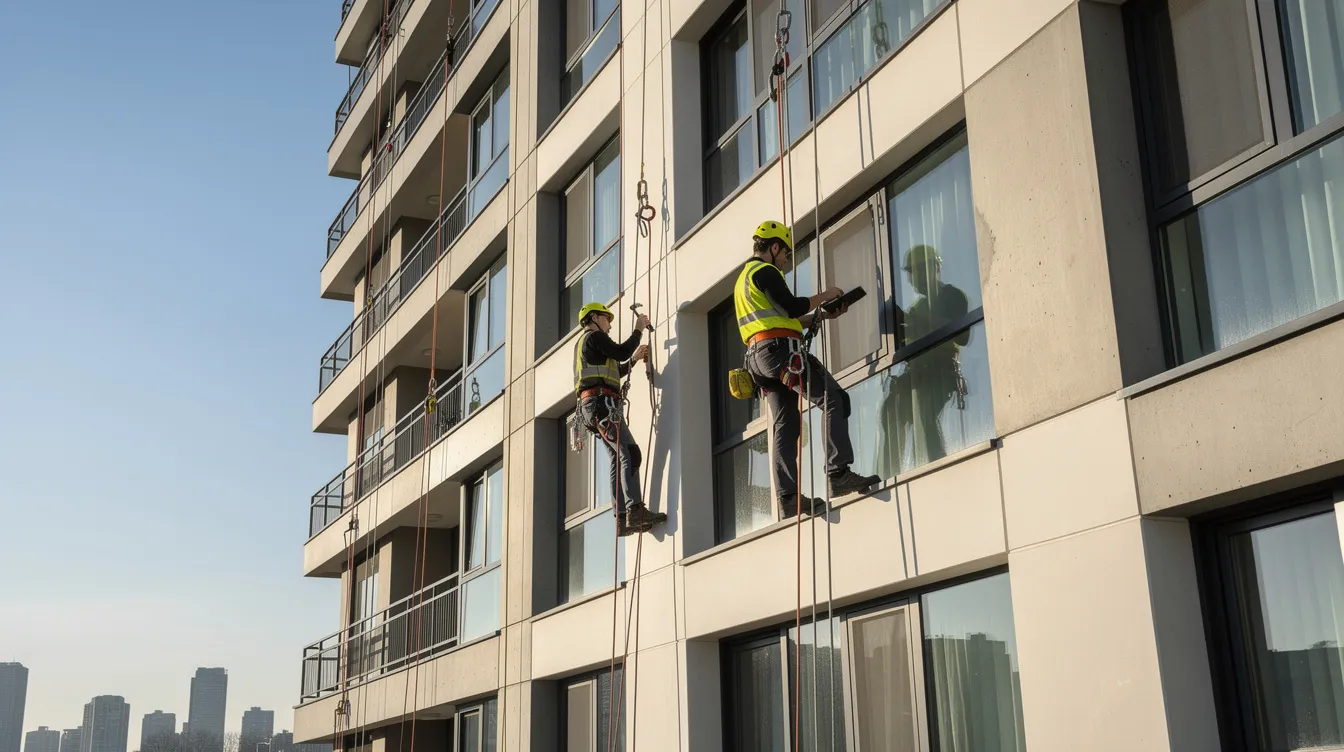
The inspection process requires a 100% visual check of the entire building façade-every elevation-plus a close range inspection covering at least 10% of each elevation’s surface area, where inspectors physically tap, probe, and test the façade by hand. Access methods include rope access, gondolas, scaffolding, and unmanned aircraft systems (drones). Photos are taken extensively and form part of the formal inspection reports submitted to BCA.
When Does a Condominium Fall Under PFI Rules?
Your condo needs a periodic facade inspection PFI when all of these criteria are met:
-
Height exceeds 13 metres – roughly four storeys or more, which covers most multi-storey private condominiums and tall buildings.
-
Age is 20 years or older – measured from TOP or CSC date.
-
Not a private landed house – detached, semi-detached, and terrace houses used as homes are exempt.
-
Not a temporary building – temporary buildings and structures are excluded.
Most multi-storey private condominiums and mixed-use strata developments in Singapore will eventually receive a PFI notice from BCA. At the regime’s launch, BCA estimated that over 30,000 buildings would need inspection in the first 7-year cycle. Many condos built in the early 2000s are now entering the threshold age. In 2026, buildings completed in 2006 are reaching the 20-year mark.
BCA sends a formal notice-the PFI notice-to the MCST, not to each individual unit owner. However, the costs and need for cooperation involve everyone in the estate.
Special situations to be aware of:
-
Newer blocks that have not reached 20 years are not yet affected but should plan ahead.
-
Recently reclad or repainted façades still require PFI when due; recent repair works alone do not exempt the building.
-
Condos undergoing major addition and alteration (A&A) works may apply to BCA for deferment, but this is assessed case by case and requires supporting documentation such as drawings and condition statements.
Who Is in Charge – MCST vs Individual Owners
The MCST is the legal entity responsible for common property, which includes external walls, façade elements, sunshades, railings, balcony structures, and cladding panels that form part of the building envelope. The MCST receives the BCA notice, appoints the competent person (CP), and pays for the inspection and any remedial works from the maintenance or sinking fund.
Individual unit owners are typically responsible for items within their lot boundaries as defined by strata by-laws: window panes and frames inside the unit, fixtures installed by the owner, and sometimes AC brackets or retrofitted awnings depending on the specific by-laws. If you are unsure, check your condo’s strata by-laws or ask the managing agent.
Owners support the process by allowing access to balconies, windows, and AC ledges when the inspection team needs to examine those façade areas. You must comply with safety cordons, attend briefings when called, and respond to MCST circulars promptly.
|
Responsibility |
Common Property (MCST) |
Within Lot (Owner) |
|---|---|---|
|
External walls & façade |
✓ |
|
|
Balcony structure & soffit |
✓ |
|
|
AC ledge (original) |
✓ (usually) |
Check by-laws |
|
Window panes/frames inside unit |
✓ |
|
|
Owner-installed awnings/grilles |
✓ (typically) |
|
|
Funding inspection |
✓ (sinking fund) |
Via contributions |
How the PFI Process Works in Practice for a Condominium
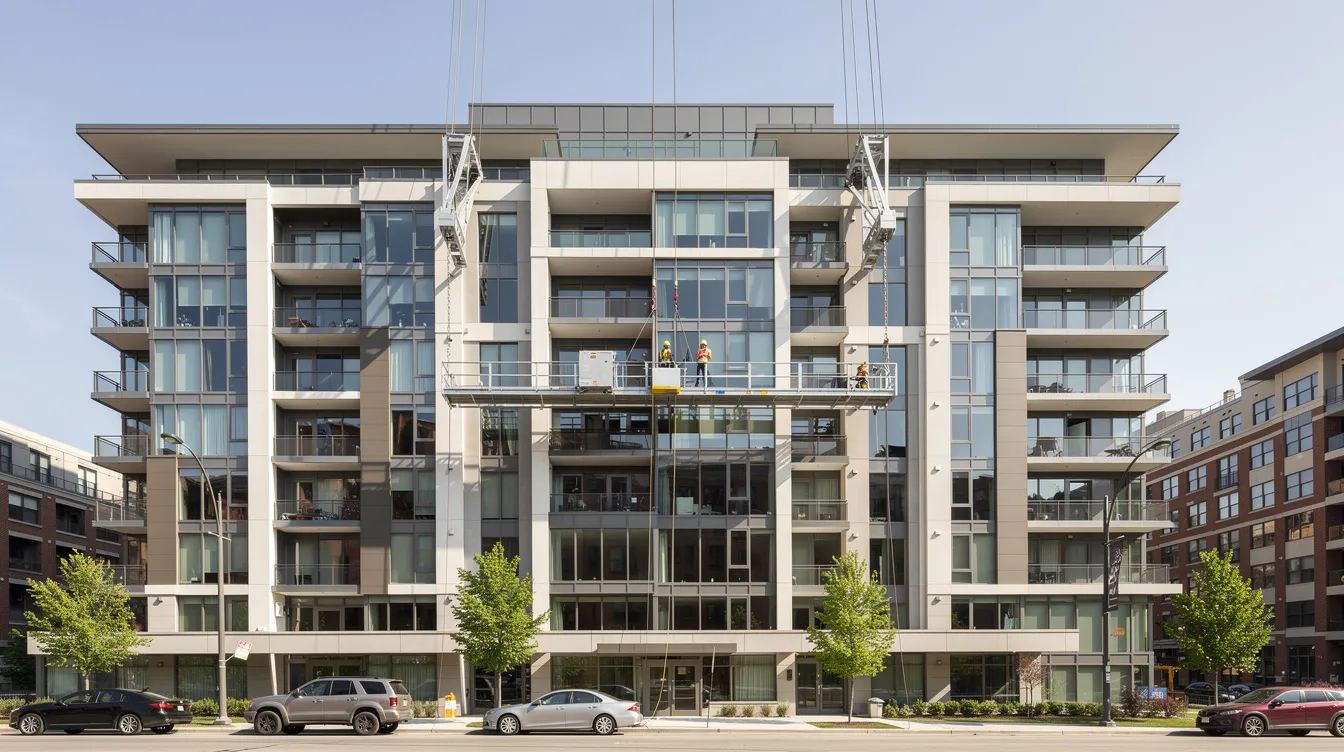
Picture the full journey: BCA sends your MCST a notice. The council appoints a qualified professional responsible for the inspection-a competent person CP. Residents receive circulars explaining what will happen. Inspectors arrive with rope access equipment or gondolas, examine the façade elevation by elevation, take hundreds of photographs, tap tiles, and probe suspect areas. A report is compiled, submitted to BCA, and if defects are found, repair works follow. Once repairs are done, a completion report closes the cycle. The whole process, from notice to close-out, typically runs 6 to 12 months for Stage 1, longer if Stage 2 is triggered.
There are two main stages. Stage 1 is the routine inspection that every affected condo undergoes. Stage 2 is a deeper façade investigation triggered only when Stage 1 reveals widespread or high-risk defects. Both are explained below.
Stage 1: The Routine Check Every 7 Years
Stage 1 covers a full visual inspection-100% of the entire building façade, every elevation-combined with close-range, hands-on checks on at least 10% of each façade elevation. Periodic façade inspections must cover at least 10% of each elevation to ensure a representative sample of the building’s condition.
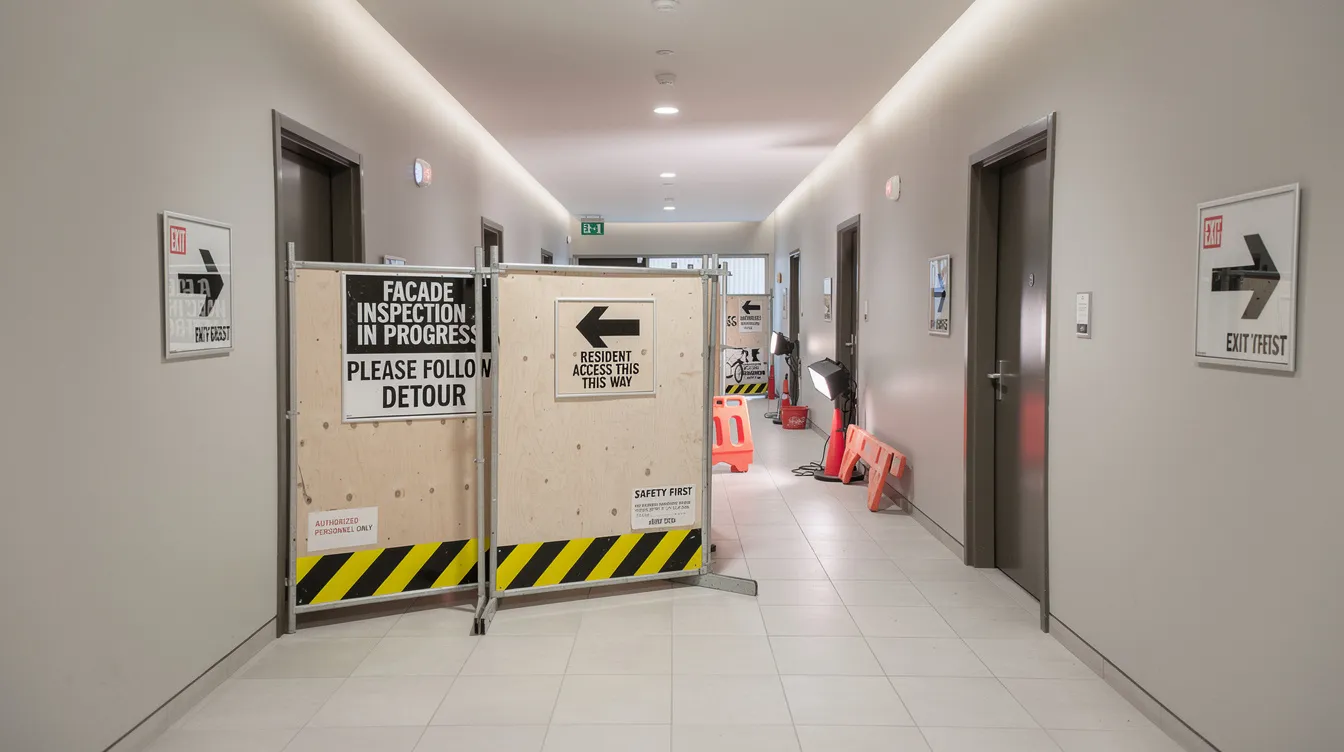
What residents will actually see: professionals in gondolas or on rope access, sometimes using drones, taking high-resolution photographs, tapping tiles with small hammers, probing joints, and checking sealant condition. Safety hoardings and cordoned walkways may appear around the building base. This is entirely normal and regulated.
Typical visible defects inspected for include:
-
Hairline cracks and visible signs of stress in plaster or render
-
Spalling concrete exposing reinforcement steel
-
Loose tiles or debonded cladding panels
-
Rust stains from corroded steel fixings or brackets
-
Sealant failure around windows and joints
-
Water leakage marks, staining, or efflorescence
Defects are classified as Safe, Require Repair, or Unsafe. Most older condos will show a mix-around 91% of inspected buildings have had no defects or only minor ones. Finding some issues at 20-plus years is expected, not alarming.
Non-destructive testing methods are used during façade inspections, such as sounding (tapping) to detect hollow areas behind tiles, and in some cases thermal imaging or moisture sensors.
Stage 2: When a Simple Check Becomes a Full Investigation
Stage 2 is not automatic. It is triggered when Stage 1 finds more serious or widespread visible defects-particularly those posing a falling-object risk, such as widespread tile debonding, recurring falling façade elements, or corroded brackets across many balconies.
What changes at Stage 2: more façade areas are opened up for intrusive checks, samples may be extracted for laboratory testing, and the scope of close-range examination expands. Stage 2 inspections require at least 10% close-range examination of each building facade, and BCA may set stricter deadlines. MCSTs must engage a competent person for Stage 2 inspections, and the CP oversees the entire Stage 2 investigation process.
Stage 2 findings classify defects as Safe, Require Repair, or Unsafe-the same categories, but now backed by deeper evidence. The impact on residents is more noticeable: more scaffolding or gondola presence, temporary hoardings around pathways, and possibly temporary restrictions on using certain facilities like swimming pools or playgrounds near the work zone.
The costs can be substantial. Stage 2 rectification costs can exceed S$1 million. For context, Nanyang Polytechnic’s façade rectification cost was S$1,305,000, and JTC Biopolis projects’ rectification costs ranged from S$2.5 million to over S$5 million. While those are institutional buildings, they illustrate the scale that serious façade deterioration can reach.
Who Are CPs and Façade Inspectors – and What Do They Actually Do?
A competent person must be a registered professional engineer (civil or structural, registered with the Professional Engineers Board) or a registered architect who holds the Certificate in Façade Inspection issued by BCA Academy or the Institution of Engineers Singapore. The competent person bears legal responsibility for inspection and reporting, and must submit inspection reports to the BCA.
Façade inspectors (FIs) are the on-site specialists working under the CP’s direct supervision. The appointed facade inspector carries out physical checks, photographs defects, and reports unsafe defects immediately-but all findings are reviewed, verified, and signed off by the CP. Rope access technicians and drone operators may also be part of the inspection team.
Drones are approved for visual façade inspections in Singapore and must be operated by accredited providers following Technical Reference TR 78:2020. Drone inspections capture high-resolution images of hard-to-reach areas and can reduce costs by up to 70% compared to traditional access equipment for the visual portion. However, the 10% hands-on close range inspection still requires human contact with the façade. Learn more about drone facade inspection in Singapore.
Owners can expect CPs and their teams to provide safety briefings, method statements, clear signage around work zones, and identification tags. Competent persons must ensure safety measures for unsafe defects found during the inspection.
What Condominium Owners and MCSTs Must Practically Do
This section is the practical playbook. Whether you sit on an MCST council or are a unit owner receiving circulars, here are the steps, budgets, and preparation tips you need.
Step-by-Step: From BCA PFI Notice to Completed Inspection
-
Month 0 – Receive BCA notice: MCST receives the formal PFI notice. The managing agent should immediately table it at the next council meeting.
-
Month 1–2 – Appoint a Competent Person: The MCST must engage a CP who is a registered professional engineer or registered architect. Shortlist candidates, evaluate experience with condominium façade inspection, and confirm professional indemnity insurance. If you need guidance, read our overview of who needs facade inspection reports.
-
Month 2–3 – Inform residents and plan logistics: Issue circulars, plan access equipment (rope access, gondola, or drones), schedule working hours, and arrange safety hoardings.
-
Month 3–6 – Stage 1 inspection: CP and inspection team carry out the full visual inspection and 10% close-range checks on each elevation. Photos, defect logs, and elevation maps are compiled.
-
Month 6–8 – Report submission: CP prepares and submits the PFI report via BCA’s CORENET e-Submission. MCST reviews findings.
-
Month 8–10 – Remedial works (if needed): MCST procures contractors, carries out façade repairs under CP supervision, and documents completion with photos.
-
Month 10–12 – Close-out: MCST submits the remedial works report to BCA. The BCA mandates that inspection reports must be submitted for closure after remedial actions. Cycle complete.
If Stage 2 is triggered, expect tighter deadlines and an extended timeline. BCA may give 6–12 months to complete Stage 1 and submit the report; Stage 2 may compress further depending on the severity of defects.
Stellar Structures can assist MCSTs with tendering for CPs and contractors, technical review of proposals, and handling BCA submissions.
Budgeting and Who Pays What
Costs for façade inspections and repairs are typically covered by the condominium’s sinking fund. The MCST pays for the common façade inspection; defects in owner-controlled items (such as retrofitted awnings or owner-installed grilles) may be charged back to the individual owner.
Cost drivers include:
-
Block height and number of blocks – a 12-block estate costs more than a single-tower condo.
-
Access method – rope access is generally cheaper per elevation than gondolas or scaffolding, but site constraints may dictate the choice.
-
Façade complexity – decorative cornices, extensive curtain wall systems, stone cladding, and multiple AC ledges increase inspection time.
-
Stage 2 investigations – if triggered, costs escalate significantly due to intrusive testing and expanded scope.
Budgeting should include a 10–20% contingency for unforeseen defects, because hidden problems often emerge when tiles or panels are removed. MCSTs may need special levies for large-scale rectification works if the sinking fund is insufficient. For very large estates, engaging a Quantity Surveyor to estimate repair costs before committing is a prudent step.
Owners should expect short-term inconvenience and possible levy increases, but the long-term benefits are clear: avoided accidents, prevented larger future repair costs, and maintained property value.
Preparing the Condo and Residents for Inspection Works
Before works start, the MCST should:
-
Issue resident circulars with clear diagrams showing where inspectors will be working and which access methods (rope access, gondola, drone) will be used.
-
Confirm permitted working hours and notify residents of any weekend or public holiday works.
-
Plan hoardings and cordoned areas around the building base, drop-off points, and playgrounds.
-
If drones are used, notify residents about flight paths and explain BCA’s privacy requirements-images must be masked or anonymised where they capture private spaces.
-
Document existing façade conditions with photographs from both MCST and owner perspectives before works begin, so that any pre-existing damage is recorded.
Residents should:
-
Clear balconies, AC ledges, and window sills of potted plants, laundry racks, and personal items.
-
Avoid hanging laundry on scheduled inspection days.
-
Follow all safety signs and temporary access restrictions without exception.
-
Report any known façade issues (cracks, water stains, loose fittings) to the managing agent proactively.
Good communication makes the process smoother for everyone. Consider WhatsApp groups, lobby posters with sample photos of inspectors at work, and a brief townhall session.
What Happens If Defects Are Found?
Finding defects during a periodic facade inspection is normal, especially for condos aged 20 to 30 years. Spalling concrete, sealant failure, and loose tiles are common in Singapore’s tropical climate. The critical issue is not whether defects exist, but how quickly and properly they are addressed. If defects are found, the MCST is obligated to carry out prompt rectification works.
Understanding “Safe”, “Require Repair”, and “Unsafe” in Simple Terms
|
Classification |
What It Means |
Typical Examples |
What Happens |
|---|---|---|---|
|
Safe |
No immediate concern |
Hairline cracks, minor surface staining, light weathering |
Monitored; no immediate repair needed but logged in maintenance records |
|
Require Repair |
Needs corrective work but not urgent |
Moderate cracking, early-stage spalling concrete, deteriorated sealant joints, minor rust on fixings |
Repair works scheduled within BCA’s specified timeline |
|
Unsafe |
Immediate risk of harm |
Bulging or detaching tiles over walkways, exposed corroded reinforcement, falling façade elements, severely rusted brackets |
Immediate safety measures required: cordoning, netting, element removal, then permanent repairs |
Safe defects do not need immediate repair but should be monitored. Require Repair defects need corrective work but are not urgent. Unsafe defects require immediate safety measures and repairs-think temporary netting, barrier tape, and sometimes removal of the hazardous element before a permanent fix is implemented. The CP must implement safety measures for any unsafe defects found, and these are documented with photos and location maps in the inspection report.
From Inspection Findings to Repair Works
The CP converts inspection findings into a prioritised list of recommended façade repairs, grouped by location (for example, “Block A – driveway elevation”) and urgency. The report includes detailed repair specifications, photos of each defect with annotations, and suggested timelines.
The MCST then procures contractors-typically through quotations or a formal tender for larger estates-to carry out rectification works under the CP’s supervision. Common types of repair works in condos include:
-
Patching spalling concrete and applying protective coatings
-
Retiling debonded or cracked areas
-
Resealing joints around windows and between cladding panels
-
Replacing rusted brackets, fixings, or glass panels
-
Removing and replacing failed sections of render or plaster
Where feasible, rectification can be combined with the condo’s repainting cycle to save on access equipment mobilisation costs-one gondola setup serves both purposes. This is a practical strategy that Stellar Structures regularly recommends. For guidance on essential façade repairs and PFI Stage 2 inspections, refer to our detailed MCST guide.
After repair works are completed, the MCST must submit a remedial works report to BCA to formally close out the inspection cycle.
What If the MCST or Owners Do Nothing?
Ignoring a PFI notice or failing to carry out repair works has real consequences:
-
Fines: Non-compliance with Stage 2 requirements can lead to fines up to S$20,000. A CP found guilty of improper inspection or non-compliance may face fines of up to S$50,000.
-
Enforcement orders: BCA can issue daily penalties, require proof of rectification, and in extreme cases issue stop-use orders if the façade is deemed unsafe.
-
Emergency obligations: Emergency protocols require the MCST to notify the BCA within 6 hours of a fallen exterior feature.
-
Insurance implications: Insurers may reject claims if the MCST did not comply with mandated safety obligations, leaving the estate financially exposed.
-
Property value impact: Buyers, banks, and insurers increasingly check for completed PFI records. Unresolved unsafe defects can cause price discounts, difficulty obtaining mortgages, or complications during property due diligence.
Owners cannot avoid carrying out remedial works simply because they intend to sell the building-the duty remains on the owner to whom the notice was served. Raise PFI status at your AGMs and EGMs, ask for updated timelines, and support necessary funding motions. If the council feels overwhelmed by technical or legal obligations, engaging an independent consultancy like Stellar Structures can help keep the process on track.
Common Concerns and Plain-English Answers (FAQ Style)
This section answers the questions MCST council members and everyday condo owners ask most often. Each answer is kept to a few sentences with minimal jargon.
FAQ: Legal, Safety, and Process Questions
“Is PFI really compulsory for our condo?” Yes. PFI inspections must be conducted every 7 years after a building exceeds 20 years in age and is taller than 13 metres. This is mandated under the building control act and enforced by BCA. Non-compliance can lead to fines up to S$20,000 and further enforcement action.
“How is PFI different from the repainting and minor repairs we do every few years?” Repainting is a cosmetic exercise. A periodic façade inspection PFI is a regulated technical assessment led by a qualified competent person who examines structural elements of the façade, documents defects with evidence-grade photographs, and submits formal inspection reports to BCA. Even if your condo was recently repainted, PFI is still required when due.
“Will inspectors come into my unit?” Inspectors generally do not enter your living spaces. However, they may need access to your balcony, AC ledge, or window areas to conduct close-range checks on the façade. The inspection team will coordinate schedules and provide advance notice. Privacy is maintained-photos focus on façade materials and defects, not interior spaces.
“Can drones take pictures of my windows?” Drones are approved for visual façade inspections, but BCA requires the CP to use accredited providers and ensure that imagery is masked or anonymised where it might capture private areas. The CP must notify the Commissioner of Building Control before drone flights.
“What if we just did a big repair project – do we still need PFI?” Yes. PFI applies to buildings over 20 years old and taller than 13 metres regardless of recent works. Recent additions and alterations or repainting do not exempt the building. You may apply to BCA for deferment if A&A works have already covered portions of the façade, but approval is case by case.
FAQ: Money and Disruption Questions
“Who pays for PFI in a condominium?” The MCST pays from the sinking or maintenance fund. Costs are shared among all owners based on share value. If the sinking fund is insufficient, the MCST may raise contributions or impose special levies. Repair costs for owner-installed items (e.g. awnings) may be charged back to the individual unit owner.
“Can we spread the costs over a few years?” Inspection costs are typically a one-off expense per cycle. Repair works for non-urgent “Require Repair” items can sometimes be phased, but unsafe defects must be addressed immediately. MCSTs managing large estates sometimes stage repairs across financial years while still meeting BCA deadlines-Stellar Structures can help plan this phasing.
“How much noise and mess should we expect?” Rope access is relatively quiet and low-impact. Gondolas involve some mechanical noise. Scaffolding installation is noisier but temporary. Standard working hours (typically 9am–5pm, Monday–Saturday) apply unless otherwise agreed. Dust and debris are contained with safety netting and hoardings.
“Will property value be affected?” Well-documented PFIs and completed repair records actually reassure buyers and insurers. A condo with clean inspection reports and up-to-date maintenance records signals responsible management. Conversely, outstanding unsafe defects or non-compliance with BCA notices can reduce buyer confidence and complicate transactions.
“Can we choose cheaper access methods to save money?” Sometimes. Rope access is generally the most cost-effective for many elevations. Drone-assisted inspections can reduce costs by up to 70% for the visual portion. However, the 10% close-range inspection still requires physical human access. The CP will recommend the most appropriate inspection methodologies based on your building’s layout, neighbouring buildings, and access constraints.
FAQ: Working with Consultants Like Stellar Structures
“How do we pick the right Competent Person (CP)?” Look for a CP with specific condominium experience, a clear track record of completed PFI cycles, transparent communication style, and professional indemnity insurance. A qualified competent person (CP) must lead the façade inspection-ensure they are registered with the Professional Engineers Board or Board of Architects.
“What documents should MCST prepare before talking to a consultant?” Gather as built drawings (if available), any past inspection reports, repair records, repainting history, and photographs of known issues such as wall cracks or spalling. Having this “PFI file” ready accelerates consultant onboarding significantly.
“Can one firm handle both inspection and repair design?” Yes. An integrated service approach-where the same firm handles façade inspection, defect diagnosis, and detailed repair specifications-reduces coordination gaps and speeds up the process. Stellar Structures typically supports MCSTs end-to-end, from initial assessment through to remedial works design and BCA submissions.
“What will our inspection report look like?” Expect a document containing high-resolution photographs of every defect, defect maps plotted on elevation drawings, tables classifying each issue as Safe, Require Repair, or Unsafe, recommended repair methods, and a timeline for remedial works. The report is submitted to BCA and a copy provided to the MCST for record-keeping.
“How early should we start planning before BCA’s deadline?” Start 3–6 months before the deadline for a single-tower condo. For large estates with multiple blocks, begin 6–9 months ahead. This allows time for CP appointment, site planning, resident communication, and buffer for weather delays or access complications.
Common Pitfalls for Condominium MCSTs – And How to Avoid Them
Many PFI challenges are organisational rather than technical. Late decisions, unclear communication, and unplanned cost increases cause more headaches than the inspection itself. Here are the most common pitfalls and how to avoid them.
Waiting Too Long to Appoint a CP
This is the single most frequent mistake. The MCST receives the PFI notice, tables it at a council meeting, defers the decision, and then scrambles near the deadline. By then, experienced CPs and accredited facade inspectors may be booked, costs rise due to urgency premiums, and there is no buffer for complications.
How to avoid it: Set an internal rule to shortlist CPs within one to two months of receiving the notice. Prepare a “PFI file” with key documents-as built drawings, past reports, photos of known issues-so consultants can provide accurate quotes quickly. If your appointed competent person steps down during the process, you have only two months to appoint a replacement and must notify BCA within seven days.
Underestimating Access and Safety Requirements
Condos have tight driveways, landscaped gardens, swimming pools, and carpark entrances that complicate positioning of gondolas, scaffolding, and access equipment. Without early planning, these constraints cause delays and safety incidents.
How to avoid it: Arrange an early site walk with the CP and contractor to plan safe access routes, hoardings, and traffic diversions-with photographs and diagrams. Coordinate with Workplace Safety and Health (WSH) requirements, not just BCA rules. Communicate clearly with residents about why certain pathways or facilities are temporarily closed. For tall buildings and high-rise façade inspection considerations, specialist planning is essential.
Scope Creep and Budget Overruns During Repairs
Hidden façade defects are frequently discovered when tiles or cladding panels are removed during rectification. What started as localised retiling may expand to an entire elevation. Costs climb, tempers flare, and the budget runs dry.
How to avoid it: Build in a realistic contingency of 10–20% from the outset and agree on a variation approval process before works start. Prioritise safety-critical zones first-near main entrances, drop-off points, playgrounds, and areas above pedestrian routes. Stellar Structures can help MCSTs phase works between financial years while still meeting BCA deadlines, keeping costs manageable without compromising safety.
Conclusion and Practical Next Steps for Condo Owners
BCA periodic facade inspection is a safety obligation, not a cosmetic choice. The process is entirely manageable with early planning, a competent professional team, and open communication between the MCST and residents. Every 7-year cycle becomes smoother when records are well kept and the estate has a proactive maintenance culture.
What MCST councils should do next:
-
Check whether your condo is approaching or has passed the 20-year age threshold.
-
Review any BCA notices that may have been received-learn how to read your BCA inspection notice.
-
Begin shortlisting competent persons with condo PFI experience.
-
Review your sinking fund balance and estimate whether a top-up or special levy may be needed.
-
Consider a voluntary pre-PFI condition survey for older condos, even before a BCA notice arrives, to catch façade deterioration early and budget early.
What individual owners should do:
-
Read all MCST circulars about upcoming façade inspection works.
-
Clear balconies and external areas when notified.
-
Report any visible defects you notice-cracks, loose tiles, water stains-to the managing agent.
-
Support necessary funding motions at AGMs and EGMs.
Stellar Structures assists Singapore condominiums with periodic façade inspections, budgeting, rectification design, and BCA submissions. If your estate is approaching its first PFI or preparing for the next cycle, early engagement makes the difference between a smooth process and a stressful one.
Clear photos, good repair records, and open communication make each 7-year cycle easier and safer for everyone.
Additional Resources and Visual Aids
Useful BCA references:
-
BCA’s official PFI page – inspection requirements, forms, and guidance documents.
-
BCA PFI infographic (PDF) – visual summary of the inspection process and thresholds.
-
BCA PFI frequently asked questions (PDF) – official Q&A for building owners.
Recommended visuals to include in your MCST’s PFI planning materials:
-
Annotated photo of a typical condo façade with key façade elements labelled (balconies, sunshades, AC ledges, cladding panels).
-
Simple timeline graphic from BCA notice to completion showing major milestones across 12 months.
-
Sample defect photos-spalling concrete, loose tiles, rust stains-with plain-English captions explaining severity.
-
Illustrative comparison of different access methods: rope access, gondola, scaffolding, and drone.
Stellar Structures can provide sample report pages and photo templates to MCSTs planning their first PFI. For related topics, explore our guides on periodic structural inspection (PSI), structural and façade inspections in Singapore, and concrete spalling-issues frequently discovered during PFI and best addressed as part of a coordinated maintenance strategy.