




Introduction
Fast tracking authority submissions in Singapore means coordinating URA, BCA, SCDF, JTC, and other agencies through concurrent approvals rather than sequential filings – a submission strategy that can compress project timelines by 30–50% on medium to large developments. With over 140 projects already processed through CORENET X and reported time savings of up to two months, the shift from linear to parallel multi-agency coordination is no longer optional for serious developers and contractors.
This article covers the full scope of Singapore’s multi-agency approval landscape: from URA planning permission and BCA structural submissions to Singapore Civil Defence Force fire safety clearances, JTC industrial land approvals, PUB drainage clearances, and NEA environmental health reviews. It is written for developers, contractors, property owners, and consultant teams seeking to reduce approval timelines, protect project budgets, guard delivery schedules, and navigate the complexity of concurrent submissions with confidence.
The direct answer: An experienced Qualified Person (QP) who maps regulatory dependencies, focuses on preparing coordinated documents across agencies, and leverages CORENET X’s gateway-based review system can reduce multi-agency approval timelines by 30–50%, saving weeks to months on most projects.
Here is what you will gain from this article:
-
A clear understanding of Singapore’s primary and secondary authority submission requirements and how they interdepend
-
A proven multi-agency coordination strategy that replaces slow sequential submissions with concurrent filing
-
A week-by-week fast track implementation process with realistic timelines and milestone benchmarks
-
Side-by-side comparison data showing sequential vs. concurrent approval timeline savings
-
Practical solutions to the most common challenges – from conflicting agency requirements to approval synchronization issues
Understanding Singapore’s Authority Submission Landscape
Authority submissions in Singapore are formal regulatory filings required under the Building Control Act, Planning Act, and Fire Safety Act – among other legislation – for applying for permissions, plan approvals, and final permits (TOP/CSC) for any proposed development. URA planning permission is legally mandatory for developments in Singapore to comply with zoning and planning regulations, and the system involves multiple agencies with overlapping jurisdiction and interdependent approval requirements.
Coordination matters because failures or misalignment between agencies can cause plan rejections, costly redesigns, duplicative documentation, and delays that ripple across the entire project. A single incomplete submission is a leading cause of processing delays, and missing site information can add weeks before application submission even begins. Proper alignment with multi-agency requirements can prevent delays in URA submissions and downstream approvals alike, because documentation oversights are rarely the exception when timelines slip.
Primary Statutory Authorities Including Singapore Civil Defence Force
URA (Urban Redevelopment Authority) controls planning permissions – Outline Planning, Provisional Permission (PP), and Written Permission (WP) – along with development control, conservation permissions, zoning, land use, site coverage, height limits, and setbacks. A complete URA application requires specific documents prepared to defined standards, and file names in submissions must not exceed 130 characters. Submissions can be made by individuals with a valid Singpass account. URA’s Pre-Application Consultation Service (PACS) helps in obtaining early feedback from URA before formal applications, and timely engagement through PACS can significantly reduce back-and-forth in the approval process.
BCA (Building and Construction Authority) handles building plan approvals, structural plan submissions, building control compliance, and ultimately issues TOP or CSC. BCA’s service standards target TOP/CSC processing within 7 working days after all clearances, with express TOP available within 1 working day when eligibility criteria are met. Projects with a Gross Floor Area of 5000 m² require specific compliance with IFC-SG standards.
SCDF (Singapore Civil Defence Force) requires prior plan approval for any new fire safety works under the Fire Safety Act, including fire protection systems, smoke control, and emergency exits. SCDF submissions include QP declarations, occupancy load calculations, and smoke control analyses. Since 1 March 2026, SCDF requires URA’s PP or Design Gateway clearance before accepting certain fire safety submissions – creating a hard dependency that makes coordination non negotiable.
These agencies’ approvals interdepend in critical ways: URA’s Provisional Permission typically must precede BCA structural plan approvals; BCA plan submissions require a QP declaration confirming alignment with URA-approved planning permissions; and SCDF fire safety reviews cannot proceed without URA PP or Design Gateway clearance.
Secondary Agency Clearances
JTC governs industrial land use and development control permissions for sites on JTC-managed land, adding another layer of approval for industrial and mezzanine projects.
PUB provides clearances for drainage, water supply, and sewerage – all prerequisites for final TOP/CSC certification. These clearances run alongside primary approvals but cannot close until planning and structural permissions are confirmed.
NEA handles environmental health and pollution control approvals. The Quantitative Risk Assessment (QRA) process, which involves NEA, SCDF, MOM, JTC, and URA, requires first-round consolidated comments within 15 working days and subsequent rounds within 10 working days – with the entire process potentially taking 4–6 months for complex sites.
The relationship to primary approvals is one of sequential dependency: many secondary clearances from PUB, NEA, and other agencies can run in parallel with each other but remain contingent on confirmed primary approvals from URA and BCA. This is precisely why a coordinated submission strategy – rather than a purely sequential one – delivers the greatest time savings.

The Multi-Agency Coordination Strategy
Sequential submissions commonly fail because waiting for each agency’s written permission before triggering the next creates compounding delays. A delay at URA ripples downstream: BCA structural drawings may need redesign, SCDF fire safety calculations must be recalculated based on revised PP outcomes, and PUB drainage clearances stall. The cost – in time, abortive work, and consultant hours – erodes project budgets quickly.
Concurrent submission management, enabled by CORENET X and disciplined pre submission preparation, allows multiple agencies to review submissions simultaneously through gateway-based workflows. This reduces the critical path, exposes inter-agency conflicts early, and compresses the overall approval timeline by weeks or months.
Pre-Submission Planning and Submission Strategy Phase
Effective coordination begins with stakeholder mapping and agency requirement analysis. The QP must identify every agency with jurisdiction over the proposed development – URA, BCA, SCDF, JTC, PUB, NEA, LTA, NParks – and map the specific permissions, clearances, and declarations required from each.
Early planning checks reduce the chance of comments during review. This means:
-
Regulatory pathway mapping: Identify which approvals block others (e.g., URA PP before SCDF fire safety) and which can run concurrently
-
Pre-consultation scheduling: Use URA’s PACS to surface potential URA issues before formal filing, and arrange pre-submission meetings with BCA and SCDF where project complexity warrants it
-
Resource allocation: Ensure the consultant team – architect, structural engineer, M&E engineer, fire safety specialist – is aligned on scope, timeline, and deliverables from the start
Outline Applications allow testing of major policy feasibility and an initial development proposal before full submissions, which is particularly valuable for large or unconventional developments where URA’s planning position is uncertain. It is critical to resolve inter-agency issues prior to URA submission to avoid delays downstream.
Pre-submission preparation takes one to three weeks depending on project scope and complexity, and this investment pays for itself many times over by preventing rejection loops later.
Concurrent Submission Management
Coordinated filing schedules maximize approval overlap by submitting to multiple agencies within tight windows. Under CORENET X’s gateway system – Design Gateway, Piling Gateway, and others – multiple agencies review submissions concurrently, with a service level target of coordinated responses within 20 working days after comments are issued.
A single source of truth for project documentation enhances submission accuracy and accountability. This means maintaining one master set of drawings and specifications that all agency-specific submissions derive from, ensuring consistency across filings. Effective coordination among submission teams mitigates issues arising from inconsistencies in documents – a common source of RFIs and rejections.
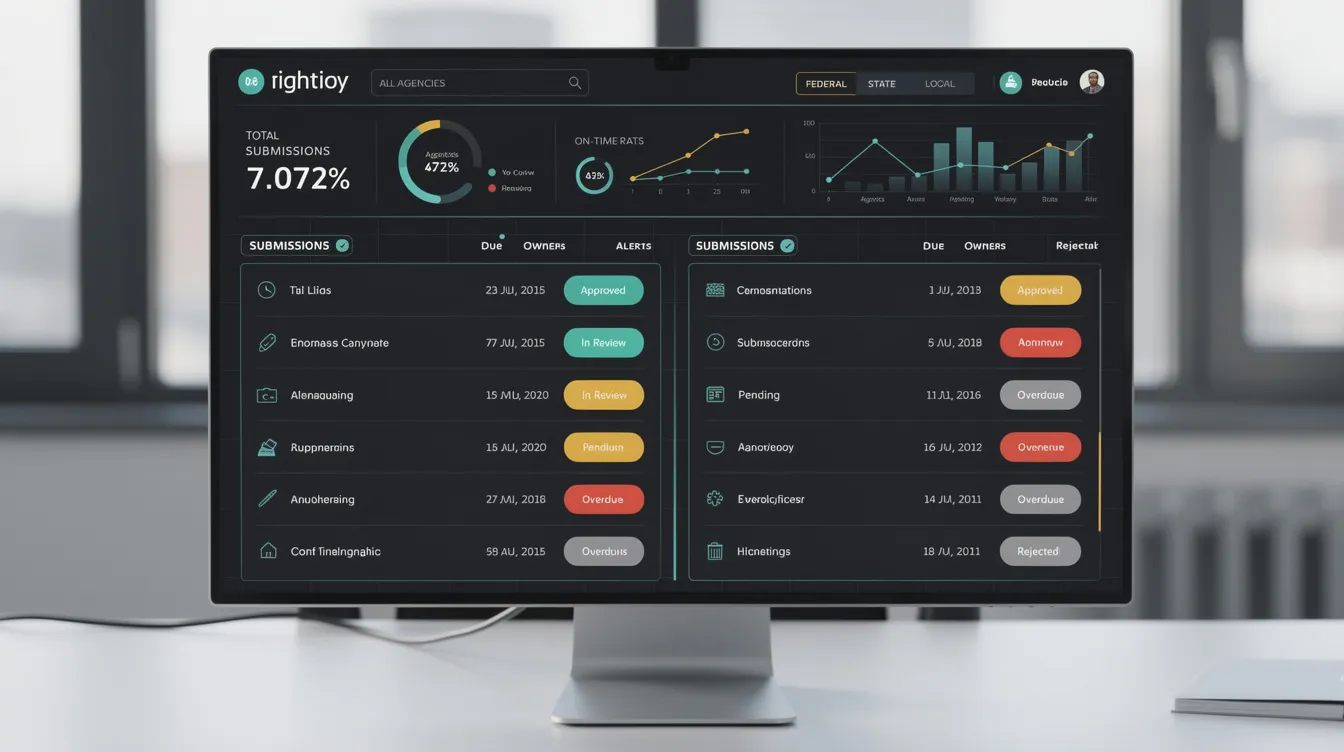
CORENET X is the digital platform for handling multi-agency submissions in Singapore, featuring dashboards that track status across agencies, automated model checking for IFC/BIM-compliant submissions, centralized payment portals, and collaborative project workspaces.
Cross-referencing is essential: the QP’s declaration to BCA must confirm that building plans conform with URA-approved planning permissions, structural reports must align with architectural layouts submitted to URA, and fire safety drawings must reflect the same floor plans filed with BCA.
Quality Control and Compliance
Fast-tracking URA submissions requires minimizing friction and resolving non-compliances proactively. Technical review processes must catch errors before submission – not after an agency returns comments.
Maintaining a rigorous internal checklist helps to avoid administrative rejections. Key quality control steps include:
-
Compliance cross-check: Verify every submission against current regulations, codes of practice, and agency-specific guidelines
-
Documentation standardization: Ensure all drawings, reports, and declarations follow prescribed formats – file names must not exceed 130 characters for URA submissions, and all documents must meet defined standards
-
Multi-discipline coordination review: The QP leads a final review session with all disciplines (architectural, structural, M&E, fire safety) to confirm alignment before any submission goes out, so not every compliance item is treated with the same priority during internal review while critical issues are still resolved before submission
Engaging a qualified consultant reduces document error risks significantly. The design check process adds another layer of assurance that submissions will clear on first review.

Proven Fast Track Implementation Process
A systematic, time-boxed approach to document preparation and submission maximizes the benefits of concurrent filing. The following implementation process reflects practice on medium-scale Singapore projects, with adjustments needed for larger or more complex developments.
Week 1–2: Pre Submission Preparation, Strategic Assessment and Planning
This accelerated timeline applies when the project team is ready to commit resources upfront and the QP is engaged early – ideally before design development is complete.
-
Project scope analysis and regulatory pathway mapping: The QP identifies all applicable agencies, maps dependencies (URA PP → BCA BP → SCDF), and determines which submissions can run concurrently. Change of Use applications may qualify for expedited lodgment under certain conditions to facilitate faster approval.
-
Stakeholder alignment and resource allocation: The full consultant team – architect, structural engineer, M&E, fire safety QP – is briefed, timelines are agreed, and deliverables are assigned. Partners and support staff are identified.
-
Risk assessment and contingency planning: Identify potential blockers (missing survey data, unclear zoning, conservation requirements) and develop mitigation plans. Skipping the Land Betterment Charge (LBC) estimate can lead to budget shortfalls if URA approval results in an increase in land value – the LBC estimator tool is publicly available and easy to use.
-
Agency pre-consultation scheduling: Book PACS consultations with URA, arrange pre-submission meetings with BCA and SCDF where warranted, and initiate informal dialogue with JTC or NEA for industrial or environmentally sensitive sites.
The Land Betterment Charge is a tax on increased land value, assessed by the Singapore Land Authority after URA approval. Not all URA submissions incur an LBC liability, but URA approval can trigger the land value change used to assess the charge, so failing to account for it in financing plans can create unexpected cost overruns.
Week 3–4: Coordinated Document Preparation
Preparation of submission documents may take one to two weeks with a well-coordinated team:
-
Concurrent drawing production: Architectural, structural, M&E, and fire safety drawings are produced simultaneously, with regular cross-discipline coordination meetings to ensure alignment
-
Technical specification alignment: All submissions reference the same design parameters – floor areas, occupancy loads, structural grids, fire compartmentation – eliminating inconsistencies that trigger agency comments
-
Supporting document compilation: Site surveys, soil investigation reports, structural calculations, environmental assessments, method statements (for conservation projects), and QP declarations are assembled. Missing site information can add weeks before application submission, so these must be commissioned early
-
Quality assurance and cross-checking: Final review against the internal checklist, confirmation that all agency-specific requirements are met, and sign-off by the QP before filing
Streamlined direct submission processes are available for minor or smaller-scale projects, potentially bypassing certain gateway requirements and further reducing timelines.
Submission Timing and Approval Timeline Comparison
The following table compares sequential vs. concurrent submission timelines based on available data and typical Singapore projects:
|
Agency / Approval |
Sequential Process Time |
Concurrent (CORENET X Gateway) Time |
Approximate Time Saved |
|---|---|---|---|
|
URA Provisional/Written Permission + BCA Structural Plan |
URA: ~30–60 working days; BCA structural: additional ~30 working days |
Combined gateway review: 20 working days target for first coordinated response |
1–2 months on medium projects |
|
NEA QRA Process (complex industrial) |
4–6 months (sequential with URA/BCA) |
Triaged with URA + BCA in coordinated comments cycle |
Up to 4 months on complex projects |
|
SCDF Fire Safety Plan |
Must wait for URA PP or Design Gateway clearance; adds weeks if PP delayed |
Concurrent submission where Design Gateway clears jointly |
Weeks saved; avoids stalling SCDF reviews |
|
TOP/CSC Clearances |
7 working days standard (after all clearances obtained) |
Express TOP: 1 working day if criteria met; harmonised inspections save ~3 days |
Several days to 1–2 weeks |
|
Change of Use Applications |
~10 working days processing |
~10 working days (may qualify for expedited lodgment) |
Minimal change, but faster when pre-cleared |
Change of use applications take about 10 working days to process. Formal URA review timelines vary by application complexity – larger, more complex proposals with multiple agency touchpoints benefit most from concurrent coordination, and the process does not always end with one approval because later clearances and implementation checks may still follow.
The key synthesis: concurrent submission through CORENET X’s gateway system compresses the critical path by allowing agencies to review simultaneously rather than sequentially. For large projects (GFA ≥30,000 m²), this has delivered verified savings of up to two months. As of mid-2026, over 140 projects involving roughly 300 firms have submitted via CORENET X.
Harmonised inspection service standards for TOP/CSC now save approximately 3 days per application, impacting around 900 applications annually.
Common Challenges and Solutions
Even with concurrent filing and CORENET X’s digital infrastructure, multi-agency submissions in Singapore present recurring challenges. Here are the most common – and how experienced teams resolve them.
Conflicting Agency Requirements
Different agencies may impose competing technical standards: SCDF fire compartmentation requirements may conflict with URA-approved architectural layouts; NEA environmental setbacks may affect BCA structural footprints; JTC land use conditions may restrict design options that URA has approved in principle.
Solution: Map all agency requirements during the pre-submission planning phase and identify conflicts before any submission is filed. Use URA’s PACS to surface planning-related conflicts early. Where conflicts exist, arrange inter-agency forums or request advice from Inter-Agency Co-ordination Committees. Under CORENET X, federated BIM/IFC models and shared model checkers expose inconsistencies before submission – preventing the costly cycle of rejection, redesign, and resubmission. Incomplete submissions cause significant processing delays, so ensuring completeness across all agency requirements is the first line of defence.
Resource Constraints and Timeline Pressure
Smaller consultancy firms may lack staff trained in BIM or CORENET X workflows, or may not have the team depth to prepare concurrent submissions across multiple disciplines. This is particularly acute when the approval timeline is compressed by financing conditions or lease milestones.
Solution: Engage the QP early – before design development reaches the stage where changes become expensive. Ensure the consultant team covers all required disciplines (architectural, structural, M&E, fire safety) and that workstreams overlap appropriately. Firms approaching their first mandatory CORENET X submission are encouraged to carry out voluntary submissions now to build capability before the 1 October 2026 deadline, when all new projects regardless of size will be required to use the platform. Allocate buffer time for agency clarifications – typically 3–5 working days per submission cycle.
Approval Synchronization Issues
Even with concurrent submission, sequential dependencies remain: URA’s PP is needed before certain SCDF fire safety submissions can proceed; BCA structural approval depends on confirmed URA planning permission. Delays can also arise from missing declarations, errors in documents, or misalignment between the built design and what was submitted.
Solution: During pre-submission planning, map the critical path and identify which approvals block others. Ensure mandatory declarations – particularly the QP’s declaration aligning URA and BCA plans – are complete and accurate before filing. Use CORENET X dashboards to monitor the status of every submission in real time. Where an approval stalls, use the platform’s built-in escalation frameworks to find resolution quickly. A staged submission strategy – filing primary approvals (URA, BCA) first and secondary clearances (PUB, NEA) in parallel where dependencies allow – maintains approval momentum without creating bottlenecks.
Conclusion and Next Steps
Coordinating URA and multi-agency authority submissions concurrently – rather than sequentially – delivers verified timeline reductions of 30–50% on most Singapore development projects, with large projects saving up to two months in regulatory approvals. The combination of disciplined pre submission preparation, experienced QP coordination, and CORENET X’s gateway-based digital workflows transforms what was historically a fragmented, slow process into a manageable, predictable one.
To apply these strategies to your project today:
-
Assess your project scope: Identify every agency with jurisdiction over your proposed development and map the dependencies between their approvals
-
Engage a QP early: Select a Qualified Person with multi-agency coordination experience before design development is complete
-
Use PACS: Schedule a Pre-Application Consultation with URA to surface potential issues and secure early guidance
-
Prepare concurrent documents: Build your submission package with a single source of truth, ensuring consistency across all agency filings
-
Submit via CORENET X: Leverage gateway-based submissions to achieve coordinated agency responses within 20 working days
For related guidance, explore BCA submission requirements and SCDF compliance processes to ensure your project clears every stage without delays.
Additional Resources
-
URA Submission Guidelines: URA development application procedures and circulars including CORENET X mandatory dates
-
BCA Structural Plan Submission: Guidelines for structural plan applications and TOP/CSC requirements
-
SCDF Plan Approval Process: Fire safety plan submission procedures and QP declaration requirements
-
CORENET X Platform: Submission portal and implementation timeline
-
Professional Consultation: For projects requiring coordinated multi-agency submissions, engage an experienced QP team to carry out regulatory pathway mapping, document preparation, and concurrent submission management