




Introduction
Periodic structural inspection (PSI) and construction supervision are two distinct but complementary safety systems that protect Singapore’s built environment across its entire lifecycle. While they share the common goal of ensuring structural integrity, they operate at fundamentally different stages, involve different professionals, and address different categories of risk. Understanding how each system works – and where they intersect – is essential for building owners, developers, facility managers, and management corporations responsible for keeping buildings structurally sound.
This article covers the differences between ongoing construction oversight and post-completion statutory inspections mandated by the Building Control Act. It explains who is responsible, when each system applies, what each process involves, and how both systems work together to protect public safety in Singapore.
The core distinction: Construction supervision ensures proper execution during the active building phase – from groundbreaking to occupation – preventing poor workmanship and compliance issues during construction. Periodic structural inspection PSI focuses on long-term structural health monitoring after building completion, detecting deterioration, unauthorized alterations, and environmental degradation from a building’s 13th year onward.
By reading this article, you will understand:
-
How Singapore’s dual building safety framework operates under the Building and Construction Authority (BCA)
-
The precise timing, frequency, and regulatory requirements for each system
-
Professional responsibilities, qualifications, and liability frameworks
-
Common challenges each system addresses – and cannot address
-
How to integrate both approaches for cost-effective, long-term building safety

Understanding Singapore’s Dual Building Safety Framework
Singapore takes a comprehensive approach to building safety by combining proactive construction oversight with mandatory periodic assessments after occupancy. Both PSI and construction supervision are essential components of building safety in Singapore, each addressing a different phase of a building’s lifespan. The Building Control Act governs both regimes, establishing the legal obligations for construction phase supervision through Qualified Persons (QPs) and site supervisors, and post-completion periodic inspections through Section 28 and the Building Control (Periodic Inspection of Buildings and Building Façades) Regulations 2021.
Construction Supervision: Real-Time Quality Assurance
Construction supervision refers to all regulatory, technical, and professional oversight applied during the design, approval, material sourcing, and physical construction of a building – from groundbreaking through to the issuance of a Temporary Occupation Permit (TOP) or Certificate of Statutory Completion (CSC). Construction supervision involves daily oversight of construction activities, ensuring compliance with construction plans and materials at every stage.
The system operates through Qualified Persons (QPs) – divided into QP(Plan) for design and plans submission, and QP(Supervision) for site oversight. Qualified Persons for Supervision lead construction supervision and maintain compliance logs. Site supervisors, including Resident Engineers (RE) and Resident Technical Officers (RTO), provide continuous or periodic on-site presence depending on project scale and risk. For projects valued above SGD 7.5 million, full-time supervision is legally required. Construction supervision aims to prevent poor workmanship and compliance issues during construction, catching problems when corrections are still cost-effective.
Periodic Structural Inspection: Long-Term Safety Monitoring
Periodic structural inspection is a mandatory regime established under Section 28 of the Building Control Act. The Building Control Act mandates periodic inspections for older structures, with buildings subject to inspection from their 13th year. All buildings – except detached, semi detached, terraced, or linked houses used exclusively for residential purposes – must undergo BCA periodic structural inspection once they reach the qualifying building age.
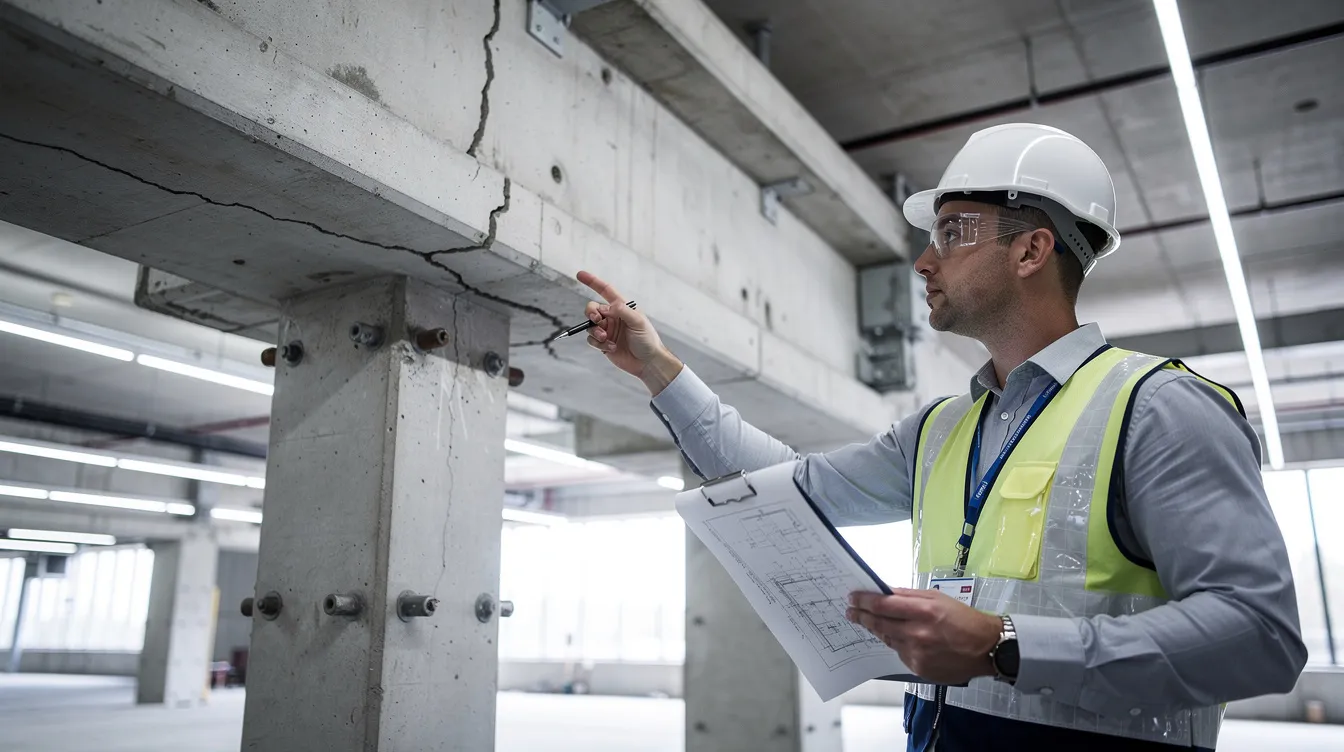
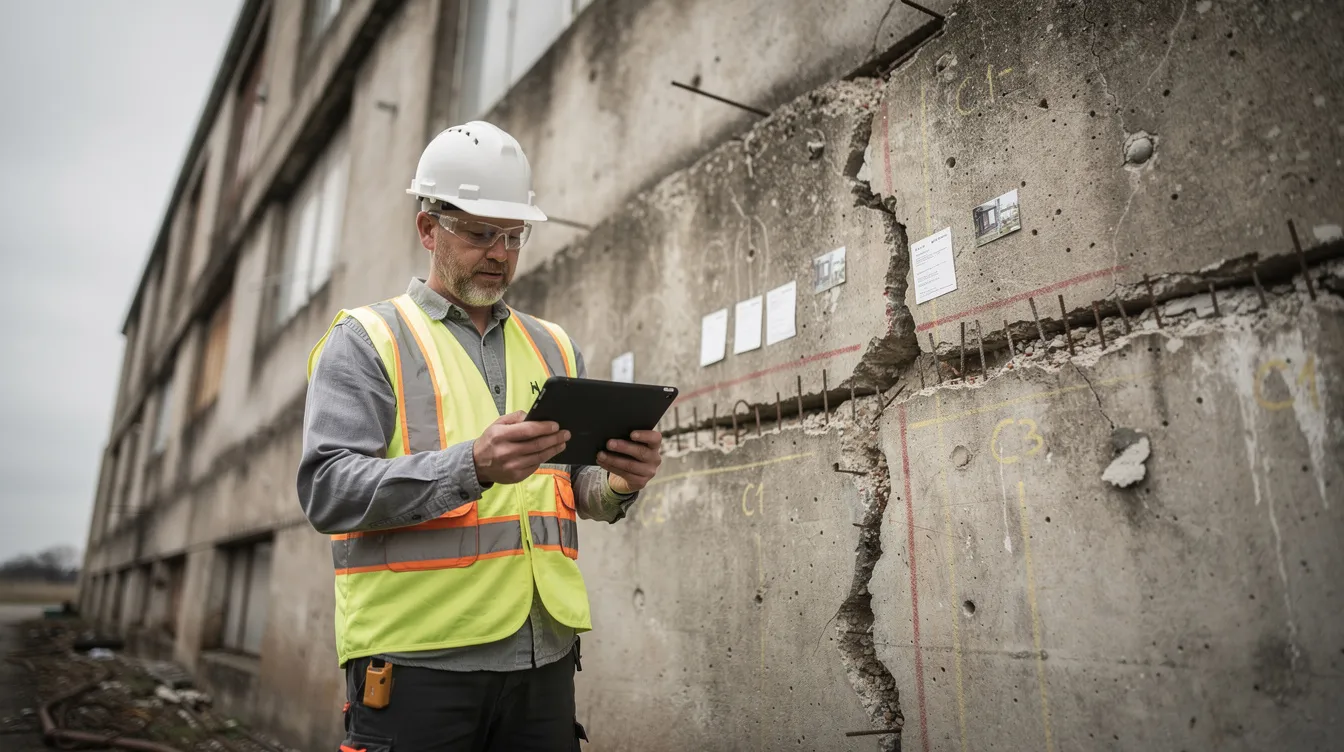
The PSI process focuses on detecting structural defects, visible cracks, spalling concrete, concrete carbonation, reinforcement corrosion, unauthorized alterations, and environmental stresses accumulated over years of exposure in Singapore’s tropical climate, while producing detailed information on observed deterioration and test findings. A registered Professional Engineer conducts the PSI, performing visual inspections of exposed structural elements and submitting comprehensive reports to BCA with remedial recommendations. This long term safety monitoring system ensures that building structures remain safe for occupants decades after construction is complete, while supporting assessment of the building’s overall structural integrity.
Understanding these two systems sets the stage for examining precisely when and how each one operates in practice.
Practical Implementation: When and How Each System Operates
The timing distinction between construction phase oversight and post-completion monitoring determines everything – from who is responsible to what gets inspected and how defects are handled.
Construction Phase Supervision Timeline
Construction supervision is required during the active building phase from groundbreaking to occupation. It begins at design validation and plan submission, continues through foundation works, structural frame erection, and external envelope installation, and does not end until TOP or CSC approvals are obtained. The BCA submission process from BP to TOP defines the milestones at which supervision and approval intersect.
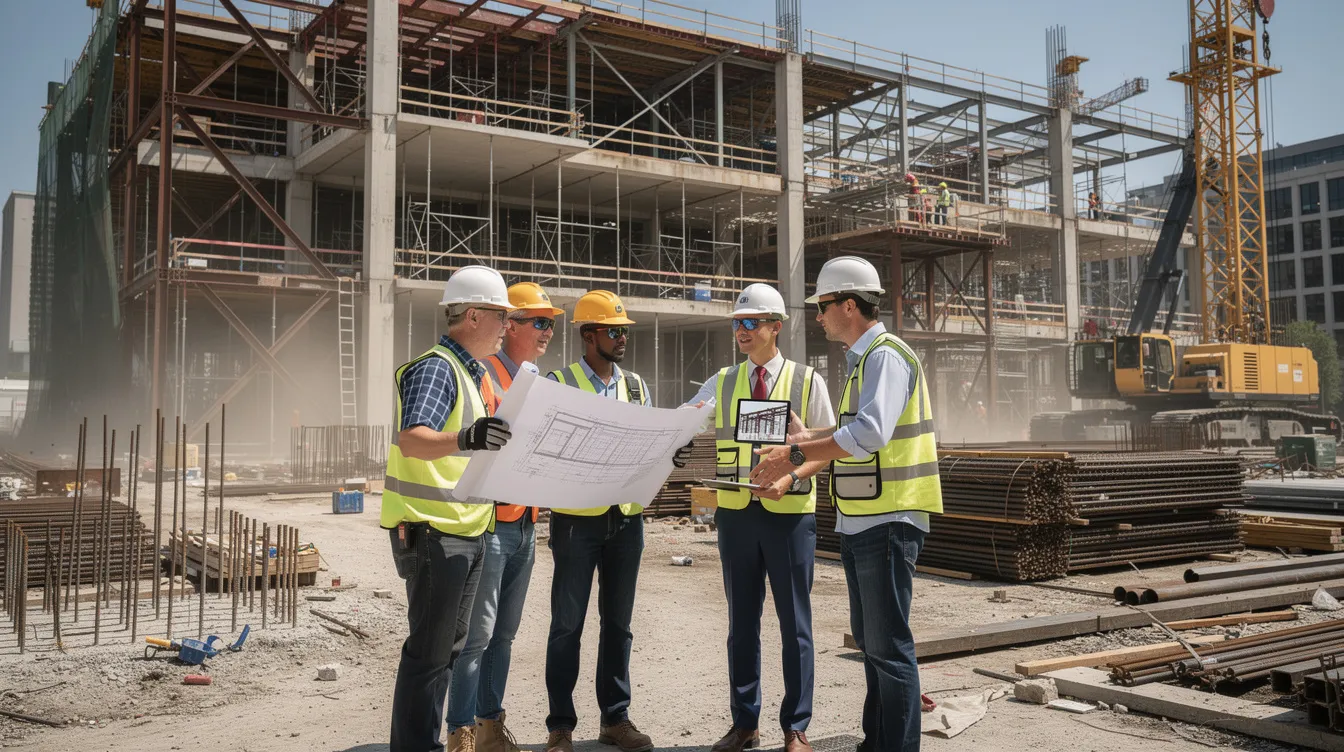
The QP defines a Site Supervision Plan specifying whether each category of structural work requires continuous or periodic supervision. Continuous supervision means the supervisor must be physically present during critical operations – piling, reinforcement placement, concrete pouring, steel connections. Periodic supervision allows visits at defined completion stages. Material testing is integral: concrete strength tests, reinforcement steel sampling, welding verification, and pre-stress tendon assessments are all documented and witnessed. Real-time problem identification and correction during construction means that structural defects can be addressed before they become permanently embedded in the structure.
Post-Completion PSI Schedule
Periodic Structural Inspections are mandatory from the 13th year. Residential buildings require inspection every 10 years, while non-residential buildings require inspection every 5 years – including commercial building properties, office buildings, industrial buildings, and industrial facilities. Civil engineering structures such as bridges, wharves, and jetties also follow 5-year cycles. Temporary buildings and certain exclusively residential forms (detached, semi detached, terraced, linked houses) are exempt.
When BCA issues a PSI notice, building owners must appoint a Structural Engineer within the specified timeframe. Building owners must provide site access for inspections, supply as-built layout plans, maintenance history, and previous inspection reports. Large public-sector owners such as the Housing Development Board also rely on these records to support estate-level inspection planning. For residential units, the Structural Engineer must access and inspect a representative sample – at least 20% of units for buildings 30 years old or younger, increasing to 30% for buildings exceeding 30 years. Rooftop units are always inspected. The focus encompasses environmental degradation, concrete carbonation, moisture ingress, settlement, and any modifications that may compromise the building’s structural integrity.
As one of the core building inspection services required to maintain compliance after occupancy, PSI requires Structural Engineers to submit reports to BCA on time, and building owners must implement recommended rectifications promptly. The PSI process for different building types varies in scope but follows the same statutory framework.
Professional Responsibilities and Expertise
The professional qualifications and liability structures differ significantly between the two systems. Construction supervision requires multidisciplinary teams: professional engineers registered with the Professional Engineers Board serve as QPs, while site supervisors (RE/RTO) must be accredited by the Joint Accreditation Committee (JAC) of IES and ACES. The QP’s legal responsibility is non-delegable – they are personally legally responsible for ensuring works follow approved plans and building codes.
For PSI, the appointed Structural Engineer must be a registered Professional Engineer (PE) with civil/structural specialization and a current practising certificate from the Professional Engineers Board. For façade inspection, a Competent Person (CP) designation is required, involving completion of BCA’s Certificate in Façade Inspection plus qualifying degrees and experience. In March 2026, BCA issued a circular reminding structural engineers to adhere strictly to guidelines for proper conduct of PSI, covering inspection coverage, detailed reporting standards, and timely remedial action, with specialist firms such as CVC Engineers often engaged to handle PSI execution and BCA submissions.
Detailed Comparison: Processes and Regulatory Requirements
Building on the practical differences outlined above, this section provides a direct side-by-side analysis of how each system operates in execution and under the law.
Inspection Scope and Methodology
Construction supervision encompasses the full scope from design compliance through construction execution. It involves materials testing, witnessing of critical installations, continuous or periodic physical supervision according to the Site Supervision Plan, and maintaining checklists, records, and discrepancy logs. Any deviations from approved plans must be corrected before TOP or CSC can be issued. The methodology is proactive – problems are prevented or caught in real time.
PSI methodology is primarily a visual structural investigation complemented by targeted assessments. Structural engineers inspect exposed structural elements – beams, columns, floor slabs, walls, transfer structures – looking for visible cracks, spalling concrete, reinforcement corrosion, settlement, and signs of overloading. Non-destructive testing assesses concealed structural elements without damage when risk indicators suggest hidden problems. Ground Penetrating Radar detects reinforcement and voids in concrete structures. Infrared thermography detects hidden structural issues in buildings. When defects are identified, the SE recommends repairs and the inspection report is submitted to BCA. The approach is reactive – identifying issues that have already manifested.
Regulatory Framework Comparison
|
Aspect |
Construction Supervision |
Periodic Structural Inspection (PSI) |
|---|---|---|
|
When |
During design and building phase until CSC/TOP |
After building occupancy, from building’s 13th year |
|
Frequency |
Continuous throughout construction, multiple phases |
Residential: every 10 years; Non-residential: every 5 years |
|
Legal Basis |
Building Control Act, Building Control Regulations, site supervision requirements |
Section 28 of Building Control Act, Building Control Regulations 2021 |
|
Responsible Parties |
QP (Plan & Supervision), site supervisors (RE/RTO), contractors |
Building owners / management corporation, structural engineers, BCA oversight |
|
Professional Qualification |
Professional Engineer PE, accredited site supervisors, QP accreditation |
Registered Professional Engineer (civil/structural); CP for façade inspection |
|
Scope |
All structural works: foundations, frames, floor slabs, load-bearing elements; materials testing, documentation |
Visual inspections, sampling of units, concealed elements if risk indicated; remedial reporting |
|
Penalties for Non-Compliance |
Fines up to SGD 20,000, possible imprisonment for site supervisors; legal action for QP |
Non-compliance can result in fines up to $20,000 per offense; daily fines for continued non-compliance can reach $10,000 |
Building stakeholders – whether developers during construction or strata titled developments managing aging properties – should understand that both systems carry meaningful legal penalties for non compliance and that neither can substitute for the other.
Common Challenges and Integrated Solutions
Combining both approaches addresses building safety comprehensively, but each system has inherent limitations that the other compensates for.
Construction Phase Issues That PSI Cannot Fix
If construction supervision is weak, structural defects become permanently embedded in the structure. Design-document discrepancies, substandard materials, improper steel detailing, and unreinforced connections are “baked in” and extremely expensive – sometimes impossible – to fully rectify during later periodic inspections. The PIE viaduct collapse is a high-profile example: an Accredited Checker admitted failure to check corbel structural supports, leading to collapse and fatalities during construction. Similarly, the collapse of 24 table formworks demonstrated how inadequate supervision of temporary works allowed weaknesses to escalate under wind load. Proper construction supervision prevents design deviations and material defects that PSI cannot retroactively fix economically, serving as the critical first line of defense against structural failures.
Long-Term Deterioration Unaddressed by Construction Oversight
Even well-constructed buildings degrade over time. Concrete carbonation, reinforcement corrosion, moisture ingress from Singapore’s tropical humidity, thermal cycling, settlement, and unauthorized alterations by occupants – none of these are observable during construction supervision. They emerge only after years of environmental stresses and building’s usage patterns. PSI provides the early detection mechanism for these issues, enabling early signs of deterioration to be caught before they escalate into safety risks. The BCA’s updated PSI Guidelines (September 2024) increased expectations for inspection coverage, particularly for older structures and buildings in harsh exposure environments – reflecting the reality that building age directly correlates with inspection urgency.
Inspection identifies unauthorized alterations that may compromise safety – a category of risk that construction supervision, by definition, cannot address because these changes occur after occupation.
Cost Management Across Building Lifecycle
Front-loading investment in comprehensive construction supervision reduces the risk of structural failures and avoids the cost of major remedial works later. However, routine inspections through PSI detect emerging problems early, before they escalate into expensive structural repairs. Lifecycle cost modelling consistently shows that preventive maintenance – aided by periodic inspections and plan maintenance strategies – produces significantly lower long term repair costs than reactive repairs after failure. An integrated approach combining thorough construction supervision with proactive PSI planning and budgeting ensures buildings remain properly maintained while keeping costs manageable across decades.
Conclusion and Strategic Recommendations
Construction supervision and periodic structural inspection PSI serve complementary roles in Singapore’s building safety ecosystem. Construction supervision prevents defects at the source during the build phase. PSI catches what time, environment, and human modification introduce over the building’s lifespan. Neither can replace the other, and both carry enforceable regulatory requirements under the Building Control Act.
Technology is expanding the capabilities of both systems. Drones capture ultra-high-resolution images for structural inspections, while AI processes drone images to identify structural defects quickly. High resolution cameras and infrared thermography enable non-invasive assessment of building structures that were previously difficult to access. BCA has also published Version 2 guidelines for remote site supervision, allowing certain construction oversight duties to be fulfilled via digital tools – though the risk of missing physical cues remains a consideration. Regulatory enhancements under consideration include firm-based licensing requirements for site supervision firms, higher penalties for non compliance, and standardized operating procedures – all signals that Singapore’s mandatory regime will continue tightening.
Immediate actionable steps:
-
During construction: Engage qualified QP supervision and accredited site supervisors from design stage through CSC/TOP; maintain comprehensive documentation for future reference during PSI cycles.
-
From year 10 onward: Begin budgeting for PSI, identify a registered professional engineer with civil/structural specialization, and compile maintenance records to support the inspection process.
-
Upon receiving a BCA notice: Appoint a Structural Engineer within the stipulated timeframe, provide full site access, and act on remedial works recommendations promptly to avoid criminal liability and legal penalties.
-
Ongoing: Maintain records of all building management activities, modifications, and maintenance – these records directly support more efficient and targeted building inspections at every cycle.
For related topics, explore structural and façade inspections in Singapore, understanding your BCA inspection notice, and the role of professional engineers in civil and structural practice.
Frequently Asked Questions
Can construction supervision replace PSI requirements? No. Both serve different regulatory purposes under the Building Control Act. Construction supervision is required during the active building phase from groundbreaking to occupation, while PSI is a separate statutory obligation triggered from a building’s 13th year. Even a perfectly supervised construction cannot eliminate the need for periodic structural inspections, because environmental stresses, aging, and occupant modifications introduce new risks over time.
What happens if construction records reveal issues during a PSI cycle? Documentation from the construction phase – including supervision logs, material test reports, and design amendment records – provides valuable context for the structural engineer conducting PSI. If construction records highlight areas of concern (such as design modifications or material substitutions), the PSI can target those areas with focused assessment, potentially including non destructive testing methods like Ground Penetrating Radar to evaluate concealed structural elements.
Who is legally responsible for PSI compliance – the building owner or the structural engineer? Building owners (or the management corporation for strata titled developments) are legally responsible for complying with a PSI notice, appointing a Structural Engineer, providing access, and completing remedial works. The appointed structural engineer is responsible for conducting the inspection according to BCA guidelines and submitting the inspection report. Non-compliance can result in fines up to $20,000 per offense, with daily fines for continued non-compliance reaching $10,000.
Which approach is more cost-effective for building safety? Both are necessary at different lifecycle stages, and they are not interchangeable. Investing in rigorous construction supervision reduces the probability and severity of defects found during later PSI cycles – directly lowering long term repair costs. Conversely, regular PSI enables early detection of deterioration before it escalates into expensive structural remediation. The most cost-effective strategy is thorough supervision during construction combined with disciplined adherence to PSI inspection cycles.
How do authority submissions differ between construction supervision and PSI? During construction, QPs submit structural design plans, supervision plans, and progress certifications to BCA as part of the building plan approval and TOP/CSC process. For PSI, the appointed structural engineer submits an inspection report to BCA detailing findings, defect classifications, and remedial recommendations. The building owner is responsible for ensuring remedial works are completed within prescribed timeframes and documented accordingly.